


‘Who Are You?’ podcast with guest Kahlen Lamarche ’27
Balancing ice hockey as a criminal justice major

Balancing ice hockey as a criminal justice major
Joel Vanner: Hello, and welcome to ”Who Are You?,” The Bobcats you know, the stories you don't. I'm your host Joel Vanner, inside the podcast studio at Quinnipiac University School of Communications, and I am joined today by my guest, Kahlen Lamarche. Kahlen, welcome to the show.
Kahlen Lamarche: Thank you so much for having me. I'm super excited.
Joel Vanner: I'm glad you're excited. I'm sure you could guess what my first question to you is going to be, and that is, who are you?
Kahlen Lamarche: My name is Kahlen Lamarche. I'm a criminal justice major with a minor in forensic science and psychology. I play on Quinnipiac’s Ice hockey team here. I'm also from Canada, Ontario, more specifically, and my graduation year is 2027.
Joel Vanner: Wow. What position do you play on the women's ice hockey team?
Kahlen Lamarche: I am a right-winger.
Joel Vanner: Right winger. Yeah. Okay. So let's unpack that there. You're a criminal justice major, forensic science and psychology minor. You're also on the ice hockey team. Take me back to Kalen as a child. Did Galen think that she'd be studying those things and playing hockey in college?
Kahlen Lamarche: Honestly, no. So when I first kind of started skating, I would say I was figure skating first. I had two older brothers who actually did play hockey, though. My mom kind of wanted her little princess to be a little girl, you know? And so she wanted me put me in figure skating and tap dancing, ballet. So I kind of did that when I was a little bit younger, like, five, six, and then around seven. My figure skating coach told my mom that I don't have the finesse to be a figure skater. And then I actually try hockey.
Joel Vanner: Your mom was thinking, Man, my two sons went through hockey and I wanted something. At least you got the footwork down in ballet.
Kahlen Lamarche: So that definitely helped me for where I'm at today. But she's definitely mad about it. She was like, Oh, my little princess just needs to go into hockey with her two older brothers. So that's how kind of I transitioned into hockey. And then from there, I just my career path for hockey took off, and I kind of was playing a lot of tournaments like out of Canada, so we came to the US a little bit. I played for Team Canada U 18, and then kind of getting recruited from a bunch of schools. Quinnipiac was the very first one who reached out. So that was pretty nice, and I was super interested into everything they kind of had. I looked into their programs, their facilities. They kind of took me on a virtual drone tour because at the time, COVID was actually kind of a thing. So that was really cool. And I just got to know a lot of people, too, as well, like, people who I kind of grew up playing with. So I talked to a lot of those teammates, and then they I kind of honestly from there, I knew that Quinnipiac was going to be my home for the next four years, and I committed to them, I think, within three weeks from when we started talking.
Joel Vanner: So At first sight, you knew it.
Kahlen Lamarche: I knew that this was gonna be my home.
Joel Vanner: And criminal justice as your field of study, did you grow up liking criminal What encouraged you to choose that as your study?
Kahlen Lamarche: Yeah, so funny thing is, I actually have no, like, relatives or family members that are even involved in, like, policing criminal justice, like, at all. Detention, like, nothing. So I think it's just, honestly, growing up, I was always, like, kind of intrigued with shows like criminal minds and just, like, all those little crime shows and documentaries of, you know, how mysteries are getting solved and, you know, like bodies are getting found. So I think just kind of from a young age, I was always, you know, like, intrigued and curious about, like, kind of stuff like that. And so I was like, I want to maybe be, like, a police officer or a detective when I grew up, and funny, like, people ask me, like, what do I want to do when I'm older, and I tell them, like, I want to go into kind of criminal justice field and be a police officer or whatever my path may lead me to. But they're like, Wow, that would suit you a lot. So I think it's just something that I kind of take, and I'm like, You know what? Yeah, I'm gonna do it. And I came here, and I'm like, I declared my major of criminal justice, like, right when I got here. So I kind of already knew that that's what I was gonna do, and I wanted to learn as much as I can about it and yeah, just be educated.
Joel Vanner: And you're a forensic science minor. Yeah. I haven't actually heard of that before today. Tell me about the minor and how that contributes to your experience in the criminal justice program.
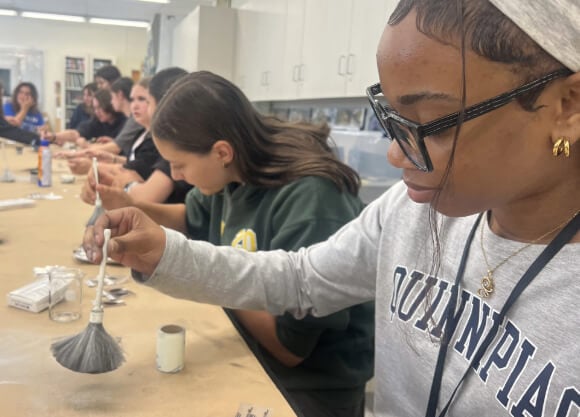
Kahlen Lamarche: Yeah, so they actually just, like, started the minor itself, I think, last year, and so I declared it as one of my minors, and I think it's just kind of kind of helped me, like if I wanted to kind of transition into maybe a path in forensics. I'm taking forensic oncology and a bunch of other forensic classes within it, which I'm taking, like, this forensic bones class right now, which is so interesting. Like, just learning all these little bones like Oscoxas and I didn't even know we had half of these bones, so I don't even know what that is. Right? That's what I'm saying. So it's, like, such little cool things.
Joel Vanner: It sounds really hands on.
Kahlen Lamarche: Yeah. So it's a lot of, like, lab works. And so that's how I also learn, like, so much easier, like, so it's just so cool, and I think it's, like, something that I can, like, transition into when I want to go into, like, criminal justice field and kind of start a big girl job, I would say, I guess, there. So I think, like, all the skills that I'm learning in all these classes are just so transferable.
Joel Vanner: There a specific class or faculty member that has been really impactful to you so far?
Kahlen Lamarche: So one class that I've loved and really enjoyed doing was this summer, I actually did an internship with the Derby Police Department. And like I said, I'm a very hands on person. So that experience was unreal. Everyone was just so amazing. Like, from the staff to, like, the officers that I was shadowing, it was just such a surreal kind of experience, and it made me, like, honestly, find a passion for wanting to be a police officer. And it's just, like, little details that you wouldn't kind of realize from being a police officer, like, go into, like, the community and, you know, just being like that kind of figure as a police officer is, like, insane. And I was shocked. So I'm kind of happy that I did that to know that, you know, policing is something I do want to pursue in the future.
Joel Vanner: And you also took part in the inside out program, too, right? Yes. Tell us about that program and your experiences there.
Kahlen Lamarche: That was, that program was honestly like, again, just a surreal experience. Like, you would never find that in any other university you go to. I was like, so you'd show up for class in the morning and you'd go to the prison. And you would learn amongst, like, inmates. So it would be like a classmate, then an inmate, and then a classmate, and we would do a full kind of circle. And it was led by Professor Stephen McGuinn, which he's also one of my favorite professors here. And you would kind of just he'd ask questions and you would, you know, like, chat amongst kind of everyone and you'd have these one on one conversations with, like, incarcerated individuals, and it was just it was so cool to kind of see their perspective on, you know, being incarcerated and how they got there and how maybe it could have they could have I don't know how like to say that, but, like, they could have stopped from, you know, maybe getting arrested a little bit. And it was just like, their perspective on things was so like eye opening, I would say, and it kind of just changed a lot of my perspective on so many different topics.
Joel Vanner: It sounds like in your experiences in the criminal justice program, um, you're learning the different parts that make up the team of criminal justice kind of on the hockeyteam, the different parts that make up a hockey team. So transitioning there, your life is a student athlete. We've talked about all your experiences in the criminal justice program. You're also balancing being a student athlete. What is a typical day like if you have one?
Kahlen Lamarche: Yeah, so, honestly, I could just use today. So I kind of just woke up, like in the morning. I woke up around I think it was 715. My alarm was set. And then I kind of got up, got some breakfast, and then I headed out to the rink. We had a little skill session. And then I kind of just went home, chilled a little bit, had maybe another little breakfast in there. But then, you know, I got ready for my day, and then I'm coming here. And then, say, some days, I'd have class, so it depends obviously what I have that day. And then I'll kind of, you know, go get lunch, and then we'll have our practice block 1-5. So then I'll head up to the rink, and then we'll do kind of a team warm up in the middle there before we jump onto the ice at like two. And then we'll be on the ice. We'll go lift after we kind of skate. And then we kind of stretch as a team after we lift. And then we're obviously going to more classes because we got to fit classes in there somewhere. So a lot of us have 5:00 or 630 o'clock classes. So then we head up to those, and we kind of make room for meetings and stuff and, you know, going to different kind of clubs like SAC and QCar and all these other kind of groups that we're all involved in. So we kind of have to make time for those as well.
Joel Vanner: And SAC is Student Athletic Advisory Council?
Kahlen Lamarche: You nailed it. Wow? I love acronyms on the show.
Joel Vanner: I love to guess. But it sounds like time management and balancing. It's not something you're new to having played for Team Canada, I'm sure you traveled a lot with that experience. How have you adjusted to that lifestyle?
Kahlen Lamarche: I mean, it's honestly, like you said, I've been doing it since I was kind of little, so I actually billeted when I was a little younger in my junior years. I was kind of I lived with a different family, so I was kind of already away from home. So that part I was kind of already used to coming here. And then, you know, you were still balancing school out there. You were still doing practice when you could. Just practice wasn't in the middle of the day. So that's kind of the only difference, I think, is that practice is kind of in the middle of the day and you have, you know, a five hour kind of time block for your athletics here, and that's something that you're kind of dialed into during that time. And so I think that's kind of one of the only differences. You don't really have to balance a lot of academics. Like, you just got to make sure you're kind of taking the time you have when you have it, and you're doing your work and you're not kind of, you know, watching a show, maybe at that time. You're kind of just sacrificing little moments in your day for maybe work instead of watching a show or something that you like doing.
Joel Vanner: And you're doing all of that in the beautiful facilities on the York Hill campus, the M&T Bank Arena. How have all of these experiences prepared you for what may come next? And what do you think is next for Kahlen Lamarche?
Kahlen Lamarche: Hopefully what's next for me is that after next year, I want to enter the PWHL draft. It's a new professional women's hockey league for those who don't know; it just opened up a couple of years ago.
Joel Vanner: And we settled that your favorite team is Toronto, yes.
Kahlen Lamarche: So hopefully that once I get out of college and graduate, get a degree, I hopefully can go keep continuing playing pro a little bit. And then I want to slowly kind of transition into a career and obviously, law enforcement, maybe policing. Like I said, I've kind of developed a big interest since my internship with that. So that's kind of one of my biggest things. Those are the two major things that I hopefully I will do in my future. Um, but yeah, like, I think, you know, class a Quinn Bac just have prepped me and made me know that I want to be hopefully a police officer in my future. Like like my internship course. Like, it kind of kind of solidified that for me, you know? And so it made me excited to want to, like, grow up more and, you know, an adult, I guess. Yeah, adult and get a big girl job. And I do want to kind of pursue that career, and I think it's gonna suit me, and I'm obviously gonna give it all I have because that's who I am. I give my 100% to everything when I want it. So I think that's just one thing that kind of Quinnipiac prepared me for is to always, you know, give everything a chance and to really dive into everything and make sure you go into everything and attack everything with an open mind set and just learn as much as you can while you're here, 'cause you know, this opportunity is not given to everyone, and so you got to kind of seize every moment and everything you get and run with it.
Joel Vanner: That's a sound bite right there. You mentioned you wanted to you hope to go into the PWHL draft. I expect Jersey when you make the team. But how have you been able to grow as a hockey player here at Quinnipiac on the athletic side there?
Kahlen Lamarche: Yeah. Honestly, I think I'm just seeing it right now in my junior year. Like, the player I came in as, I was, you know, maybe a little more kind of shy to be there and to maybe have the puck on your stick. It's a scary feeling, I guess, when you're around, you know, people who are four years older than you. So I think I've kind of just grown into who I am, the role I play on my team, and just the little kind of details that go into being a bobcat day in and day out. And I think it's something that I've kind of, you know, tweaked my mindset to, and if I want to be part of the team, I got to kind of shift my mindset to being a team player and being that person who does all the little details that kind of coach asks from us.
Joel Vanner: And if you could give any piece of advice to students who are preparing to become student athletes, taking that transition, what would you say to them to get them started in the right way?
Kahlen Lamarche: Honestly, I would say something that was really overwhelming for me was the recruiting process. I think it's don't I mean, I went with the first school who reached out to me, but it was a great choice. It was a great choice. I'm having so much fun here, you know? Like, I wouldn't trade anything for what I got. I have an amazing opportunity, and I'm loving it here. But I would just say, like, kind of take that process slowly. Don't let coaches force you into making a decision to committing for that team. You know, do your own research, you know, dig in deep into that team what their roster is going to look like when you come into that year, you want to play your freshman year, right? And if they're going to recruit a class of, you know, 15 people, it's not ideal for you to come that year or to that school at all if you're looking to come in your first year, right? So I think it's just doing all those that little dirty work yourself because all the coaches are going to say great things about the school, and they all want you to come, obviously to your school. So it's kind of to to take what they say to you with a grain of a salt and do your own work beforehand. And that kind of also release pressure off of you when you're talking to the university or the school or the college you want to go to, because you know so much about the school already, and so they're not gonna kind of trick you into going somewhere where maybe they promise you something and you won't really get it.
Joel Vanner: And look into the academic areas they have, too. You came here, found criminal justice, and you've loved your time here so far, which is awesome to hear. Yes. Kahlen, thank you so much for taking the time today. It was great to have you on the show.
Kahlen Lamarche: Thank you so much for having me. Again, I had so much fun.
Joel Vanner: If you enjoy today's episode, be sure to subscribe, share, and like, and find other episodes on Apple, Spotify, and YouTube podcasts. Until next time, when I ask my next guest, who are you? I'm Joel Vanner. Bye for now.










Quinnipiac Today is your source for what's happening throughout #BobcatNation. Sign up for our weekly email newsletter to be among the first to know about news, events and members of our Bobcat family who are making a positive difference in our world.
Sign Up Now