

Professor utilizes intersectional expertise to understand the evolution of women’s rights in America
June 29, 2026
June 29, 2026

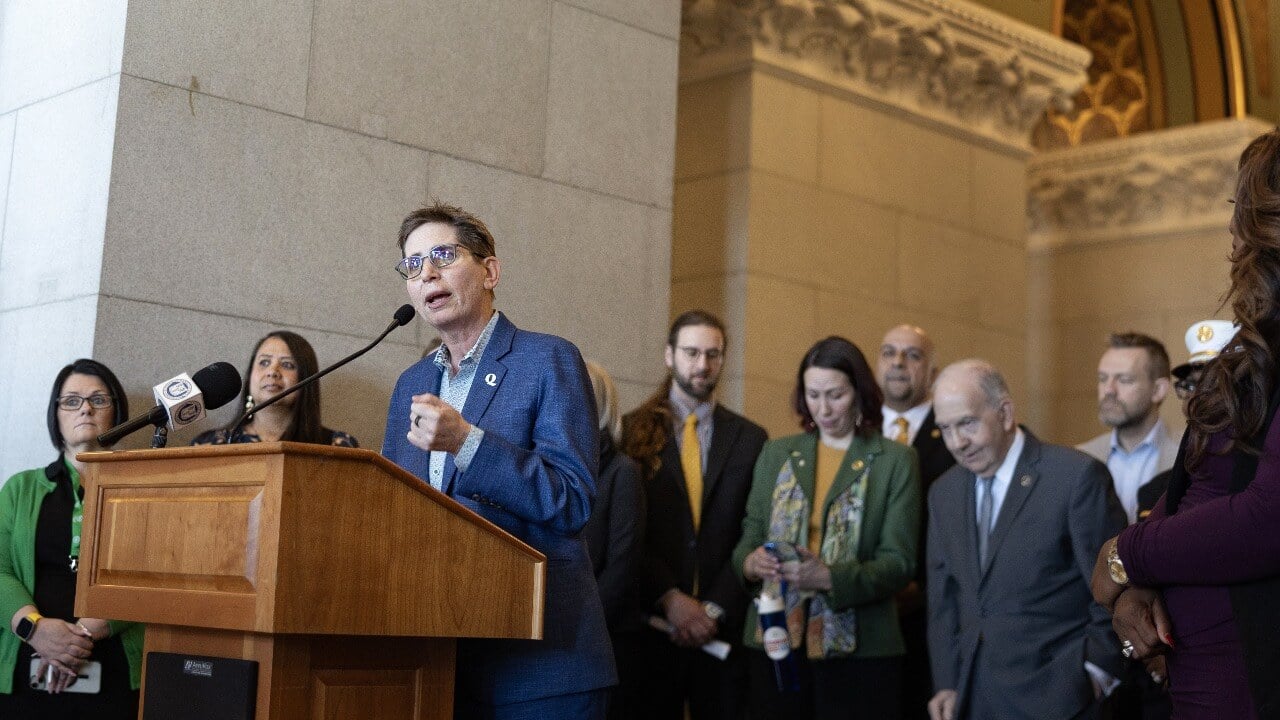
“Women and girls are people, so politics always applies to them, though the field of political science resisted that understanding for at least 100 years after its establishment in the late 1800s,” said Sacco. “People have a tendency to associate politics with masculinity and the interests and actions of men. Women are seen as ‘social reformers’ or doing ‘community service’ whenever they engage in politics and public service, but when men engage, people are more likely to classify their actions as politics.”
Over the course of the last 250 years, there has been a nonlinear path to the progress of women’s rights and the fight for gender equity.
“We see both the expansion and also the contraction of women's rights over the course of American history,” said Sacco. “Though American women have made progress over the last 250 years in legal rights to hold property, maintain custody of their children after a divorce, vote, participate in public affairs, get an education, control their own reproduction, etc., we also see pretty fervent attempts to undo that progress today.”
Sacco emphasizes the need to continue advocating for progress in modern times.
“The Declaration of Independence reminds us that people had to fight hard for the improvement in statuses we have seen over the last 250 years. Women (and men) should be vigilant in defense of the world they have grown accustomed to — things can absolutely go backward,” said Sacco.
The Declaration of Independence laid the foundation for citizens of the United States to express their concerns democratically and gave the people the opportunity to shape the future of the nation.
“Evidence of the continued importance of the Declaration of Independence comes from people's movements of all kinds since — the women of the 1848 Seneca Falls convention modeled their ‘Declaration of Sentiments and Resolutions’ upon it, American Indians modeled their ‘1961 Declaration of Indian Purpose’ on it and the Black Panther Party invoked it in their ‘1966 Ten-Point Program.’ It still resonates with people around the world in its aspirations.”
As the fight for equality across the United States expands, many organizations and movements continue to advocate for social justice.
“Showing up in large numbers and maintaining focus on legislative demands has always been key to expanding rights,” said Sacco. “Also, sadly, demonstrating one's suffering in pictures and videos has also been effective in changing hearts and minds. Moving the needle on public opinion can be the key to getting laws changed. It's possible to do it without widespread public opinion on one's side, but it's much easier when public opinion is in agreement that something has to change.”
Sacco attempts to bring awareness of the unique challenges that women face in politics to her students through a diverse curriculum.
“In my women and public policy class, I focus on policy issues of particular salience to women because of the disproportionate impact on women and girls — the politics of reproduction, poverty, workplace concerns including pay equity and sexual harassment, sexual assault and domestic violence,” said Sacco.
As she looks toward the future, Sacco is hopeful for what the next era of the United States will bring.
“I don't know what the future holds, but I hope people will spend some time in this 250th year reflecting on the sort of political world they want to inhabit, what they expect of their government and fellow citizens and what they will do help to make that vision real,” Sacco said. “People are so clever — I look forward to seeing what my fellow Americans come up with to create a future we all can co-exist in.”



















Quinnipiac Today is your source for what's happening throughout #BobcatNation. Sign up for our weekly email newsletter to be among the first to know about news, events and members of our Bobcat family who are making a positive difference in our world.
Sign Up Now