


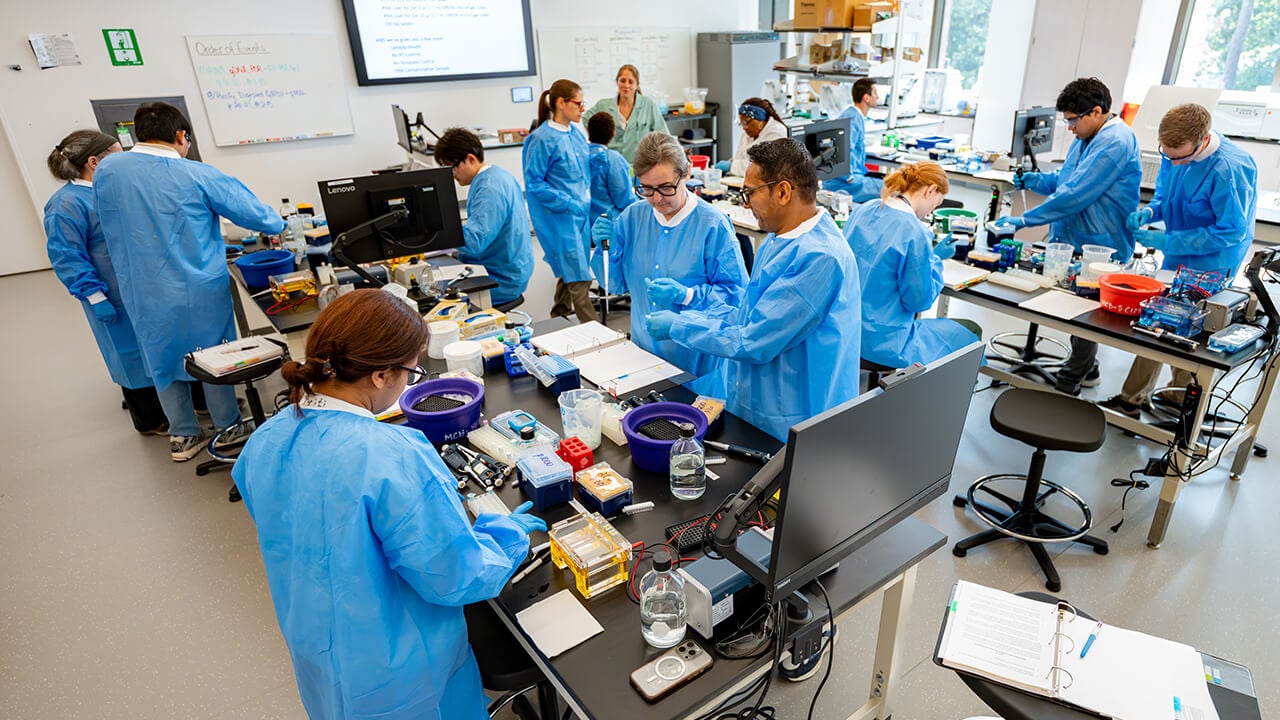
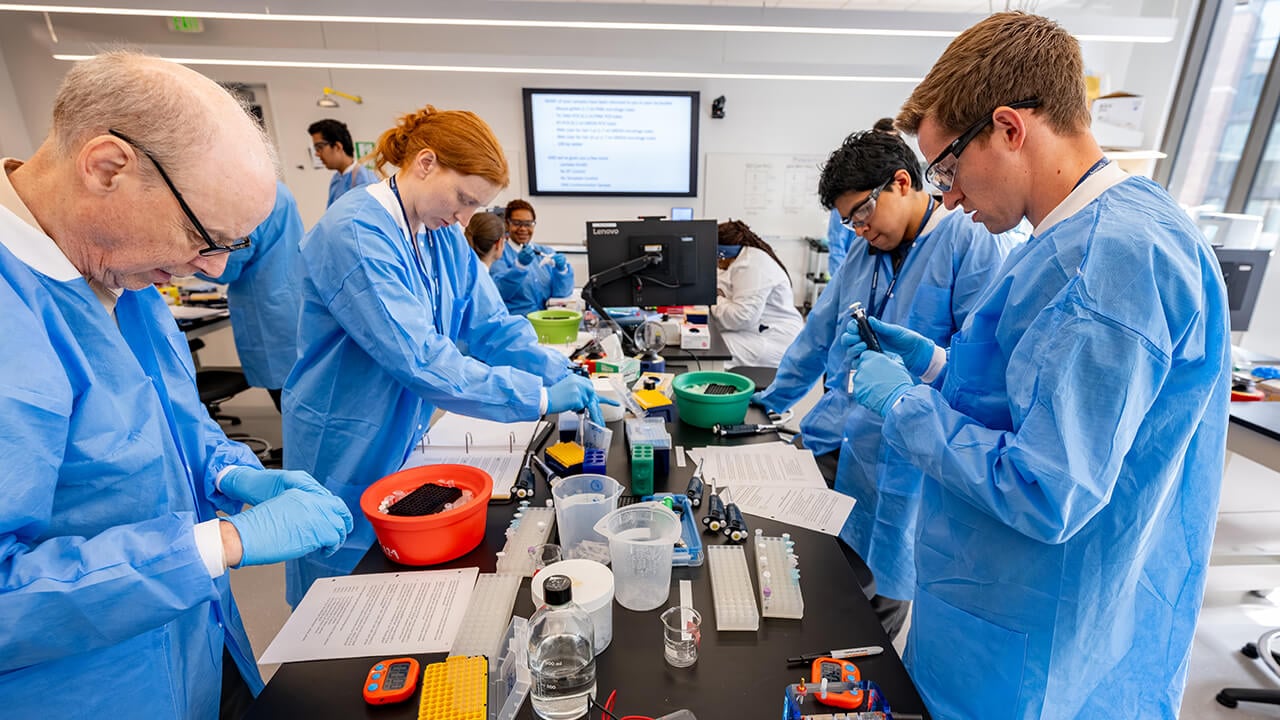
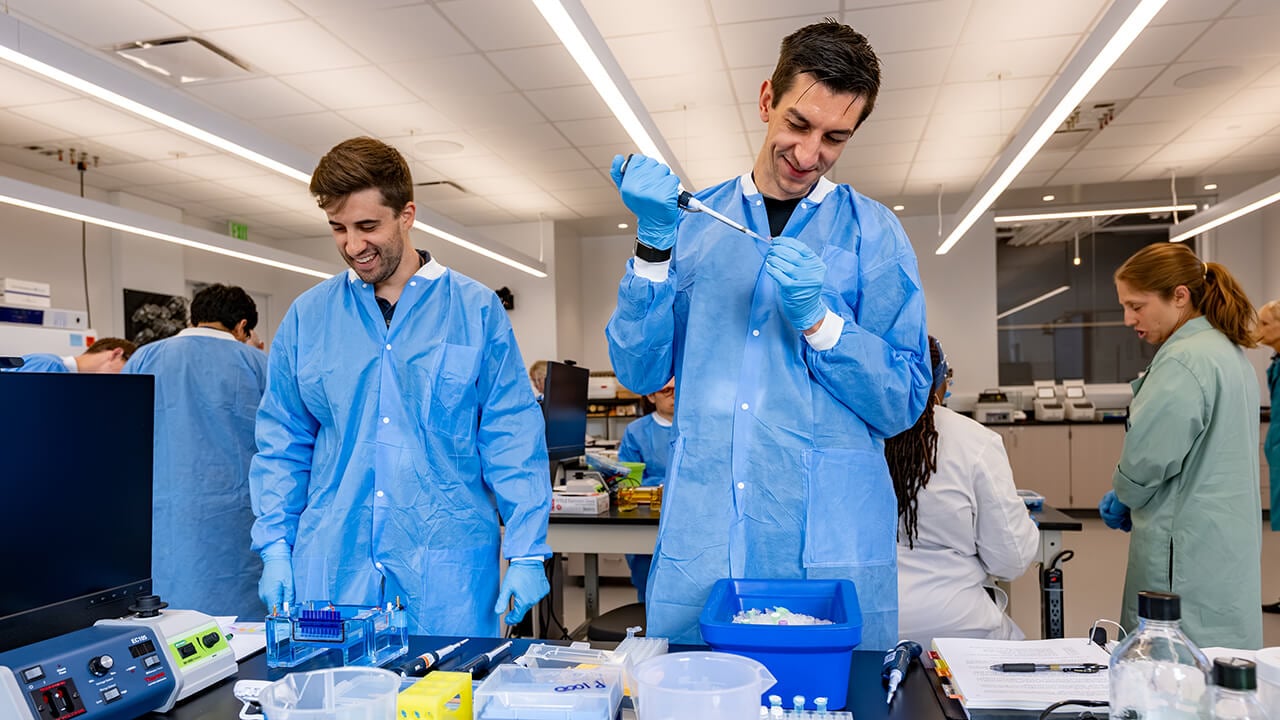
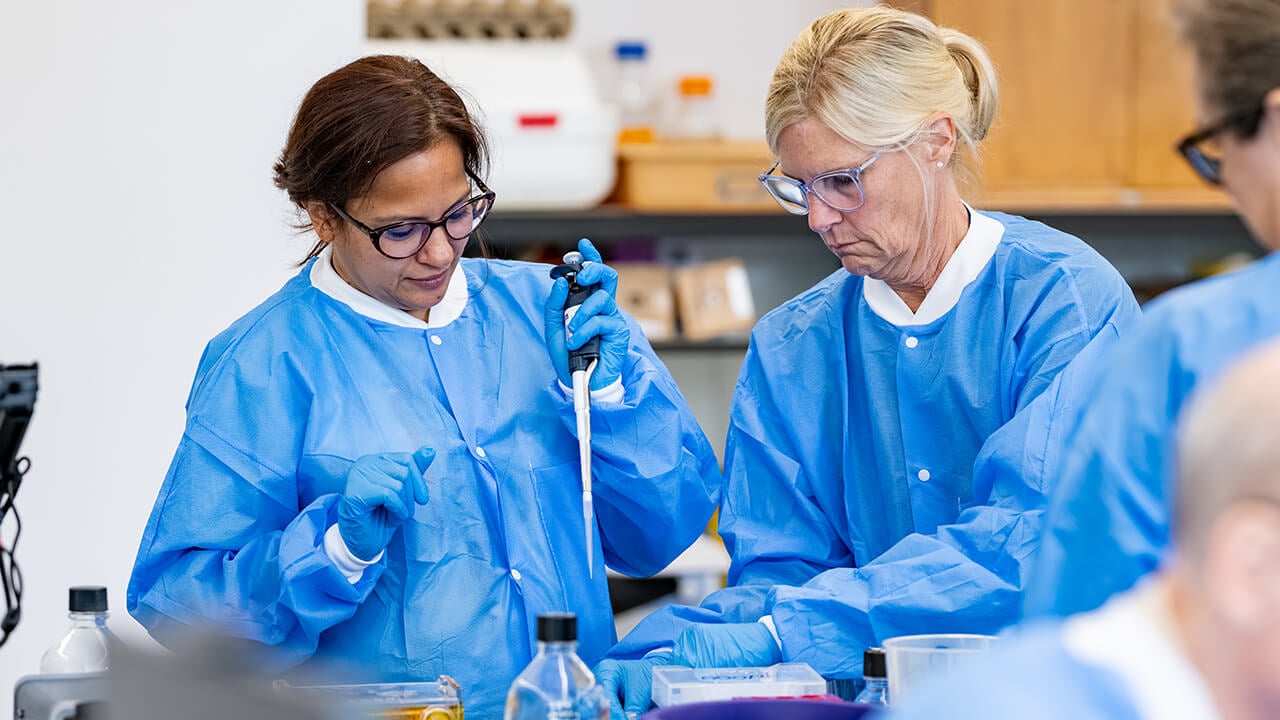
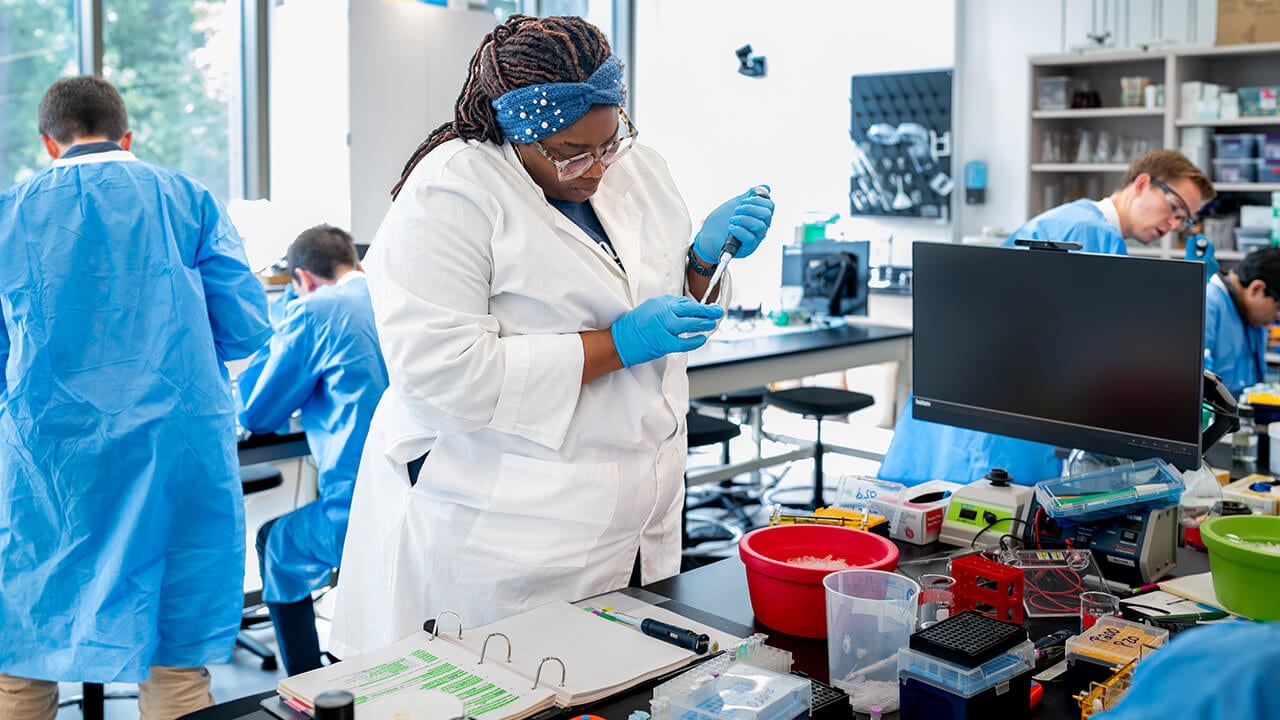
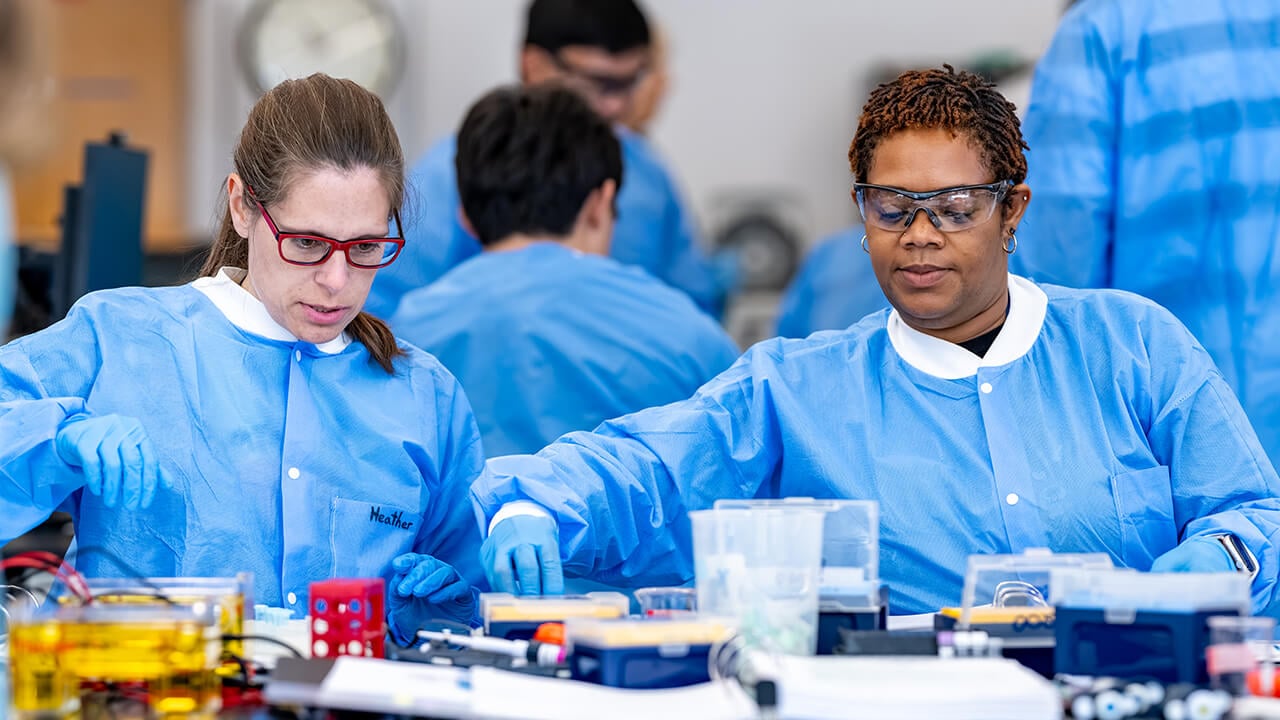
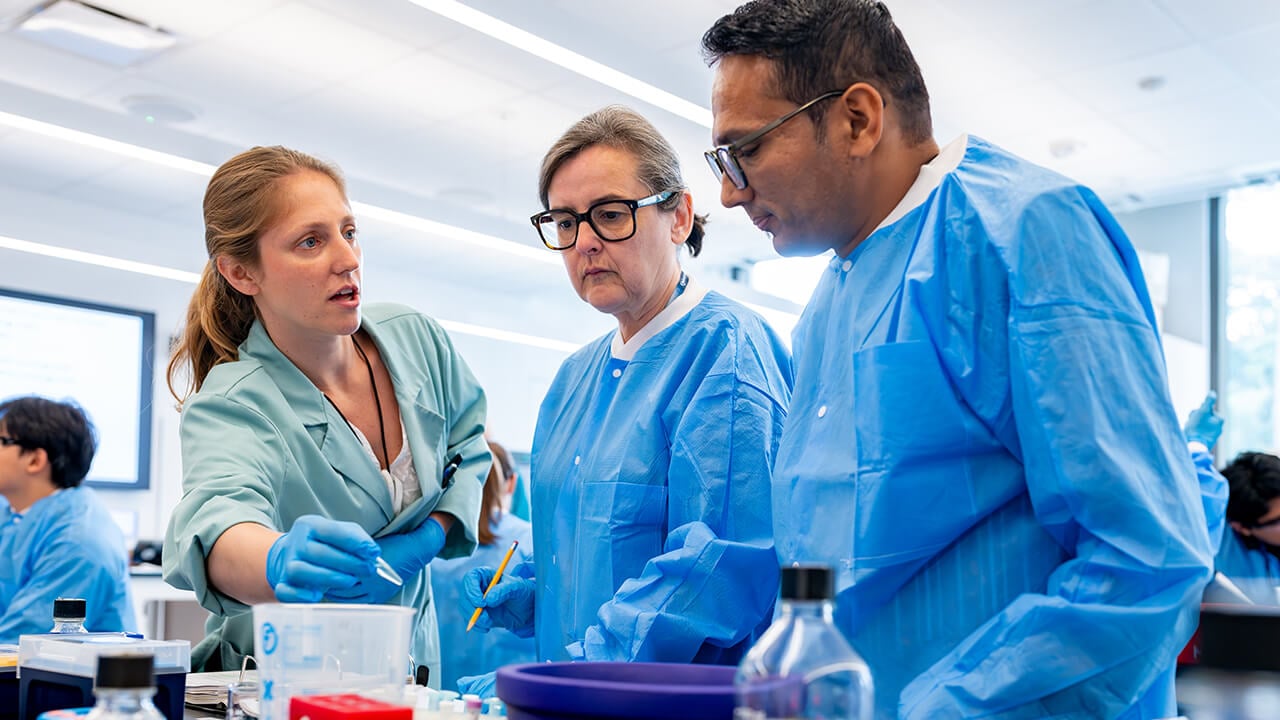
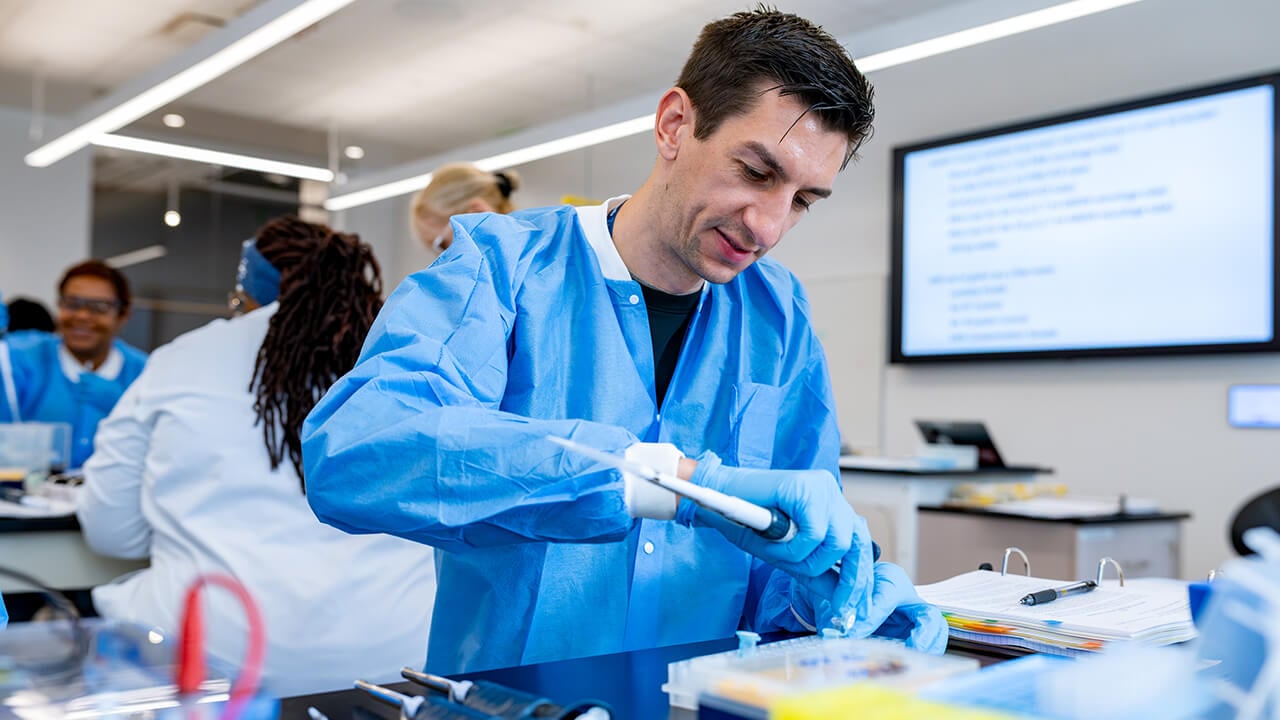
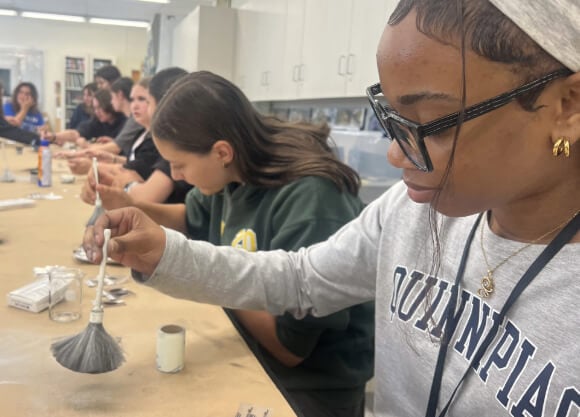
Combining high-level theoretical instruction with rigorous, hands-on application at Quinnipiac’s state-of-the-art facilities, the comprehensive curriculum spanned foundational techniques such as DNA and RNA isolation to advanced methodologies like CRISPR-Cas9 genome editing and next-generation sequencing workflows.
Directed by Assistant Professor of Biology Nils Pilotte, the workshop established a new partnership with New England Biolabs and Quinnipiac’s Office of Lifelong Learning, relocating the company's renowned annual program of over 40 years from another university to Quinnipiac’s Mount Carmel Campus.
“I think it speaks to the fact that Quinnipiac has heavily invested in the resources to enable a course like this,” Pilotte said. “Having the equipment and the facilities available, as well as the infrastructure and the ability to house these established professionals in a variety fields, speaks to how the university is broadly investing in a lot of different areas to make opportunities like this possible.”
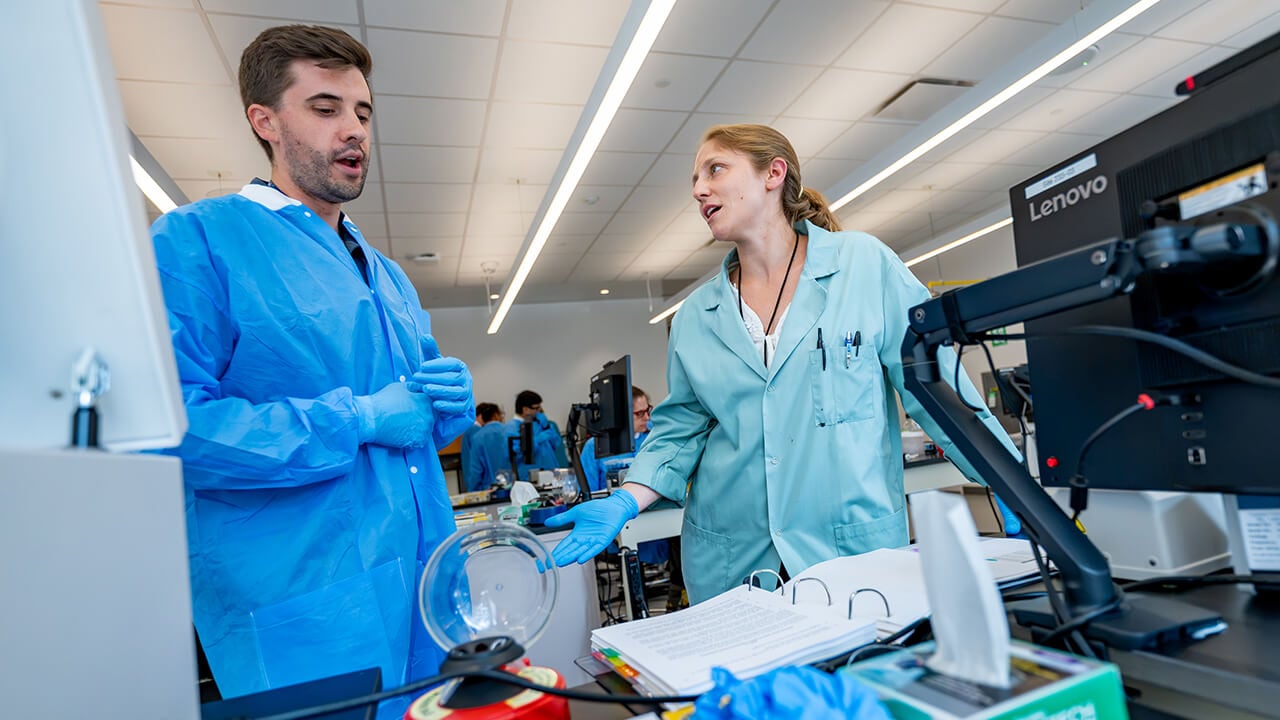
From July 19 through August 1, a cohort of 17 attendees stayed at The Grove, Quinnipiac’s newest residence hall, and participated in hours of immersive daily learning with lectures and labs in Quinnipiac’s advanced SITE building.
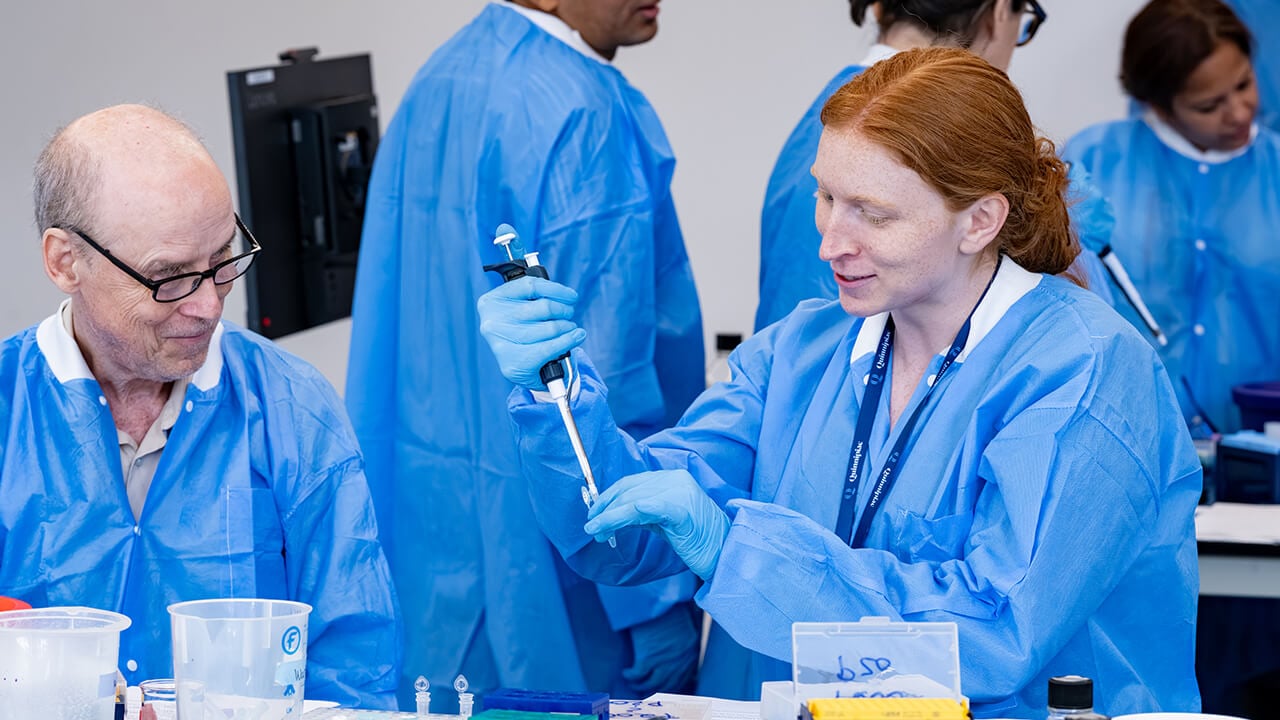
The NEB Molecular Biology Summer Workshop draws participants from professions as varied as medicine, engineering and law together with educators, students and international scholars, fostering a uniquely collaborative learning environment.
“We pitch it as no prior experience required, so the very first day of the course we’re talking about very fundamental things like DNA and RNA, and we build all the way up through CRISPR and next-generation sequencing and some of the more modern advanced technologies,” Pilotte said.
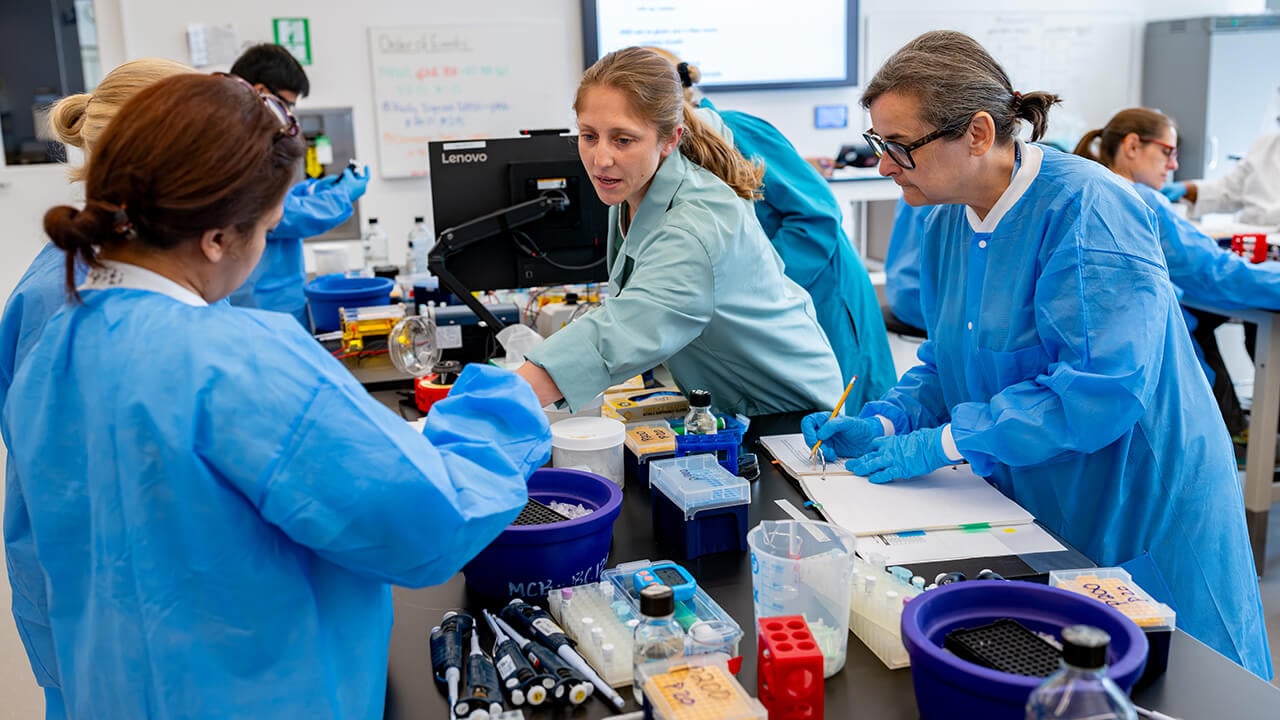
Pilotte’s wife, Allison Pilotte, an adjunct professor of biology at Quinnipiac, brought her previous experience as a NEB laboratory instructor of a decade to her new role as the workshop’s laboratory director this summer.
“This course tries to incorporate the newest molecular biology technologies that are available. For a lot of participants, they haven’t had the opportunity to be exposed to those technologies. This is a very intensive, crash course to basically be exposed to all those new technologies that they can take back to their own labs and use for their research,” Allison Pilotte said.
In addition to fielding applications from all over the country and the world to develop each annual cohort, New England Biolabs sponsors several participants who are international scientists from developing countries and high school teachers.
Workshop attendee Albert Caraan conducts research on plant breeding at a university in his native country, the Philippines. He said the workshop is showing him how microbiology techniques are transferable to different types of research areas.
“I didn’t really have any formal training in molecular biology, but during my research I have always encountered doing it,” Caraan said. “So I know the techniques, but I did not know most of the principles behind it. It’s really a good opportunity to participate in this workshop to gain both this formal training and at the same time theoretical foundation.”
For Caraan, collaborating with participants from a variety of professional backgrounds proved to be one of the workshop’s biggest highlights. He also had high praise for Quinnipiac’s supportive faculty and exceptional facilities.
“I hadn’t heard about Quinnipiac before this program, and now that I’m here, it’s a really great university. The facilities are brand new. I feel like if I was a student here, it would be a really conducive environment for me to study,” Caraan said.
Attendee Mary Cartenuto teaches honors biology and scientific research to high school students in Alpharetta, Georgia. She also advises the school’s International Genetically Engineered Machine (iGEM) team, which is currently working on a new diagnostic for malaria.
“The iGEM kids are just head and shoulders above anything I know to do. We’ve got great mentors, but I’d love to be able to be more helpful, so this is helping me to help them,” Cartenuto said.
Beyond supporting her competition team, Cartenuto plans to bring these advanced techniques back to her high school scientific research classroom, establishing a practical pipeline so her students can master essential molecular workflows.
Attendee Gillian Mair of Boston, Massachusetts works at New England Biolabs as a tech support scientist. Her work is currently helping to support NEB next-generation sequencing products.
“I’m very proud that we have a workshop like this. It attracts people from all different fields and with varied interests in molecular biology, but everyone shares the same passion and desire to learn,” said Mair.
By pairing industry-leading science with deep faculty expertise, Quinnipiac’s partnership with New England Biolabs is delivering transformative learning opportunities for attendees.
“It’s been exciting for us to have the opportunity to do this,” Nils Pilotte said. “We’re looking forward to growing it, learning from this year and hopefully expanding it even more next year.”
In Focus
In this Article
Read This Next

Stay in the Loop
Quinnipiac Today is your source for what's happening throughout #BobcatNation. Sign up for our weekly email newsletter to be among the first to know about news, events and members of our Bobcat family who are making a positive difference in our world.
Sign Up Now