


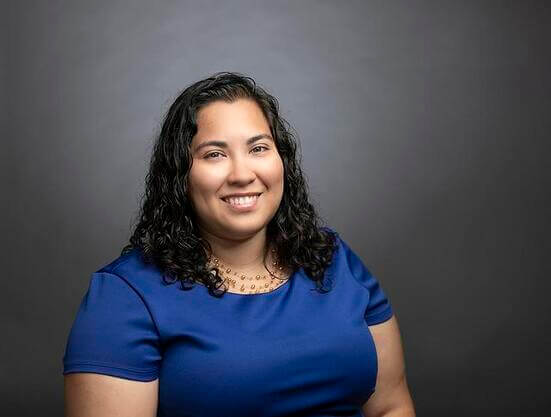
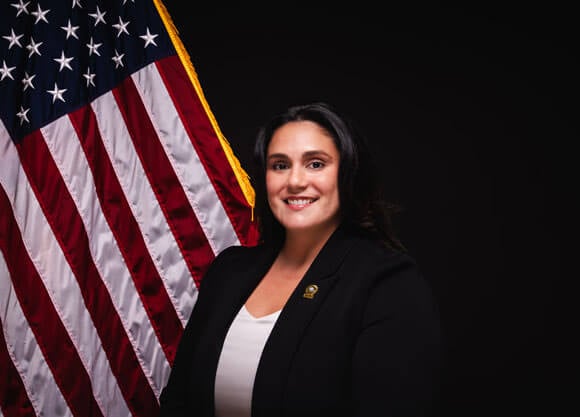
‘Who Are You?’ podcast with guest Adrihanna Collins ’27, ’28
From journalism to a world of opportunities
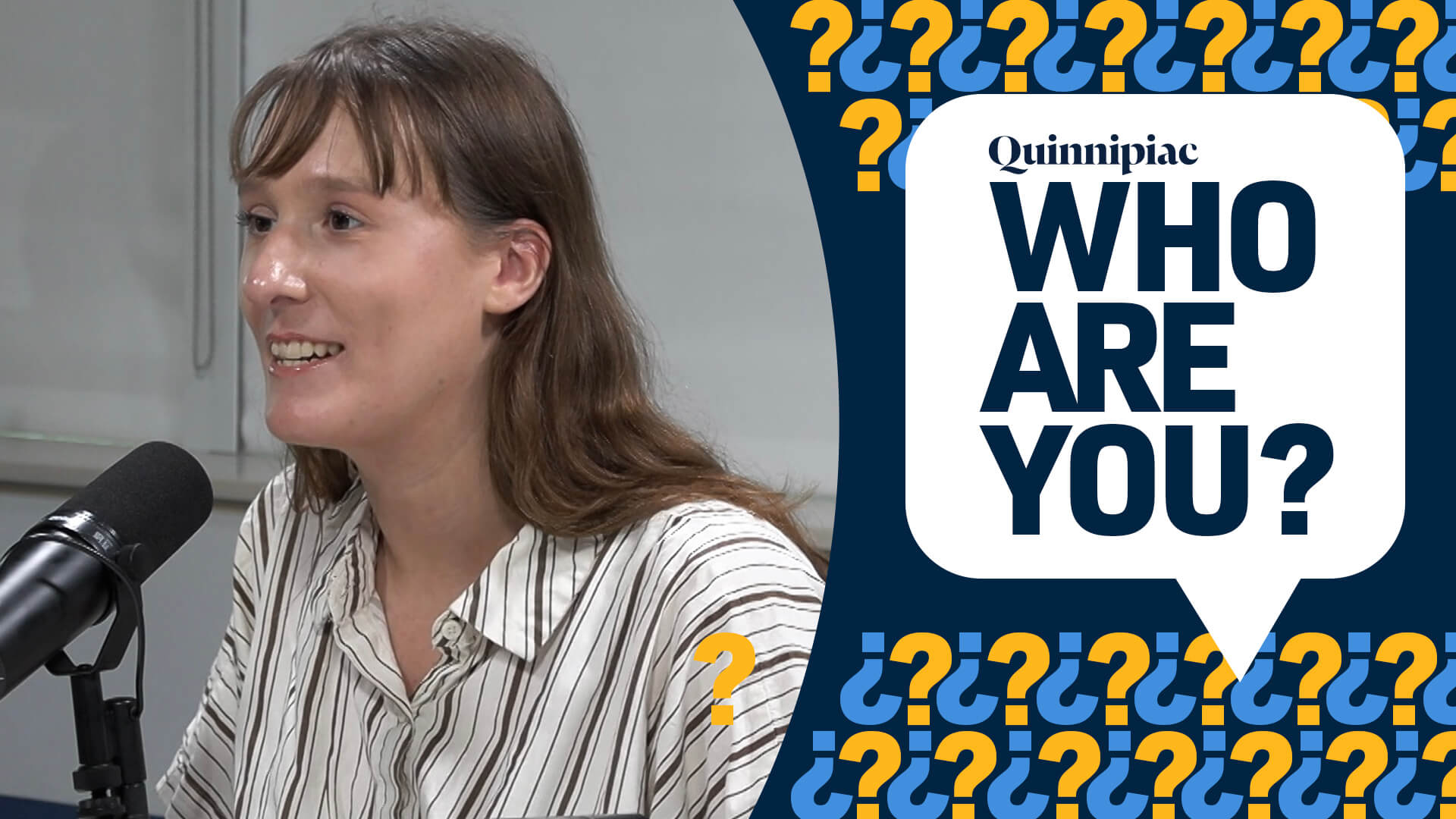
From journalism to a world of opportunities
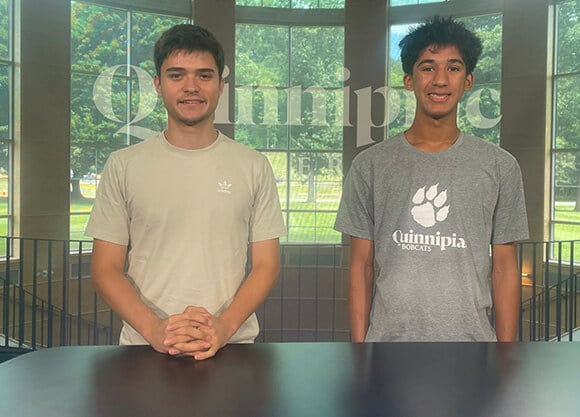
Joel Vanner: Hello, and welcome to ”Who Are You?,” the bobcats you know, the stories you don't. I'm your host Joel Vanner inside the Podcast Studio at Quinnipiac University School of Communications. And I'm joined today by my guest, Adrihanna Collins, Adrihanna, welcome to the show.
Adrihanna Collins: Hello. It's lovely to be here.
Joel Vanner: It's lovely to have you on the show. I'm excited to get to know you and your story so far here at Quinnipiac.
Adrihanna Collins: I'm excited.
Joel Vanner: So, Adriana, I ask my guests the same first question, and that question is, who are you?
Adrihanna Collins: So, hello. My name is Adrihanna Collins, and I am a Journalism and History three-plus-one student at Quinnipiac currently in my third year. I'm from a very tiny town near Syracuse called Weedsport. And yeah, I love Quinnipiac, and I love journalism, and I love history, and I'm really excited to talk about it today.
Joel Vanner: And we'll get into what three plus one means a little bit later in the show, but I do want to start first with Weedsport, New York. Close to Syracuse. Very small town. Tell me about Adrihanna growing up. What were you interested in? What did you do?
Adrihanna Collins: Yeah. So, growing up, I'm from Weedsport, New York, which is a town of about 1,788 people. >>Pretty small town.
Joel Vanner: Pretty tiny. Smaller than the number of undergraduates we have here at Quinnipiac.
Adrihanna Collins: Um, yeah, definitely going to Quinnipiac was a big change from that. I graduated at a class of 59, so I was used to kind of a very tiny town, everyone kind of knowing you. And I grew up also without air conditioning, so we always went to library as a kid, which kind of started me on really just enjoying reading, which I guess was my first introduction into journalism and academia, in a sense.
Joel Vanner: Did you have a favorite book or section that you would go to every time you went to the library, kind of what did you do that brought you into that journalism interest?
Adrihanna Collins: Yeah, so as, I guess, a history major, I've always enjoyed historical fiction, especially as a kid. I loved the American Girl series, specifically Kit Kittredge who was a child journalist in Cincinnati during the 1930s. And she covered homelessness in her area, which I thought was absolutely fascinating. And when I read her story for the first time, I was like, “Wow, this is what I want to be. I want to be a journalist someday,” 'cause I was always very, very curious. I asked a lot of questions, which isn't necessarily everyone's favorite thing. But I was like, “She gets to ask a bunch of questions, and it doesn't matter because that's her job.” I was like, that's what I want to do someday. And here I am.
Joel Vanner: So taking inspiration from that book probably through high school, maybe involved in some journalism, history related activities. When it came time to looking for a college, you mentioned how much bigger than your town and graduating class Quinnipiac is. What were you looking for in a college and kind of what drew you to consider Quinnipiac?
Adrihanna Collins: I was hoping to get out of my area of New York. Obviously, I'm close to Syracuse, but I didn't really want to go to Syracuse. I wanted to get out, but I also wanted to make sure that whatever school I was going to was a very good journalism school.
Joel Vanner: And you had some pretty tough criteria when you were looking at schools, I hear?
Adrihanna Collins: Yes, I Googled Whenever I got an email from a school, I would Google them to see if they had a journalism program, and then I would see if they were in the top 50 journalism programs. Quinnipiac, I think, was 32 on some list, and I was like, “Okay, I'll tour. Why not?” And so when my mom and I first toured, we kept calling it “Quinn Pac” because we had honestly no idea what it was. And then we got here, and we were like, Wow, this is amazing. I just thought the facilities were so, like, beautiful and up to date compared to maybe some other schools I had seen. And it was like a moment of kind of butterflies. Like, I knew that this was, like, a place I could actually see myself.
Joel Vanner: And for the three plus one program, did you apply right into it when you were interested in coming to Quinnipiac? And then if you did, tell us what that experience was like starting as a freshman kind of in that accelerated format.
Adrihanna Collins: Yeah, so I applied immediately into the three plus one program just because I had heard about it. I went to essentially every single open house and Admitted Students Day I could just to kind of see what was out there and see if this was really my perfect fit. And I started out my freshman year taking 19 credits instead of the traditional 16 credits, so I could graduate early in three years, and then my last year, which would be most people's senior year, will be my graduate year. So I took 19 credits, which is considered for some people a really big course load. Honestly, I never felt it. I would say if you took a lot of college classes in high school or maybe AP, you wouldn't really notice it.
Joel Vanner: It's a little familiar.
Adrihanna Collins: Yeah. And it's one of those things where since you start on 19 credits, you never know how 16 credits feel.
Joel Vanner: Sure. And you have community along the way, too, with other three plus one students, right, that kind of helps you and supports you through this process.
Adrihanna Collins: I would say, especially as a communications major, it's more surprising to see that someone isn't a three plus one rather than if they are a four plus zero.
Joel Vanner: In your journalism studies and your journalism courses, is there a specific course that you've had so far that has interested you or reaffirmed that, like, “Journalism is exactly the place I want to be” thinking about Adrihanna as a kid in the library, reading the book, kind of what has your experience been so far?
Adrihanna Collins: I have loved all of my journalism and professors. I can't say I've had a singular bad one. And I've taken a lot of really impactful courses. I came into Quinnipiac not really knowing what area of journalism I wanted to go into in high school. I was in both my broadcast and my newspaper. And through Quinnipiac, I feel like I understand that I want to be a multimedia journalist, so I want to be able to do both those video aspects as well as those print aspects and taking multiple different classes that have encouraged that, have been really great. So I took a social media for journalism class that was really great and inspiring with Mike Schmidt, as well as a cultural and entertainment journalism class with Professor Margarita Diaz, who was also absolutely incredible. I love that class. I've always enjoyed kind of culture and entertainment. I've done, like, theater both in high school and here. So being able to cover just, like, entertainment journalism has always been, like, a big thing. I grew up, like, reading People magazine, so you do great.
Joel Vanner: You published a project coming from that class, as well, right? Tell us about the project that you had in that class.
Adrihanna Collins: Yeah, so at the end of the year, I was able to we were able to choose a final topic, and we were able to publish it on Medium.com, and I published a story on meme propaganda and how in the Iran War as well as the Ukrainian War, though I was focusing mostly on Iran, how we've been noticing a lot of propaganda is being used kind of in this satirical meme fashion. We saw both in Iran and from the United States, like, official accounts and, like, what that means for the future of warfare and how that kind of stuff is targeted. Especially since a lot of it is using AI. So the new term for it has been “slopaganda.” It's absolutely, like, fascinating how we're trivializing and making it comedic warfare and bombings and such.
Joel Vanner: So it sounds like in your courses, you're able to stay up to date on the latest trends in journalism. You mentioned AI, social media, content creation and use that in relevant to today topics with the article that you published on Medium.com. Things in the School of Communications, communications as a field always changing. How have you felt supported kind of as things in the world are evolving and changing as a student in your studies so far?
Adrihanna Collins: I would say that the first off is that staff and professors here is so adaptable and so tailored to the student experience. I've had so many professors who, like, will sit down with me if I have questions, they'll be like, “Hey, I would love to solve this with you.” You know, as long as you work hard, you're going to get it back here. I've never felt like that professor was against me. Really, the focus is on how you can better yourself and become, like, a communications professional someday.
Joel Vanner: And here to support your development into however you want to be when you graduate Quinnipiac.
Adrihanna Collins: Yes. And I think a big thing that my mom always told me when I went to college is that I couldn’t be a one trick pony, that I had to make sure that I was good as many different things in the world of communications, just because the world of communications is moving so fast, where you kind of have to be a little experienced in everything. So my degree has really allowed me to experience all different types of communications, whether it be video production, I've made press releases, I've done ad slide shows and presented to an actual, like, business before. So I've really appreciated that Quinnipiac has kind of given me that experience.
Joel Vanner: And you've had those experiences here, and then you've also traveled a bit with Quinnipiac, specifically with our Albert Schweitzer Institute. You traveled to Chicago for conference. Tell us what the Albert Schweitzer Institute is and then what the conference was that you went to.
Adrihanna Collins: Yeah, so the Albert Schweitzer Institute is an institute on campus named after Albert Schweitzer, who I believe was a philosopher and very focused on environmentalism. And the Albert Schweitzer Institute provides experiences for students where they can go to many different places. I know they go to the United Nations as well as Oxford, and happily, I was able to go to the Society of Environmental Journalism Conference in Chicago. I've always been fascinated by the environment. I did a lot of environmental clubs in high school.
Joel Vanner: Did you know that was, like, a sector of journalism that had a huge conference or was this something new to you when you heard about it?
Adrihanna Collins: I guess I never really thought about it before. Like, I understood that, environmental topics have been covered, but I never considered that like, “Wow, there are some people whose whole job is to do environmental journalism.” And being able to be surrounded in a room of people who are so fascinated on that one topic, especially since it is something that I am interested in going into was really rewarding and really exciting. And I'm really thankful that I was able to have that opportunity.
Joel Vanner: We also talked before the show about your interest in studying abroad. You went abroad to Switzerland for a week as part of a class. Tell us about that week long experience. It wasn't a whole semester. It was just a week, but tell us what you did over in Switzerland and what you learned.
Adrihanna Collins: Yeah, so I went on a faculty led abroad experience to Switzerland for a history of science class. And that was absolutely amazing. Before the class, we were able to learn a lot about the history of not only Switzerland and their culture, but just the history of science in general and how big of an impact Switzerland has specifically with things like Cern which we were able to tour, as well as glaciers in the Alps, which we were also able to see. It was really amazing to kind be able to get out of the classroom and see the things we were exactly talking about. I've been to Canada, but I've never really been over the sea.
Joel Vanner: Over the sea.
Adrihanna Collins: So it was really cool to be able to go somewhere where I don't think I would ever realistically be able to go before and as cheaply as I was able to.
Joel Vanner: And I’m sure as you were over there, exercising your journalism skills, content creation, taking it all in, with all the skills you've learned in your journalism classes. Here on campus, you've also founded a student organization. There are over 170 plus student run clubs and organizations here on campus, and you've founded one. Tell us about the club that you founded and kind of how you got that process started pretty soon after you came here at Quinnipiac.
Adrihanna Collins: Yeah. I am the founding president of Bridge Quinnipiac, which is an organization focusing on increasing solution point oriented politics through discussions on polarizing topics. We've talked about things like the Iran War, the Epstein files, Venezuela, the intention is rather than debating these topics, you sit and hear other people's opinions, understand the why of where they're coming from, and just truly understand a different side, especially with the rise of social media, we're stuck in these, you know, kind of wormholes or echo chambers of the same opinion over and over again. And I was reached out to by the Bridge USA organization to start a chapter on campus through the Instagram. I was like, “Wow, this sounds like a great opportunity. I would love to.” I found a few of my friends, a few people who I saw were interested in joining and we were able to set up with student orgs. I think we contacted them in August and then by October, we were cemented. So it was only a few month process and they were really helpful and collaborative the whole time.
Joel Vanner: And as you're creating that student organization, you're creating a community there here at Quinnipiac. So that's awesome. Looking back on your time so far, I think, would it be fair to say, maybe you were a little bit nervous your freshman year coming from a small town to Quinnipiac, trying to understand, get your footing in college life? Looking back on Adrihanna as a freshman, how have all these experiences helped you grow so far?
Adrihanna Collins: I was definitely a very nervous freshman. I came in. Nobody else from my school had gone out of state, really. I was the only one. Everyone stayed very local. And so, no one from my school really knew what Quinnipiac was. So when I came, I was like, Wow. I have no connections to back where I was from. I know no one here. Um which was scary, but also kind of freeing because at the same time, you don't have to stay with maybe some of the old things of your past. But the scary kind of got to me first. So first two semesters, though I was involved in clubs, I was kind of scared to take those leadership approaches. It wasn’t until my spring semester when a professor. I can't remember what professor, but they said, “it's important when you get an opportunity. If you're interested, just say yes. Don't worry about it. Just do it, and then worst comes to worst. It's not the greatest experience, and you stop it after this semester.” I was like, I actually really like that, you know, I was so, held back and scared of doing things, especially, necessarily by myself. And just being able to experience, just say yes to things, honestly, has really grown. My freshman year, even though I had so much fun, my sophomore year, I had so much fun and felt so much more fulfilled.
Joel Vanner: There are so many opportunities to get involved, so many ways you can make an impact and learn from others. And if there's something that is not here at Quinnipiac already, just like you did, you can start your own club, organization, interest group, et cetera. Looking back on your experience again and your studies so far in journalism and history, what advice would you give to students who are interested in the three plus one program or really any of the accelerated dual degree programs we have here at Quinnipiac? What advice would you give to them to start preparing for that heavier course load, accelerated environment?
Adrihanna Collins: I would say take advantage of every opportunity you have and just dive into it because the worst comes to worst is that you decide, Hey, I don't want to do the accelerated program anymore and you can go back to the four years. But if you have the option to do it, might as well do it. Honestly, since you start with a bigger course load, you don't really feel the course load. So I would say dive in, try it, and worst comes to worst, you say no, thank you.
Joel Vanner: And now looking ahead to journalism, you've had a couple of different areas that you can kind of exercise your muscles in. Where do you see yourself going in the field of journalism, a specific area, or do you see kind of your career taking off in a different space?
Adrihanna Collins: I hope to go into journalism, specifically multimedia journalism. So being able to write print articles with social media videos kind of to back it up, which I feel very supported by the community here to be able to do and really access those experiences and those tools. I don't know. I'm really excited for my future, exactly where it holds, where I'll be, but I'm excited to be at a company and doing the things that I've dreamed of since second grade.
Joel Vanner: Well, Adrihanna, it was awesome having you on the show today. Thank you so much for joining me and sharing your story.
Adrihanna Collins: Thank you.
Joel Vanner: If you enjoyed today's episode, be sure to subscribe and share and find other episodes on Apple, Spotify, and YouTube. Until next time when I ask my next guest, who are you? I'm Joel Vanner. Bye for now.





Quinnipiac Today is your source for what's happening throughout #BobcatNation. Sign up for our weekly email newsletter to be among the first to know about news, events and members of our Bobcat family who are making a positive difference in our world.
Sign Up Now