


‘Who Are You?’ podcast with guest Frank H. Netter MD School of Medicine Dean Lisa Coplit
Her journey and the impact of Quinnipiac's Netter School of Medicine
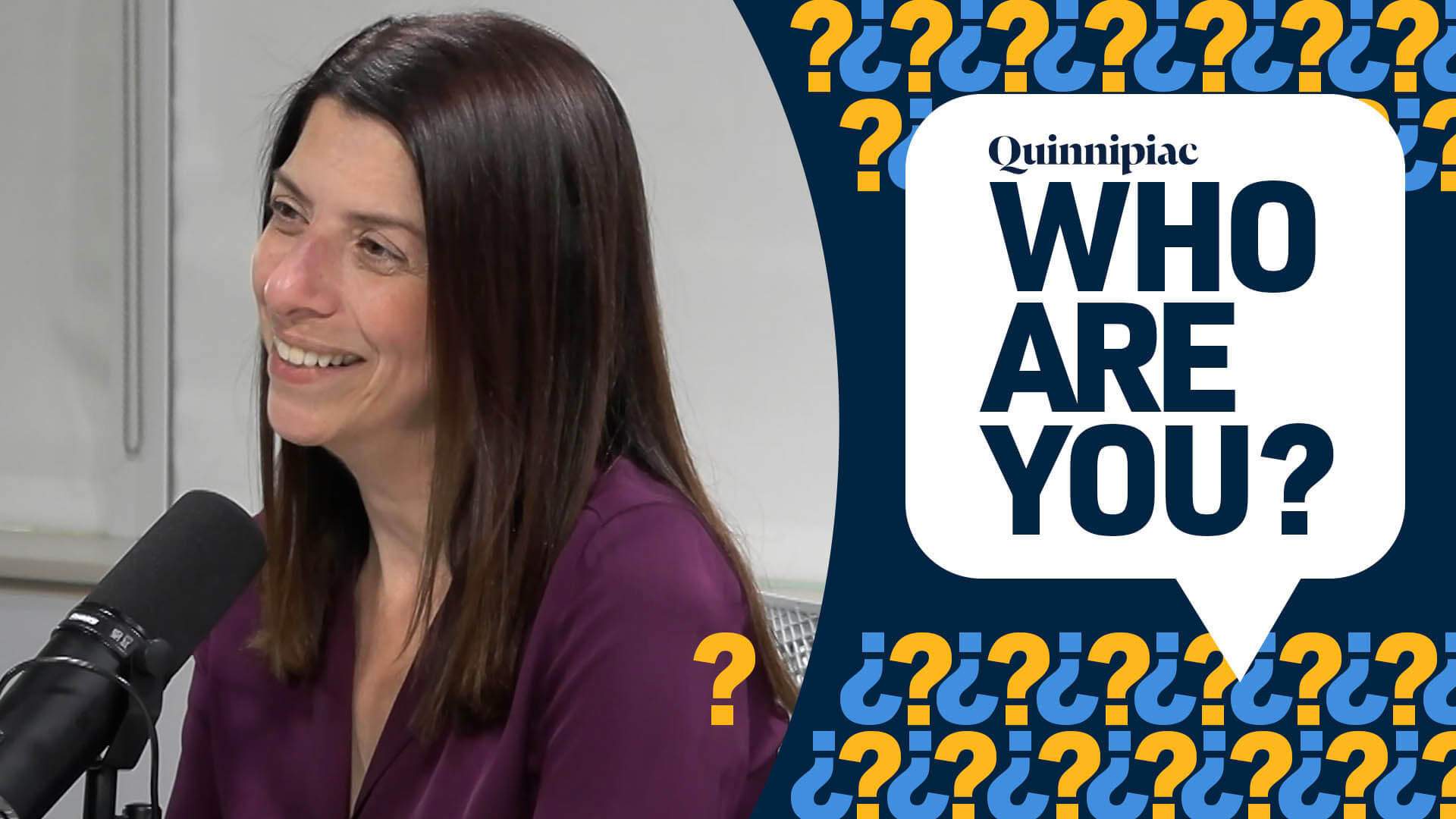
Her journey and the impact of Quinnipiac's Netter School of Medicine
0:00 Who is Dean Lisa Coplit?
3:52 Lisa's experience in college
7:46 Lisa's journey to her medical specialty
16:19 Overview of the Frank H. Netter MD School of Medicine at Quinnipiac University
20:56 What sets graduates of the Netter School of Medicine apart?
24:56 What makes students successful in medical school?
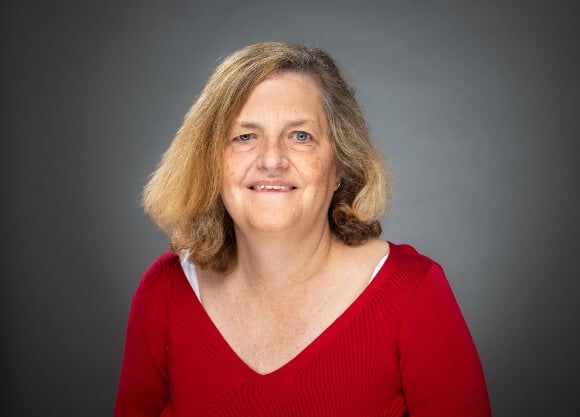
Joel Vanner: Hello, and welcome to ”Who Are You?,” The Bobcats you know, the stories you don't. I'm your host, Joel Vanner, inside the podcast studio at Quinnipiac University School of Communications. And I'm joined today by my guest, Dr. Lisa Coplit, Dean of the Frank H. Netter MD School of Medicine, here at Quinnipiac. Dean Coplit, welcome to the show.
Lisa Coplit: Thank you so much, Joel. Happy to be here.
Joel Vanner: I'm happy you're here. Lisa, as I'll refer to you in the podcast. I asked my guest the same first question, and that question is, who are you?
Lisa Coplit: It's such a big existential question.
Joel Vanner: A vague question.
Lisa Coplit: Well, you already mentioned my profession, right? That I'm the dean of the medical school, which is a position of incredible honor and privilege. I'm also a general internist by training. So a physician by training in primary care. I am a mother of an 18-year-old girl who's about to go off to college and a wife.
Joel Vanner: Big moments going to medical school is she?
Lisa Coplit: Yes. Oh, no, definitely.
Joel Vanner: No, no, no, no. No.
Lisa Coplit: She's poly sci, probably law-bound, yes.
Joel Vanner: Awesome. Awesome. Well, let's talk about Lisa growing up.
Lisa Coplit: Yeah.
Joel Vanner: Take us back in time. Where are we? And what is Lisa growing up interested in? Is it always been medicine?
Lisa Coplit: Um, amazingly, it has always been medicine. And I'm not sure where it really originally came from, but as far back as I can remember, I wanted to be a doctor, and there was, you know, a little meandering along the path. There was this book that I had that I remember very well in elementary school. And every year, you would paste your class photo in it, and then it had these blank lines underneath it and some prompts. And one of the prompts was always, What do you want to be when you grow up? So I found this book several years ago, and I'm looking through it, and every single year it either said doctor or it said, doctor and singer. Those were the two.
Joel Vanner: Never a singing doctor?
Lisa Coplit: Never just singer, which was interesting. I guess, a singing doctor. And my voice really isn't that great, so I don't know where that came from. So that was not a career destiny for me whatsoever. I veered a little bit. At one point, I thought about in high school being a professional violinist.
Joel Vanner: Oh, wow.
Lisa Coplit: Yeah, I started the violin when I wasn't terribly young. I would think I was in fifth grade and loved it. And played the violin throughout high school and really thought about taking that down the professional path. But I also realized that what I really loved was playing in groups and ensembles in the orchestra and that those positions are not easy to get. And while I think I was very good, it didn't feel like a calling. I also wasn't incredible, right? I think you have to be really, really incredibly talented to sort of make that a profession, as well. But I really thought about it. So that was sort of one small meandering moment.
Joel Vanner: An area of passion.
Lisa Coplit: An area of passion.
Joel Vanner: And one could and maybe this is a bad analogy, but maybe the medical field is kind of like an orchestra. Everybody plays their individual parts to come together for an experience, the environment.
Lisa Coplit: I love that. I never thought about that. Never in my life.
Joel Vanner: Maybe it lands with our listeners. Maybe it doesn't. Focusing on the medical field, kind of always having that in your head is where you want to go. Time for college. What did you study? And did you pursue it there? Kind of what was your journey through college like?
Lisa Coplit: I ended up being a double major in college in biology and anthropology. I started out in biology, and yet, I wanted to do the anthropology major. I was just very interested in anthropology and archaeology, in fact, and have to be honest, the first two years of college were very pre-med heavy. And it was shockingly competitive to me. I did not expect to be in such a competitive environment. So I went from I grew up in the Midwest in Ohio, and I came from Ohio to the big city of Boston, which now, I don't think is a big city, having lived in New York. And I just expected that college and pre-med was going to be this incredible collaborative experience where we'd be studying together, and we all had the same goals, and it wasn't that. There were a couple of great friends that I made, I think, who shared that perspective, but it just so happens that it was a really competitive environment. And it made me question whether or not this was the right profession for me. So I ended up finishing off, really front-loading everything and finishing off my biology major fairly quickly. And then I went into the anthropology classes, and they were so vastly different. I loved them all and allowed me to step back and really think about why I was making the decision I was making. And I think I just needed a little bit of space from sort of that competitive atmosphere, and I came back around to it. And I ended up taking a year between college and medical school.
Joel Vanner: Was that common to take a year?
Lisa Coplit: No. It was very uncommon, and I had multiple people telling me not to do it. Now, I'm, you know, the statistic is escaping me, but I think that something like 95% of our students in our class now are what you would call non-traditional. Non-traditional has much too broad of a of a definition at this moment in time because essentially, it means anybody who didn't go straight from college, but it shows you, right, how different things have become. But what I wanted is I wanted to experience the real world. I wanted to try out research a little bit more. I did a little bit of research in college, and I wanted to try it out a little bit more. So I worked as a research assistant in a lab. In Boston. I wasn't for me. That was great to find out. I always tell students of all different levels that it's just as important to realize what you're not meant to do as what you're meant to do, but I really enjoyed the experience. And it also sort of gave me space to really reflect and focus on the application process, which was even then a big process, even bigger now. There are just a lot of benefits, I think, to taking that year and sort of being what felt like a full-fledged adult.
Joel Vanner: It sounds like your path in medicine had some turns, going into undergraduate, a little bit more intense. Probably your community got you through it, taking a year off, doing some research. Path not so linear, which is something we uncover with our students here on the podcast as to how they've discovered where they would like to be. In the medical field, especially, how did you narrow down the area of medicine that you wanted to practice? Was it you knew from the start, or did you kind of sample and discover where you weren't so fond of? What was that process?
Lisa Coplit: Just realized at this moment in time, as you asked me that question, that my journey towards my specialty was very similar to my journey towards medicine in general, and that I had the idea of what I wanted to do, the vision and sight, and then sort of meandered away from it a little bit here and there, but ultimately came back to it. So I went in thinking that I wanted to do primary care and probably internal medicine, but I was very open-minded. I didn't go in thinking, “that's what I'm doing.” And I definitely considered other things along the way. I loved my surgery clerkship. Loved it. And we were able to choose an elective during our surgery clerkship. I think it was the only one where we could do an elective. And I chose ear, nose, and throat, also called otolaryngology.
Joel Vanner: Or ENT? As I know it.
Lisa Coplit: ENT, as you know it. That's right. And just loved it. And it was my very first rotation was surgery. So it was also just very exciting. And so I didn't contemplate surgery, but I very much contemplated ENT after that. Loved my medicine rotation. So that was great. Loved taking care of kids, and so briefly contemplated maybe doing medicine PD. You can do something called MD PDs, where you do a residency in medicine and a residency in PDs, and they're both very slightly condensed. So I contemplated that. And I think those were the only ones on the table in the end that really spoke to me. I don't think there was one rotation that I did that I didn't enjoy enjoy them all, but I kept thinking, what would I want to wake up every day and do? So then at that point, it's a process of elimination. Sure. Really, right? And I was I kept sort of coming back to ENT and thinking, like, what's keeping me from it? I spoke to one of the residents, and she said, you know, what is it that you like about it? And so I told her, I love the in-office procedures. I love when we have patients who come back, right, and we get to see them after the procedure and see how they've done. And we talked about that. I loved the shorter surgeries that we were in the OR for. I did not at all enjoy the neck dissections, which would be 10 hours long sometimes, and she said, It's a surgical specialty. She said, I hear you saying that you like being more in the office doing NT work than you do in the OR. You have to love the OR. And it was such great advice. And I just went home, and I really reflected on that. I thought, Do I love the OR? And I realized I love some of the things we did in the OR, but I don't love the OR. I liked it, but I loved being in the outpatient setting, and I love the continuity part of it. So what is continuity that is primary care?
Joel Vanner: So it sounds like mentorship connection helped guide you towards choosing primary care. We're in Boston. You mentioned New York, which is where you landed next. Yes. Two weeks, interview, searching for an apartment in New York, hitting the pavement running.
Lisa Coplit: Yes.
Joel Vanner: Tell us about your first experience there and what that process was like for you.
Lisa Coplit: I'm happy too. I remember when I was a chief resident, when I was looking for my first job. And I had two weeks’ vacation in the spring. And my now sister-in-law was already living in New York, and we've laughed about this a couple of times since. And she was wonderful. And she let me and my husband stay with her in her studio apartment in New York. And I said, okay, I've got two weeks. We're gonna find an apartment, and I have to find a job in two weeks. And she was there's no way you're doing that.
Joel Vanner: Well, you just made it through med school. You can make it for two weeks in New York City.
Lisa Coplit: I don't know how I did it, but we did both in two weeks. And I looked at several different positions. I think that there was so much mentorship involved in that process before I got there. My residency program director was incredible. He's still one of my mentors; I still consider him one of my mentors now, a lifelong mentor. And at the time, there was an actual book of, you know, all the residency programs in the country. And so we opened it up to New York because I was moving to New York, and that was because of my husband's job. And we went through all the programs, and he started circling the programs that he thought that I would like, knowing who I am and what I was looking to do. And I absolutely wanted to teach and get a clinician educator position. I didn't know what that would look like. I didn't feel very strongly about how it was constructed, but I wanted to teach, and I wanted to be in an academic medical center. And he circled all of them. He's like, You should apply to all of these. So he said, write a cover letter about what you'd like to do and just, you know, send it to them. Put your CV, your cover letter, and send it to every single program. Wasn't looking for a job in a residency program, per se, but that was the entry point that he had recommended. And it worked. The world is different now. It doesn't quite work like that anymore, but that still works sometimes. I think that it's easier to find where there are openings now as well. But there were a few places that had really interesting positions, and I interviewed with all of them. I ended up going to the one that was my first choice: Mount Sinai Hospital in New York and Mount Sinai School of Medicine, that's associated with it. And the position that they had was a clinician educator position, but they also had a hospitalist position that was a non-teaching position. And what was interesting is that I interviewed for the clinician educator position, and they were actually looking for somebody who had done a general internal medicine fellowship at the time, and I hadn't done that. And they said, Oh, you should consider the hospital's position. I said, Why, really really not what I really want to teach. And my residency program director, who was my mentor, said, Go for it. You know, you should consider that hospitalist position because, you know, you'll be at the place to,
Joel Vanner: Get your foot in the door.
Lisa Coplit: Get your foot in the door, and you'll end up doing a little teaching, and they'll see that you love it and that you're good at it, and you'll end up in that position. He's like, but you know what? He's like, I want to call a colleague of mine because maybe there's something we don't know about. So this is what I tell people all the time. You know, it never hurts to ask and have conversations that you think, Well, there's no position open. It never hurts to have that conversation because if it's not now, it might be a year from then or two years from then, right, that there's something that's a really great fit. And it turns out that the dean for medical education at the time, had just received a gift from a grateful patient to start the Institute for Medical Education. And his vision for that was that it would be a faculty development resource for the entire medical school. And he was looking to hire somebody sort of fresh and young and develop them. And so I met with him, he's like, Well, this is actually what I'm looking for. So it was just timing, and they would have posted that position, right? So it was just timing. And I ended up with the clinician educator position. And I ended up doing at least I want to say it was 50% of my time with the institute right out of my chief year, and it was my dream job.
Joel Vanner: Let's focus now on the Netter School of Medicine. You were actually on the founding leadership team of the school. It's one of three medical schools in Connecticut, the newest medical school. How have you seen it grow since its founding?
Lisa Coplit: Obviously, Joel, it's grown a lot, and being a part of that growth journey has been probably the greatest privilege of my career. Netter was started; its founding mission was to serve its communities and serve the needs of the state. And we take that mission very seriously, and we're very proud of who we've become and where we've come. So I think it's important to know that the Netter School of Medicine is a community-based medical school. We're the only community-based school in the state. And so what does that mean? A traditional academic medical center is where you have a major hospital, you have an associated medical school, and they are sometimes part of one organization. And most of the training happens at that primary site. We don't own a clinical entity, and so what that allows us to do is we partner with clinical partners and clinical sites all over the state. We have incredible partners, and it gives our students very, very broad education in all different settings. What have we been able to do in terms of that mission? You know, I'm proud to say that we're the only school in the state who has rural residency programs. We have a rural family medicine residency program. We have a rural psychiatry program. Uh, they're doing incredibly well. We their impacts on their communities have been truly transformational. And that's just one example, right, of how we're caring for those communities. So right now, we're in a physician shortage across the country in the state of Connecticut. That shortage is only growing for a number of reasons. And some people might say, Well, Connecticut's a small state. Do you really need three medical schools? The answer is absolutely you need three medical schools, and even with those three schools, it's going to be challenging to address that physician shortage. So all three of the schools are absolutely critical in meeting those needs of the state, but I think it's important to say that, you know, that's part of who we are, right? So we're actively working on being we already, I should say, are very flexible to sort of the workforce needs. One of our core values is primary care education. So we want a large majority of our students to choose a field related in primary care related to primary care. And right now some of the biggest shortages are primary care and behavioral health. There are some specialties with severe shortages as well. And, you know, I see us as a school that is going to remain flexible to be able to meet those needs, such as in ten years, if it's different, then we can be that resource, as well. So we are here to serve our communities. We're looking at even new and better ways to improve retention of students in our state. Our students have the highest rate of students who the highest percentage who are going into primary care residencies when they graduate; we want to see that continue and grow. And the other way in which we care for our communities that we're very proud of is that we want to make sure that we're caring for all members of our communities, including those who are the most underserved. We have a very strong service orientation at Quinnipiac in general and at the Netter School of Medicine in general. And this year, one of the major initiatives that we have is to expand our Bobcat Community Health Alliance, which really started as a grassroots student-run organization around volunteerism in the community and underserved communities. And so we're now really putting more infrastructure around that and more resources into that to grow very robust free care patient care experiences for citizens across the state.
Joel Vanner: We educate Netter students as global citizens with Connecticut as our community. As the School of Medicine, the Netter School of Medicine has grown, it's developed its identity, and it's developed a community. And it's developed something else unique, and that is reflected in the graduates that graduate from the Netter School of Medicine. What sets Netter graduates apart from other graduates from schools of medicine?
Lisa Coplit: One of the things that I hear from our graduates.
Joel Vanner: Which is the good source.
Lisa Coplit: The best source, right, that comes about what sets them apart. It comes from their own experience. They are told that they are set apart in a couple of ways. One is that I think their clinical skills in general are really, really outstanding. We, you know, score well above the national mean in terms of what residency program directors think about the preparedness of our graduates when they hit residency. We're really proud of that. Our students also rate our clinical skills training at the 99th percentile nationally. So we're really proud of that piece, and they feel that they feel set apart. They say, they don't care what situation they go in. And other people that they're with who have come from schools all over the country. And they say, “Wow. I have really great clinical skills.” They feel very confident that. I love hearing that and seeing that, and we have great data. It's not thoughts and ideas.
Joel Vanner: Actual feedback experience that you're hearing.
Lisa Coplit: And they're doing it just extraordinarily. The other thing that they say sets them apart that doesn't surprise me, but I'm so happy that they recognize the value of it, is that because they learned in a community-based setting, they had to learn in huge diversity of clinical experiences in clinical settings. And so when you're going through that, that can feel uncomfortable, right? If you're in the same building in the same hospital and that's where you're doing most of your rotations, you're sort of used to that. Routine becomes a routine. It does. And you feel comfortable in that setting. So they have to go through discomfort, a little discomfort with sort of each change in setting. And in the end, they all say that it was one of the most valuable parts of their medical school learning because they then are able to leave and walk into any type of setting, and they're like, I've got this. I know what I'm doing, and I feel comfortable on this space and just focus in on taking great care of patients. So I think that's a really important part of what sets them apart. And I think the other piece of what sets them apart is because they have this experience where they have to choose a concentration and do a scholarly project. And so they have this area of distinction; it sort of allows them to grow professionally. In another area within, or it could end up being outside of, medicine. But it's something that truly sets them apart. I think that's also, just practically speaking, important, because when you're applying for residency, you know, programs are getting tens of thousands of applications sometimes for a handful of spots. And how do you come off the page? And I think one of the ways you come off the page is having something that really distinguishes you. And it just so happens that every single one of our students has something that distinguishes them, and they literally have an area of distinction.
Joel Vanner: And it is so ingrained in the Netter experience. It is extra, and it is unique, but it is so ingrained in the student experience here in Netter.
Lisa Coplit: Yeah. So I think our students- I know that our students are different and are unique in just the best way so proud of all of them.
Joel Vanner: Speaking of students and the traits that students have, what do you think makes a student successful in medical school? We talked in the beginning how a large percentage of medical students are non-traditional learners, which is a very vague term. But what do you think makes students successful in medical school?
Lisa Coplit: There is no mold, right? So I have to start by saying that I really mean that authentically. There are so many different types of students who are incredibly successful, and boy, the differences among them are actually quite a beautiful thing.
Joel Vanner: Which might be good for someone to hear because they may not think that they are a medical history, or it could be a medical. So hearing that is really important.
Lisa Coplit: Yes. And I very much want people to hear that. We have students who come in who have actually been more focused in the humanities before they get to medical school. We have students who were neuroscientists before they came to medical school. I mean, just a vastly different place that they're coming in from and vastly different study methods, concepts around learning, all of those things. And I think the truth is the reality of it is, is that if you've made it to medical school, most likely, you have figured out on your own enough skills that you need to be successful. You'll probably figure it all out. If there are things that we can do along the way to just let's make it easier. Let's help them get there faster. Let's help them thrive sooner so that they can spend less time struggling and more time finding their passion. I think, you know, that's really the goal. So you know, where do you see people who have, I think, an easier time of it? I think that, you know, resilience is key, and I think one of the important things to recognize about resilience and about the growth mindset, which are two separate constructs, is that they can be they can be learned, and they can be built. Some people are more naturally resilient, and some people naturally have a growth mindset, but that doesn't mean that you can't develop those. So I think that's important, and we work on that. So I think that resilience piece, I think being a flexible thinker, I think is very helpful because you're going into all different types of scenarios that are new, all different kinds: clinical, non-clinical; you're going to work with other students and faculty and staff and other health professions learners and professionals, and all different kinds of patients, right? So being somebody who I think one appreciates is how much you learn from different perspectives. I think that is a success maker. And I think somebody who can be flexible and thinking about, I'm going to need to maybe learn different skills or approach something differently in this outpatient rotation in a community health center than in my inpatient rotation in a busy urban hospital. So different. They're so different. I think just sort of being open to, you know, realizing that, you know, it's going to be it's going to feel uncomfortable, but embracing those embrace it and try to actually learn how to function in that setting because that's going to help you down the road when you have new experiences. So I think those are very important pieces. I think that figuring out, in fact, and taking time to think about how you learn best and maybe experimenting with some different ways of studying, experimenting with studying alone, studying with colleagues, studying in different settings, and different techniques. I think all of that is important because if you can figure that out sort of early on, that also sets you up for success, 'cause there is a lot of there's a lot of studying and learning to be had, too.
Joel Vanner: Well, Lisa, thank you so much for joining me on the show today. It was great to have you on as a guest.
Lisa Coplit: Thank you so much. It was a lot of fun.
Joel Vanner: If you enjoy today's episode, be sure to subscribe and share and find other episodes on Apple, Spotify, and YouTube. Until next time, when I ask my next guest, who are you? I'm Joel Vanner. Bye for now.




Quinnipiac Today is your source for what's happening throughout #BobcatNation. Sign up for our weekly email newsletter to be among the first to know about news, events and members of our Bobcat family who are making a positive difference in our world.
Sign Up Now