



Students dig into forensic science at Quinnipiac's summer program
July 14, 2026
July 14, 2026
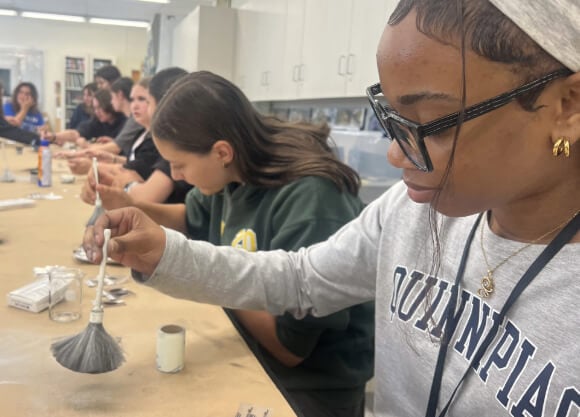
By the end of the two-week program Friday, Forbes and her fellow campers will have worked together to solve a mock homicide through hands-on forensic science exercises
"I started getting interested in forensics after watching ‘The Flash,’" Forbes said. "Barry Allen, who becomes The Flash, worked in forensics, and I thought it was really interesting seeing him investigate crime scenes."
Her curiosity led her mother to enroll her in Quinnipiac's immersive summer program, where she is discovering that real forensic science is much different from what viewers see on television.
"The shows don't really show the boring parts because everything happens so fast," Forbes said. "Here it takes more time, but even the parts people might think are boring are fun to me. I'm getting a deeper understanding of what forensics really is."
Forbes said one of her favorite parts of the program so far has been excavating simulated skeletons.
"Digging up the skeletons was really fun," Forbes said. "From what I've seen so far, I still want to pursue forensic science."
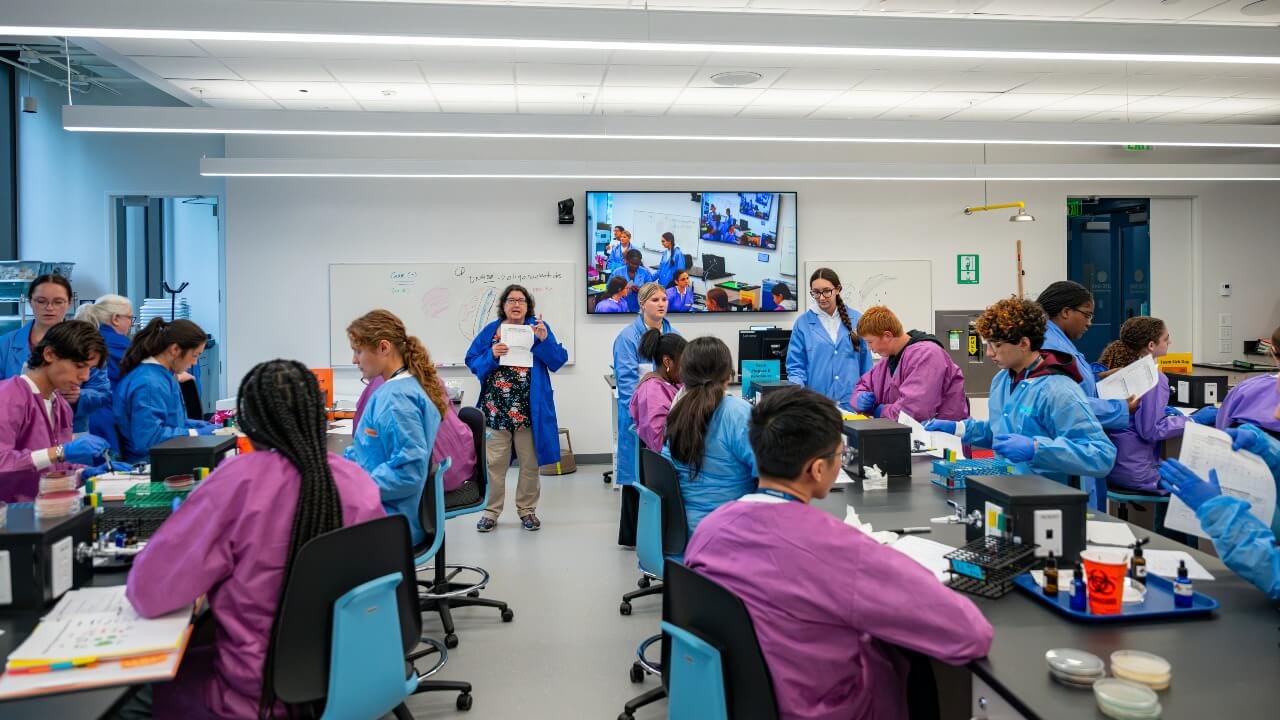
The immersive program gives students the opportunity to experience the science behind crime scene investigation through activities that mirror techniques used by forensic professionals. Rather than learning solely through lectures, participants spend the program collecting evidence, documenting scenes and applying scientific methods to build a case.
The program has brought together 24 students from across the country, including participants from California, Washington, Florida, Georgia, New York, Massachusetts and Connecticut.
Jaime Ullinger, professor of anthropology, runs the camp along with Julia Giblin, professor and director of anthropology, and Lisa Kaplan, professor of biology.
"It is exciting to bring together students from so many different places who all share an interest in forensic science," Ullinger said.
Throughout the program, students are analyzing hair and fabric samples, excavating simulated clandestine graves, recovering skeletal remains and examining evidence from a mock crime scene that includes a body wrapped in a towel, a knife, a cellphone and other clues.
"We dug two bodies, so students excavate mock clandestine graves near the Hilltop parking lot," Ullinger said. "They collect all of the evidence and are now examining it as they work through the investigation."
Students are also learning about fingerprint analysis, forensic anthropology, forensic entomology and evidence recovery while gaining an understanding of the scientific methods used during criminal investigations.
The program features presentations and demonstrations from professionals working across the forensic sciences, giving students an opportunity to learn directly from experts in the field.
Guest speakers include Brian Harte, a crime scene photographer with the FBI in New Haven; Mark Davison, a former Connecticut State Police trooper and Quinnipiac adjunct professor who specializes in bloodstain pattern analysis; Kevin Parisi, a latent print examiner with the Connecticut State Police Forensic Laboratory and Quinnipiac adjunct professor; and Elaina Marcotte, a forensic biologist with the Connecticut State Forensic Science Laboratory.
Marcotte introduces students to wildlife forensics, an emerging field that examines crimes involving animal trafficking, animal abuse and food fraud.
"Wildlife forensics can include everything from exotic animal smuggling to cases involving animal abuse or food fraud," Ullinger said. "It's another example of how broad the field of forensic science really is."
Throughout the program, students are exploring potential careers in forensic science while connecting classroom concepts with real-world applications. The hands-on format allows participants to work collaboratively, apply scientific techniques and gain a better understanding of the many disciplines involved in criminal investigations.
In addition to the technical skills they are developing, students are forming connections with peers who share similar interests and gaining exposure to faculty members and professionals working in the field. The program emphasizes collaboration, critical thinking and problem-solving while giving participants a glimpse into careers in forensic science, forensic anthropology, forensic psychology and related disciplines.
Building on the success of its inaugural year, the program continues to provide students with an engaging introduction to forensic science and the opportunity to explore the field through immersive, hands-on experiences.







Quinnipiac Today is your source for what's happening throughout #BobcatNation. Sign up for our weekly email newsletter to be among the first to know about news, events and members of our Bobcat family who are making a positive difference in our world.
Sign Up Now