



Faculty members share guidance on educating younger generations about 9/11
September 05, 2026
September 05, 2026
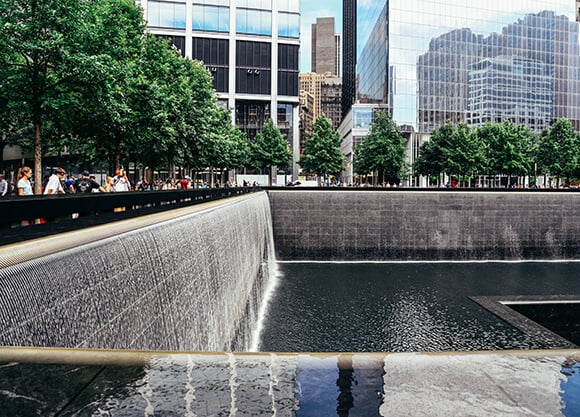
Most people who were alive on September 11, 2001 can recall exactly where they were the moment they found out about the terrorist attacks.
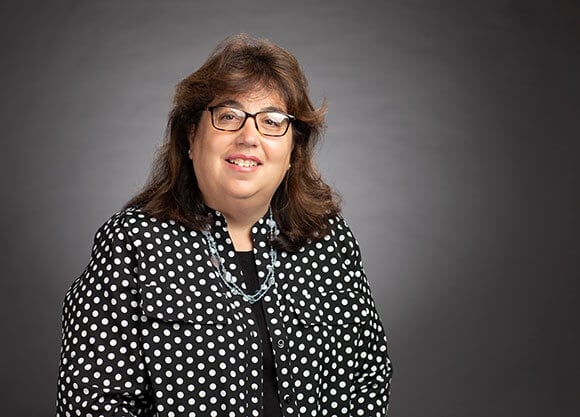
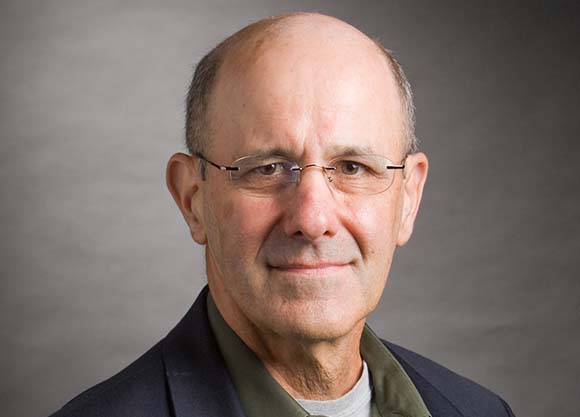
Chris Voth, coordinator of academic integrity and part-time history professor, recalled being in Texas at the time.
“I was dropping my son off at preschool when I heard the news of the first plane hitting the North Tower on my drive home,” she said. “There was a lot of confusion at first about what exactly happened — whether it was a small plane or large — whether it was an accident or on purpose. I called my mother to talk about it, and we turned on our respective televisions just as the second plane hit the south tower. We knew it wasn’t an accident then.”
Voth recalled that in the years before 9/11, most Americans only saw acts of terrorism happening in other places on television. It had seemed like a distant issue.
“I don’t think many of us, perhaps outside of the intelligence community, ever imagined someone flying a hijacked plane into buildings,” Voth said. “I think the real shift in our national outlook was the feeling that no one was really safe.”
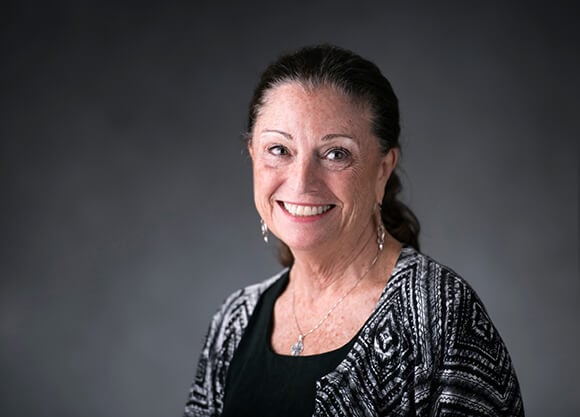
Jennifer Dauphinais, associate teaching professor of education and coordinator of the social emotional learning and school climate program, had driven from her home in Colorado to visit her family in Connecticut.
“The morning of 9/11, I remember it being a very sunny, blue-sky kind of day,” they said. “I was meditating on my parents’ floor when the phone rang. My mom was whispering on the other end, ‘We are under attack.’ She said the whole nation was under attack, and planes had crashed in New York City.”
The events from that day shocked Dauphinais, and the heightened emotions could be felt long after the tragedy.
“I immediately panicked,” they said. “I kept thinking this was such as overwhelming unreality in contrast to the blue sky outside. As the next few days unfolded, everything felt so vulnerable. We were all so wounded and stunned. So many friends and family members were coming back from the city sharing what they saw while others were shuttling in to provide support. Since so many Connecticut residents commuted to New York City, people here were searching for lost loved ones, and our news channels were inundated with missing-person reports and survivor stories.”
Voth also experienced a mix of emotions, but shock and surprised stood out among them.
“I had the radio or the television on the entire day,” she said. “I was in my room folding laundry at the moment the newscasters realized that people were jumping from the building. I get chills remembering that moment, and I can hear it in my mind.”
Now as a history professor at Quinnipiac, Voth continues to talk about the implications of the attack with her students, especially as many of them learned all they know of the event from the stories of their family and peers.
“I have taught my history students about the concept of cultural trauma and how some events can impact present and future members of a society long after the people who directly experienced them are gone,” she said. “Examples of cultural trauma that students immediately recognize include the Atlantic slave trade, the Holocaust, civil wars and other episodes of mass violence and upheaval. Research into intergenerational trauma has even raised questions about whether the effects of traumatic experiences can be reflected in epigenetic changes across generations.”
Dauphinais also tries to help her students understand trauma, while being careful to respect their wellbeing and personal connections to the event.
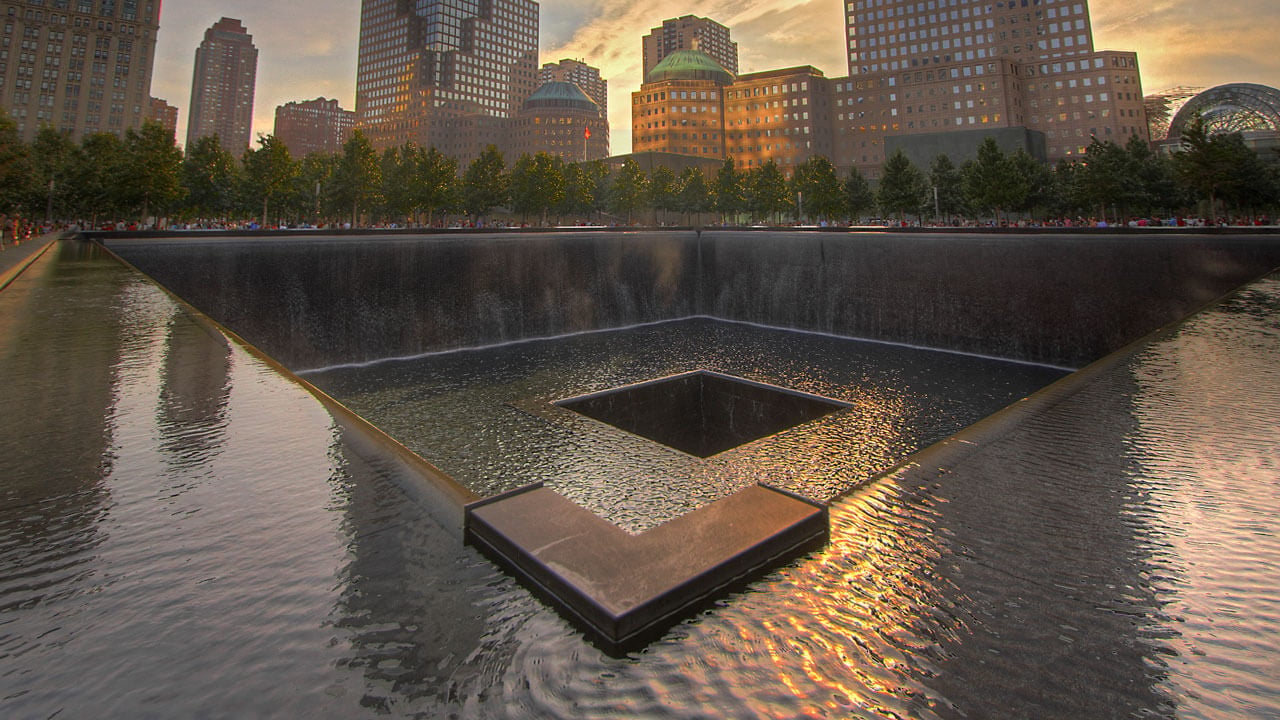
“I don’t think you can teach trauma in terms of the physical and psychological ways it confronts you without embodying it,” they said. “And I don’t think we should have to transfer that trauma to make it valid or meaningful to students. However, I spent some time with my friend during her post-doctoral research at the 9/11 Museum, and I can say that immersive and visceral experience of being there provides a mixture of beauty and grief that is beyond anything that can be conveyed in a classroom.”
Dauphinais mostly uses 9/11 as a case study in the classroom to help students grasp concepts of intergenerational trauma and “looking for the helpers.” She specifically tries to teach 9/11 in a way that makes it relevant to her students, rather than presenting it as a historical event they don’t have personal connections to.
“In terms of social-emotional learning for students, particularly younger K-12 students, I use Mr. Rogers’ idea of ‘look for the helpers,’ which had a huge resurgence in social-emotional learning curricula during the 9/11 era,” they said. “I show my students excerpts of the 9/11 lesson series and have them analyze how finding the good deeds amidst crisis can help our students process frightening events and build resiliency.”
Dauphinais also uses the event to teach students about the intersecting cultures that were affected by 9/11.
“I have had students who lost parents, neighbors and family members in the Twin Towers,” they said. “I also have Muslim students who are very aware of how changes in national surveillance impacted their public lives and sense of safety. I felt much more anxious and conscientious about how those classroom discussions went and how we honored the day in the years immediately following.”
As Voth brings 9/11 into classroom conversations, she bridges history from centuries ago with the more recent emotional rawness that students can relate to.
“When I ask students if they think 9/11 is — or will become — a point of cultural trauma for Americans, most say it already is,” she said. “There is an advantage to the fact that many grew up hearing stories about it from their parents, so it is not so distant that they cannot make the emotional connection. It is more difficult for students to imagine someone living in Medieval Europe suffering from trauma than it is for them to imagine someone experiencing them in the early part of the 21st century. But, when we make meaningful connections between accounts and events of the distant past and experiences that are more familiar to our students, that often sparks an understanding that was not there before.”
To Voth, the start of the digital era also helps younger learners to understand how 9/11 changed the world they were later born into.
“If we were working only with written accounts to teach about 9/11, I think we would struggle to adequately convey the shock and horror of the events,” she said. “Because 9/11 occurred in the digital age, however, we also have video and audio recordings that provide a much more immediate sense of what people saw, heard and experienced that day. For a generation of students who have grown up surrounded by digital media, these sources can make the event feel far less distant than written accounts alone might allow.”
Voth says she hopes commemorating the anniversary will not only help remember those who lost their lives that day, but also to help promote civic engagement and peace.
“When I think about ‘Never Forget,’ another phrase comes to mind: ‘Those who do not learn from history are doomed to repeat it,’” she said. “Remembrance is about more than recalling where we were on September 11, 2001. It is also about understanding the complex political, ideological and foreign policy developments that shaped the world in which those attacks occurred. Remembering means honoring those who were lost, while also taking seriously the responsibility to learn from history so that future generations can build a more peaceful and secure world.”
Want to learn what Quinnipiac is all about? We invite you to join us at an Open House, where our students, faculty and staff will introduce you to life as a Bobcat through a variety of sessions and tours.
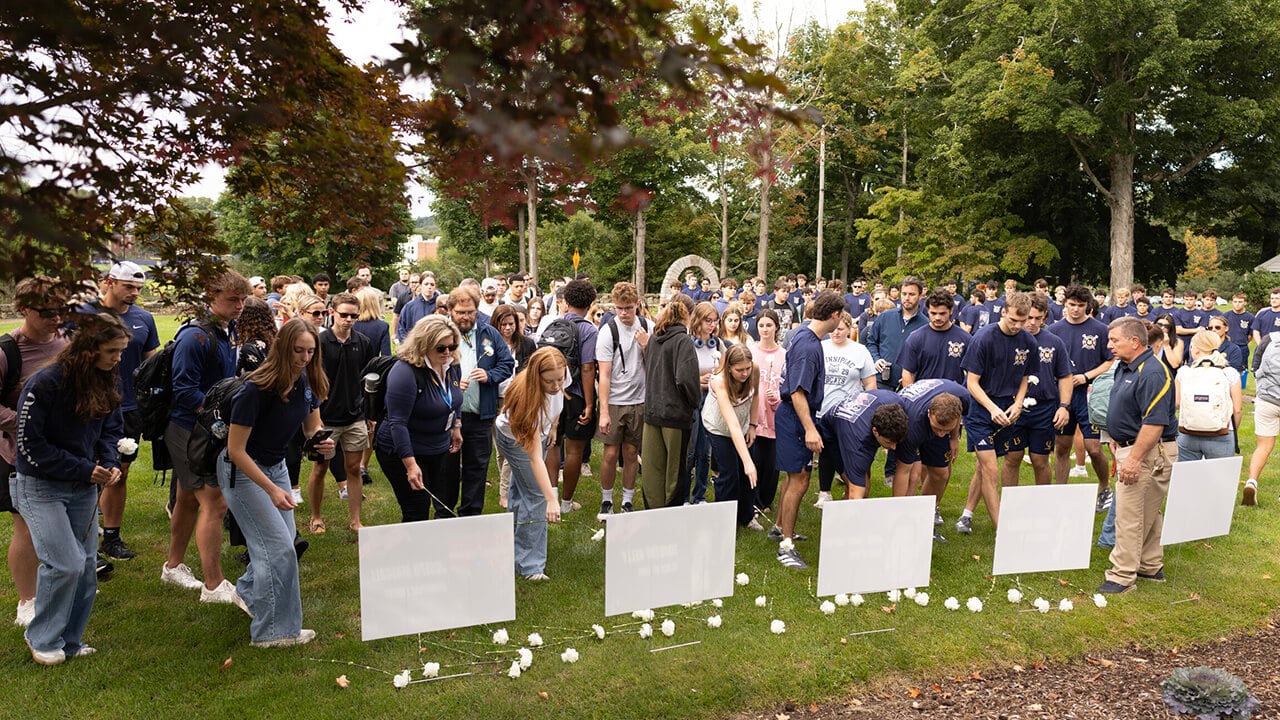

Quinnipiac Today is your source for what's happening throughout #BobcatNation. Sign up for our weekly email newsletter to be among the first to know about news, events and members of our Bobcat family who are making a positive difference in our world.
Sign Up Now