

Attend an Open House
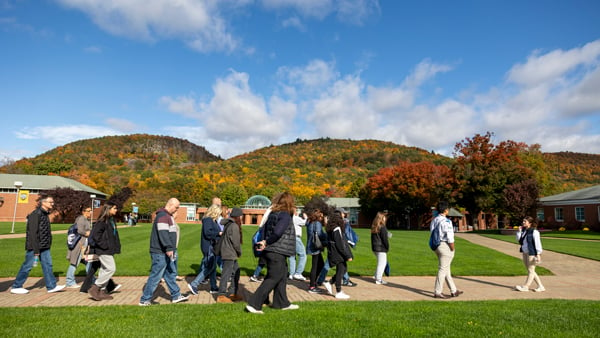
Want to learn what Quinnipiac is all about? We invite you to join us at an Open House, where our students, faculty and staff will introduce you to life as a Bobcat through a variety of sessions and tours.
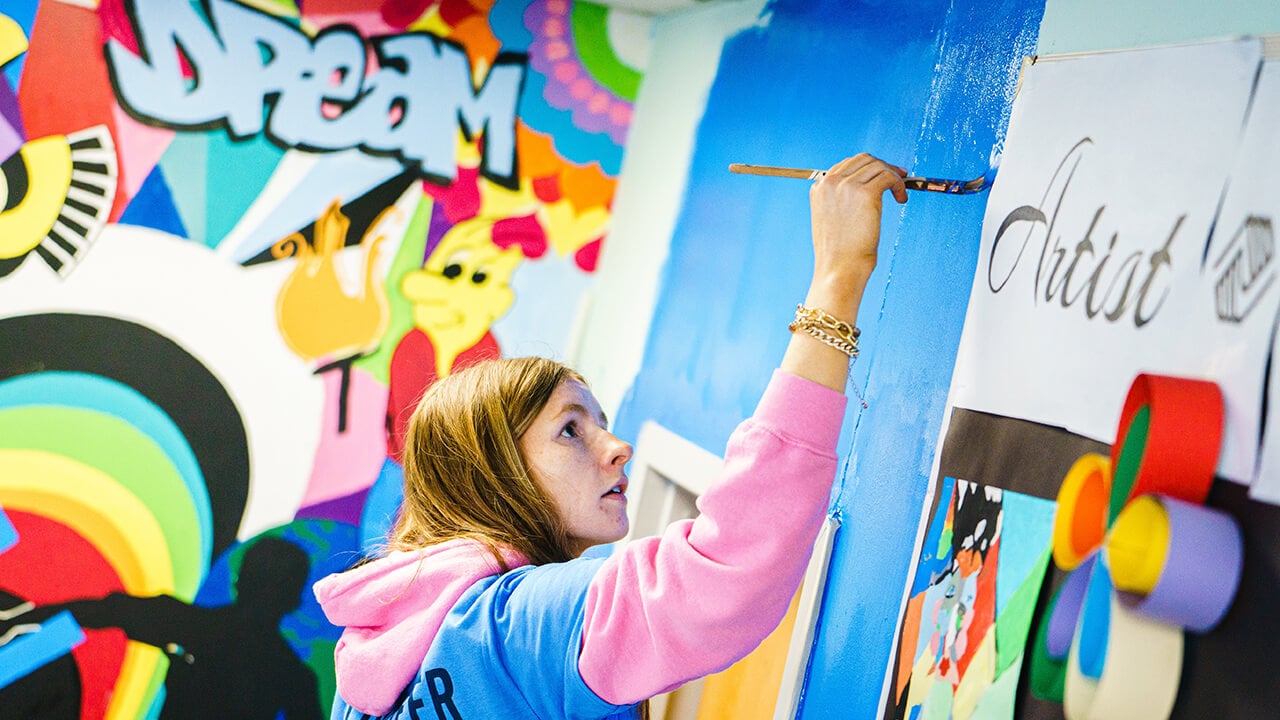
For Nicole James, visiting assistant professor of digital visual arts, creativity is “one of the most magical ways we can express our humanity: the act of synthesizing and building upon human experiences and knowledge in order to reexamine, innovate and progress our understanding of how things work and what things mean, whether that be intellectually, strategically, artistically or in simple gestures across everyday life. Creativity is essential to making meaning while also understanding that meaning.”
She also views creativity as a means for societal and individual progress.
“In a lot of ways, I believe creativity helps grant humans a sense of purpose while also stifling stagnation of thought and action,” said James. “It marries our knack for problem solving with aspirations of what could be, what could have been and what we hope to achieve. Innovation, improvement, experimentation, trial and error and exploration are just a few broad examples of where creativity shines — to question the status quo and unpack the meaning of ‘this is how it has always been.’”
Pattie Belle Hastings, professor of interactive media and design, emphasizes the important of creativity.
“Creativity is important because every ‘problem worth solving’ doesn’t come with instructions. The creative process is how we build the instructions ourselves,” she said.
Hastings reminds everyone that it is possible to improve creativity skills, even if you don’t consider yourself an artist.
“All humans are creative, and creativity does not belong only to the arts. All disciplines, fields and industries require creativity and creative thinking. They are skills that can be learned and taught just like any other,” she said.
As we enter a new era of artificial intelligence and automation, many worry about the elimination of creative roles in the workforce.
Jennifer Dauphinais, associate teaching professor of education and coordinator of the social emotional learning and school climate certificate program, demonstrates how technological advancements can not only coexist with human ideas but can also help elevate them to new levels.
“An artist can extend their creative practice through tools such as a digital audio workstation, using effects and plug-ins to transform source sounds into something that could not have existed without both the technology and the artist's imagination,” they said. “The tool alone is not creative; it is the collaboration between the tool and the human creator that produces something new.”
However, new generative AI tools can also make this relationship between human creators and technology more complicated and evoke ethical dilemmas.
“Systems such as OpenAI's models can transform, abstract, recombine and reinterpret creative works by drawing on patterns learned from vast collections of human-created material,” Dauphinais said. “To some, this makes AI a creative megalith, something capable of generating an extraordinary range of outputs at a remarkable speed. To others, it resembles a parasite, deriving its capabilities from the accumulated intellectual and creative labor of millions of people.”
James also believes that technology should be a tool to help elevate the creative work of an individual, rather than a sole creator.
“I liken artificial intelligence, automatization and similar technology to their less scary cousin, the calculator,” she said. “We learn the concepts of math — adding, subtracting, division, etc. — before we are given the gift of the calculator to advance our mathematical knowledge. We are then using a technological tool to advance the concepts we already understand in order to complete more complex problems in a shorter amount of time. I find creative endeavors in the age of artificial intelligence to be a bit stickier, though similar. Asking a machine to create an entire work of art, poem, song or character without having worked through some of these creative processes without a machine leading the way is where I find this impacting creativity the most.”
For those who need some assistance getting their creative juices flowing, the internet has become a common tool to research ideas and seek inspiration.
Hastings believes that this can be a useful way to spark creativity, but we must be careful with how we find inspiration in the work of others.
“Research shows early exposure to examples can widen our thinking, and it can also anchor us to what already exists before we’ve had a chance to generate our own ideas,” she said. “It can also throw us into comparison thinking, which can prevent people from trying to create anything. In design sprint facilitation, I have people generate their own ideas first, in silence, before they look at anyone else’s and then share with the room. After that, online research becomes a tool for expanding an idea instead of a shortcut that narrows it.”
This process is not much different than how people sought inspiration before the digital age.
“Before the internet, people visited libraries to research books, photographs and archival materials. They studied as apprentices. They wandered through museums, observed their surroundings or studied the work of other creators. With the arrival of the internet, this process expanded dramatically, making all of this information readily accessible from mostly anywhere,” said Dauphinais.
As these new technologies make information more available to the general public, the ability to turn ideas into output has expanded.
“The technology we have today has totally changed the relationship between creativity, skill-building and access,” Dauphinais said. Tools that were typically considered professional-level are now available to almost anyone. So those traditional barriers between imagination and production allow more people to participate and share it. That's why AI has so much available to work from. The process is feeding itself.”
While this accessibility seems great, it also brings up the anxious question: Will my job be eliminated by a robot?
As expected, the answer can vary greatly by the field of work or study, but it seems that the definition of creativity is evolving.
“I am inclined to believe that the baseline of what is considered a ‘creative skill’ is being absorbed into another term: adaptability,” said James. “A ‘creative skill’ still requires some level of knowledge of technique, concepts, materials and processes; however, I think that one’s confidence in and ability to problem-solve, learn and apply multiple skills on the fly and critically think about various paths forward for any given project or body of work are starting to outshine a lifelong commitment to mastering a singular creative craft or approach, for better or worse.”
For those seeking to build their creativity, whether for their own enjoyment or to stay relevant in a changing workforce, there is a unique tool that could help: boredom.
“Boredom is the birthplace of creative work,” said Hastings. “It’s the gap where our brain wanders and makes connections we weren’t consciously looking for. When every idle moment gets filled with a feed or autoplay, that gap disappears. I’d argue the scarcest resource for creative people right now isn’t inspiration. It’s unstructured, unstimulated time.”
James also agrees that boredom can play a key role in supporting creative processes.
“While access to online content is great for inspiration — in all of its infiniteness and the endless scroll — I think that the availability of content has served as a detrimental pacifier for those moments of boredom,” she said. “Instant gratification of news bites and cat videos can immediately scratch that itch of boredom. This ritual serves as a great distraction that can derail the creative process or dismiss it before it even begins.”
Dauphinais agrees that social media could be detrimental to one’s creative process, but for a different reason.
“A larger challenge today may be less about boredom and more about a skills gap — how people perceive their own creative abilities when they are constantly exposed to work from others,” they said. “We could make the same analogy when thinking about Instagram users comparing themselves to an influencer's appearance or wealth. Seeing the level of creativity that exists around us can inspire us, but it can also create uncertainty about whether we are worthy or capable of creating something that we hope will be highly valued.”
While creativity can be a powerful tool for those who spend the time to cultivate it, it can sometimes be intimidating when you don’t know where to start.
Hastings has spent much of her career helping students develop their creativity and believes that anyone can become more creative.
“For anyone who finds the creative process intimidating, it’s more teachable than people think,” she said. “You don’t have to wait around for a lightning strike of inspiration. There are frameworks that give the creative process structure and take some of the pressure off.”
For those who naturally struggle to generate new ideas, there are many resources that serve as guides for creative processes.
“I’ve spent decades building and teaching these methods, including a free Design Thinking Dashboard that walks people through the process,” said Hastings. “The point of all of it is the same: creativity isn’t a gift some people have and others don’t. It’s a process you can learn.”
Want to learn what Quinnipiac is all about? We invite you to join us at an Open House, where our students, faculty and staff will introduce you to life as a Bobcat through a variety of sessions and tours.

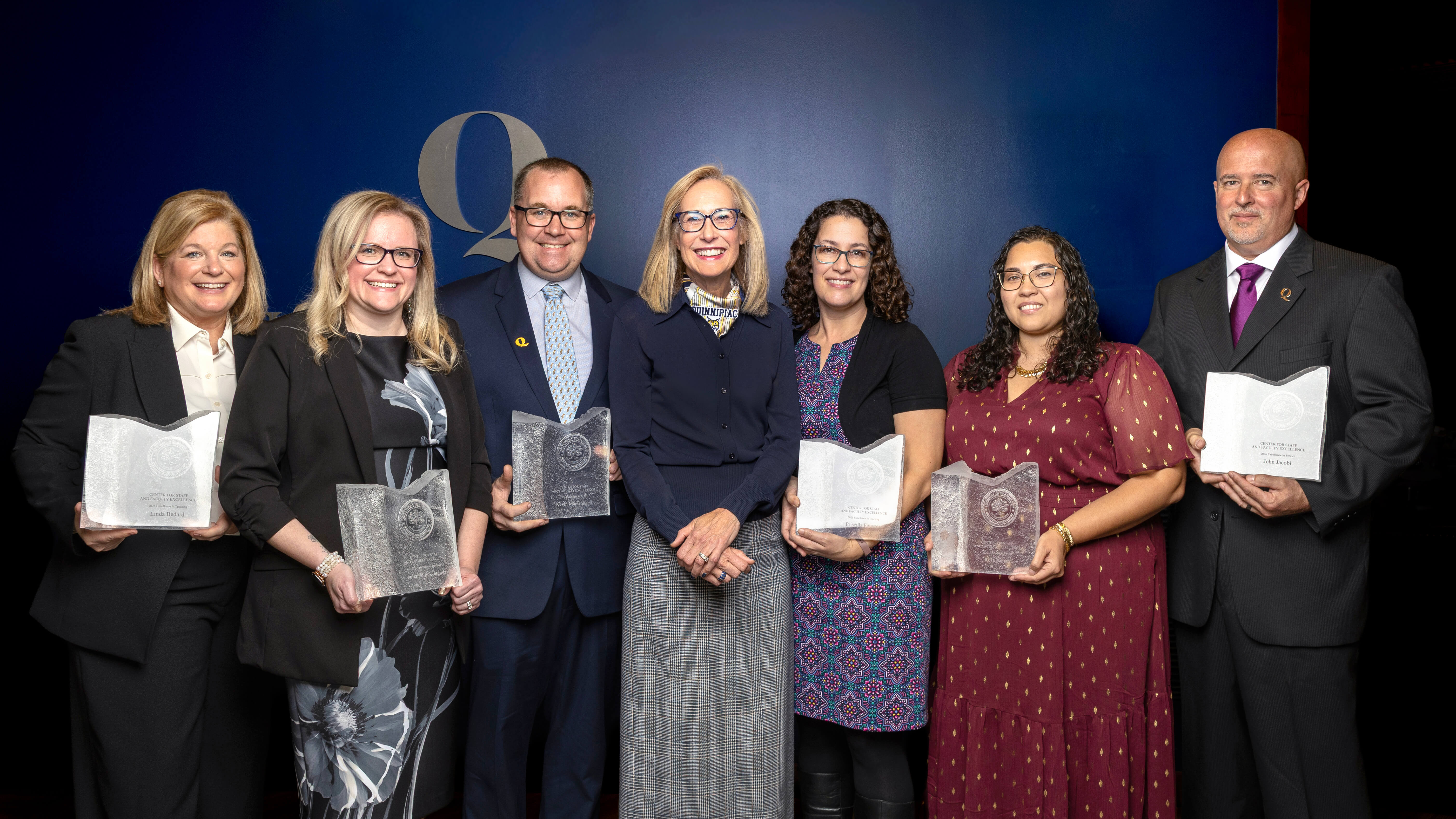













Quinnipiac Today is your source for what's happening throughout #BobcatNation. Sign up for our weekly email newsletter to be among the first to know about news, events and members of our Bobcat family who are making a positive difference in our world.
Sign Up Now