



Why we believe in ghosts: an anthropological perspective
September 29, 2026
September 29, 2026
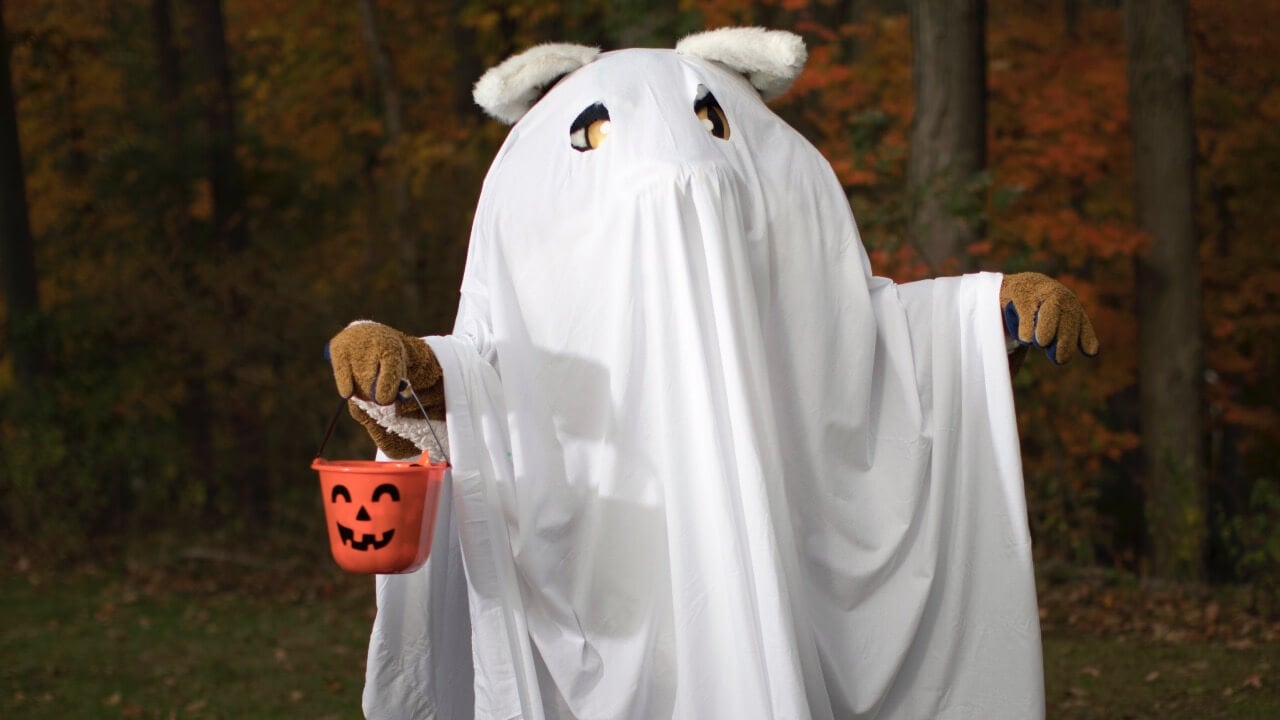
“We can't give a definitive answer as to why so many of these apparitions appear in most cultures, but it isn't surprising since there is much of the world that is unknowable to us,” said Professor of Anthropology Hillary Haldane. “Human cultures come up with inventive and diverse ways to explain phenomena.”
From an anthropological perspective, beliefs about ghosts can therefore reveal more than whether a society accepts the supernatural. They can provide insight into how different cultures understand mortality, the environment and humanity’s place within the world.
“A culture's beliefs about apparitions can give us insight into how they think of life/death and the natural world,” Haldane said. “For many cultures, they don't separate the world into nature versus human, and so entities can be both.”
The distinction between humans and nature that may seem familiar in some societies is not necessarily shared everywhere. In certain cultural worldviews, spirits, people and elements of the natural environment can exist within the same interconnected system rather than belonging to entirely separate categories.
“Humans and ‘nature’ can move between dimensions seamlessly,” Haldane said. “We often interpret these as spirits, or some other ghostly life-form, but for people with this worldview, they don't see them as separate.”
Scientific advancement has also changed how people understand previously unexplained phenomena. However, greater scientific knowledge has not necessarily eliminated supernatural beliefs, and new ideas about communicating with spirits have developed alongside changing technologies.
“As much as scientific advances have helped us to comprehend the world around us, there is still so much that is unknown and will probably remain unknowable,” Haldane said.
Like faith and religion, she explained, beliefs in apparitions can persist while new ones emerge, sometimes through devices intended for contact, such as Ouija boards.
The idea that ghosts must be frightening is also far from universal. In some cultures, spirits are understood as relatives, ancestors or continuing members of a community rather than mysterious beings that should be feared.
“In many cultures, the ancestor spirits are not scary, they are an essential part of a household, kinship system and reproductive process,” Haldane said. “They are wanted and needed in these cultures.”
These beliefs can also challenge the idea of death as a definitive end to a person's existence. Some cultural traditions instead understand death as a transition in which an individual continues in another form, becomes connected to nature or eventually returns through another generation.
“For some cultures people never die — they continue to exist in some form,” Haldane said. “Some become an element of nature, or they are held in reserve to reappear in a new generation.”
Ghosts and spirits can serve practical cultural purposes as well. Stories about supernatural beings have historically been used to pass knowledge and expected behaviors between generations, allowing beliefs about apparitions to function as teaching tools.
“Many cultures use apparition folktales or stories as a teaching tool,” Haldane said. “Elders will tell the young about such spirits or ghosts as a way to warn, motivate or provide guidance on behavior in a way that children find entertaining and educational at the same time.”
Even within a single society, there is rarely one universal interpretation of the supernatural. Some people fear the possibility of encountering a ghost, while others actively seek supposed contact with spirits as a way of answering questions or maintaining a connection with people who have died.
“Look at our own society, some people find it terrifying, while others seek out spirits for connection, to find answers or with the hopes of being in touch with a lost loved one,” Haldane said.
This variation helps explain why beliefs about ghosts have been able to change without disappearing entirely. The appearance, meaning and purpose assigned to apparitions may shift, but the larger questions surrounding death and the unknown continue across generations.
“Ultimately, I think apparitions are an interesting human universal precisely because as a species we all exist in some state of unknowing, and awe of our world,” Haldane said. “Apparitions are a part of our sense of wonder. They serve as a cautionary tale, and they also provide people with a sense of connection to things that seem enigmatic, bizarre or initially frightening.”
Beliefs surrounding death can therefore be understood not simply as stories about what happens after life, but as ways cultures define what being alive or dead actually means. In some traditions, biological death does not necessarily represent the end of an individual's existence.
“You may stop breathing and your heart stops pumping in one ‘body’ but that doesn't mean you are dead,” Haldane said. “You become a different essence or inhabit a new body or become part of the living world surrounding humans.”
Across cultures and throughout history, ghosts have taken on different appearances, meanings and roles.
While ideas about the supernatural continue to evolve alongside societies themselves, the persistence of apparition beliefs demonstrates how humans continue to interpret one of the most enduring uncertainties of human existence: What, if anything, lies beyond the parts of the world we can explain?









Quinnipiac Today is your source for what's happening throughout #BobcatNation. Sign up for our weekly email newsletter to be among the first to know about news, events and members of our Bobcat family who are making a positive difference in our world.
Sign Up Now