



Criminal justice students recognized with research presentation award
September 23, 2026
September 23, 2026
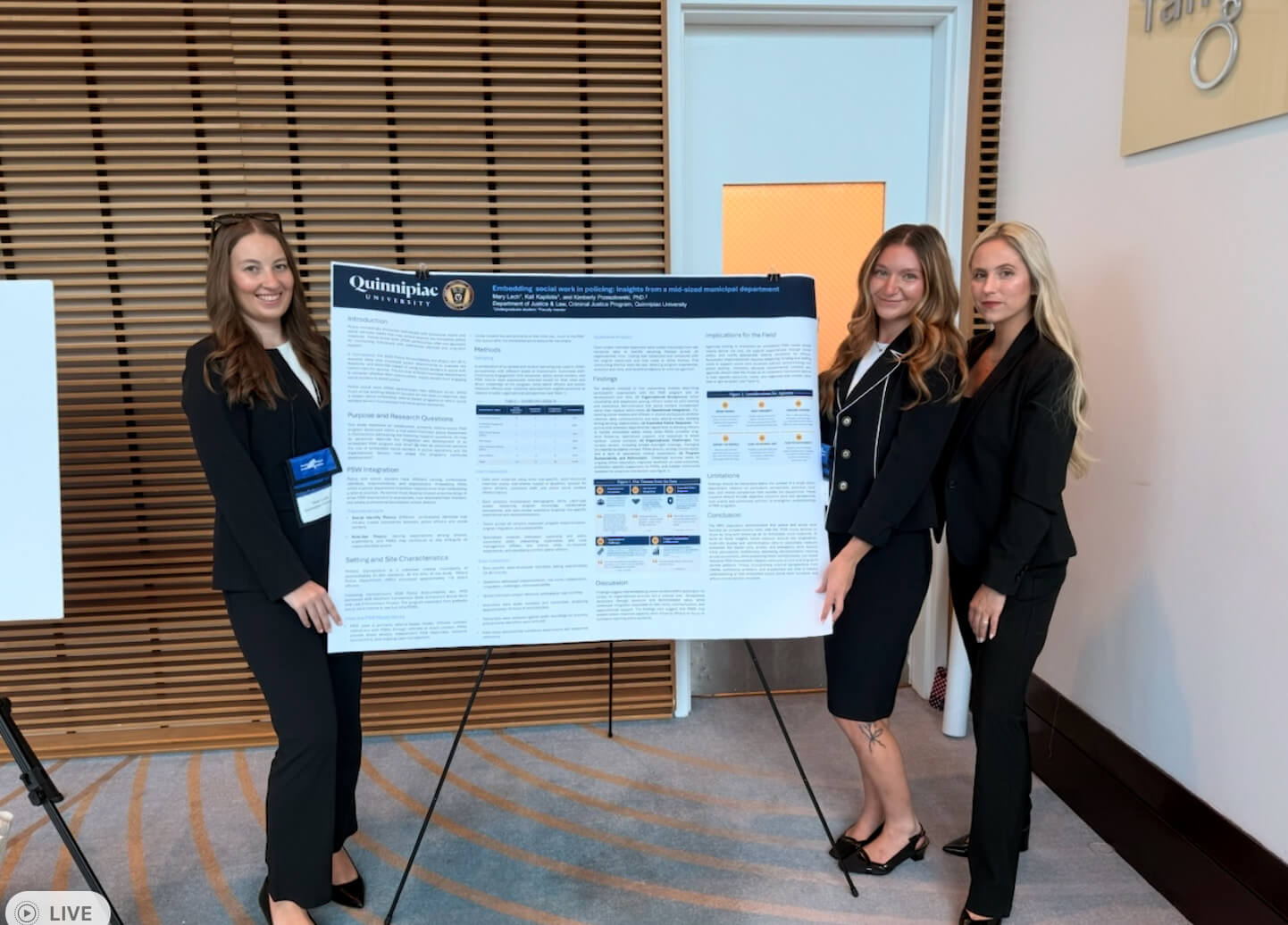
The project was done in partnership with the Milford Police Department; and focused on social work, Kapilotis explained.
"Our research poster examined the integration of the Police Safety Worker (PSW) role within a municipal police department, using the Milford Police Department as a case example. Our research explored how PSWs can complement traditional law enforcement by responding to the social and behavioral needs that often contribute to police interactions," said Kapilotis. "Rather than replacing officers, PSWs provide an additional resource for addressing issues such as mental health concerns, substance use, family crises, victim needs, homelessness and connections to community-based services. This allows police officers to focus on their primary law enforcement responsibilities while PSWs can provide specialized support and connect individuals with appropriate resources."
Their research was done through comprehensive interviews that spanned throughout the entire department, Lech added.
"We interviewed 26 members of the department across different roles to better understand how police social workers were integrated into the agency and how personnel viewed the program," Lech said.
Lech spoke about the themes and points of learning that came from their research, which fueled their award-winning presentation.
"Through those interviews, we identified five major themes: organizational acceptance, operational integration, expanded police response, organizational challenges and program sustainability and refinement," said Lech. "One of the biggest takeaways from our research was seeing how police officers and social workers can have very different roles and responsibilities while still working collaboratively to better serve their community. Our research also highlighted some of the challenges that can come with implementing a program like this and what departments should consider as these programs continue to develop."
Kapilotis emphasized how the presentation aspect to their project enabled them to bring their findings to others in the criminal justice field.
"Presenting our work in a poster format required us to take a large amount of information and condense it into the most important findings while still explaining the significance of our research," Kapilotis said. "The presentation was also an opportunity to discuss our research with people who had different levels of experience and perspectives within the criminal justice field. Answering questions and explaining our methodology helped us become more confident in our ability to communicate collegiate-level research."
This confidence as well as thorough preparation was key to the duo as they overcame presentation nerves, said Lech.
"The biggest challenge was probably the nerves that came with presenting research at a professional conference as an undergraduate student. We knew we could be speaking with people who had years of experience in criminal justice and research, so we wanted to make sure we were prepared to confidently explain our study and answer questions," Lech said. "Kali and I spent a lot of time preparing together before the presentation. We practiced different conversations we might have with people who approached our poster, asked each other potential questions, and made sure we really knew the research rather than simply memorizing what we wanted to say."
Lech and Kapilotis expressed gratitude toward Professor Przeszlowski, who was their faculty mentor.
"Having Dr. Przeszlowski as a mentor was also extremely important," Kapilotis said. "She provided guidance and constructive feedback while allowing us to take ownership of our research."
Lech added, "I especially cannot speak highly enough of Dr. Przeszlowski and the impact her mentorship has had on me. She trusted Kali and me enough to bring us into this research, gave us the opportunity to contribute in meaningful ways and treated us as valuable members of the research team. Having a professor who genuinely wants to see her students succeed and is willing to create opportunities for them has made such a difference in my experience at Quinnipiac. I truly could not have asked for a better mentor."
Przeszlowski explained that she has a working relationship with the Milford Police Department. She strives to integrate students into her research.
Lech and Kapilotis' energy, passion and understanding of the project excited Przeszlowski.
"Kali and Mary are both hardworking, curious students who pay attention to the details. What impressed me most was how seriously they took the opportunity," said Przeszlowski. "They didn't just want to know what to say during the presentation; they wanted to understand the research, how we arrived at the findings and why they mattered. They put a lot of time into preparing, so seeing them receive the award was really exciting. I knew how much work had happened before we ever got to the conference."
Przeszlowski was also impressed with Lech and Kapilotis' strong bond, which pushed them to greatness.
"They worked really well together," Przeszlowski said. "There was a lot of back-and-forth throughout the process — looking at themes, deciding what needed to make it onto the poster, practicing the presentation, and anticipating questions they might receive. They challenged each other in a good way and were both invested in getting it right. It never felt like they were just dividing up sections of a poster and memorizing their individual parts. They both understood the larger project and wanted the final presentation to represent the research well."
Lech and Kapilotis also spoke highly of each other, conveying that their relationship will continue.
"Kali and I have honestly become inseparable throughout this experience. We clicked almost instantly, and I could not imagine having done this with anyone else," Lech said. "Research and traveling can both come with unexpected challenges, but we were always able to work through them together and, more often than not, find something to laugh about along the way. We supported each other throughout the entire process, from preparing for the conference and practicing our presentation to traveling together and even sharing outfits when we were in Florida! Being able to share such an exciting accomplishment with someone who became such a close friend made the entire experience even more memorable."
"Working with Mary was an educational experience that I will never forget," Kapilotis shared. "She brought experience and knowledge to the project, but more importantly, she took me under her wing and became a role model throughout the process. I learned a great deal from her about conducting research, presenting professionally and approaching challenges with confidence. We supported each other throughout the research and presentation process, and I truly believe that our ability to work as a team contributed to the success of the project."
The students also expressed gratitude for Quinnipiac and the university's support in their presentation and academic careers.
"Quinnipiac prepared me by providing me with the academic foundation and resources I needed to feel confident taking on this project," said Kapilotis. "Courses such as research methods, along with my background in policing and other criminal justice coursework, gave me the knowledge and skills to approach the research process. Quinnipiac also gave me the opportunity to participate in professional projects like this one, which allowed me to apply what I was learning in the classroom to a real-world setting. I am incredibly grateful to have had this experience and to have had the opportunity to represent Quinnipiac University at the SCJA annual meeting."
Lech spoke about the valuable experiences that come from saying "yes" to opportunities.
"I am incredibly honored that our work was recognized at SCJA, but I am even more grateful for everything that came with the experience. I got to learn from professionals in the field, become more confident as a student researcher, and share an unforgettable experience with Kali and Dr. Przeszlowski," said Lech. "It made me realize how much can come from saying yes to opportunities that might initially feel intimidating. I am excited to continue learning, getting involved in research, and seeing where the Criminal Justice program and these experiences take me in the future."






Quinnipiac Today is your source for what's happening throughout #BobcatNation. Sign up for our weekly email newsletter to be among the first to know about news, events and members of our Bobcat family who are making a positive difference in our world.
Sign Up Now