


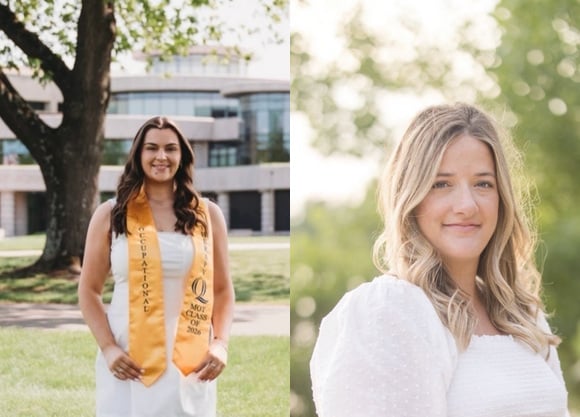
‘Who Are You?’ podcast with guest Jackie Callinan ’23, MS ’25
Benefits of learning Spanish and studying abroad
Benefits of learning Spanish and studying abroad
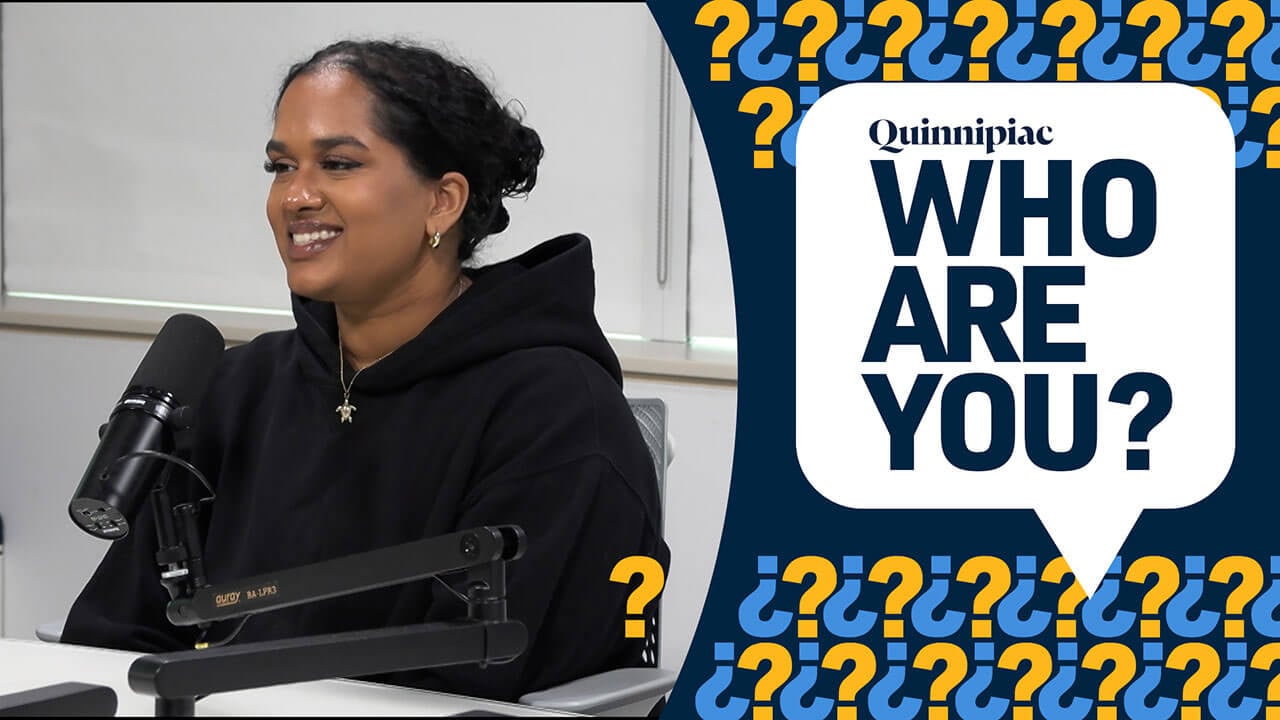
Joel Vanner: Welcome to today's episode of ”Who Are You?,” The Bobcats you know, the stories you don't. I'm your host, Joel Vanner, inside the podcast studio at Quinnipiac University School of Communications, and I am joined for today's episode by Jackie Callinan. Jackie, welcome to the show.
Jackie Callinan: Thank you for having me.
Joel Vanner: So, I'm sure you could guess by the name of our show what my first question to you is going to be. We know your name, but who are you?
Jackie Callinan: I am Jackie. I am a- currently a second-year physician assistant student here at Quinnipiac. I'll be graduating this upcoming August, which is crazy to think about. But I've been at Quinnipiac since 2019. I did my undergraduate here in health science. Um, and now been here ever since.
Joel Vanner: How did you know that health science was a field you wanted to study in college? Was there some moment in your childhood that said: This is what I want to do? Walk me through how you ended up here.
Jackie Callinan: Yeah. I think the craziest thing when thinking about that question is that I kind of didn't have a solid, concrete moment growing up where I was like medicines for me. My mom likes to say that when I was young, I was always really interested in my siblings injuries, their band aids, their cuts.
Joel Vanner: Doctor J. That was your nick name.
Jackie Callinan: Yeah. Unfortunately, PAJ doesn't rhyme as well with, like, the syllables.
Joel Vanner: We can roll with it?
Jackie Callinan: We can roll with it, yeah. But there's even, like, this one picture that my mom has that it's me like maybe one or 2-years-old, like, looking and touching my sister's band aid. And I think that that just defines how I grew up loving medicine. I love science in high school with biology and chemistry, which I feel like it's not really normal to love AP chemistry that much.
Joel Vanner: That one especially.
Jackie Callinan: Yeah. Yeah. But I kept taking, like, anatomy courses, forensics electives. And then I learned about what the PA field was, and ever since then, it's here where I am.
Joel Vanner: And when you were in high school, you volunteered with an ambulance agency, right?
Jackie Callinan: Mm hmm.
Joel Vanner: Tell me a little bit about what you learned from that experience and how maybe that directed you to where you wanted to study.
Jackie Callinan: Yeah. I mean, I joined that agency when I was about 16 and so pretty young. And I think that was really important for learning, like, how to grow in confidence and decision-making skills and also, like, putting all of, like, the science and education that you've learned in your head to actually real life. Like, they kind of say it's like the head-to-hand transition. So I loved it. I mean, I remember the first training session we had, and it was on the I was helping extract, like, a pedestrian from, like, underneath the car. And we were down on the ground, you know, using, like, the device to help get the patient out.
Joel Vanner: And you were like 16 at this, right?
Jackie Callinan: Yeah, I was 16. And then what's crazy about that is once you hit 17, they let you, um, advance more into more roles in the organization. So at 17, I started dispatching. So when all the 911 calls came in, we were responsible for sending out all the ambulances to locations. If the ambulances, they said, we need more backup or we need another ambulance because there's multiple patients. Or even we need you to call 911 so that the helicopter can come transport our patient to the trauma center. At 17, I was like, Okay, I'll be calling 911 for the first time and asking for a helicopter. Um, but then that was a great transition to then riding on the ambulance as a first Aider, which basically an EMT aid. And then I was able to get my EMT license and start doing the care on my own, leading a crew at 18. And that set me up really well for PA school.
Joel Vanner: So you had all of these experiences. Tell me a little bit about how those experience led you to come here to Quinnipiac.
Jackie Callinan: Mm hmm. So it's actually a pretty funny story. So like I said, I was very interested in science in high school, and I was also like, you know, a high school student athlete, did track, cross country, lacrosse. And they had us do, like, a student leadership thing where we would help at the front desk, like, certain mornings of the week. So I did that, and I got really close with the secretary, wonderful woman. And I was always there studying or stressing about college applications. Um, so one day, we were just out on a cross country, like, run, 20 minute run. And one of our girls just sprained her ankle, got hurt, and I was like, I'll take any opportunity to walk during a run, but also, you know, making sure that she was okay. So I was like, Hey, like, it's okay. I'll walk back to the school with you. Like, let's just get you back, and get you some ice, you know, help. And as we were walking back, that secretary actually ended up seeing us as she was leaving work. She pulled over. She was like, Hey, girls, like, get in the car, I'll drive you back to the school, get you back to coach. And I remember I was sitting in the front seat with her, and I was talking about my ACTs. I like that. And she was like, Jackie, Jackie. Stop worrying. My daughter worried about her ACTs, too, but she still went to Quinnipiac, went to the ELMPA program, and she just graduated PA school, and she's doing great. She's got a job in surgery in New York City, and I was like, Oh, Okay. And I think she had told me about the ELMPA program before, but it never really registered.
Joel Vanner: There's a lot of things that swirl around your head at that point of your life. Yeah.
Jackie Callinan: So I just remember going home after that practice, sitting on my couch and looking up the Quinnipiac ELMPA program, and I was like, Oh, my gosh, like, these are all the courses I want to take an undergraduate. And then I looked at what a PA is, and I researched, and then I, like, looked at the PA courses, and I was like, Oh, my gosh, like, this perfectly aligns with what I want to do. And even, like, they had an EMT course as part of the curriculum sophomore year, and I was like, Wait, this is awesome. So I actually think that when I found out about Quinnipiac in the PA program, it was like maybe less than three weeks to the application deadline. So it was a really quick turn of events, but now I'm here six years later.
Joel Vanner: Now you're here. And ELMPA is the abbreviation for entry level masters physician assistant program?
Jackie Callinan: Yep.
Joel Vanner: So tell me a little bit about so your undergraduate was in health science studies. Tell me a little bit about your undergraduate experiences that you had.
Jackie Callinan: Yeah. So I think what really defined the undergraduate experience for me was how it kind of morphed into this focus on the Global South, which was really surprising and not something I expected. So my freshman year, I had an open space in my curriculum in the spring semester, so I decided to apply for the International Health Research trip. So surprisingly, it got accepted. And then it was a course based in Nakoya Costa Rica, which is one of the five blue zones of the world. So, one of the regions where the majority of the population there or, like, a certain percentage lives beyond the year 100. And a lot of researchers are trying to, like, find the common factors between those regions across the world, evaluating, like, what makes them so healthy that they can live to beyond 100. So that was great that we got to do some on the ground, like, blood pressure, gait analysis, um, gait and grip strength, and we really got to engage with the community, go down there and learn about health from a different perspective.
Joel Vanner: How long were you down there for?
Jackie Callinan: We were down there for a week. Actually, the week before COVID happened, and we were getting all the emails from Quinnipiac at Poolside, which was kind of crazy. So we were there for a week. And then, my junior year, I did a J-term class which was oh, I guess, sorry, starting more from the beginning, I ended up switching to a Spanish minor at the beginning of my freshman year because I had learned French in high school, but I realized that in that local EMT organization and here as well, there was a lot more Spanish speaking patients than French, and I really just was frustrated that I couldn't communicate with a lot of these patients. So I ended up enrolling in Spanish 101, my freshman fall, and then working towards that minor throughout. So from, like, that minor, I learned about this J-term program, which is like the January term. And I took Exploring Global Engagement, I believe it was called, with Professor Sabato. And that class was actually half the majority of our class was Nicaraguan students from, like, our Quinnipiac Alliance down in Nicaragua. And that was wonderful, being able to just connect with these students, our age, like, across the globe and learning about just global solidarity, global engagement. And I think we still have our Spotify playlist that we all put on our favorite songs that we could all, like, listen to. And I think then, later on, because I really want to study abroad, just with, like, some countries still coming out of, like, COVID restrictions and COVID precautions, I ended up taking this semester off to go do, um, I ended up taking this semester off to do a three-month rock climbing and backpacking leader course in Argentina, which was phenomenal. It was one of the favorite decisions and things I've ever done in my life. But I don't think if I had those two experiences at Quinnipiac, I would have felt comfortable or confident enough to do that.
Joel Vanner: So tell me more about the rock climbing experience and how that fits into the other experiences you had.
Jackie Callinan: Yeah, I think, well, it was a great challenge, of course, to be in fully immersed in, like, a Spanish-speaking environment. I really got to practice my Spanish. And even though I was corrected multiple times down there, it was still okay. But I really what I really took from that experience was the importance of, like, having an important work-life balance moving forward because I just realized how much I love to do rock climbing and hiking and how I really wanted to keep that as part of my life, not having a life just dominated by my, like, professional career. But even the first week down there, we were able to witness a helicopter rescue on one of the mountains. So actually, where I was was in Patagonia, which is my town was the logo of Patagonia. So it was a rescue on the big mountain in the middle. And I just saw the entire town just drop what they were doing and mobilize to go, hike out, and then also, like, climb up to go rescue those climbers and provide medical aid. And I was just like, Wow, this is something I want to do in the future. I want to have the hiking and climbing skills to go get to the patient, but I also want to have the medical skills that when I get there, I can provide aid, and I can I can be both parts of that equation to help people.
Joel Vanner: And how do all of these experiences abroad that you've had? How did all of those connect to your studies here at Quinnipiac?
Jackie Callinan: I think what it really came to was applying a sense of context and compassion and the diversity of the patient populations that we are expected to give care to. We had a course in our graduate program called- or we talked about, like, the social determinants of health, which are, like, the non-medical reasons or the non-medical factors that end up influencing a person's health, and many aspects to it, like their culture, their cultural beliefs, religious beliefs, the environment they grew up in, even the, like, the existing socioeconomic barriers that come into place. So I think it also prepared me I prepared me well in that I can just give an example. Like, I was on my family medicine rotation and really busy practice in a more underserved area. And I remember, like, my first day going into a room, and it was just there was not a lot of resources. Like, we didn't have, like, the telephone translator services that a lot of hospital systems have. And there was only one person in the office who spoke Spanish. And so we went into the room, and we were trying to communicate, and they didn't speak a lot of English. And I just started speaking. And I just tried, even though my grammar was awful, but, um, I was able to, you know, use my Spanish. At that practice, as well, I was able to work with some immigrants and refugees who were getting, like, their immigration physicals and, like, help them with their vaccines and such. And so I was really prepared to, you know, strike up a conversation with them. Like, how are you doing? Like, Oh, where are you coming from? Like, how has the transition been? Um, and then I think also that lens of, like, global solidarity from undergraduate pursued, like, caused me to pursue learning more about that in the graduate program. So I joined the Quinnipiac. It's like a Connecticut area health education centers like, multi-university program that involves Quinnipiac. That is a program focused on rural and rural and urban underserved populations and those health disparities. So I really got to learn about more of those health disparities. I was able to do, like, a blood pressure screening and, like, diabetic foot education at the, like, Northern Connecticut Native American tribes, like, fair. So we were, like, doing, like, the circle dances with the tribal members. I was able to research and produce a podcast on health disparities for the recently jailed or incarcerated. And then, like, even in that same family practice, we had a lot of people who were recently released from prison, and I was able to use that knowledge, being like: okay, what services do you need? Like, do you have difficulties getting your medications? Did they set you up with any follow-up appointments when you left jail to, like, control these things? These control these medical issues you have. So I think it all, like, has come together my clinical year, if that makes sense.
Joel Vanner: Absolutely. And the ability for you to step in in that experience and just communicate with those patients and make sure that they were getting answers to their questions. They were able to ask questions and understand the care they were getting. How have all these experiences helped you grow throughout your time here at Quinnipiac and make you into the person you are today and going into the workforce, getting started there?
Jackie Callinan: Yeah, I think that's a really good question. I mean, I think that it's really grounded in myself a sense of importance of community and understanding and, like, understanding that we need to do so much learning about other people, other groups of people, because in real life, like, the patient population, I'll see when I graduate in August, is not homogeneous.
Joel Vanner: It's anybody that walks through the door?
Jackie Callinan: It's anybody that walks through door. So it's really trained me to want to learn more and want to do more to help a diverse amount of patients. I mean, I think, in terms of going into the workforce soon, um, so yes, like, it's one thing to learn about all these existing disparities or the differences, but it's another thing to actually take that information and apply it. So I can't wait to be, like, an actual, certified PA medical provider and start doing this- let's keep doing these clinics, keep doing these educational events, but also maybe, like, use my position for advocacy. I mean, I just wrote my first piece of my first written testimony for Connecticut State Legislature bill that would change the law to allow women who are incarcerated to receive mammograms at a facility closest to them, which is just really important basic health prevention and health initiation, we know that mammograms reduce mortality. And if I can use my experience, my clinical experience, my position as a PA to help contribute to some of those changes, I think that would be really worthwhile. And also, you know, who knows? Like, maybe I can dream big one day and combine, like, this health lens and this global solidarity, this culture, this love of language, and, you know, maybe, try to join a UN task force, work for the Olympics.
Joel Vanner: Maybe you'll find yourself at the top of Patagonia, again.
Jackie Callinan: I would love nothing more. And exactly. Like, even, like, being maybe as a PA, I can work at like an embassy abroad or in my free time, be a volunteer search and rescue PA, like, wherever I end up. So it's really exciting to think of how many opportunities or how many routes I can go down in the near future.
Joel Vanner: So, we talked about confidence. You talked a lot about being able to communicate. If there's somebody listening to this podcast and they're like, I want to be just like Jackie.
Jackie Callinan: Oh gosh.
Joel Vanner: But maybe they're a little scared, like, they don't know where to get started, right? All those experiences- they're a lot to have. And this is all in college, right? What advice would you give our listeners or our watchers who may want to follow a similar path and have that global experience and get all these different experiences in their tool belt. What advice would you give them to even get started? You know, you started volunteering with the EMT organization, but is there some other motivation that's kept you going that maybe you go back to in times of uncertainty?
Jackie Callinan: I think one core piece of it is just finding what excites you, even if it's small, and starting from there. So I just simply loved going into my EMT shift. I had so much fun. I never knew I was going to expect the relationships that I made there. And then once you enjoy something, it just dominos effects, and it leads you to the next thing. So, you know, maybe finding a language that you really love learning and practicing speaking, and then you'll see where it takes you. But also, in that regard, I would give the advice that it's okay to be a bit uncomfortable. Like I, in all of these experiences, I took the leap. It's like, I don't know if I'm the most comfortable going to Argentina on my own or, you know, trying to speak Spanish in a class with a majority of people from Nicaragua when I'm in my grandma's room, and my entire family can hear me mumbling Spanish in the other room. And then, even now, like, as, like, a student is, like, finally, like, the discomfort to try to tell a precept or a treatment plan or try to speak Spanish to someone. But you just got to be okay with being a little uncomfortable at first.
Joel Vanner: And be unique, too. And when you're getting started on your journey, find what makes you unique and take advantage of the opportunities you have that way.
Jackie Callinan: Yeah. And then, you know, staying if you stay true to yourself and, like, what makes you happy and what some people reference as, like, your why or your passions, then I think things will come naturally to you. And that's wonderful to just grab by the reins and just go with it.
Joel Vanner: Jackie, that's all the time we have today. It was a pleasure having you on the show. Thank you for coming on and sharing your experiences and advice, and best of luck as you prepared to enter the workforce soon.
Jackie Callinan: Thank you.
Joel Vanner: If you like today's episode, be sure to like, subscribe, and share, and find other episodes of ”Who Are You?,” on Apple, Spotify, and YouTube Podcasts. Until next time when I ask my next guest: Who Are You? I'm Joel Vanner. Bye for now.

Quinnipiac Today is your source for what's happening throughout #BobcatNation. Sign up for our weekly email newsletter to be among the first to know about news, events and members of our Bobcat family who are making a positive difference in our world.
Sign Up Now