



Faculty and student earn prestigious awards at statewide physical therapy conference hosted on North Haven Campus
October 27, 2026
October 27, 2026
Three Quinnipiac physical therapy faculty members were recognized for their exceptional work to support the physical therapy community in Connecticut during the conference.
Karen Blood, clinical associate professor of physical therapy, earned the Scholar Award for her dedication to advancing geriatric care.
“Dr. Blood has made substantial contributions to physical therapy education and clinical practice through her scholarly writing in the areas of geriatric care, curriculum development, competency-based education and clinical decision-making,” said Tracy Wall, chair and clinical professor of physical therapy. “Her publications address critical issues facing the profession, including the preparation of entry-level physical therapists to care for an aging population, competency development in geriatrics and acute care and the application of emerging evidence to optimize patient outcomes. Her research will provide education to the PT community for years to come.”
Sarah Shaver, assistant clinical professor of physical therapy, received the Innovation Award based on how she incorporates trauma-informed care into her classes, introducing students to unique ways of navigating the evaluation process and designing treatment programs that support patients.
Kathleen Egan ’23, DPT ’27, says she nominated Shaver because the professor has already made a lasting impact in just her first year at Quinnipiac.
“She demonstrates how innovation in physical therapy extends beyond evaluation and treatment techniques alone,” said Egan. “Her work emphasizes creating a more inclusive healthcare environment and ensuring that every patient receives individualized, trauma-informed care. She challenges her students to consider how the language we use, the assumptions we make and the way we approach our patients can shape their experiences, access to care and outcomes. Her impact extends far beyond the classroom and has inspired me to become not only a better student and clinician, but also a better person.”
Laura Simaitis, assistant professor of physical therapy and director of the DPT associate program, was also recognized Saturday afternoon. She earned the Mentor Award. Simaitis has compassionately supported students in their professional and personal development.
"When Laura teaches, her passion for neurologic rehabilitation and for educating the next generation of physical therapists is infectious," said Abigail Rosenthal-Pitts '24, DPT '27, one of her advisees. "She has a genuine desire to see everyone around her succeed, and that commitment extends far beyond the classroom. She takes the time to understand what matters to each student and then works tirelessly to help them reach their goals and aspirations. She brings an energy and optimism that is contagious, and she consistently makes those around her feel supported, valued and capable."
In addition to the three faculty recognized, Rosenthal-Pitts earned the APTA Connecticut 2026 Student Scholarship, recognizing her academic and professional success as a physical therapy student.
Rosenthal-Pitts presented a panel titled "Leveraging Leadership Opportunities for Professional Growth" during the conference, addressing the pathways and barriers to student leadership in the physical therapy industry.
"Research in physical therapy leadership informs us that meaningful engagement with our professional organization, APTA, builds community, fosters professional passion and inquiry and supports career growth," she said. "Our goal was to offer an interactive session on evidence in leadership and professional growth that empowers student success in leadership and advocacy in the classroom, professional network and eventual clinical settings."
Rosenthal-Pitts also served as the president of the Student Focused Interest Network (FIN) for APTA Connecticut during the 2025-2026 academic year. She helped foster community among physical therapy and physical therapy assistant students across the state and executed a successful National Advocacy Dinner that was nationally recognized by the APTA.
"Leadership in APTA CT has developed my professional advocacy skills," Rosenthal-Pitts said. "I did not recognize the value of professional advocacy until I became involved with APTA CT, and this organization taught me the importance of participating in the conversations that make decisions for our profession. We immediately think of clinical practice in PT, but we sometimes overlook the legislative portion of the profession. The Student FIN and APTA Connecticut have facilitated my growth into professional advocacy in a supportive and meaningful way."
Additionally, Rosenthal-Pitts is the director of advocacy for Quinnipiac's Graduate Physical Therapy Club.
“She has held numerous leadership positions within the school and at the state and national level that brought her to the top of the applicants,” said Wall about Rosenthal-Pitts. “She has a true commitment to leadership and advocacy within the PT profession.”
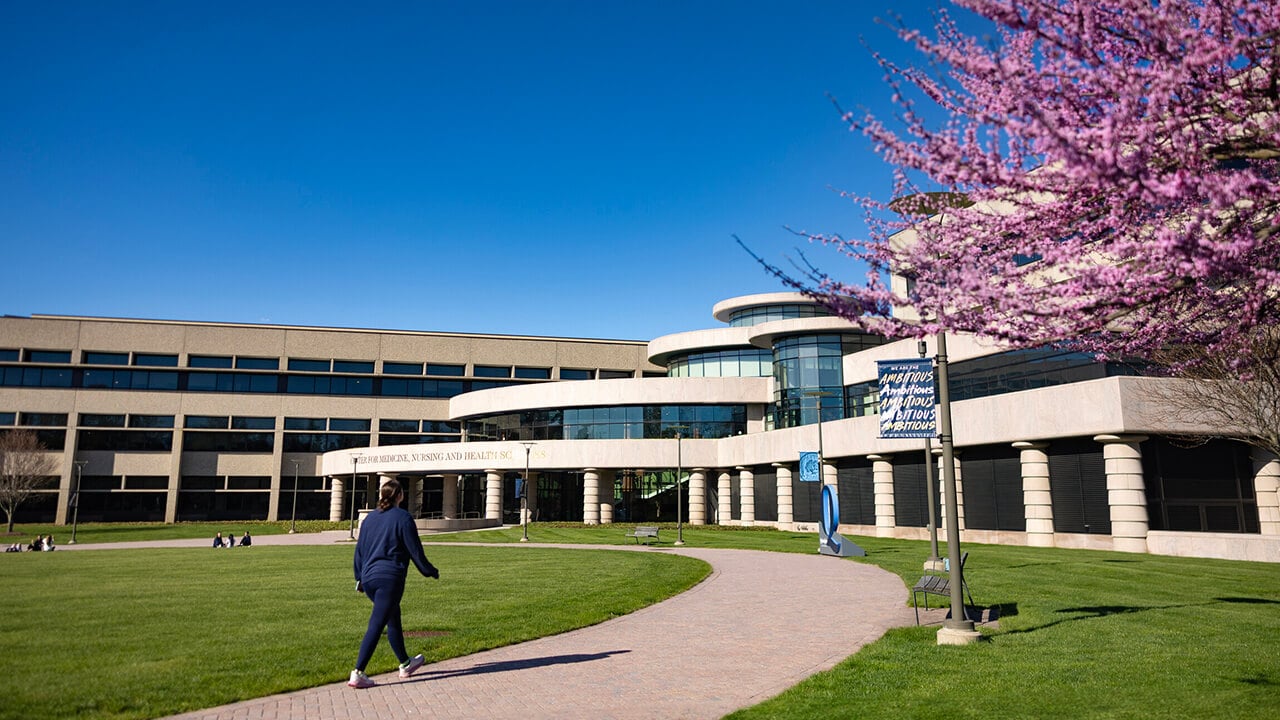
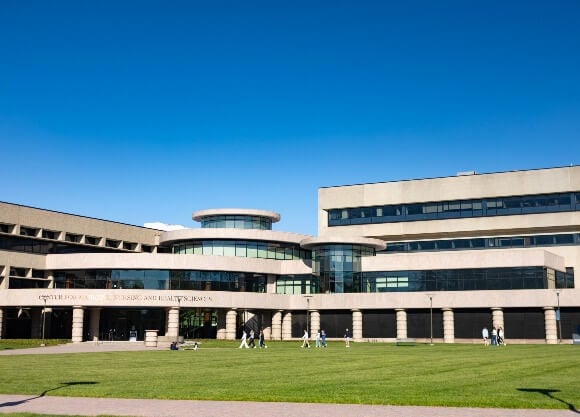
Beyond celebrating faculty and student achievements, having the conference on Quinnipiac’s North Haven Campus was meaningful to Quinnipiac’s physical therapy community.
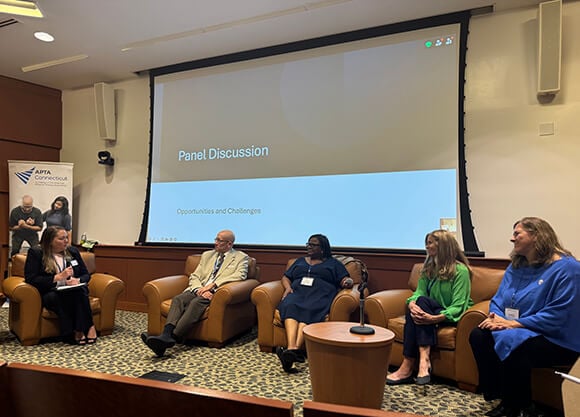
Specifically, the Kathy Harris Keynote Presentation brought together all conference attendees for a panel discussion in honor of the late APTA Connecticut President Katherine Harris.
“Katherine Harris was one of our faculty, and so this means the world to us to continue to move on in her tradition of demonstrating compassion and striving for excellence,” said Wall. "When they asked if we would sponsor and host the event, that was an easy ‘yes’. Part of our department’s goals is to foster life-long learners, and being able to sponsor an event here that promotes life-long learning and continuing education is awesome.”
Each year, the conference rotates between the schools in the state of Connecticut with physical therapy or physical therapy assistant programs.
“We really value that connection to each university,” said APTA Connecticut President Maryclaire Capetta. “You can see it in the attendance here, the conference is really well connected to each of the school’s faculty as well, and bringing their expertise to the conference, whether it be through conference programming or posters, you see it through the research that’s being disseminated here.”
The conference kicked off with a mentoring program meetup, where mentees and mentors were formally introduced to support their attendance at the conference.
Capetta says she is proud of the impact this successful mentorship program has had in its first two years.
“It was a way to make showing up to your first conference less intimidating,” Capetta said about the program. “You would be immediately paired with a mentor who is an experienced attendee and somebody who really knows the ropes. We also try to establish not just a mentorship for the day of the conference, but also more lasting mentorship as well.”
The day continued with a variety of panels, with topics ranging from navigating complex pain diagnoses and therapeutic exercise prescription to promoting clinician well-being and professional growth.
For third-year (D3) student Ciara Collins ’24, DPT ’27, the conference helped her prepare for navigating the workforce after graduation.
“It gives a lot of opportunity to us as students to make connections with faculty from other universities and from treating practitioners in the local area, which is especially good as a D3 student who’s looking to make connections to bridge the gap into my future career,” she said. “I got a lot out of the experience, both in the education piece and the connections that I made — just gathering as much knowledge and as much preparation as I can before I go out on my last clinical and then eventually look for a job.”
The conference was equally impactful for first-year (D1) students, including Tina Leshak ’26, DPT ’29, and Emma Simons ’26, DPT ’29.
Leshak, who also served as a student volunteer, saw the conference as an opportunity to explore different areas within the field of physical therapy.
“It opens up a whole world for me as a student to kind of understand the difference niches of the field of physical therapy, and I think these conferences are super important because it’s where you can get those interests in super specific realms of PT,” she said.
Simons also recognized the benefits of getting involved with professional conferences early.
“It’s definitely a great opportunity to network,” said Simons. “Just being in my first year, I don’t know that many people in the field yet, so it’s a great opportunity. I’m starting to think where I would want to do my first clinical, so it’s a great opportunity to see the different places in the area I can start to think about.”
From attending the panels and poster presentations, students already began thinking about how they can take what they learned back to their clinical experiences.
“The first session that I attended was about cardiovascular response to exercise and how we should monitor that in our patients, regardless of what setting we’re in,” said Leshak. “Throughout that presentation, I was kind of thinking of how I can create a little to-go manual to attach to my badge at whatever setting I work in that describes the common medications we’ll see in that field and how they can relate to the heart rate response and how I can better educate my patients on that.”
Collins also connected what she learned back to her coursework.
“My first session this morning was about [Benign Paroxysmal Positional Vertigo] BPPV, and we’re actually just starting our vestibular unit in neurology, so I’m really excited,” Collins said. “I feel like I got a little bit of a step ahead on the content that we’re about to learn.”
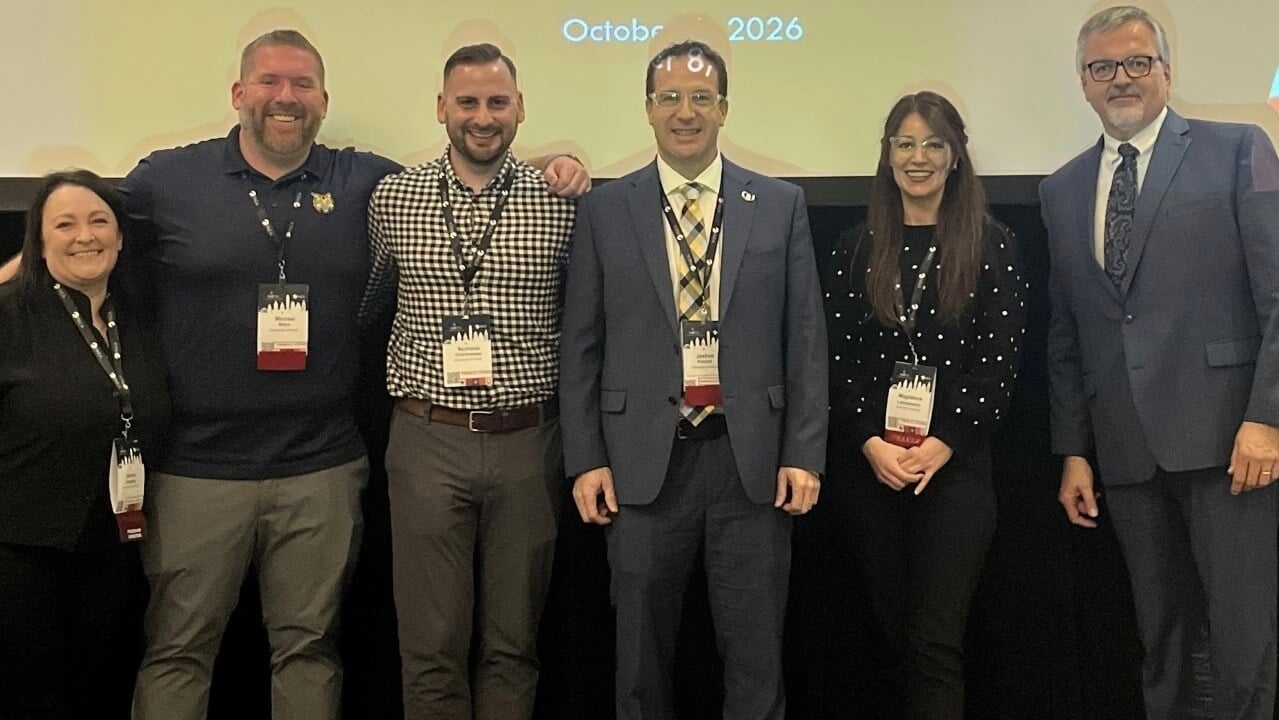
The morning and afternoon panels were separated by the keynote presentation, where attendees learned from leaders of various healthcare advocacy groups, including Nick Karapasas, president of Connecticut Chiropractic Physicians Association; Dawn Brown, executive director of National Association of Social Workers CT; Kimberly Sandor, executive director of the Connecticut Nurses Association; and Joyce Rioux, legislative chair of the Connecticut Occupational Therapy Association.
Moderated by Capetta, the panel introduced the Healthcare Professions Coalition of Connecticut.
The coalition, originally brought together in response to recent changes in access to student loans, formed in December 2025. Bringing together 15 statewide healthcare advocacy groups, the coalition represents 82% of the Connecticut healthcare workforce.
According to the panelists, the first action of the group was to improve access to student loans for healthcare graduate programs. The collective power of the coalition elevated and empowered the voices of each group during legislative sessions.
“When it comes to showing up as an ally for each other, it has been truly a blessing to learn about my other colleagues here in the profession and also paying attention to what’s going on,” said Sandor.
The group’s collaboration and collective passion for advocacy was successful in creating a new graduate student loan program for Connecticut residents.
The group played a key role in the bill that was passed this year, stating that the Connecticut Higher Education Supplemental Loan Authority (CHESLA) must create a Supplemental Graduate Student Loan Program and also helped provide additional funding for the cause.
Conference members not only learned about how this resource can support current students, but they also left feeling empowered to advocate for the future of the physical therapy profession.
“I think that it’s a new day in advocacy in Connecticut for healthcare providers,” said Capetta. “The coalition now working together toward shared goals is going to be really powerful in getting legislation passed that benefits our patients and our workforce. The sky’s the limit in terms of what we can do. The APTA Connecticut is the voice of the profession of physical therapy in Connecticut, and now our voice is even stronger as a member of this coalition.”













Quinnipiac Today is your source for what's happening throughout #BobcatNation. Sign up for our weekly email newsletter to be among the first to know about news, events and members of our Bobcat family who are making a positive difference in our world.
Sign Up Now