



As America celebrates its 250th birthday, Frederick Douglass matters — so do his words
July 01, 2026
July 01, 2026
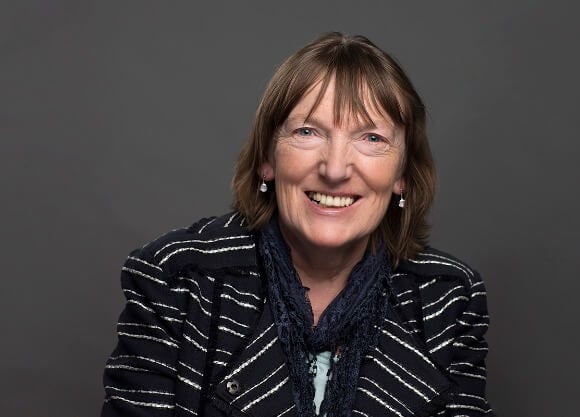
For history professor Christine Kinealy, a world-renown Douglass scholar and founding director of Ireland’s Great Hunger Institute at Quinnipiac, the statue by sculptor Andrew Edwards isn’t merely striking.
It’s an essential, daily reminder of our freedom.
"I just love that statue. It brings together these figures who, just like Frederick, fought for social justice and freedom for all people,” said Kinealy, noting that Douglass is portrayed as 27 years old in the distinctive and provocative piece.
As an enslaved boy in Maryland, Douglass learned how to read after the wife of a slaveholder taught him the alphabet. He was a fast learner, all at once resourceful and determined to become literate. By 20, Douglass escaped slavery and headed north as a wanted man.
But while he saw education as a path to liberty and intellectual freedom, Kinealy said Douglass would see those founding values quite differently in 2026.
“Frederick would be disappointed in the lack of civil discourse today. Even though he disagreed with people, including his fellow Black abolitionists on occasion, there was always a reason and a rationale behind his argument,” Kinealy said. “It was never a personal attack on anyone. It was always about his ideas and ideology. There are no more discussions today. It’s all about shouting. The middle ground has eroded.”
As Douglass grew older, developing the oratorical skills that led him to flee America in 1845, he traveled to Ireland. It was here he met O’Connell and found international acclaim for his poised, articulate reasoning.
When Douglass returned from Ireland after only four months, he signed the petition for women’s rights in America. He was just 30 years old at the time. He was also the only Black person whose signature appeared on the document.
“Sometimes, as Frederick showed, you have to be a bit brave and be outside your comfort zone,” Kinealy said, gently leaning across the table with a smile.
For Douglass, his most memorable speech took place on July 5, 1852, at Corinthian Hall in Rochester, New York. With slavery as a solemn backdrop, he concluded his speech with the words below. The excerpt seems particularly fitting for reflecting on America’s 250th birthday and all the history that it encompasses.
“Your high independence only reveals the immeasurable distance between us. The blessings in which you, this day, rejoice, are not enjoyed in common. The rich inheritance of justice, liberty, prosperity and independence, bequeathed by your fathers, is shared by you, not by me. The sunlight that brought light and healing to you, has brought stripes and death to me. This Fourth of July is yours, not mine. You may rejoice, I must mourn,”Douglass said.
The words resonate deeply with Kinealy.
Generations and generations later, conflicts over race and religion persist. As an example, Kinealy pointed to “The Troubles” in Northern Ireland that marked 30 years of fighting between Protestants and Catholics from 1968 to 1998.
“When I talk with my students about the protests in Northern Ireland and the whole Civil Rights Movement, I point out they were largely led by young people. They used their voices to be heard and to change things,” Kinealy said.
“Things can always change, but people have to be willing to stand up and change them,” she added. “I tell my students all the time, ‘You’re the hope of the future, so stand up for what you believe in.’ Maybe that’s the lesson we get from history.”
Always searching for the perfect teachable moment, Kinealy paused and turned the conversation back to the Protestants and Catholics in Northern Ireland.
“They never lived together. They never went to the same schools. They had all these myths about each other,” Kinealy said, shaking her head.
“When you take the time to get to know someone who’s not exactly like you, all of a sudden, you're like, ‘Oh actually, they are just like me. They love their children. They love their dogs. They have dreams, too.’ People need to come together and see that.”
It’s a message not unlike that shared by Frederick Douglass. More than a century later, it still rings true.























Quinnipiac Today is your source for what's happening throughout #BobcatNation. Sign up for our weekly email newsletter to be among the first to know about news, events and members of our Bobcat family who are making a positive difference in our world.
Sign Up Now