



‘Who Are You?’ podcast with guest Matthew Maher ’26
Leveling up in game design

Leveling up in game design
Joel Vanner: Welcome to today's episode of ”Who Are You?,” the Bobcats you know the stories you don't. I'm your host, Joel Vanner inside the podcast studio at Quinnipiac University's School of Communications. And I am joined for today's episode by Matthew Maher. Matthew, welcome to the show.
Matthew Maher: Thank you. I'm glad to be here.
Joel Vanner: So, I'm sure you could guess by the name of the show what my first question to you is going to be. We know your name, but tell me, who are you?
Matthew Maher: I'm a third-year game design and development major at Quinnipiac University. Uh, Programming concentration.
Joel Vanner: So game design and development, tell me a little bit about, is that something you've always been interested in? And if so, when did that interest start for you?
Matthew Maher: So that interest started way in the past. It started with my father, who he had an SNES, which, for those of you who don't know, is a console. I ran some older games on it. And one day I saw him playing; he handed me a controller, and it was just magical to me. I want to say the game was A Link to the Past for anyone who's curious, but I'm not 100% sure. After that, I started to get involved with some online communities for online games. More specifically, some MMOs, which are massive multiplayer online. They have a lot of players, and from there, I kind of started getting interested in the development side.
Joel Vanner: And MMOs, was there a specific one that you liked the most that you played often, and was there one that kind of formulated your love for games after your experience with the SNES?
Matthew Maher: So, the most influential one definitely has to be Disney's Toon town online, which was actually shut down in 2013, which might sound like the end of the road there, but that's kind of what made it more important because it led to a lot of private servers ran by the fans, and because of that, I was able to kind of peek behind the development curtain a lot more.
Joel Vanner: And how old were you at this point when you were playing these games?
Matthew Maher: So, I mean, I first played Toon Town probably when I was in, like, elementary school. But when I really started getting involved with the community, I was in middle school.
Joel Vanner: So you had a peek behind the curtain at how games were operated behind the scenes.
Matthew Maher: Mm-hm.
Joel Vanner: What led you to get that peek behind the curtain and what sparked your interest in exploring that further for studies in college?
Matthew Maher: So I think I think what led me to kind of look behind that curtain was just curiosity. I wanted to see kind of what was going on, partially probably because I wanted to know what was coming in the future to the game. And then from there, I started learning about how the game was programmed, the language it was programmed in, started self-teaching myself, and then started taking a couple of classes in high school for it.
Joel Vanner: So game design, exploring that in college, what specifically drew you to Quinnipiac?
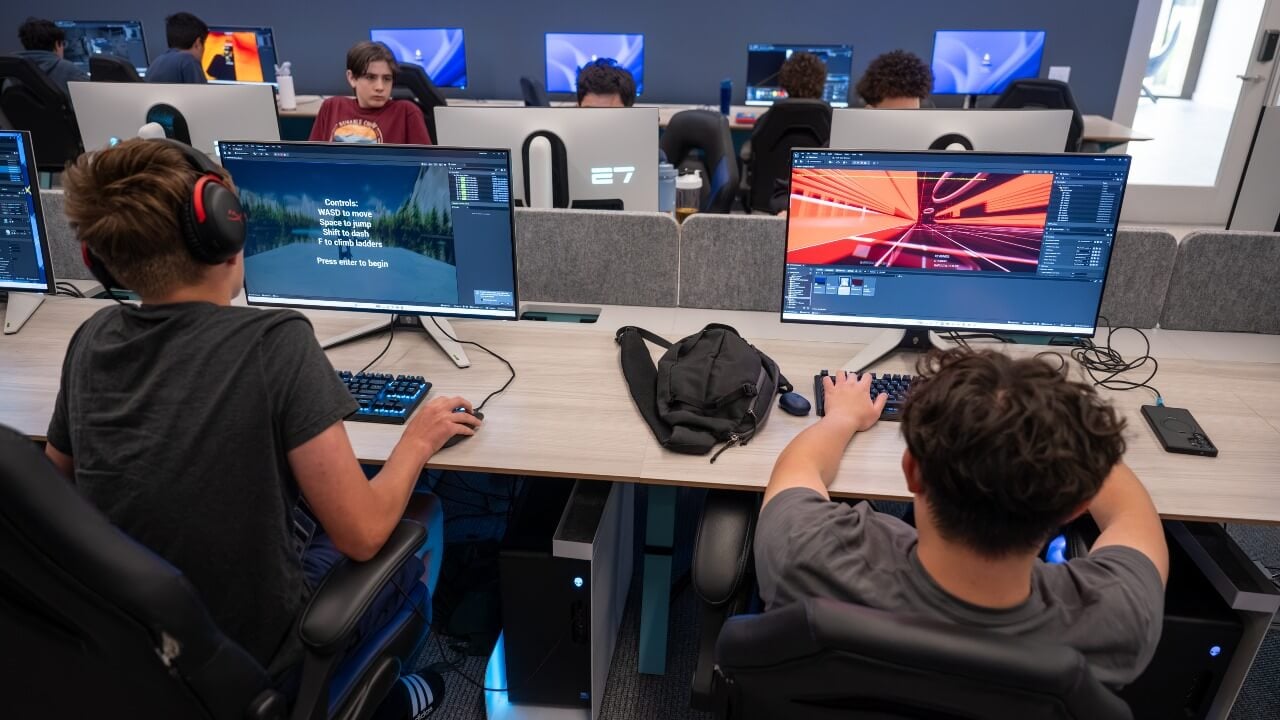
Matthew Maher: So Quinnipiac was on a big list of schools I had that had notable game design programs. And when I finally toured all of them, the main thing that Quinnipiac did that really stood out to me was that they very clearly supported their game design program. Like, there's a whole room there was a whole room in the Tator lab when I came here, and now there's one in the CAS lab and then in the new building. And that was something that a lot of other schools really weren't offering. Some of them, they just kind of mentioned the room, but they never really show it. So it kind of felt like, what's going on there?
Joel Vanner: You have a set space. You have set spaces.
Matthew Maher: Exactly.
Joel Vanner: For your studies and for your program. And you also have on the York Hill campus, there's the E Sports room. Were you a member of E Sports during your time here at Quinnipiac?
Matthew Maher: I actually was. Mainly during freshman year, I did a little bit sophomore year as well. I was a part of the Quinnipiac Smash Brothers team, and I even went to nationals with them in Texas my freshman year.
Joel Vanner: Oh, wow. That's an awesome experience. So the game design and development program, tell me a little bit more about we talked about the facilities, but the community that's there. Is there a specific faculty member that's guided you through the program that you want to call out? What's been your experience like in the community you found there?
Matthew Maher: The faculty is great. I don't think there's a single person within the faculty that hasn't been amazing, but out of all of them, the most influential has definitely been Professor Wesson. He is the one who got me an internship in my- after my sophomore year and has actually gotten- that internship, had actually led to contract work for me.
Joel Vanner: What did you do at your internship?
Matthew Maher: We worked with a company called Indistinguishable From Magic, IF Magic for short, to create a sort of sandbox-style tech demo for their modular controller, which essentially what that means is there's a lot of these little, like, pieces that you can just put in, and they all do different things. It's really cool.
Joel Vanner: And your contract work that you did after the internship, tell me a little bit about what that work was.
Matthew Maher: So, the contract work was also related to IF Magic and their modular controller. But this was a lot more of a game rather than a tech demo. It was shown off at the World Experience Organization in the UK and at PAC East in Boston this year. It was essentially a two V two game where players controlled a little mind cart that they had to reach- make reach an end goal using the different modules.
Joel Vanner: So how in your internship and then in this contract work, you're obviously connecting your studies with those experiences, but how have those two kind of blended together to teach you more about the field and kind of inform what you want to do in the future once you graduate?
Matthew Maher: So, I would say that there's definitely a lot that overlaps and that I've learned, but the biggest takeaways: the first one is definitely like what part of the field I want to go into? The game design field is huge. I know I wanted to be part of the programming part. That's not specific enough still. The thing that I really ended up enjoying was doing a lot of foundational work. So, sort of, like, the very, like, base of the game, as well as tools to help actually other developers. When I worked on the internship, I actually made the whole input manager to get the data that was being cast from the controller and convert it to something that was usable by other developers.
Joel Vanner: Taking a step back, how did the internship lead to that contract work?
Matthew Maher: So, the internship was with this, technically, it was through Professor Wesson's company, Hexacoza, but we were contracted out to IF Magic. And they were so impressed with the work that was done that they hired a couple of people from the internship to continue to do work on something else. They were it was kind of like a no brainer to them because we also helped develop the API that works with their modular controller, so we already knew the tools we were using.
Joel Vanner: And in your internship and in the contract work, you're working as part of a team, right? And does that carry over into your courses in game design? Is it a lot of team work working with others?
Matthew Maher: Definitely. Uh, making games, it's very rarely a one man job.
Joel Vanner: Not a solo. Solo job, yeah.
Matthew Maher: Yeah. With the more recent work, it was a much smaller team, mainly because we also had a much smaller scale. But with the internship, it was a much larger team with a lot of artists, a lot of level designers. Some people who were tasked with EMC, only making sure that there weren't issues when everything was being put together. There's a lot of moving parts of game design, which also means a lot can go wrong, unfortunately. But also, it creates a nice community at the end of the day.
Joel Vanner: How did those experiences help you grow? We talked about professionally already, but personally, what did you take away from those experiences?
Matthew Maher: Number one thing definitely has to be time management, not just in the sense of making sure I have enough time to do everything, but also kind of pacing yourself, making sure not to overdo it.
Joel Vanner: So you've mentioned that the field of game design is so broad. There's so many different parts that play a role in that field. What specifically have you found an interest in, and is it where you started, is that where you'll end up, or have your experiences and expectations changed throughout your experiences?
Matthew Maher: So, I'm definitely close to what I thought I'd be doing. As mentioned, I'm trying to go a little bit more into the game tools and foundational side. Mainly because of the fact that I'm realizing I really like the kind of instantaneous feedback I get from my other workers. When I started, I definitely I definitely knew I was going to do the programming side of it. I didn't quite know what. I figured I'd probably do more of the gameplay side, so the actual mechanics, making sure that, like, the players what the player sees is correct, all sort of front-end. But now I'm kind of closer to the back end.
Joel Vanner: And if you could give advice to anyone who's interested in studying in a program related to game design or, and/or pursuing it for a career, what advice would you give them to get started?
Matthew Maher: Oh, that's- I would have to say, honestly, just find some resources online. There's a lot; especially find communities.
Joel Vanner: There's a lot of forums out there for really any game.
Matthew Maher: Yeah. As I mentioned, I got into game design because of an MMO. And there's plenty of communities like that, and I'm sure that if you're looking to get started, you can find one that will be happy to help you kind of learn the ropes.
Joel Vanner: So you mentioned online communities are important. For students who are listening, who are looking to take it to the next level, what advice would you give to them as they're looking for the right college program?
Matthew Maher: I would say the best thing you can do is look at the work coming out of that college from current or even prior students and also pay attention to, like, where that work is coming from, because the opportunities that the college can provide you are the most important thing. And like I said, I got work from essentially through a professor here, and that led to more opportunities. Well, it's not the common story. It's also not uncommon. So kind of looking for those situations, that's the most valuable thing you can get out of these sorts of college programs, and they're not super hard to actually find, either.
Joel Vanner: Community in person, community online, teamwork connection, especially in the field of game design, it sounds like those are integral pillars to the work. Matthew, thank you so much for sharing your experience with us here today. And it was a pleasure to have you on the show.
Matthew Maher: Thank you for having me.
Joel Vanner: If you like today's episode of ”Who Are You?,” be sure to find our other episodes on Apple, Spotify, and YouTube podcasts, and like, share, and subscribe. Until next time, when I ask my next guest: who are you? I'm Joel Vanner. Bye for now.






















Quinnipiac Today is your source for what's happening throughout #BobcatNation. Sign up for our weekly email newsletter to be among the first to know about news, events and members of our Bobcat family who are making a positive difference in our world.
Sign Up Now