



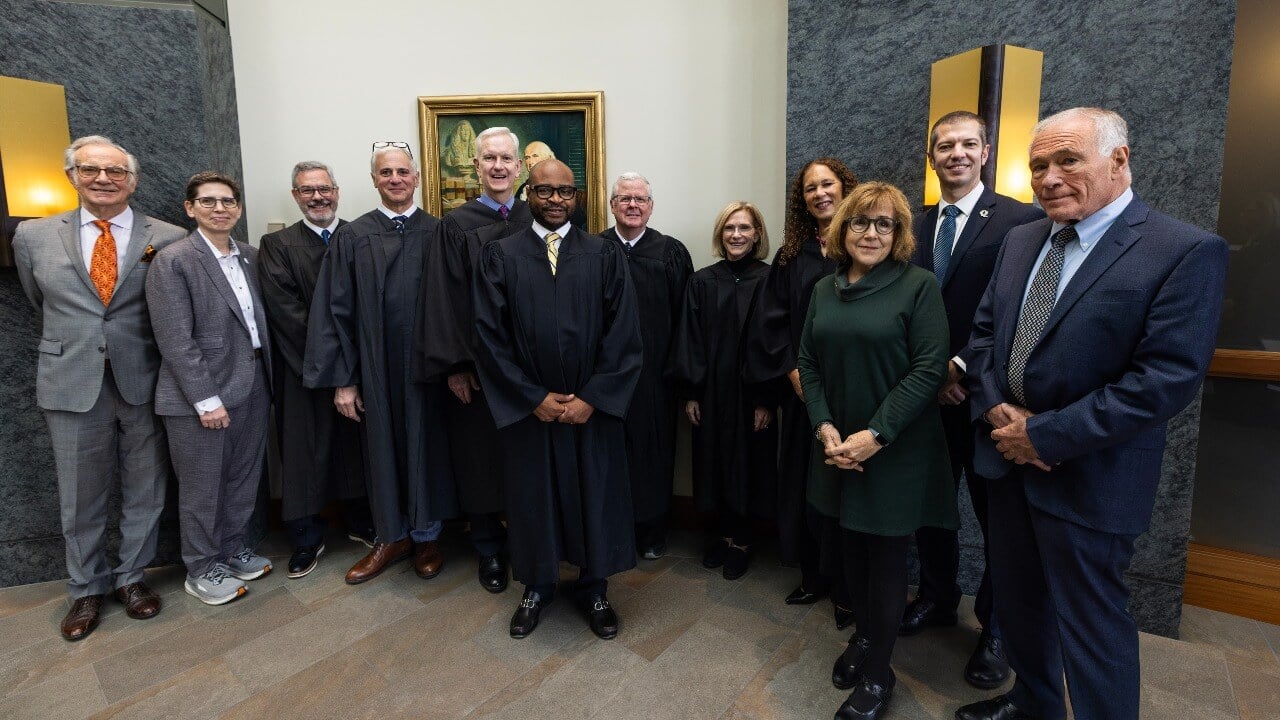
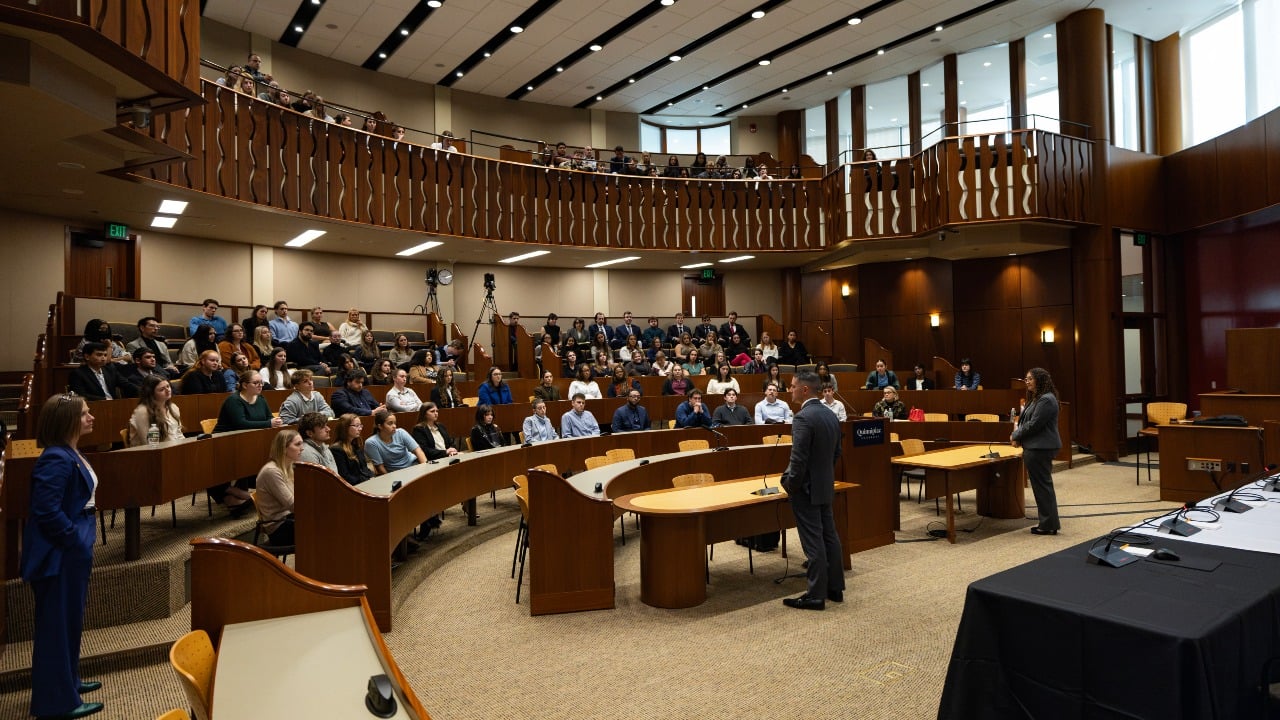
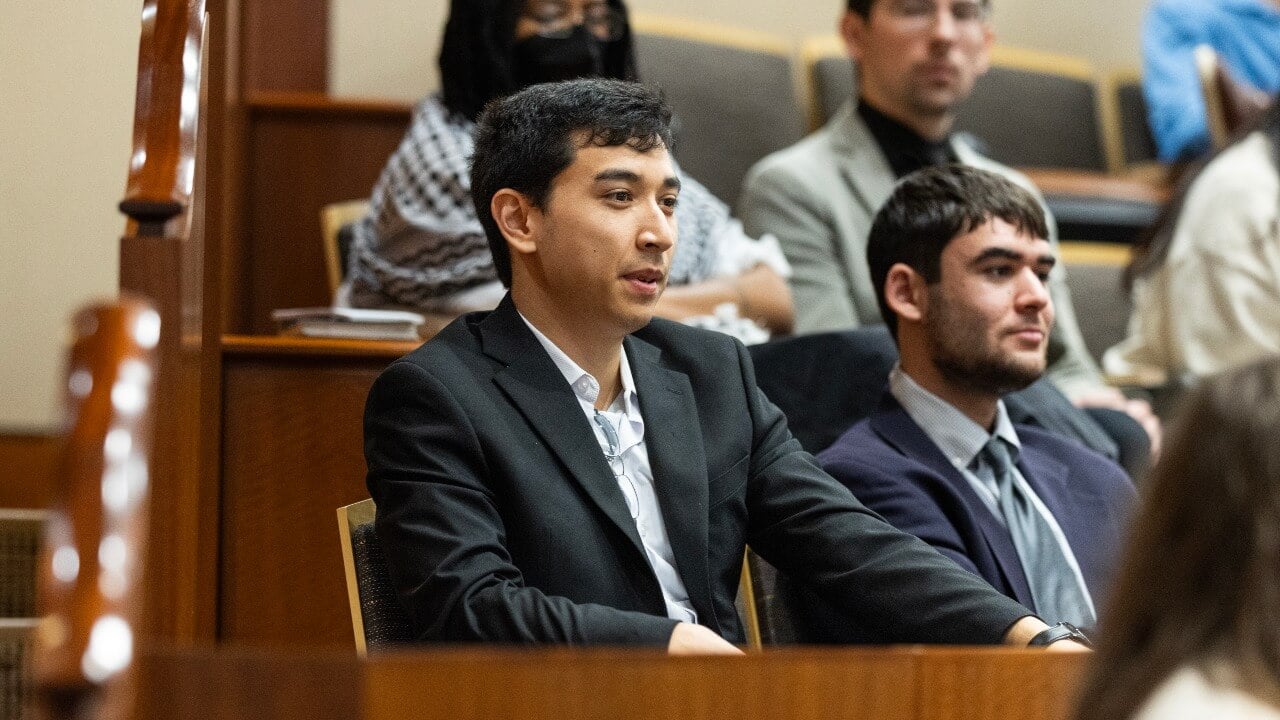
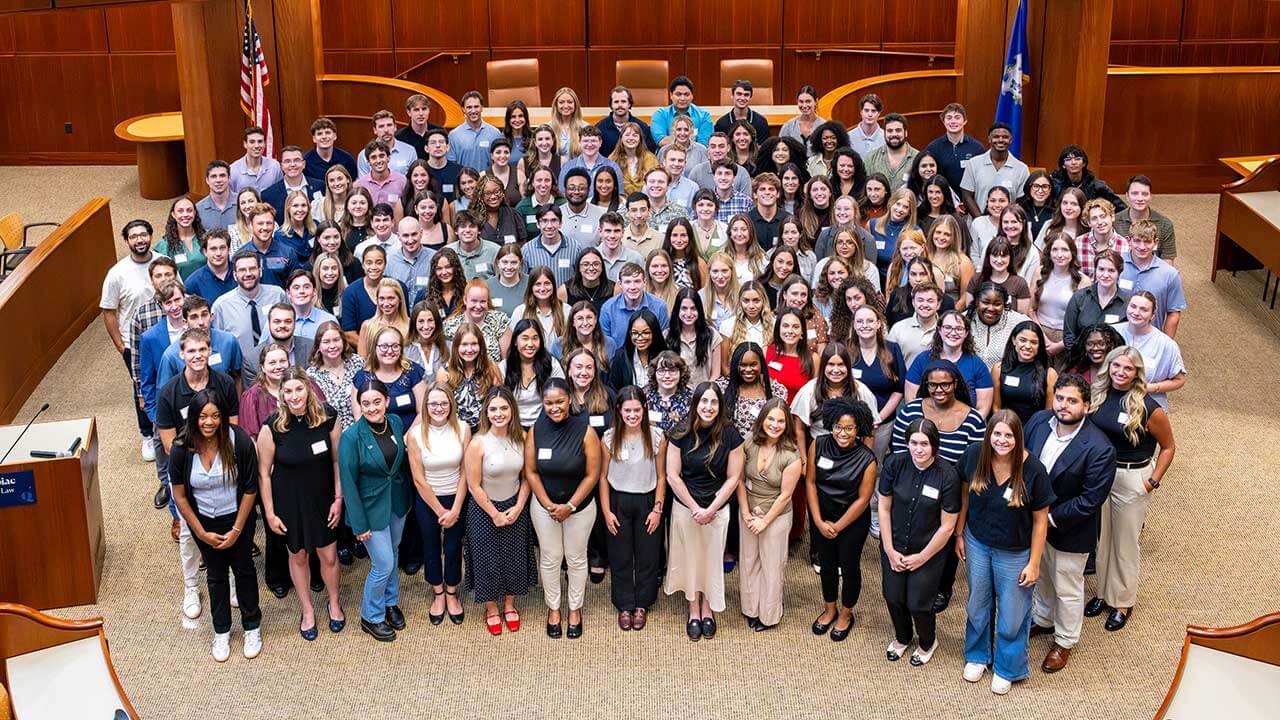
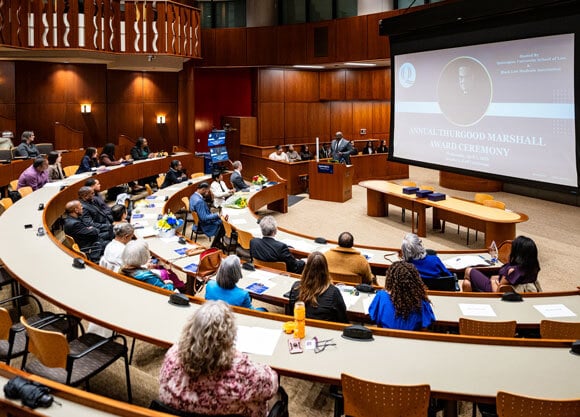
For the first-year law students filling the Brooke A. Goff Courtroom, the experience offered a meaningful connection between the education they are receiving and the work they hope to do one day.
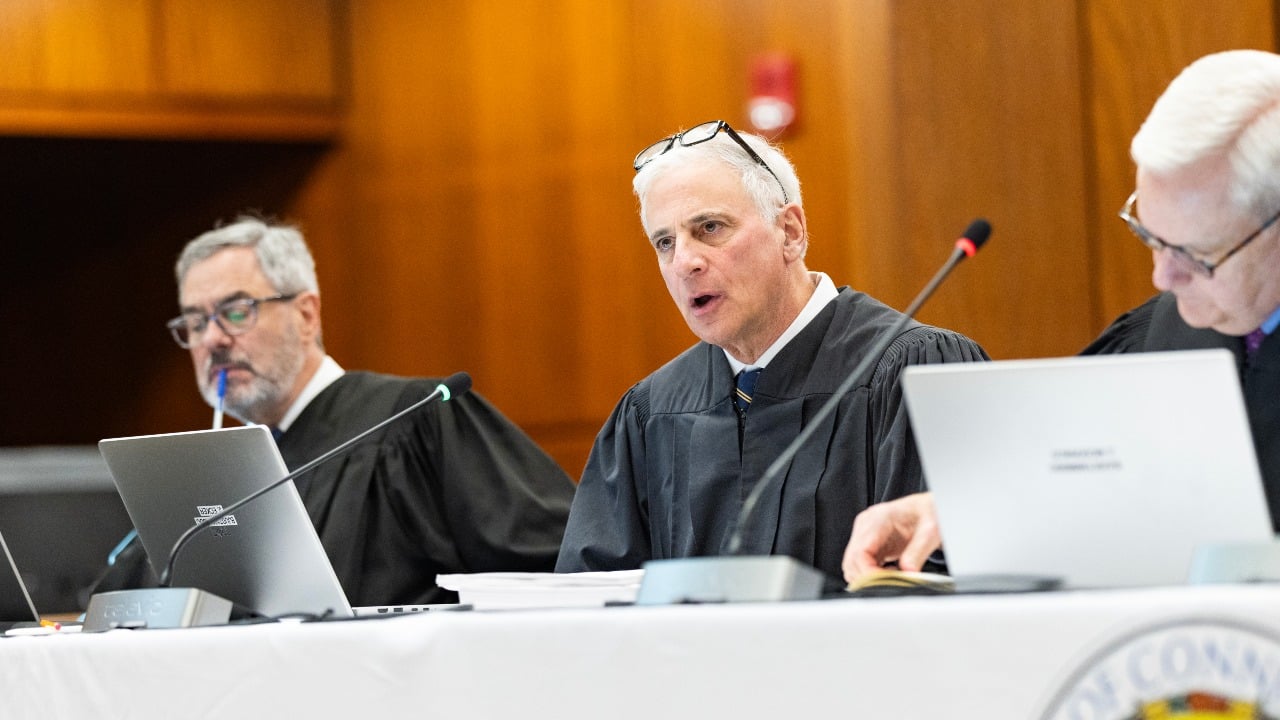
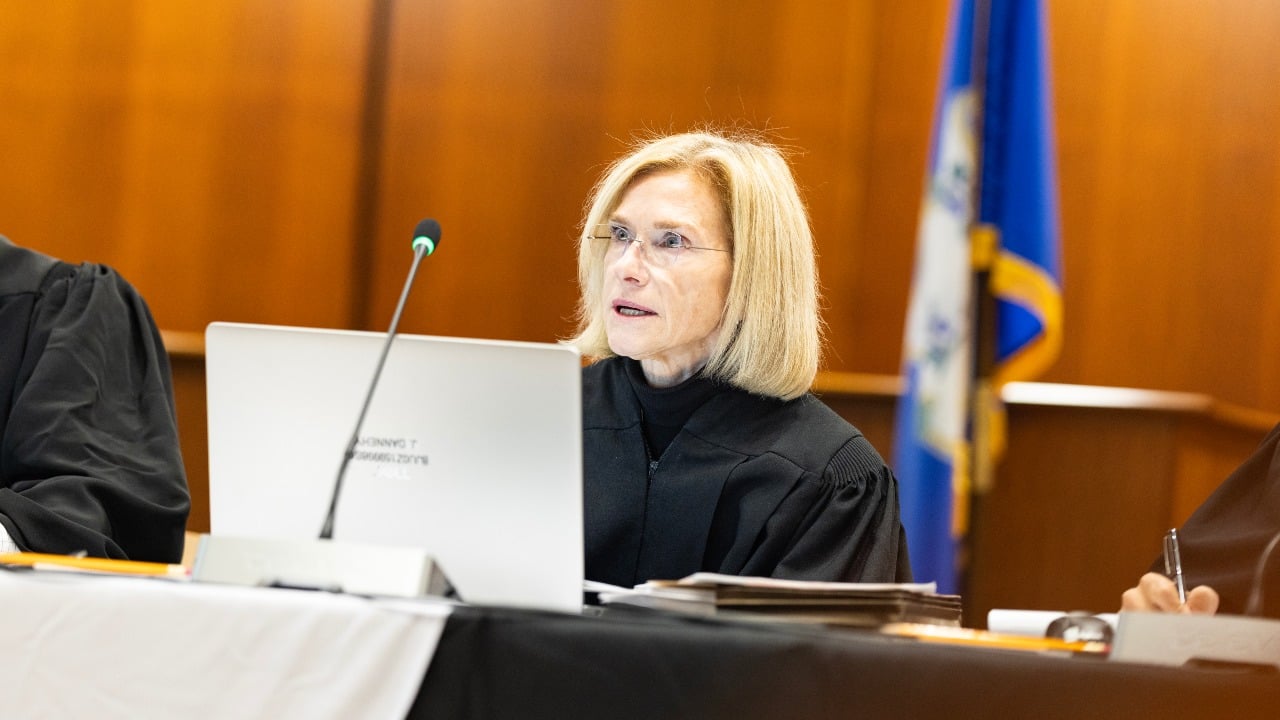
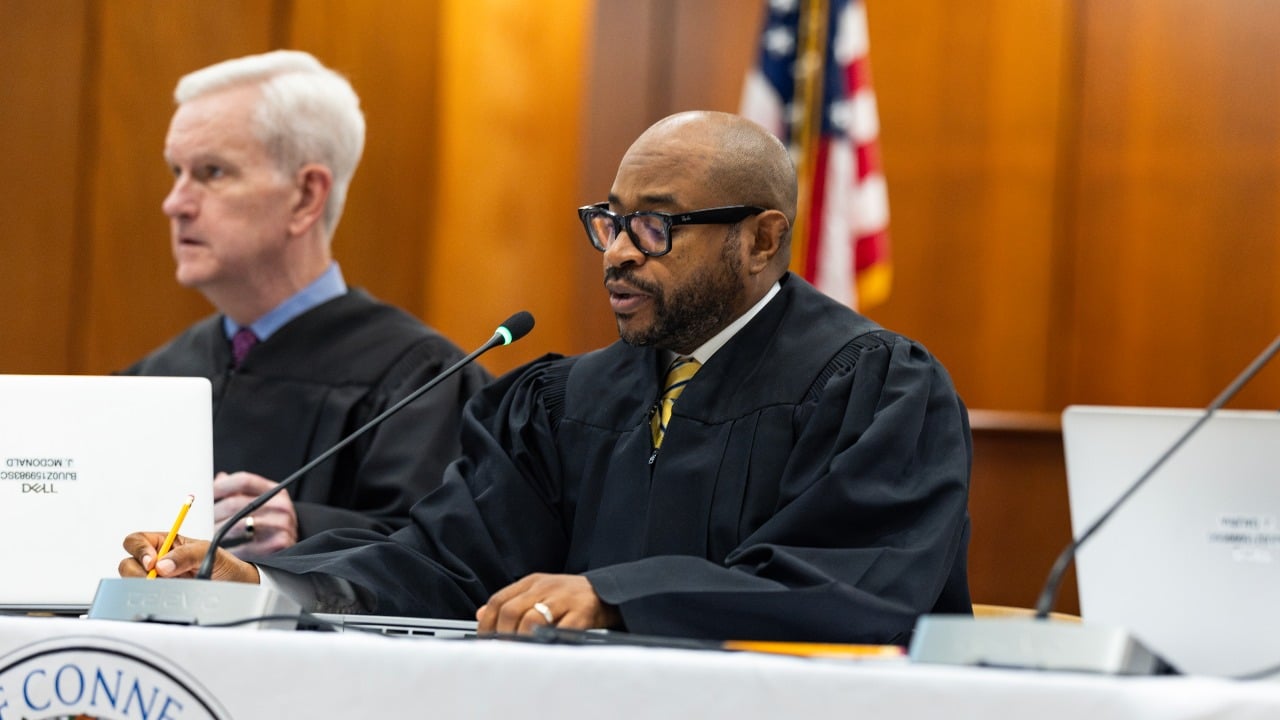
The visit marked the Supreme Court's return to Quinnipiac for the first time since 2016 and gave students an opportunity to observe the appellate process as it happens, from the attorneys' arguments to the justices' questions and the decisions advocates make in responding.
The event reflects a defining feature of a Quinnipiac legal education: Students don't just study the law. They experience it.
"At Quinnipiac Law, we believe that legal education is about more than learning rules and cases," said School of Law Dean Brian Gallini. "Hosting the Connecticut Supreme Court gives students a firsthand view of those values in action. They are not simply reading appellate opinions after the fact; they are observing judges, advocates and court personnel carrying out the work of the justice system in real time."
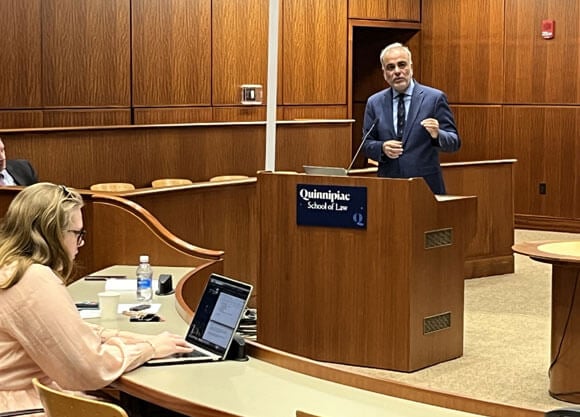
The day began with a look back at Quinnipiac Law's own history. Attorney Wesley Horton, of counsel at McElroy, Deutsch, Mulvaney & Carpenter, LLP, reflected on his role as a young lawyer in an appeal that helped preserve the law school in the early 1970s.
Horton also shared advice with students preparing to observe the day's proceedings. He encouraged them to seek appellate work early in their careers, offering a lesson from his own experience: "Go to a trial law firm and volunteer to do their appellate work, and you'll be surprised how fast you move up and are doing important things."
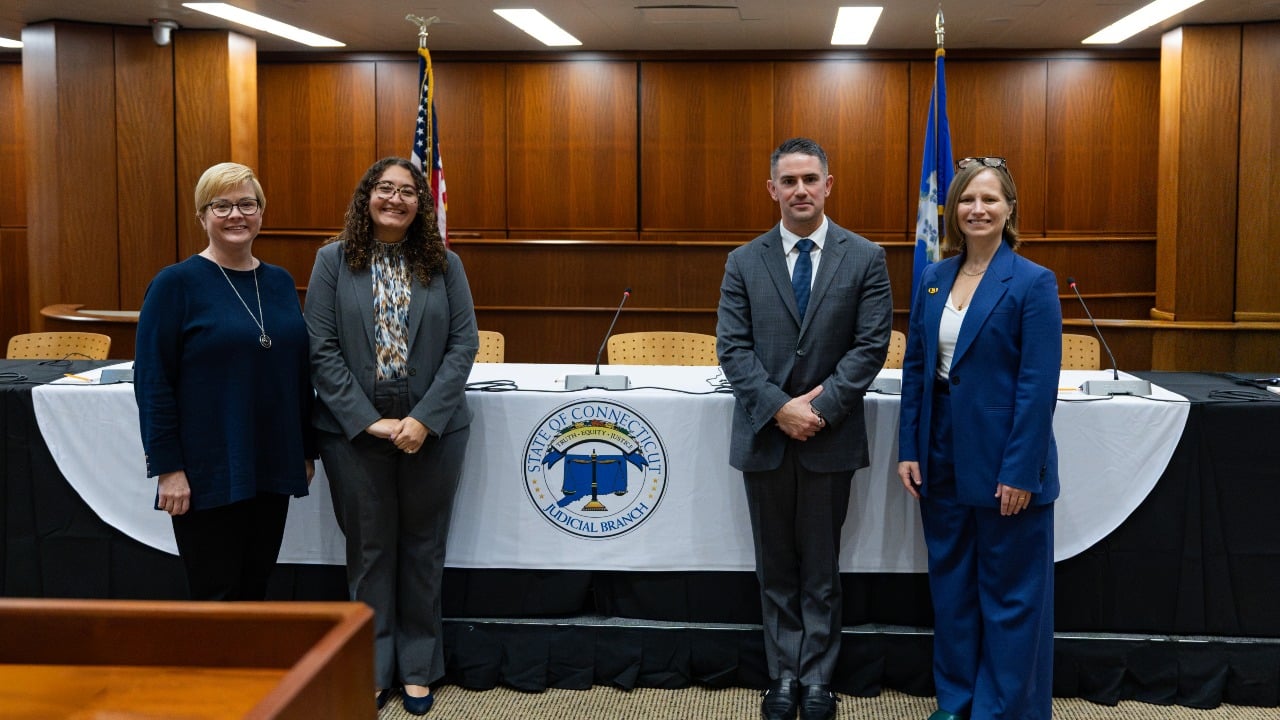
The three alumni represented different areas of appellate practice: Joe DaSilva, JD ’99, of Russo & Rizio, LLC; Jonathan Sousa, JD ’12, of the Office of the Chief State’s Attorney Appellate Bureau; and Kayla Stephen, JD ’20, deputy assistant defender in the Appellate Division. Their presence offered students a glimpse of the different paths a Quinnipiac legal education can open, from private practice to prosecution and public defense.
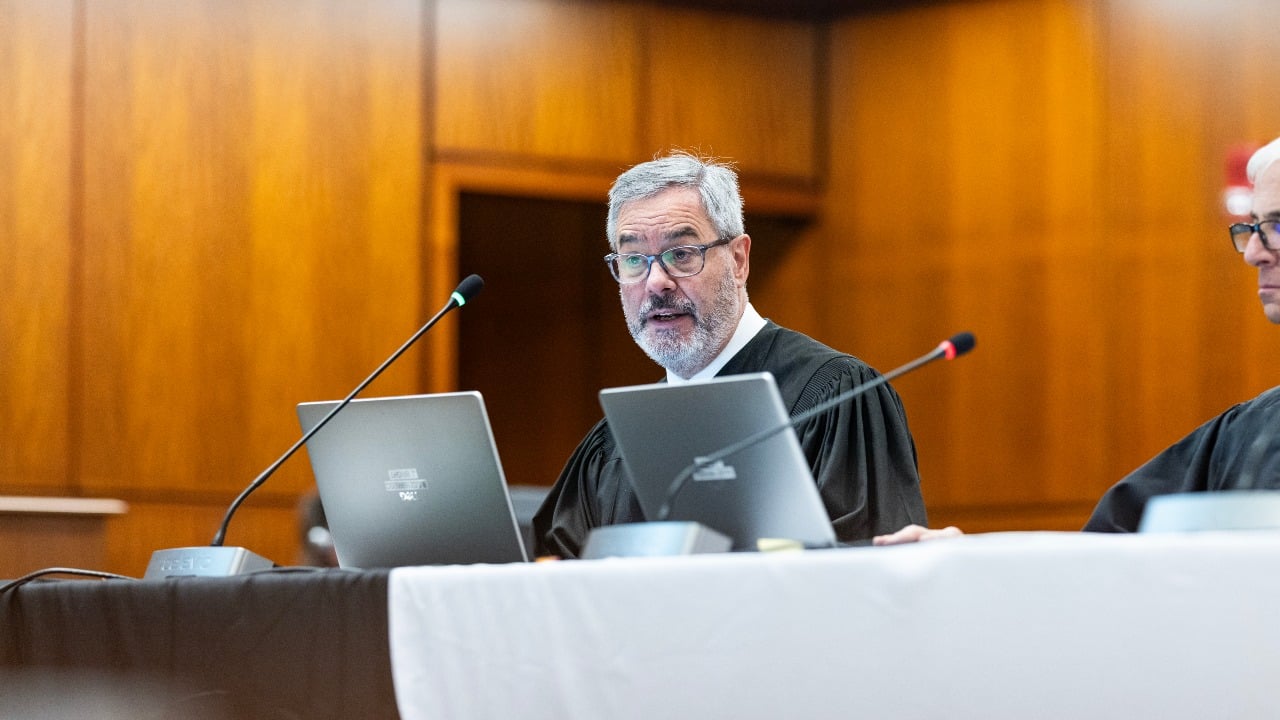
The Supreme Court heard arguments in two cases involving complex questions of law.
In Marcio Rene Aguilar v. Janet Eick, the justices considered issues surrounding Connecticut's Anti-SLAPP statute, including whether a trial court may hold an evidentiary hearing on a special motion to dismiss and base its decision on evidence presented during that hearing.
In State of Connecticut v. Daren S., the court considered whether the Appellate Court correctly concluded that the trial court had not abused its discretion in admitting expert testimony concerning delayed reporting of uncharged sexual abuse in connection with evidence of prior misconduct.
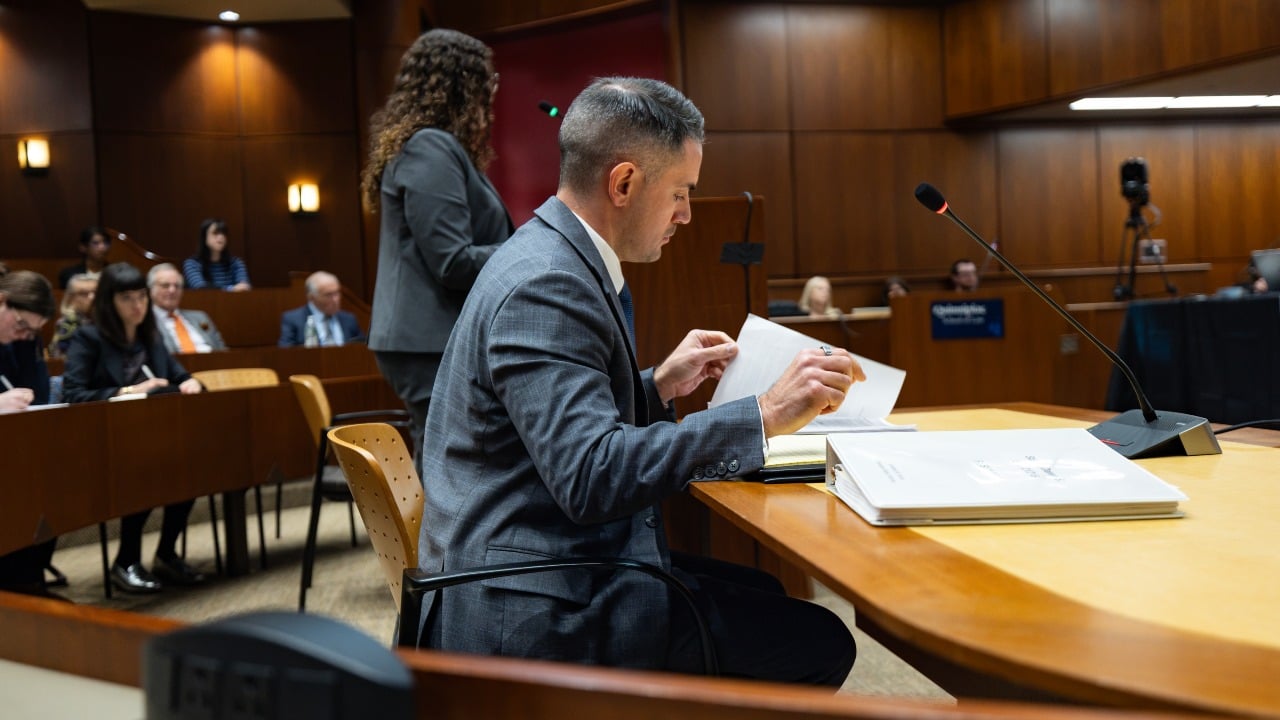
For students, watching the proceedings offered lessons that extend beyond the legal issues themselves. They could see how attorneys prepare, respond to challenging questions, adjust their arguments and engage with the justices — skills that Jenny Chou, a distinguished practitioner in residence for professional development and chair of the law school's Clerkships Committee, said are difficult to fully appreciate through case readings alone.
"By observing the justices' questions and the attorneys' answers, students can gain a better appreciation that law is not static: It is challenging, it changes and individual attorneys can have a role in shaping it," said Chou. “I think students will come away realizing how exciting — and fun — judicial clerkships can be. You get ‘courtside seats’ to attorneys working at the top of their game. The facts of the cases change, but fundamentally they are debating about what is right and fair. And then as a clerk, you get to be closely involved in the judge's decision-making.”
Following each argument, students had the opportunity to ask questions of the attorneys, learning more about appellate preparation, the development of advocacy skills and the demands of legal practice.
“The post-argument Q&A offered students a rare opportunity to learn directly from Connecticut Supreme Court advocates. By asking how attorneys prepare for argument, master new areas of law and develop their advocacy skills, students gain practical insight into both the profession and the lifelong learning that legal practice requires,” said Millie VandenBroek, School of Law associate dean of career development. “By seeing advocacy at its highest level, they can better understand the professionalism, preparation and excellence the profession demands and aspire to embody these qualities themselves.”
During the questions-and-answer session with the attorneys, Sousa offered aspiring attorneys a few fundamentals to keep in mind.
"Know your facts, know your law, be respectful of courts,” he said. “Always work hard on behalf of your clients."
For Quinnipiac Law first-year student Quinto Melnick ’26, JD ’29, the opportunity to observe the court brought another classroom lesson into focus: the importance of precision in language.
“The Q&A offered invaluable insight, and I appreciated the attorneys taking time from their demanding schedules to speak with us,” said Melnick. “Observing the justices’ interactions, demeanor and careful phrasing brought our classroom lessons about precision in language to life. The importance of a single word became tangible in arguments that could shape both the outcome for the parties and the law more broadly.”
Melnick also appreciated seeing Quinnipiac alumni appear before the court, noting how different career paths can ultimately lead attorneys into the same courtroom, even on opposing sides.
“It was an honor to see that almost every attorney appearing before the Court was a Quinnipiac alum,” said Melnick. “That shared foundation highlighted the different ways our careers may take us and how those directions can ultimately lead us into the same courtroom, even on opposing sides, proving that life is not a single path, but a field where you may change directions, but as long as you are moving forward, you can still make it to the other side of the field.”
The visit also offered an opportunity for Quinnipiac undergraduates to connect with the legal profession. The proceedings were livestreamed and made available to undergraduate students, extending the experience beyond the law school. For students interested in law, criminal justice, political science and related fields, access to a law school and its career development resources offers an added dimension to their undergraduate experience.
Bringing the Supreme Court to campus required more than preparing a courtroom for an audience. It required transforming the space to accommodate the court itself.
Because the Connecticut Supreme Court hears cases with all seven justices sitting together, Quinnipiac's facilities team constructed a custom bench to accommodate the full court. The effort involved collaboration across the university and the Judicial Branch, with facilities, information technology, audiovisual, security, faculty, administrators and student employees all contributing to the day.
“Our amazing facilities team had to build a bench the day before to fit all seven justices because they hear arguments en banc (as a full bench) for the Connecticut Supreme Court,” said VandenBroek. “It's inspiring to see how our community comes together to make this possible. This was really a team effort."
Chief Justice Raheem L. Mullins also recognized the collaboration behind the event and the opportunity it provided students.
“The Connecticut Supreme Court is honored to bring the On Circuit program back to Quinnipiac University School of Law. We appreciate the hard work of everyone who has been involved with planning and logistics,” said Mullins, in a released statement. “We appreciate Quinnipiac’s enthusiasm and dedication to providing this opportunity to see in person, real cases argued before the Supreme Court.”
The visit continued a recent series of opportunities for Quinnipiac Law students to learn directly from the judiciary. Over the past year, the school has hosted the Connecticut Appellate Court and the U.S. Court of Appeals for the Second Circuit, bringing state and federal appellate proceedings to campus. For Gallini, these occasions underscore the connection between legal education and the responsibilities students will assume as practicing attorneys.
“These experiences also reinforce an important lesson: Lawyers are not simply technicians. They are officers of the court, counselors, problem-solvers and leaders within their communities,” said Gallini. “Opportunities like this encourage students to think about the role they will play in advancing justice and serving clients with competence, professionalism and integrity.”
In Focus




In this Article
Read This Next























Stay in the Loop
Quinnipiac Today is your source for what's happening throughout #BobcatNation. Sign up for our weekly email newsletter to be among the first to know about news, events and members of our Bobcat family who are making a positive difference in our world.
Sign Up Now