


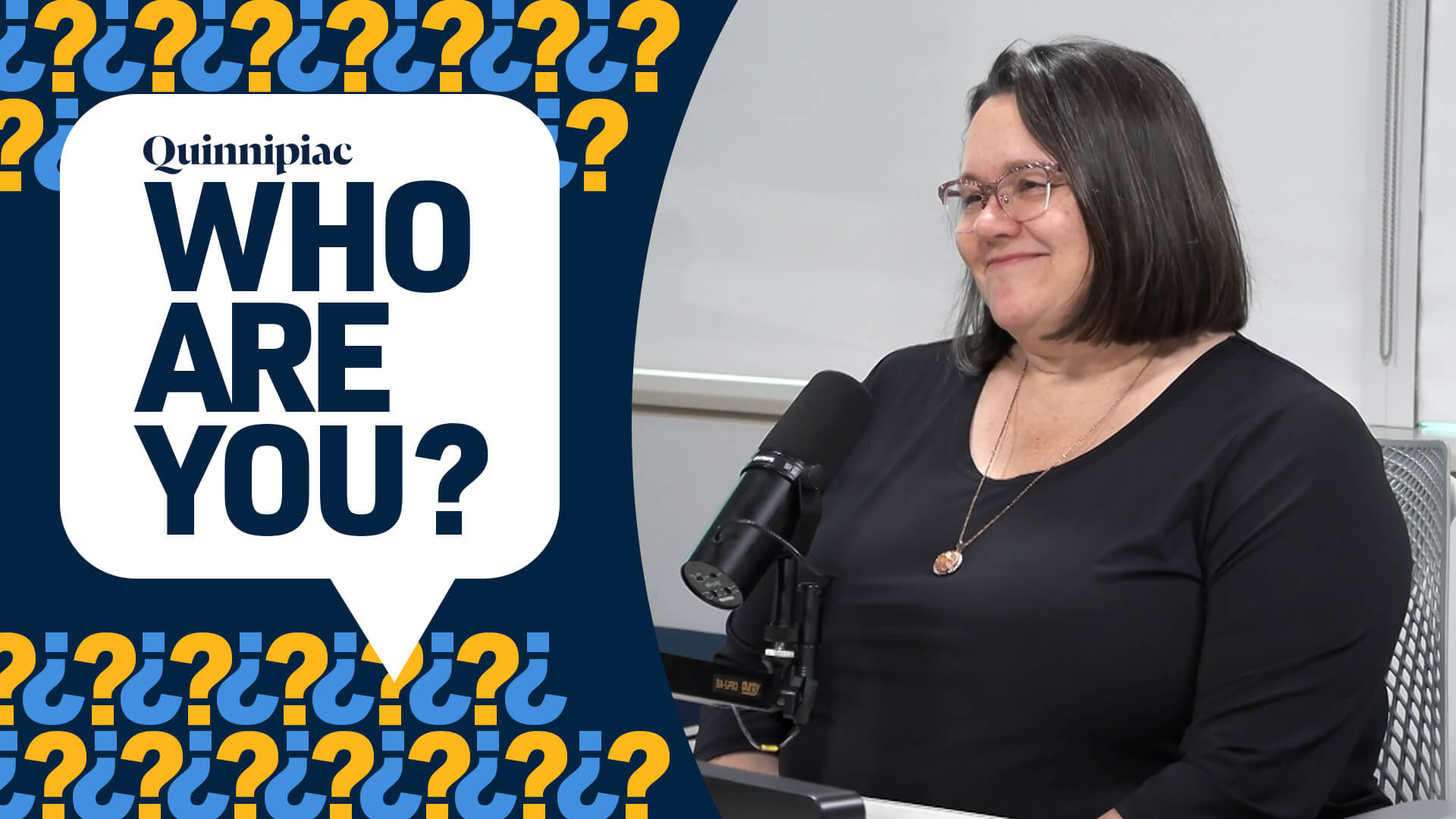
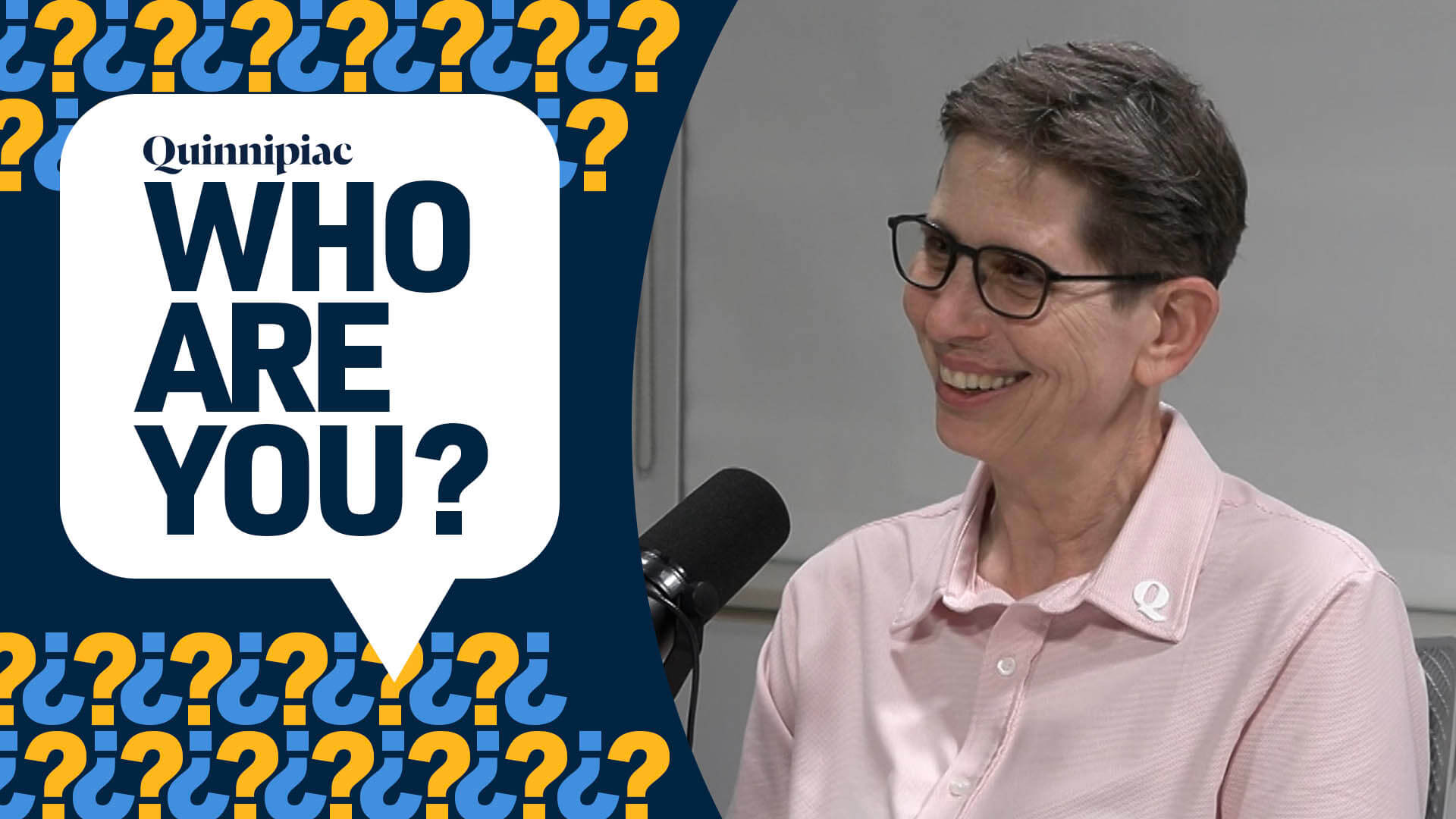
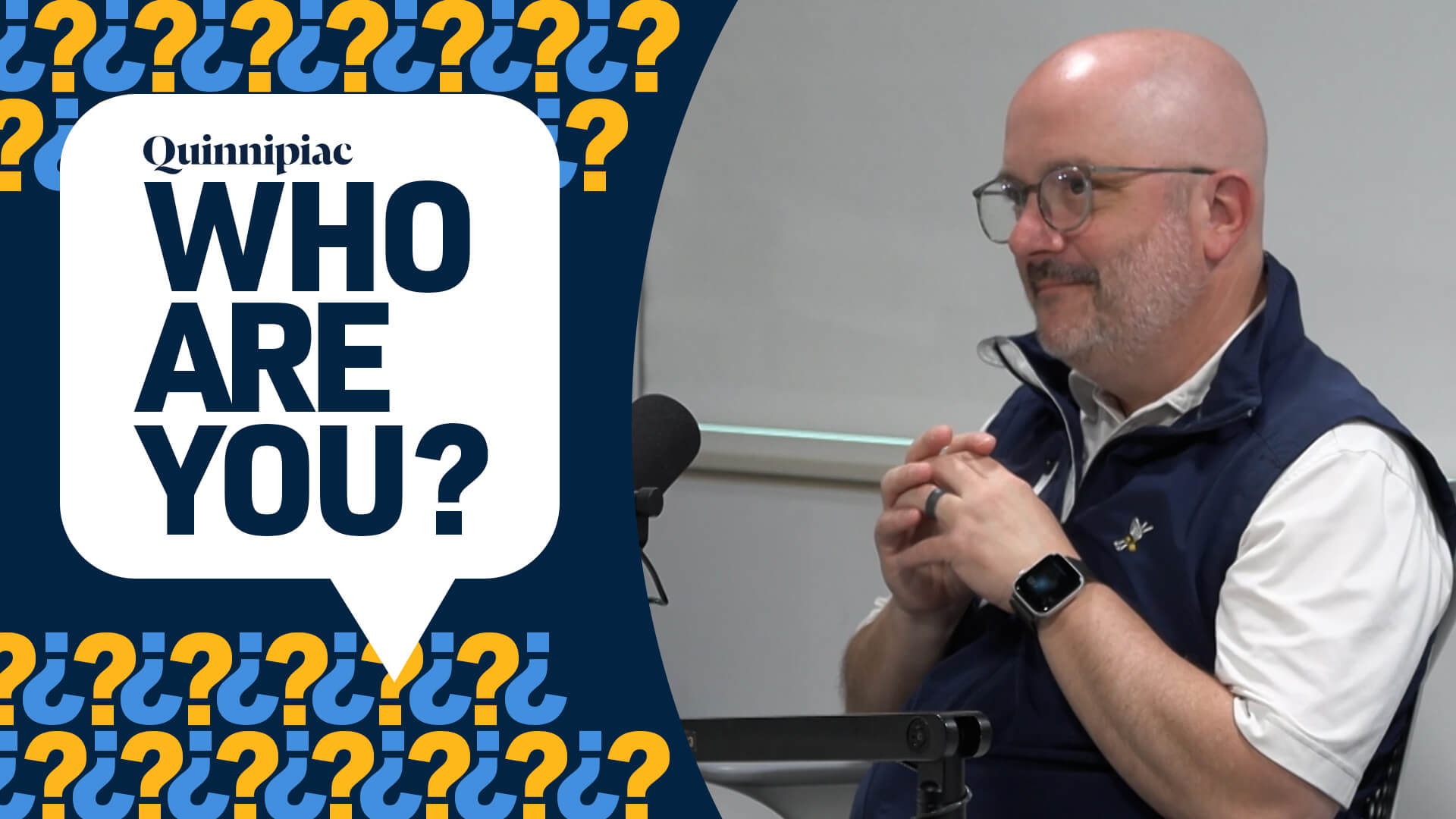
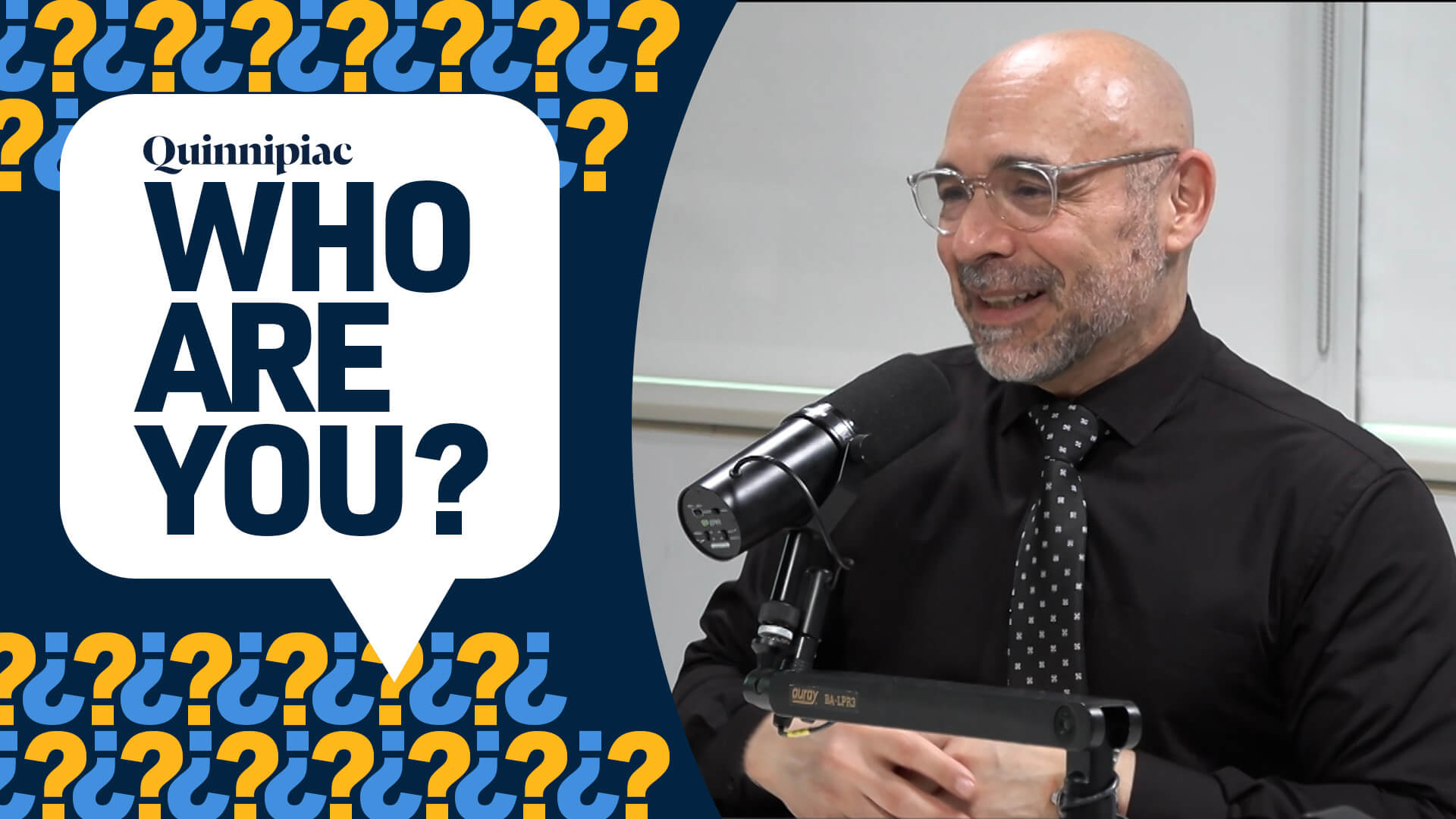
‘Who Are You?’ podcast with guest Professor Carrie Bulger
Industrial and Organizational Psychology and the challenges of work today
Industrial and Organizational Psychology and the challenges of work today
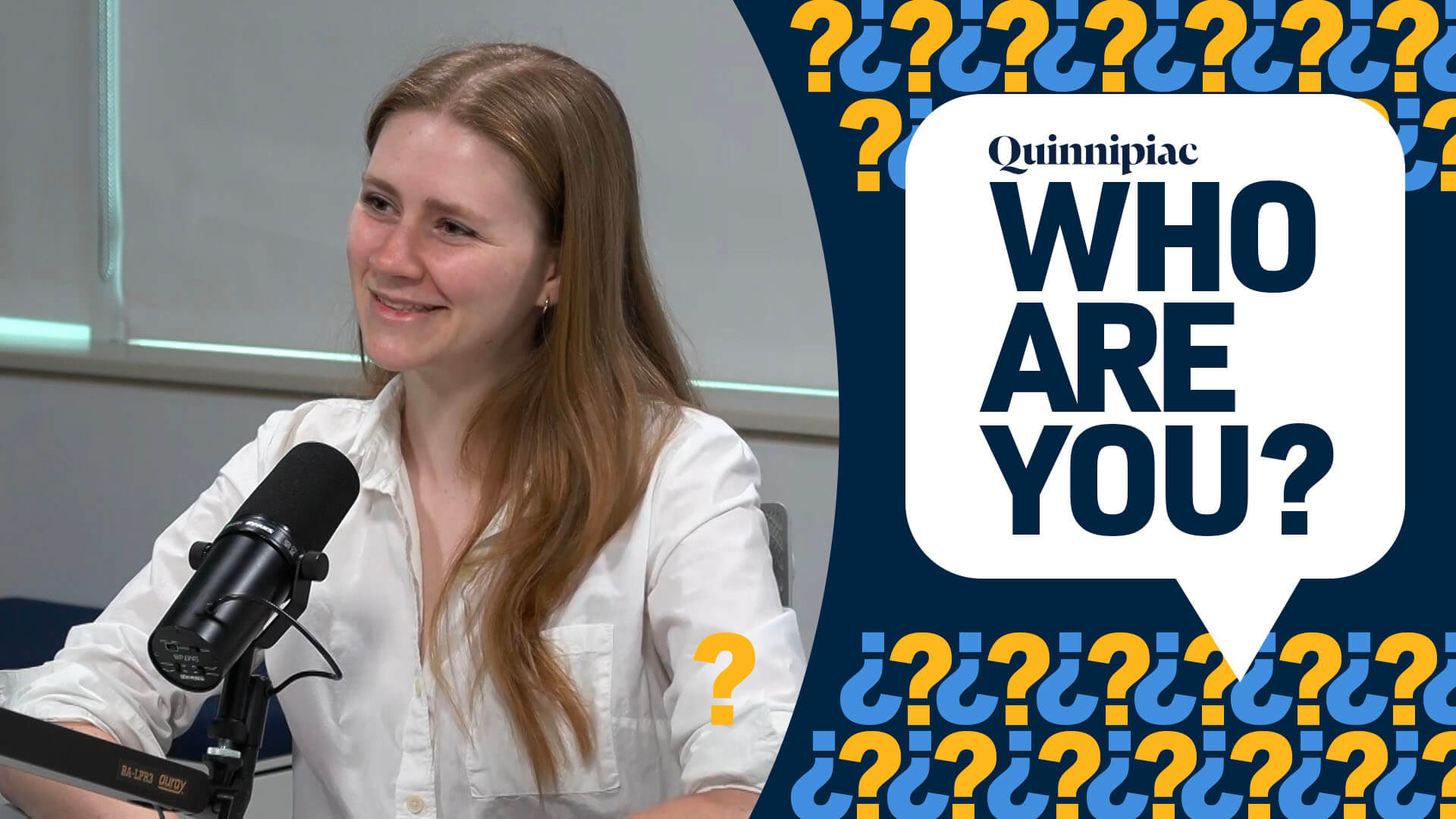
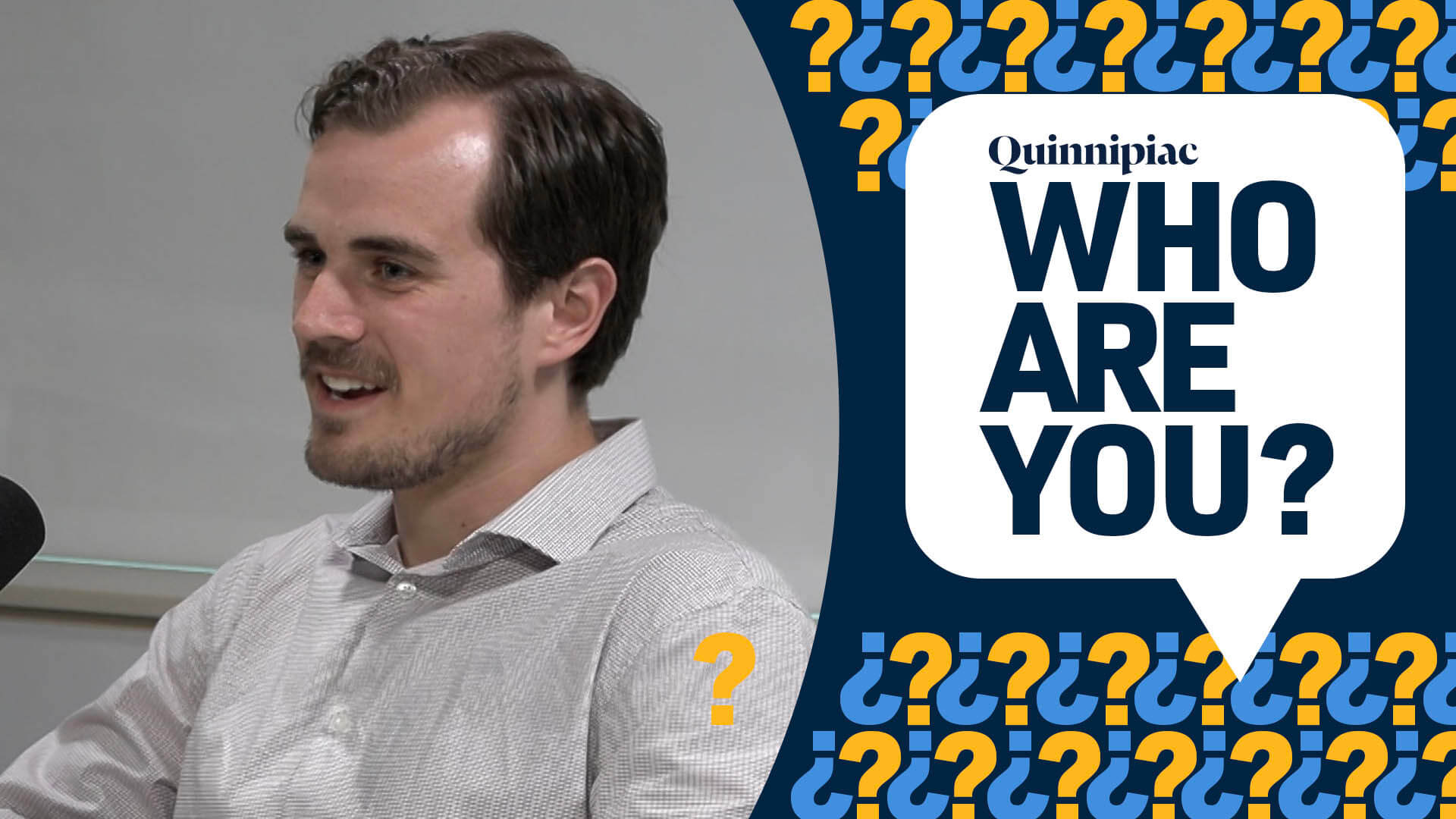
Joel Vanner: Welcome to ”Who Are You?,” the Bobcats, you know, the stories you don't. I'm your host, Joel Vanner, inside the podcast studio at Quinnipiac University's School of Communications, and I am joined today by my guest Carrie Bulger. Carrie, welcome to the show.
Carrie Bulger: Hi, Joel, thanks for having me.
Joel Vanner: So, Carrie, we know your name, but tell me, who are you?
Carrie Bulger: Ah, thanks. I am a professor of psychology. I am an industrial-organizational psychologist, and I teach lots of different site classes. I study work stress and well-being, especially how we create boundaries around our work and our home lives. And I've been a Quinnipiac for a long time.
Joel Vanner: Awesome. Well, welcome to the show.
Carrie Bulger: Thanks
Joel Vanner: Industrial Organizational Psychology, I.O.psych, right? Short. But let's just start with the field of psychology. How did Carri learn that that was a field that she wanted to go into?
Carrie Bulger: Yeah, man, it feels like I knew I was gonna be a psychologist for a really long time. I definitely remember in high school, people would come to me for advice. My friends always wanted to talk to me, and I just figured that was where I would end up psychology.
Joel Vanner: Did you post up in, like, a classroom, say, “Come by this room at this time. Carrie's here. The peanuts?”
Carrie Bulger: No, I did not do that. No, I just felt like a natural thing for me, and I really assumed that I would be a clinical psychologist and become a therapist. But then I found Iosychology. My dad was a journalist and he went on a business trip, which was really unusual for him. But he came back from that trip and he handed me this in flight magazine that had a cover story about a guy who studied personality at work. Dad said, This is pretty cool. You should check this out. I read it and I was like, That is pretty cool. So that's how I discovered Iosych.
Joel Vanner: Discovered I. O. psych through the magazine your dad brought home from the airplane. Studied that in school. Where did that take you?
Carrie Bulger: Sort of. I majored in psychology and I did a minor in business because a lot of universities don't have Iosych Quinnipiac is pretty unique in that regard. We have multiple Iopsychologists and multiple Iosych classes, but I didn't have that as an undergrad. I did psychology major as much as I could. I learned about business, and then I moved to Connecticut to get my PhD in Iosych.
Joel Vanner: And what drew you to Quinnipiac? So you were in Connecticut for your PhD program and looking for something special in your next adventure?
Carrie Bulger: Yeah. So as a doctoral student, again, I made some assumptions. I thought I was going to go and be a consultant and kind of change the world of work out in the real world. You were learning so much about. Yeah, exactly. I want to do. And I still do I still do want to make work better for people. That's kind of that's the goal of every IO psychologist. Um, but as a grad student, I fell in love with teaching and doing research. And the Quinnipiac job came up in the spring of 2000 and I applied and got asked to come interview, and the psychology department was full of these really charming, interesting people who loved their students, and that was really clear. The other cool thing about that interview was they actually involve students in it, including someone who wanted to get her degree in Iopychology connection right there. Yeah. So before I even left that day, I told the chair of the search committee that I wanted the job.
Joel Vanner: So as an I.O. psychologist, I'm a huge fan of Ted Talks, and, you know, you can get lost in TED Talks talking about positivity, trust, the workplace. Right. But I want to hear from you. What are some of the challenges of work that we see today?
Carrie Bulger: Well, you named some of them. I think a big issue right now in workplace is mental health and well being. We talk about that a lot at Quinnipiac too, we care about that for our students, faculty, and staff, and we're not alone. Every workplace is into that right now. So the good news is that opsychologists know that a lot of things can change to positively impact well being. That doesn't involve therapy. I am not a workplace therapist. But if we, for example, can make leaders more effective at their job, well, that trickles into their employees, right? It makes their employees better at their job.
Joel Vanner: Are you in the classroom for your students today? How are you modeling that for your students? Do you have an activity that you do or something that you reference to just kind of set that tone for them that this is what the experience in my class is going to be like?
Carrie Bulger: Yeah, from day one, we start talking to each other. You know, when I teach the iost class, I ask them well, first, I start by telling them about all the jobs I've had from high school till now. And then I ask them the same. What are the jobs that they've had? And I always ask them to tell me the job they like the most and the job they like the least.
Joel Vanner: You get a lot of laughs when you start talking about the jobs they like the least.
Carrie Bulger: Yeah. Yeah. So it's funny. Some people say, I've liked every job I've had, but, you know, they haven't had that many jobs yet. Give them time. Right. Yeah.
Joel Vanner: You ask students about their favorite and least favorite jobs. Tell me what your favorite and least favorite jobs were.
Carrie Bulger: Well, I mean, obviously, I've been here a long time. So this is my favorite job, but before this job. Right. You didn't pay me to say that. Before this job, surprisingly, one of my favorite jobs was working at Wendy's, and I did that through college. And you would think, I mean, don't get me wrong. I went home smelling like French fry oil and chopping onions. That was not pleasant. But I loved it. Interacting with my co workers. I worked the drive through, so I got to, you know, type in all the orders and wear the headset. That was kind of fun. Many hats. Track to manage right there. Exactly. But really, I think, now that I'm an Iopsychologist and have thought about that job, the reason I liked it so much was because of my manager. He was supportive. He made us trust him. He helped us out when we needed it. And he was just a really good boss of a bunch of teenagers. You know, he did a really nice job.
Joel Vanner: That can't be that easy.
Carrie Bulger: Right. I mean, I'm sure he was trained, like every other Wendy's manager was trained, but he also had something special about him that made us enjoy working for him.
Joel Vanner: I haven't had too many jobs yet, still young in my career. Uh, one of my favorite jobs, I worked for ESPN and the Walt Disney Company for a number of years. I like that job for a variety of reasons. I had a couple of different hats that I wore, kind of similar to you in your Wendy's experience. But I liked seeing the impact of the work that I was having, being able to see the difference I was making. You turn on ESPN there it is. You go to the app there it is, right? There's just something about being able to see that immediate impact in the workplace that gives you that satisfaction that I'm in the right place, I'm doing the right thing.
Carrie Bulger: Yeah, if you described that to me in class, I would tell you that that is 100%, one thing that makes people like their jobs is that they can see the significance of their work from, you know, our future PT students who are going to go out and help people, be able to move their bodies better to our future psychology majors who are going to go out and do a variety of things in the world where they're going to use what they know to make people's lives better.
Joel Vanner: The topic of jobs, the psychology curriculum is interesting in that it has some moments in there where students can take stock of their values and their interests to inform the rest of their studies, right?
Carrie Bulger: Yeah, it's really exciting. We have a curriculum that is really aimed at future thinking. We want our students to learn as much as they can about all the different kinds of psychology, but we also want them to think about, how am I getting ready for my career, whatever that might be. A bunch of our students are going to go become psychologists. I mean, that's pretty normal. But what's true of psychology majors is that the vast majority don't become psychologists. That's probably a surprise. It's not a surprise. But the good thing about that major, what we think is really great is that they're getting skills in communication, critical thinking that are translatable to any job. And so, yeah, we have this really cool class where we walk students week by week through some self assessment where they figure out what is it that they value? What is it that floats their boat? What are they interested in? And how does that translate to career options? It's not like, do you want to do you like working with wood? Maybe you should be a woodworker, but what are the things about working with wood that can translate to other careers?
Joel Vanner: Do you work well with the other teams that you'll interface with in the workplace? Right. I'm pretty plugged into the world of AI, as I'm sure you are. And there are just some things that it'll never replace: human empathy, emotion, that human connection. So it's great for the students, you have that check for them to determine what their interests are in the field of psychology while they're here at Quinnipiac.
Carrie Bulger: Yeah, reading about AI is actually one of the first readings in that class because we want them to understand exactly what you just said: it won't replace everything. But also, they have to understand AI themselves and figure out how to work it in their career.
Joel Vanner: So for those listeners who may not have had a corporate workplace setting yet, right? And they're listening to us talk about these things in the workplace that they need to be aware of mental health, good leadership, etcetera. What would you suggest to them that they do now just to keep aware of those things as they prepare to enter the workforce?
Carrie Bulger: Great question. I think there are lots of things that our students can do. Take a variety of classes so they can get a wide range of skills. Get involved on campus. The clubs that you belong to the organizations that you work with will give you a wide range of experiences that will translate into work pretty easily. Even if you don't think it does right away, you'll see it as you progress. Keeping track of what's going on in the workplace, a lot of that gets discussed on traditional media news and that sort of thing. But you see it on social media too. Start following some folks who talk about work on social media.
Joel Vanner: Be connected with your family members who are out in the workplace; see what their experiences are. And those are also things you learn in an interview process too, about the workplace culture and the values that they have there.
Carrie Bulger: Yeah, believe it or not, your family knows about work, right? They have jobs. Yeah. Yes.
Joel Vanner: Those that are in the workplace, lifelong learning and continuing education is a big part of Quinnipiac here and you're involved in that space. What programs are you involved in there?
Carrie Bulger: It's pretty exciting. I think the Lifelong Learning department is doing some really great work. I'm really proud to be involved. I focus mostly on the leader development programming, which is pretty wide ranging. We have programs that help leaders get better at conflict management that help leaders assess performance, and we really help leaders know themselves because self awareness is actually the fundamental when it comes to being an effective leader.
Joel Vanner: These continuing education programs for a specific audience, or can anyone enroll in them if they're interested?
Carrie Bulger: Yeah, it's actually both. So there are some programs that are developed for and with specific organizations. So the lifelong learning folks get in touch with talent management at an organization and figure out what's needed in their workforce and develop programming just for them. But we also have a whole suite of programs that are open enrollment, and anyone who's interested in becoming better at their job, especially better at leadership or teamwork, can get involved.
Joel Vanner: I actually had a really great experience in the leading with Impact program that the Lifelong Learning office put on. It was a collection of employees from across Quinnipiac. We touched on a number of things. My favorite, I think, was conflict management and resolution styles. Yeah, and how to communicate through conflict. Because I think conflict kind of comes up and you would know better than me. Comes up in the workplace, but it's not always something people react to immediately. Sure. But there are the little signs along the way that something may be there.
Carrie Bulger: Yeah, so I think that's important. I don't teach that part, but I do know about conflict, and one of the things that I think people don't think about is some conflict is okay, and it's actually helpful. It's a part of life. Right. And there's different kinds of conflict. So really getting that opportunity that you had to think about it, to explore it, and even maybe play with it a little bit is one of the important parts of that program.
Joel Vanner: Yeah, it was awesome, and I encourage anyone who's interested to check out the offerings Lifelong Learning has. Nice. Thank you, Carrie, for joining me on the show today. It was great to have you, and I appreciate you sharing your insights.
Carrie Bulger: Thank you. It was great to be here. I really enjoyed it.
Joel Vanner: If you enjoy today's episode of ”Who Are You?,” be sure to like, subscribe, and share, and find other episodes on Apple, Spotify, and YouTube podcasts. Until next time, when I ask my next guest, who are you? I'm Joel Vanner. Bye for now.

















Quinnipiac Today is your source for what's happening throughout #BobcatNation. Sign up for our weekly email newsletter to be among the first to know about news, events and members of our Bobcat family who are making a positive difference in our world.
Sign Up Now