



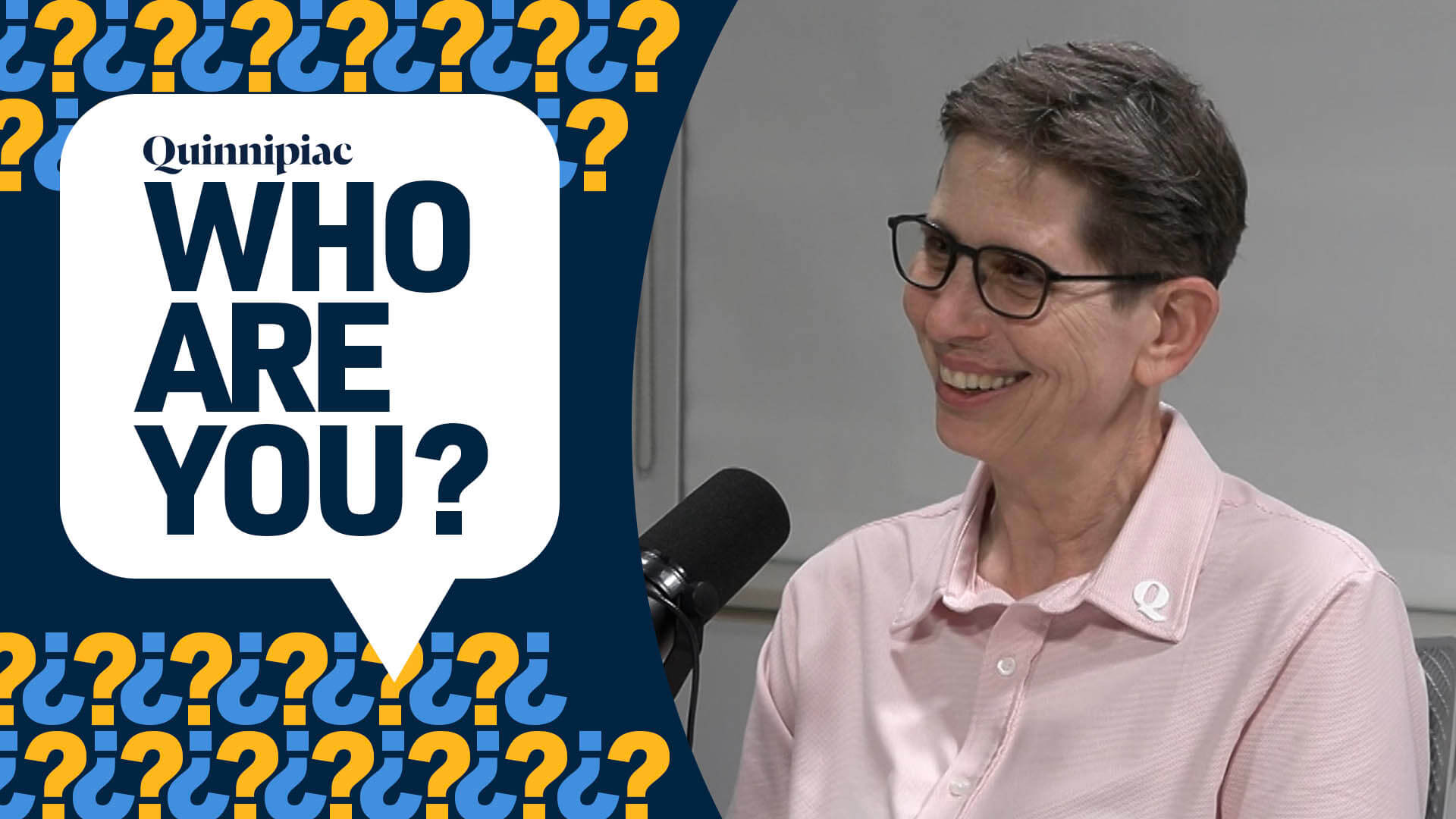
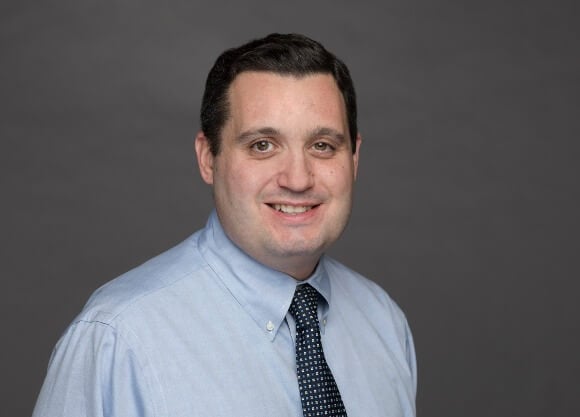
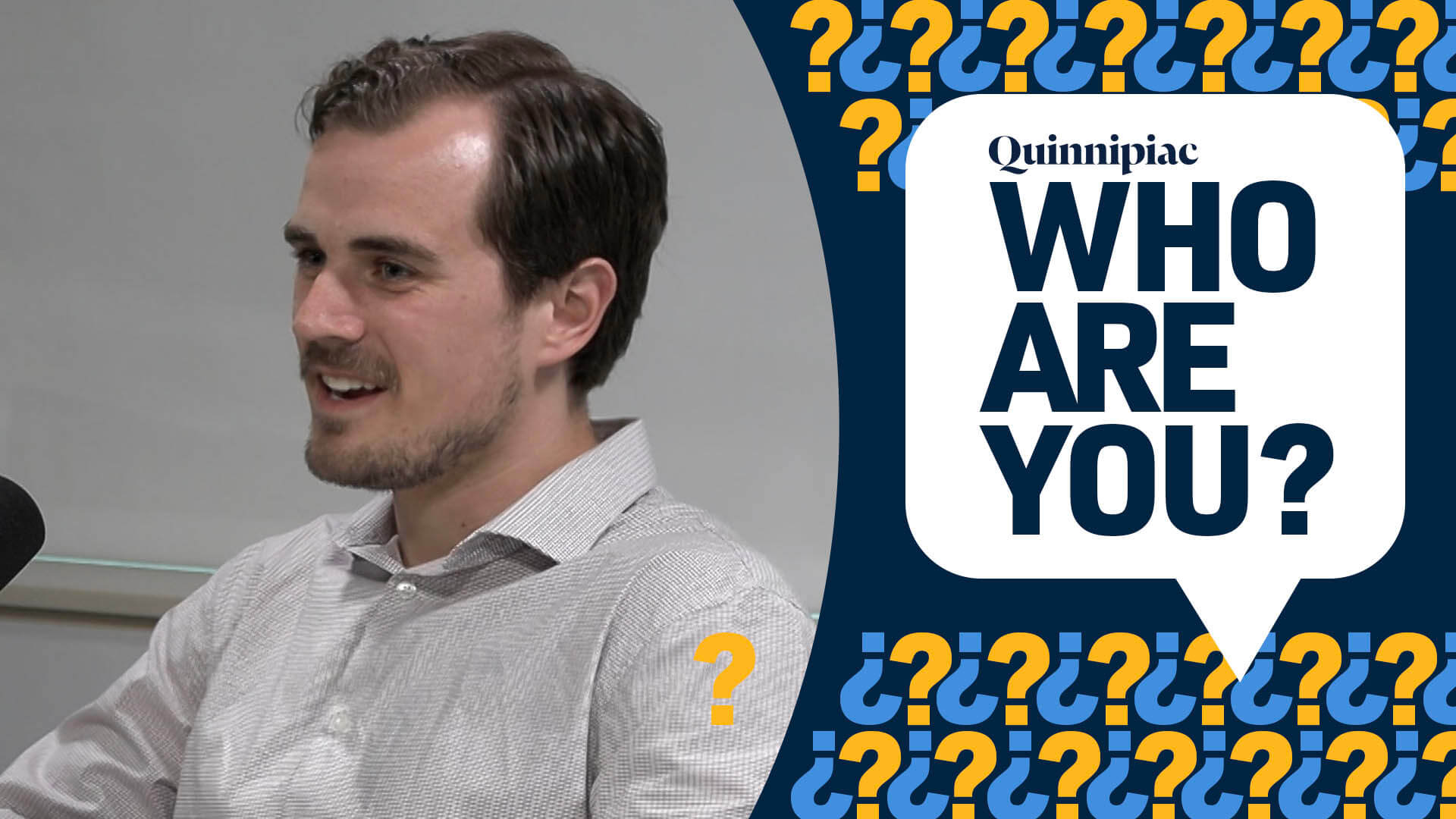
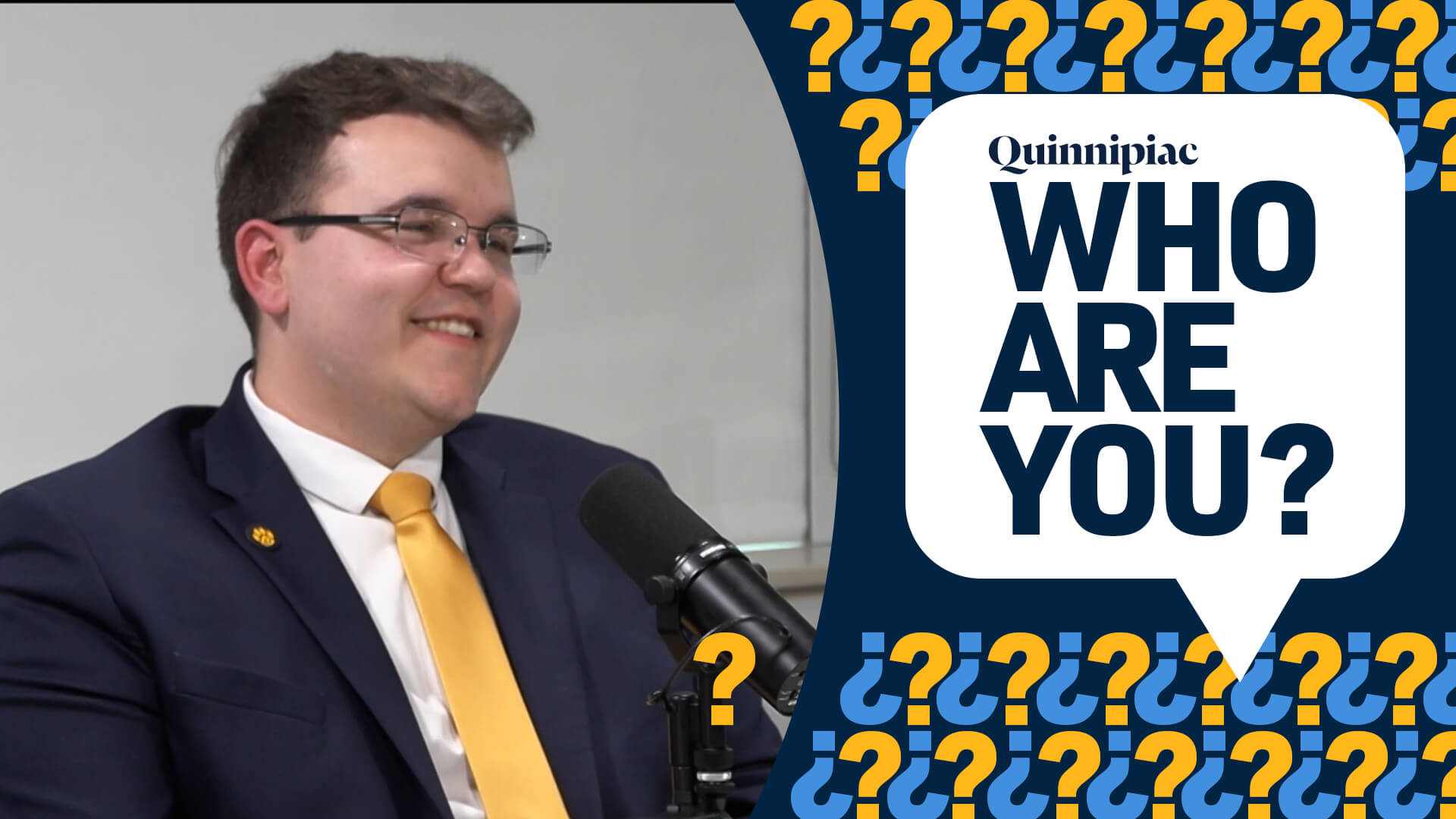
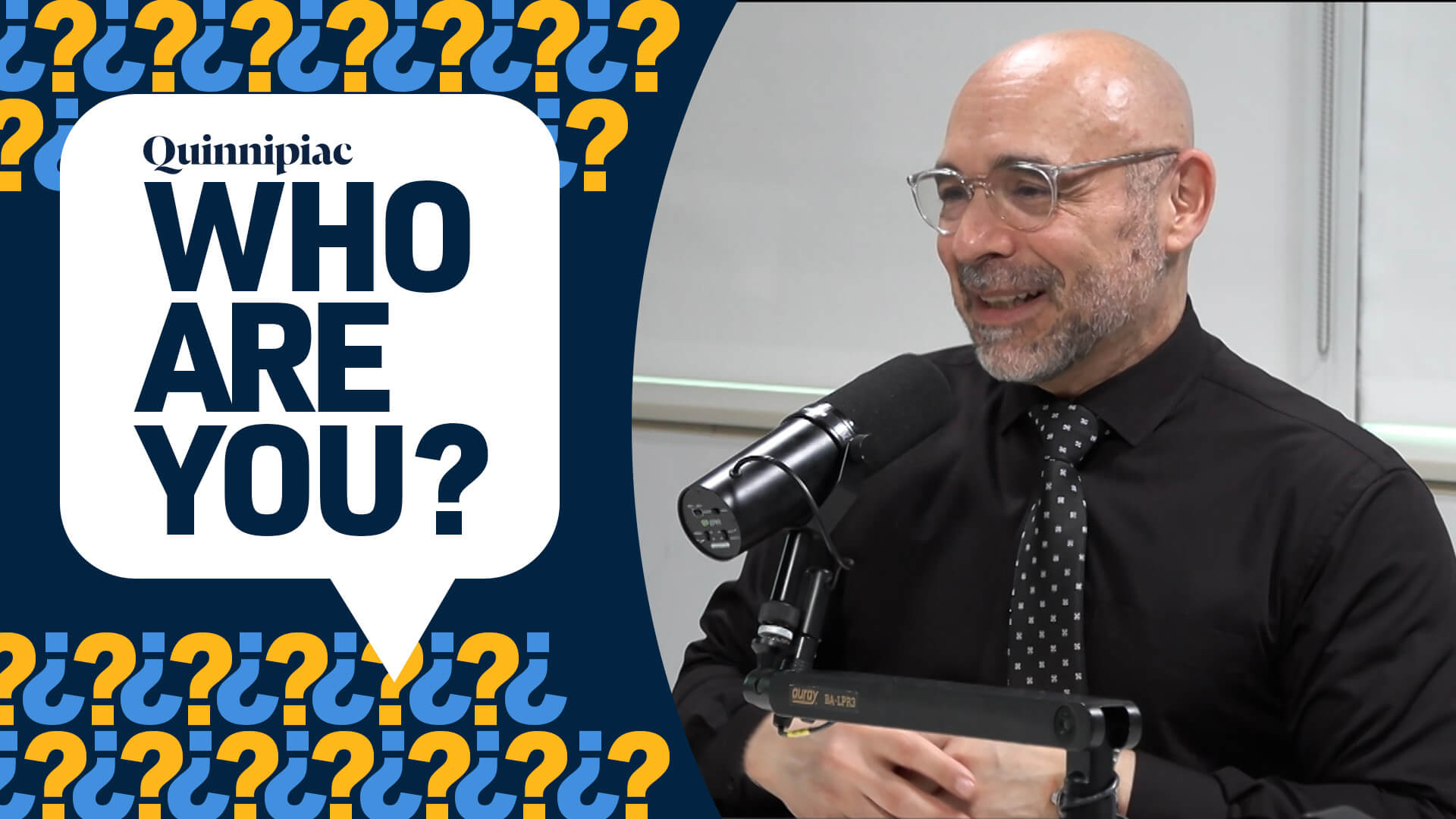
‘Who Are You?’ podcast with guest Professor Nick Pietruszkiewicz
The inside scoop on Quinnipiac’s Sports Communication Program
The inside scoop on Quinnipiac’s Sports Communication Program
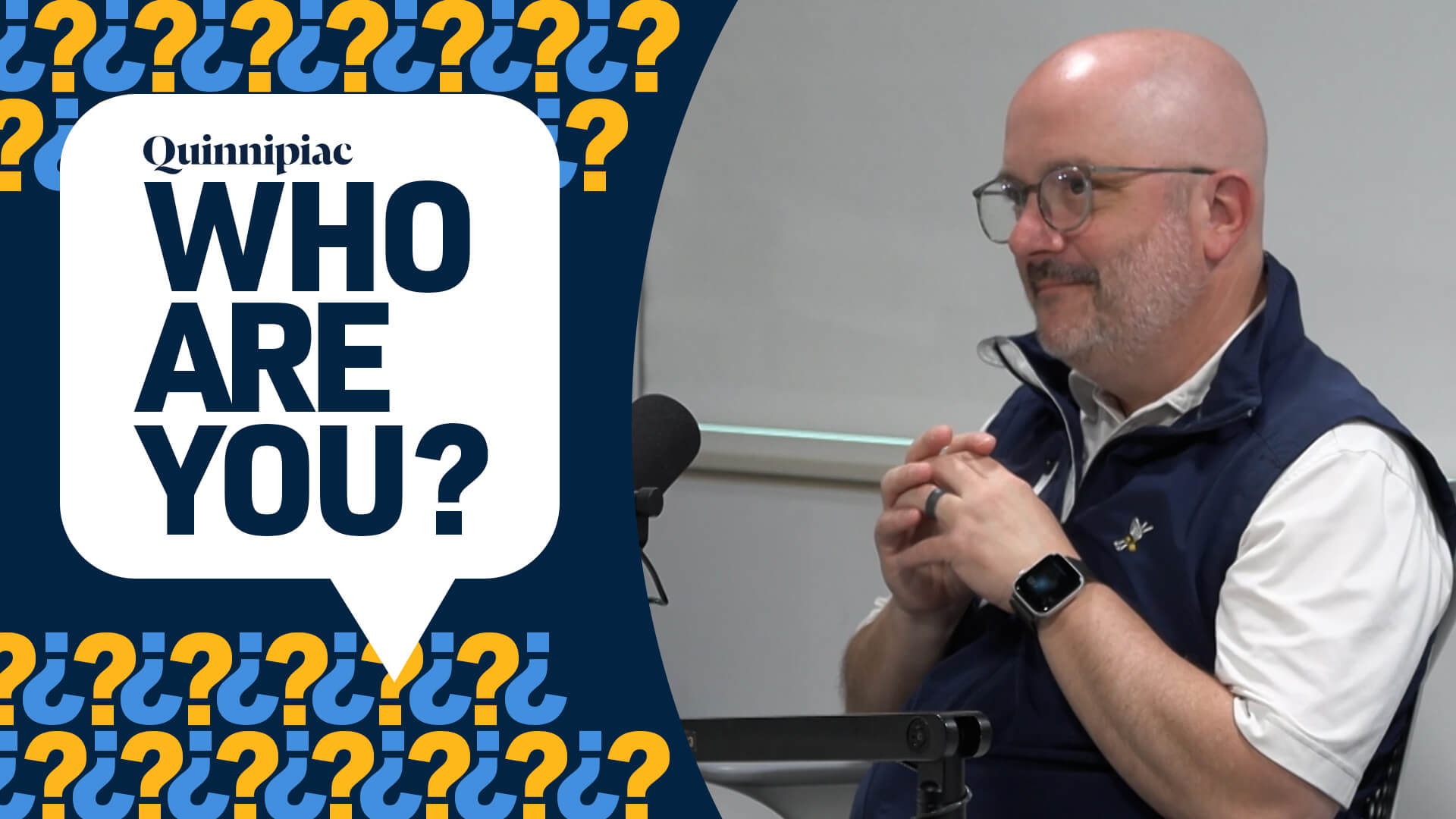
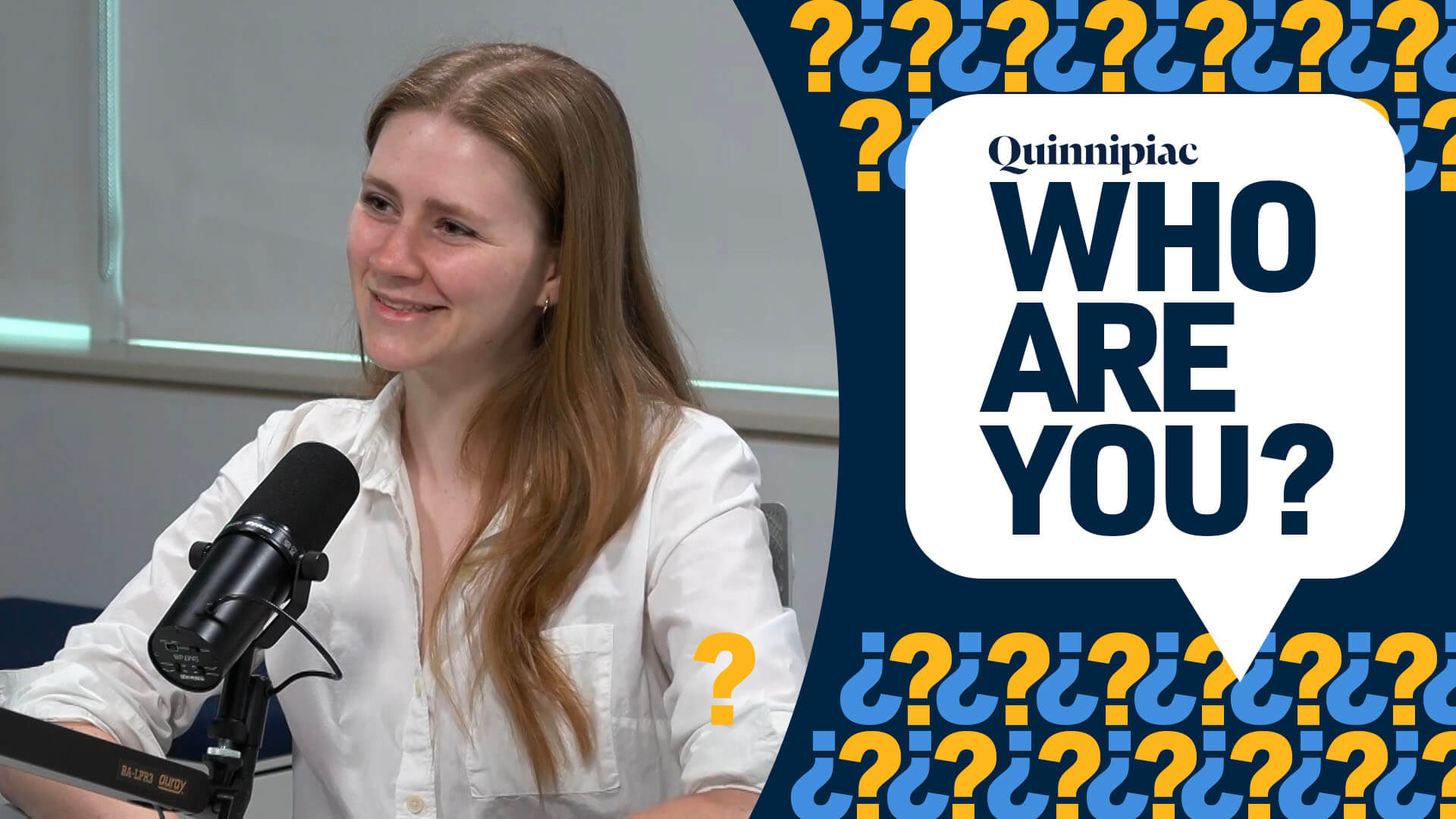
Joel Vanner: Hello, and welcome to ”Who Are You?,” the Bobcats you know, the stories you don't. I'm your host Joel Vanner inside the Podcast Studio at Quinnipiac University's School of Communications, and I'm joined today by my guest, Nick Pietruszkiewicz. Nick, welcome to the show.
Nick Pietruszkiewicz: Thanks for having me. This is great.
Joel Vanner: I'm happy you're here. You have an interesting story that we will get into. But, Nick, I know you host a program. What's your story. But on this program, we ask who are you?
Nick Pietruszkiewicz: Okay.
Joel Vanner: So I will ask you that question. Tell me, who are you?
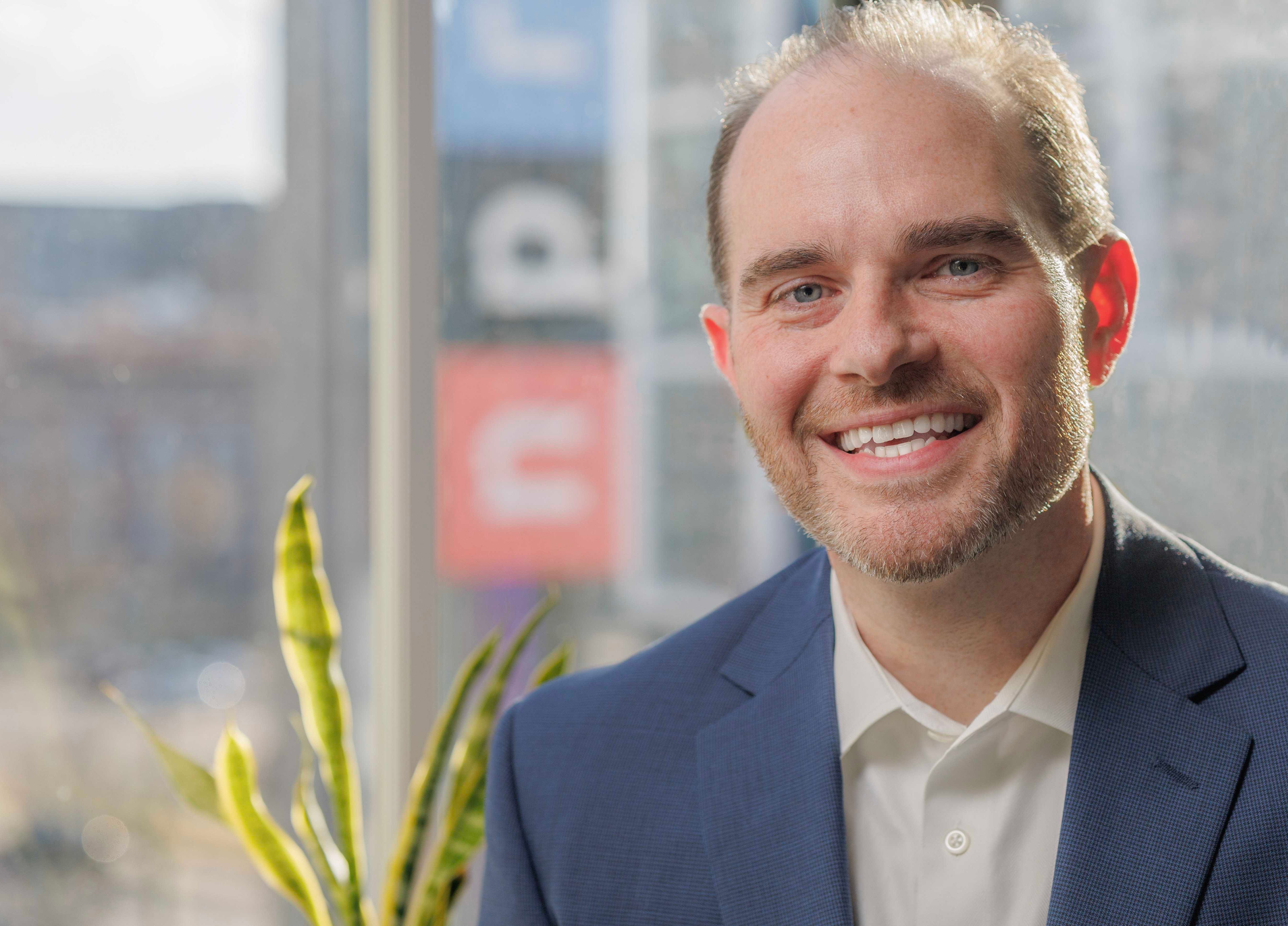
Nick Pietruszkiewicz: So, my name is Nick Pietruszkiewicz. All 15 letters are in the right spot. Believe it or not, there are two Zs. My wife, when we got married, went from Atkins to Pietruszkiewicz, so she got ten letters in the marriage. She's thrilled about that. I am assistant professor of journalism and director of the sports Communications program here at Quinnipiac University.
Joel Vanner: We will unpack what the sports communications program has to offer students later in the program. But first, I want to stay talking about you, Nick. growing up, did you play sports?
Nick Pietruszkiewicz: I did. Despite being height challenged, I played basketball, baseball and golf.
Joel Vanner: So five, three years of us who are watching and listening, I'm also height challenged.
Nick Pietruszkiewicz: Yeah.
Joel Vanner: Appreciate your attempt at basketball.
Nick Pietruszkiewicz: Sure, no, I played. I started in high school. I could pass, I could shoot, and I did not guard a single person. I didn't play any defense.
Joel Vanner: And you had two older brothers who following along in the story guided and encouraged you along the way. So let's start with Nick growing up with two older brothers. Tell me where are we right now?
Nick Pietruszkiewicz: Sure. So I grew up in I tell people Scranton in Pennsylvania, but it's actually a town called Throop, spelled THROOP. So you know.
Joel Vanner: Wife is doing a lot of work.
Nick Pietruszkiewicz: Right from the outset, either we can't speak or we can't spell. And sometimes that's a little bit of both. So, yeah, I grew up. We have I have two older brothers. My oldest brother Chris, is ten years older than I am. My middle brother Alan, is five years older than I am. We jokingly said that my parents had us that way because then you only have to have remembered one age and then just be able to either go plus or minus five to make their life easier. So yeah, I grew up with two brothers who loved sports, a father who loves sports, so it became a big part of who I am and the life and career that I had after that.
Joel Vanner: Probably a bit of a competitive nature going on there, too, with your older brothers.
Nick Pietruszkiewicz: Yeah, I mean, I'm the best athlete among the three of us. We can argue. Actually, the oldest brother is probably the best, although I would never tell them that to his face, so I'm going to count on him not actually listening to this.
Joel Vanner: Well, we'll make sure to share at least when it comes out. So let's so going throughout high school, playing sports. Interested in sports, was that kind of really your only area of interest at that point?
Nick Pietruszkiewicz: So, I think, well, I mean, sports is a big part of who I am. You grew up with two older brothers and a father who is actively involved in sports like you want to do what your older brothers do you want to do what your father does. And so you follow them around and you become part of that sports culture and watch it all the time. But I've always been interested in words. And so I wish I had a plan of what I became later in my professional life, but I loved writing and I loved sports, and we threw them off the wall. So I think that part of it is, and I wish it was still happening more today, but I loved when Sports Illustrated came in the mail, right?
Joel Vanner: And magazine.
Nick Pietruszkiewicz: Something, a piece of paper actually in your hands. And so I think that was important from the beginning was, I liked how people described the world around us.
Joel Vanner: So you have this passion for journalism, an area of interest. How did you turn that into a path in your undergraduate experience in college? But how did you start out?
Nick Pietruszkiewicz: Sure. So I got in to college. I did not get into the journalism school right out of the gate. So I had to prove that I belonged, and part of that was taking the test for standard written English. And I am the worst standardized test taker in history. I think it runs in the family. And so I must have failed it twice before finally passing it the third and allegedly last time I was going to be allowed to take it. I sat in an Associate dean's office and took it with him staring at me. So again, I don't know if I actually passed or he helped me out. But I had already been working for the student newspaper. I had already been covering major division one sports. And so I had already proven that I could do the job, and I was annoyed that this stupid, standardized test was going to keep me from something that I won the only thing I've ever wanted to do. And two, that I had already proven, at least to myself that I think I can do this. And so, eventually, we cleared that hurdle and led to a pretty good run of doing day to day sports journalism for 22 years before I came over here full time.
Joel Vanner: And when you were in college, you had experience with the Washington Post. And that was a place that you always kind of wanted to go back to. What did you do at The Washington Post? Where did you start out?
Nick Pietruszkiewicz: So during college, I worked for the student newspaper my first three years, and then my fourth year, my senior year, I worked at the Washington Post. I answered phones. I covered high school sports and non revenue college sports for a year for the final year of my academic life, and then for six months after I graduated because I couldn't find a job. So I answered phones. I covered high school sports. There was nothing quite like seeing my byline in the Washington Post. I tell people when I got into this, I wish I could say I wanted to be Woodward and Bernstein and be the next great Washington Post journalist. I didn't know any better. I just like sports and I liked writing, and I threw them up against the wall and created a career. But the Washington Post, and I will still never forget I was there for the presidential election in 2000, so Bush Gore, when nobody knew who won. And I remember volunteering to work election night just because I wanted to be in the building. I wanted to be, like, in the arena. And so, nobody could figure out who won. We learned the phrase hanging chads. And I looked up and Woodward was Bob Woodward was walking through the newsroom, and you're just, Oh, my God, it's Bob Woodward. One that's so cool and two, something big must be happening because it's 10:00 at night. And Woodward of Woodward and Bernstein just walked in the building.
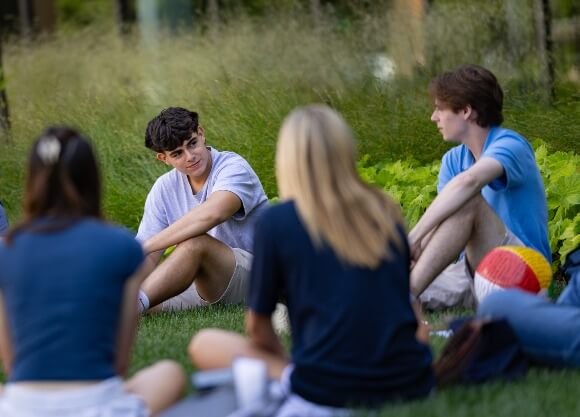
Joel Vanner: Would you say, and here at Quinnipiac, we have various student media clubs and organizations that students can get involved in one of over 150. My time here at Quinnipiac, I was in Q30 Television, which is our student run television station. Would you say that the experience that you had in college and the experiences that students can have here at Quinnipiac and Student Media, elevate their skills that they learn in the classroom, give them those practice opportunities to actually create those things that could get them to places like the Washington Post or even ESPN, which we'll get into a little bit later, too.
Nick Pietruszkiewicz: I think it's vitally important to do it. I think it's as important as the academic experience of standing or sitting in a classroom with myself and the other professors around here. Is it more important? No. You still have to come to class and still do your assignments. But I think it's incredibly formative, and you learn what you're good at, but more importantly, you learn what you're not or a style that you don't like. I think you learn as much from what you don't like as what you do. And so whether it is being conversational, whether it's being sarcastic, whether it's being fact based and using numbers to tell your story, you figure out what you like, or you figure out what you don't like or what you're not as good at that you need to improve upon. And I think that's the opportunity with student media. Like, you can take your first shots, and figure out whether you swung and missed and why you swung and missed and fix it, or figure out what you're really good at and really focus in on that part of it.
Joel Vanner: And you can build community too with your peers and faculty advisors that are also in the organizations.
Nick Pietruszkiewicz: Yeah, like, Monday and Tuesday are a big day for student media, and right around the corner from where we're sitting, those knuckleheads are all sitting in the wedge and working, and I walk in there and there's music playing, and they have doughnuts on certain days, or they just came from the caf, and it's ten or 15 of them. And I think that's part of the experience, too, and the important part of the experience is interacting with each other because we're all this now, right? And so we don't actually talk to each other. And so the fact that I walk in there, I'll make two jokes. I'll heckle them, and I'll leave, but to see them, you know, being loud and talking to each other and yelling at each other, hopefully, respectfully, is an important part of the process, too, as much as the finished product is.
Joel Vanner: Right. A community you were in early on in your career was in Chicago. That was your first step in journalism after bartending and other things on the side for a couple of months. But that's an important part of the story. When you graduate college, sometimes you don't have everything figured out before you graduate. I was in the same boat. Took me a bit to land my first job, which was actually at ESPN. But some people graduate and they have that. Everything's not all figured out. But your path started in Chicago, covering high school sports, but then quickly changed, right? You had a pivot.
Nick Pietruszkiewicz: So I got there. They had hired me to the focus was going to be high school sports. I was there for a week, and one of the people that was working in the sports department left. And so I was there a week, and they said, Hey, by the way, we're going to switch it, and you're going to cover the Chicago Cubs and the Chicago White Sox, Major League baseball. I said, Really? Okay. I can do that. So for the next seven years, it was a small circulation newspaper, so you did a little bit of everything. I still did It didn't matter if the Cubs and the White Sox were playing on a Friday night. I was summoned to cover high school football, but I covered the Cubs and the White Sox. I did a little bit of the Chicago Bulls and Chicago Bears Notre Dame football. Illinois basketball at a time when they were really good. So I covered a lot of things, but the main focus for the seven years that I was there was Major League baseball. I covered about 110 or 120 games a year. And really the first time I started to travel a lot, which is a big part of that job. And so I wish I enjoyed it more than I did because I was always so worried about what's next and how much money I was gonna make and where I was gonna go like, seven years in Chicago and Chicago is in the summer the greatest city in the world. And I think there if I have a professional regret, it's that I didn't enjoy it as much as I should have. I was too worried about what comes next.
Joel Vanner: Speaking of what comes next, ESPN comes next in your story, baseball, something that follows you through. In your professional journey, taking that step into ESPN, what was that like, and what experiences did you have there?
Nick Pietruszkiewicz: It was a little it's scary, and it's not because ESPN is big and it's because it's the largest sports media company in the world. It was more I was switching roles. I'd only ever wanted to be a reporter. And I actually the path to ESPN, I was becoming an editor and being one of the people that was sort of in charge, but also more direction than the actual reporting and the writing. And so I remember interviewing there. I interviewed actually on a Sunday. I flew to Philadelphia to interview at the Philadelphia Daily News to cover the Philadelphia Phillies. And I'm from Pennsylvania, and then flew back to Chicago on Sunday night Monday Monday night after the interview and flew to ESPN on Tuesday to interview for that job. If I'm being entirely honest, I wanted the Philadelphia job. I didn't want the ESPN job. Funny how that works? It does, right? So I then got the ESPN job, and it was time newspapers were really struggling at that point, and you're worried that the layoff might come to get you at some point, because the industry was shrinking. And so I took the ESPN job and spent the next 14 years of my life doing so much more than I ever could have imagined. You know, you hear editor, and you're like, Oh, you're the guy that moves the commas around. No, it's no, you shape the message. You decide what's important. You interact with the writers that you used to be, and I think that helped me, too, because I was on the other side of it. I was a reporter before I became an editor. And so when a reporter would say, I really can't do that, I would either know that's BS, or, you know what? You're right. Like, that doesn't work in terms of the logistics. Let's alter the course and the strategy here.
Joel Vanner: And the versatility that you're highlighting between the roles you've had and the things you've been able to do, it's a great lead into the sports communication program here at Quinnipiac. Tell us about the program and what's offered in it.
Nick Pietruszkiewicz: Sure.
Joel Vanner: Students experience.
Nick Pietruszkiewicz: Sure. So we had so many students for open houses that step onto campus, and they say, I want to work in sports. But not everybody wants to be a journalist, and that's okay.But they come on campus and they want to work in sports, and it never made sense to me, to us in the building because I didn't create this program on my own. There were a lot of people involved. We should have probably done it earlier. But why does a student who is interested in sports and in the communications field have to go to different departments or different buildings across campus? Hey, I want to do analytics. So should I go over there? I want to do PR or advertising. I've got to go to the PR and advertising department. Like, it just didn't make any sense. And so, sports communications now houses you want to work in social? We can help you with that. You want to work in PR advertising? That's sports communications. You want to still be the person that sits at the sports center desk. That's sports communications. And so it put everything sports related in the communications environment under one tent and in one building. And the first year has been an incredible success that I'm really, really proud of. I'm incredibly excited that I was able to be the director of the program at its outset and kind of have a hand with the help of everybody else in the school of communications, building this into something that is important not just to the university, but to the people that it really matters to, and that's the students and to see their excitement and how much they've been involved in it and to see open houses with the next wave coming is really, really is really, really cool and something I never thought I'd be involved with.
Joel Vanner: And just thinking to not only the proximity of Quinnipiac to Bristol, but of Quinnipiac to New York and Boston and the ability to go elsewhere as well and how sports travels and the stories behind it. Important that this is here and available to students.
Nick Pietruszkiewicz: Yeah, and listen, I spent 14 years at ESPN. Bristol's 15 miles from here. If we don't have a relationship with them, I failed the students and I failed the university because I left on my own 3.5 years ago to come and do this full time to flip the script and to be my next professional act. But if we don't have guests traveling down Route nine from Bristol, like, I've failed. And so we've had an incredible amount of people that have been coming as guests, but more importantly, we have a lot of people that are adjuncts from there. And so when we say, we're going to teach you how to prepare for a job in PR or in storytelling. Look, here's the vice president of PR at NBC Sports, or the vice president of Audio and Audio is going to teach a podcasting class.
Joel Vanner: Teaching class.
Nick Pietruszkiewicz: Right. And so if people watch College Game Day, which, along with Inside the NBA is the most popular and influential show in the history of sports television, the executive producer of College GameDay is teaching a class this semester. Can't get much better than that.
Joel Vanner: Awesome industry connections to inside and outside of the classroom. Speaking on the courses, what are examples of some of the courses that students could take? I know the program is still relatively new, but what are some examples of courses that students could look forward to taking?
Nick Pietruszkiewicz: Sure. We have the So we have courses in PR. We have courses in social media. We have courses. I'm in the process with a friend of mine developing a course for sports on YouTube, because I think we have to make sure that we evolve. As a university, as a school of communications, as a program that's even in its first year, what we do in year three and in year five is going to be entirely different and should be, because the industries around us and the delivery methods in which people get their content and tell their stories, whether it's through social or PR or video changes.
Joel Vanner: So not to mention AIs, integration.
Nick Pietruszkiewicz: Sure.
Joel Vanner: And everything sports.
Nick Pietruszkiewicz: So we have you know, that's going to be one of the courses that is in development. I am teaching a sports messaging in the modern athlete in the fall that looks at how athletes use their social channels and use their YouTube channels as means to talk to the fans, and then how they make mistakes, how they get themselves in trouble, then how they try to get out of that trouble. So there is a PR component to that. There's a storytelling component to that. There's a social media component to that, and then there's a crisis management component to that. And that is what we're trying to embody in this program, is it can be and should be all things to all different students.
Joel Vanner: Looking back on your career and your educational experiences from going into undergrad and having to retake the standard English tests a couple of times, just to be in journalism, which is a place you knew you wanted to be to your career at ESPN and then coming to Quinnipiac after having adjunct for quite a long time and now being the director of our sports communications program, what advice would you give to someone who's interested in going into sports, maybe not the sports journalism piece, an area of sports, but maybe a little bit intimidated that it may feel like you need to know know it all because you need to be able to do a number of things.
Nick Pietruszkiewicz: Be okay with not knowing. I didn't ever I never considered being an editor. I didn't want to, and I spent 14 years doing it. And that's the big part of this program, too, is there are so many opportunities to work in sports that people that the students when they get here, even after a year or two, wait, I can do that and be involved in sports. That doesn't make Really? Yes, you can do that. That is a job in sports. Do you want to help create the environment between periods at a hockey game, game day management, operations. That's part of sports communications. You want to plan giveaways before a game for the Yankees. That's Sports Communications. That's what we're talking about here. That's messaging. And so understanding that you don't understand is okay. I didn't I went I had no idea. I went and, again, went to college and said, sports, writing, throw against the wall and see what happens. Those opportunities are here, too, because people walk in my office, and I have every media credential I've ever been given in my life. I have one of the cork boards in my office, mostly because my wife wants these things out of our house. And they are mileposts of my life, but they're also opportunities that I didn't know existed before. And so I just got back for the masters, and all the people that I worked with are working in sports, but we're all doing different things. Sure. There are social media people. There are PR people. There are communications people. There are video people putting together not just things for the big screen on your wall, but your phone and your social channel and your PR network and your communication staff for next year. There's so many different opportunities that you're not aware of, and you just have to be willing to have your mind open enough to understand that those opportunities might exist.
Joel Vanner: Thinking of a sports media enterprise, even sports teams, tons of departments that make up those. So there's an area in there opportunity for anyone. Being confident in yourself but also willing to learn along the way and bringing your full self to every experience, sounds like it would serve students well.
Nick Pietruszkiewicz: Because, especially the industries change, and you have to have that adaptability about you, or you're not going to survive. It's what we're teaching them now, when they go out into the world, five years from now, they're gonna have to know a new skill. Or they're gonna have to know a new delivery method, or they're gonna have to know a new social media application. Are you willing to do it, or you just say, Well, I've always done it this way, and this is the only way I want to do it. I've worked with too many people in my time at ESPN is Listen, I wanted to do this one thing. I wanted to be a reporter. I want to be a writer. I have no interest in learning how to be good on television. I have no interest in learning how to be good on social media. And the world passes you by that way.
Joel Vanner: Yeah, I have to be open to all opportunities that come your way. Nick, thank you so much for joining me on the show, sharing your story experience, and what the sports communications program that Quinnipiac has to offer.
Nick Pietruszkiewicz: Thank you. I appreciate it.
Joel Vanner: If you enjoy today's episode, be sure to subscribe and share and find other episodes on Apple, Spotify, and YouTube.Until next time when I ask my next guest, who are you? I'm Joel Vanner Bye for now.


Quinnipiac Today is your source for what's happening throughout #BobcatNation. Sign up for our weekly email newsletter to be among the first to know about news, events and members of our Bobcat family who are making a positive difference in our world.
Sign Up Now