



‘Who Are You?’ podcast with guest Ian Mclellan MD ’28
What it’s like to be a student at Quinnipiac’s Netter School of Medicine

What it’s like to be a student at Quinnipiac’s Netter School of Medicine
Joel Vanner: Hello, and welcome to ”Who Are You?,” the Bobcats you know the stories you don't. I'm your host Joel Vanner inside the podcast Studio, at Quinnipiac University's School of Communications, and I'm joined today by my guest, Ian McLellan. Ian, welcome to the show.
Ian McLellan: Hi, thank you for having me. Happy to be here.
Joel Vanner: Happy you're here, Ian. So I start the show with the same first question for all my guests, and that is we know your name, but tell me, who are you?
Ian McLellan: Who am I? So, I am a third year medical student at the Frank H Netter School of Medicine at Quinnipiac University. I am originally from Minnesota, where I grew up my whole life, and then moved out here when I was 25, and I currently live off campus with my girlfriend and my two kitties who we adopted from a nearby shelter.
Joel Vanner: Awesome. So let's start actually with going out to Minnesota, right? From here, it's out to Minnesota. But let's go back in time. Tell me about Ian growing up. What were your passions and interests?
Ian McLellan: Growing up, I was a very family oriented person. I was fortunate enough to have both sets of my grandparents live in the same city, one less than a mile away. So I spent a lot of time with family, a lot of time with my younger brother and younger sister. So I was very family oriented. And that included trips to the cabin playing sports with them, lots of big family get togethers.
Joel Vanner: What kind of sports did you play at these family get togethers?
Ian McLellan: We would play football, handball, if you've heard of that.
Joel Vanner: Okay.
Ian McLellan: Toss lacrosse, stick around. And then I consider East Recons a sport if you go intense enough.
Joel Vanner: Okay. And you also are a hockey fan, too. We chat about that before the show.
Ian McLellan: Yeah, I love it. I'm wild fan.
Joel Vanner: Unfortunately, I'm a Bruins fan. But okay, so surrounded by family, playing sports, hang out with your family, medicine runs in your family, right? You come from a line of those in the healthcare field.
Ian McLellan: That's correct. My mom's dad to my grandpa. He is a pharmacist, and then my mom became a dentist, and then I was really inspired by the healthcare field. They love their jobs. They came home happy. They talked about it a lot. So I knew that I wanted to get in health care from a pretty young age. Didn't know exactly what it was going to be. Funny enough, my brother followed suit. He's actually in dental school right now, so we're both going down the health care pathway.
Joel Vanner: Is there, like, a competition you got 'Cause you're the oldest, right?
Ian McLellan: Yeah, I'm the oldest.
Joel Vanner: So is there, like, a competition he's got going on 'cause you're the oldest?
Ian McLellan: Ah, not really. He actually got to dental school before I got into med school. So there's competition wins at that, right. He'll be a dentist long before I'm a practicing physician.
Joel Vanner: So what was that moment where, you know, your family comes home, happy from work, they enjoy what they do, have these family get together, surrounded by it growing up? Was there a moment that you were like, Yeah, this is what I want to do in addition to that? Like, what brought you to that realization?
Ian McLellan: Yeah, the exact moment as a Minnesota sports fan, huge Minnesota Vikings fan. So for those other Vikings fans, I'll remember Adrian Pearson's 2010 ACL tear, it was devastating. He was my favorite player at the time, and now he was going to be out for a whole year, possibly more so I remember being just totally involved in that injury. I wanted to know the surgeries he was going to do the rehab, when he's going to be back. I believe I was ten or 11 at that time. So on our family iPad or wherever we had, I was looking up news articles and very into that. And at the same time, my grandma, she's also a nurse. I forgot to mention that earlier. So she's healthcare. She worked on orthopedic floor. And so she knew a little bit more about the medicine. And actually, remember I was sitting at the cabin with her. We were on, like, the little bench chair swing. And she was talking about being an orthopedic and being a doctor. And that's when I fell in love and got it, and my ten, 11-year-old had that. I wanted to head into medicine, most likely, and for sure, do healthcare. So I'd say that was the turning point where it really got stuck in me. Got me on that path.
Joel Vanner: So you graduate high school and you go to your undergraduate experience, right? How did you structure that so that it would position youwell to then go into medical school when you were done with that? What was kind of going through your mind there?
Ian McLellan: Yeah, right away, I was picking a major. I decided to do biochemistry, mostly because my mom did it, and I liked math and biology. So I was like, Oh, I can do biochem. That shouldn't work out. Honestly, just kind of guessed. I've now learned it's not really that big of a deal for med school what major you do, but I'd go back and do it again. I really like it, so I picked the major and found I enjoyed it. But besides that, I also started to volunteer at the hospital. My sophomore year, I just sent an application to the local hospital to see if I could volunteer. And I did a multiple different roles from working in the pharmacy to working on adult floors to being fortunate enough to work in the pediatric unit and the intensive care unit, which was really a privilege to do.
Joel Vanner: So that kind of showed you the environment that you would be going into, which when we get to advice you would give, that's kind of one of your pieces of advice to get that experience before go to med school to kind of figure out if it's for you.
Ian McLellan: Definitely.
Joel Vanner: Looking at med schools, what was the process like looking at med schools and what drew you to the Netter School of Medicine here at Quinnipiac?
Ian McLellan: Quinnipiac. So the first time I actually heard of Quinnipiac is when they beat my undergraduate team in hockey.
Joel Vanner: Yeah, they did, for our first national championship.
Ian McLellan: Yep. So I recognize that so I want to look more into the school, and I've always liked East Coast vibes. I didn't know much about each specific state, but good food, good, transportation going from New York City to Boston. So I was really interested in joining that East Coast city life.
Joel Vanner: Dunkin' donuts over here,.
Ian McLellan: Dunkin' donuts. Really good seafood out here. That was a wonderful surprise. So yeah, being in Midwest my whole life, I was ready to move out. So I did apply all over the country, East Coast, Midwest, and then a little bit in the Southwest, as well. But I was really hoping for a Northeast or stay local in Midwest. And besides with Quinnipiac, I also like that it's a smaller private school when I was looking around because I really like that one on one interaction that you can get. And being in the large undergrad school, I didn't quite get that as much.
Joel Vanner: You mentioned when you were going through your orientation at the Netter School of Medicine, you kind of met everyone there is to meet because of the school sides and just the involvement that administration and faculty have in your medical school experience. What was that like coming to orientation, just getting acquainted after moving out to Connecticut from Minnesota, new place, new people. What was that transition like?
Ian McLellan: It was really cool. So in my undergrad and just in general life, I'm not used to having that sort of support. So I actually remember on the last day of orientation, we all came into the big auditorium for the last day, and they brought in every single course manager, the deans, basically, everyone who runs the school, and they said, ask us any question you have. Anyone have any questions? And I thought that was really nice because I don't think many places would do that.
Joel Vanner: In person AMA, ask me anything.
Ian McLellan: Yeah. Ask me anything. Any questions you guys have. So a few of us raised our hand and had random questions, and they all answer them to the full stability, and that was wonderful. I think they all supported. Got to help with the transition and just getting in that mindset of medical school because it is different than undergraduate, right? It requires different things of you, time management, study wise, right? Yeah, I took a few years off, too, so I was a little rusty in my school and being on campus again. So that whole week where we got to meet everyone and they really let us know what the years going to be like and what to expect. And they even had a course for the first few weeks where it was like, how to be a medical student. And that was very helpful as well.
Joel Vanner: So, you are going into your third year of medical school. Tell us what a typical day is like in your first year and second year because there's differences, right, in what you have to do and what you expect.
Ian McLellan: Yes, there's definitely some differences. First year, the first two months, I would say, it's a lot different than the rest of medical school. That's where you're relearning your basic sciences, you're getting used to what the curriculum looks like and really finding out what it means to be a doctor. So there's a lot more on campus events during that time, lectures. You get to learn if youel like doing lectures. Otherwise, we also record our lectures. I was more of a home studier, so I enjoyed being able to look over all the stuff at home and go at my own pace, wake up when I want to. It was really getting to know your professors, getting to know your teachers, and just figuring out your flow, how you study, how your friends study, who your friend group is, and who you want to be as a medical student. It was discovering who you were.
Joel Vanner: Was there a certain faculty member that helped guide you the most in your first year of med school, and how did they kind of help you through that transition?
Ian McLellan: Yeah, so we have a program called CAS. It's it's like once a week on Thursdays, and it's with.
Joel Vanner: Clinical arts and science.
Ian McLellan: Clinical Arts and Sciences. Yeah, it's with local doctors in the area coming for 2 hours for the M1s, 2 hours for the M2s, and they teach you how to be a doctor. And doctor Williams was my preceptor that year, and he really helped me get used to medical school, comfortable becoming a doctor with the physical examinations. I've always been good at the school part, so that wasn't too new for me, but learning how to talk to a patient, how to keep a conversation going, not be scared was a pretty big skill that I had to learn. And he really helped help me gain that confidence that I took to be a physician in a room and not a scared medical student.
Joel Vanner: So that's awesome that you learn that in the first year, getting that confidence and those basics in year one. What about year two? What's the typical day in year two, like?
Ian McLellan: So, year two is more of your getting into the medicine. So end of first year, I kind of like the joke. I can tell you the biochemistry of what's wrong with you, but I had no clue what medicine to give you or what was actually wrong. And I knew what went right in the body. Year two, you learn what goes wrong in the body and how to fix it. So it's a lot more intense, I would say. You have a lot more information. And, for example, you meet three times a week for 2 hours just to go over a case nice and slow, like a heart failure case or a kidney disease case or a GI case, and that teaches you how a patient might come into the office, how a patient might leave, how to treat it. And it's nice because you get to make all of your mistakes in a small group of eight and then have a knowledgeable preceptor with you that can correct you. So it's a really good way to warm up. And then, otherwise, it's still kind of, like, self study if you like going to lectures, you go to the lectures. But figuring out how you study best to get all the information into you. And our faculty does a great job of they want us to know the information, so they will do whatever they can to help us get the information from their learning objectives into our mind.
Joel Vanner: And along the way, you are a part of the Netter community, and you're also forming your own community among your peers and fellow students. Tell us about the community at the School of Netter. What your experiences have been in some of the things. That you've done?
Ian McLellan: Oh, it's a very tight knit community. There is no toxic competition between my classmates at all. I would say everyone supports each other. I know everyone's name. Like, obviously there's different friend groups, but everyone gets along well. I've never been in a group of someone that I didn't like or enjoy hanging out with or that I wouldn't want to see outside of class. I would be happy to see any of them at any time.
Joel Vanner: And you do some work outside of class for Special Olympics Connecticut with your classmates, and you did a polar plunge?
Ian McLellan: Yeah.
Joel Vanner: Related. Tell us about those experiences and how those contribute to the netter or community. And what your goals are in leading and participating in them?
Ian McLellan: Yeah, of course. So that is a big role of me as a medical student. That's probably the biggest part of me besides being an actual student. I'm part of the DREAM, which is a special Olympics club. It stands for disability, rights, equality, advocacy and medicine. I had to think of that one. And then I'm also part of a group called Cheshire Wellness, where students that graduate from a local high school with intellectual developmental disabilities. They spend time with medical students on Fridays. So in those two communities, I'm really trying to engage myself and other classmates with this unique population because I've just seen throughout medical care that people can be uneasy around people with disabilities, not know how to communicate. So I feel like by getting myself and encouraging our other classmates to interact with them and advocate for them as medical students in 10, 20, 15 years, it will lead to better doctors who will be better engaged with this population and hopefully lead to better care for them in the long term.
Joel Vanner: With your academics and the community and extracurriculars you've done, have you narrowed down a specific area of medicine you want to practice in looking ahead to year three? Or are you still figuring that out? And how does Netter support you in that kind of figuring out where you want to go?
Ian McLellan: Yeah, so I actually wind to become a ENT in the first year, and I've stuck with it since then, which is pretty rare. I'd say most people have no clue what they want to do going in the third year. Quinnipiac did help me with that a lot. I remember going to Doctor Pak, Doctor McHugh, and then Doctor Helgren and being like, Oh, I'm interested in ENT. Can you guys help me out? And they all were willing to help. Doctor McHugh was like, Yeah, we'll reach out to Hartford Healthcare to see what they can do. And then doctor Helgren had a contact of ENT she knew, and she connected me with him, and we're currently have a mentor mentee relationship and are producing research, and I'm loving the ENT relationship that we have. But, yeah, they have all the support you could ever need. There's probably 15 different professors with their doors open at any time. So always there to help a find what you want to do.
Joel Vanner: So with all of your academic experiences, going into year three, involvement in the net community, going into ear nose and throat as your focus concentration, looking back, how have all of those experiences and things you've learned about yourself helped shape who you are today?
Ian McLellan: All these experience in my time at Quinnipiac has really helped me shape to become the patient centered care physician that I want to be trying to find the best way to put it, but Quinnipiac is always there to put the patient first. You're not there to diagnose a patient and get them out of the room or find the cure away, you're there to figure out who the patient is and how you can best be there for them. So before we even started talking about diagnosis or anything like that, we were learning how to talk to a patient, how to show compassion, how to show empathy, how to introduce yourself and make eye contact, which can be new for new students because if you're going to room, knowing to make eye contact him and explicitly told so, you're not going to do that. So I feel like they've done a great job at preparing me to be a doctor who really cares for their patient and creates an open environment for their future patients, which I think is more important than even learning the science behind it. I think that's the biggest part of being a doctor is being the one to help other people.
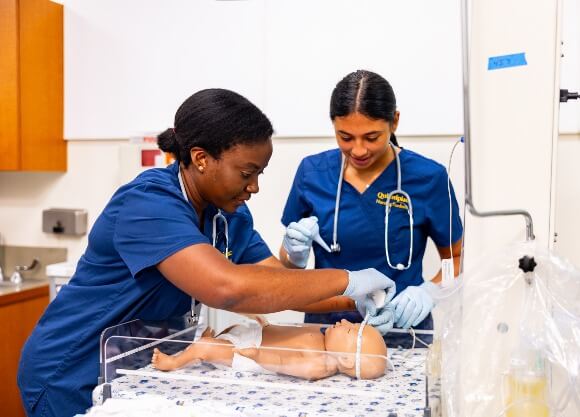
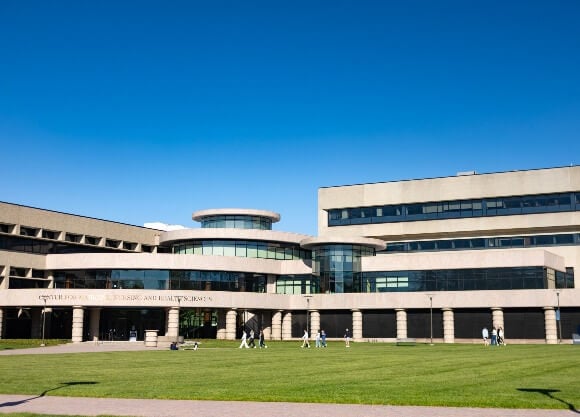
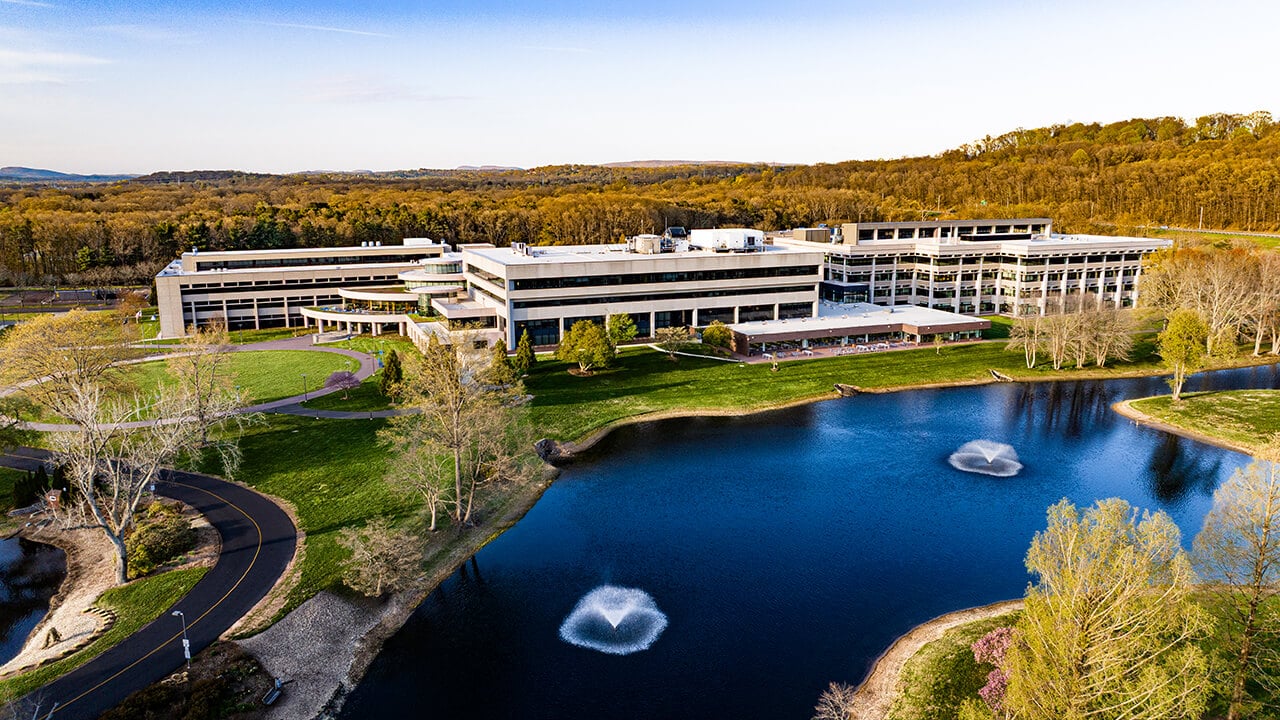
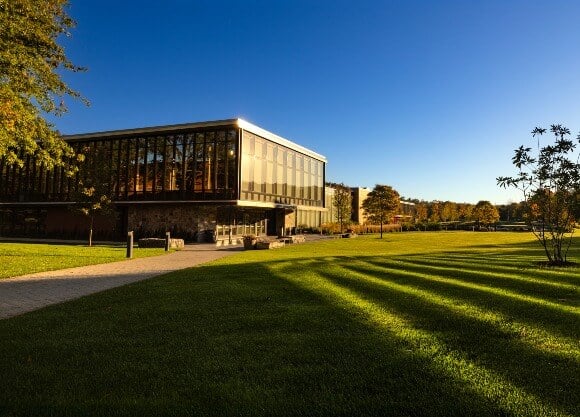
Joel Vanner: And being on the North Haven campus, the Netter School of Medicine is with the School of Nursing, School of Health Sciences, School of Education, law, all surrounded, right? There are interprofessional healthcare experiences with standardized patients, which are actors that come in and simulate experiences that you would have. I'm sure you've participated in those activities with other healthcare professions. That's got to help boost your confidence and give you that experience for when you go out into the real world with real patients, right?
Ian McLellan: Yeah, that was a really cool experience I did. So I did that one time, and we had medical students, nursing students, PA students, OT students, PT students, and social work all at the same table. So there was like two from each school. And then the case we were doing was, a son who was, like, 25, and then his mother were coming in, and we were talking about discharging his mother to a rehab facility before going back home. And the actors are fantastic. The standardized patients. Like, they really make the atmosphere feel like you're talking to real patients. But what was cool is I got to see how every other school would work together for this one patient. It's not just a doctor come in and then say something and then hand them off to the PT. It's everyone in the same room working together to make sure that the patient can have the best care possible. I think experiences like that will be very helpful for them in the hospital and can have to work with other people. So I think it would be difficult if I just learned medicine, and then all of a sudden knew nothing about these other schools and had to start learning how to work with them and residency and beyond. So I really like those initiatives. And it's fun. It's a good time.
Joel Vanner: We have an episode with Julie Booth of the podcast to go back and give that a listen if you're interested in learning more about the interprofessional healthcare education events advice. What advice would you give to students who are considering medical school generally? Not netter yet, but just medical school generally?
Ian McLellan: In general, yeah, I've been thinking about this question a lot. And looking back, I think one of the best experiences I had was working was volunteering as a youth lacrosse coach really reminded me I was thinking about, like, if you have a patient come in who's a little bit disgruntled and unhappy, it's very similar to upset mother or father of a kid playing lacrosse. Because you're there to help them, you're volunteering, you're spending your time. You want what's best for the kid or for your patient, but you also have to learn that you can't just give them the answers or say what you think come on, no. You have to learn to empathize with them and really see where they're coming from. And as a youth lacrosse coach, I really got to see where the parents are coming from, what made them upset where things could go wrong, and I could work with them to problem solve a solution, whether it's more playing time for their kid, a different position, or if they're just not having fun and letting me know. And that's similar to a patient that can come in with chronic back pain, and they're upset, they're in pain, which makes sense. And you have to listen to their pain and then realize, Hey, maybe this medication didn't work. Maybe I have to send them to PT, if they hate PT, find a new way. So that experience was, besides the whole leadership part, which is also like a physician,but learning how to interact with patients at a different level and problem solve was very helpful to me, and I didn't see that coming when I was a youth across coach. I didn't do that like, Oh, I'm learning to be a great doctor being a youth across coach.
Joel Vanner: Right. One wouldn't think those paths happen way.
Ian McLellan: They really do the more I think about the leadership from Youth cross, responsibility, and being a physician.
Joel Vanner: Thinking to Netter specifically and the unique community at the school of medicine at the Netter School of Medicine, what advice would you give to someone who wants to join that community and come here to Quinnipiac for medical school?
Ian McLellan: I would say, get to know your professors, and they're very friendly. They're there to help you. And definitely, if you're struggling, reach out. Reach out to your classmates, class president. Actually, it's still unbelieve me how much our school is there to help you out. They're there to teach and to make sure that you succeed as a medical student. And I'm just thinking even from our dedicated study period, which is very intense, they had, like, a local therapist come in and talk to us about well being for an hour. And that's the type of dedication they have for you. Open doors, anytime you need anything, you can go talk to anyone. They'll make sure you what you need. If they can't do it, they'll send you in the right direction. And they've been there, right? They've experienced medical school.
Joel Vanner: They know the stresses that come with it, and they're there to support you through school related things and the rest of it, as well.
Ian McLellan: Yep, exactly. School, research, anything's going around at home, they're there to talk to you about. Even if you just don't know what to do, what elective to take, they're there to talk it through with you.
Joel Vanner: Well, Ian, thank you so much for joining me on the show today and sharing your experience in Netter, and good luck with the rest of your studies.
Ian McLellan: Thank you. This is a lot of fun. I appreciate it.
Joel Vanner: If you enjoy today's episode, be sure to subscribe and share and find other episodes on Apple, Spotify, and YouTube podcasts. Until next time when I ask my next guest, who are you? I'm Joel Vanner Bye for now.



Quinnipiac Today is your source for what's happening throughout #BobcatNation. Sign up for our weekly email newsletter to be among the first to know about news, events and members of our Bobcat family who are making a positive difference in our world.
Sign Up Now