



Professor Sujata Gadkar-Wilcox honored with leadership award
June 22, 2026
June 22, 2026
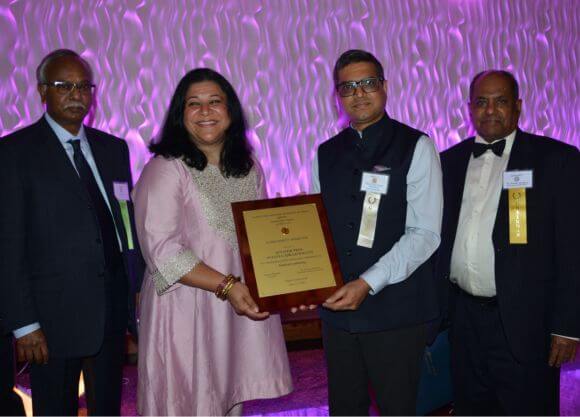
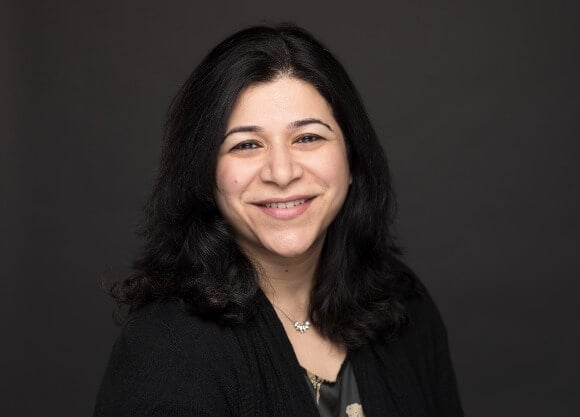
Serving as Connecticut’s first-ever Indian American state senator and first South Asian American female senator, Gadkar-Wilcox has become a prominent voice on issues affecting education, civic engagement and community development, while continuing to inspire students through her teaching and scholarship at Quinnipiac.
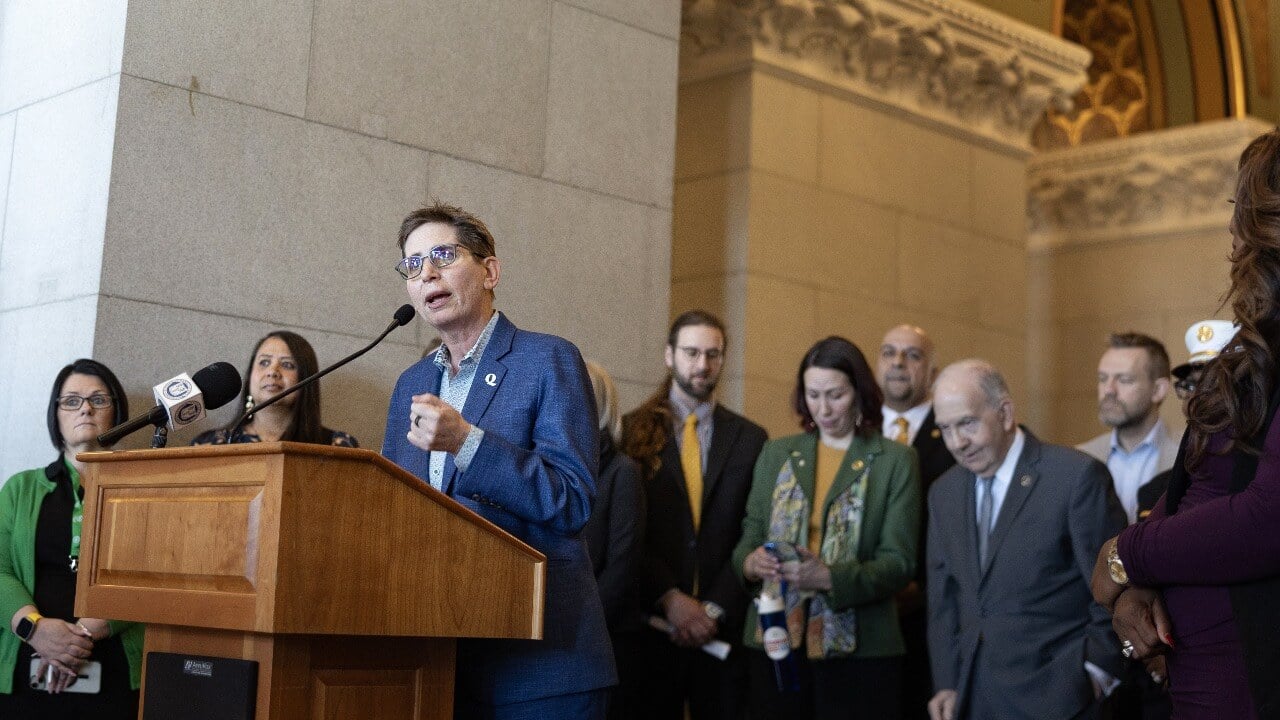
She was honored by the Global Organization of People of Indian Origin (GOPIO) Connecticut Chapter, which presented Gadkar-Wilcox with its political leadership award on June 13. The honor recognizes Gadkar-Wilcox for her dedication to championing underrepresented communities, advancing equity in education and healthcare and blazing a trail for future Indian Americans in public service.
Gadkar-Wilcox was elected to the senate in November 2024 and began serving in January 2025. At Quinnipiac, she is entering her 15th year teaching undergraduate classes in constitutional law, comparative law and human rights law, among other subjects. She said her decision to enter politics was inspired by her time in the classroom.
“Being a teacher of constitutional law and a teacher of democracy, I’m seeing a politics that doesn’t match the principles and the vision our framers have put in place,” Gadkar- Wilcox said. “That was really why I got involved in politics altogether — to bring about a new kind of politics, one that’s really focused on grassroots, on mobilizing, on community. One that’s amplifying voices of people that don’t otherwise get heard and one that’s bringing a new kind of representation.”
In her acceptance speech at GOPIO Connecticut Chapter's 20th Anniversary Celebration and Annual Awards Banquet, Gadkar-Wilcox noted the country is experiencing an important moment for immigrants and for the immigrant story.
“Importantly though, we often separate the two — the immigrant story and the American story. What we have to consider more is how inseparable the two are. How the immigrant story becomes the American story,” she said.
Many American pastimes, holidays and customs are deeply rooted in cultural traditions brought by immigrant groups that came to the United States in waves before the South Asian community, she said.
“Similarly, when Quinnipiac hosts a Holi event, a garba dance and a Diwali celebration, students now from different backgrounds mark their calendars and look forward to attending. These traditions become part of the American story because immigrants and their families are the American story,” said Gadkar-Wilcox.
Prior to coming to Quinnipiac, Gadkar-Wilcox engaged with pedagogical issues as the director of a non-profit legal education organization and worked in litigation.
In addition to her current legislative service, teaching and scholarship, she is the Executive Director of the Oxford Consortium for Human Rights. As a Fulbright-Nehru Scholar (2015-2017), Gadkar-Wilcox studied constitutional values in India. She has presented papers and published articles on domestic violence law in India, First Amendment Jurisprudence in the United States and on issues related to media studies and critical race theory.
As she outlined in her award acceptance speech, Gadkar-Wilcox said her career has been and always will be focused on the public interest.
“As a litigator, I had the highest number of pro bono hours at my law firm among all associates. As a director of a non-profit, I worked with young people to understand their rights and responsibilities under the law. As an educator, I try to support programs that provide access to new educational opportunities for students who may not otherwise have them — first-generation students and underrepresented students. And as a legislator, I work to promote the public good.”
Born in New York City to immigrant parents, Gadkar-Wilcox said her contributions in public and private life are shaped by the diversity of values that she has come to understand as “…an Indian child speaking Marathi at home and as an American teenager listening to Michael Jackson and Depeche Mode.”
“In other words, my experience within the immigrant journey of my parents brings together my upbringing in the United States with the Indian cultural norms and social practices I learned from my family. It helps me see social and political problems from multiple dimensions, which is why I am a scholar of both the U.S. and Indian Constitutions and admirer of both the American pragmatism of John Dewey and the transformative Indian Constitutionalism of Dr. B.R. Ambedkar — father of the Indian Constitution.”
In her first senate term, Gadkar-Wilcox served as chair of the new Government Oversight Committee, the Regulations Review Committee and a Select Committee on Special Education. She served as Vice Chair of the Judiciary Committee and the Higher Education and Employment Committee.
Gadkar-Wilcox said she was especially glad to serve as special education chair last year in her very first term as state senator.
“We made historic investments in special education which were necessary. We started that committee by having listening sessions all throughout the state, and I absolutely love that,” said Gadkar-Wilcox.
In her chairmanship of the Government Oversight Committee, she successfully advanced comprehensive anti-trafficking legislation, strengthening the state's fight against human trafficking.
“This is an issue that affects so many people. I think what the Epstein files tell us is that if it’s happening all the way in the upper levels of administration, it’s happening on the ground all the time — so we should be doing more in investing in prevention,” she said.
Gadkar-Wilcox is also leading legislative efforts in the General Assembly to expand and restructure the state's Trafficking in Persons Council and will be stepping in as its legislative chair.
“That’s another commitment for me — to make sure we’re doing more to address what is a horrible crime and a very visible crime. It requires more intervention so that we can get to prevention,” she said.
Additionally, Gadkar-Wilcox is also proud to have pushed for support of the new Connecticut-India Trade Commission bill, overwhelmingly passed by the state senate. The commission will create long-lasting ties between the state and India in advanced manufacturing, technology, academia and other areas.
“I’m helping to make sure the commission is up and running and to make sure that we have some good opportunities for trade, academic exchange and collaboration in the arts along with manufacturing, technology and all of those areas,” Gadkar-Wilcox said. “We want to really think about what this relationship looks like at the state level. Especially with the uncertainty right now around federal trade agreements, it really gives an opportunity as a state to look at global agreements, which is amazing to me.”
Last year, she helped to advance and pass the senate bill recognizing Diwali as an annual ceremonial state holiday, which was signed into law by Governor Lamont.
“Because that’s not an experience that everyone shares, it’s important to bring that perspective into the legislature, and to be able to have visibility around that — but also to get things done that will be good for Connecticut, like the Connecticut-India Trade Commission, which the governor is excited about, as well,” said Gadkar-Wilcox.
Prior to representing Senate District 22 (Bridgeport, Trumbull and Monroe) in elective office, Gadkar-Wilcox was appointed by Governor Ned Lamont to serve as a Commissioner on the Commission on Human Rights and Opportunities in Connecticut. She has worked with students to implement principles of community action planning in the local community and has organized human rights workshops at the United Nations and Oxford University.










Quinnipiac Today is your source for what's happening throughout #BobcatNation. Sign up for our weekly email newsletter to be among the first to know about news, events and members of our Bobcat family who are making a positive difference in our world.
Sign Up Now