



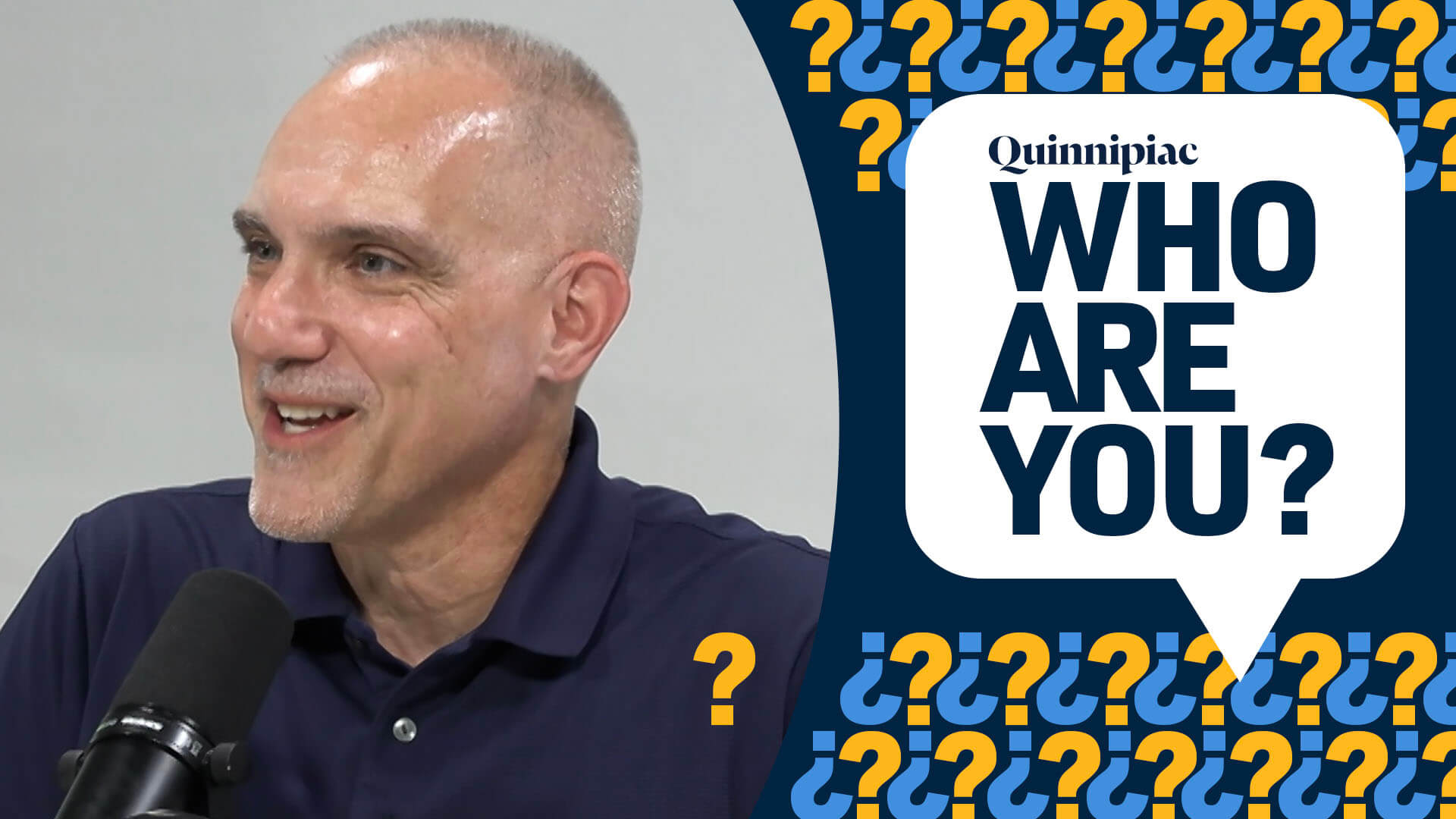
‘Who Are You?’ podcast with guest Professor John Powers
Quinnipiac's Interactive Media & Communications Program; "The Agency"
Quinnipiac's Interactive Media & Communications Program; "The Agency"
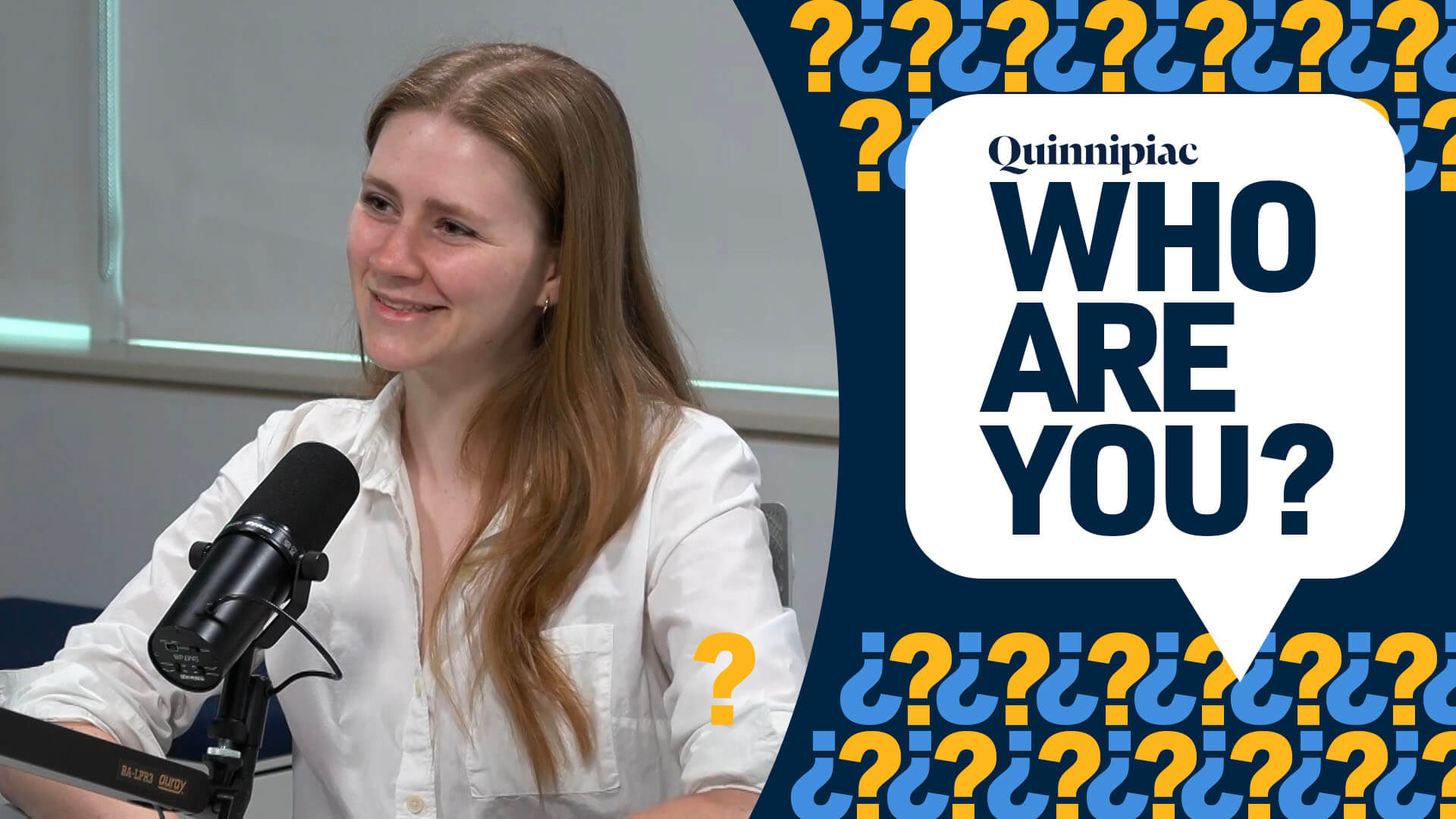
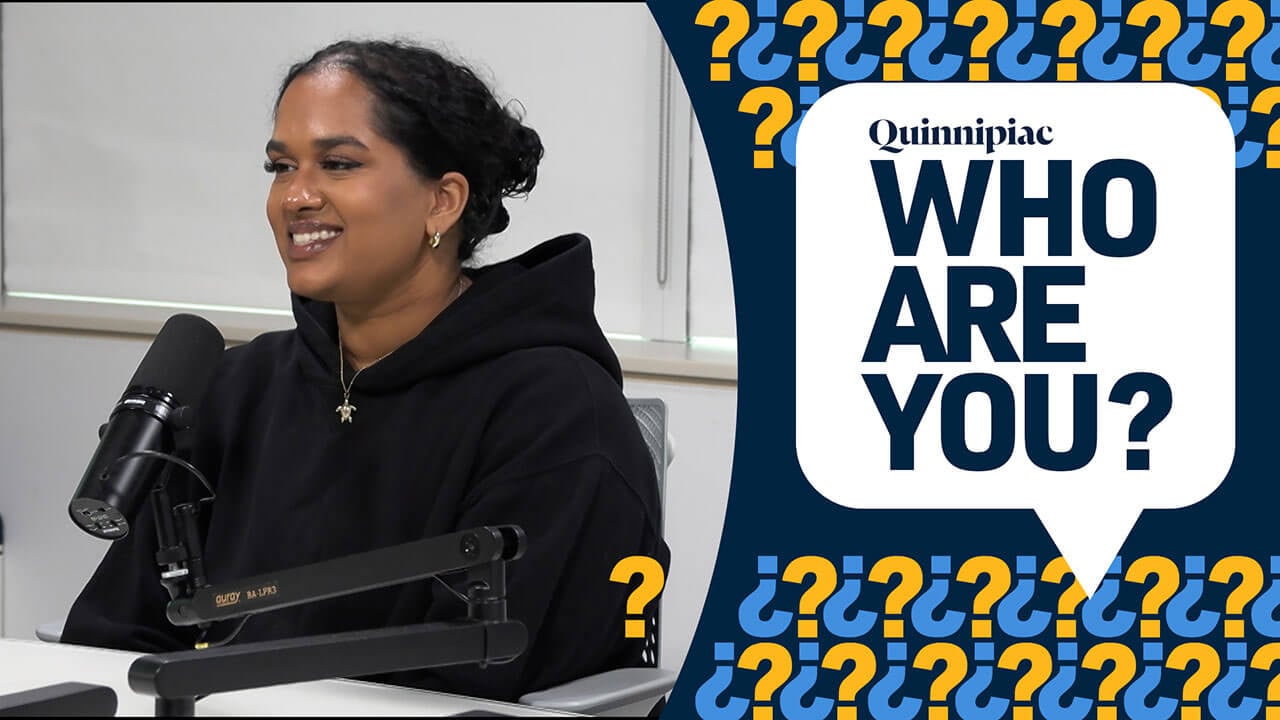
Joel Vanner: Hello, and welcome to ”Who Are You?,” the Bobcats you know, the stories you don't. I'm your host, Joel Vanner, inside the podcast studio at Quinnipiac University School of Communications, and I'm joined today by my guest, John Powers. John, welcome to the show.
John Powers: Great to be here, Joel. Thanks for having me.
Joel Vanner: Awesome. I'm sure you could guess, John, by the name of the program, what my first question to you is going to be. And that is tell us, who are you?
John Powers: So, my name is John Powers. I'm the director of the Interactive Media and Communications grad program here, an assistant professor in the School of Communications and also one of the co directors of the agency at Quinnipiac.
Joel Vanner: Did younger John always think he was going to work in the communications field, work at a university?
John Powers: Yeah, that's a great question, and I think it started when I realized at a very young age that I wasn't going to be able to play professional sports because I just love sports growing up, realized that I would have to take a different path if I wanted to be around sports. So just growing up, watching the NFL on TV and the announcers and the people involved in Major League baseball and other sports was sort of the route I took from high school into college, into communications. Once I was in college, I sort of fell in love with public relations and realized I was much more something that I could really get into. And so I became a PR major and went from there.
Joel Vanner: So public relations- what drew you to the field of public relations, and where did that lead you after college?
John Powers: So I just really liked all the different aspects of PR, that it wasn't like, tied into just, you know, one sort of skill set, that it was writing, and it was strategy, and it was, you know, interpersonal communication.
Joel Vanner: And this was before, not to date your job, but before social media, too.
John Powers: That is very true. Yes, much before that. So this was the old style way of PR with press releases and building relationships with the media and all that sort of stuff, which is still done today. But what happened was I sort of, you know, fell in love with that. And my first job out of college was at a local hospital here in Connecticut. I had really no interest in healthcare, but I also fell in love with working there and worked there for ten years. I loved it because it just gave me a chance to do everything there. And that is when social media came into existence and things like that, also.
Joel Vanner: So you started at a local hospital working in healthcare, doing public relations. The learning a lot, right? What was your next step after kind of getting that experience? Where did that lead you to?
John Powers: So this is interesting because while I was working at the hospital, my other passion was always teaching. Okay? So I actually went back to school while I was working full time at that hospital in public relations for education to earn a master's degree in education. My mom was a school teacher and just something I always love doing.
Joel Vanner: We probably had dinner around homework and everything else.
John Powers: Exactly. And, you know, it was there was a tuition reimbursement. So other than the time, you know, that was covered. And, you know, I loved it. And I've became a certified school teacher, and to this day, have never used that, but used aspect of it, probably, right? Certainly in my career now, but never actually went to teach full time in a public school. But I loved it.
Joel Vanner: So, with that education and the experience that you had, what led you to come to Quinnipiac?
John Powers: So I was working full time as a public relations director at another university, and I was asked to teach one class as a part time professor in the PR department here. I did that. I loved it. It became two classes. It became three classes. And it just was getting better and better. So with the support of my wife, I left my full time job. And continued to teach here part time and went and did my PhD so I could hopefully pursue a full time faculty position here or somewhere else?
Joel Vanner: So you're the director of the Interactive Media and Communications graduate program here at Quinnipiac. Tell me about the program and the courses that students in the program take.
John Powers: Yes, I love being in this role, and I love this program. I love the students we get to work with. We have people coming in from all different fields. The program itself is very diverse and made up of almost all electives, so students can choose their own path. So if they want to focus on social media management on the graduate level, they can go that route. If they want to concentrate on user experience design and how to develop that sort of content, they can do that or straight content creation, audio video production, podcast, as we're doing right here, all that kind of stuff. They can choose their own path and build their program that way.
Joel Vanner: You can really customize it, and it's 100% online, too.
John Powers: And that is great. It's 100% online, and yet we have a weekly live in person Zoom class, if you will. So students can be from all over the country, which they are all different points in their career, or is it the students come from all different points in the career from right out of their undergraduate program to early career, mid career. And we even have some people who are about to retire or have even already retired. Continuing that education there. Absolutely. And so it's really, to me, and I am biased, but it's the best of both worlds because people can live anywhere and be in this program. They can do the work asynchronously on their own time or on their own schedule, but they also meet up. So when we have commencement and the ICM program is here together, most of the time, those graduates have never met each other in person, and yet they all know each other very well, and they're very good friends. And I love that.
Joel Vanner: That's awesome. And I think, too, today in the age of AI, right, and how artificial intelligence is infusing its way in all industries, especially communications, being able to customize your program of study for maybe the things that you're strong in, but the things that maybe you don't have the skills and experience in yet either, I'm sure that is really helpful, too.
John Powers: Absolutely. And students can go on any path they want. We have some who will take a little bit of each because they sort of want to be uh, you know, masters of a lot of different areas and others who really want to hone in on one area and become the best at that. Speaking of AI, we do you know, we're very focused and deliberate about building AI into every course because it's such a big part of our world today.
Joel Vanner: So the ICM program, the Interactive Media and Communications program, really equips students with real-world experiences, allowing them to customize their studies and what they're interested in. Another really cool experience here at Quinnipiac is the agency. You mentioned in your intro that you are the co chair, co director of the agency. What is that organization, and what do they do here at Quinnipiac?
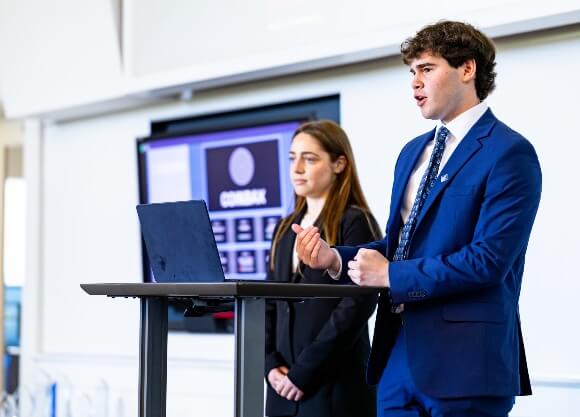
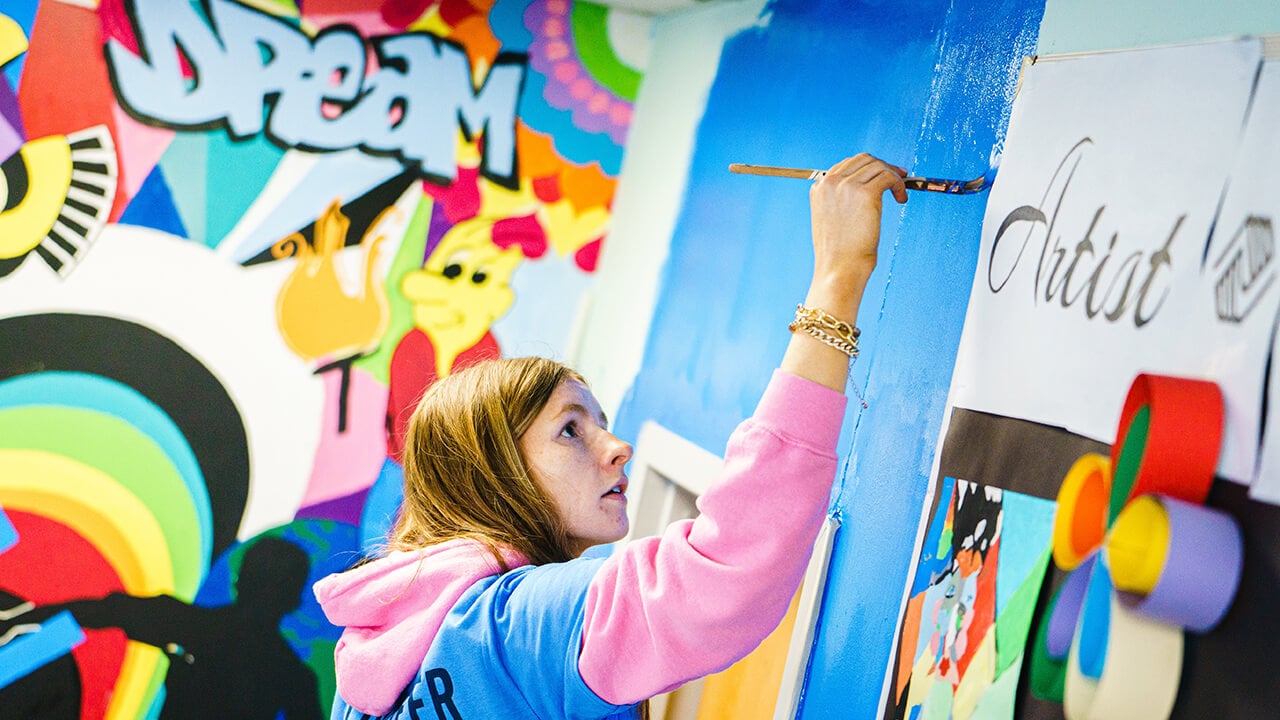
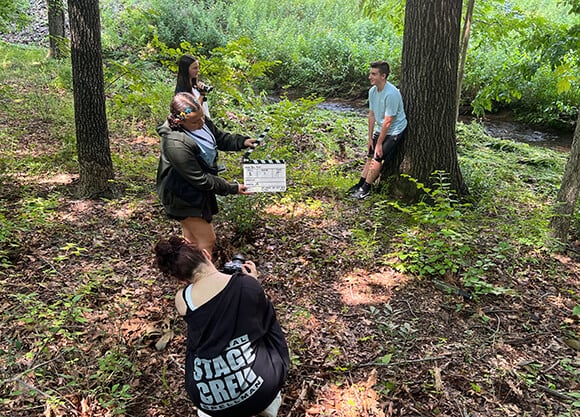
John Powers: The agency is actually a three credit class that students have to apply to get into. So it's the only course here that students need to apply to be accepted into the agency. It is a full service communication firm that is led by students. There are two faculty, myself and one of the advertising public relations faculty. We co direct together. We call ourselves the co CEOs of the agency, and students work with real clients in the real world, everything from account executive work, to managing, running different teams, a social media team, graphic design team, content copy team, video photography team. And they deal with all of the ups, downs, challenges, accomplishments of working with real clients in the real world.
Joel Vanner: Applying everything they're learning in the classroom right there at the agency, in addition to all the other student media offerings we have here at 100%.
John Powers: And we have a tag line where we call the agency, the young professionals of the agency. We call them the best of the best. And we challenge them once they're accepted into the agency for that semester to live up to that. So they're given a tremendous amount of responsibility, leeway, creativity, management opportunities. And we have seen students who have come through the agency use that to land jobs after graduation that are beyond their age and their level of experience because of this opportunity they had here.
Joel Vanner: What is, in your opinion, the most impressive project the agency has worked on so far?
John Powers: It's a great question. We try to balance the clients each semester between one Quinnipiac entity. Obviously, we have a lot of things here that we get asked to do. So we try to keep it to one, and then we find a small business or a for profit entity. And then we also work with either a nonprofit or a government agency. So I would say the two that come to mind just off the bat, one is the defended Den campaign that was done here at Quinnipiac University that our agency students came up with that name, branded it, developed it into this campus wide program that is in effect today. The other one that I think really I felt was extremely effective was with the Hampden Police Department. They came to us and asked for help with a recruitment video that they were down a number of officers and needed help recruiting younger people who would be interested in becoming Hampden police officers. And so, our students not only developed an amazing a short video for that purpose, but also built a whole campaign around it with social media and web communication and many, many other things to help with that effort.
Joel Vanner: So you've had a lot of experiences in your career, different experiences, and throughout that, you've emphasized learning in practice, but also continuing your own education and learning. And here at Quinnipiac, and I know you're a part of this. We have the Office of Lifelong Learning, continuing education space that provides trainings and workshops to leaders in all industries, at all levels, right, opportunities to continue to learn Um, what kinds of trainings do you facilitate in the lifelong learning space?
John Powers: So this is something I've really loved to do is to provide training for leaders from a variety of larger corporations, large nonprofits, other organizations who are looking to learn new techniques to lead their teams to handle the tremendous change that we all face. Um rapidly in our world to grow in their career. I think the companies and the nonprofits that are involved in this are really forward thinking and wise to invest in what their employees are doing here. And so I love going in for half a day or a day and weeding a group of leaders, you know, in all sorts of things, you know, related to transformation and building their teams and learning how to advocate for their employees, but also learning how to engage their employees and becoming involved in positive change in their organization. You know, my experience is that these are just invaluable, and the time spent with them to me is also really energizing and helps me to grow.
Joel Vanner: Know you know all the keys, but I took part in the Leading with Impact program through the Office of Lifelong Learning. And I was shocked at how engaging it was. You're not just sitting in a room, listening; you're actually doing, practicing, and learning what they're telling you right there in that session.
John Powers: And I'm glad you had that experience because you're absolutely right. These are not There is no lecture. This is interactive. And discussion based and activity based and really developing practical skills that they can go back to their office, to their team and implement to bring about, you know, positive change. And it really is encouraging when there are a few groups I work with where I see them for half a day. One month, and then a couple of weeks later, I'll see them again for a full day. And right off the bat, we spend time. They're talking about what happened? What things have you tried? And some of the stories they share are great. No, you know, the positive, some of the challenges they still face. But it's really helpful, which I'm sure you experienced yourself, how you can learn from hearing about other people's experiences and roles and all of that. And so I do think it's really effective.
Joel Vanner: My last question to you, John: you talked about how these programs help leaders navigate change. You also talked about how in the ICM program, you're teaching students how to navigate change in the field of communications and learn things that maybe they don't have skills in yet. What would you say to those? What advice would you give to people to have them keep an open mind about continuing to learn every day?
John Powers: Yeah I think in any field or, you know, in any aspect of life, one of the really positive things that gets me excited is to learn new things. And I think in this day and age, things are changing at such a rapid pace with technology, with AI, with what's going on in the world, with how people interact with each other, with how people get their information. You know, I think it is so crucial for people to be open to new ideas, new ways of dealing with people, of interacting with folks, you know, both as students here at Quinnipiac University or even in these companies when we're involved in lifelong learning training.
Joel Vanner: If someone is interested in continuing to develop professionally and see what lifelong learning and continuing education here at Quinnipiac has to offer, where should they go for more information?
So I would encourage anyone from a large corporation, nonprofit, an individual to go to lifelong learning John Powers: dot dot EDU. See the offerings there, see the information, there, reach out, have a conversation. It's a great, great opportunity.
Joel Vanner: Well, John, that brings us to the end of our time. Thank you for joining me. Hope to have you back sometime in Go Sox.
John Powers: I appreciate it, Joel. We need help. Go Sox. Maybe you can step in there.
Joel Vanner: That's not going to help, but I appreciate that. If you enjoy today's episode, be sure to subscribe, share and like, and find other episodes of ”Who Are You?,” on Apple Spotify and YouTube Podcasts. Until next time when I ask my next guest, who are you? I'm Joel Vanner. Bye for now.











Quinnipiac Today is your source for what's happening throughout #BobcatNation. Sign up for our weekly email newsletter to be among the first to know about news, events and members of our Bobcat family who are making a positive difference in our world.
Sign Up Now