



How AI might have rewritten the American Revolution
From winning support to battlefield strategy
From winning support to battlefield strategy
For Kiku Jones, interim associate dean of faculty affairs and professor of business analytics and information systems, Franklin would likely have recognized the tool’s potential immediately — especially as a writer, diplomat and communicator.
“I believe that if Benjamin Franklin had access to ChatGPT, he would use it to draft and refine his writing, tailoring messages for different audiences,” Jones said.
She said Franklin could have written a single piece and used AI to adjust its tone, language and persuasive strategy for different audiences. ChatGPT also could have helped with translation and cultural adaptation, strengthening his ability to communicate across borders and build diplomatic relationships.
At the same time, Jones said, Franklin’s use of AI would not have been without risk.
“Franklin’s writing was known for its distinctive voice, which combined intellect and wit,” she said. “If AI-generated versions failed to capture that quality, readers might question his authorship and lose trust in his communications.”
Jones also warned of the potential for “cognitive erosion,” in which Franklin might have become overly reliant on AI rather than his own critical thinking.
“Even so, one can imagine that Franklin would draw the line somewhere — likely ignoring ChatGPT altogether if it suggested choosing the bald eagle, with its ‘bad moral character,’ over the ‘much more respectable’ turkey,” Jones said.
Tamilla Triantoro, associate professor of business analytics and information systems, imagined another humerous AI use case from the Revolution — Paul Revere asking AI to optimize his famous ride.
“It tells him the most efficient path, avoids every town and minimizes social interaction,” Triantoro said. “He arrives having warned no one.”
She also imagined another scenerio in which the British might have used an AI chatbot to respond to colonial complaints.
“It opens every reply with, ‘I completely understand your frustration regarding the tea,’ and the war starts three weeks early,” Triantoro said.
Beyond the humor, Triantoro said today’s algorithms could have complicated the Revolution by deepening division rather than building unity.
“Instead of building a continental identity, algorithms would encourage hyper-local echo chambers,” she said. “British forces could use targeted information campaigns to turn different colonies against one another based on regional economic anxieties.”
Jamie DeLoma, senior director of live channels and editor of Quinnipiac Today, said AI might have transformed not only how the Revolutionary War unfolded, but also how Americans experienced it.
“If the Revolution happened today, we'd probably experience it minute by minute through social media,” DeLoma said. “AI could summarize battlefield reports, translate letters and help verify information faster than ever. But it could also make rumors spread just as quickly, making it even harder to separate fact from fiction.”
Ultimately, DeLoma, who is also an adjunct professor of communications and has taught courses on AI in journalism and various storytelling techniques, said the technologies may change, but the importance of trust never does.
“The Revolution wasn’t won just by battles — it was won by communication,” he said. “Pamphlets, speeches, newspapers and letters shaped public opinion across the colonies. AI might have made those messages faster to create and distribute, but it also could have made misinformation spread even faster. The technology would have changed, but the importance of earning people’s trust would have remained the same.”
The challenge, DeLoma said, is that the same tools that help people share information can also make it easier to distort it.
“The Revolutionary War wouldn’t have been fought just on battlefields — it would have been fought in comment sections,” DeLoma said. “Someone would have insisted Paul Revere was a crisis actor, another would have claimed the Boston Tea Party was staged, and historians would still be arguing over whether that crossing of the Delaware image was authentic or AI-generated.”
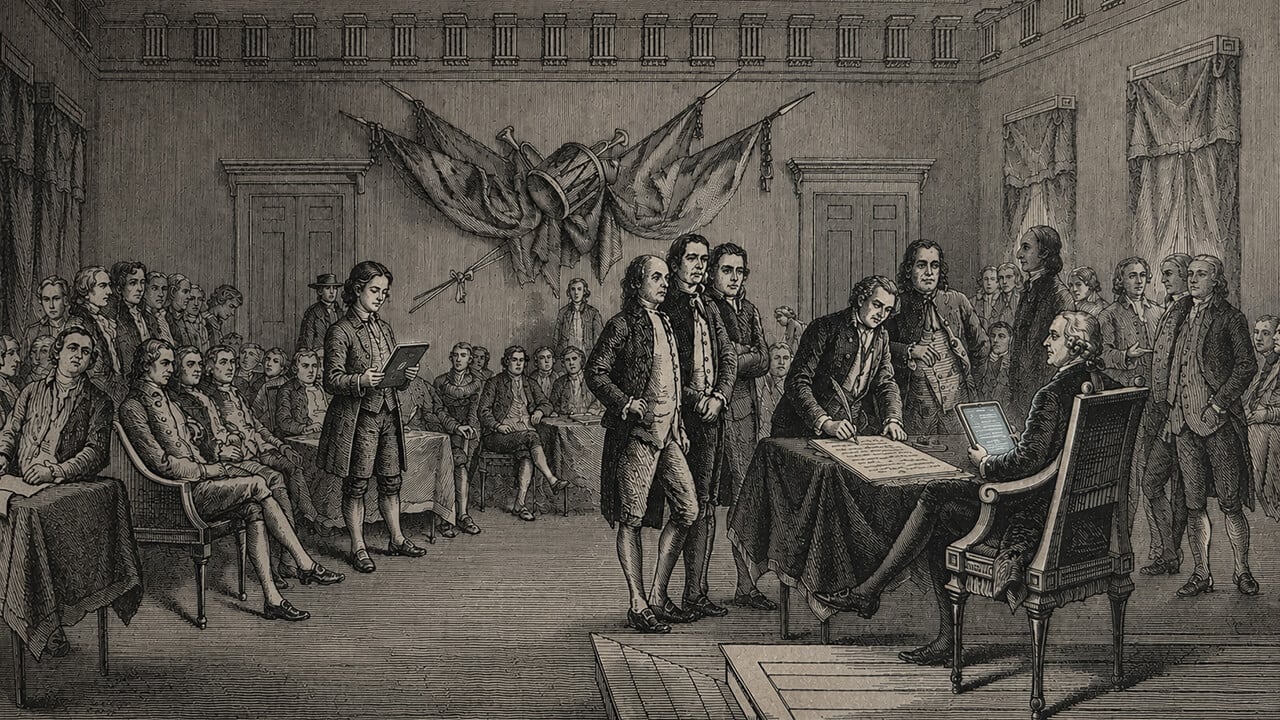
The lead image of this article was edited by AI to illustrate what our Founding Fathers may have looked like if they used modern technology.





















Quinnipiac Today is your source for what's happening throughout #BobcatNation. Sign up for our weekly email newsletter to be among the first to know about news, events and members of our Bobcat family who are making a positive difference in our world.
Sign Up Now