



From shared screens to personalized feeds: How media has changed since 9/11
September 08, 2026
September 08, 2026
Since then, the way that breaking news reaches us has changed dramatically. This information can come from a journalist, a witness with a smartphone, a social media post, a livestream or in more recent years, from realistic-looking images created with artificial intelligence.
There are more ways to know what is happening than ever before. But we no longer necessarily see the same thing.
For John Powers, assistant professor and director of the digital content creation & strategy graduate program at Quinnipiac, one of the biggest changes has been the ability of ordinary people to document events as they happen.
“On 9/11, we relied on broadcast television and cable news. Newsrooms were staffed with editors who acted as the gatekeepers, carefully choosing the stories and images we saw. It’s hard to imagine now, but there were no social media platforms 25 years ago,” Powers said. “Today, when an event occurs on a national or global level, we are instantly confronted by massive amounts of documentation from professionals and citizen journalists on all channels.”
That also means the news is no longer confined to the television in the living room or the front page of the newspaper.
“There's a difference between turning your TV off after hours of saturated coverage and having it in your pocket on your phone,” Powers said. “Now, you’re carrying the news with you everywhere you go. There is no buffer. There is no break.”
But that constant connection can also provide something that was difficult to get on September 11: a way for people to quickly let friends and family know they are safe.
“We didn’t have a ‘check-in’ feature back then. When the cell towers were overwhelmed, people could not call their family and say, ‘I'm OK,’” Powers said. “We were cut off from each other and couldn’t communicate to assure loved ones we were safe.”
But the same technology that allows people to communicate instantly also means there is no longer one trusted source where everyone is getting the news.
Instead, information is filtered through algorithms designed to keep people engaged. Two people experiencing the same event could quickly be shown very different versions and perspectives of the same information.
“The situation would be on everyone's algorithm, and then the algorithm would adjust what you see depending on how much time you spend with certain content,” Powers said. “The algorithms will decide what I see and what kind of content I’m receiving because the platform will want me to stay on their site.”
Artificial intelligence has also presented challenges that would have been unheard of in 2001.
Wasim Ahmad, an associate teaching professor of journalism who experienced 9/11 as a student reporter, remembers a time when photographs carried a level of authenticity that audiences largely took for granted.
“In 2001, you had no doubt that what you were looking at was real,” Ahmad said. “Images were captured on film, not digitally, before they were processed and distributed. There were several channels and checkpoints along the way before they were released. There was almost no way that the technology of the day could have faked the photographs that we were all seeing in real time.”
That certainty is harder to come by now.
“I can jump on my phone and type a prompt into ChatGPT that could generate a realistic photo on demand,” Ahmad said. “With that kind of capability, it’s hard to know if you're looking at something that's real or not.”
That uncertainty extends beyond artificial intelligence. Social media allows information to spread without passing through trained editors and fact-checkers who once served as a buffer between an event and the public.
The challenge for journalists is no longer simply getting information quickly. It is determining whether information is authentic and explaining that process to audiences.
Ben Bogardus, professor of journalism and chair of the journalism department at Quinnipiac, said journalists still have an essential role in moments of crisis, particularly when information is incomplete or changing rapidly.
“You really need someone who is committed to the journalistic principles and ethics of informing the public in times of crisis,” Bogardus said. “Journalists tell us what we know. They tell us what we don't know. They base those decisions on verified information and trusted sources. Otherwise, people left to their own devices, literally, start to speculate or guess, and that's not always the best thing.”
For each photo received in a newsroom, journalists verify the source of an image, examine how and when it was created, contact witnesses or officials, compare it with other photographs and video and look for independent confirmation before publishing it. Bogardus said he thinks journalists might need to do a better job at explaining how they process and validate information to their audiences.
“It helps to build trust to say we verify this information using metadata off of the image,” Bogardus said. “Or, ‘we talked to three people who were also there and then verified they were physically there in person like they claimed.’ Journalists realize that people today are skeptical of what they see online because they know things can be faked so easily.
That skepticism is understandable. It also creates a new responsibility for news consumers.
Powers recommends that people resist the temptation to accept the first version of a major story they encounter.
“Encouraging people to not believe the first thing they see is really important,” Powers said. “No matter what happens, good or bad, if there's some major event, I think people need to protect themselves from misinformation and be aware that they need to look at a few different sources before believing everything they see in their news feeds.”
The media landscape may be more complicated than it was in 2001, but audiences are not powerless in navigating it.
Ahmad says people should be more deliberate about where they get their news and remember that journalism still has a role to play.
“People use ‘gatekeepers’ now like it's a bad term for the media, but I think we’ve lost something in the mistrust of journalists,” Ahmad said. “If you ask young people where they get their news, they’ll say from social media and TikTok. My advice is simple: don’t. We need to be aware of where our news is coming from and check reputable news organizations before we share online. There are still journalists and editors out there doing the important work of vetting information. We just have to make sure we’re following them.”
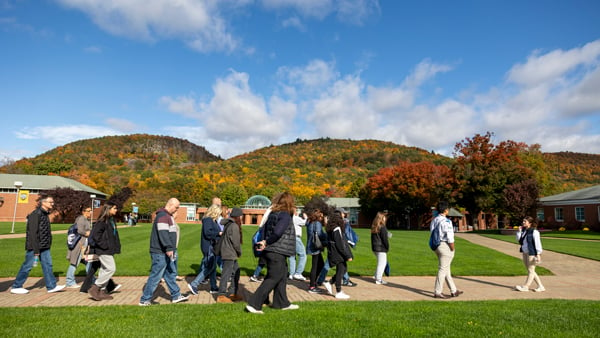
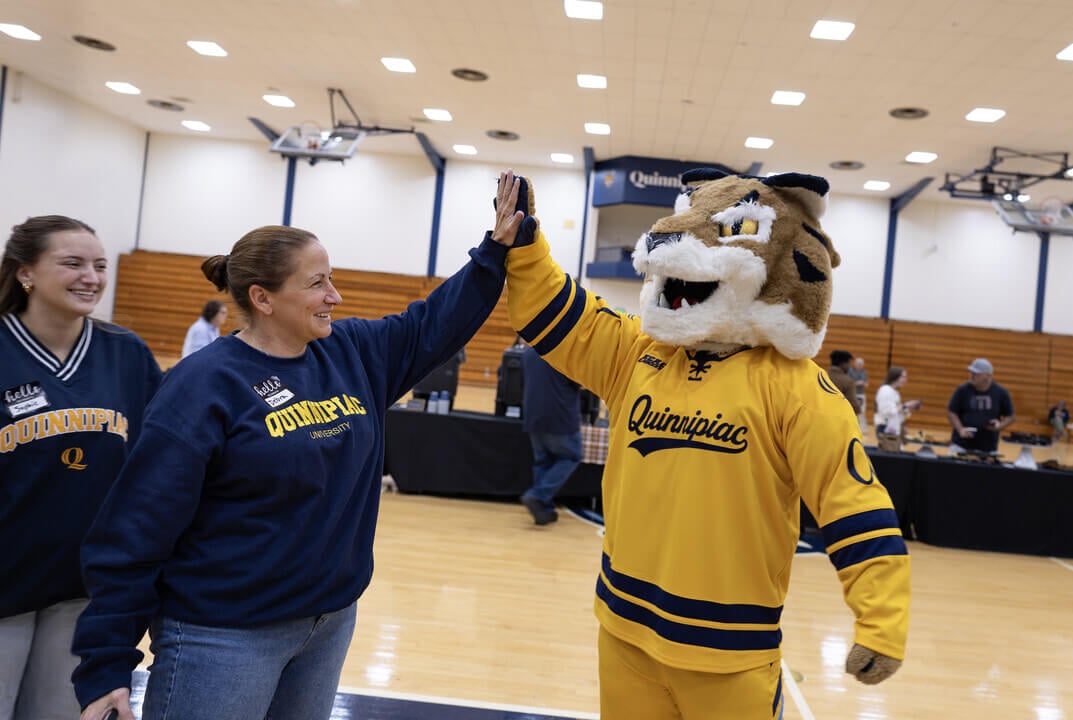
Want to learn what Quinnipiac is all about? We invite you to join us at an Open House, where our students, faculty and staff will introduce you to life as a Bobcat through a variety of sessions and tours.


Quinnipiac Today is your source for what's happening throughout #BobcatNation. Sign up for our weekly email newsletter to be among the first to know about news, events and members of our Bobcat family who are making a positive difference in our world.
Sign Up Now