



Adaptive skiing organization partnership teaches students important lessons
September 29, 2026
September 29, 2026
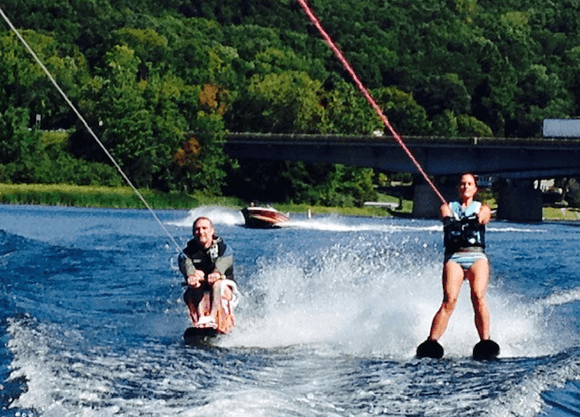
One of the organizations that has been involved in numerous Quinnipiac initiatives, beyond the Adaptive Sports and Recreation Exploration Day, is the LOF Adaptive Skiers.
“LOF’s mission is to build lasting confidence and fulfillment through exposure and professional training in recreational and competitive water and snow skiing. LOF is open to children, adults and veterans,” said Elizabeth Wescott, clinical associate professor of occupational therapy.
LOF provides many opportunities for people of all ability levels to engage in recreational activities while mitigating the high costs of equipment.
“Our office works diligently to explore and submit for grant opportunities to support the purchasing of equipment, such as sit skis, cages, mono-skies and bi-skies among numerous other pieces of equipment to support a variety of skier abilities while adapting to their needs,” said Wescott. “LOF supports the cost of equipment to ensure that participants are able to have the best experience without experiencing huge costs that are associated with such specialized equipment.”
Wescott first got involved with LOF in 2013 when she volunteered to help write grants. Now, she is a member of the board of directors.
“I got involved initially when a patient of mine wanted to get back to water sports,” she said. “Once medically cleared, he and I went to LOF and the rest is history. One of my top occupational therapy moments was skiing alongside him in a 22-mile ski-a-thon.”
In addition to the faculty connections with LOF, students also gain experiential-learning opportunities through the partnership, including research projects, the Adaptive Sports and Recreation micro-credential and service-learning courses like HSC 280: Adaptive Sports and Recreation.
Julie Booth, director of the Center for Interprofessional Healthcare Education and clinical associate professor of physical therapy, also helps students learn the impacts of adaptive sports.
"Students recognize that the benefits of adaptive sports are the same as non-adaptive," said Booth. "They see that the value and importance of sports and recreation is essential to everyone. They are able to witness both competitive and recreational athletes in action and see the health values as well as the benefits to self-esteem, confidence and social connections. They also gain an understanding of the interprofessional team in action. They see members of different health professions, coaches, individuals and families and caregivers working together to help the athlete be successful in the sport."
The first-hand experience also helps student understand the impacts of adaptive sports beyond just the physical well-being of athletes.
“Students can gain a deeper appreciation for the capabilities of individuals with disabilities and the role healthcare professionals play in supporting long-term wellness and performance. Adaptive sports provides a powerful example of inclusion, self-determination and community engagement. Students can observe how participation fosters confidence, social connection, leadership and advocacy, helping them better support individuals with disabilities in multiple settings.”
The partnership with LOF also involves students from various disciplines to collaborate interprofessionally.
Students interested in engineering have opportunities for innovation and design through adaptive sports equipment.
“Students can observe how wheelchairs, prosthetics, adaptive sports equipment and assistive technologies are customized to meet athletes' needs,” Wescott said. “This can inspire user-centered design thinking and demonstrate how engineering solutions directly impact and improve performance, accessibility and inclusion.”
Students in business and communications disciplines can gain insight into how organization create inclusive programs, secure sponsorships, market events and build community partnerships through these opportunities.
“Adaptive sports also offer examples of leadership, entrepreneurship and social impact, demonstrating how businesses can advance accessibility while creating value for participants, spectators and others,” said Wescott.
For students in any major looking to get involved, Wescott has simple advice.
“Being involved in adaptive sports has opened my eyes to the full rehabilitation continuum. I have met people who have changed my life and for that I am forever grateful. If you haven’t been to, volunteered for or experienced an adaptive event, go out and do it,” she said.








Quinnipiac Today is your source for what's happening throughout #BobcatNation. Sign up for our weekly email newsletter to be among the first to know about news, events and members of our Bobcat family who are making a positive difference in our world.
Sign Up Now