



Sports communications faculty reflect on games, moments that unified the country after 9/11
September 08, 2026
September 08, 2026
When he heard that a local high school wasn’t canceling a girls volleyball match, he knew he had to be there to take in the scene. But it wasn’t until a brassy rendition of the Star-Spangled Banner started crackling over the loudspeakers that his story began to take shape.
Pietruszkiewicz estimates he’s heard the anthem “5,000 times” at professional and college sporting events in two decades as a journalist. But the simple, patriotic ritual had never felt so important.
“I will never forget what it sounded like,” he said. “Usually during the anthem, you can hear people fidgeting or whispering to each other. Not that night. It was the most surreal thing, because it’s a high school gym, there are probably 50 people in there. Everybody else is home watching TV. I interviewed both of the coaches and the administrators, but what I remember most was speaking to one of the volleyball players. She got emotional talking about it. She knew what she had heard and what it meant.”
Weeks later, Pietruszkiewicz was in the press box at Wrigley Field when Dominican-born Chicago Cubs star Sammy Sosa took his home run trot with a little American flag in his fist.
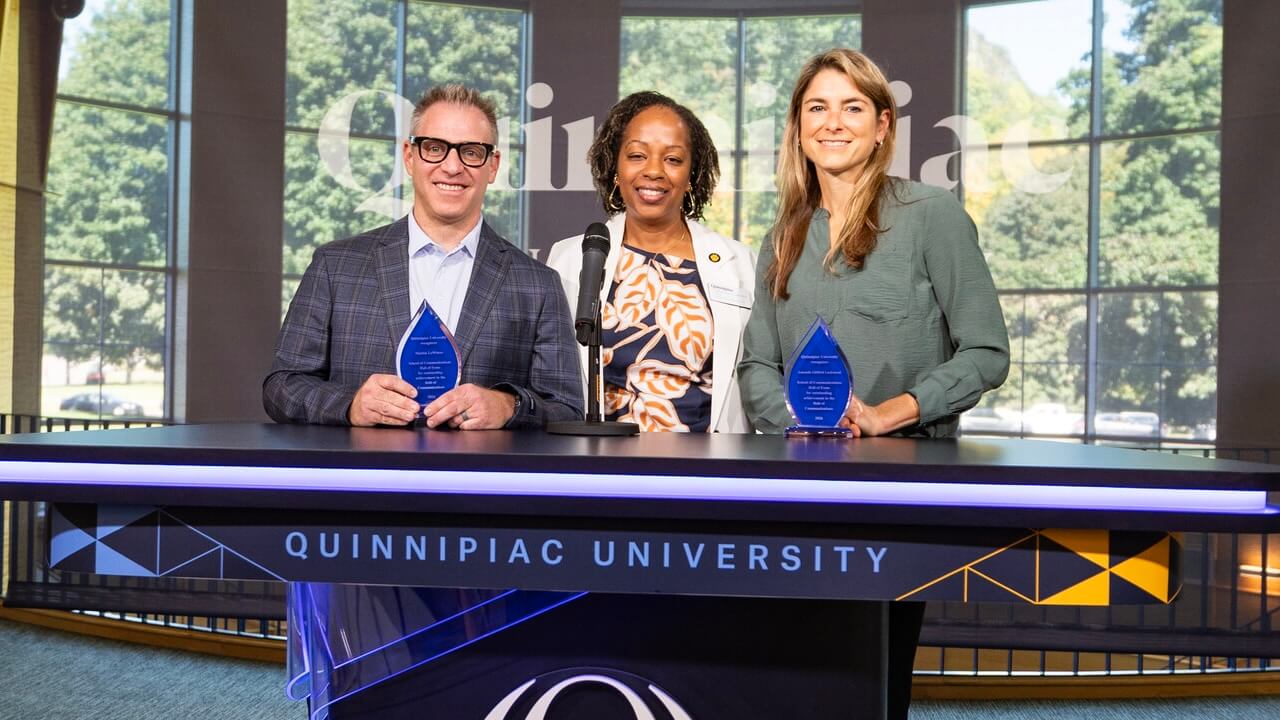
Pietruszkiewicz’ friend and former colleague at ESPN, the Hall of Fame baseball reporter Tim Kurkjian — who appeared on an episode of “What’s Your Story?” in the open-air studio at Quinnipiac — is fond of calling baseball “a common language.” It’s a sentiment that rang true as the nation mourned nearly 3,000 victims of the deadliest terrorist attacks on American soil.
“I think you can extrapolate that idea to include all sports,” Pietruszkiewicz said. “It’s a break, a break from the real world.”
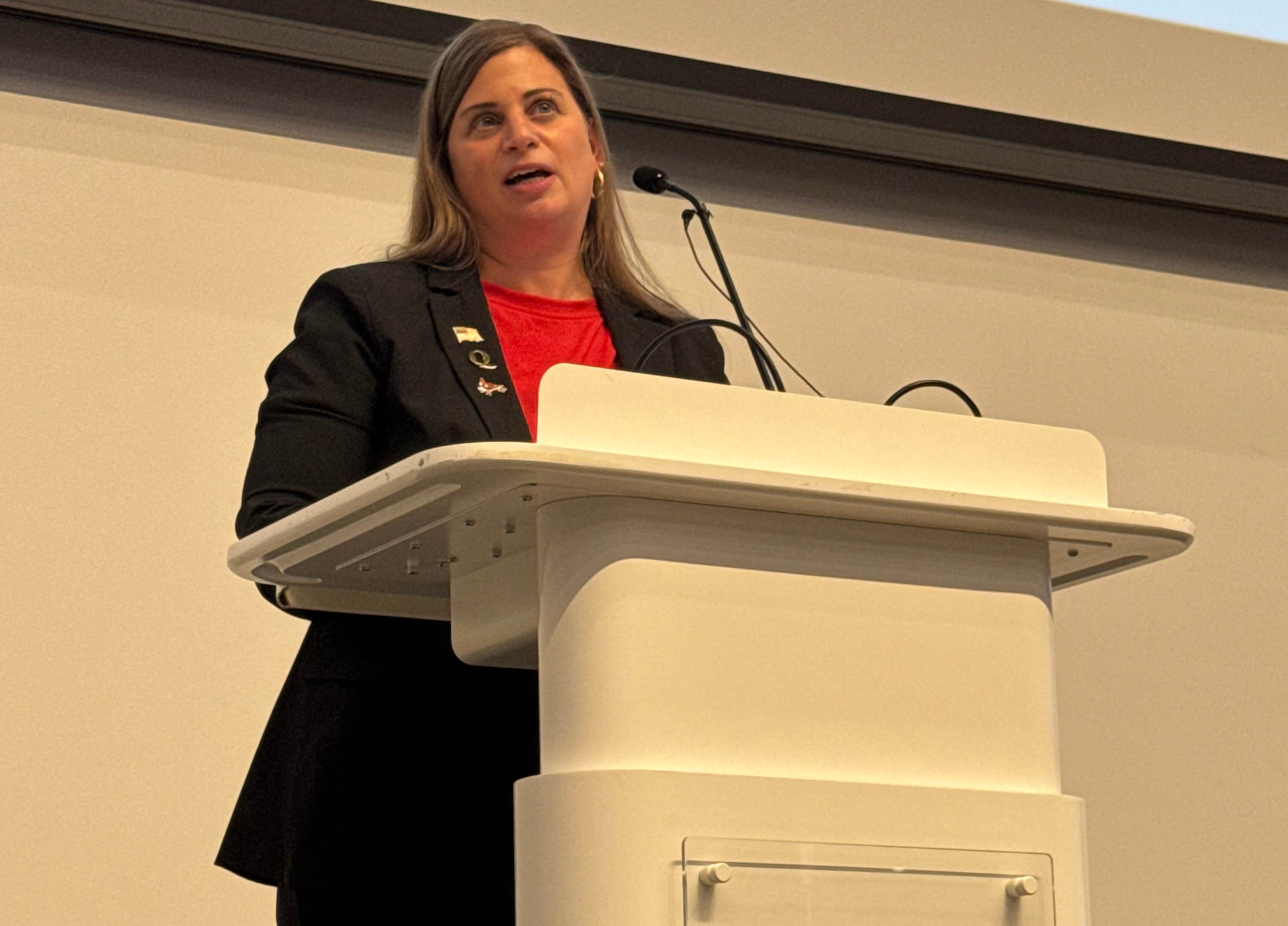
Patricia Mays, visiting instructor of sports communications, was a young journalist at the Associated Press’ Manhattan headquarters when the South Tower collapsed and a “loud, chaotic office fell silent,” she said. Although her role required her to coordinate coverage of the search for survivors, memorial services, the investigation into the attackers and other matters of national import, the effect of sports teams — particularly the hometown Yankees — was undeniable.
“Though there was a lot of comfort in the way we as Americans rallied together and showed our resilience, it was also a time filled with great sadness, anger, trauma and exhaustion,” said Mays, who has held leadership roles at ESPN and The Hollywood Reporter. “Baseball, as sports often do, became a much-needed distraction — and for many New Yorkers and beyond, the Yankees served as a beacon of hope that despite everything, we could find some normalcy again.”
Embraced like never before beyond state borders, the Yankees surged into the playoffs with a chance to win their fourth consecutive World Series title. In a nod to the brave efforts of the city’s first responders, the players donned caps bearing the letters “FDNY” and “NYPD.” The series against the Arizona Diamondbacks was marked by late-inning drama, and President George W. Bush provided an indelible moment when he took the mound before Game 3 and fired his ceremonial first pitch right over the plate for a strike, undeterred by his bulletproof vest.
The Yankees ultimately lost the series in seven games, but results were secondary to the comfort — however fleeting — the national pastime delivered when the country needed it most.
“From a news coverage perspective, it was less about who won or who lost,” Mays said. “These stadiums and arenas and rinks and racetracks became unifying places where Americans both celebrated and consoled one another, paid tribute to first responders and memorialized those we had lost.”
Want to learn what Quinnipiac is all about? We invite you to join us at an Open House, where our students, faculty and staff will introduce you to life as a Bobcat through a variety of sessions and tours.







Quinnipiac Today is your source for what's happening throughout #BobcatNation. Sign up for our weekly email newsletter to be among the first to know about news, events and members of our Bobcat family who are making a positive difference in our world.
Sign Up Now