



Quinnipiac scholar explores how first ladies have shaped America
June 29, 2026
June 29, 2026
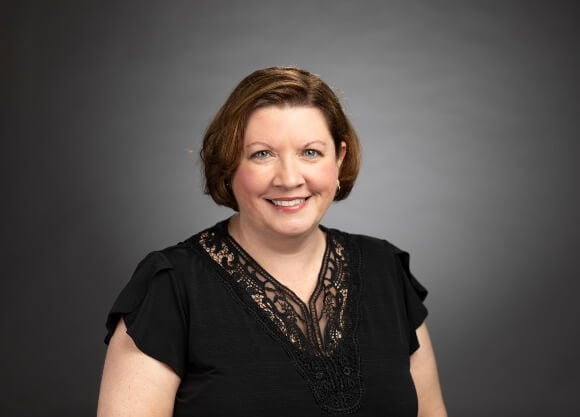
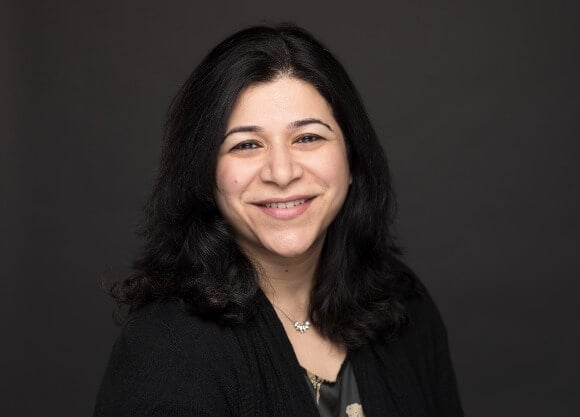
In her research and writing, Burns often examines the transformative contributions of these unelected women. Her most recent major work is "The Cambridge Companion to US First Ladies," published in 2025 and co-edited with Teri Finneman. The book was released alongside a companion 14-part podcast titled "The First Ladies." Burns’ edited collection, "Media Relations and the Modern First Lady: From Jacqueline Kennedy to Melania Trump," was published in 2020. She is also the author of "First Ladies and the Fourth Estate: Press Framing of Presidential Wives," published in 2008. Burns has published multiple journal articles and book chapters on presidential spouses.
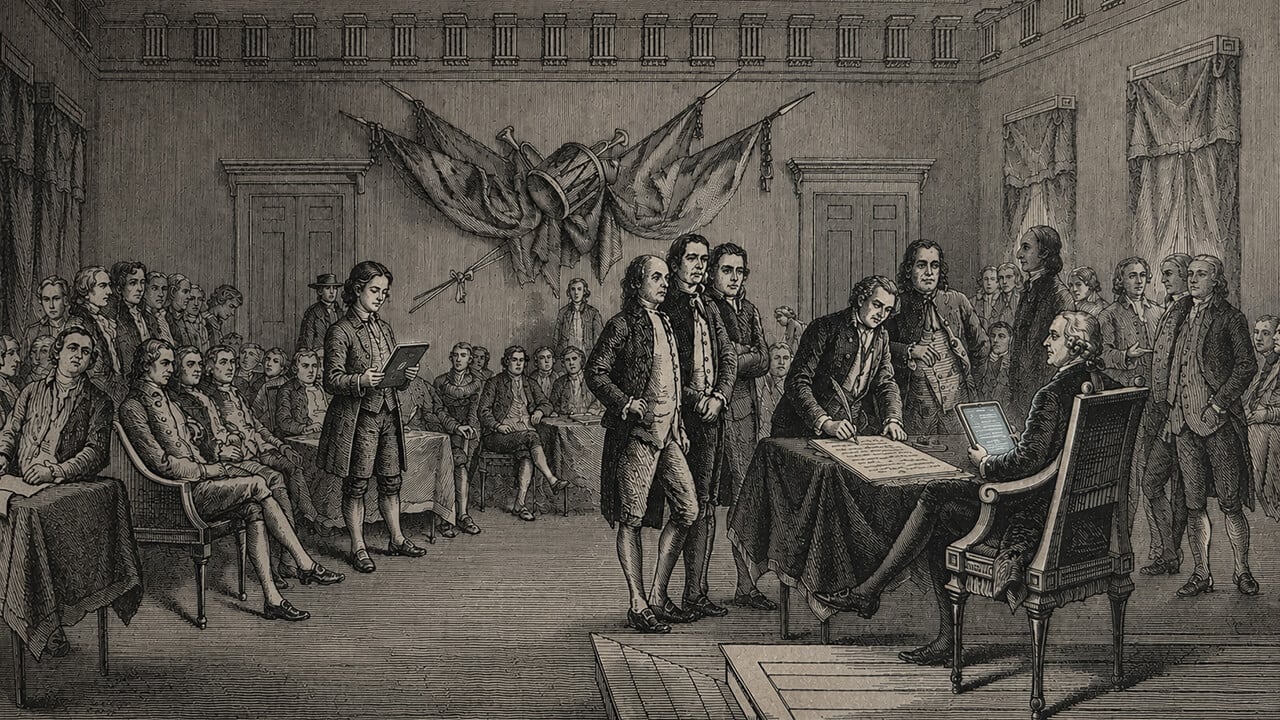
Burns said it’s important to note that, despite the public visibility of the role, the position of first lady is entirely unofficial. With no legally defined duties or constitutional guidelines, the responsibilities of the office have simply evolved over time, dating back to Martha Washington.
“These women have basically had to figure this out on their own, and they're doing so in an incredibly high-profile position. They're living in this sort of a fishbowl of D.C., and of the White House in later years, and what I've found from my research is no matter what they do, they're criticized,” Burns said. “It's a very fine line that they walk. So they have really just tried to make the most of the position — first to help their husbands and their administrations, but then also to seek out causes and interests that they wanted to support.”
Martha Washington initially planned to stay at Mount Vernon and run the family plantation while her husband was serving as the country’s first president in New York. But within weeks of taking office, “George writes to Martha and says ‘Martha, I need you here,’” said Burns.
In the new American republic’s era of parlor politics, Washington needed his wife to manage his presidential social gatherings and dinners.
“It's these dinner parties, and even things like state dinners now — think about the importance of those — that's always been a part of politics,” said Burns. “And so, Martha travels to New York. And she is basically put into service, when she gets there, to host these different gatherings.”
Despite 250 years of evolution, Burns points out that media criticism has followed first ladies right from the start and continues to this day.
“Very soon after Martha arrives, she starts getting criticized by the newspapers because her drawing rooms were too queen-like, and they said she was dowdy because of the clothes she wore,” said Burns.
Although the Revolutionary War had ended and British imperial rule in America was over, the royal court remained Martha’s only model for high-level social gatherings.
“There was nothing else for her to draw from. She was also trying to wear more sort of plain, American clothes instead of the European designs, because she didn't want to be called a royalist. And yet she was called a royalist anyhow,” Burns said.
Especially in the anti-Federalist press, criticism of Martha Washington became so negative that she quickly curtailed her public activities.
“She’s very famous for making a comment in one of her letters to a family member that she felt like she was a state prisoner, and that she couldn’t even go out of the house,” Burns said. “I think that kind of sums up this conundrum for first ladies. They have been called to serve, and they do serve, and yet they're not always happy about it because they face this intense public and political scrutiny.”
Among early first ladies, Abigail Adams earned her reputation as an early promoter of feminism, but should equally be remembered for being recognized, in her time, as an important adviser to her husband, said Burns.
“I know that when we look back on it now, a lot of people hold up Abigail Adams as a feminist icon before feminism existed. But we have over 1,100 letters between her and her husband — yes, she would tell him how the kids were doing, and how it seemed like the farm was always failing in Braintree — but they would also talk about politics. They would talk about the latest philosophy and writers. They had this incredibly rich, intellectual relationship,” said Burns.
Succeeding Washington as president, John Adams began his presidency in the nation’s temporary capital of Philadelphia. Adams stepped into a fractured presidency that was rife with partisan division. Additionally, by retaining Washington’s holdover cabinet, Adams surrounded himself with a group that was not devoted to him.
“Abigail didn't want to live in Philadelphia, and so she goes back to Massachusetts to run the farm,” said Burns. “But John writes to her, and says I need you here. Basically, he says ‘I have all these enemies attacking. I need your good counsel, will you please come?’ He listened to her on political matters. She was very smart and very good at reading people, which is also something that we see throughout the years with first ladies,” said Burns.
In Philadelphia, it was no secret that Abigail Adams was providing counsel to her husband as first lady. While she and many first ladies who have advised their husbands have been criticized as being the power behind the throne, Burns has found this is not the reality.
“That doesn't seem to be the case in any of these relationships, whether we're talking about Abigail Adams or Hillary Clinton or Nancy Reagan or Eleanor Roosevelt. All of them were criticized for this, but they were people who their husbands listened to,” said Burns.
Bess Truman’s husband also valued her as an adviser and a sounding board.
“That is who Harry turned to for advice. If you think about it, most spouses talk about their jobs at the end of the day and they bounce ideas. Sometimes, that's who you can vent to,” Burns said. “First ladies have really provided this sort of safe space for their husbands where they can talk about the frustrations and the pressures that they feel as president.”
Bess Truman also has the distinction of following Eleanor Roosevelt as the country’s first lady. Among all American first ladies, Eleanor Roosevelt is probably the most well-known and the most recognized, Burns said.
“She was very politically active before she became first lady and was worried that she would have to give that up and basically just be a hostess, because that's what she had seen Edith Roosevelt, her aunt, do,” Burns said. “But instead, she's encouraged to continue to essentially be Franklin's eyes and ears. Part of that, of course, is because of his disability. But she is able to go around and to promote things like the New Deal programs. She’s able to advocate for civil rights in a way that her husband couldn't; because he needed support of the Congress and he knew that he wouldn’t have that if he pushed too hard and too far on civil rights.”
While in the White House, she began authoring a hugely popular syndicated newspaper column, “My Day,” which began appearing in 1935 and continued for nearly 27 years into 1962.
Burns said Franklin Roosevelt often used humor to address the boundaries his wife was breaking as first lady.
“He supported her, but he also could write her off by saying, ‘Well, you know my missus, I can't really control what she does.’ But it gave her this freedom; and Eleanor did do these incredible things,” Burns said.
Post-presidency, Eleanor Roosevelt broke new ground by entering a political career of her own.
“Harry Truman appoints her to be part of the UN delegation for the United States, and she is one of the authors of the Universal Declaration of Human Rights. That’s a document that we take it for granted here in the United States, but it is incredibly important around the world,” said Burns.
In addition to an unusually long 12-year tenure as first lady, her time in the White House involved two major world events, the Great Depression and World War II.
“She’s given some latitude because of that,” Burns said. “Other first ladies who try to be as active as Eleanor quickly find they are very firmly put back in their place. Hillary Clinton is probably one of the best examples of that; but even before then, you had someone like Rosalynn Carter.”
Rosalynn Carter’s drive to be more active during her husband’s administration included sitting in on cabinet meetings, which drew harsh criticism.
“She also really championed mental health care at a time when people really weren't talking about mental health. It was a taboo subject back in the 1970s,” Burns said.
Rosalynn Carter was named honorary chair of the President's Commission on Mental Health, which delivered its final report to President Jimmy Carter in April 1978. She also testified before Congress for the Mental Health Systems Act, which was signed into law in 1980. However, her efforts did not gain a lot of media attention.
“She was really frustrated. In her memoir, she says it was because it wasn't sexy; it wasn't super controversial. And so it sort of flew under the radar,” said Burns.
While Rosalynn Carter’s efforts might not be well-known today, Burns feels her work helped shift the national conversation toward funding and treating mental health as a legitimate healthcare issue.
Betty Ford was another significant first lady who helped change the American conversation, on several levels, said Burns. She also held the distinction of being America’s first lady during the nation’s bicentennial in 1976.
"Betty Ford had one of the shortest tenures as first lady, and she really packs a lot into that time,” said Burns.
Ford famously supported the Equal Rights Amendment, taking a highly controversial stance at the time, particularly for the wife of a Republican president. In 1975, she sat down for a milestone CBS "60 Minutes" interview, in which she spoke candidly about taboo topics including openly discussing her children's potential marijuana use and the possibility of her teenage daughter engaging in premarital sex. She also praised the U.S. Supreme Court’s landmark Roe v. Wade decision.
After leaving the White House, she became widely known for co-founding the Betty Ford Center and speaking openly about her own substance abuse struggles at a time when such issues were deeply stigmatized.
“But I think the thing we forget about Betty Ford is that she also talked about breast cancer,” Burns said. “Shortly after her husband becomes president, she is diagnosed with breast cancer during a routine checkup. She undergoes a mastectomy, and she decides to do media interviews about it and discuss it.”
While today’s society embraces the importance of breast cancer awareness, “…we did not talk about these things in the 1970s,” said Burns. “A lot of women, after they had their children, did not go back for annual appointments. They did not have routine screenings. Many women died of breast cancer just because it was undiagnosed, and by the time it was diagnosed, it was too late. Betty Ford was trying to make it less taboo.”
Her championing of breast cancer awareness became a highly publicized topic.
“She's named one of the most popular women of the year. She’s really credited with starting a national conversation about women's health in general, but particularly about breast cancer. And I think that's something that we've forgotten over the years,” Burns said.
Burns noted that we often take the impact of first ladies for granted, while many of these women, despite holding no elected office or official power, have profoundly shaped American history, society and culture.
“People may remember the "60 Minutes" interview for Betty’s candor and being very forthcoming, but we do forget about her breast cancer awareness advocacy. I think that might have been one of the most important things that she was candid about, and that she was willing to go on record and talk about,” said Burns.
The role of the first lady is also defined by a unique cultural paradox. As women, the public expects them to embody modern, progressive ideals while simultaneously maintaining traditional values. Despite this intense pressure, first ladies often wield immense cultural influence. They outpoll their husbands in terms of popularity, define fashion trends and serve as vital role models for women and girls.
Among more recent first ladies, Michelle Obama stands out, Burns said.
“I think that people sometimes underestimate the power of representation. I teach media studies, and I always talk about how it’s important for people to see themselves in the media. And when you’re not there, that absence is also sending a message,” Burns said. “So to see this incredibly educated, beautiful and energetic woman of color in the White House meant so much not just to little Black girls and their moms and their grandmothers, but I think to all women. But particularly women of color — to see themselves reflected and to see this family in the White House.”
As the nation’s first woman of color to become first lady, Michelle Obama also had the experience of being a Black woman living in the White House, a building constructed by enslaved labor. It was something she talked about publicly.
Michelle Obama also faced amplified pressures as first lady.
“She really sums it up in her memoir, really understanding that this is a pressure that all of these women who have gone into this unelected position face, but then to be doing it knowing that you are representing women of color, and that there is going to be more scrutiny of you,” Burns said. “She was treated horribly during the first campaign, and we see that that horrible treatment still continues today. We still see her having to deal with this hatred and vitriol that other women in the position have not had to face. And yet she has taken that on with such dignity and grace that I think she really is a model for all of us.”
Michelle Obama also successfully leveraged her platform as first lady to champion childhood health and wellness through high-profile initiatives like the "Let’s Move!" campaign and the White House kitchen garden. In addition, her deliberate fashion choices, such as famously blending high-end designers with accessible brands like J.Crew democratized the image of the first lady. It created a powerful sense of relatability, allowing her to connect with a broad American public.
Looking back across 250 years of history, Burns said America’s first ladies have played an indispensable role in helping to shape the nation.
“These women are an important part of the presidency,” said Burns. “When we talk about the American presidency and what it means for our nation — this experiment that we call democracy — these women have been such a central component of it over the years. They are woven into our fabric, even at times when we don’t realize that their fingerprints were there.”












Quinnipiac Today is your source for what's happening throughout #BobcatNation. Sign up for our weekly email newsletter to be among the first to know about news, events and members of our Bobcat family who are making a positive difference in our world.
Sign Up Now