


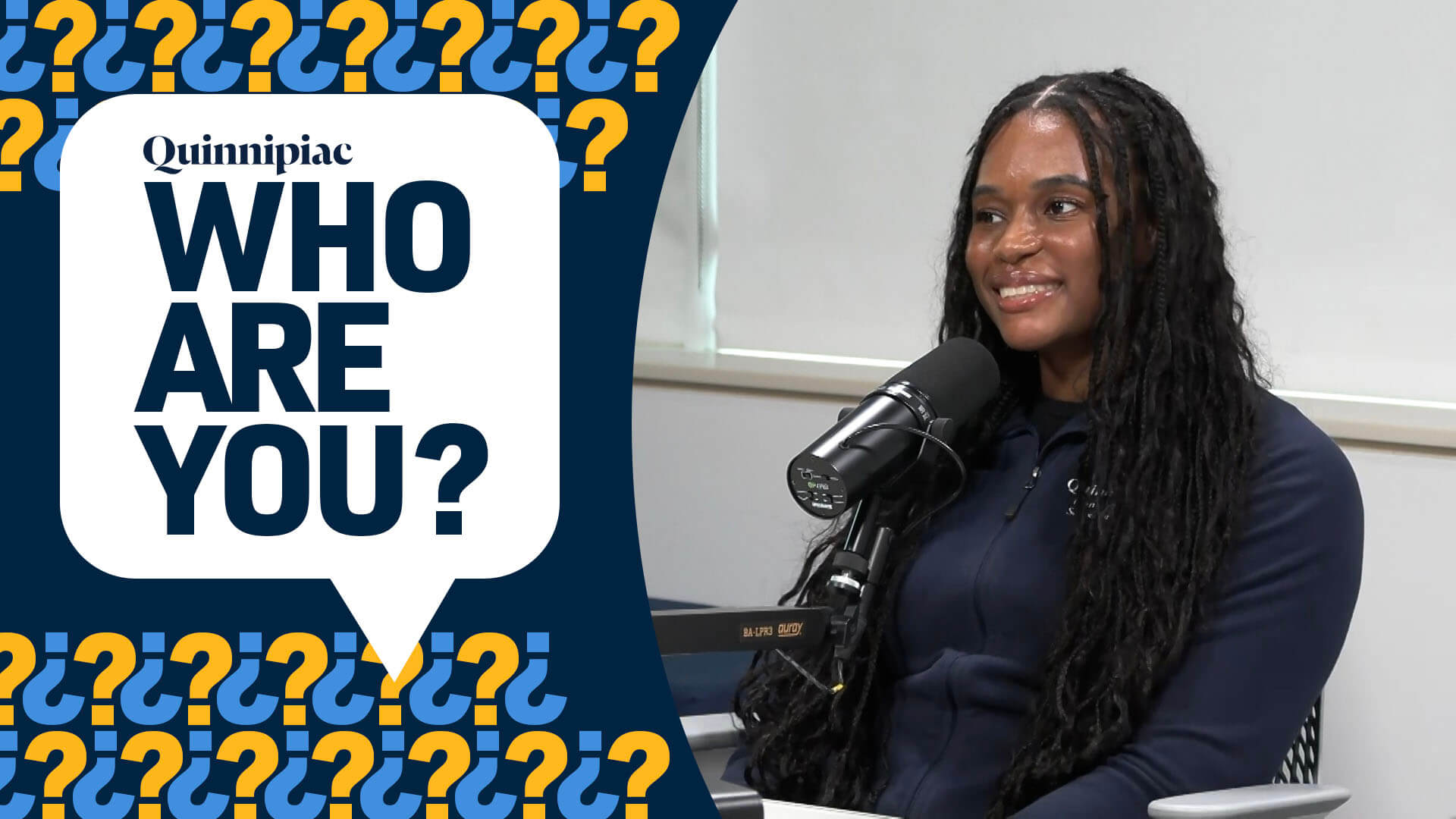
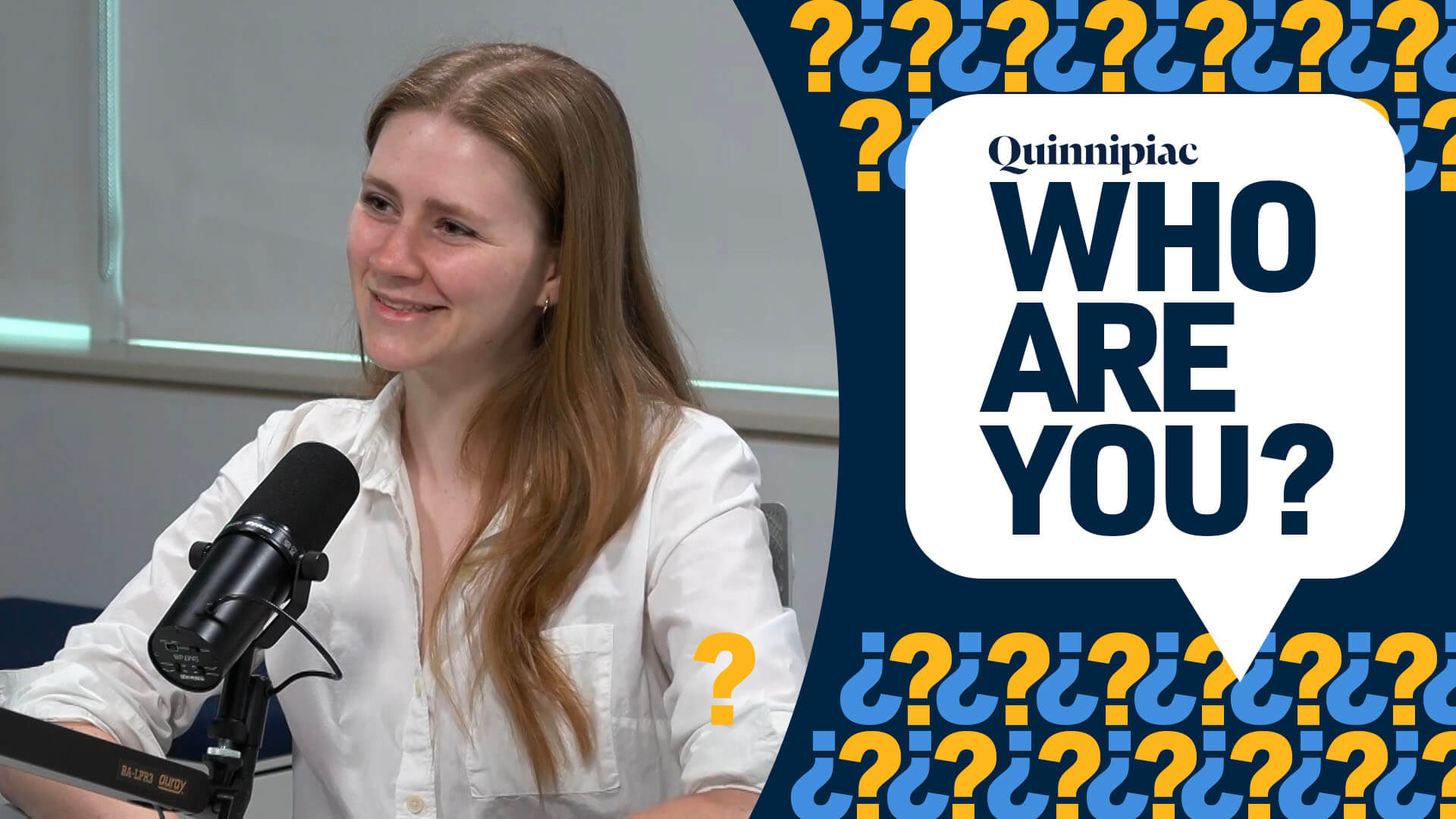
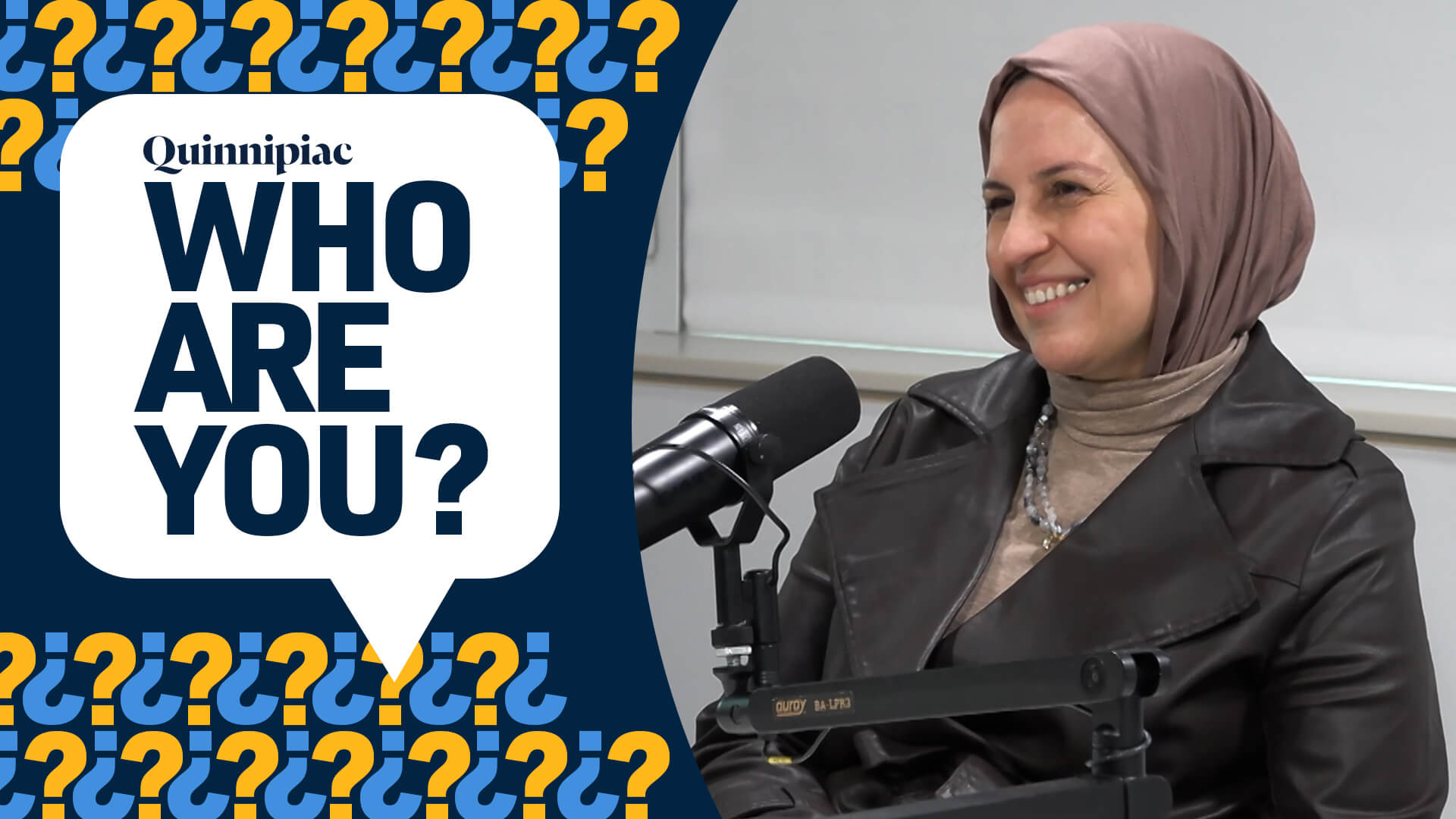
‘Who Are You?’ podcast with guest Okeroghene Rufin MD ’28
A journey from the military to medical school
A journey from the military to medical school
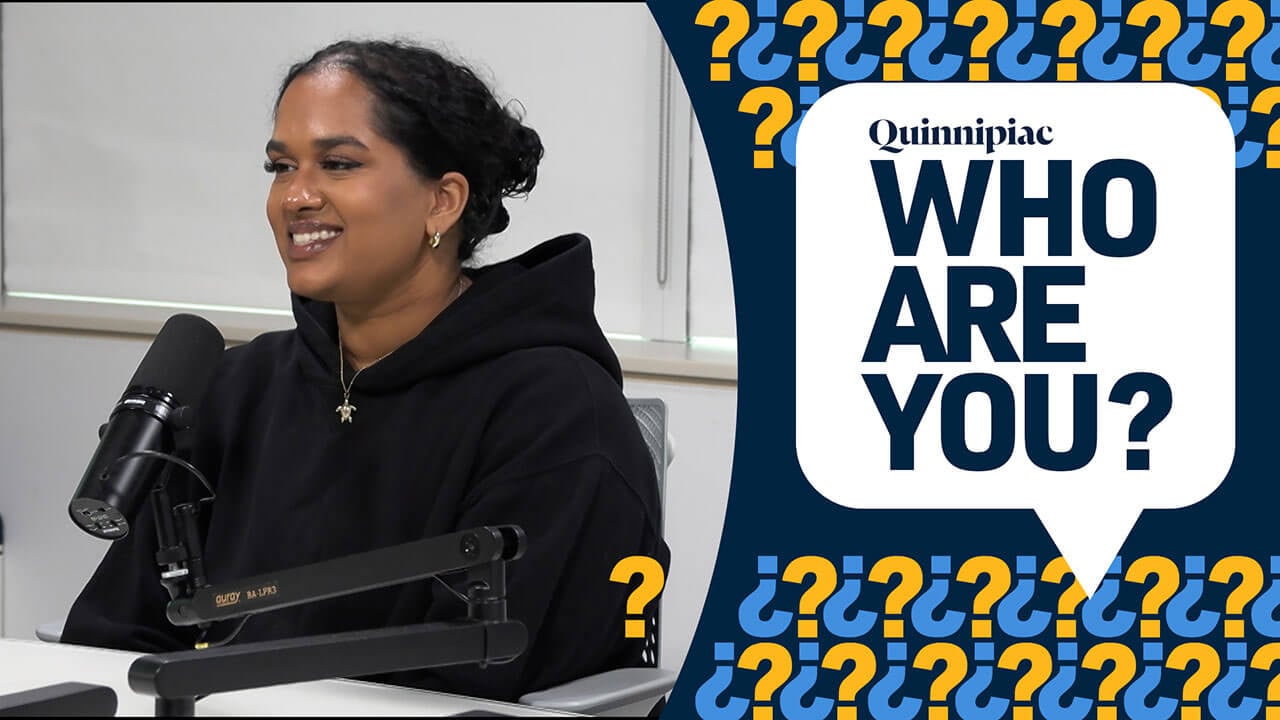
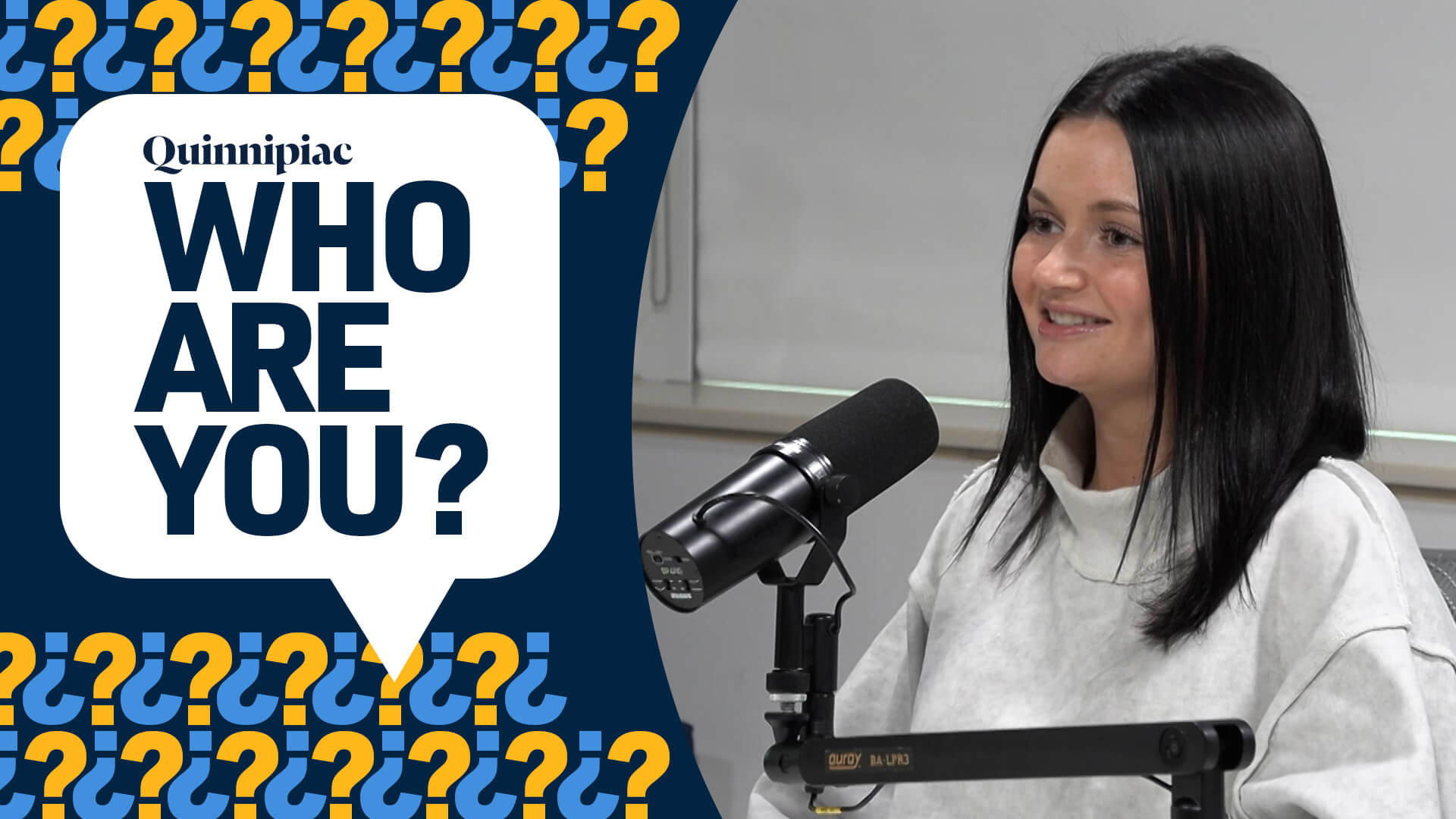
Joel Vanner: Welcome to ”Who Are You?,” the Bobcats, you know, the stories you don't. I'm your host, Joel Vanner, inside the podcast studio at Quinnipiac University's School of Communications, and I am joined today by my guest, Okeroghene Ruffin. Okie, welcome to the show.
Okeroghene Ruffin: Hi, Joel. Thanks for having me.
Joel Vanner: I'm sure you could guess by the name of the program what my first question to you is going to be. We know your name, but tell me who are you?
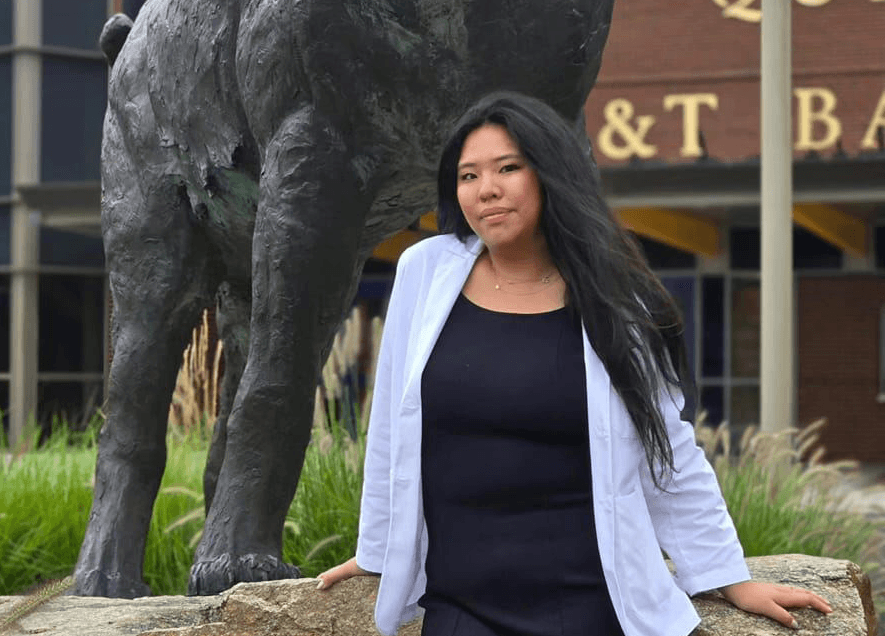
Okeroghene Ruffin: Yeah. My name is Okeroghene Rufin, but I go by Okie for short, and I am a third-year medical student here at Frank H. Netter School of Medicine at Quinnipiac.
Joel Vanner: Welcome to the show. Third-year medical student. How did medical school come to be for you? Tell me a little bit about your journey.
Okeroghene Ruffin: Yeah. Well, I didn't necessarily think I wanted to go into medical school. I did know I wanted to go into medicine, and I guess that would start. I really have to think really hard. When did I think I wanted to go into medicine? And I think it goes back to when I was younger. I've lived in different countries, to name a few, Nigeria, the UK and South Africa, which is where we mainly or I mainly grew up. And I guess when I was 13 or so, my youngest brother, he fell sick. And I guess that was my first time in a hospital, 13. And it was just a new experience, the hospital, seeing people working in a hospital trying to help my brother. And that really piqued my interest in medicine. And since then, I've explored different things in medicine.
Joel Vanner: And your journey to the Netter School of Medicine here at Quinnipiac, you were in the military for some time. Tell me a little bit about the medical aspects that you got involved with the military following that experience with your brother.
Okeroghene Ruffin: Yeah. Well, after high school, I lived in Florida, and I decided to join the military. And I did fortunately join in a medical position as a medical laboratory scientist. And in that role, we kind of have a role in medicine. And honestly, I would like to say we are the heart of the hospital because the hospital can't run without the lab. So that was my exposure to the military as that role, as well as medicine. And during my time in the military, I would also work in a hospital outside of doing my basic soldiers skills. So the hospital would be my job, my nine to five. And then outside of that, I would do the rest of the soldiering stuff.
Joel Vanner: That experience, combined with the experience with your brother, that led you to decide to continue on to medical school after you left the military.
Okeroghene Ruffin: Not exactly. So I did work as a medical laboratory scientist for probably eight years. So I didn't know instantly that, Hey, you know, I wanted to go into medical school. I worked in the lab, specifically in microbiology, and I love microbiology, and most people will tell you they hate it, but I just love it for some reason. And I work very closely with different team members, so physicians, nurses. And I just felt in the lab, I wanted to have more of that direct patient interaction. Um, so I did explore. I explored a lot, and I fell on medical school because I liked the direct patient interaction. I don't know if you've met anybody else who works in the lab. We don't speak to patients. So yeah.
Joel Vanner: What drew you to Quinnipiac and the Frank H. Netter MD School of Medicine, specifically after doing that exploration and kind of finding the area that you wanted to be? Mm hmm.
Okeroghene Ruffin: Well, I would think mainly geographically, when I joined the military, I wanted to travel, and the military said you can travel in the South, so it took me to Florida, Texas, Oklahoma. And then I did get to Washington, but I never really experienced the Northeast. So I think that's where I was looking at schools, and unpack really stood out because they have a huge Veteran community. And one of the first faculty or people at work here that I talked to was Jason Burke. He leads the Veterans office. And I don't know. I almost felt like home because I got so familiar with the military when I left the military. Everything outside of that was unfamiliar. But when I was talking to Jason, I had this familiarity come back to me, and I was like, I really like the community here at Quinnipiac. And I thought it was great to be with other veterans. You know, we have that shared experience, and, yeah, I really like that.
Joel Vanner: You found your community right off the bat with Honestly,
Okeroghene Ruffin: Yeah, before I even arrived.
Joel Vanner: Are you able to do events with the veteran student group? What kind of events do they have that you've taken part of?
Okeroghene Ruffin: Yeah, they have veteran events throughout the year. So we'll have, like, different outreach activities, multiple hikes, multiple like, veteran events, so like Memorial Day or even Veterans Day. There's an opportunity to go to the ceremonies. And we also have, like, a Veterans, like, dinner. Where I get to meet all the veterans, not just in the medical school, but in the undergrad campus, the law school, and the other graduate programs. And I think it's just a really nice time to delve into that community because I do think that's a huge identity or a huge part of who I am. And the fact that I get to keep that part of me is nothing more than I could ask for.
Joel Vanner: An incredible bridge into where you are now in medical school. So now three years into medical school, what have you experienced so far and how have those experiences helped you narrow in on a particular field that you'd like to specialize in?
Okeroghene Ruffin: Oh. Wow, I've experienced everything.
Joel Vanner: That's a lot. I think that's the goal, too, right?
Okeroghene Ruffin: Yeah, yes. Yeah, that is the goal. But I think honestly, what I liked with Quinnipiac or what I do like with Quinnipiac is that you get that community experience early during our first year. So I worked with a physician in a community clinic and so patients with him. And with my background in pathology micro, obviously, like skin infections and, you know, lyme disease, how it looks on the skin. It's an infectious disease. All those things fascinate me. And I've been fortunate enough to also gain an experience to work in a dermatology clinic, and do research in dermatology as well. And I just think through those interactions that I've had with patients, it really drew me into the field. I think one specifically one specific interaction I do remember was with a lady. She came like, how old is she? I think she was 70, but when she walked in, you wouldn't think she was 70. You would think she's young, or, like, 50, 50 is young. Um, the first thing I noticed when she walked in, um, was lesions all over her body. So she had psoriasis. And, um, it's actually quite severe to see psoriasis at that capacity with the medication and treatments available. And the physician that I was working with was able to kind of walk hand in hand to help treat her condition. She was very skeptical of medicine, and, you know, hearing her story, I would understand why she was skeptical, but the fact that the physician was able to sit down with her and really I wouldn't say change her mind, but really understand why she was skeptical.
Joel Vanner: Give her a support system.
Okeroghene Ruffin: Yes. Yeah.
Okeroghene Ruffin: Yeah. And he built that trust with her, you know? And I want I want to do that. I want to help patients build that trust for them, especially with, um, minorities. Um, there is a huge medical background and skepticism in this history, and I want to help build that trust, for them to feel comfortable seeking care.
Joel Vanner: What are some other things you've been involved in at Netter that have supported what you've been learning in the classroom?
Okeroghene Ruffin: Yeah, so we have a dermatology interest group, and I did serve a role as president, which allowed me to have the capacity to mentor other students interested in dermatology, as well as recently, we hosted a conference here at Quinnipiac where we invited the other schools in Connecticut to come attend. We talked about skin of color, as well as inflammatory skin conditions, especially in skin of color communities. And I do think it was a great opportunity to bridge a gap in medical education. As within our first two years of medical school, dermatology is a very small part of our education. And I did think this was a great way to incorporate community medicine and what we see every day as medical students as well, especially with what I saw in the clinic with my physician with the psoriasis.
Joel Vanner: You've been able to, in your third year now, mentor Netter students in their first year who are working in our local middle schools on a project. What has been your experience working with them, and what project are they working on right now?
Okeroghene Ruffin: Yeah. So the first-year medical netter students they're leading a sunscreen protection outreach program where they go to different middle schools to educate the students about skin cancer, as well as some protection because especially a lot of communities or people of color, have this myth that you don't need sunscreen. And I do think reaching out to the children and giving proper education to how for them to protect themselves from the sun is important.
Joel Vanner: You've been involved in some mentor and mentee programs during your time here at Netter. Are there any other student involvements that you've been able to become a part of?
Okeroghene Ruffin: Yeah. I've been involved in the SNMA, which is the Student National Medical Association. And one of their missions is to diversify medicine, which is important to me because dermatology is actually one of the least diverse specialties. And it made me take up a role as the vice chair of diversity Research Committee, where we kind of increase access to research opportunities for minority students.
Joel Vanner: If you could give a piece of advice to our listeners who may be considering medical school, who may be considering dermatology, too, what would you say to them to get them started on the path?
Okeroghene Ruffin: Well, I would say, if you're interested in medicine, definitely start. Don't give up. And if someone tells you you can't do it, you can. And I would say definitely finding good mentors. So reaching out, the worst I can say is no. And I don't think no is the worst thing that can happen. So definitely just calling or emailing people in medicine or that you know are physicians or even medical students, just send them an email. You never know who you'll meet.
Joel Vanner: Here for you, it was Jason Burke and the connection you made. Day one and finding your community.
Okeroghene Ruffin: Yes. And actually, I also mentor veteran students as well. So, veterans or current military personnel interested in medicine. I do work with an ambassador program. It's called Service to School, where we help veterans and military personnel not only enter medical school, but law school and whatever school you want to go into.
Joel Vanner: That's awesome. Building that bridge for them, and thank you for your service and your continued service, and thank you for being a guest on the show today.
Okeroghene Ruffin: Yes, and thank you for having me.
Joel Vanner: That's a wrap for this episode of ”Who Are You?,” If you enjoy today's episode, be sure to find our other ones on Apple, Spotify, or YouTube, or wherever else. You get your favorite podcast. Until next time, when I ask my next guest, who are you? I'm Joel Vanner. Bye for now.

Quinnipiac Today is your source for what's happening throughout #BobcatNation. Sign up for our weekly email newsletter to be among the first to know about news, events and members of our Bobcat family who are making a positive difference in our world.
Sign Up Now