



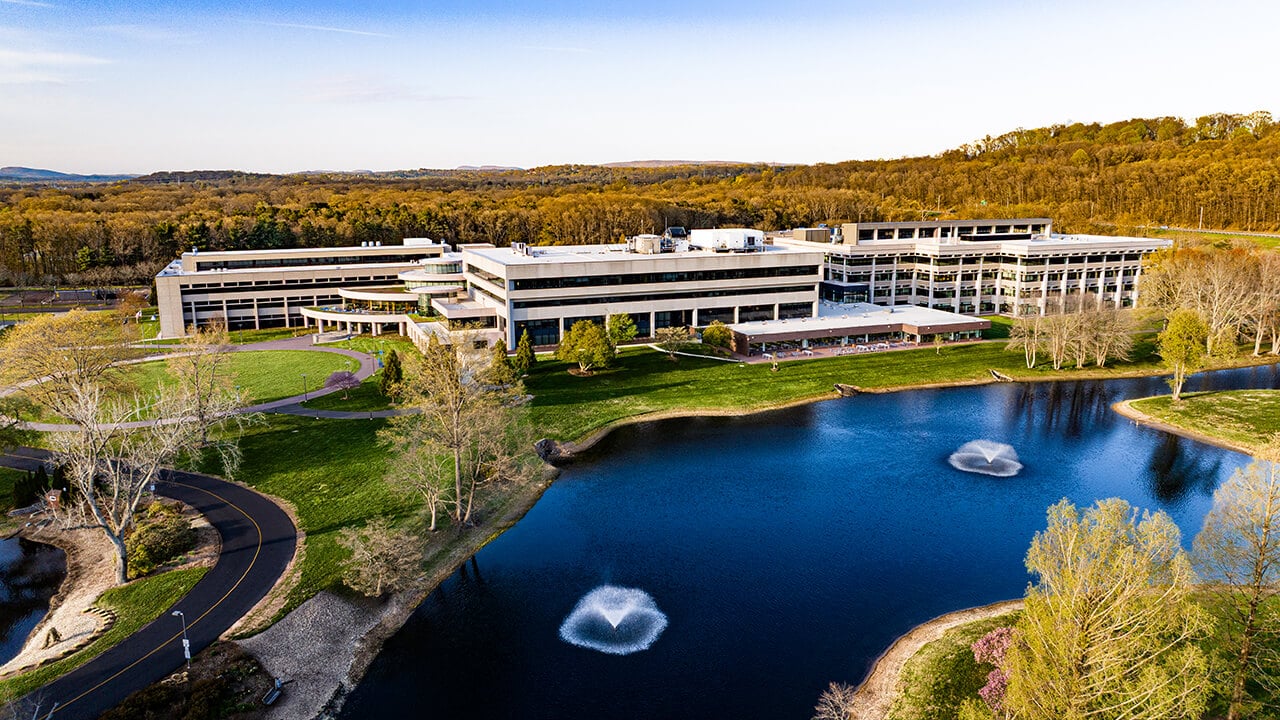
Research has consistently shown that patients receive safer, higher-quality care when physicians, nurses, physical therapists, and other healthcare professionals work together as coordinated teams. That is why preparing students to collaborate across disciplines is an essential part of healthcare education at Quinnipiac, said Frank H. Netter MD School of Medicine Dean Lisa Coplit.
The schools are working together to expand interprofessional education, create innovative simulation experiences, develop community-based clinical programs and build new models of healthcare delivery that address the needs of Connecticut’s communities.
“One of Quinnipiac University's greatest strengths is that our three health professions schools work together with a shared purpose: preparing graduates who are ready to deliver outstanding team-based care from the moment they enter practice. We envision Quinnipiac becoming the destination where future health professionals learn not only within their own disciplines, but with and from one another,” said Coplit.
Much of the interdisciplinary learning is supported by Quinnipiac’s Center for Interprofessional Healthcare Education (CIHE) located within the university. Over the past year, the center has provided experiences to 1,800 Quinnipiac health profession students, across 78 interprofessional programs, said CIHE Director Julie Booth.
In addition to offering innovative microcredential opportunities, the center works with each health profession school to provide experiential learning that aligns with students' academic progression while fostering cross-disciplinary communication, collaboration and mutual understanding.
“I think the communication and collaboration among the three schools is invaluable,” Booth said. “Quinnipiac is not only in an incredibly fortunate position in that we have all three schools on one campus, but to also have this center in place to provide different levels of interprofessional education for our students, from foundational-level learning, to applying what they’ve learned, and going on to immersive experiences.
Case studies, seminars and simulations designed by CIHE staff, interprofessional teams of faculty, and ambitious students, reflect the environments and situations encountered in the real healthcare world. Working in teams, students gain a multidisciplinary perspective on best practices and ethics, enhance each other’s clinical skills and make a positive difference in people’s lives.
Further strengthening healthcare outcomes for Connecticut residents, Quinnipiac School of Nursing undergraduate and graduate programs equip students to excel across hospitals, clinics, schools and specialized health settings through learning partnerships across the state.
Quinnipiac graduates emerge as leaders at every stage of their careers, driving systemic improvements across healthcare policy, regulation and direct patient care. As dedicated advocates for their field, they set the standard for high-quality care, constantly advancing patient safety and community well-being.
School of Nursing Dean Larry Slater said working collaboratively with the School of Medicine and School of Health Sciences is another exceptional differentiator for Quinnipiac’s outstanding nursing education, as this cross-disciplinary mindset fosters the valuable exchange of ideas and furthers innovation in learning and professional preparation.
“Ingrained at Quinnipiac is educating the whole person to make them prepared for today’s careers, and the fact that we have all three health fields on this campus gives us the opportunity to do that together,” Slater said. “We find if our students learn together, they work better together. Healthcare’s a team sport — nobody does it in isolation. By helping them work with other healthcare professionals in today’s environment, we’re exposing them to teamwork and collaboration that is essential for their long-term success.”
The School of Health Sciences equips students to address the evolving demands of 21st-century patient care and medical innovation. Offering top-ranked bachelor’s, master’s and clinical doctoral programs and innovative options such as direct-entry for undergraduates, the school develops highly-sought, forward-thinking clinicians, diagnostic imaging experts, rehabilitation specialists, and research scientists ready to transform healthcare delivery.
“Our complement of direct-entry programs is a huge differentiator for us. Students come here to enjoy a traditional four-, five- or six-year undergraduate and graduate experience while simultaneously becoming employable health professionals,” said School of Health Sciences Dean Trenton Honda. “From an employer perspective, our major distinguisher is the breadth and depth of preparation matched by the hands-on opportunities in our world-class facilities. When hiring a PA or PT student from Quinnipiac, they haven't learned in isolation — they’ve trained side by side with other future PAs, OTs, diagnostic imaging specialists, nursing and medical students.”
In the clinical environment, this type of interprofessionality is not only common, but expected, Dean Honda noted.
“Moving from your discipline-specific thinking to one where it’s really patient focused requires being facile and comfortable in an environment where everybody is working on a component of that patient’s care. It’s something that we’re able to grow here organically because of the way that we have our medical school, nursing school and all of our health professions not only co-located, but with programming that cuts across all of them; and I give a lot of credit to the Center for being that kind of formal cut across all the experiences,” Honda said.
Coplit said that while each school is exceptional, together, they create opportunities that none could achieve alone.
“By combining our expertise, we are preparing graduates who understand not only their own profession, but also the unique contributions of every member of the healthcare team. The combined strength of our schools is far greater than the sum of their parts, allowing Quinnipiac to educate health professionals differently, and ultimately better, for the benefit of the patients and communities they will serve,” she said.
In this Article
Read This Next

















Stay Connected
Get the latest news and events sent right to your email by subscribing to Quinnipiac Today.
Subscribe