


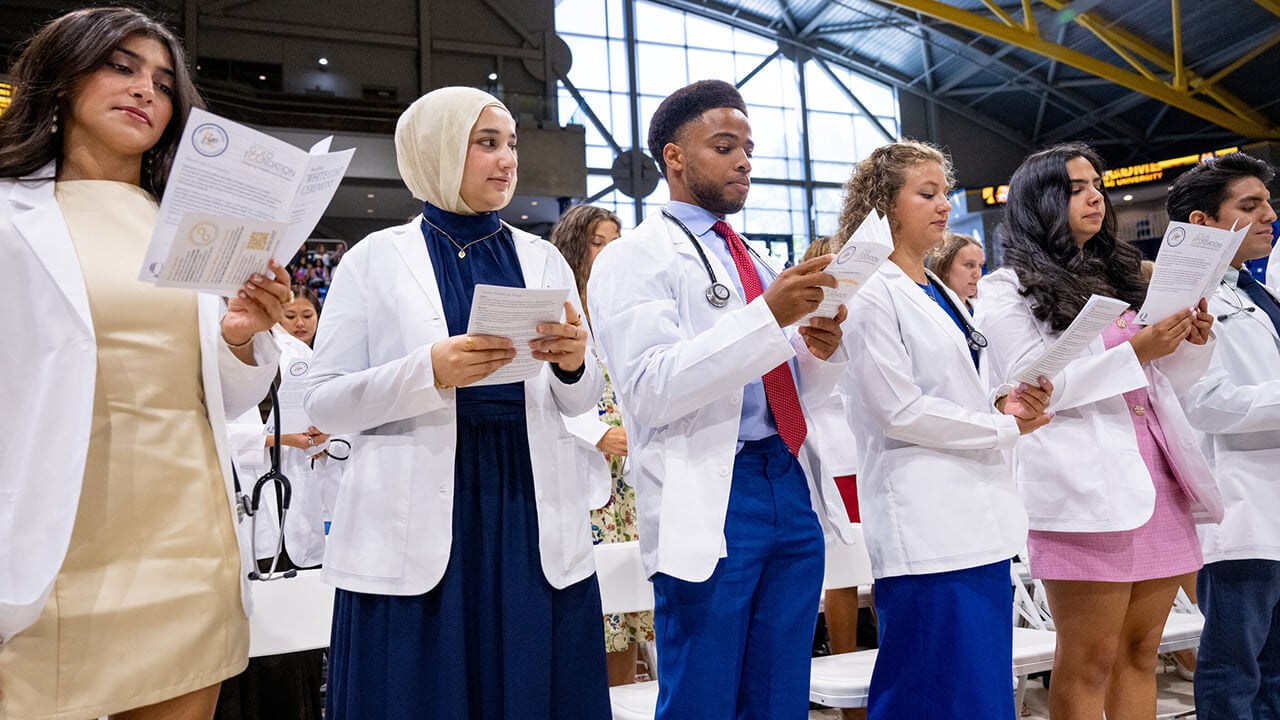
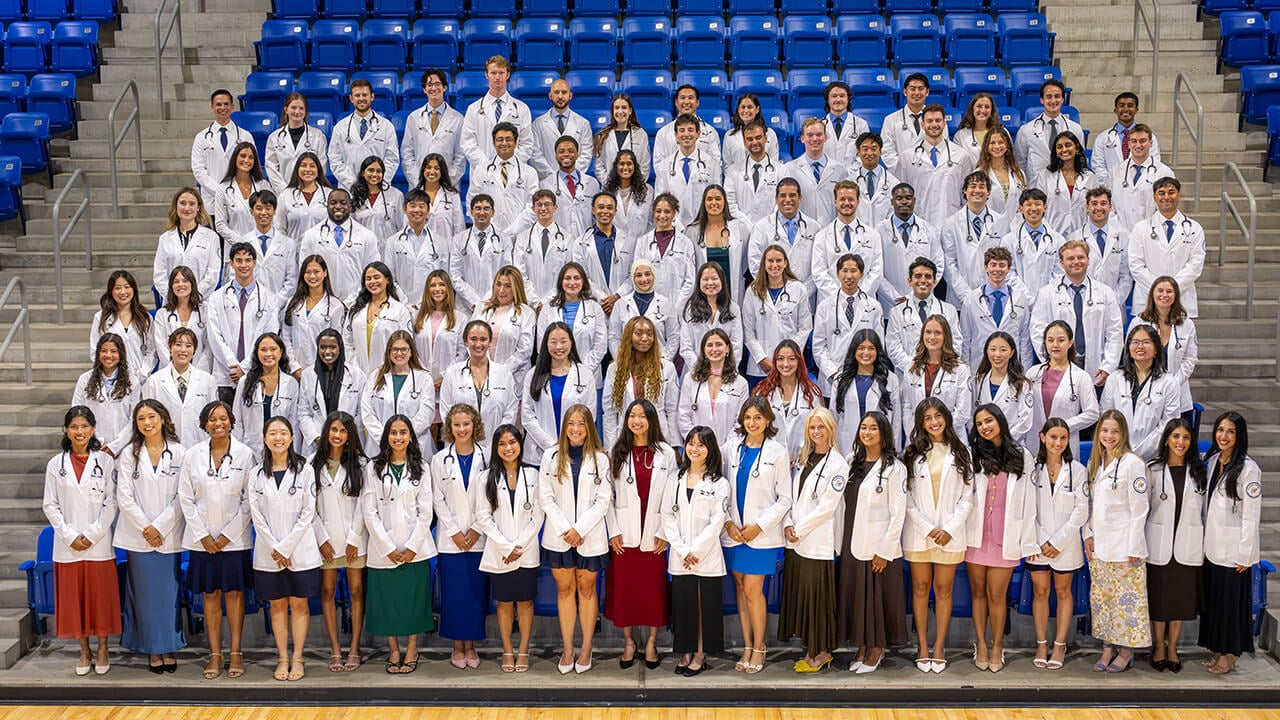
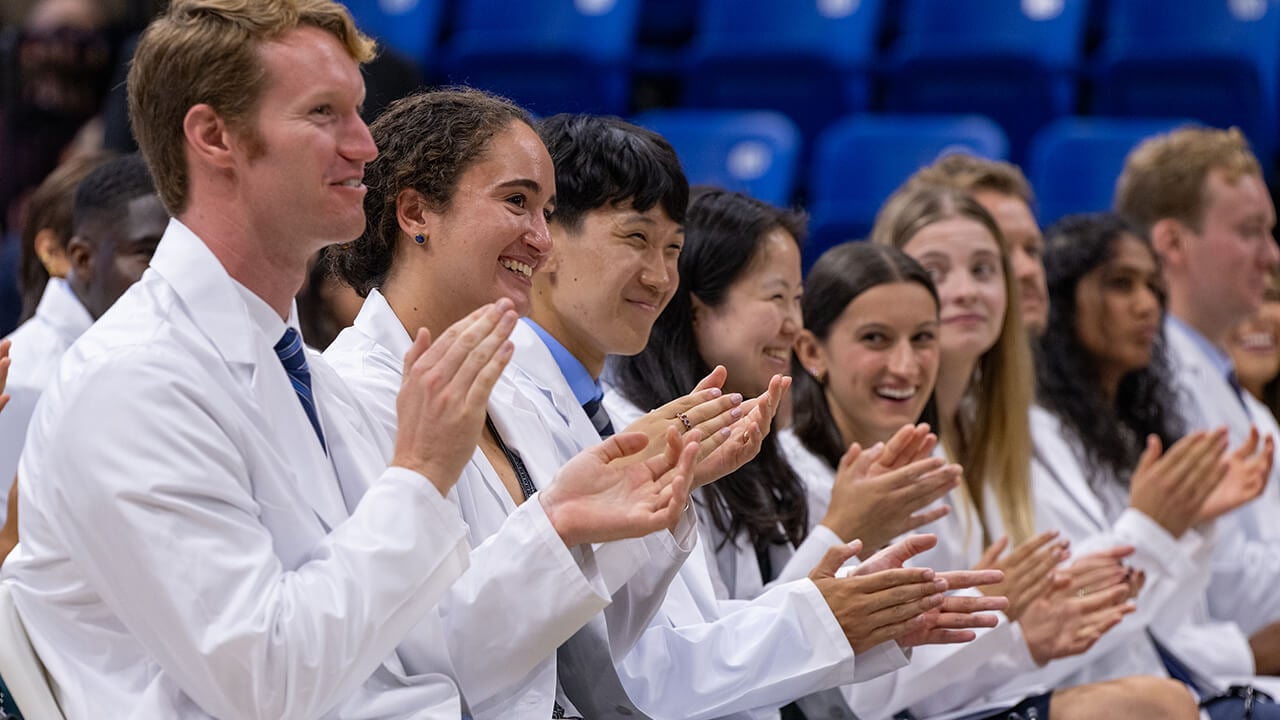
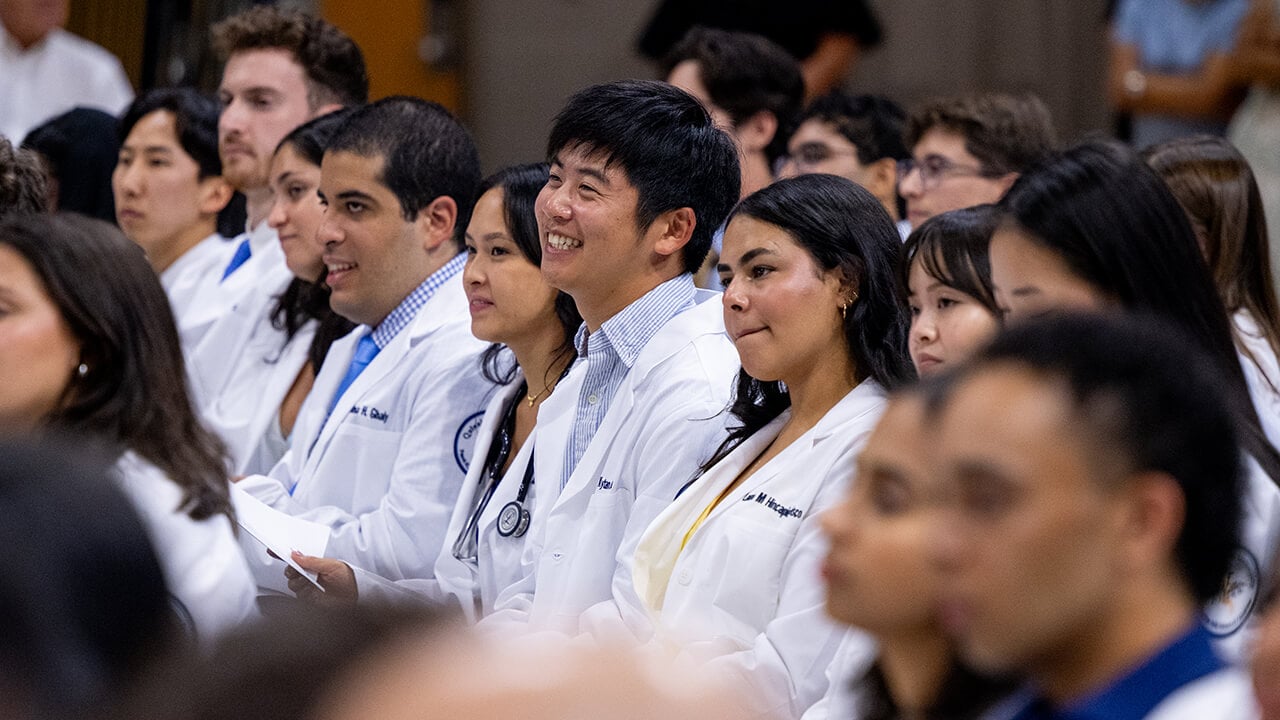
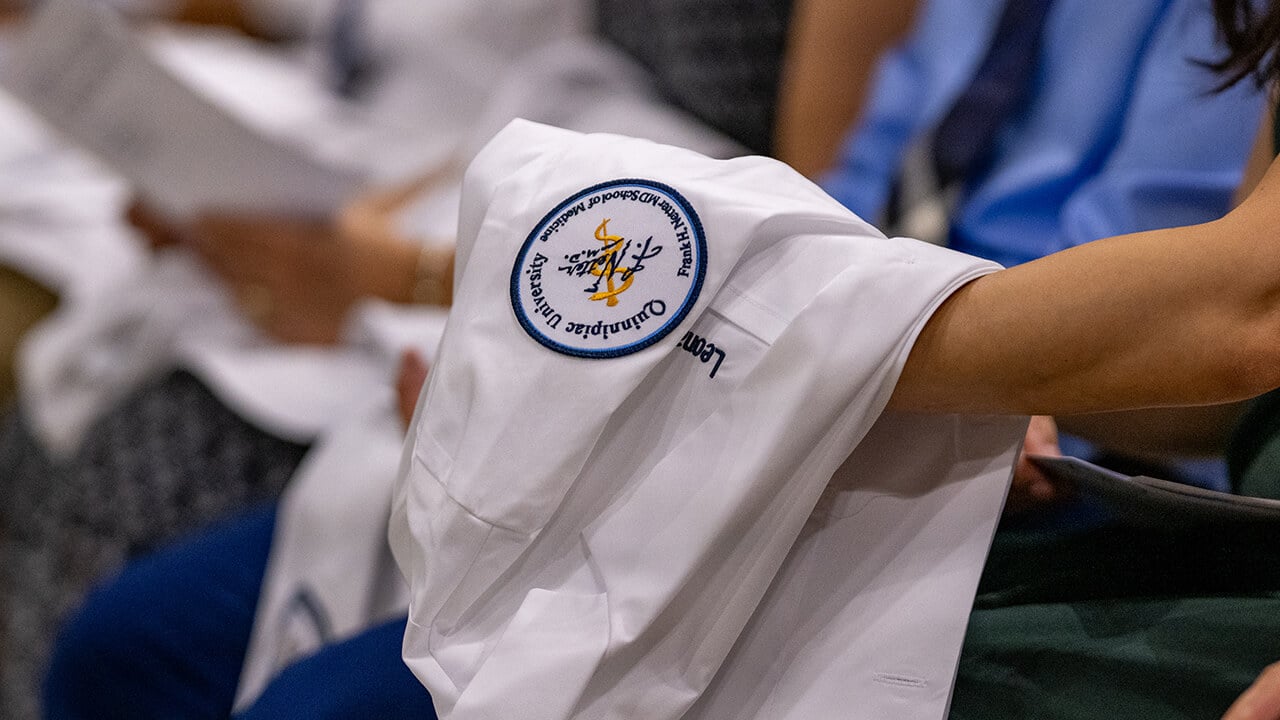
Addressing the Class of 2030, faculty leaders emphasized that putting on the white coat represents a dual responsibility: mastering the rapidly evolving science of medicine while remaining deeply anchored in compassionate, patient-centered care.
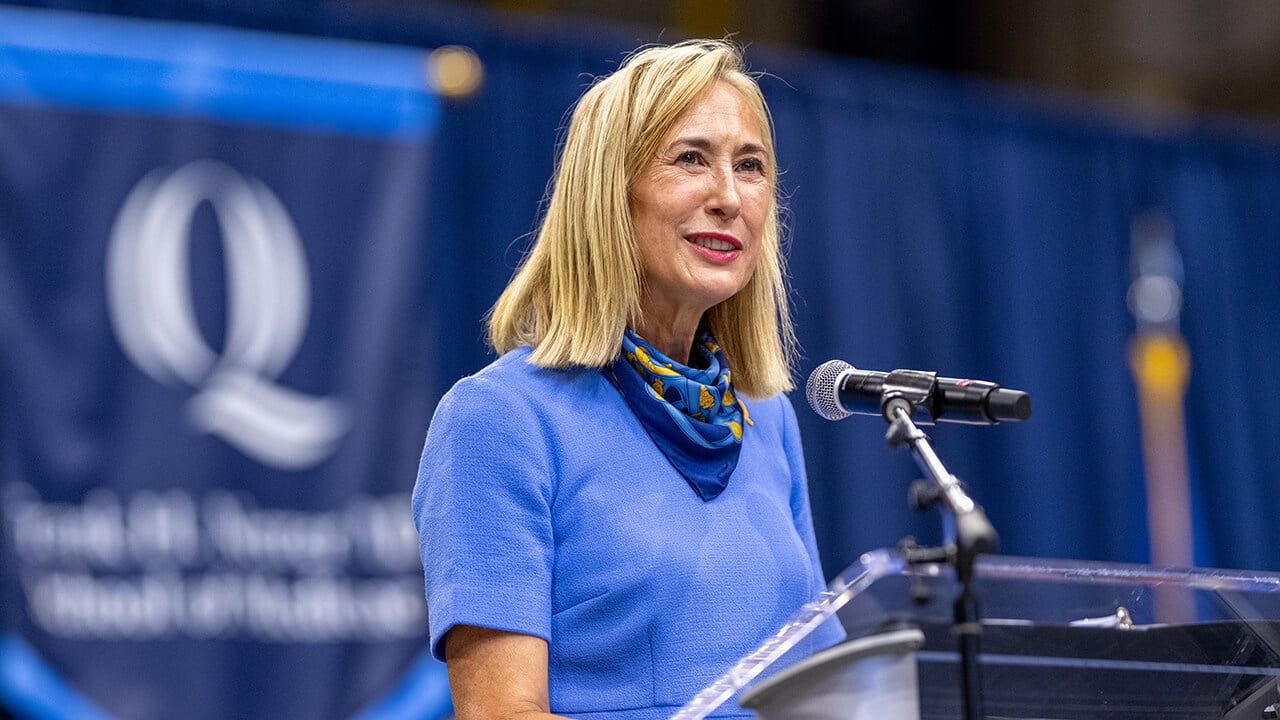
“As you know, many professions rely on a university education to prepare students with the expertise and skills to make a difference,” said President Marie Hardin. “But only a handful of professions ask society to place extraordinary trust in young people almost from the moment they begin. Medicine is one of them. That is why today matters.”
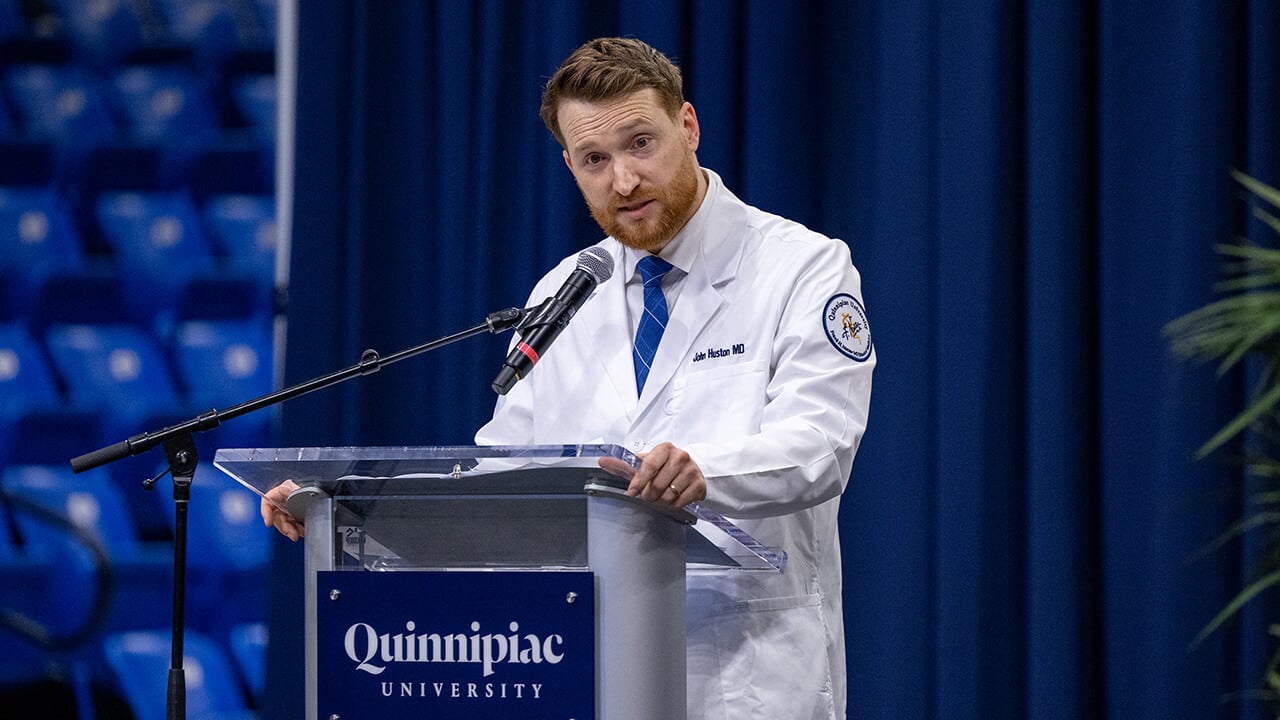
Keynote speaker Dr. John Huston, MD ’17, who was representing Quinnipiac Netter’s inaugural class, reflected on how emerging technology such as artificial intelligence has transformed medicine over the decades while the core of the physician’s role has remained unchanged.
Huston, a pulmonary and critical care physician with Hartford HealthCare and a clinical assistant professor in the School of Medicine, shared personal stories from his early training and family life. He described the immense pressure he felt, the patients and loved ones who shaped his sense of responsibility, and the moments at the bedside that defined his calling.
“Today we will hand you a white coat. Your origin story begins,” said Huston, who also serves as a specialty adviser for fourth-year Quinnipiac Netter students interested in pursuing internal medicine. “You’ll fill it with stethoscopes, pagers, reflex hammers, maybe even snacks. But the pocket that matters most is the one here that no one can see. Because one day, when a frightened patient looks up at you, everything you’ve placed inside that pocket will guide you. And it is who they’ll remember.”
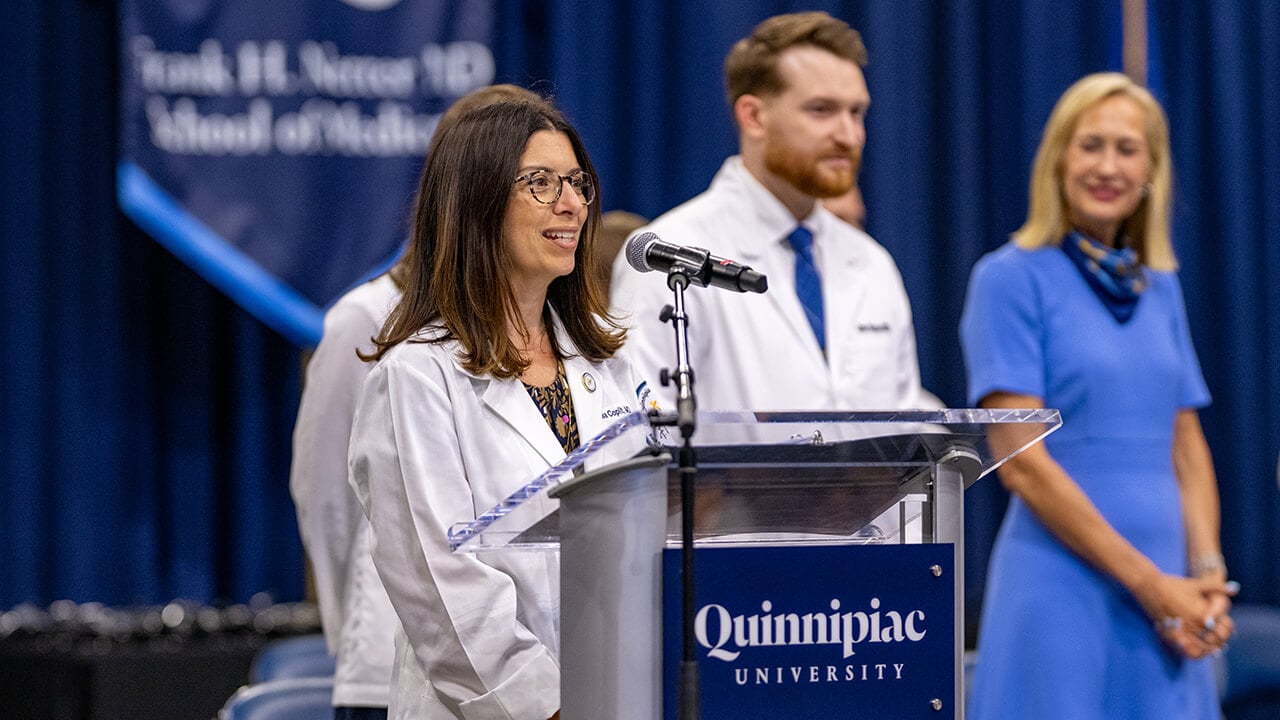
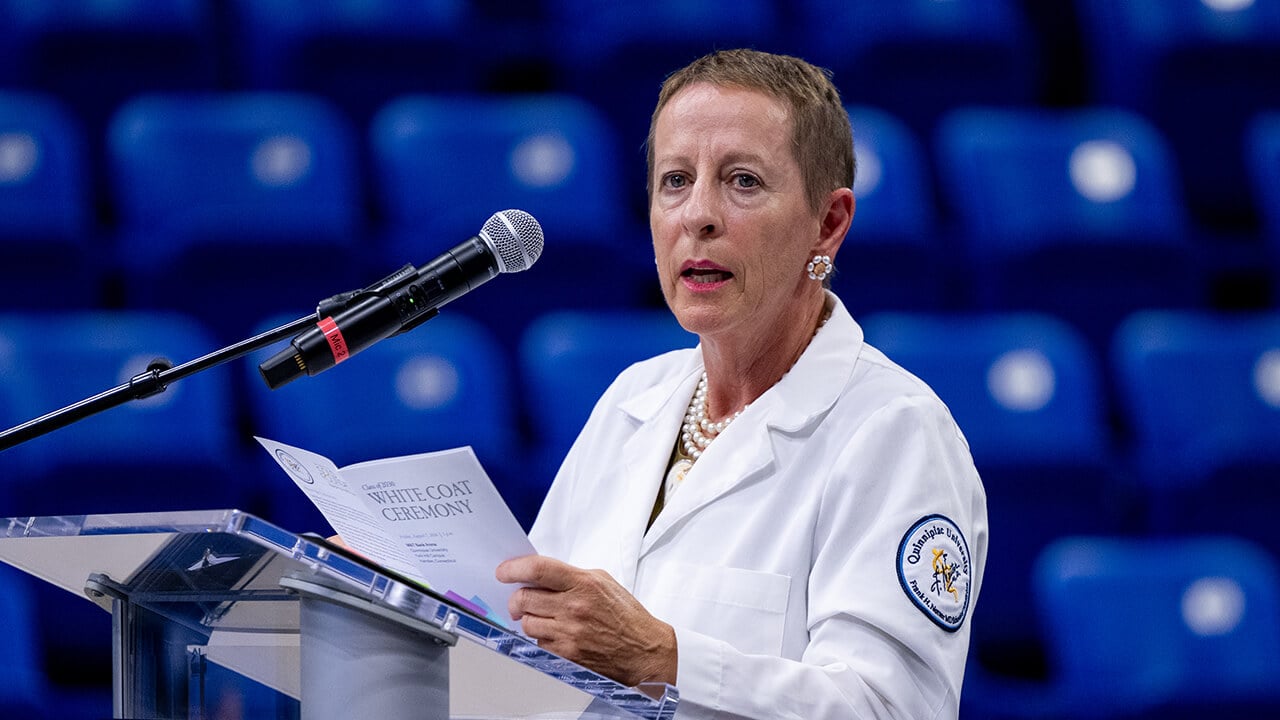
Dean Dr. Lisa Coplit, marking her first White Coat Ceremony in that role, challenged the students to wear their white coats with “curiosity, humility and kindness.”
“Remember that every patient who places their trust in you has given you one of life’s greatest privileges,” Coplit said.
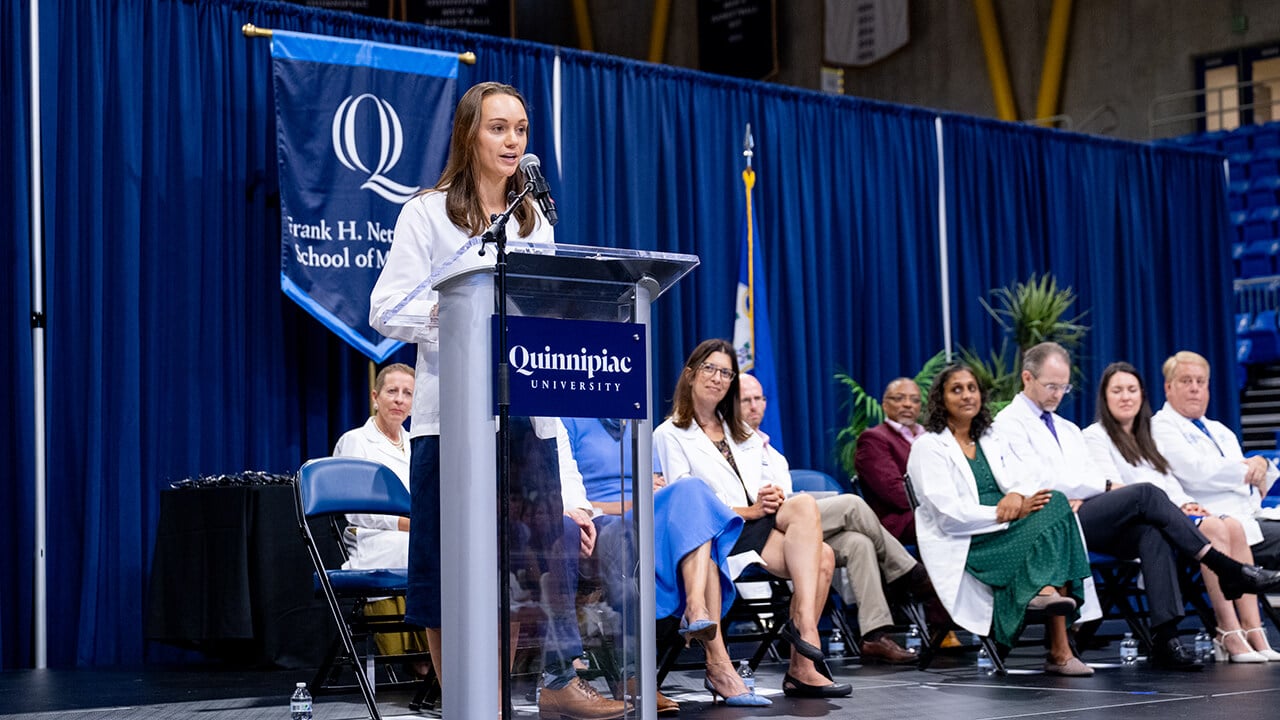
Alayna Santarosa, MD ’27, delivered the student remarks. She spoke about how surgeries and emergencies form lasting memories, but it is the quiet, unseen moments of compassion, listening and teamwork that truly shape a physician. She urged her peers to wear the white coat with humility and purpose, remembering the lasting impact they have on patients and colleagues.
“In just a few moments, you'll put on your white coat,” Santarosa said. “Wear it proudly. Let it inspire you. And remember, its greatest meaning won't come from the moment it's placed on your shoulders. It will come from the person you become while wearing it."
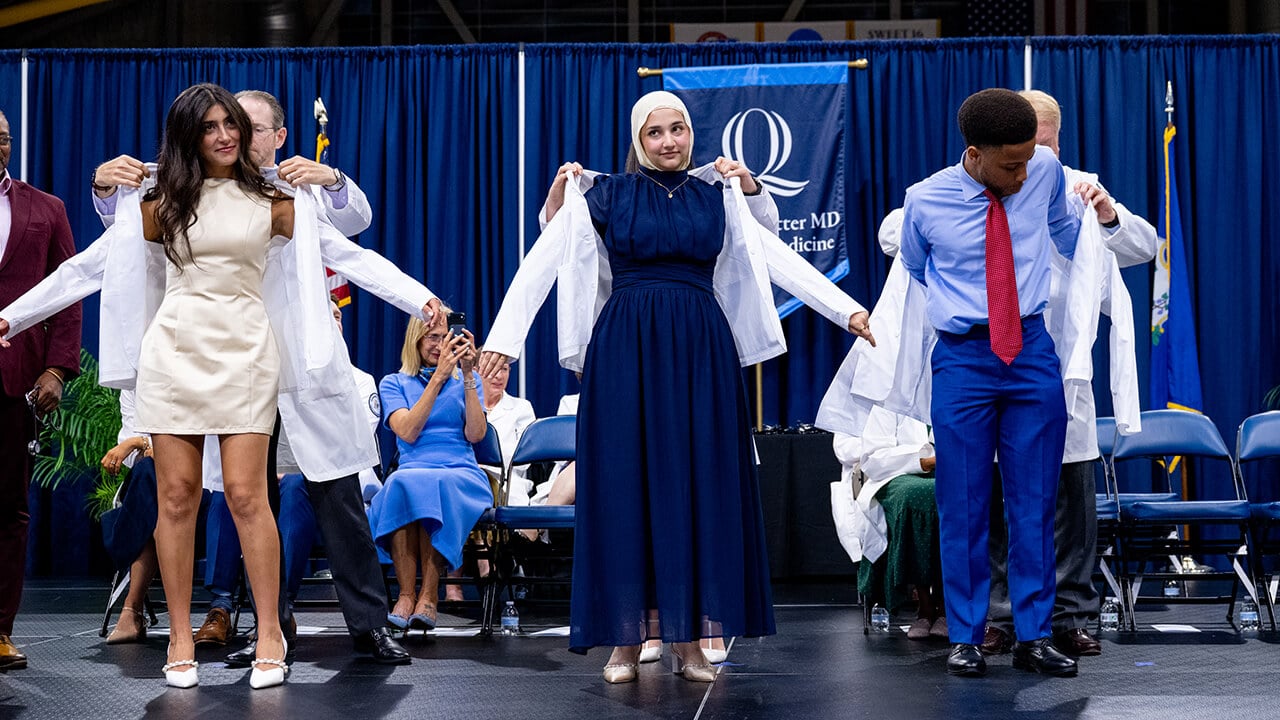
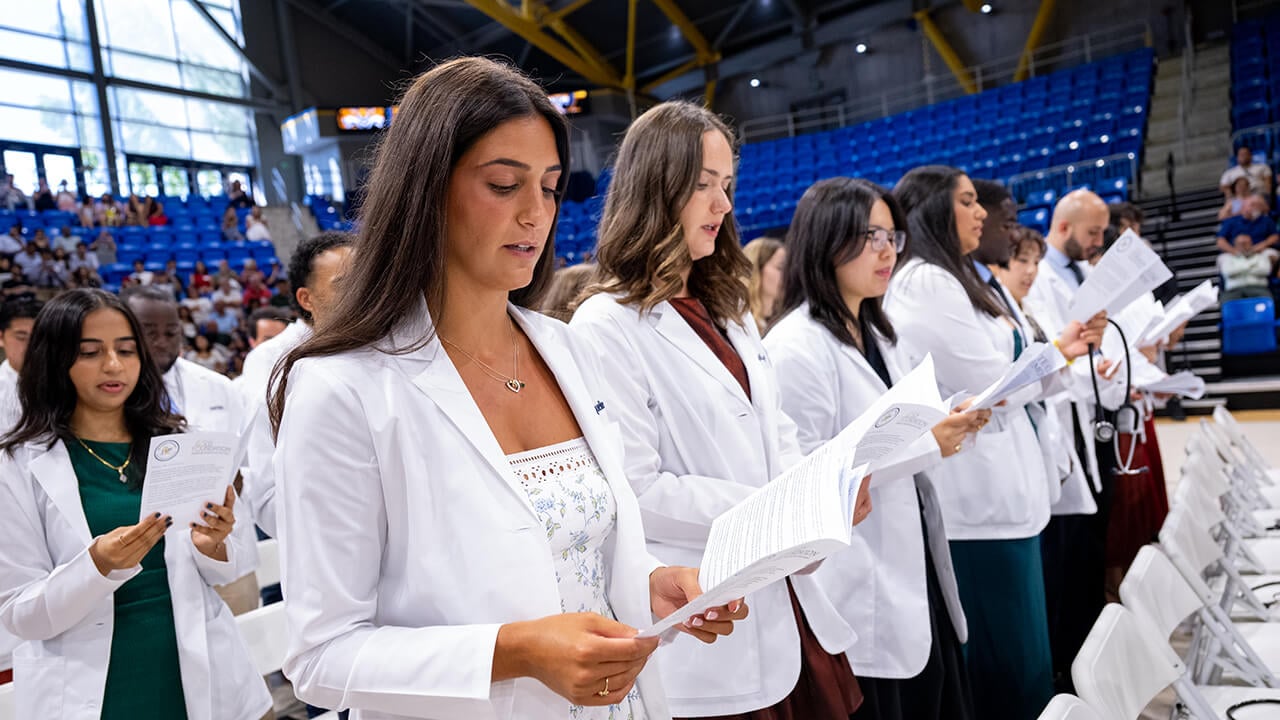
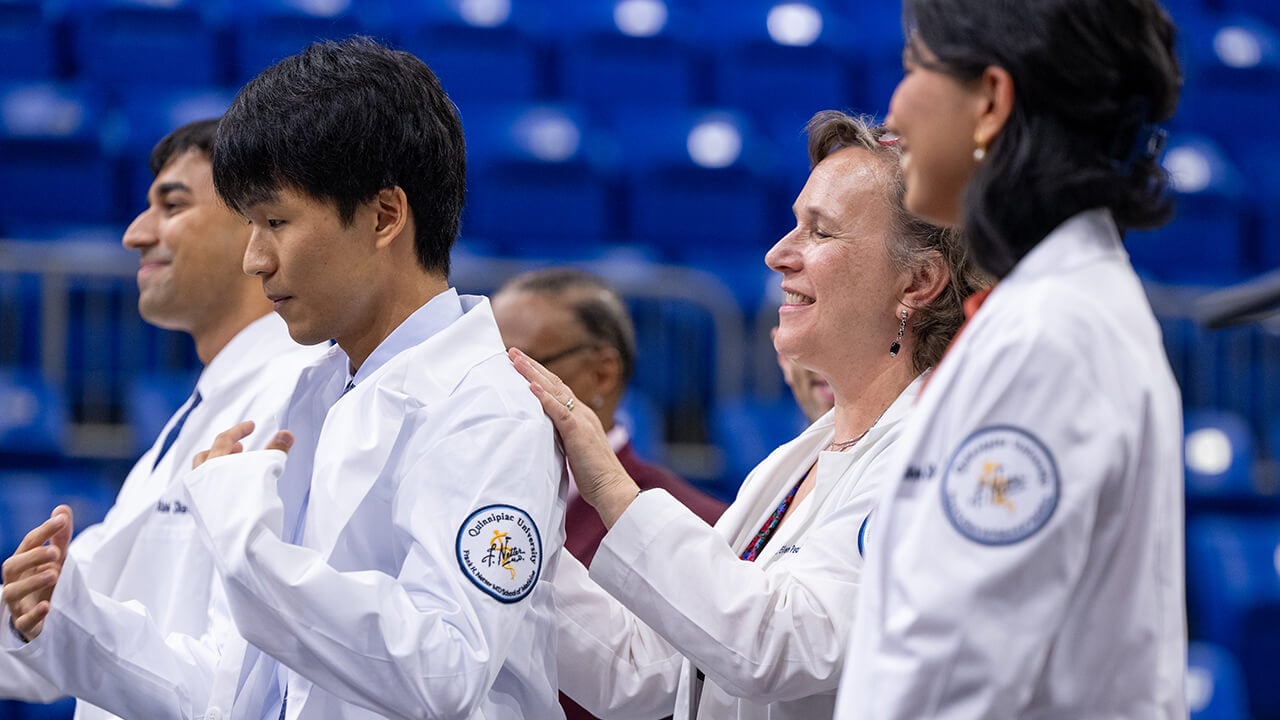
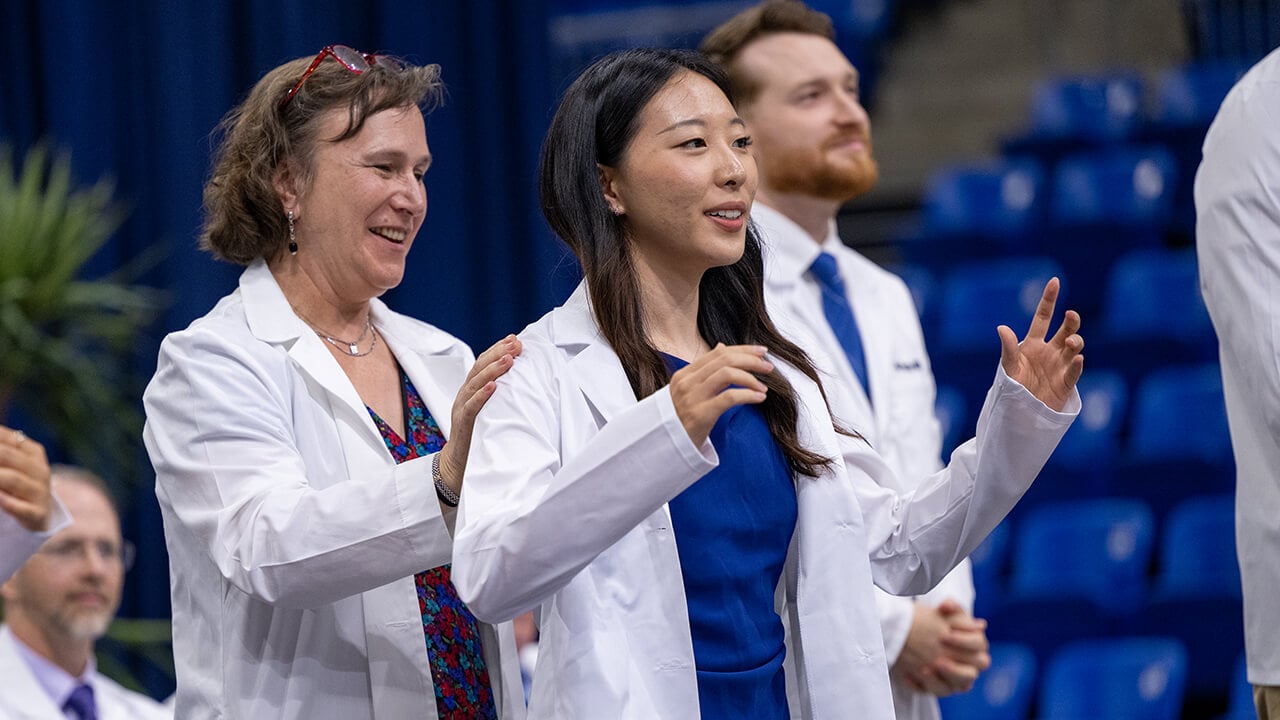
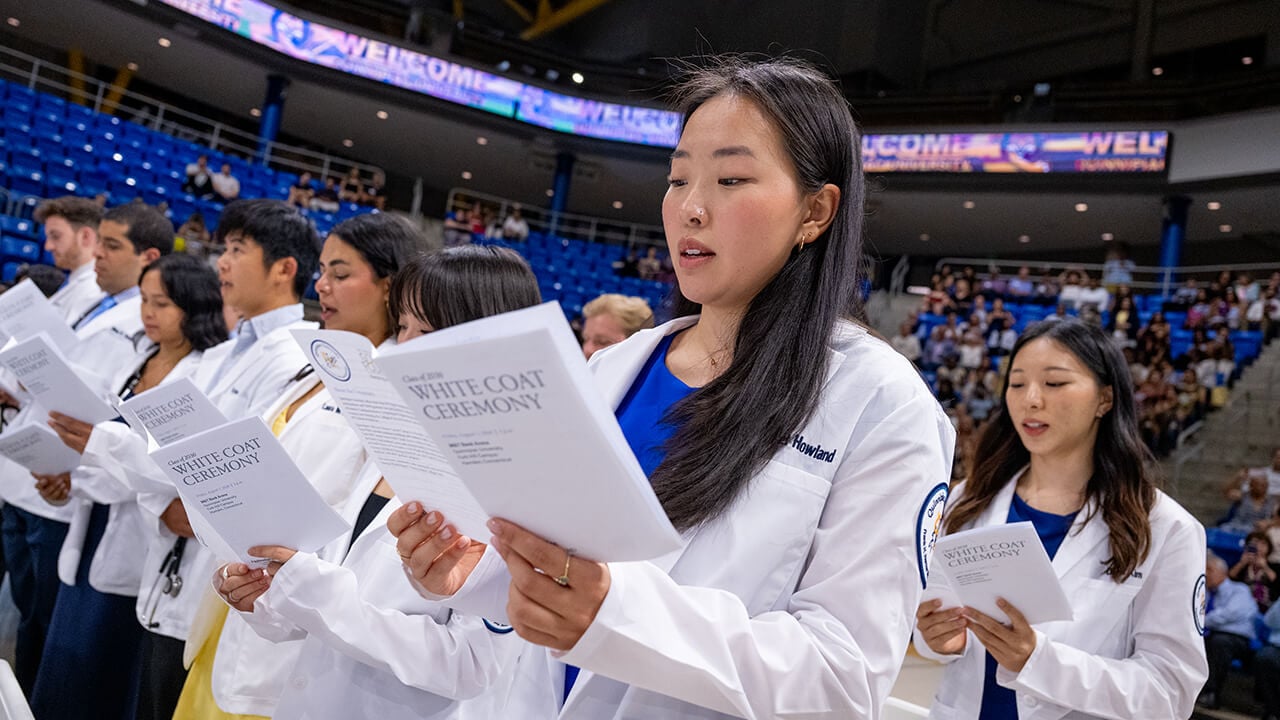
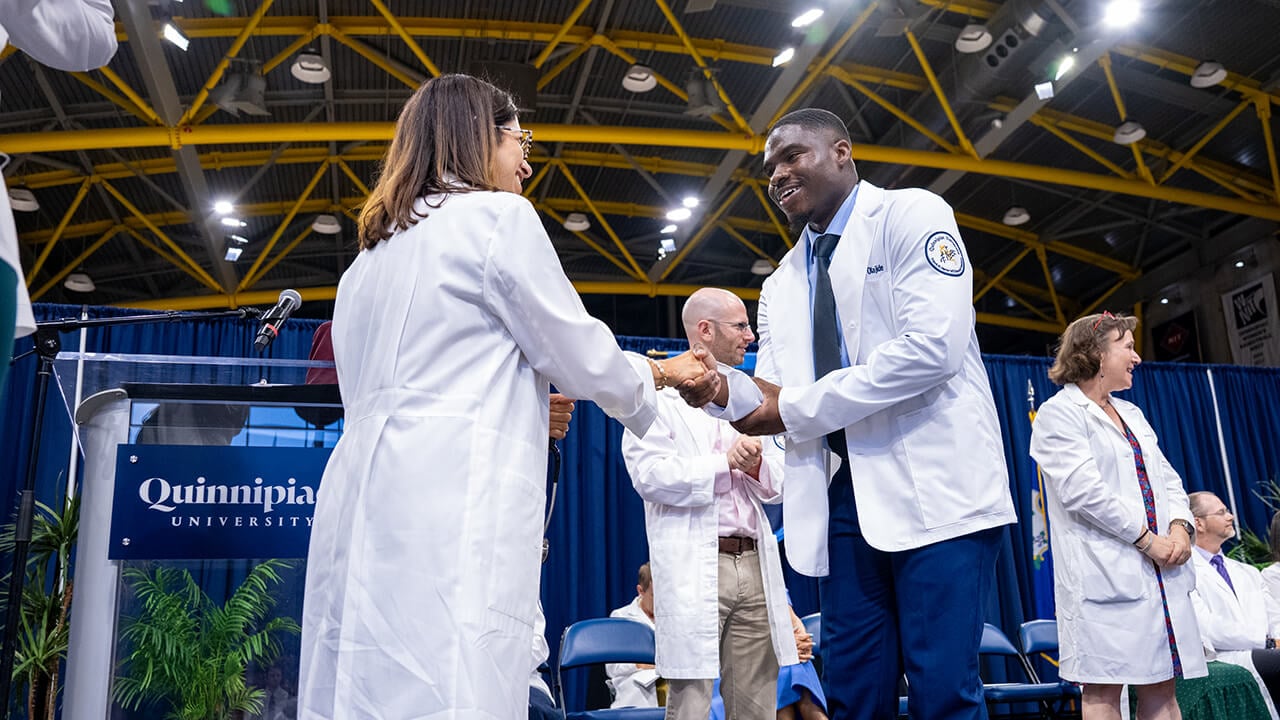
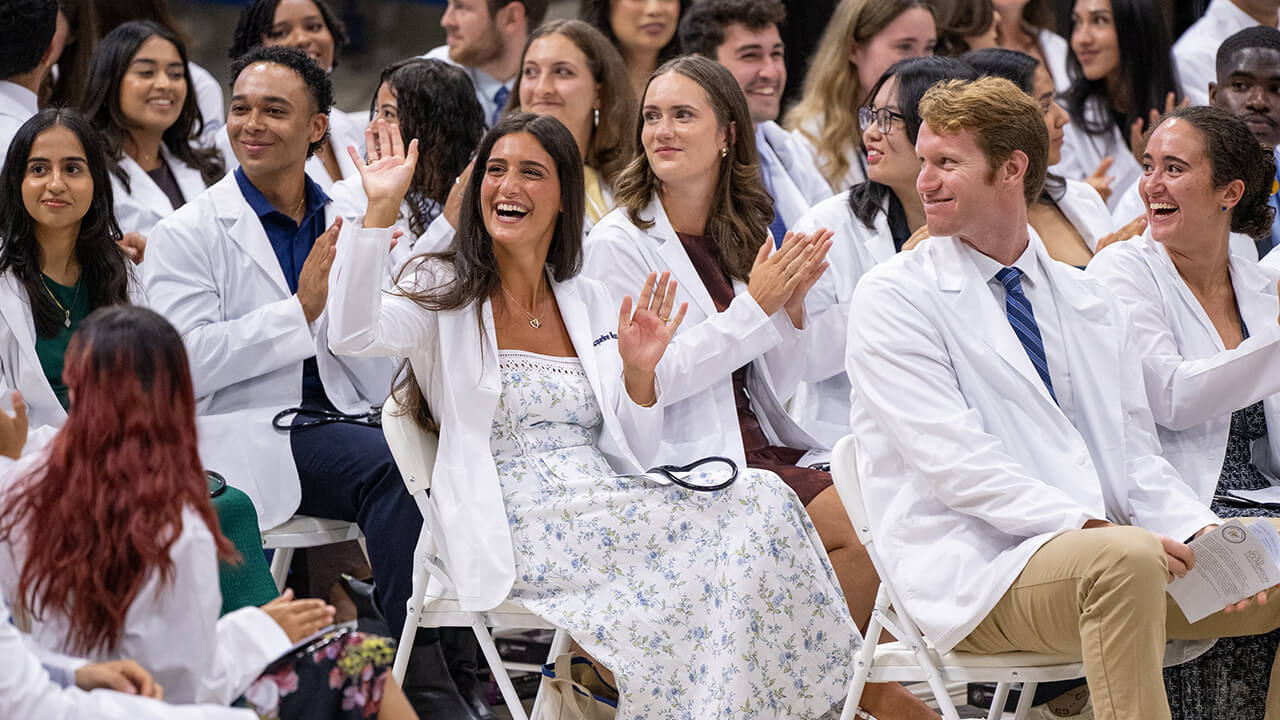
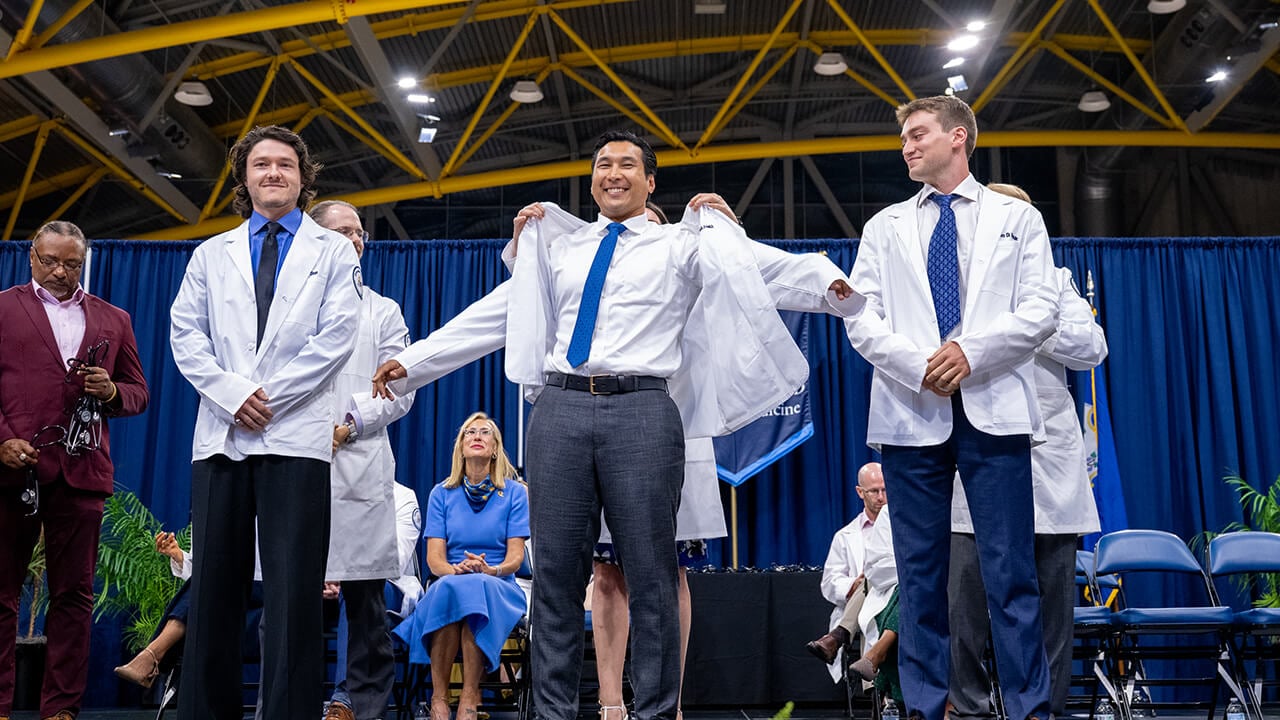
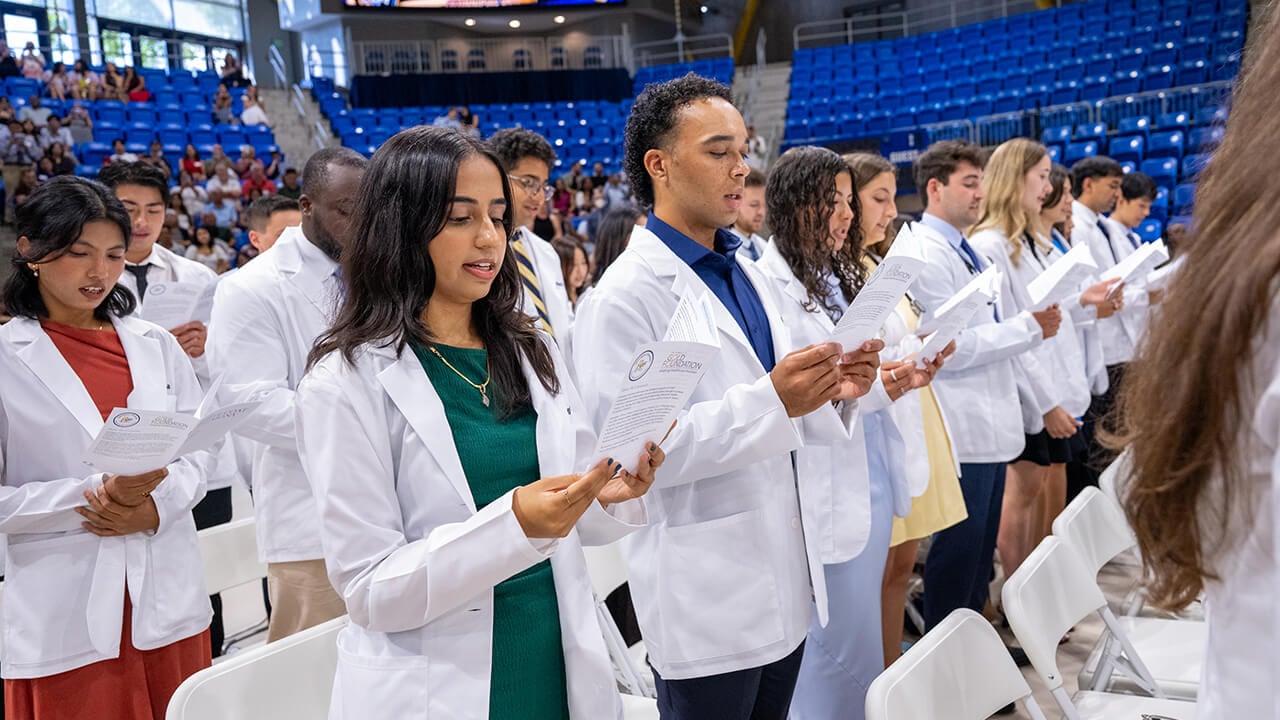
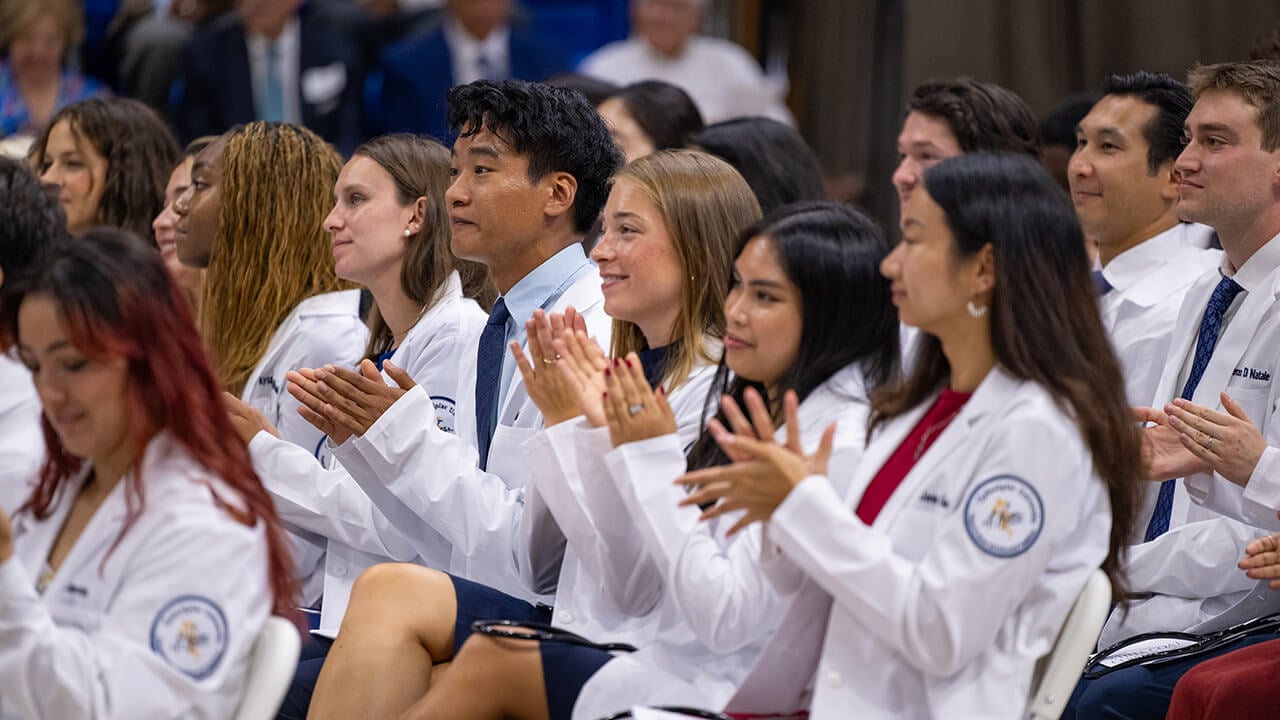
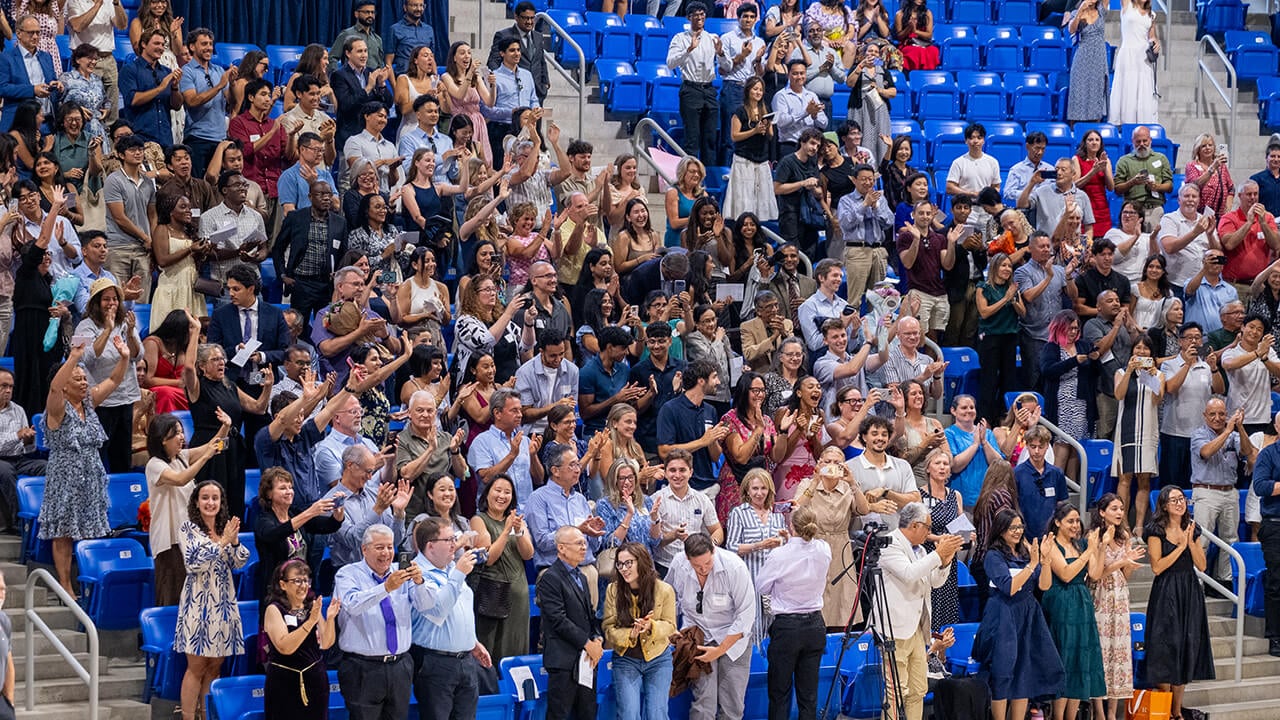
The event culminated with the tradition of draping each student in their white coats, receiving their first stethoscope and reciting the Physician’s Pledge (Modern Hippocratic Oath) before proud families, friends, mentors and peers. After each student stood at the lectern, introduced themselves and stated their hometowns, Dr. Siobhan Hollander, interim assistant dean for student affairs, led them in the pledge.
The incoming class’ dedication is evident in their remarkable achievements. Beyond representing 15 states and 56 undergraduate institutions — with five students already holding master's degrees — the students bring a wealth of hands-on experience to Quinnipiac Netter.
Prior to donning their white coats, the class logged over 300,000 hours of paid clinical experience (averaging 3,345 hours per student), more than 139,000 hours of research and 116,542 hours of community service. Their leadership spans from four Peace Corps and AmeriCorps alumni and three military veterans to 15 former varsity athletes.
The class also reflects an exceptionally global perspective:
-
40 students have at least one parent born outside the U.S.
-
16 were born abroad across nine different countries
-
51 students speak a combined 26 languages with advanced or fluent proficiency
-
12 students follow in the footsteps of a parent who attended medical school
-
13 were the first in their families to earn a bachelor’s degree
In her closing remarks, Dr. Ellen Pearlman, senior associate dean for education, praised the class for living such “wonderfully unexpected lives” before embarking on this new chapter.
“Amongst you are pizza makers, farm hands, substitute teachers, restaurant owners, startup founders, watchmakers, watch technicians, deli managers and firefighters,” Pearlman said. “One of you appeared alongside your identical twin in a national Tide commercial, while another modeled twice in an anatomy fashion show. One of you is an expert on canine cognition, and another of you writes speculative fiction and creates drawings that transform hospitalized children into superheroes. Now Frank Netter would have been so proud of that.”
A Partner in Care
As Arohi Dandawate, MD ’30, received her white coat this Friday, she marked more than the beginning of medical school.
For her, August 7 is already a date etched in her memory. On the third anniversary of her surgery for a serious medical condition involving her thyroid, she donned her white coat and took the first step toward becoming the kind of physician who empowers patients to be active participants in their care.
“I want to be a doctor who helps patients advocate for themselves and navigate the healthcare system,” Dandawate said. “I want to help people feel connected and feel seen.”
That commitment to patient advocacy was shaped long before she decided to become a physician.
The daughter of Indian immigrants, Dandawate grew up in New Jersey watching her parents build a community far from home while teaching her the importance of caring for others and herself.
Her mother encouraged her to be her own best advocate, while years of studying Kuchipudi, a classical Indian dance tradition from South India, gave her a deeper appreciation for the human body and the discipline required to care for it. The injuries that sometimes accompanied the demanding art form also introduced her to doctors and physical therapists at an early age.
“That was when I really understood what my mom was teaching me about taking ownership and advocating for yourself,” Dandawate said. “When it comes down to it, only you know your full story.”
Her experience as a patient during her college years reinforced that belief and inspired her decision to pursue medicine. More than the diagnosis itself, it was the way her physician approached her care that left a lasting impression.
“She really made me a part of the team,” Dandawate said. “I want to do that for other people. I want to make more people take charge of their health, advocate for themselves and be fully informed in the decisions they’re making.”
After earning a degree in neuroscience with a minor in music and a concentration in global health from Oberlin College, Dandawate found those same values reflected at Quinnipiac. She was drawn to the Quinnipiac Netter School’s emphasis on community engagement and the opportunity to build relationships with patients from the very beginning of medical school.
As a classical pianist and lifelong dancer, she also found a natural connection to the school’s namesake. Dr. Frank Netter’s belief that art could deepen physicians’ understanding of both the human body and the human experience resonated with Dandawate.
“As a dancer, I’ve understood my body through dance. It’s given me a lot of insight, and I appreciate art as a way of navigating self-reflection and understanding ourselves,” Dandawate said. “I think it’s just as important to understand your patients and the communities they come from as it is to learn anatomy and the fundamentals of medicine. You have to ask yourself, ‘How can I apply what I'm learning? What matters most to the people in this community?’”
When Dandawate takes the stage during the White Coat Ceremony on Friday, one moment will matter most: seeing her family in the audience.
“I think I’m going to cry,” she said with a laugh. “Especially when I see my mother, father and my grandmother watching me take this next step. They have all sacrificed so much — not just for this journey, but for me.”
A Fierce Advocate for an Underserved Community
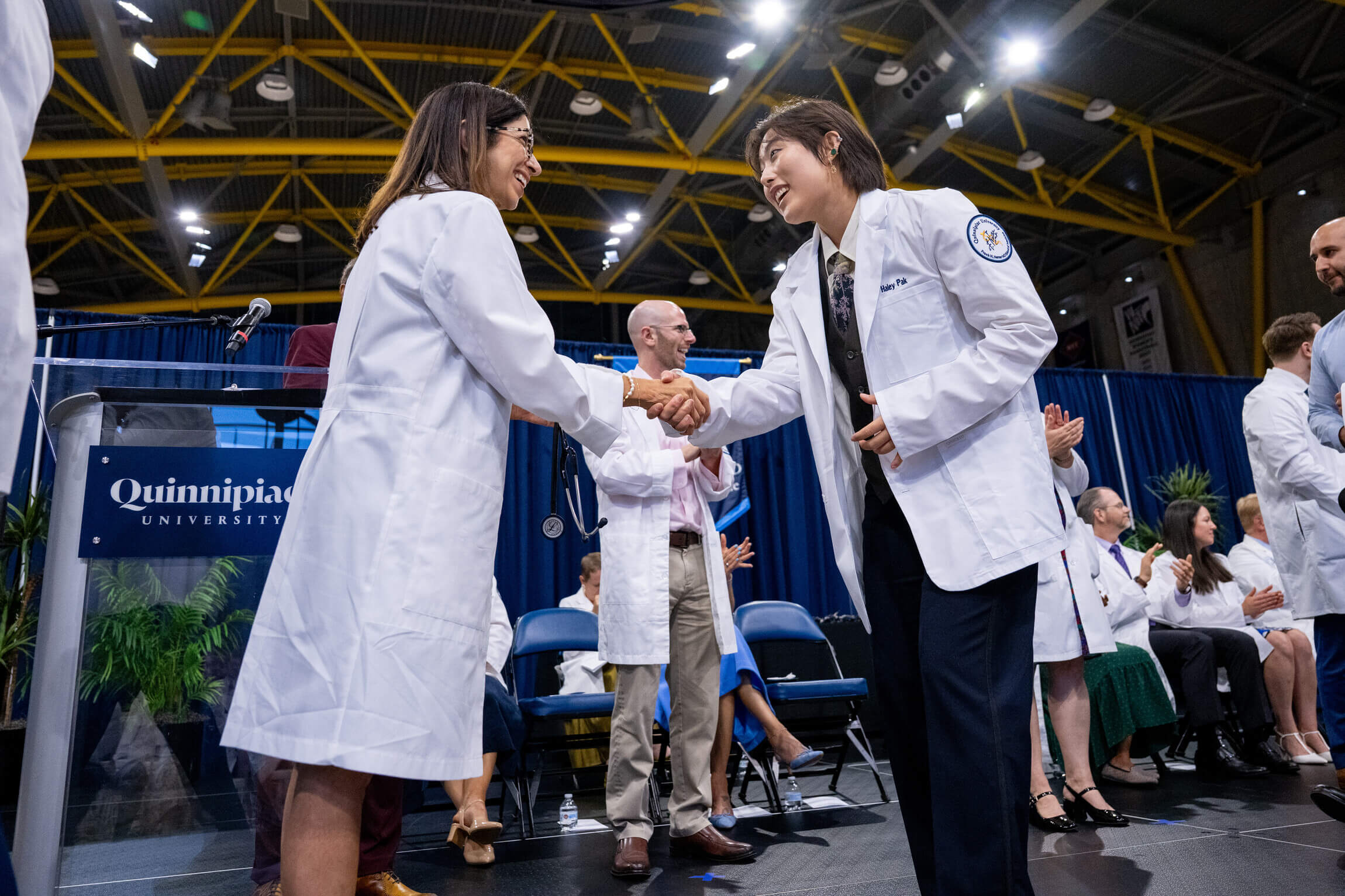
Haley Pak, MD ’30, is an accomplished illustrator and an award-winning author of science fiction stories. But when they volunteered to interview 3- and 4-year-old patients and draw their comic book-style portraits for the Cleveland Clinic’s Superhero Project, there was a subplot they didn’t see coming.
“The one thing I really loved,” Pak said, “was the kids never asked to be drawn with powers like flame blast or flying or teleportation. It was always like, ‘I want to have the power to make everyone smile.’ I just thought that was really darling.”
Born to Korean immigrants and raised in the Los Angeles area, Pak majored in English and biology at Washington University in St. Louis. They arrived at the Quinnipiac Netter School this week with a diverse array of talents and life experiences that informed their decision to study medicine.
Their father’s multiple sclerosis diagnosis — and the challenges the family faced with “patient-doctor communications” — inspired Pak’s initial pursuit of a career as a medical writer. Eventually, though, that pathway felt “restrictive,” they said. And along the way, Pak became a fierce advocate for an underserved patient community they encountered while volunteering in various healthcare facilities as an undergraduate.
“Those patients who are adolescent and bordering on adulthood tend to get overlooked,” Pak said. “They are both expected to be adults about their situation and at the same time infantilized. They’re also, of course, going in and out of the hospital, so they’re missing out on very key social development points. This leads to a lot of isolation and loneliness and an inability to express themselves properly.”
While attending college in St. Louis, Pak sought to rectify this by founding a club that organized monthly Dungeons & Dragons games for adolescent patients at a local hospital.
Players were empowered to create characters, invent storylines and tap into their creativity. In the ultimate display of the club’s effectiveness, one patient expressed disappointment at being discharged before a game could be completed.
“They were collaborating so well,” Pak said. “By the end of the game, they felt like they were a family.”
As they prepare to embark on the academic portion of their journey to becoming a physician, Pak acknowledged Dr. Frank Netter’s artistic achievements contributed to their decision to apply. Patients have long benefitted from the intersection of art and medicine, and Pak is proud to carry that banner forward.
A ‘Citizen of the World’ Finds a Home at Quinnipiac Netter
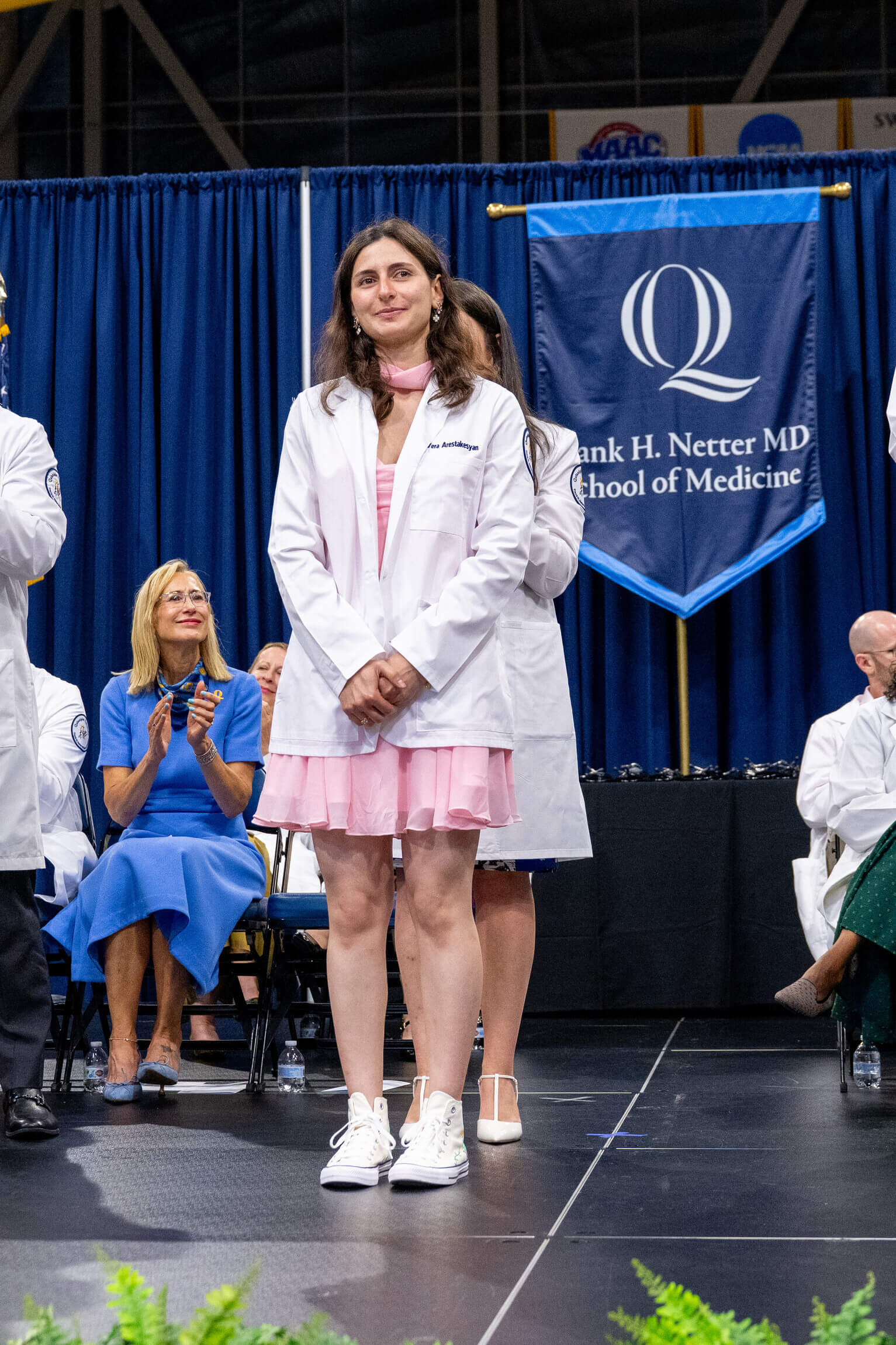
Vera Arestakesyan, MD ’30, is curious, driven and hopeful, not always in that order. She is a citizen of the world, someone who has lived in seven countries and carries the cultures and communities from all of them.
She is eager to start her next journey at the Frank H. Netter MD School of Medicine, but not before unpacking the years that brought her here.
Shortly after she was born in Iraq, Arestakesyan and her family settled in Sharjah, a thriving city of 1.8 million in the United Arab Emirates. She lived there until she was 12 before moving to Los Angeles.
“Right now, I’m interested in primary care, especially because I’ve had some health concerns over the years,” said Arestakesyan, who speaks Arabic, Armenian, French, Turkish and English. “In college, I went to my primary care practitioner very often for all kinds of things — the small things and the big things. I also love surgery, but it’s a really long path, so we’ll see how that goes. Everything is all up in the air.”
After graduating from UCLA with a bachelor’s degree in psychobiology, she applied to several medical schools before choosing Quinnipiac Netter. It was time for her next move, this one 2,800 miles across the country in North Haven, Connecticut.
“I was blessed with a pretty positive undergrad experience, but I also think the hustle and bustle of the city made it really hard for me to make connections,” Arestakesyan said. “I found that you can talk with people and they’re nice, but as soon as the conversation is over, people just float away.”
After less than a week at Quinnipiac Netter, Arestakesyan is convinced she made the right decision. Looking up to count for a moment during a Zoom interview, Arestakesyan figures she has already met about 60 percent of her cohort.
“I didn't make very meaningful connections at UCLA,” she said. “I feel like the student population here is more evenly distributed and the faculty-to-student ratio makes it so much easier to connect with everyone. So that’s been a big, big plus point for me. I'm already very grateful.”
As a writer, artist, influencer and Boba aficionado, Arestakesyan was also drawn to the work of Dr. Frank H. Netter. His colorful, intimately detailed anatomical drawings have been a staple of medical education for decades.
“I really like the idea that the school was established on the basis of medicine as art,” Arestakesyan said. “I consider myself very creatively oriented just because I do a lot of writing, and I grew up doing a lot of art. I have worked on paintings and sketch portraiture and even given some of them as gifts. I’ve sold some art, too. I really enjoy being creative.”
From Fort Drum to North Haven
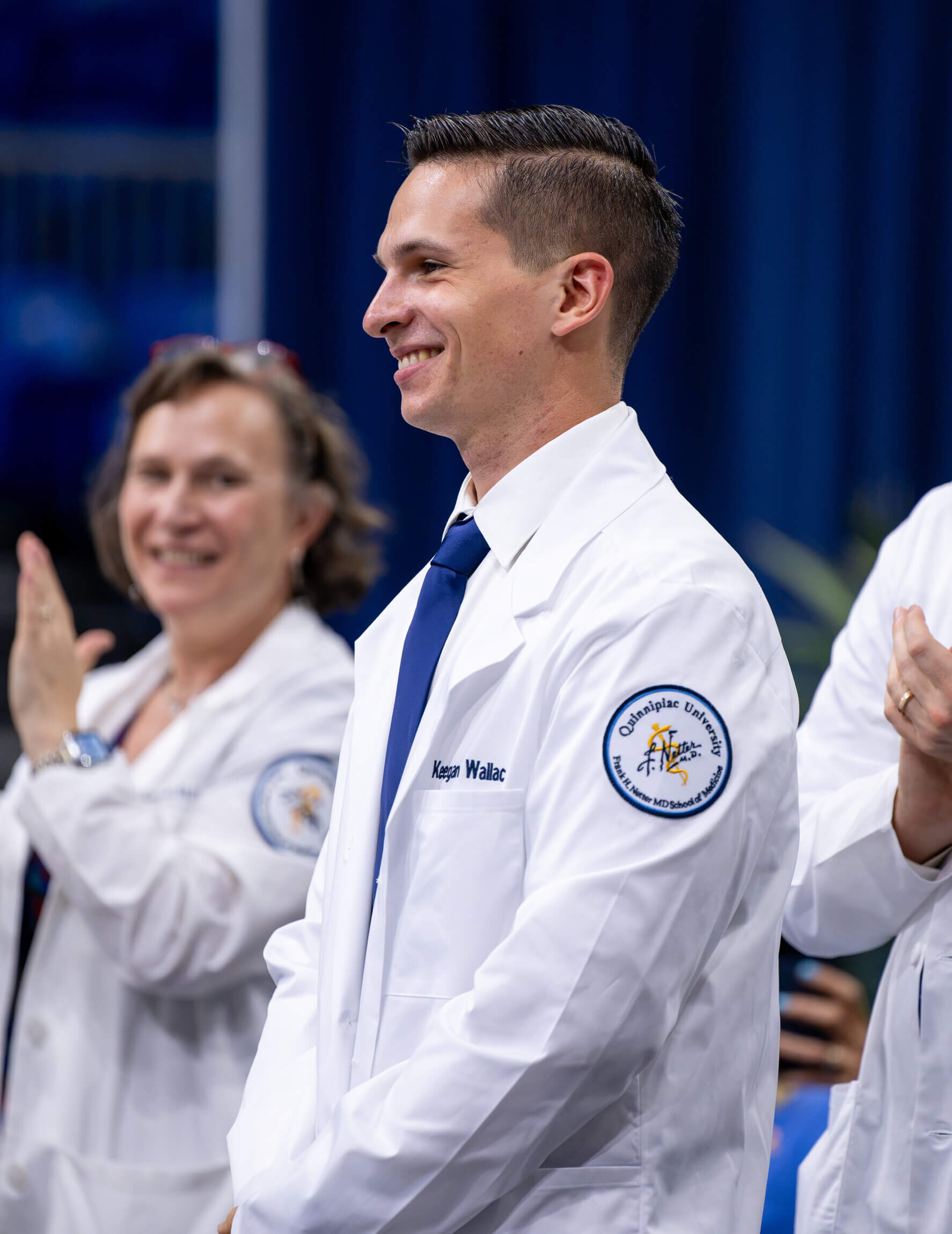
As a U.S. Army Engineer Officer, Keegan Wallace, MD ’30, served as a platoon leader and managed the daily functions of a 700-person battalion. He was frequently entrusted with responsibilities beyond his rank.
At the same time, with a bachelor’s degree in music performance as a clarinetist, Wallace understood the value of discipline and precision.
Together, these measures formed a helix of leadership and resolve that led Wallace to the Frank H. Netter MD School of Medicine.
“I looked at a lot of medical schools, obviously, as every applicant does, but Netter stood out for several reasons,” Wallace said. “One, a lot of their values intertwine with the values I've grown to adore and try to show in myself. They value community, leadership, respect, honor, integrity and personal courage."
“And two, Dr. Netter was an artist. While I don’t have a background in painting or drawing, I am a musician,” he said. “That's where I gained all my discipline, all my understanding of people. Most of my leadership roots come from music, so it’s been incredibly important in developing the man who I am today. I don't think I would have decided to pursue being a physician without it.”
After spending almost three years at Fort Drum in upstate New York, initially as a training management officer and later as a sapper platoon leader and operations officer, Wallace decided to pivot to medicine.
He understood the skills he learned in the military would transfer to practicing medicine.
“My model, obviously, is based on my leadership experiences in the military — be a human first, look for simplicity in systems and listen more than you speak,” Wallace said. “It’s not that the military didn’t fulfill me anymore. I was very happy where I was. One of the things I loved most about what I did was being able to take care of my soldiers and being involved in their lives.”
Now, it’s time for Wallace to learn how to take care of his patients and be involved in their lives. And he can’t wait.
“I’m super excited and super nervous. It’s been a long time coming. It’s kind of surreal to be honest,” Wallace said. “My wife is my biggest supporter, and she always will be. She’s going to be with me every step of the way.”
Although Wallace hasn’t chosen a medical discipline, he’s narrowed his list to three areas of care: emergency medicine, orthopedic surgery and neurology. But whatever discipline Wallace chooses, he will bring invaluable experience to his education.
“As a platoon leader, for example, I stepped in having no idea who any of them were. My platoon sergeant and I were teammates. He had almost 20 years of service in the U.S. Army and was from Jamaica,” Wallace said. “But we figured it out and developed a leadership plan. There’s something that comes with being thrown right into it and having to lead people.”
“It's not the same experience as being a physician, of course,” Wallace said. “But it does give me the experience of working with real people and leading real teams and learning to deal with problems in real time.”
In Focus
In this Article
Read This Next








Stay in the Loop
Quinnipiac Today is your source for what's happening throughout #BobcatNation. Sign up for our weekly email newsletter to be among the first to know about news, events and members of our Bobcat family who are making a positive difference in our world.
Sign Up Now