


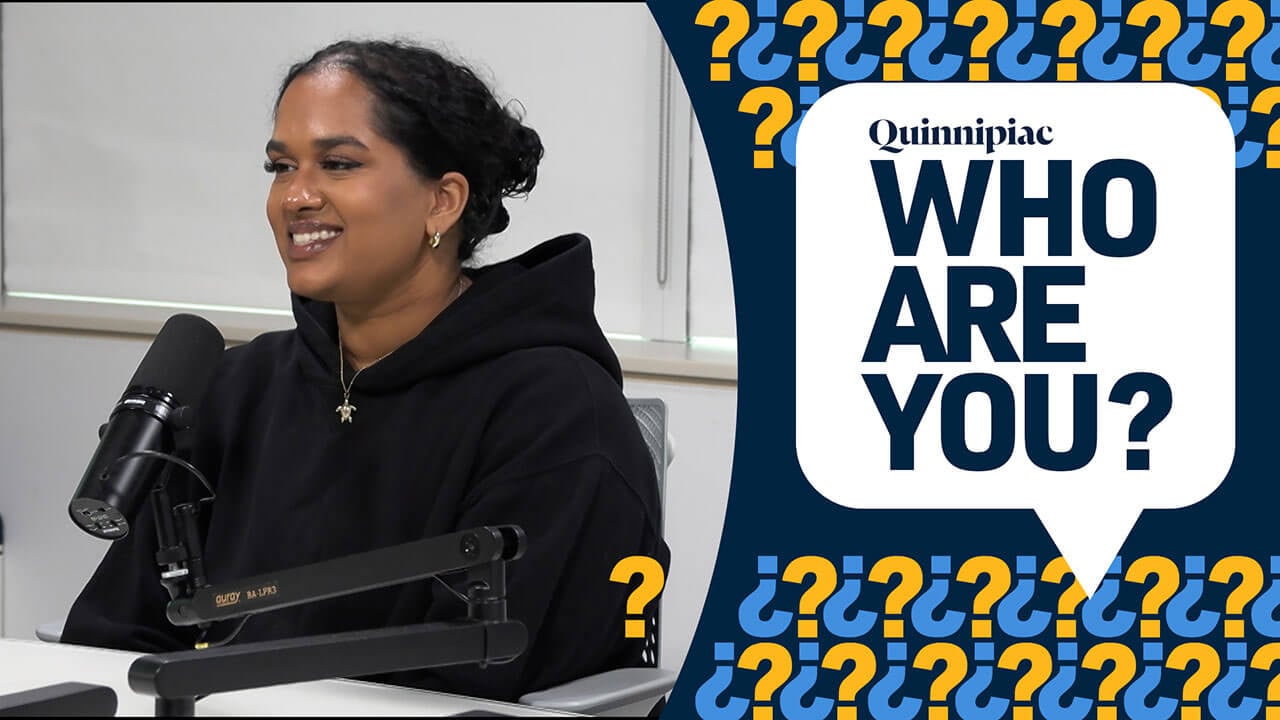
‘Who Are You?’ podcast with guest Dana Ragoonanan
Health disparities and the decision to become a doctor
Health disparities and the decision to become a doctor
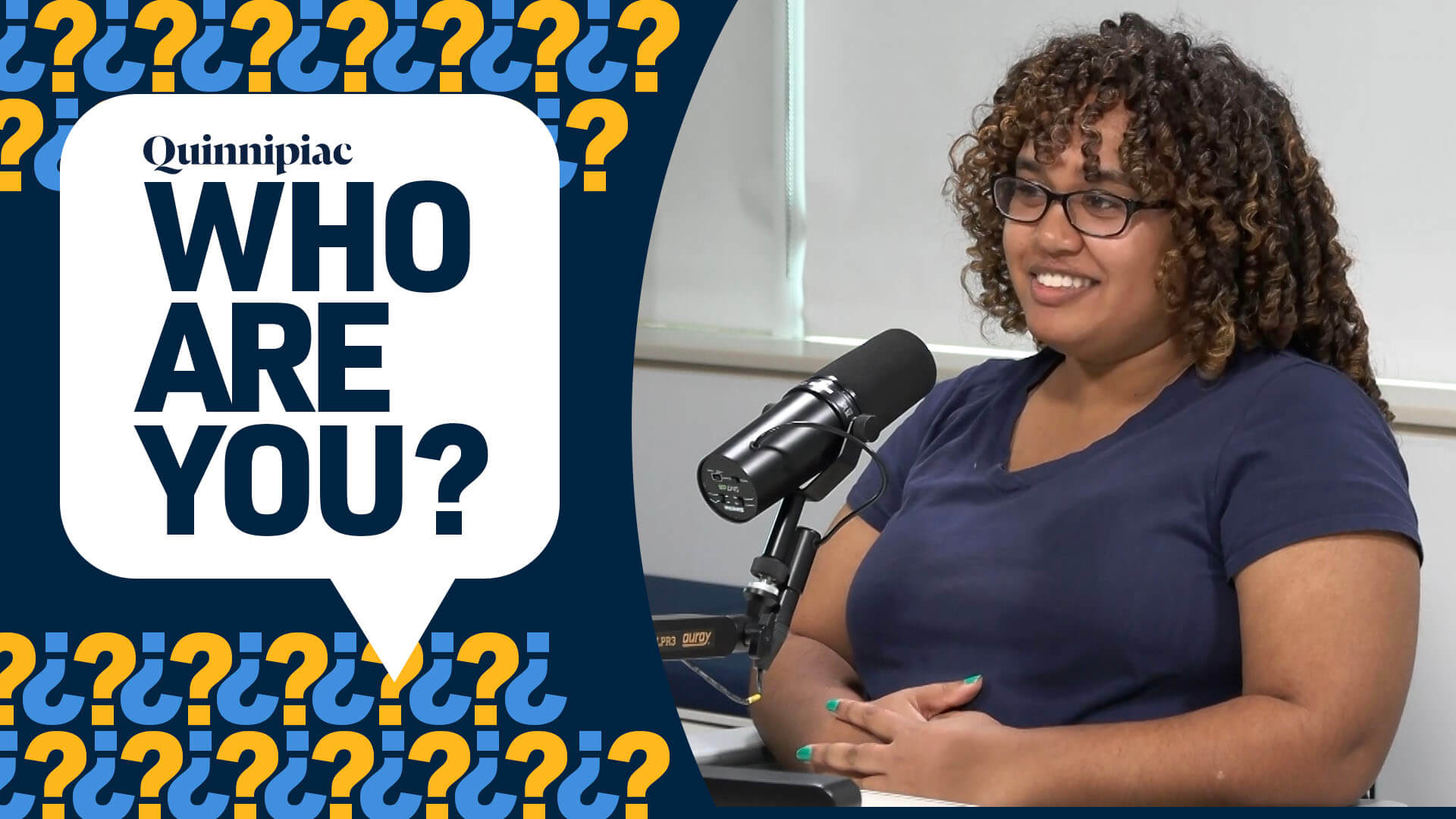
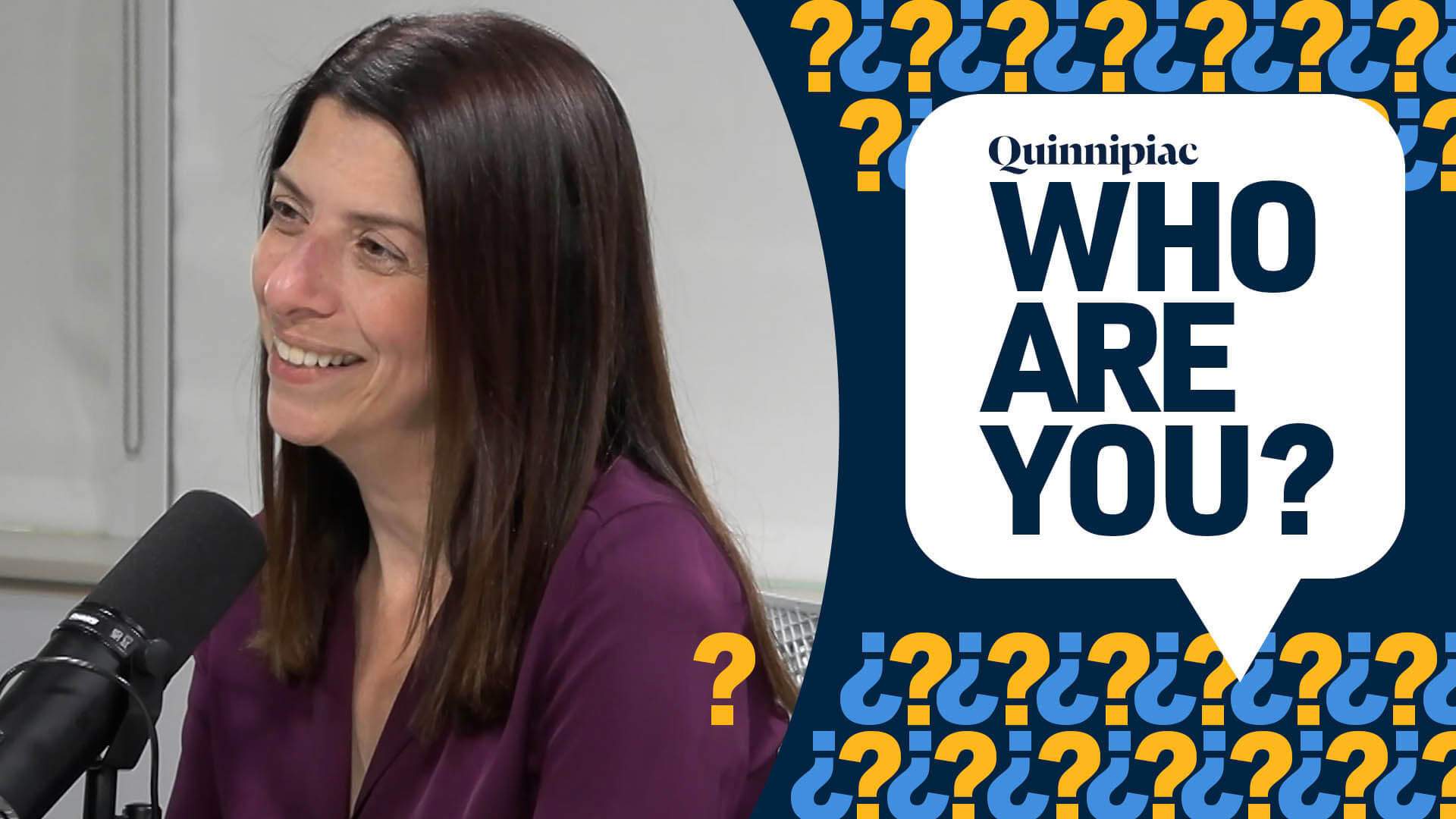
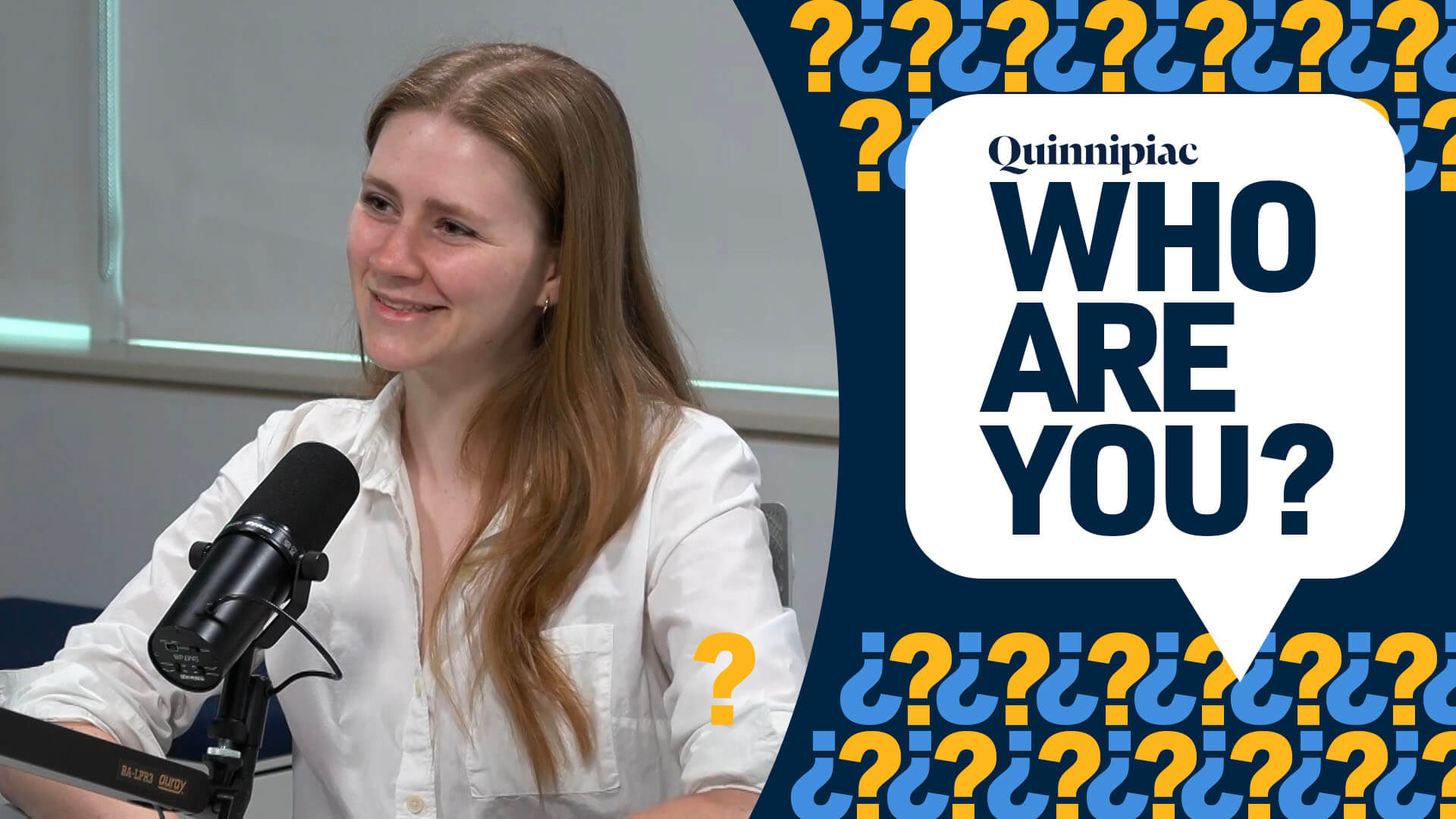
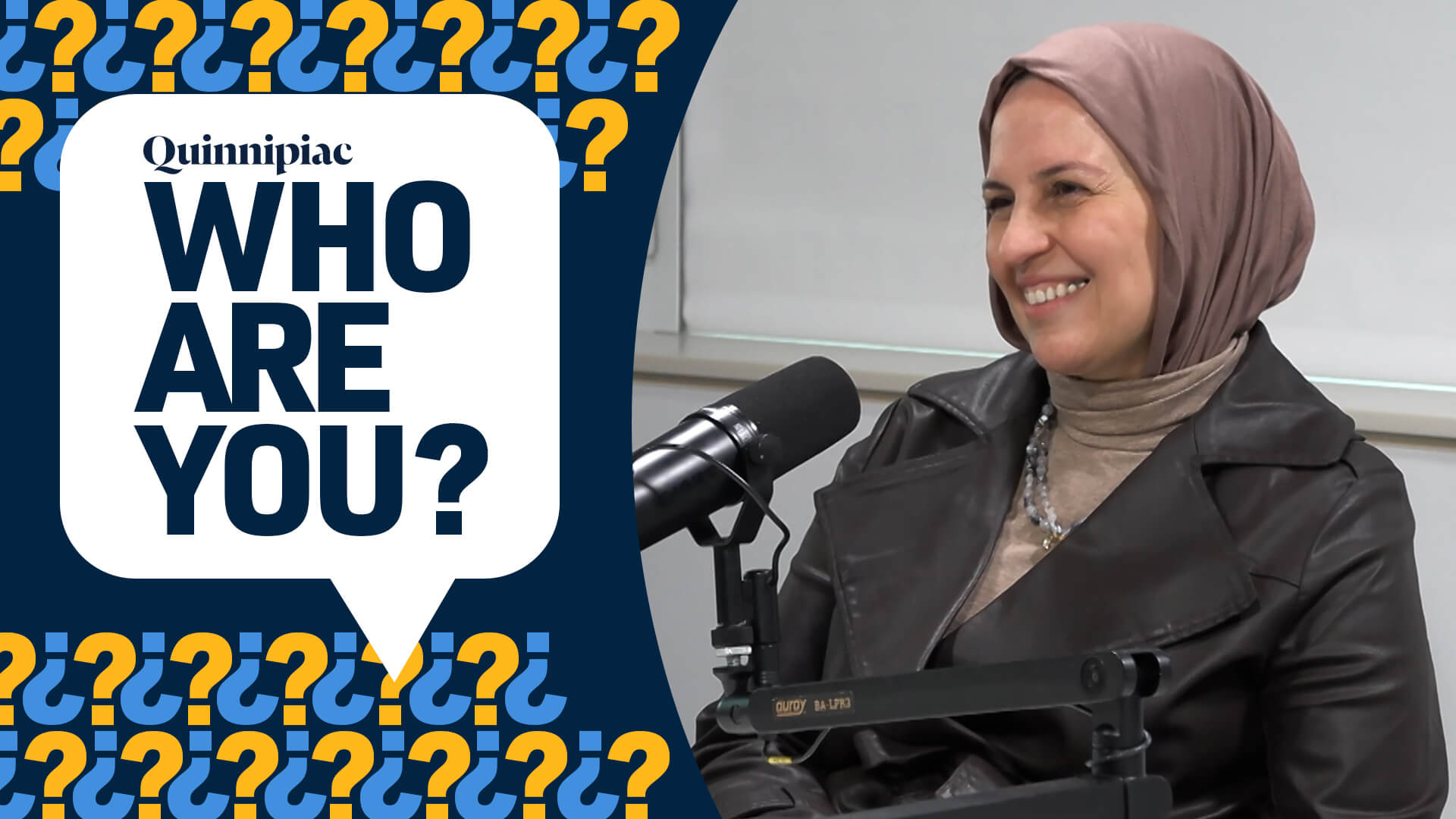
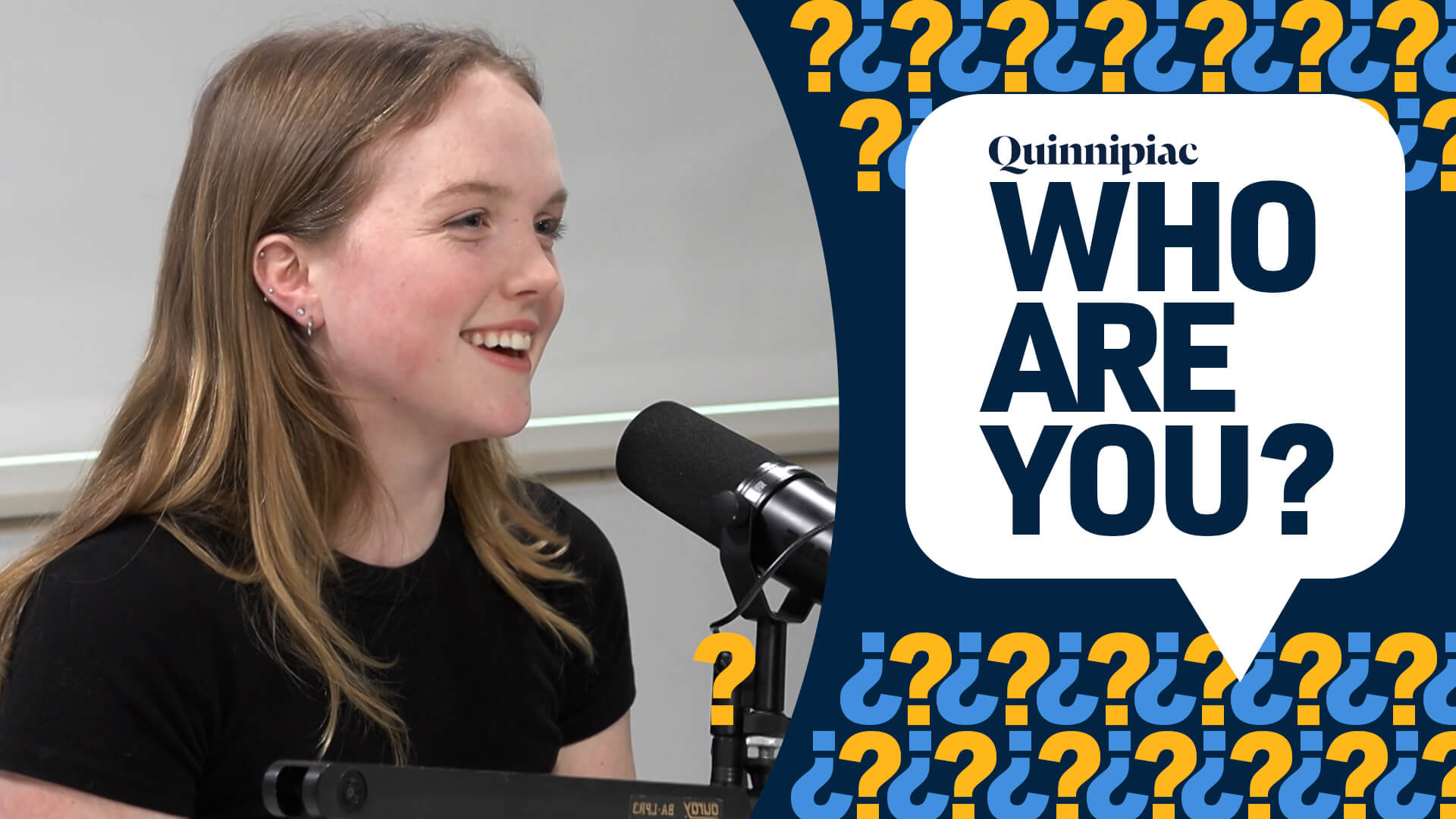
Joel Vanner: Welcome to ”Who Are You?,” The Bobcats, you know the stories you don't. I'm your host, Joel Vanner, inside the podcast studio at Quinnipiac University's School of Communications. Let's welcome to the show my guest today, Dana Ragoonanan, welcome to the show.
Dana Ragoonanan: Thanks for having me.
Joel Vanner: So, Dana, I'm sure you could guess by the name of our program, or if you've watched one of our past episodes, we know your name, but tell me, who are you?
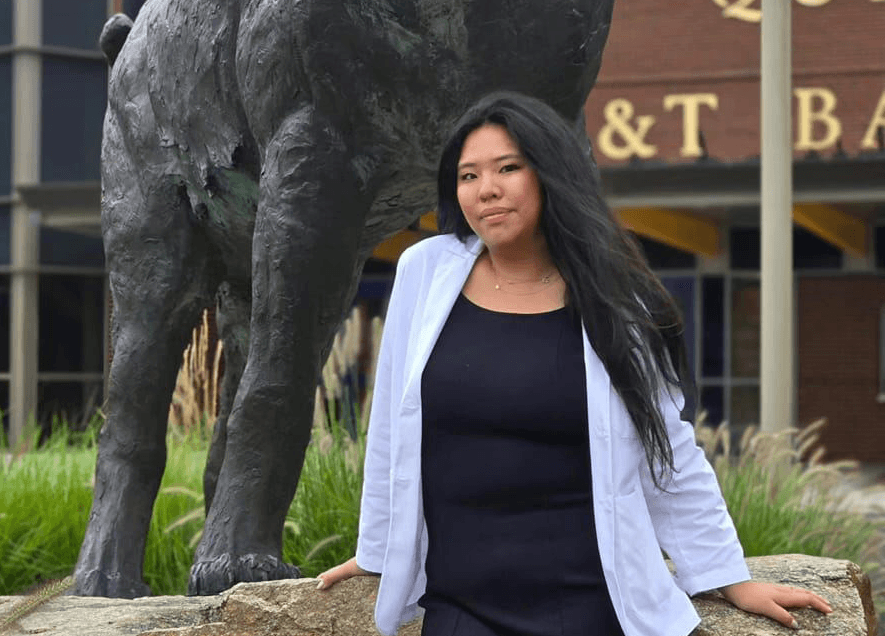
Dana Ragoonanan: So, I'm Dana, and I'm a third-year medical student at Frank H. Netter MD School of Medicine at Quinnipiac University.
Joel Vanner: So, current medical student here at Quinnipiac, tell me a little bit about how you got interested in the medical field and your journey here to Quinnipiac.
Dana Ragoonanan: Yeah, you know, I think that's a loaded question. It starts from when I was pretty young, actually. I wasn't one of those people that came straight out and knew that they wanted to do medicine. That is definitely not my journey at all. I actually didn't figure I wanted to do medicine until pretty later on in my career. So, a little bit about my background and sort of how that plays into this is that I'm first-generation American. I'm the first set to be born in America out of both sides of my family. I was born in Queens, New York, but my family's from Trinidad. And the area that we were in unfortunately, had a lot of health disparities, but at the time and growing up in that, you don't really know that. You know, it's sort of what's normal. I know it wasn't until I was actually thinking about my personal statement in terms of writing it for medical school that I did some research, and one in ten babies in my zip code specifically are preemie, which isn't necessarily a great number to have. But again, that's just something that we thought was the norm. And I think it was sort of growing up in that and then moving on to higher education and then getting some of the language to talk about the things that I've seen really spurred my interest into medicine.
Joel Vanner: What did you study in your undergrad years?
Dana Ragoonanan: I was a biology minor, biology major, actually, with a chemistry minor.
Joel Vanner: And what kind of sparked your interest to go into those fields before continuing on to medical school?
Dana Ragoonanan: You know, I think biology obviously ties in a lot with the human body, but I think it was sort of an interest in seeing the body as a system. So where I come from in New York and in my family, a lot of what we do is we fix things ourselves. So, whether that be cars or things going wrong in the house, like, it's always like, you know, you're going to do it, fix it yourself. And that's the way I see the human body as sort of a system where things go wrong, and you can fix it. And I think biology ties in perfectly to that, where you're learning the molecular mechanisms as well as the larger picture, as well.
Joel Vanner: And you had a study abroad experience, too, before you came to medical school. Where was that study abroad experience, and what did you learn coming out of that?
Dana Ragoonanan: Yeah, so that one was in South Africa. So I actually did the study abroad and stayed a little bit afterwards to work. At that point in my career, I was really interested in infectious diseases. So I did my study abroad. And I specifically chose South Africa because of, unfortunately, the epidemic of HIV there. I knew that there would be a lot to learn scientifically, but more importantly, to me, at the time, was socially and sort of what the social determinants of health were surrounding HIV. So that's what I studied for about five months, and then I went on to work in an HIV lab there.
Joel Vanner: And after college, you stayed in the New England area with Boston Medical Center.
Dana Ragoonanan: Yeah.
Joel Vanner: What was your role there?
Dana Ragoonanan: I was a lab manager there, and it was a newly established lab that focused on using a Zebrafish model to essentially recreate or help better understand stem cell migration.
Joel Vanner: And how did those experiences bring you to apply to medical school and inform where you are today at Netter?
Dana Ragoonanan: Yeah, man. That's another loaded question. I think a lot of what I want to do in my future career is work with populations that have lower socioeconomic status that are immigrant populations. So that's where my family background is, or minority populations. And I think all of those experiences were geared towards me understanding that idea more holistically. So growing up and seeing those disparities and then going to higher education, you're not finding the language to speak about this. But now going to South Africa or working at Boston Medical Center, you're seeing the interplay of those social determinants of health in real life, but also solutions to fix them. And I like being on the solution side, especially because of my family background of always, fixing things yourself.
Joel Vanner: And how have those how have you learned those things in your courses here at Netter?
Dana Ragoonanan: Yeah, I think Netter does a really good job of letting us be hands on, especially as soon as you, you know, pretty much walk in the door in your first year. We have a program where we work with community physicians, and we shadow from as soon as we enter into med school. And seeing that and seeing a lot of the primary care fields really ties into those social determinants of health because you are the first line.
Joel Vanner: You are right now tutoring at a school in New Haven. Tell me a little bit about I know you have a story to share out of that experience. Tell me about that experience and how that's contributed to your time here as well.
Dana Ragoonanan: Oh, honestly, that's one of the things that I bring me joy. They're all the studying and the tests and whatnot. I tutor at a school down in New Haven. It's primarily low income minority students who attend there, and I would go every single week and tutor, I think it's up to fourth grade to eighth grade in pretty much any subject that they came in with. I ended up being more on the math and science side, which I think kind of attracts. But I think why that brings me such joy is because one of the things that I'm passionate about is early exposure to medicine for minority individuals in an effort to try and increase retention. So I think about this one student that I had. He came in and I remember, the first thing he said to me was, Am I gonna do anything? And I was like, Okay, cool.
Joel Vanner: And he said a great first statement.
Dana Ragoonanan: That was it. No name or anything. And then he said, as you tutor me more and more, I'm going to do less and less. And I said, Okay, no problem. And then, soon enough, you know, I figured out ways to relate with him. I figured out things that help him learn, things that don't help him learn, how I should, you know, orient myself physically in terms of, like, where do I sit? Where in the classroom do we sit to help facilitate his learning. And I think now we're at a point where I don't think he wants to work with any of the other tutors. But just building those bonds and helping them see that their goals are attainable, especially when it comes to math and science, I think is something that is so important in that pipeline of keeping people interested in medicine and succeeding in medicine.
Joel Vanner: And you're undoubtedly making a difference in his life. So that is awesome right there. You are also a part of the Student National Medical Association. Organization here at Netter. It's also a nationwide organization. Tell me what that organization does and what your role here is at Netter and beyond, too.
Dana Ragoonanan: Yeah, so the acronym for that is SNMA. And what that organization does is it helps support minorities in medicine, whether that be giving them resources, helping them make connections, having conferences, pretty much throughout the nation, where you can meet other medical students and really build a community and have that support that we really need in medicine. And my role there actually started off with our Netter chapter of SNMA. And my title there was the MAPS Liaison. So again, it kind of ties into my goals of wanting to increase retention of minorities in medicine. And what that role does is it works with our undergrad chapter. So Quinnipiac's undergrad chapter, who are interested in medicine. And held different events. I held the third annual MAPS Day. So MAPS is the Minority Association for pre-med students so their undergrad version. And where we had attendance from honestly, all over the East Coast, and these students actually came to Quinnipiac, we showed them the medical school. We allowed them to get their CVs looked at. We did some, simulations with our surgery trainers, just to get them really interested in medicine. I sort of like break down that barrier that we have of like, Oh, medicine is kind of scary. You don't really want to be involved in.
Joel Vanner: Puts them in the place, right?
Dana Ragoonanan: Exactly.
Joel Vanner: Yeah, in the place, they can look around and say, I belong here. I can be here; I can make it.
Dana Ragoonanan: Yeah. So I did that for our local chapter, and then I actually moved on to our regional chapters. So I covered the six states in New England, which I'm probably going to miss one, but Massachusetts, Rhode Island, Connecticut, New Hampshire, Vermont.
Joel Vanner: Maine.
Dana Ragoonanan: Maine.
Joel Vanner: I was going through in my head, too.
Dana Ragoonanan: Yeah. And essentially, I'm doing the same thing, but at a larger scale.
Joel Vanner: Kind of just an off-the-cuff question here. You're helping students. You're tutoring your student in New Haven, and you're helping our undergraduate students here through your involvement there. Do you get questions from your family when they are feeling ill or feeling sick? They call you up on the phone and just want them you to diagnose them right there over the phone.
Dana Ragoonanan: I wish you were here maybe about 3 hours earlier because my father called with the exact same thing. There was a rash and he's like, What do you think this is? And I was like, Well, I would have to see it first. And then we can go from there. But I get those questions all the time. I had somebody call me once like, should I take a Tylenol? I was like, Well, I don't know what's going on.
Joel Vanner: Don't go to WebMD because you always getting the worst there. But yeah, I could see how that adds up in your time there.
Dana Ragoonanan: Yeah. But, you know, I do like that role, and, you know, when I am qualified, I pass all my boards and whatnot. I do like taking on that role because Medicine growing up is not something that was very attainable, both in terms of becoming a doctor but also just access to medical care. Something that I thought was completely normal was having, like five or six hour wait times to see a physician, which now I know is not normal at all, but I think, you know, just having somebody there or even just, like, a reassurance of, you know, maybe you should go to the hospital, or, you know, maybe this is something that we can sort out at home, like, is going to be really helpful to my family.
Joel Vanner: How have all of these experiences helped you grow and maybe inform the path you want to take once you finish medical school? You kind of touched a little bit about it from your experience growing up with the medical field and what you experienced there, and now you're giving back in ways that are similar. How have all your experiences? How are they going to come together and inform where you're going to go in the medical field after graduation?
Dana Ragoonanan: Yeah, you know, I don't see medicine or, I guess, just treating patients as my sole responsibility. I do want to take on, aside from that, but take on a more community based role, especially in terms of mentoring. And again, like, going back to those goals of increasing exposure to medicine, especially within my community. So I would like to have my clinical practice is one thing, but also, like, a separate, like, mentorship or community based programming where I get to interact with all the different factors from social determents of health to education to just, like, you know, having students see somebody that looks like them who's doing this.
Joel Vanner: If we have a listener out there and I'm sure we do, who's thinking about maybe medical school is the place for them, what advice would you give them to get in that mindset, things to do? What would you say to them today as they get ready to embark on that journey?
Dana Ragoonanan: Yeah, I think one of the things that was absolutely crucial to my journey to medicine was finding mentors. And those can be people at your university. Those can be people that are outside of your university. And mentors are kind of a scary thing to find. So my advice would be, if you don't have a mentor, just email someone.
Joel Vanner: Have to be formal, either. It doesn't have to be, you know, super. Just make those connections.
Dana Ragoonanan: Absolutely. I think connections are, like, honestly, some of the biggest things that got me through the entire arduous process of applying to medical school, even deciding to apply to medical school and everything that came after it. But honestly, I mean, we have ChatGPT now.
Joel Vanner: ChatGPT, write an email for, you know, I want to find a mentor and then send out as many as you can. There's no harm in doing it. So just give it a shot.
Dana Ragoonanan: And they may land on someone like you who's more than willing to give back and be their mentor in that way. They just have to reach out.
Joel Vanner: Absolutely. What would you say to someone who's considering the Frank H. Netter MD School of Medicine here at Quinnipiac? What sets Netter apart, would you say to them?
Dana Ragoonanan: Immediately, the first thing that came to my mind was the word connection. And we were just talking about connections a little bit before. But I think the community here at Netter is absolutely unbelievable, especially in terms of the faculty. I have never had a bad interaction with any of the faculty here. They are always so willing to help show up to their office, and they will spend as much time as you need explaining any concept that you need. And if they can't help you or the way that they're explaining it isn't working, immediately they'll say, alright. You're going to go talk to this person. They'll give that person a heads up, and you'll go to that person and they'll help explain everything that you need. One story that comes to mind is actually, I had to take a day off because I got food poisoning while fun. Yeah. And then the next day when I came back in, I had at least four to five professors coming up to me and asking, Are you okay? Do you need anything? You know, can we help? Did you miss anything in class that you need us to explain? And I was like, Wow. I just remember telling, you know, one person, Hey, I'm going to be out. But just like that community was there, and, you know, it really fosters a safe learning environment and somewhere that you want to be. And I think with all the stress that you have going on in med school, that's somewhere that you would want to be.
Joel Vanner: Yeah, and that probably puts you at ease, too, with all the stress and a rewarding time of your life being in medical school with everything else going on. I can see how that sense of community- I'm happy you found that and thank you for your contributions to the world so far, and thank you for being a guest here on my show.
Dana Ragoonanan: Thank you. Appreciate you having me.
Joel Vanner: That is a wrap for today's episode of ”Who Are You?” If you liked this episode, be sure to find others on Apple, Spotify, or YouTube, or wherever else you find your favorite podcast. Until next time, when I ask my next guest, who are you? I'm Joel Vanner. Bye for now.

Quinnipiac Today is your source for what's happening throughout #BobcatNation. Sign up for our weekly email newsletter to be among the first to know about news, events and members of our Bobcat family who are making a positive difference in our world.
Sign Up Now