



Two Quinnipiac alumnae connect through adaptive sports nonprofit
October 22, 2026
October 22, 2026
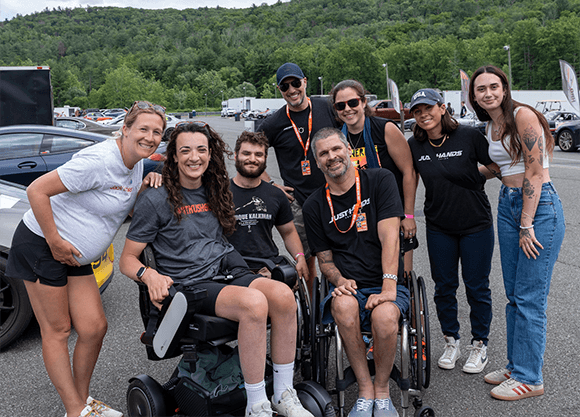
“Our mission is to level the playing field by creating opportunities for disabled athletes to participate in sports alongside their nondisabled peers,” said Barrett. “Through adaptive equipment, individualized instruction and supportive programming, we help athletes push boundaries, develop new skills and experience the freedom and excitement of performance driving and mountain biking.”
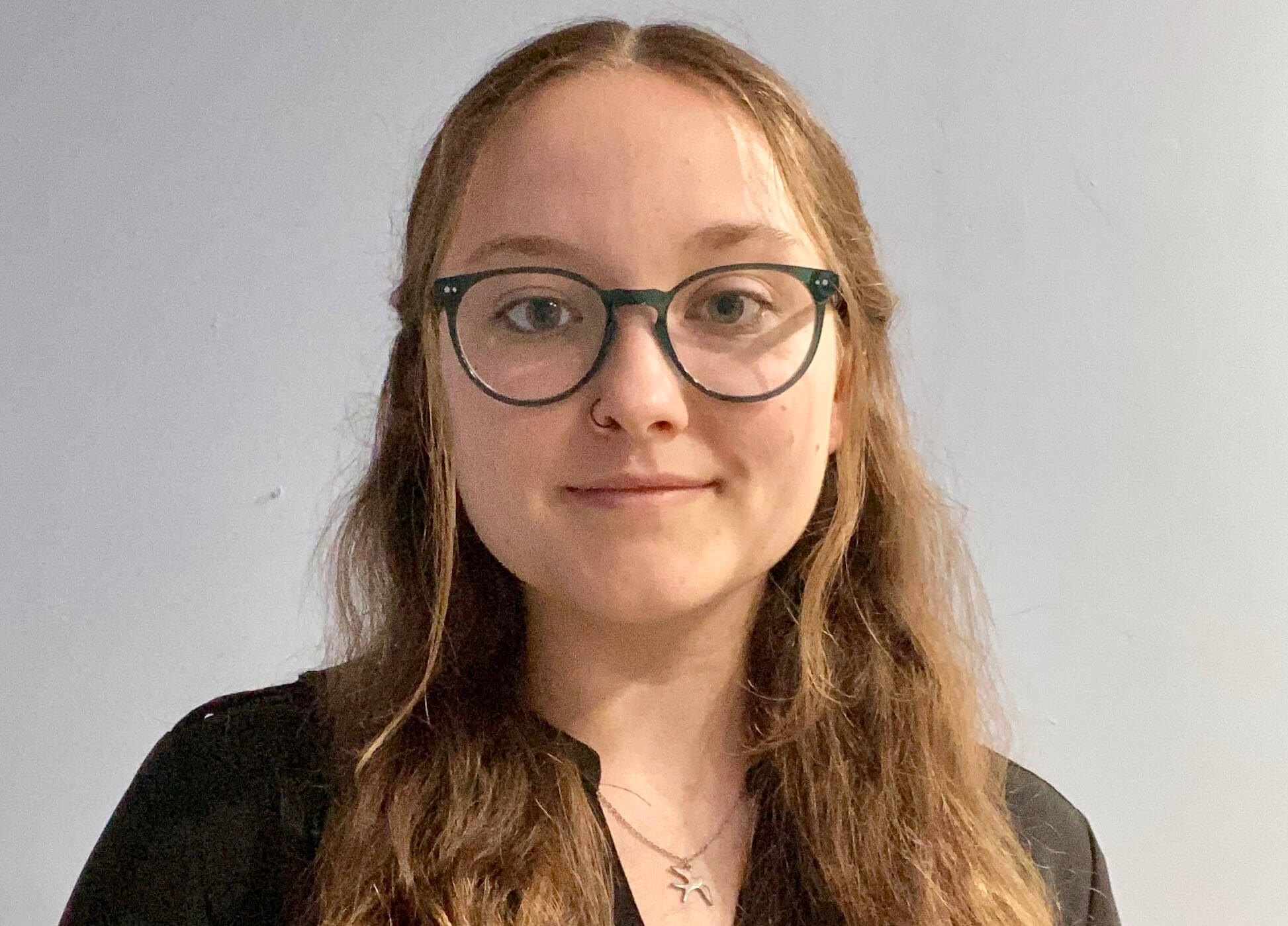
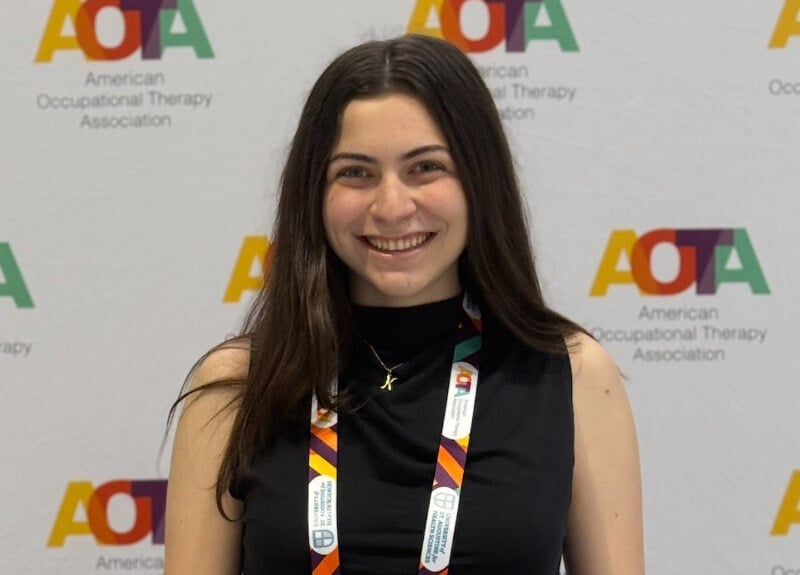
Barrett serves as the director of programming and lead instructor at Just Hands and recently passed her National Board of Certification in Occupational Therapy (NBCOT) exam after graduating with her doctor in occupational therapy in May.
“What makes Just Hands especially meaningful to me is our belief that a difference in method does not mean a difference in merit,” she said. “For me, some of the most meaningful moments are seeing an athlete realize that an activity they once thought was out of reach is possible and competitive. These experiences demonstrate that access to sport is about more than recreation. It is about autonomy, identity, community and the opportunity to pursue something meaningful.”
Barrett first became involved with Just Hands while working on her doctoral capstone project. Her research explores several main themes.
“First, adaptive motorsports was identified as a meaningful occupation with therapeutic benefits extending beyond those typically discussed in adaptive sports literature,” she said. “Participants emphasized the importance of equitable participation, the opportunity to experience success alongside nondisabled peers and the value of engaging in activities that involve challenge and risk.”
In addition, her research analyzed the role that occupational therapy has in facilitating participation in adaptive sports, both directly and indirectly. Barrett found that occupational therapists can use their expertise in positioning, functional performance and individualized equipment to advocate for greater access to adaptive sports.
“These findings reinforced my belief that occupational therapy has an important role to play beyond traditional clinical settings,” she said. “We can bridge the gap between rehabilitation and community participation by connecting people with meaningful experiences, adapting activities to support performance and advocating for individuals' right to make informed choices about their lives.”
Barrett’s Quinnipiac experience energized her to explore new ways to apply her knowledge in occupational therapy while having a lasting impact in the lives of others.
“Quinnipiac gave me the freedom and encouragement to pursue my ideas and passions, even when they extended beyond traditional understandings of occupational therapy,” she said. “Rather than limiting me to an established path, the program encouraged me to explore how our profession could make a difference in new and unconventional spaces.”
Elizabeth Wescott, clinical associate professor of occupational therapy in the School of Health Sciences, was one of the professors who played a key role in guiding Barrett — not only in developing research, but also in directly supporting the mission behind it.
“One of the most meaningful examples of her support was when she came to the racetrack with her entire family to experience and support the work we were doing at Just Hands,” Barrett recalled. “That level of personal investment meant a great deal to me. She went beyond supporting a student project; she showed up for the community and the mission behind the work.”
Barrett says that she is grateful to Quinnipiac for challenging her to think creatively about what an occupational therapist can look like and the difference they can make.
“My experiences reinforced that meaningful occupational therapy starts with listening to people, understanding what matters to them and finding ways to help them participate in the activities that give their lives meaning,” she said. “That perspective continues to guide my work at Just Hands.”
Barrett’s path intersected with Brant, who serves on the Just Hands board of directors, as they both supported the mission of Just Hands.
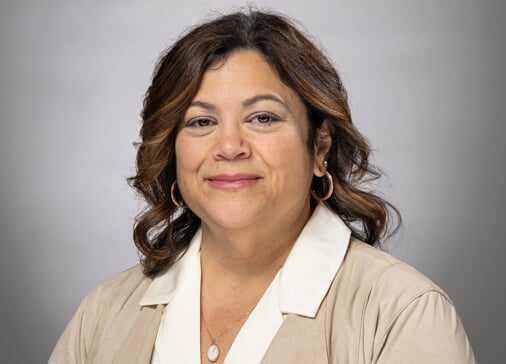
Brant works full-time at RVNAhealth, a nonprofit healthcare organization, where she serves as associate director of intake and private pay operations, ensuring that patients and families have access to the services they need.
For Just Hands, Brant coordinates participants registration, events, communications, fundraising and many behind-the-scenes tasks that are crucial to the success of the programs.
“Nichole has been amazing to work with and is a wonderful example of how a clinical mindset can be applied outside of traditional healthcare settings,” said Barrett about her fellow graduate. “Her experience in healthcare, her big heart and her genuine passion for people make her a tremendous asset to the Just Hands team."
Brant first learned about the organization when she was searching for an additional part-time position and saw a social media post advertising the impact of Just Hands.
“After learning about their vision and what they were working to accomplish, I was completely blown away,” Brant said. “The mission, the opportunities they were creating and their passion for making adaptive motorsports and recreation accessible to individuals with disabilities were unlike anything I had experienced before. What started as an opportunity for part-time administrative work quickly became something much more meaningful to me.”
For Brant, her work for Just Hands is about so much more than applying her business administration skills.
“There's something incredibly powerful about watching someone experience an activity they never thought they'd be able to participate in,” she said. “It's not just about cars or bikes. It's about independence, inclusion, confidence and making sure people have opportunities to experience life without unnecessary limitations.”
After already establishing herself in the healthcare administration industry, Brant returned to higher education wanting to develop a stronger understanding of the business principles that guided the work she was doing.
“My education helped me connect the practical experience I had already gained with a deeper understanding of business management, organizational operations and financial decision-making,” she said. “That was a major reason I chose to pursue my degree in business administration at Quinnipiac.”
Brant completed her MBA degree completely online, allowing her to continue working while connecting concepts from class directly to the situations she encountered professionally every day.
“There were times when I would learn something in class and immediately recognize how it applied to a situation I had encountered at work,” she said. “For me, Quinnipiac wasn't about starting a career. It was about strengthening the foundation of a career I had already built and becoming a more knowledgeable and effective leader.”
It was equally rewarding for Brant to collaborate with a Quinnipiac graduate working toward a shared mission.
“Working with Cesira has been wonderful, and I think it's especially meaningful that we share a connection through Quinnipiac,” she said. “Cesira brings an incredible amount of passion, knowledge and dedication to Just Hands. Her background in occupational therapy is such an asset to our organization, particularly with our adaptive mountain biking program.”
The two experts combine their varying backgrounds to interprofessionally support the goals of the nonprofit.
“Cesira brings her clinical expertise and hands-on experience with participants, while I bring my background in operations, administration and nonprofit management,” Brant said. “It's a great example of how two people with different educational and professional backgrounds can come together to make a difference.”
Just Hands recently partnered with Quinnipiac’s Center for Interprofessional Healthcare Education to lead an adaptive sports demonstration at the annual Adaptive Sports and Recreation Exploration Day that took place in September.
The group is continuing to expand their impact across the region in numerous ways.
“We are currently building a mountain bike trail system at Lime Rock Park that is being designed with adaptive riders in mind but will be open to everyone,” said Barrett. “By creating spaces that are accessible from the beginning, we hope to make outdoor recreation more inclusive for the entire community. Ultimately, our goal is not simply to help individuals access existing opportunities, but to help create opportunities and environments that may not have existed before.”
Just Hands has grown significantly in the past year, increasing their membership by 211%, tripling their fleet of adaptive cars and expanding their community outreach efforts by 50%.
“While the statistics demonstrate our growth, the individual experiences are what make the biggest impact on me,” said Brant.
As the organization continues to grow, the alumnae are inspired by the possibilities for expanding their influence in the lives of others.
“I am incredibly proud of how much Just Hands has grown, but I'm even more excited about what comes next,” said Brant. “As we continue to expand our programs, equipment and partnerships, we're creating opportunities for more people to experience the freedom and excitement that come with participating in these activities.”







Quinnipiac Today is your source for what's happening throughout #BobcatNation. Sign up for our weekly email newsletter to be among the first to know about news, events and members of our Bobcat family who are making a positive difference in our world.
Sign Up Now