


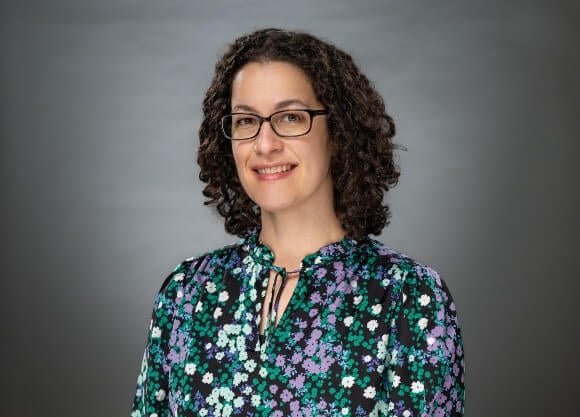
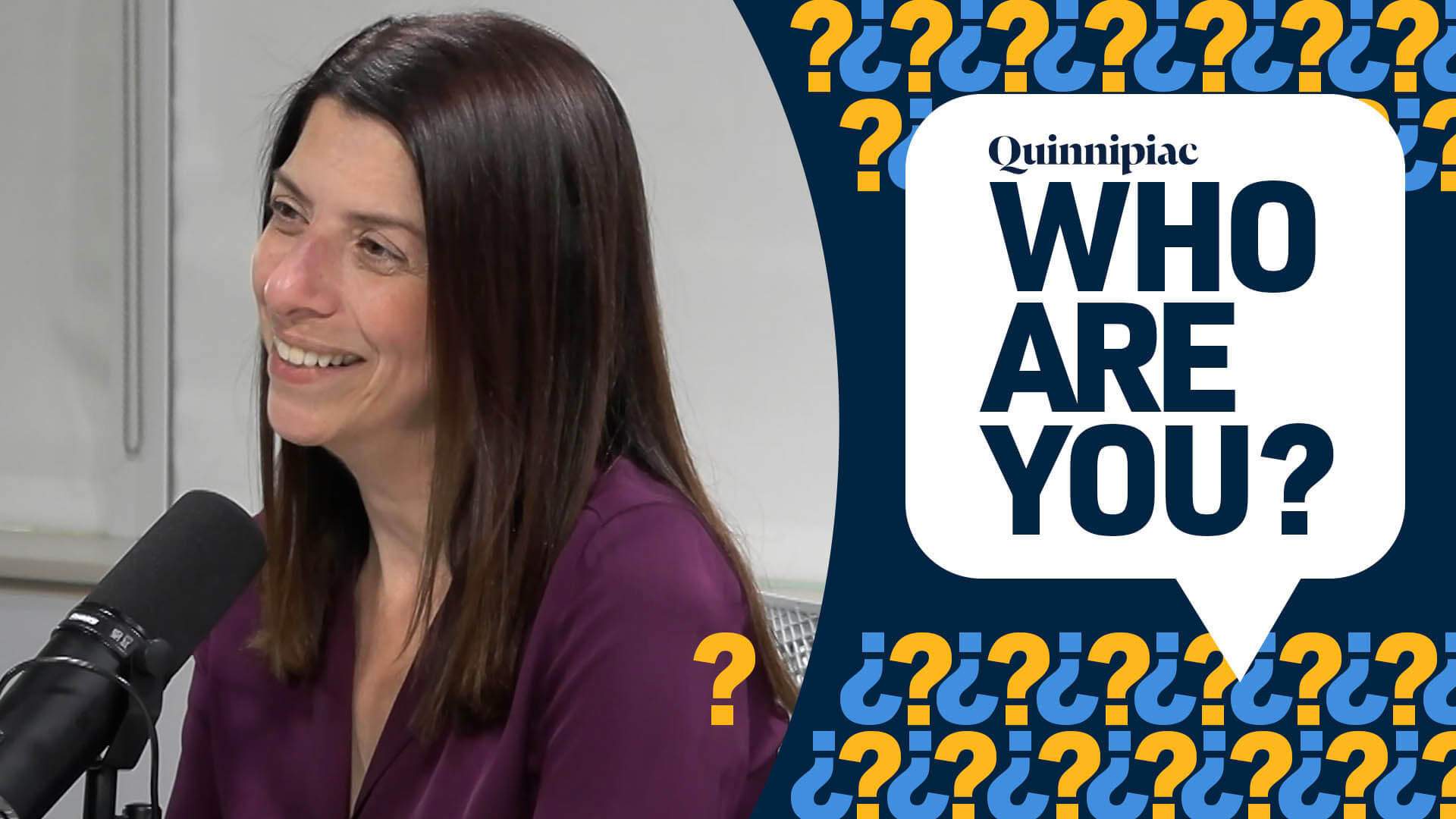
‘Who Are You?’ podcast with guest Professor Ruby Elkharboutly
Everything you need to know about software engineering at Quinnipiac
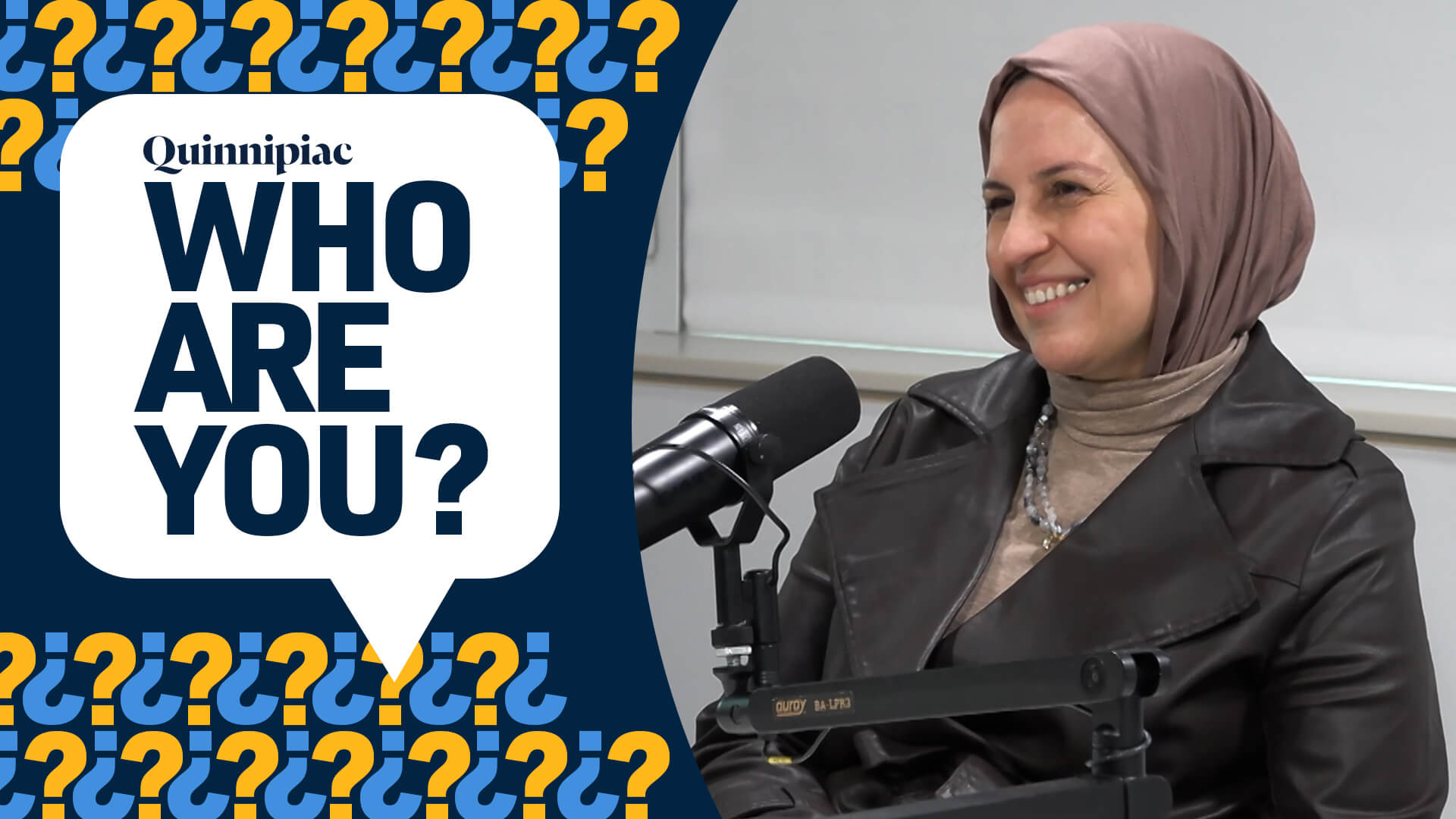
Everything you need to know about software engineering at Quinnipiac
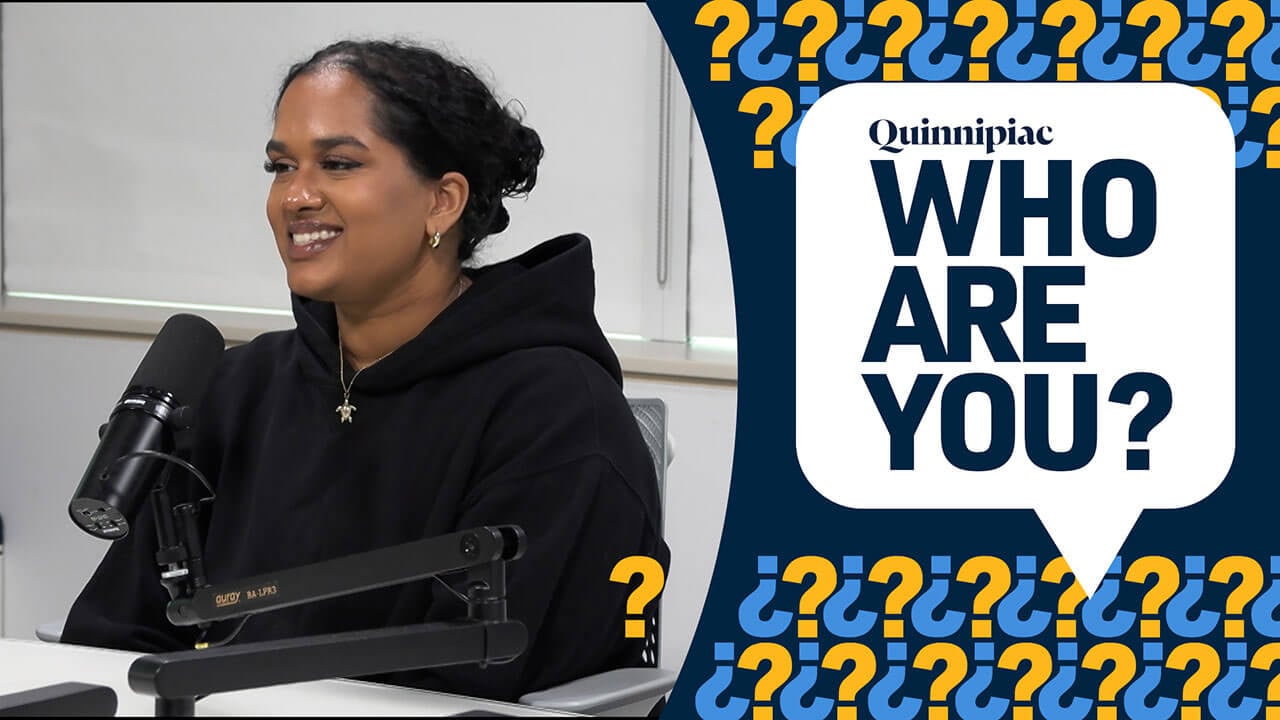
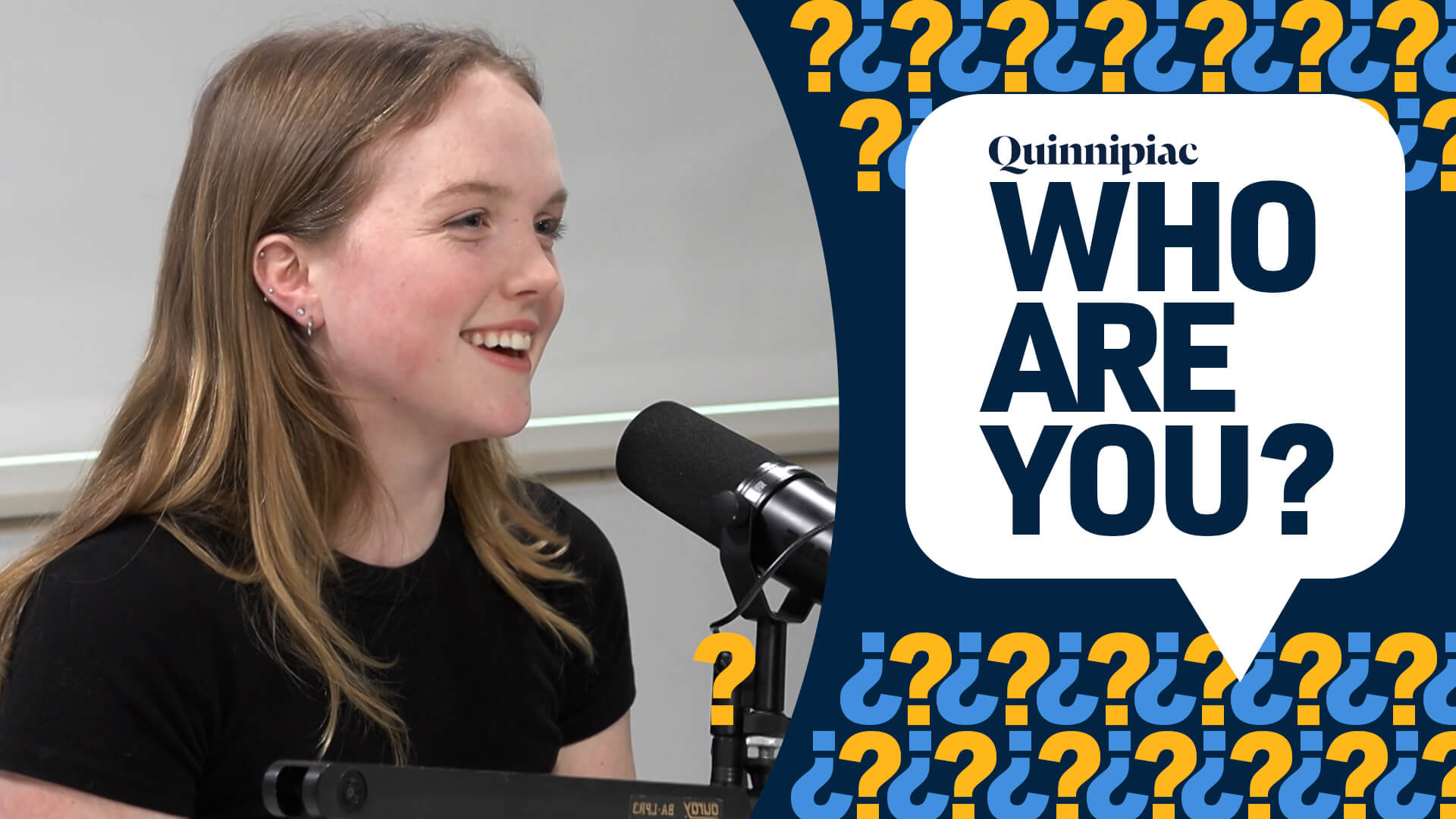
Joel Vanner: Hello, and welcome to”Who Are You?,” the Bobcats you know, the stories you don't. I'm your host Joel Vanner inside the podcast studio at Quinnipiac University School of Communications, and I'm joined today by my guest Ruby ElKharboutly. Ruby, welcome to the show.
Ruby ElKharboutly: Yeah, thank you so much. Happy to be here.
Joel Vanner: I'm happy you're here. Ruby, I ask my guest the same first question every time, and it's an easy one. Sometimes it's a deep one. But that question is, who are you?
Ruby ElKharboutly: Well, I'm a professor of software engineering. I've been here...Let me see. So I have some numbers in my mind. I've been at Quinnipiac for 13 years. I've been at the US for 26 years. I..no, I've been in the US for 23 years, so the number three again. And yeah, and I've been a consultant, too, software and now senior consultant at Connecticut Center of Advanced Technology for Advanced Technology CCAT for almost three years, number three is, like,.
Joel Vanner: It's your lucky number.
Ruby ElKharboutly: I guess so.
Joel Vanner: I love the number three, too. And we'll unpack all of that experience in this show today. But I want to get started with talking about you and where your interest in software engineering came from. You mentioned you came with numbers, and I hear that math and science was an interest area of interest for you growing up. So tell us about Ruby growing up. Where are we?
Ruby ElKharboutly: Absolutely. So yeah, so since I was very young, I think maybe I had the genes because my dad is a geologist, too. And growing up, like, being when I was like, really young, I want to say, like, you know, second grade or something, the conversation you used to have is explaining gravity or talking about, like, physics or the stars.
Joel Vanner: These are big conversations.
Ruby ElKharboutly: I know, yeah. And it was I still remember, like, you know, many of these conversations and how that was very inspiring for me growing up. I had passion and, you know, problem solving skills since I was very young, like, you know, even I want to say, like, third grade, fourth grade. I would just, you know, be problem solving. Somebody would do the mental math for me, and I'll be problem solving, just jumping in class and bringing, you know, just saying solutions, and coming up with the solutions for problems. Math was my favorite subject growing up. It came easy, kind of easy for me. And yeah, I mean, you know, that was something I really enjoy doing.
Joel Vanner: So so math came easy to you. Thinking about where computing and kind of the engineering aspects came into your area of interest, where was that for you? How did you first get introduced to computers and technology?
Ruby ElKharboutly: So, that literally happened in college. So I mean, we're talking like literally more than two decades, almost two decades away or more. And at that time, computing was in very early stages. So when I was applying for college, I knew I had the passion for math and science, physics was, you know, very interesting for me too. And the way my college worked is you go undeclared, and you have to keep a GPA and you have to keep a specific score to be able to apply or even get accepted in one of the a different career. So I was undeclared. So I took the first computing course, and my professor was a Microsoft Ex Microsoft member, and he was a young, inspiring, kind of, you know, faculty. I took the first course. I think this was my only A plus that I got in college.
Joel Vanner: Wow, you picked it up that quickly, and like you said, computers were still relatively new still developing, and you took that course and picked it up pretty quickly.
Ruby ElKharboutly: Yeah, yeah. And I think this is when I knew. Yeah, I would major in computing. That's the way to go for me. Yeah.
Joel Vanner: So majoring in computing, graduating from university, where was your next stop? Where did that bring you?
Ruby ElKharboutly: So the next step was in the industry as well as doing a master's degree. So as soon as I graduated, I joined the industry, I was very ready. I was kind of, you know, Okay, let's start making money. Okay, let's make money. So I joined the industry. I worked as a software engineer for a number of years. I started doing my master's degree at the same time. It just started coming to me that how I feel like, you know, this is where I find my passion. And you become you're lucky when you're going to work every day and liking what you do. And it's that feeling of excitement you get. And I think girls will definitely connect when you are finding a piece of clothe or a bag, a handbag that you really like. So it's that hype that you get when you're happy about finding, you know, doing something with passion or liking something. And I worked for the industry for a while and then came here to the US, and this is where I started my PhD. And I think I saw myself as a software engineer as somebody who's going to work at the industry for a long time, but it's the move to the PhD or doing the PhD that brought me or brought me back to Oh, teaching and academia is where I belong.
Joel Vanner: And it sounds like in the beginning, you were talking about your father, and it sounds like he was a role model for you in the conversations you had and the teaching he gave you about the different things you talked about. Coming back into academics, you said, You really teach with passion was one of the things. You bring passion into the classroom. What was it like that transition back into a students, teaching students today, about a field you're so passionate about? How do you bring that into your classroom to communicate that to students?
Ruby ElKharboutly: Yeah, I mean, so coming to the class and really, again, just liking what you do and wanting to inspire your students and be the role model. I think there's that contagious, contagious feeling of, okay, this is how I see myself as a professional when I grow up for students coming to Quinnipiac and also just being able to convey the different topics and the critical thinking and also be able to relate to them when it comes to the profession after they graduate. I think all of this like many different pieces to one puzzle. Other things is, like, how do you engage how do you bring in technology in the classroom? How do you engage students in different ways? How do you also make sure that you're inclusive in the way you teach? So, also being trying to address students, you know, in different ways. So some of them are visual. They like figures. They would relate to figures. Some of them like the problem solving. Some of them it's very hard for them to say for a lecture for a long time. Being able to put all of this together and tailor a lecture that, you know, brings in or highlights your your passion and enjoyment in the classroom, but also helps the students learn is something that definitely I feel like, you know, is a drive for students to thrive here at Quinnipiac.
Joel Vanner: And some students may not know, too, that this is an area they want to study. They may be trying it out for the first time, so helping them kind of unlock them unlock that in themselves. Staying on the topic of choosing what to study, what is the difference between computer science and software engineering? And then how do they complement each other? I know it's something we've talked about before, and you explain it very well. So what are the two areas, and then how do they come together here at?
Ruby ElKharboutly: Absolutely. We get this question all the time. And software engineering as you hear it is two things. So it's combined the software and also the engineering aspects. So very similar to every engineering discipline. So we have mechanical, civil, industrial engineering. We have these foundations of engineering principles and engineering techniques that we use into the building of software. This is what we do in software engineering. So we basically teach students how to create software using the engineering disciplines. Things like from the beginning of how do you come up with an idea for a product? How do you come up with an idea for a software?
Joel Vanner: So you don't start with needing to know how to code. It's way before that in the thought ideation.
Ruby ElKharboutly: They go hand by hand in hand. So what you're talking about is common core for computing and engineering, how to write software, how to code software, how to talk to the computers basically have that common language with the computer, but also we complement this with the engineering discipline. It's basically a combination of core computing and engineering. With an in depth study into the building of soft, right? That's what software engineering is. On the other hand, computing is more broad, you do have the idea of building software, but also you're studying different theoretical topics in computing and some fundamentals of computing, things like for example, graphics, or how do you work with media? How do you work with graphical images, machine learning, AI, other topics like that. We are more focused on to the discipline of creating software and building software, but also, how do we do this in a professional manner? How you apply engineering into that.
Joel Vanner: With the curriculum in the School of Computing and Engineering, the complimentary nature of it allows students to kind of explore that in the beginning and see kind of where their interests lie and then pick where they want to go specifically in there. What types of students really excel in the software engineering field? Is there a certain characteristic, problem solving curiosity, maybe. Is there something else that maybe if somebody out there is listening and they say, Hmm, I'm really interested in this, but I don't know if I'm the right type of person, what would you say to them?
Ruby ElKharboutly: So I think it's more of the problem solving and critical thinking skills that would be, you know, a fit for the program. You don't have to be like, you know, amazing in math and science, but you do have to have this methodical way of thinking and breaking things down and being able to solve a problem. And actually this is one of the reasons that we ask students to take or both programs have a number of math courses because they give you the ability to think methodically and again, being able to break problem and solve the problem from start to end. And these methods and techniques that we apply to be able to do the problem solving. So that's a huge skill that helps you in the career.
Joel Vanner: So walk me through a student's journey in software engineering. Where do they start and how do they progress through the program?
Ruby ElKharboutly: Okay, so students starting in software engineering and computer science, we have that sense of community and they go coming in. So they take the same courses in the first year and the second year. And these courses basically focus on fundamentals, basics of computing, writing code in different languages, a couple of different languages. Also, it's a preparation for the courses we're going to take in the next year. And many of these courses are mobile app development. A web app development, so full stack, front and end, also AI courses that you're going to take in the future. So we want to make sure that they get that solid foundation being able to basically talk to the computer, write code, being understanding of the different quality of the code that write, like, you know, understanding performance, understanding algorithms, understanding, deep understanding of these data structures. So all of these are areas that they need to understand or know before we move into the more exciting topics coming up.
Joel Vanner: You mentioned artificial intelligence. It's a big thing. It's becoming a big thing, and understanding it is a separate conversation. But how are students learning and kind of co creating with AI in software engineering courses? How have you seen students embrace that, and how have you brought it in the classroom, too?
Ruby ElKharboutly: Absolutely. So specifically when it comes to when we talk about late sophomore and junior year when the students are more comfortable with the coding, this is when they're more using the AI tools in the classroom, maybe things like copilot. So for example, helping them write code. Also, bringing in code and critiquing code created by the AI, that's very important. Testing their code using AI, so building testing cases using the AI. There's a lot as a software engineer that you do day to day using the AI, which helps you enhance what you're doing, but also gives you the chance to complement and help the AI in bring in the best practices. Okay? I mean, as much as we don't make the students rely on AI, we want to make sure that they can use that strength, be able to be equipped with, you know, using AI in the classroom, but also after they graduate. And Again, understand that their skills are even better than the AI. They're able to critique. They're able to reuse it correctly. And they are also able to fix any mistakes made by the AI.
Joel Vanner: But just being able to work with it already puts them at an advantage when they go out into the job market, and they can show that to employers and land their first opportunity. In the introduction, you mentioned you're a senior consultant at the Connecticut Center for Advanced Technology CCAT. What do you do in your role as a senior consultant? And then how does that help inform what you do in the classroom with students?
Ruby ElKharboutly: Yeah, absolutely. CCAT is basically a research comp is more of a research facility that helps manufacturing in Connecticut and especially small size manufacturing, use more advancements. Like for example, my role is using machine learning and also AI to basically predict and make sure that the production of parts in these different facilities is going the right way, creating something what we call autonomous cell or implementing industry four point oh practices. And in my role, it's very it's it's very research based. So I'm using data from the machines to basically predict and make sure that the manufacturing is going in the way it's supposed to do without the provision of machinery. So without provision of human human human use, basically. So a couple of things, I feel like, you know, bringing in industry experience in the classroom makes your topics very relevant and very applicable in the classroom. The ability to collect big size data, so we're talking about machine data and part data, and, you know, like, you know, being able to bring all of this data and be able to use it in the analysis and talk about it and discuss it is also a huge benefit. Another very important point is that computing goes along with other domains. I just connects very much to other domains like healthcare, manufacturing. So it's a complementary kind of discipline to other disciplines. So I like my students to understand that they're not going to end up or many of them are not going to end up just working in pure computing. Some of them will work in healthcare. Some of them will work in manufacturing, and being able to kind of grasp the domain or the knowledge from the other discipline is a very important aspect that they have to do. They experience all of that in capstone, so they work on many different different projects for different clients and different vendors. But it's a very good exercise to just bring this home in the classroom and have an understanding of that.
Joel Vanner: You mentioned where students may find themselves in the working world, IT departments across all of the large companies. The School of Computing has a huge reach for alumni. Just look it up on LinkedIn come to an open house, meet with the faculty, learn all about the students that have gone through the program. What piece of advice would you give someone who's considering coming to Quinnipiac, considering studying software engineering or computer science? They're not quite sure if they want to take that next step. What would you say to them today?
Ruby ElKharboutly: So I really like to remind my students, and this is something I try to do very early on of all of the resources they have in here. I also want them to be part of the community, that community that we try to build in the computing, but also the community across the university. And you just don't have to you know, you're not only part of the community. You are the community. Be the community, right? So even small things like stop by the tables and just smile, see what other people are doing in the community. Go to the Learning Center and find help. Come to your professor and find help. You are you are here, so be here, be part of this community, engage in many different ways. And this is really, very important. It's very important for them and also for others, because, again, be the community, right? Be the person that's giving help and giving and just bringing support and building the community around. I think this is very important for students to remember that we as faculty are here for them. We are, I mean, all dedicated, want them to thrive and succeed, and we have our offices open for them anytime.
Joel Vanner: Two, once you're here, don't forget to stop by the engagement fair, where our over 150 plus student run clubs and organizations academic related, hobby related, industry, et cetera, are tabling there looking for new students to join their organization. It's a great place to find what you may be interested in and find your community here at Quinnipiac. Well, Ruby, thank you so much for joining me today. It was great having you on.
Ruby ElKharboutly: Thank you so much, Joel.
Joel Vanner: If you enjoy today's episode, be sure to subscribe and share and find other episodes on Apple, Spotify, and YouTube podcasts. Until next time when I ask my next guest, Who Are you? I'm Joel Vanner. Bye for now.

Quinnipiac Today is your source for what's happening throughout #BobcatNation. Sign up for our weekly email newsletter to be among the first to know about news, events and members of our Bobcat family who are making a positive difference in our world.
Sign Up Now