



Professors earn NASA CT Space Grants for curriculum development
July 21, 2026
July 21, 2026

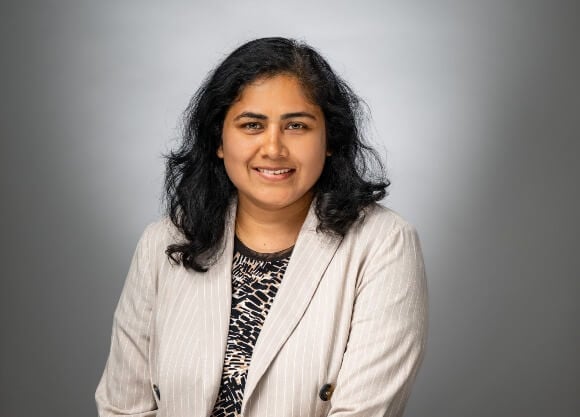
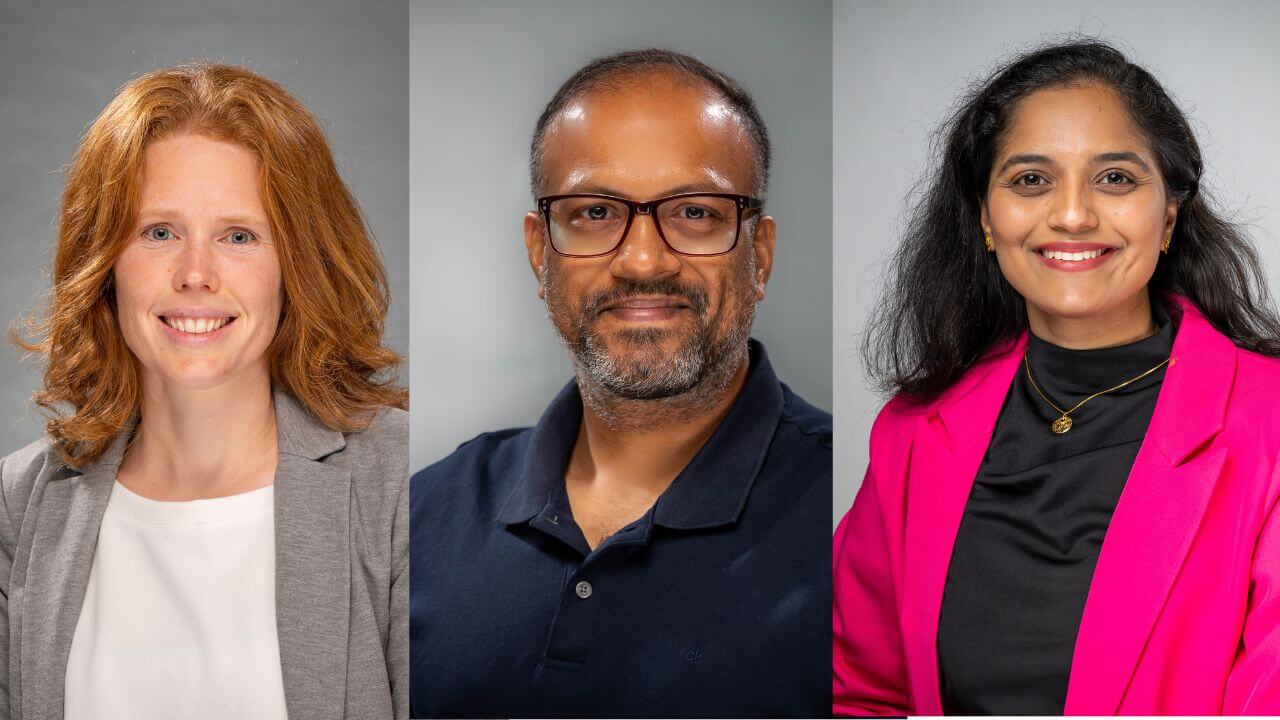
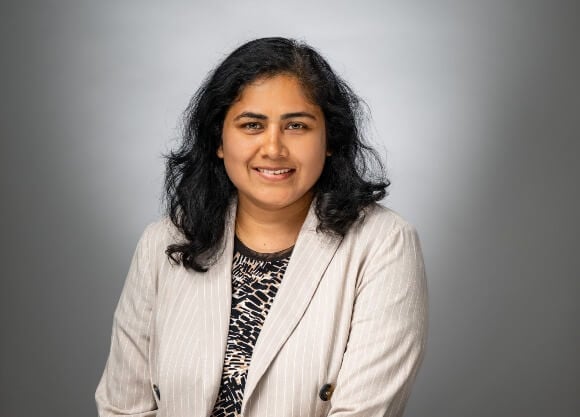
Shah’s project, “AI-Driven Software Engineering for Intelligent and Autonomous Systems,” will launch a new course (SER375 Special Topics). Her course will provide undergraduate and graduate students with hands-on, project-based experience integrating AI across the software engineering lifecycle. Course focus areas align closely with NASA priorities in autonomy, scientific data analysis, and human-centered intelligent systems.
Jaiswal’s project, “Scientific Computing for Modern Science and the Quantum Era,” will develop an interdisciplinary course that enables students to use computation as a practical tool for scientific discovery. The work strengthens NASA-relevant STEM education by advancing computational thinking, modeling, and interdisciplinary scientific preparation.
While these are not the first NASA CT Space Grants for Quinnipiac, both awards represent another giant leap forward for the university and its School of Computing & Engineering.
“For Quinnipiac, this award reflects the growing strength of interdisciplinary work at the School of Computing & Engineering,” said Jaiswal, who also serves as associate chair of computing. “It shows that the university is creating space for a forward-looking curriculum that brings together computation, mathematics, physics and emerging technologies in a meaningful and applied way.”
Shah discussed how NASA CT Space Grant funding for her project will help to shape the student journey.
“At Quinnipiac, this grant provides an opportunity to create innovative, hands-on learning experiences that connect theory with practice,” Shah said. “It reinforces our commitment to preparing students for careers in rapidly evolving technical fields while encouraging them to think critically about the systems they build and the people those systems serve.”
Shah’s course emphasizes intelligent and autonomous systems, real-time data processing, responsible AI, and system reliability. She said receiving NASA CT Space Grant curriculum development funding for the course represents an important investment in Quinnipiac students. It’s helping them to develop the technical, problem-solving, and ethical decision-making skills needed to become thoughtful software engineers and technology leaders in an increasingly AI-driven world.
“For me, this grant is about ensuring that our students are prepared for a world where artificial intelligence is becoming an integral part of how software is designed, developed, and maintained,” Shah said. “As educators, we have a responsibility not only to teach current technologies but also to help students adapt to emerging ones and understand their broader impact on society.”
Jaiswal explained his course emphasizes translating scientific ideas into working code, covering numerical methods, simulation, probability, linear algebra, differential equations, and data-driven modeling. It also builds the mathematical foundation necessary to understand emerging quantum computing applications.
Receiving NASA CT Space Grant funding for his work is a strong vote of confidence in the idea that scientific computing should be treated not as a narrow technical skill, but as a core way of doing modern science, he said.
“The grant supports the development of a course that helps students move from learning equations and concepts in the abstract to actually building models, writing code, running simulations, and interpreting results in ways that mirror how science and engineering are practiced today,” said Jaiswal.
Knowing many students are curious about scientific computing, simulation, AI, and quantum technologies, but do not always have a clear entry point that connects these ideas in a rigorous and accessible way, Jaiswal designed his course to provide that bridge.
“It will give students practical experience in translating scientific ideas into working code, modeling real systems, thinking carefully about uncertainty and accuracy, and developing the kind of computational fluency that is increasingly valuable across science, engineering, and technology fields,” Jaiswal said. “My hope is that students will leave the course not only with stronger technical skills, but with a broader sense of confidence about their ability to contribute to modern scientific and interdisciplinary problems.”
The course is also meant to provide an important foundation for future institutional growth.
“This course is designed not only to stand on its own, but to serve as an early step toward a broader pathway in quantum and scientific computing at the School of Computing & Engineering at Quinnipiac,” said Jaiswal.
Both Jaiswal and Shah are excited to offer their new courses and greatly appreciate NASA CT Space Grant Consortium for recognizing the important work of curriculum development.
“I am grateful to the NASA Connecticut Space Grant Consortium for supporting this work and for investing in the future of computing education,” Shah said.
“Strong courses do not appear automatically,” Jaiswal added. “They require time, reflection, design, and a clear vision for how students learn best. I am thankful to the NASA Connecticut Space Grant Consortium for supporting that process.”

Want to learn what Quinnipiac is all about? We invite you to join us at an Open House, where our students, faculty and staff will introduce you to life as a Bobcat through a variety of sessions and tours.







Quinnipiac Today is your source for what's happening throughout #BobcatNation. Sign up for our weekly email newsletter to be among the first to know about news, events and members of our Bobcat family who are making a positive difference in our world.
Sign Up Now