



‘Who Are You?’ podcast with guest Professor Jon Blake
Everything you need to know about Computer Science at Quinnipiac

Everything you need to know about Computer Science at Quinnipiac
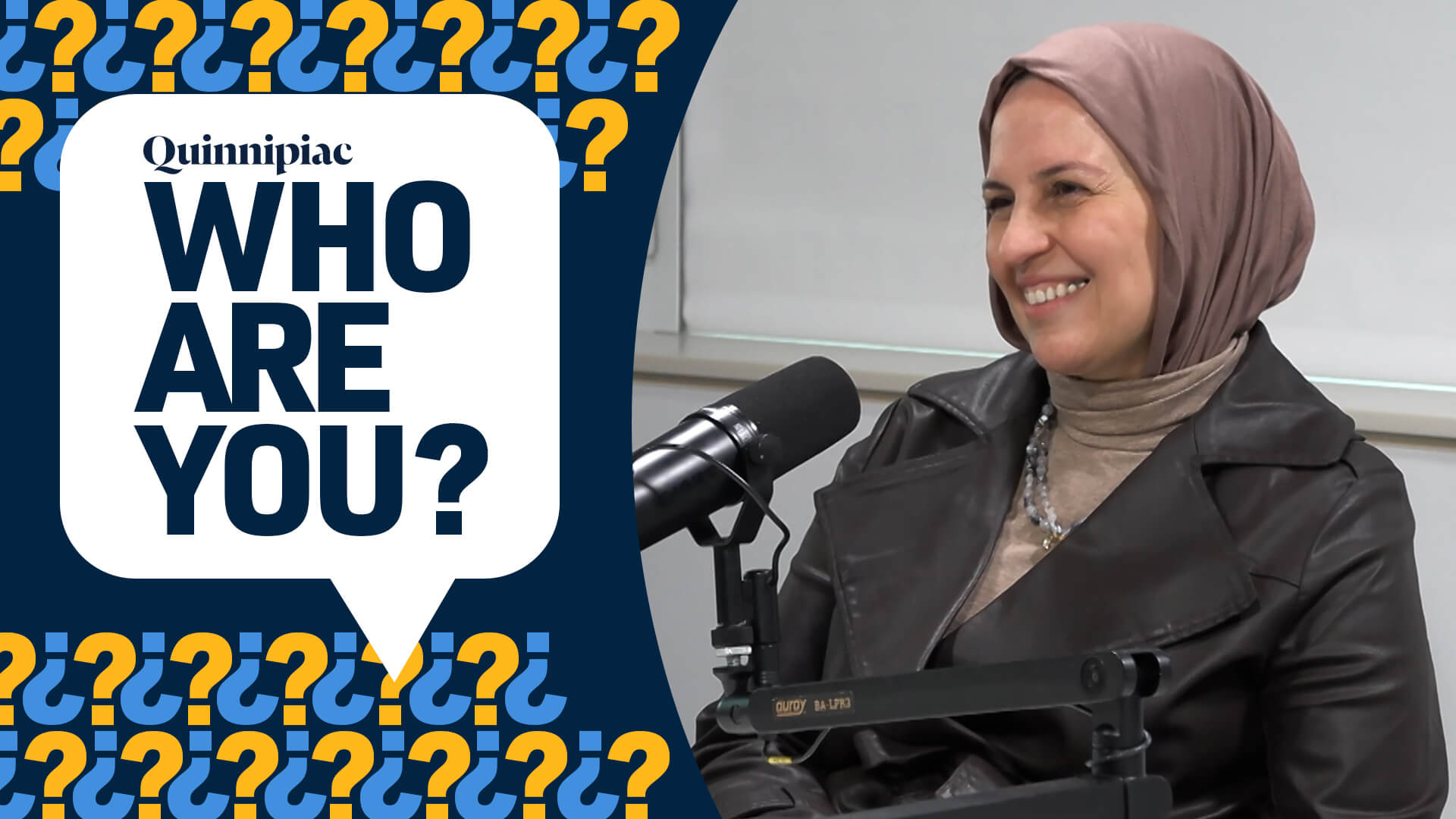
Joel Vanner: Welcome to ”Who Are You?,” The Bobcats you know, the stories you don't. I'm your host Joel Vanner inside the podcast studio at Quinnipiac University's School of Communications, and I'm joined today by my guest, Professor Jonathan Blake. Professor Blake, welcome to the show.
Jonathan Blake: Thank you very much. It's an honor to be here.
Joel Vanner: Can I call you Jonathan?
Jonathan Blake: John.
Joel Vanner: Okay. John.
Jonathan Blake: Jonathan, if I've done something wrong.
Joel Vanner: Jonathan, if you've done something wrong. Nothing wrong to do on this podcast?
Jonathan Blake: I'll know when you change what you call me.
Joel Vanner: Okay, John. I ask my guest the same first question every time, and that is tell me. Who are you?
Jonathan Blake: I am professor of computer science and software engineering in the Department of Computing in the School of Computing and Engineering.
Joel Vanner: One thing you've mentioned is that computers have been a part of your life since forever, right. You're in the field now. Going back to when you were growing up, they were still in their introduction phases, right? I'm not gonna date you, but I will say that. Tell me where your passion and interests got started with computers.
Jonathan Blake: So probably middle school, early middle school. And when I look back on it, I think that many of the decisions that I made then, what I do now for a living was somewhat inevitable. At the time, it was the mid 1970s and, you know, you didn't have computers at home. You were starting to see computational devices like video games out and about, in the world. But if you wanted to get access to a computer,
you had to really go find one at a computer center, usually at a university.
Joel Vanner: Because it needed, like, a room a room to operate.
Jonathan Blake: A giant room, in order to fit this thing in. And my a friend of mine, in middle school or someone I knew in middle school, their father was a director of a computer center at a university. And this fellow student said, If anybody wants to learn how to use these computers, which were new and in the news for the first time, let me know and we'll do some sort of student summer class with people at the computer center. And so I signed up for that thing. And I got hooked. I got hooked on it because, I've come to conclude that I'm a big fan of problem solving, and I've never been involved with anything in my life that was more purely related to the notion of solving a particular problem. I often tell my students that the only thing that's better than solving a hard problem is solving a hard problem that somebody told you they didn't think you could do. And so I really got into that in middle school and then high school. I kept working in the computer center because they would let, you know, kids and sons of people who work there get in. And then I had to major in computer science because if I wanted to keep working on it, that was the only way to get access to it when I was in college. So by getting into college and majoring in computer science, my father was in academia, and so that was a potential career choice for me. I'm graduating from college. I don't know what I want to do. I decided to get a job for a year, and if I don't like it, go back to grad school, and I was applying to grad school two months after I started the job because clearly, all of this had put me in the career path of academia in computer science.
Joel Vanner: And you didn't think that that was the path at the outset kind of following in your father's footsteps in that way?
Jonathan Blake: It's a good question. So, you know,I've thought about that a lot. And sometimes I'm of the mind that no matter what I would have been a professor. I just happened to be in the time in computer science. And the other half of the time, I think, no matter what I would have been in computer science. It just happened to be as a professor. So I kind of feel like the pair was a bit inevitable. I do think that having a family member in academia put it on my radar in ways that I wouldn't necessarily have seen. But yeah, I think it was just an inevitable march towards that, just because I said yes to doing something when I was like, 13-years-old at a local university.
Joel Vanner: So the field of computer science, I'm not super familiar on the specifics of it, and maybe our listeners aren't either. What is computer science, and what is so fascinating about it to you? And I'm sure that has kind of grown and evolved as technology itself is growing and evolving and computers no longer traditionally require a whole room in order to operate.
Jonathan Blake: Yeah. Well, there's several things, I think that initially attracted me and have kept me engaged. One of them is this notion of problem solving, this idea that you're given a small number of small parts, and the challenge is to build something as complex as you can out of these small parts. I used to tell people, I haven't looked this up recently, but I used to tell people like ten years ago that Alexis automobile had 200 million lines of code in it. So we're talking about total number of parts for something, the things that humans build that are the most complex are software artifacts. So that's always been really interesting to me. And I also really enjoy kind of being on the front or the cutting edge of something. And another thing that kind of leans me towards academia is I get paid to learn new things that are just now coming out. And so I'm constantly being exposed to something that will show up in industry next year or the year after that, and I get to explore it. I tell my students that I sometimes say it's playing with it it's working with it, but it's really kind of playing with it a little bit.
Joel Vanner: And you're learning with them kind of as you're learning yourself, seeing what it unlocks for the future of the field or whatever?
Jonathan Blake: A lot of our students in computer science in software engineering, which is another one of our undergraduate majors. A lot of our our students are going to be hired by companies and asked to be the people that are bringing these new technologies into the company. They're going to be asked to be the ones who develop the policies on AI usage because, you know, the people that have been in the industry for 40 years aren't necessarily the ones who have the experience to think about that critically. And so I have to stay on top of everything because if my goal is to have our students be awesomely successful for the rest of their lives, they have to be ready for their industry. And so we want to keep them thinking about things in this way and how to learn a new stuff, how to take control of a situation where maybe they're the ones who are expected to do something with artificial intelligence and policy or whatever in their new company.
Joel Vanner: We'll get to artificial intelligence and AI in just a minute. It's a very hot topic. But you mentioned software engineering. What is the difference between computer science and software engineering?
Jonathan Blake: An excellent question. The first part of the answer. Now, when you ask a professor to give concise answers to things, you should realize I'm being paid to give long answers for things. And so I'll do my best.
Joel Vanner: I'll time you.
Jonathan Blake: I'll do my best. But so if you think about computers as a range of topics from the hardware of the device to the software of the device. There's a lot of things on that line. There's, you know, all these traditional computer science topics and new ones coming in every day. There's a ton of stuff. A computer scientist like me, because my degrees were in computer science, finds everything along that line interesting. I say it's all shiny. There's lots of shiny things you can poke your fingers at along that line. So computer science is a breadth look at all of computing. About 25 years ago, 25, 30, we came to the conclusion that the best way to double the time it took for software teams to complete a project was to double the number of people on the team. You were so bad at working together that the more people you threw at something, the slower it became. And so software engineering is kind of an attempt to address that. So rather than being a breadth discipline, it's depth, looking at, you know, applying centuries worth of good engineering design and build techniques to the development of large scale software systems.
Joel Vanner: More focused area on the spectrum.
Jonathan Blake: It's really about building big pieces of software. Our students in software engineering and computer science all apply for the same jobs. They all get the same jobs. There's no difference in the degree. It's just a question of, what is the passion of a particular student? I think it's important for students to understand that because if you look at the job market, all of the jobs are labeled software engineer. And so the initial thought for students is that they have to major in software engineering to get that job. Computer science has been needing those jobs since before there were software engineering majors. It's just, you know, the only people who have a job that's called computer science or computer scientists is someone like me. They just don't call that an industry.
Joel Vanner: So let's stay with curriculum academics for a minute. In the Department of Computing in our School of Computing and Engineering, what types of programs are available to students? How do you help students unlock which program may be right for them? What kind of guidance is provided to them in that process?
Jonathan Blake: So I guess the first part of my answer is that students don't need to decide before they come here. Our programs are all designed to ensure that they get exposure to them in a way that lets them choose whichever one is right for them. I think it's a lot of our prospective students are happy to hear that they don't have to make these kinds of decisions.
Joel Vanner: It's a big decision to make.
Jonathan Blake: It's a big decision. I mean, there's always this fear that I have to decide when I'm 18-years-old, what I'm going to be doing when I'm 50. And that's not the case for us. You have plenty of time to decide these things. And the way we do that is we had four undergraduate degrees. Our newest one is in artificial intelligence. We also have undergraduate degrees in software engineering and two different degrees in computer science. And for all four of those degrees, they share the same common curriculum for at least three semesters. So a student can come here, choose whichever one they want to when they apply, take three semesters worth of common classes, talk to their classmates, talk to the professors, join the computing club, spend time in the office or their advisor, talking about what they're interested in. We have students that switch between them all the time because they discover what their passion happens to be and we give them time to make that discovery.
Joel Vanner: What's the difference? You mentioned there are two computer science degrees. One is a Bachelor of Arts a BA, the other a Bachelor of Science. What's the difference between the BA and the BS program?
Jonathan Blake: Yeah, so we spend a lot of time being introspective about our programs. Partially, it's because of accreditation issues. We want to make sure that we're doing the right thing. There's a lot of structural reasons why I think it's important for us as a faculty to always make sure that we're on top of what our programs do for our students. And one of the things we've discovered is a lot of our students, when they come here, they have more than one passion. They may be interested in computers or computer science, but they also might have some passion in some other area, in the academy here on campus, there are many majors that do amazing things. And so the BS in computer science is specifically focused heavily just in computer science. And so that's for the student that really wants to focus only on computer science. If you come to me and you are interested in computer science and some second major, maybe you want to, you know, study computational X, where X is something else around campus, we have the BA program. The BA program requires that the student complete what is effectively a minor in a different discipline. And then at the end of their time here, rather than doing a senior one year project, they complete a thesis, where they do research at the boundary between computer science and what their other discipline is. We have students in the BA program that are, you know, submitting papers to conferences and traveling around the country and doing all kinds of amazing things. And, you know, what we can tell the families, the students is that there's no real difference in opportunity when you leave into the job market. You know, some of our highest paid graduates are BA students. There isn't a difference. Who you are as a student, how engaged you are with your academics. Are you keeping up with your GPA? These are the things that can make a difference. Honestly, if you come in and you minor in some discipline, there's every possibility that your boss's boss had that as a major when they were an undergraduate, and now you have something to talk about when you're staying around the coffee maker in the morning.
Joel Vanner: You mentioned minors. You mentioned we have a major in artificial intelligence. We also have a minor in artificial intelligence that is available as well. Given that computer science and software engineering are constantly evolving fields with artificial intelligence. Some say it's replacing jobs. So say it's a good co worker. I know you have thoughts on that as well. What type of student do you think succeeds in the field of computer science, software engineering? What kind of characteristics do you think those succeeding students have?
Jonathan Blake: So I'll tell you a story to lead into my answer to that. And that was a few years ago, I had a student take my introduction to programming class. And one of the things that's a hallmark of Quinnipiac is that if you come here as a first year student and you take your first class, you're likely to get someone like me. We teach. All of us teach all of our classes. So I'm teaching this intro class. And I had a student who was in the biology department, and that's close to my heart. Computational biology, Bioinformatics, is sort of what I love. And so I asked the student at one point during the semester, excited to see if we're in this class, what made you decide to take this indoor programming class as a senior? You can't get a minors and not enough time, right? And her answer to me was that she had a lot of friends who were computer science majors, and she liked the way they thought. And I was super honored by that statement because one answer to your question is that, you know, the purpose of a computer science degree program, while on the surface, it's to expose you to all these areas of computing, that, you know, that continuum I mentioned in breadth for computer science, but it's also a lot about how you think structured problem solving, this idea of building something large with lots of small parts. So any student that has done something like that in high school, they love proofs in geometry class. Any time you've done something like that, that's giving you a bit of a hint that the thought process that we go through through the four years of your undergraduate education, that's what we're trying to teach you so that you can tackle any new problem that's going to happen coming down. Down the road.
Joel Vanner: Today, as a professor here at Quinnipiac, knowing that academics is now your life following in your father's footsteps, what energizes you to go back in the classroom and learn the new things that we talked about before alongside students as the discipline changes? Is it artificial intelligence? Do you bring those up in your courses? What could students expect coming in?
Jonathan Blake: So none of the faculty in computing rest on prior work. We're always trying to change what we do, keep up with what's happening. It's why we have our students publishing in conferences. That's cutting edge for how computers are thought about in the industry. I think that's going to be true no matter who it is that you have from our faculty in the class that you take here. For me, personally, I love learning new things. I love going from a state where I didn't know something to a state where I understand how it works. I will admit unashamedly, that if it's something that not a lot of other people know how to do, it makes it a little bit better for me. Just because I think it's kind of cool to get these ideas and keep them around, whether it's something so brand new that nobody knows it or something that's so old that people have forgotten about it, they both, I think, excite me in the same kind of way. And so that's part of what I try and bring to the classroom is I get excited about these things that I'm trying to convey to my students. I warn them at the beginning of class that I can talk a little quickly, and I can get a little loud, the more excited I get because I love what I do.
Joel Vanner: The passions coming out.
Jonathan Blake: Yeah, yeah. I try and not make it too much. When I get home sometimes, my wife does tell me that I've carried my teacher voice home from school, and I have to tone it down a little bit because I'm no longer projecting to the seats in the back of the classroom. But I get excited about this. You know, I think everybody should love their job, and I love my job.
Jonathan Blake: So your passion comes out in your teaching in the classroom. You're also very well known for the snacks that you have in your office. And just being there is a resource for students as they're learning and discovering themselves. Tell us about the snacks. Did you bring any today?
Joel Vanner: I did not bring any snacks today. I did not they're not. My office is a minute from here. If you feel hungry afterwards, I'm happy to feed you.
Jonathan Blake: We can go now. We don't to finish the.
Joel Vanner: I do like to make a bold and relatively undefendable statement that I have the best knacks on campus.
Jonathan Blake: Okay. Well, the first one to say it is the first one to get the award.
Jonathan Blake: Well, I don't know if anybody else has said it before me, which is why I podcast.
Joel Vanner: Well, this is the source of truth, so.
Jonathan Blake: I think the first step for students in their growth. And I tell families this all the time that four years of college is to a large extent about identity shift. I mean, students go from being a student of X to being a professional of X. And so their own personal identity have to shift about that. And part of the process is to seek out help, to talk to people, to not, you know, college is different than high school. It's very different. That transition is a struggle because of, you know, a lot of our students have these tools and techniques for success that have worked the first 18 years of their life, but now have to think about it differently. So one of the ways that I like to effect that change is to get them to talk to me, you know, come in and sit in my office and put your feet on the desk and talk about things. If you're comfortable doing that, then you're comfortable coming in with a question you might have or a problem that you're experiencing or something else. You want me to point you in the right direction for some course, even if I'm not teaching you in that class. And so I am not ashamed to use my basket of snacks as a way to get students to come in and just be in my office. If a student asks me a question one time out of ten that they're in my office, then every penny that I spent on snacks is worth it.
Joel Vanner: That's a win.
Jonathan Blake: Yeah, because and I will tell you that I have students that are just poke their head around the corner, and I'll look up, and it's like, Are you hungry? Yeah. Alright. They're they're not in my major.
Joel Vanner: Right.
Jonathan Blake: Everyone else in the School of Computing and Engineering. They know I have the snacks. They're not in my major. I'm more than happy to provide them with a snack.
Joel Vanner: And in the after their four years, their career may lead them in a different area than what they studied here at Quinnipiac, but it may lead them to a very successful career in computer science or software engineering as evident by a lot of the alumni from the computing programs here at Quinnipiac, not just in New England, but across the country, probably around the world as well too.
Jonathan Blake: Yeah, yeah, well, I think that one of the things that we can help the students to understand is that computer science and software engineering, it's a pretty big umbrella. And so there's a lot there are a lot of jobs that students can go and get with degrees in computer science and software engineering. I think one of the issues that we have to make sure that we address early on in students' careers is for them to understand that computer science is not about sitting in a cubicle writing code all the time. We have a large number of our students that don't write code at all. Maybe they're project managers. You know, there's all quality assurance. There's so many areas of computing where having a degree in computer science can help you and so, yeah, we've got students West Coast, East Coast down south, international. We have a lot of contacts in this area for students because they're closer to us, but, you know, there's a bunch of students working for all of the top companies out in the Seattle area, San Francisco, so they just do amazing things.
Joel Vanner: And the jobs that students today get after they graduate here from Quinnipiac may not even exist yet. They'll just be formed either right when they're out or as they're in their careers, those jobs will pop up and they'll be able to use their education and experience in those areas. Something that you have recently taken on as a hobby I hear is Blacksmithing. Tell us where your interest in Blacksmithing came and what that means to you. Some of your students, if you share this podcast with your class, they may not know oh they know.
Jonathan Blake: They know. They want me to make things for them.
Joel Vanner: Did you make anything for the podcast?
Jonathan Blake: No.
Joel Vanner: So no snacks.
Jonathan Blake: So no.
Joel Vanner: Nothing, mate.
Jonathan Blake: Let me tell you this story first, and then you'll understand why I didn't make you anything. So I make things all the time in my professional life, and I used to describe them as being virtual. Things. I think it's better to call them intangibles, because some of the things that I make like designing a new course or a new program, I wouldn't call it virtual, but I would call it intangible.
Joel Vanner: I can't have it.
Jonathan Blake: Right. There's real value in having something that you've made that's tangible. And I talked about this with a parent of a student a few years back, who was a mason, and look he looked at me and he said, you know, I drive by this building in Hartford every day, and I can see the stone that I set in that building. And he completely understood what I meant about having something tangible. So I started doing stuff with woodworking. And then shifted to hand tool woodworking, making things without power tools. And when you fall down that rabbit hole, one of the things that you discover is there's an entire class of furniture that's made hundreds of years ago that isn't fancy, but it's still around, and it's made with nails. And so, to me, the next step was, how do you make a nail? Went to a demonstration, asked a guy how to make a nail. I was invited behind the big chain to pull the bellows while he made it. I wasn't supposed to be there, but I took advantage of that. And so I started working at a local forge making nail. So I didn't make you anything because I figured it out if I were to sell the nails that I make at cost and include my time, each nail would be like, $400. I'm not very good at it, so you're not going to get a nail. And that just really exploded. If I'm thinking about tangible things, I mean, I've made a lot of stuff out of tools that I've made. It's incredibly self referential. I haven't made an anvil and I haven't made a forge, but I've made everything else from tongs to punches to hammers, moved on from nails to hooks to hinges for chests to knives, kitchen knives. That's kind of big right now. There are a lot of places in the area where you can go and make kitchen knives. I've made a bunch of pens, back to the woodworking. So just making things that are somehow tangible, I think, is sort of an important part of what I do.
Joel Vanner: And I think that mindset you're kind of getting to it, the mindset of being a computer scientist, problem solving is helping you through the different problems, learning the new things in these different areas as you're making nails and hinges. And all the rest of it. Well, it's never too late to come back and give me something that you've made.
Jonathan Blake: Oh, okay. All right. Maybe a bottle opener.
Joel Vanner: Maybe a bottle opener. Advice for students. We've talked about advice for students that maybe are thinking about the specific program that they want to study here at Quinnipiac, but maybe just general advice for students who are looking to a computing field in college. Maybe they didn't have an interest in it before and maybe they're a little bit late to thinking about it. What would you say to them to get them started in the right way?
Jonathan Blake: I would. I would start by saying that there's a very good chance that the things that they've heard about what it is that we do are not necessarily accurate. They may have some elements of truth to them, but I think once you get involved with a program like ours, you begin to see where the nuance. Lies. The first thing that I would say is that if you haven't done any computer science related stuff in high school or programming, you're fine.
Joel Vanner: You don't need to know how to program?
Jonathan Blake: No, we have plenty of people. I mentioned earlier, students how well they're doing in industry. I can point to them and say, this subset never touched any programming before they got here. The first three semesters of our combined curriculum is designed to get students in that fourth semester in a common place regardless of where they started. So my first comment would be not to worry about that. The second comment would be to be careful of your frustration. If computer science if the computer science education is learning how to think, then there's going to be a lot of fits and starts as you do that. And it's frustrating. I was frustrated when I started out because, you know, I tell students the best thing about computer programming is that the computer does exactly what you say, and the worst thing about computer programming is the computer does exactly what you say. And so you're allowed to get frustrated, but you can't I don't know. You can't get frustrated that you're frustrated because that's what caused you to quit. Sure. So you start to get frustrated. If you come to me and you say I spent 6 hours working on this yesterday, I will be sympathetic about it. But what I might say is after 2 hours, come see me. Alright? Because the last 4 hours, you were just hurting yourself and not helping yourself.
Joel Vanner: Don't get discouraged.
Jonathan Blake: Right. And I'm not going to give you an answer, but I'll point them in the right direction, and then all of a sudden the light will go off. And you see that in our students. After sometime in the first year, the light will go on about thinking in a particular way. They'll be annoyed because they will not understand why it was hard before the light went on, but, you know, give themselves some grace and move on. They've passed that hurdle, if you will.
Joel Vanner: Right.
Jonathan Blake: So the big things would be, get ready for personal responsibility because you're responsible for your time in college in ways that you were not used to in high school. Don't stress about how much you've done before you got here. Seek help if you need it. There's resources all over campus. And even if you need to come to see me five times for snacks first before you're comfortable asking the question, I got no problem with that whatsoever.
Joel Vanner: Come to an open house, come for campus tour. Come meet Jon at his office.
Jonathan Blake: Yeah, sure.
Joel Vanner: Connect up with him. Jon, it was great having you on the show. Thank you for sharing your story.
Jonathan Blake: Absolutely my pleasure.
Joel Vanner: It's great having you.
Jonathan Blake: Wonderful. Thank you.
Joel Vanner: If you enjoy today's episode, be sure to subscribe and share and find other episodes on Apple, Spotify, and YouTube podcasts. Until next time when I ask my next guest, who are you? I'm Joel Vanner Bye for now.










Quinnipiac Today is your source for what's happening throughout #BobcatNation. Sign up for our weekly email newsletter to be among the first to know about news, events and members of our Bobcat family who are making a positive difference in our world.
Sign Up Now