


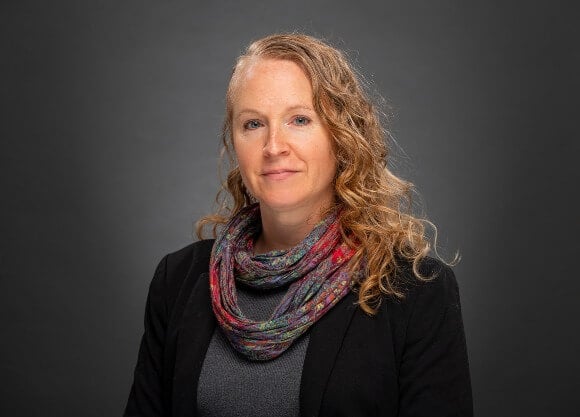
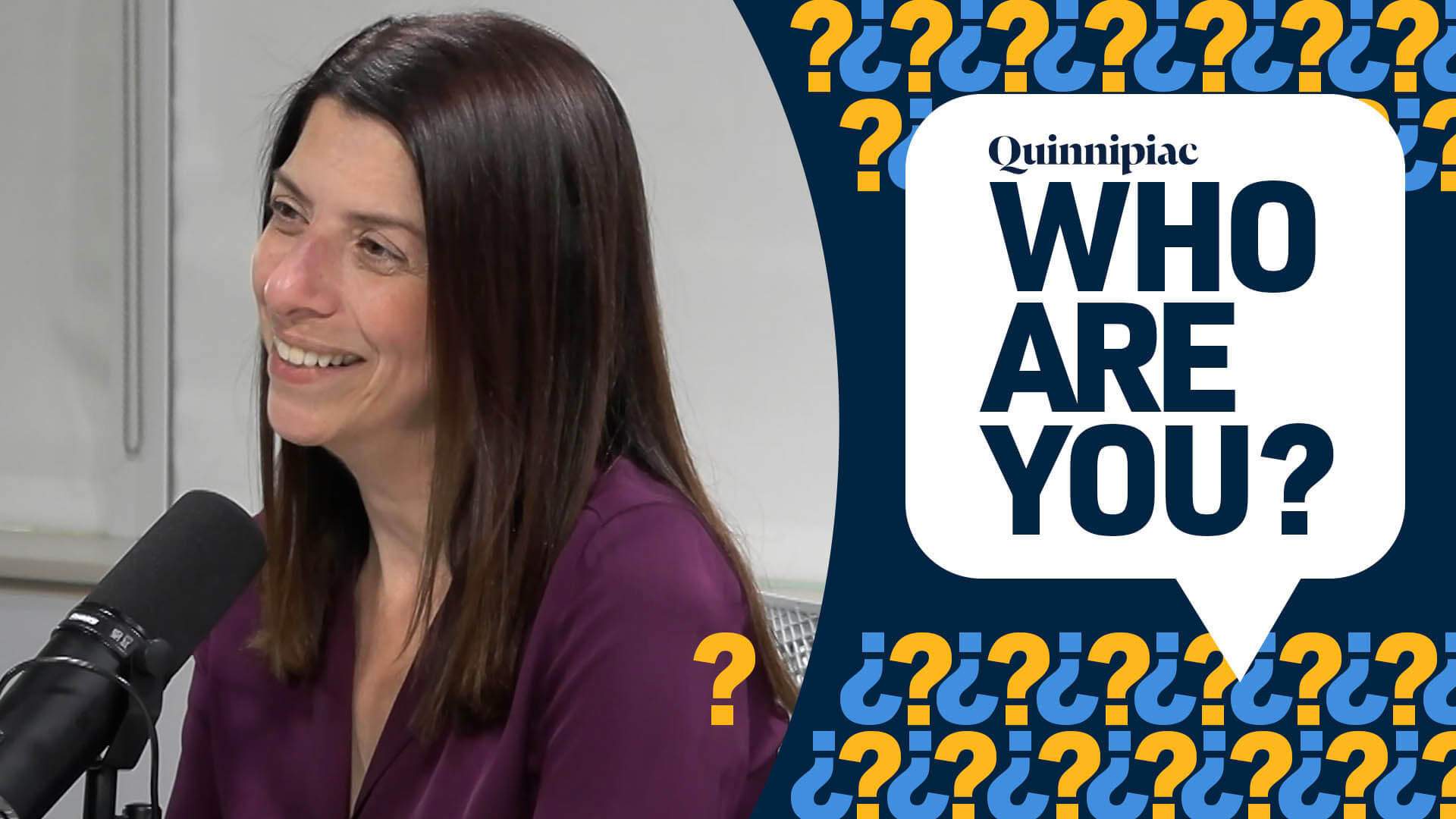
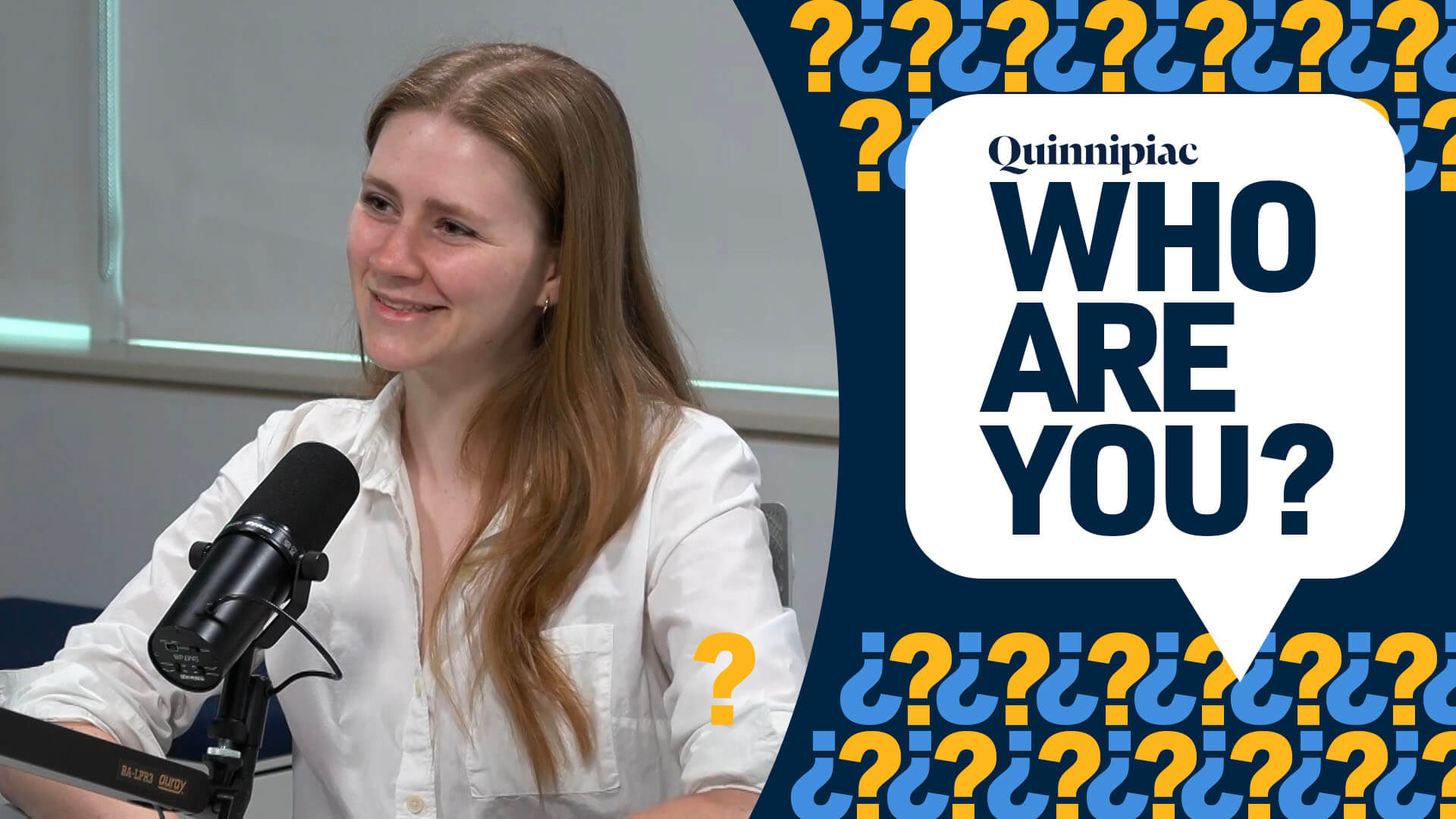
‘Who Are You?’ podcast with guest Professor Bhakti Sharma
From open water swimmer to advertising professor
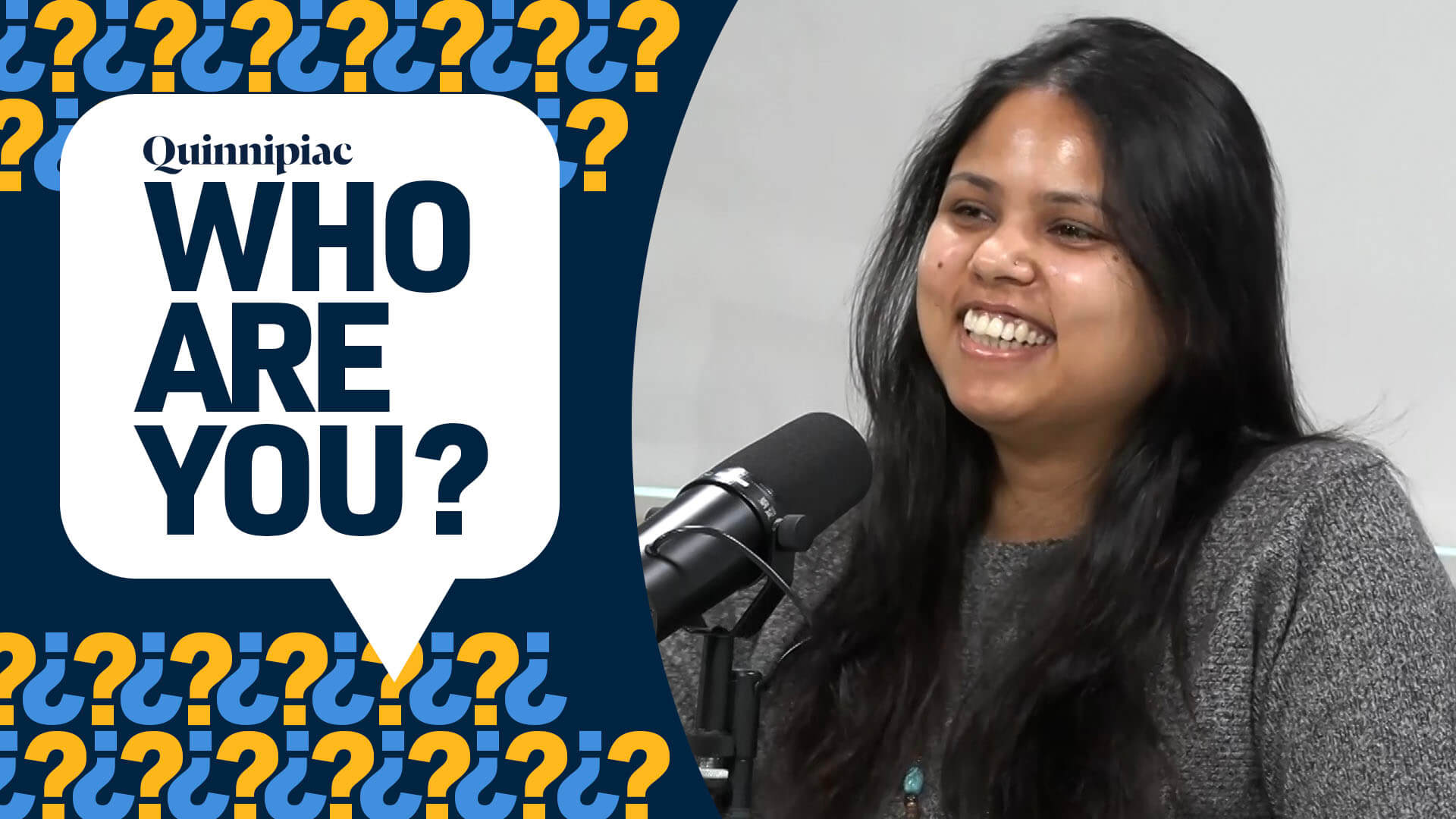
From open water swimmer to advertising professor
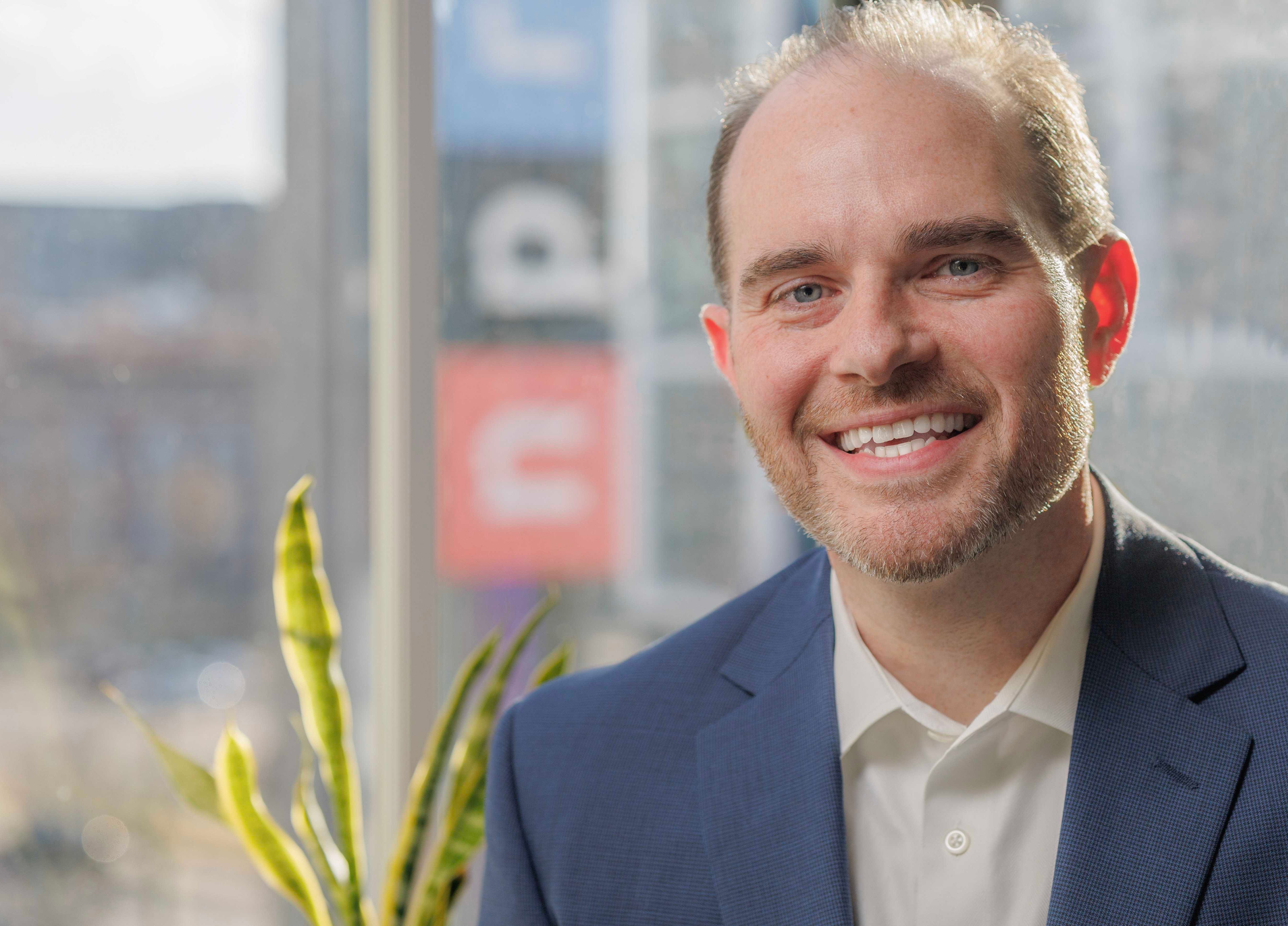
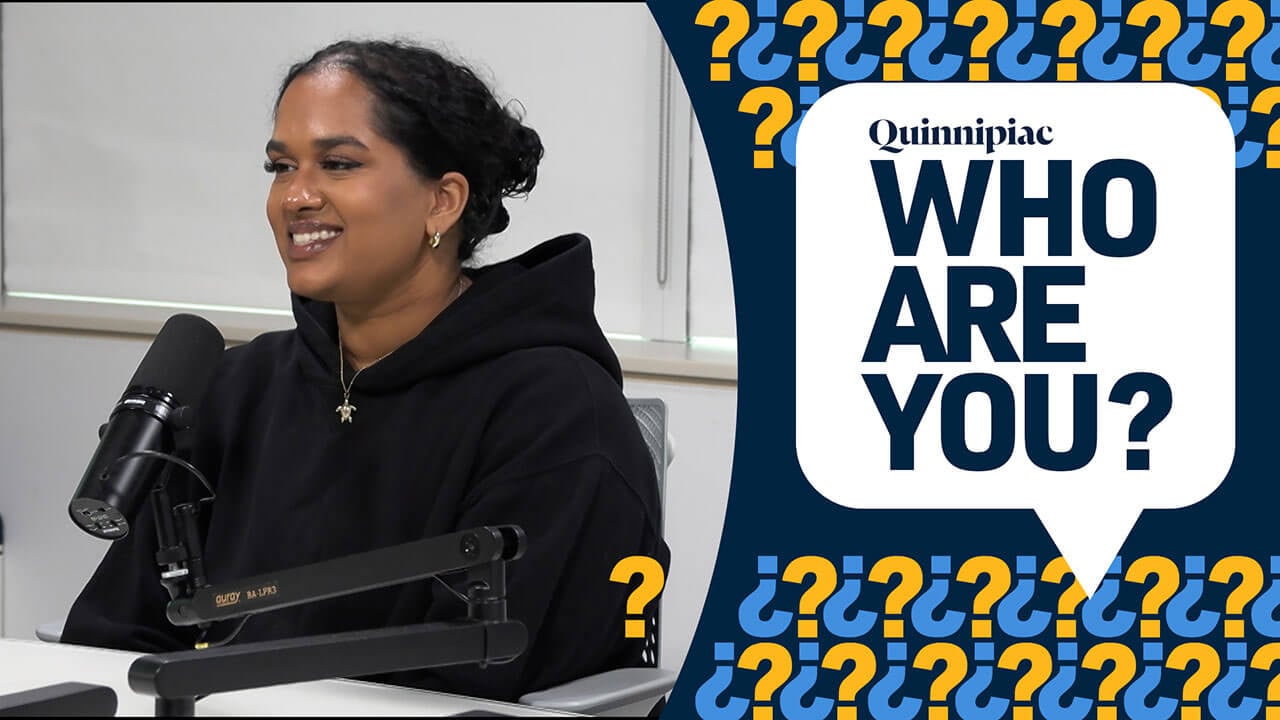
Joel Vanner: Welcome to Episode 11 of Who Are You? The Bobcats you know the stories you don't inside the Podcast Studio at Quinnipiac University School of Communications. I'm your host, Joel Vanner, and I am joined on today's episode by Bhakti Sharma. Bhakti, welcome to the show.
Bhakti Sharma: Thank you for having me. Happy to be here.
Joel Vanner: Awesome. Well, I'm happy you're here, and I'm sure you could guess by the name of the show. Well, my first question to you is going to be. We know your name, but tell me, who are you?
Bhakti Sharma: Um, my name is Bhakti Sharma. I am an assistant professor here in advertising and integrated communication at the QU School of Communications. I am originally from India, so I moved to the United States about seven years ago. And in my alter ego alternate life, I'm also an open water swimmer. So that sums up basically who I am.
Joel Vanner: An open water swimmer in an alternate life. Why, why don't we start there?
Bhakti Sharma: Why don't we dive into it?
Joel Vanner: Dive into it, right? I don't have anything interesting in any of my alternate lives, I don't think yet. But tell me a little bit about how you got started swimming.
Bhakti Sharma: Yeah. So my parents are both athletes or were athletes in their lives, and they believe that it's very important for every child to have some kind of extracurricular activity going other than just academics. And because my mom was a swimmer herself, she thought that this is something that she could teach me, she could pass on to me. So she started actually training me when I was 2.5-years-old.
Joel Vanner: Oh wow.
Bhakti Sharma: Initially, it was just supposed to be a life saving drill that everyone should know how to swim. And the earlier you start kids, the easier it is for them and the better they are. But then, you know, I started competing at the district level. I started winning. I graduated to state level, then national level, so on and so forth. But I come from a very small town. In a desert state in India. So we did not have all season pools, like no heated pools or anything. We didn't have pools for a very long time. So I used to train during the winters just to be able to compete at the national level, but I got tired of racing against myself and racing against the clock and being the only one in the pool alone so around that time, my mom had known about the English channel from her college life. So she just threw it at me. She's like, are you interested in doing that? And the 14-year-old self that I was, I just was so bored swimming in the pool, and I just wanted to try something new. And I said, why not?
Joel Vanner: You took the chance and embraced it.
Bhakti Sharma: Yeah, without knowing what I was getting myself into, and that's how I started my open water journey. I did my first open water swim in Mumbai when I was 14. And then I had to wait two years, and at the age of 16, I did the English Channel swim, the solo crossing, and it just started from there.
Joel Vanner: So how do you get yourself in the mindset to even prepare for something like that?
Bhakti Sharma: It's changed over time because I've swim for so long. I have changed as a person, so my preparations have changed. As a teenager, it was just about doing whatever my coach or my mom was saying. So whatever they were saying, I was just doing. I English Channel, you can take anywhere between 6 hours to 20, 24 hours.
Joel Vanner: Oh, wow.
Bhakti Sharma: So it was just about maximizing the time.
Joel Vanner: That's a grind.
Bhakti Sharma: Yes, it's definitely a grind. So it was just about maximizing the amount of time I can spend in the pool or in the ocean just swimming. As I grew older, I realized that it was a lot of mental training as well, and my swims got harder. So to give you a context, I did my last open water swim in Antarctica. So that was probably the most difficult swim that I had ever done. And I knew that, yes, my body had to be trained, but my mind also had to be trained. So all this to say that preparation has changed as I have grown older, and I've started to see the bigger picture rather than just the swim itself. I've started to see how I am growing as a human being through the swims and what is coming out of me in terms of preparation and what are my mental blocks and so on and so forth.
Joel Vanner: And there's probably an element of, like, personal branding, advertising, right, to get yourself to that point in Antarctica. Tell me a little bit about what that journey was like, establishing yourself.
Bhakti Sharma: Yeah, so swimming itself is not a very popular sport in India. Open water swimming, a lot of people don't know about it too it's not because, you know, they're ignorant. It's just not something that we have grown up listening about, even swimming for that matter. Um, so it was very difficult to translate that vision of why I want to do this and how it's just as good as any other competitive sport and why, you know, corporates can benefit from sponsoring my swim. So it was very hard to sell that picture to companies that could have funded me. Um, so I did while I was doing all my swims, I was also continuing my education. So I, you know, did my undergrads in commerce in India, which is basically what you would call business here. And I did do an MBA, as well. So I took all of that knowledge, all of that advertising knowledge that I learned during my MBA, and I put it into my fundraising campaign. So I was basically branding myself. I was also kind of selling myself to companies as to how they should invest in me and why what would be the benefits of them investing in me. So there was a lot of personal branding going on. There was a lot of logistical management going on, a lot of rejection. But eventually, one of the companies in my hometown did see the benefit of doing this, and we could come up with a co-branding kind of program that would benefit both them and me.
Joel Vanner: And your swim in Antarctica was 41 minutes.
Bhakti Sharma: That's correct.
Joel Vanner: Right? And there were some records set. Tell us a little bit about the results of that swim.
Bhakti Sharma: Yes. So at that point, my goal was to do the longest swim that anybody had ever done in Antarctica, and I did end up achieving that goal, but that record was recently broken by a swimmer from Argentina, which is great.
Joel Vanner: It's probably cool to be the one that has the record, and then when somebody breaks it, kind of in a club of record holders, one and two.
Bhakti Sharma: Well, I broke somebody else's record, right? Who were my idols. And so now my record has been broken.
Joel Vanner: So you were the motivation for someone else.
Bhakti Sharma: I would like to think so, but, you know, it's just the nature of sports. That's how it goes in sports. But I also ended up being the first swimmer from Asia to do a swim in all five oceans because Antarctica was the last ocean that I did, and I was the youngest swimmer in the world to be able to swim in Antarctica. So there were, there were some record setting happening there.
Joel Vanner: Wow. So you talked about your education that you continued in India. You talked about establishing a personal brand for yourself as you were looking for your swimming career and being able to go to all these places and do all these swims.
Bhakti Sharma: Yeah.
Joel Vanner: Tell me a little bit about how those experiences led you to advertising and what got you interested in that field.
Bhakti Sharma: Right. So, um, in India, it's kind of an unspoken rule that yes, sports are great, but you do have to succeed in academics because that's where you make your career and eventually your money. So I was always doing sports and also pursuing my academic goals. I knew that I didn't want to be a doctor or engineer early on. That was just not where my heart was. I knew that I was interested in business because my father is a businessman, and I grew up watching him, the things that he does. So in the beginning, I was doing a very, you know, straightforward path that everybody else was doing around me. I was studying to be an accountant, which here you would call CPA. In India, we call the charter accountant, but I quickly realized that it's not for me. I don't like numbers that much. And I also had a pull towards creativity. I wanted to be able to do something creative with my brain, if not with my hands or, you know, something like that. So I decided to do an MBA. And while I was preparing for my entrance exams for MBA, I came to know that I could actually do an MBA in advertising. And that, to me, was mind-blowing because advertising was kind of, you know, my love as a child. I would watch these commercials on television and they still live in my head, rent-free. That's how much I love those.
Joel Vanner: And then they've all got a jingle to them.
Bhakti Sharma: Yes. Yes, especially in India, the commercials are very emotional, very dramatic like our movies. So they're like mini movies. Uh, and so when I found out that I could pursue my love for business and creativity together, that's how I ended up doing an MBA in advertising, and I ended up working in an agency after that.
Joel Vanner: And swimming is kind of an artwork, too, right? So creativity there, creativity and advertising as well. What led you into the classroom and your role here at Quinnipiac?
Bhakti Sharma: Right. So I moved to the United States to kind of continue my education and continue swimming. So I enrolled in a masters program, and then right after the masters program, where I was, they were like, I think you were great for PhD, and so I ended up doing the PhD. And during my graduate experience, I was given the opportunity to teach in classrooms as a teaching assistant. And I really like that. I loved sharing my love for advertising with other people and seeing the lights go on in their heads about some things. And so I finished my PhD, and now I'm here in the classroom.
Joel Vanner: Is there anything from your experience as a swimmer that you change into motivating students in the classroom? Like, how do you bring those lessons that you learned from that awesome experience to impact students in your classes?
Bhakti Sharma: Yeah, that's a great question. Um, the first thing I say, I mean, I don't try to give unsolicited advice, but if I see a student struggling with trying to figure out who they want to be or where they should be and, you know, because this is the time where you feel that pressure of This is what my life is going to be like-.
Joel Vanner: You have to have it all figured out.
Bhakti Sharma: You have to have it all figured out, and I try to tell them that I didn't have it figured out and that I have these two kind of separate paths that somehow came together. Everything that I've learned in life is useful. So that's the one thing that I always come back to. I didn't know that I was going to be in a classroom, but everything I learned during my MBA in advertising, I used it for my swimming. And everything that I used or got from swimming, a lot of public speaking and so on and so forth. I'm kind of now using it in my classroom. So I try to bring that big picture mindset where your path may not be clear right now, but everything is going to be useful in some form or the other, if you let it be.
Joel Vanner: And also resilience in that, too, because I'm sure there were experiences in your swimming career where maybe things didn't go quite as planned.
Bhakti Sharma: I mean, just like in life, I personally feel that I have plans, and then life has different plans for me. So I make my plans with a grain of salt. I have realized that, you know, I can make plans and I can work towards them, but life is gonna life.
Joel Vanner: You're on life's journey.
Bhakti Sharma: Yeah, yeah.
Joel Vanner: Yeah.
Bhakti Sharma: So you also have to be able to go with the flow and see where life is taking you and what you can get out from that. So yeah, resilience is a big part of it. And I think every single human being is trying to be resilient in their own way. You don't have to be an open water swimmer to be able to see that. Sometimes we just can't see our own resilience, and we need somebody to remind us of that, and I try to do that as a professor.
Joel Vanner: And one of the common themes, I think, comes through the episodes we've done so far on this podcast is the team around you. So you mentioned your mom, formerly competitive athlete. Your father was a businessman, which kind of led you to the business aspect and liking that. How did you establish I mean, that team around you was your family, but how would you suggest students kind of establish that team for themselves so that they can start to figure out what their life may be that way?
Bhakti Sharma: Yeah, it's very important to have your people around you, who can be your cheerleaders, but also who can call you out or make you aware of your blind spots because, you know, nobody has all the answers as much as someone would like to think. So I always I don't know who said it, but it was something like, if you're the smartest person in the room, you're not in the right room. So I always try to surround myself by people who absolutely know more than I do, but also people who do believe in my crazy vision because swimming in Antarctica was a completely crazy, bonkers vision for somebody to have.
Joel Vanner: And it's unique, too.
Bhakti Sharma: Yeah.
Joel Vanner: Yeah.
Bhakti Sharma: And, you know, legitimate questions were there, like, why and, you know, why, all of those things. So I actually I needed a doctor to bring with me on the swim because the cruise that I was going to go on did not want to take any responsibility for me for good reason. So I had to have a doctor on my team. And I actually got my doctor from Iceland. So from the completely different pole, she traveled to the opposite pole. Off the planet. And I had never met her in my life, but she was recommended by somebody I knew in Iceland, but I knew by talking to her over the phone that she knows this is crazy, but she's 100% there to support me and take care of me. And I learned so much from her. Like, when we were going to do our swim, we were in the middle of Antarctica and she's putting on this really red lip, and I asked her, and she was like, you know, I need to come off as confident for you, even if I don't feel confident on the inside. So those are the kind of people that you would want in your team who, yes, are more talented, knowledgeable than you, but who also see you and see your vision.
Joel Vanner: When you introduce yourself to students in your courses, do you tell them that you were a competitive swimmer in your Antarctica experience? What's the usual reaction?
Bhakti Sharma: Uh, I do have a slide deck that I show them, and because I want to come across as authentic as I possibly can, I want them to know who I am as a human being and not just this person who is just going to lecture you for the next 16 weeks. So I do talk about it. They have unique reactions. Somebody they ask them, What was my longest swim or if I have had any encounters in the water.
Joel Vanner: I didn't even think about that. You think open water swimming? There's a guided path, but I guess open would mean there's not.
Bhakti Sharma: Yeah, there's none. You're in the ocean. You just have a boat with you to guide you where you're supposed to go so that you don't get lost in the middle of the ocean. But yeah, you're there in the wilderness with everything that lives and breathes in the water.
Joel Vanner: Mental toughness, right?
Bhakti Sharma: Yeah.
Joel Vanner: What do you think about when you're-.
Bhakti Sharma: Oh, so many things.
Joel Vanner: Probably not like, you know, what am I gonna have for dinner?
Bhakti Sharma: Oh, 100%.
Joel Vanner: Maybe the homework you had to do when you got back?
Bhakti Sharma: Not the homework, for sure, but the dinner part, absolutely, 'cause I can see the people on the boat eating the food that they're eating. And, you know, there's always that, Oh, I'm struggling here, and you're eating all this nice food on the boat. During my English channel, they were feeding me the chocolate rolls. I forgot the brand, but I could only eat a bite because you're not supposed to swim on a full stomach and everything. So I kept imagining that as soon as I get out of the water, I will eat an entire packet of these rolls, but I was so sick after that swim that I never ate that for the next five years.
Joel Vanner: Wow. You just had that association with it. You couldn't have it.
Bhakti Sharma: I had PTSD from there.
Joel Vanner: Well, we don't have any here for you today, sorry to say.
Bhakti Sharma: Yeah. So yeah, they have these questions. But at the end of the day, they don't really care what I've done. It's about that relationship that I have with them and what am I providing them that can help them in their future journey. Yeah.
Joel Vanner: So now you're an assistant professor in advertising and integrated communications here at Quinnipiac. When students are taking your courses, what are you hoping they take away from those courses?
Bhakti Sharma: Yeah, I'm so glad you asked that question. My main goal is for them to see advertising and branding the way I see it, which is number one, a lot of fun. And number two, just like it helped me integrate my various interests and random passions into a cohesive career. I hope that they're able to see that from the courses. The one thing I love about advertising is you can take the knowledge that you get to any industry. Every industry is going to need advertising and branding, so you can take that knowledge and pursue any passion. So, for instance, if you love music, you can take whatever knowledge you get from advertising courses and apply it to the music industry. So that's what I try to instill in my students that it's a lot of fun. You get to explore a lot of different avenues. You don't get bored in advertising because you get to work with so many different clients. And on an individual level, I try to in some way, give across this belief that every individual is unique at the end of the day. They all have unique interests. They all have unique passions. Some of them don't see them as creative. I was that person for the longest time, but everybody has creativity inside of them, and I try to encourage that part of them to come out through different exercises and activities. So yeah, if there's one thing they could take from my courses is that this is a lot of fun, and you can explore a lot of different passions and interests through this one avenue.
Joel Vanner: And it's also I think a part of it, too, is when you think about advertising, you think about the world we're in, how fast things go, it's being a critical consumer, too. So even if you may not be practicing it, right? But you're taking a course, you become a critical consumer of it to see where it shows in your life.
Bhakti Sharma: Absolutely. So in my foundation advertising course, we do talk about that. They do write that as a reflection piece because we're surrounded by advertising. The minute you wake up and you look at your phone, you're bombarded with at least 12 different messages that are advertising. So how do we parse out the good from the not necessary to the dump? So yeah, absolutely 100%. How can we become critical consumers of information and advertising and also appreciate the value that it's bringing to our lives. We get to know about so many things through advertising that we would never know about. So trying to bring all of that into my courses.
Joel Vanner: Bhakti, it was awesome to have you on the show today and awesome to hear about your open water swimming experience and the uncovered stories that one may not know about you. So thank you so much for joining.
Bhakti Sharma: Thank you for having me. And to whoever is listening, come visit us in the advertising department. We have a lot of fun, so come talk to me.
Joel Vanner: Alright, thank you. Thank you. If you like today's episode, be sure to like and share and find other episodes of Who Are You on Apple, Spotify, and YouTube podcasts. Until next time, when I ask my next guest, who are you? I'm Joel Vannerr. Bye for now.










Quinnipiac Today is your source for what's happening throughout #BobcatNation. Sign up for our weekly email newsletter to be among the first to know about news, events and members of our Bobcat family who are making a positive difference in our world.
Sign Up Now