


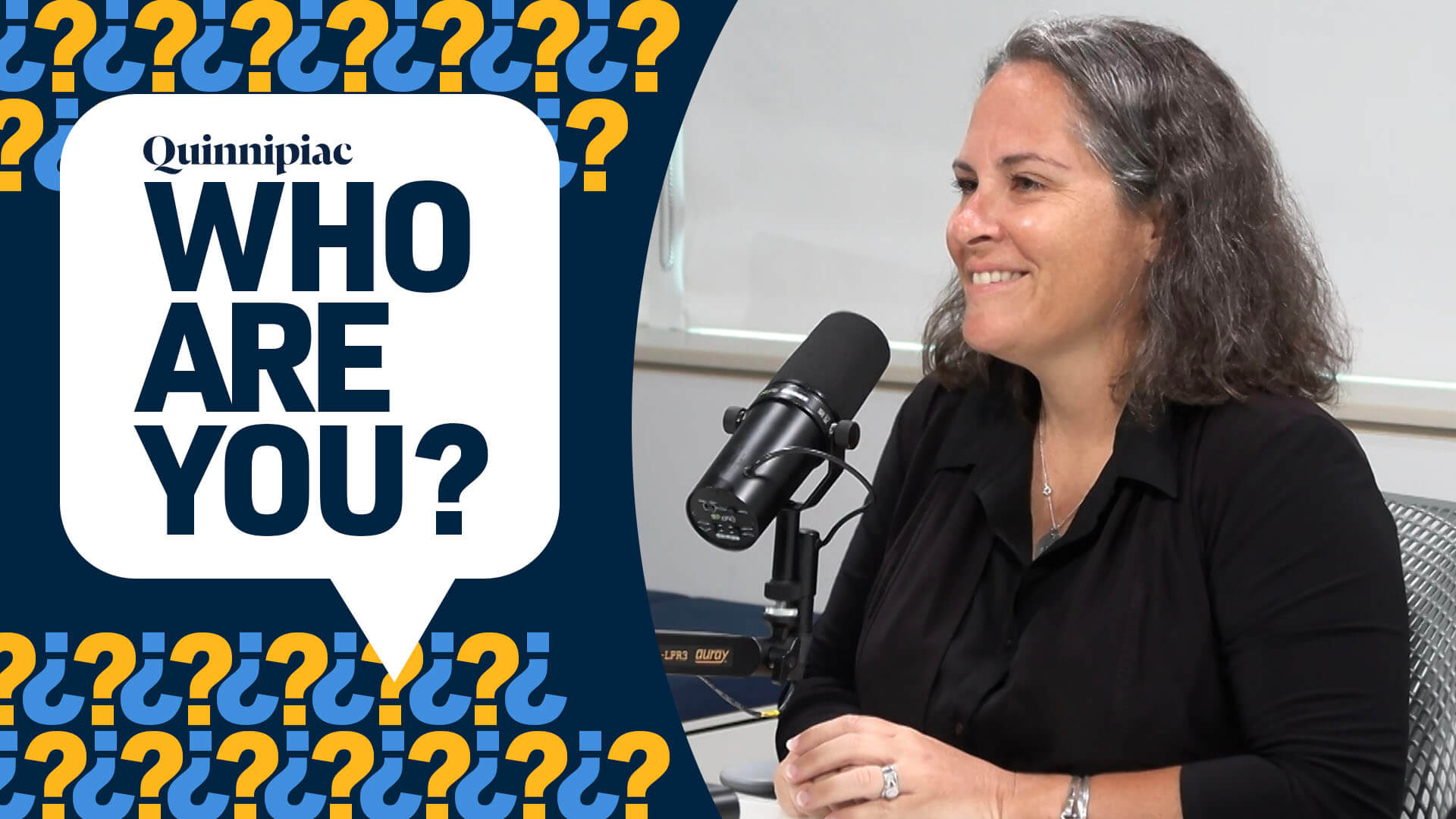
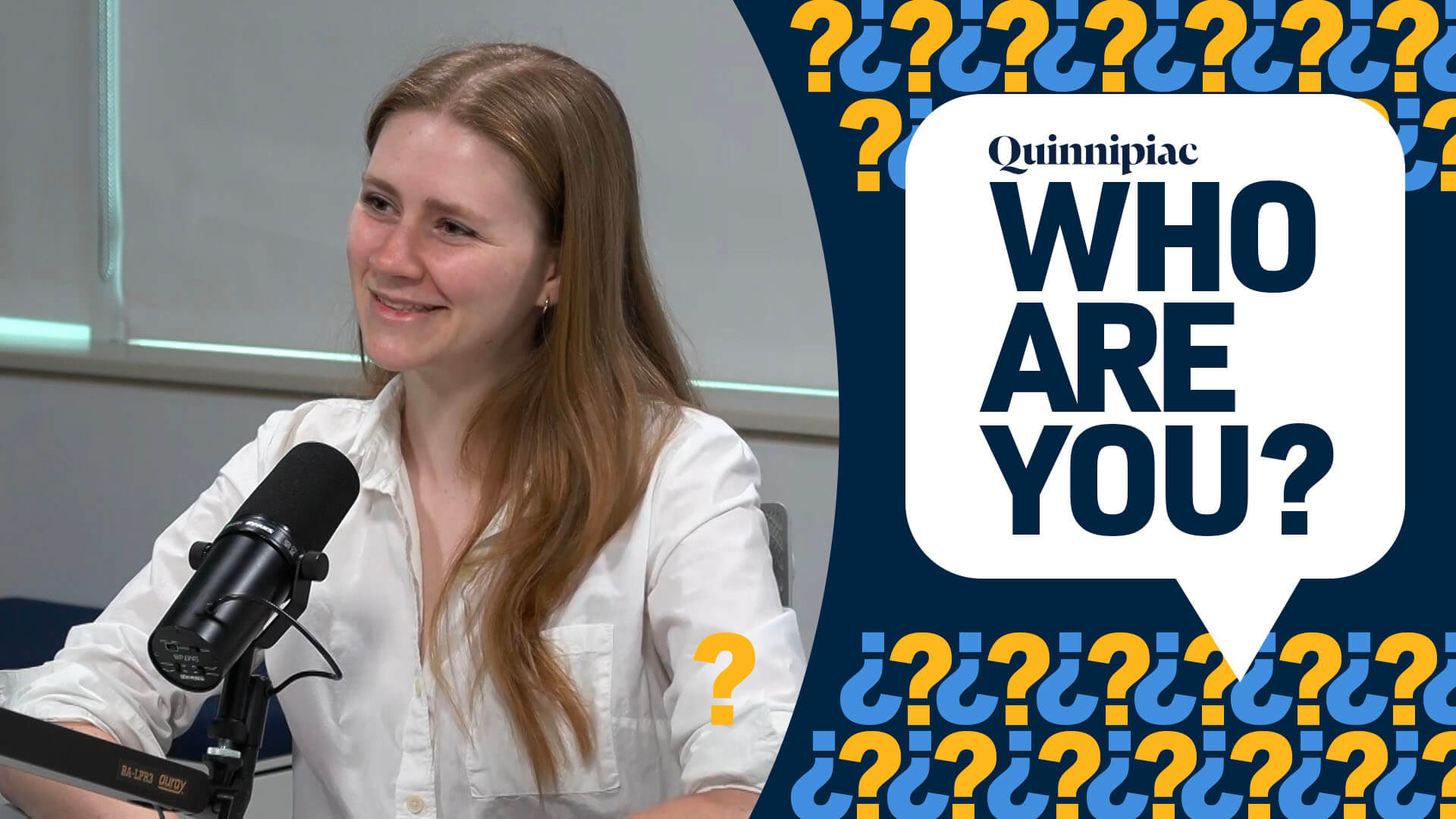
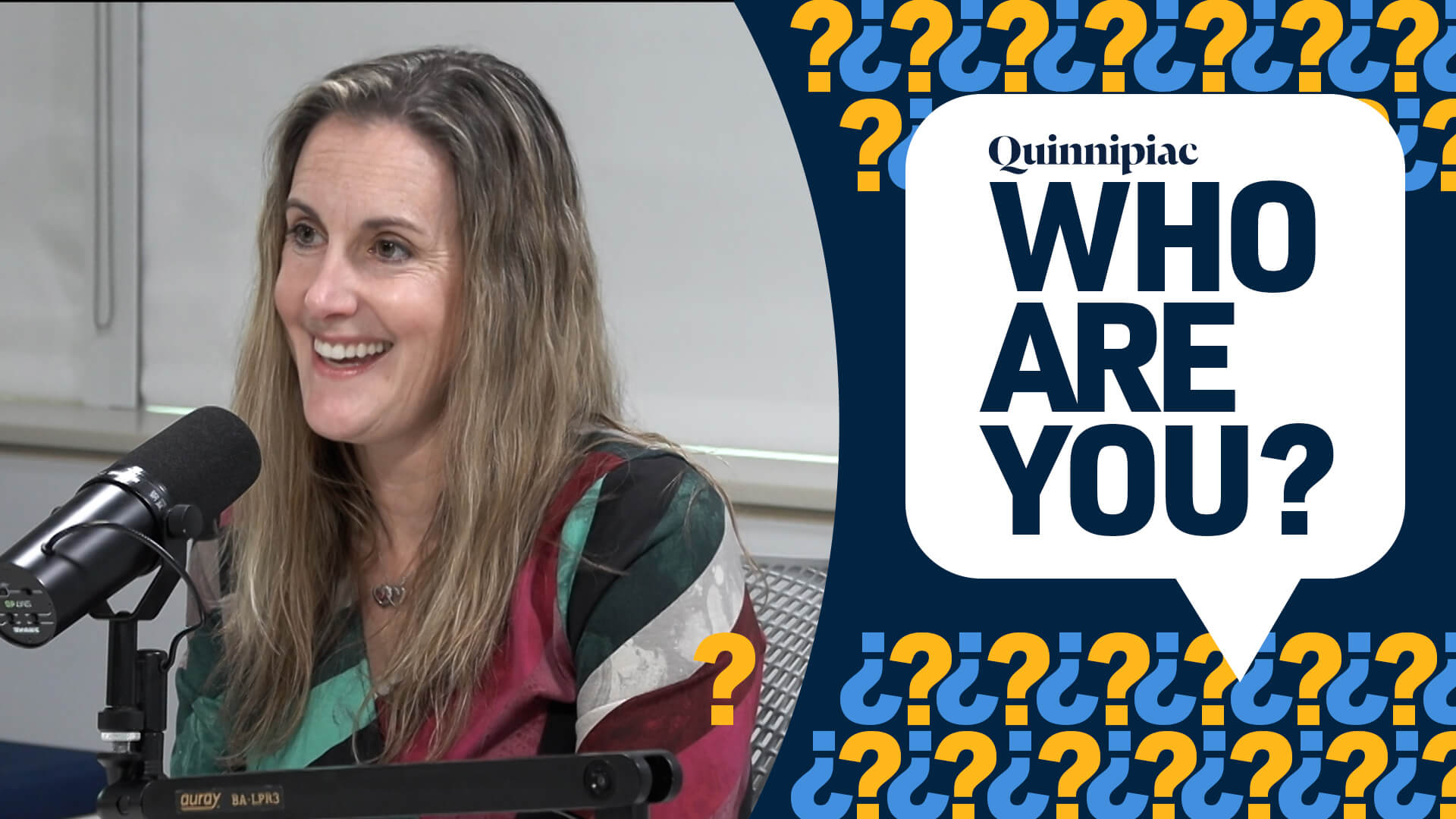
‘Who Are You?’ podcast with guest Erin Sabato
The impact of studying abroad in college
The impact of studying abroad in college
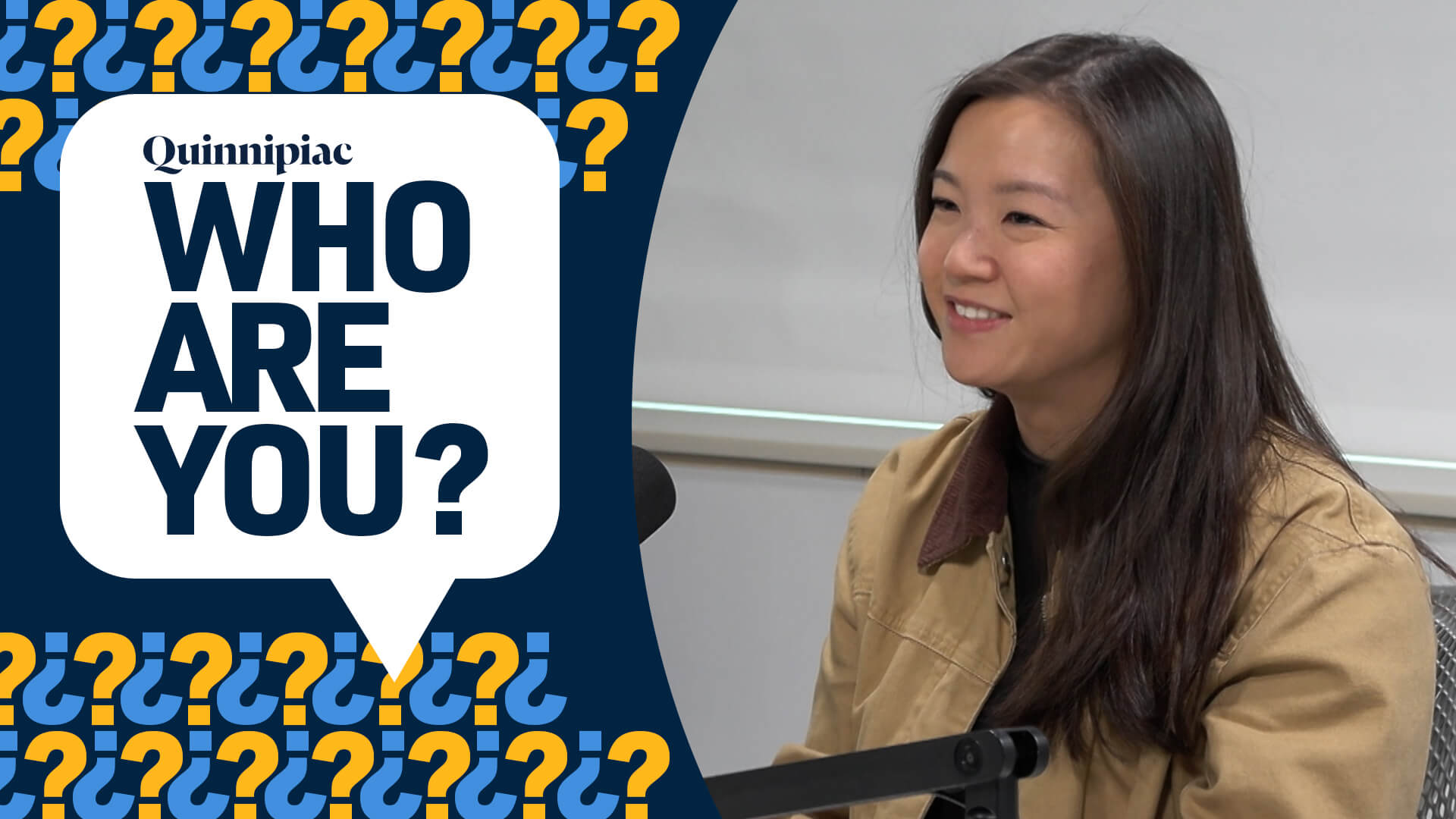
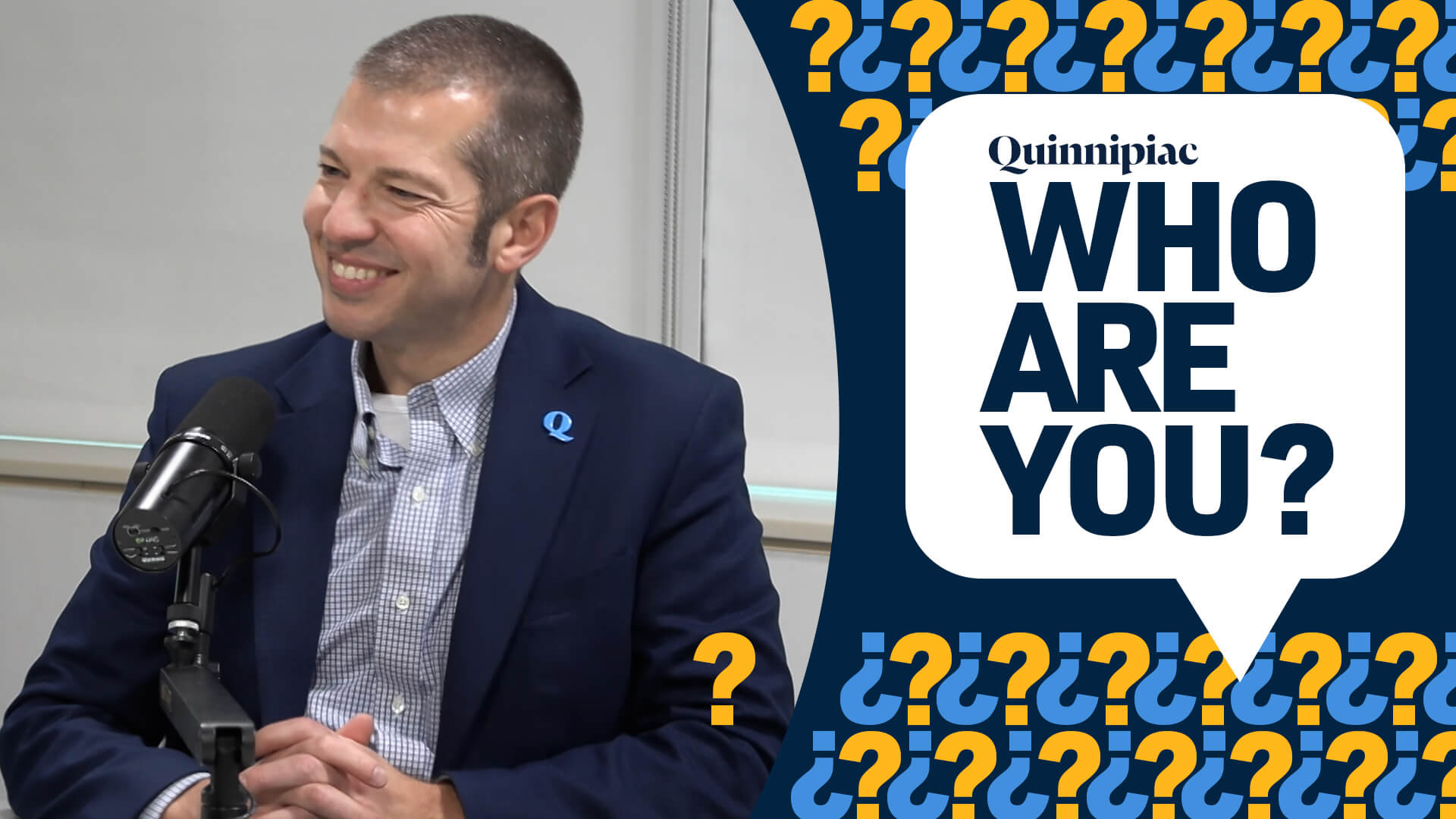
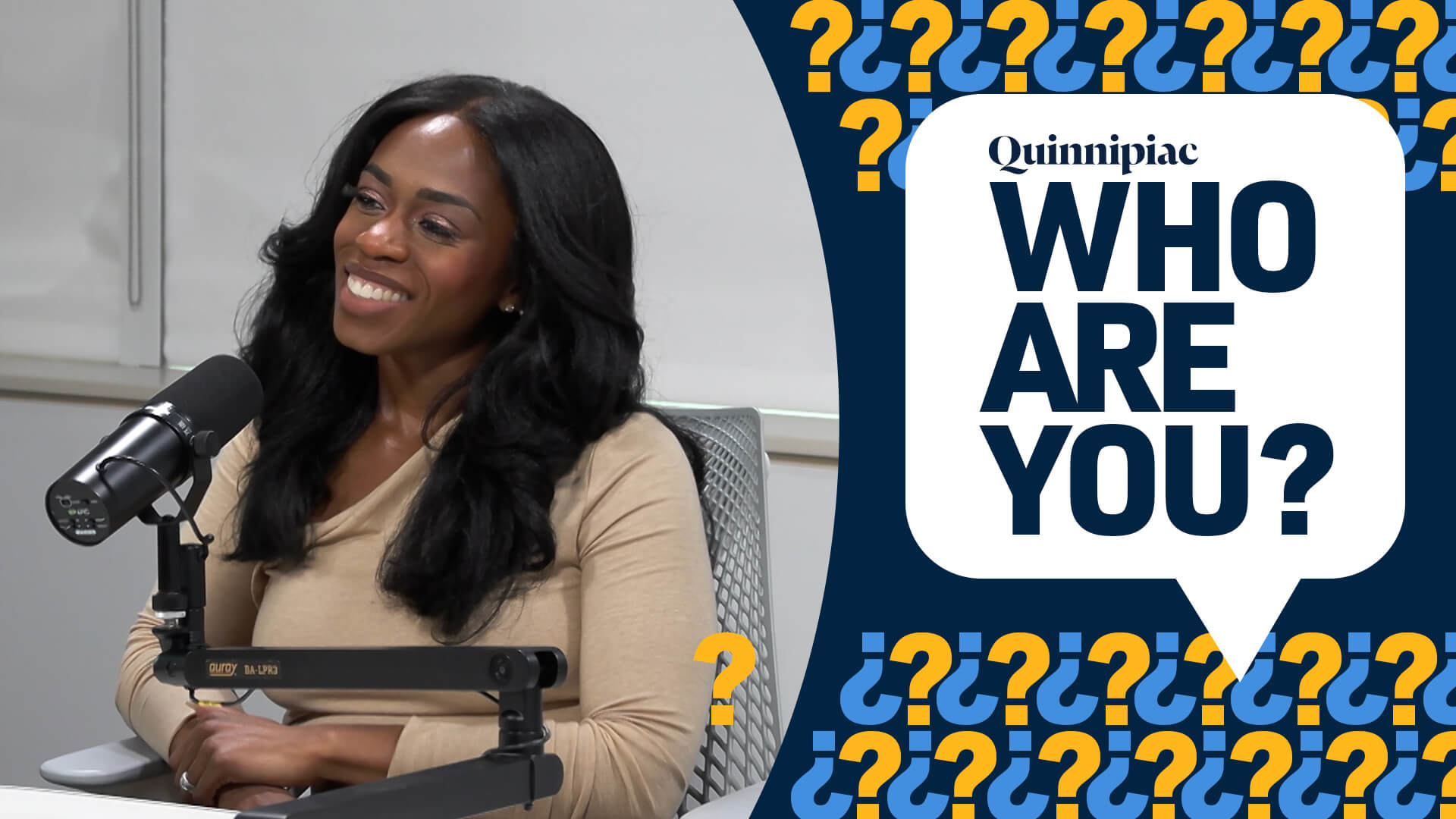
Joel Vanner: Welcome to ”Who Are You?,” the Bobcats, you know, the stories you don't. I'm your host, Joel Vanner, inside the podcast studio at Quinnipiac University's School of Communications. And I am joined for today's episode by Erin Sabato, the senior director of Global Learning. Erin, welcome to the show.
Erin Sabato: Thanks so much for having me.
Joel Vanner: So, Erin, we know your name, but I'm sure you could guess by the name of the program what my first question to you is going to be. And that is, who are you?
Erin Sabato: Thanks, Joel. So I'm Erin Sabato, and as you said, I am the Senior Director of Global Learning in the Office of Global Engagement. I'm also a proud Quinnipiac alum, so I've been here for a number of years. And really, my role at the university is to create opportunities for students to go abroad in a number of different ways.
Joel Vanner: So, you had a homecoming. You studied at Quinnipiac, and you came back. But before we get to that and what you do now in your role, tell me how you came to Quinnipiac for your undergraduate study.
Erin Sabato: Yeah. Well, it's really funny because when people find out what I do, they assume that my whole life has been one of traveling. But I actually didn't even have a passport until I came to Quinnipiac. I was somebody who, as a young kid, I was always really curious. I loved learning about people. I was a big reader, and I was a big writer. But we didn't travel much as a family. We took vacations, but we really stuck around the East Coast. And so I came to Quinnipiac to study journalism. And when I was the end of my freshman year, I found out about an opportunity to go abroad to Ireland, and I immediately took. Um, and really, that's where my life kind of began when I had that first opportunity to go abroad.
Joel Vanner: Was that nerve-racking for you? You have to get your passport and all that situated, and a couple of months later, I think so. Trip.
Erin Sabato: But, you know, when you're that young, you kind of don't know what you don't know. And so I was just excited to kind of leap into this opportunity. So, yes, I had to get a passport. I had to sign up for classes. I had to book a plane ticket. And really, I just kind of went for it and landed on the ground in Ireland. And that's really kind of where the world began to open up for me in completely new ways.
Joel Vanner: You had two more study abroad experiences. So you really caught on after that. Where were your other experiences?
Erin Sabato: Yeah, I did. And, you know, they say it's cliché, but it's 100% true that kind of once you have these opportunities, you just want more. And that's why I'm so grateful that I'm able to provide these types of experiences for our students now in my current role. But as an undergraduate, I also went to Cape Town, South Africa, and then I went to Leon, Nicaragua. So I had very different and unique experiences, a full semester abroad in Ireland, J term or a January program in South Africa, short yeah, exactly. The J-term program was about three weeks, and then the spring break program in Nicaragua. So all very different lengths of time, different goals, different locations, of course, and really truly unique experiences.
Joel Vanner: And those experiences opened up your world for postgraduate. Yeah. After you graduated from Quinnipiac, you worked internationally, right?
Erin Sabato: Yeah, I did. So as an undergrad, as I said, I was studying journalism, but I was also a Spanish minor and, you know, being able to speak Spanish and kind of work and live and move in Spanish-speaking countries like Nicaragua kind of really opened up a whole world of opportunities for me. So I spent the week as an undergrad in Leon. And as I was there, I was thinking, how do I how can I do more of this? How can I continue to learn in this way, in this type of environment, in this type of community? So I decided to graduate early, and I finished my undergrad in December, about a semester early and then moved back to Nicaragua to the city, the community where I'd spent that spring break. And I spent a few months there teaching English in the school that Quinnipiac had a longstanding partnership with. And then, while I was in Nicaragua, I decided to apply to graduate school in Costa Rica. So I was able to continue learning and living in Central America, continuing to apply my language skills while also getting a master's degree.
Joel Vanner: It's that one study abroad, that first study abroad experience in Ireland, that really opened up your world to all of those other experiences you had.
Erin Sabato: It really was. It taught me to be curious in a different way. It taught me more independence and resilience. I challenged myself in so many new ways. I traveled by myself. I was able to interact with people that I otherwise never would have had the chance to. So yes, I completely credit that first semester abroad. It was my second year, so I went a little bit early. It was my sophomore year, fall semester, and that was really kind of the springboard that has led me to where I am today.
Joel Vanner: For you, personally, how did those experiences enhance, at that time, what you were learning in the classroom as part of your program?
Erin Sabato: So in Ireland, at the time, we had a really unique opportunity to study four days a week and then go on field trips, for kind lack of a better term, on Fridays. So we were able to, you know, experience and visit the locations that we were studying that week. And so that really kind of made it more real. We were able to visit the locations that we were learning about. We were able to go to museums and see, kind of just firsthand, what we were learning about in the classroom. And the unique thing about that program, too, as I think many study abroad, you know, locations and sites offer, is that it was taught by Irish faculty. So I had those perspectives from experts from Exactly, from the community, and from the country where I was living.
Joel Vanner: After your graduate studies in Costa Rica, some time at a nonprofit, you actually returned to Connecticut. And you came back to Quinnipiac in 2008? Yes, exactly. What was your experience coming back to Quinnipiac like? And what role did you come back in?
Erin Sabato: Yeah. So I actually came back. I was hired to be the program director at the Albert Schweitzer Institute. So it was really a full circle moment for me. I was hired to run the programs that I had participated in as an undergraduate. Um, and as I mentioned, after being in Nicaragua for a spring break trip, I decided to, you know, kind of really change my trajectory and graduate early and move down there and live alongside the community partners that had been facilitating these student programs for us. And so then I was on kind of the other side of it, where I was now the one working with the community partners to facilitate programs and to create opportunities for students. So, you know, the program that literally changed my life and has, you know, had such a huge impact on me personally and professionally, I was now able to kind of facilitate those opportunities for students.
Joel Vanner: That's an awesome full circle moment there. Yeah, yeah. And today, you know, through your office and your work, Wini Pac offers a number of a broad opportunities in all different sizes. Tell me a little bit about the opportunities that are available to our students today.
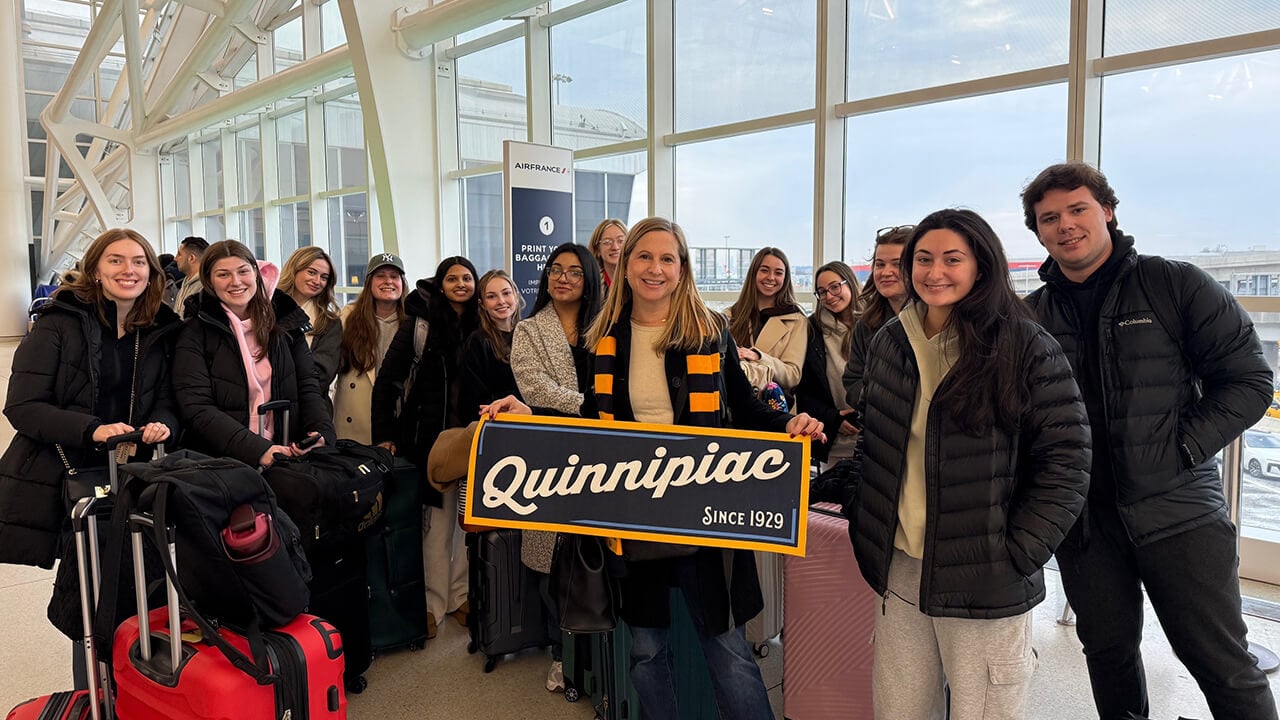
Erin Sabato: Yeah. So we know that going abroad is so important, and we truly believe that any student who wants to go abroad should have the opportunity to do so. But we know that there are a number of factors that students and their families have to consider when making that decision, because it is a big decision. You know, I remember having those conversations with my parents and saying, I want to go abroad for a semester, and, you know, they themselves didn't have passports. So they were a little nervous, and it really wasn't until my dad and my mom came to visit in some of the countries that I was living in that they were like, Okay, we see you in your element. We know this is a good thing. But sometimes that's scary. It's new for families. So we create programs that, you know, can be eight days all the way up to a full semester or a year, because, as I said, we know there are so many different factors that go into that decision. So I personally oversee what we call faculty-led programs, and those are Quinnipiac courses that typically range between eight days to up to three weeks that are led and taught by Quinnipiac faculty. Usually, the students are enrolled in a course during the semester, either the fall or the spring, or sometimes the summer. And then, as part of that course, as part of that class that they're taking here, they go abroad with their faculty, a chaperone, and their classmates. And the travel component complements what they're learning or what they have learned in the classroom during the semester. But then we also have programs that are over the winter break for a whole summer. Students can intern for a summer abroad. And, of course, they can spend a semester or a year studying and learning at a university overseas.
Joel Vanner: Those are across all disciplines in all nine schools.
Erin Sabato: Yes. Right. Absolutely. We have programs for every student. We have students that are sometimes in the spring semester of their first year traveling with us. But then we have graduate students traveling with us. So, you know, we really do have a range of programs, a range of disciplines, as I said, already, length of time, location. So, yes, there really are opportunities for everybody.
Joel Vanner: What's an example of a faculty-led experience that students could have?
Erin Sabato: Yeah, so of course, I'm going to talk about the one that I teach. So for the last five years, I have taught a course in the School of Education, although it's open to students outside of the School of Education as well. And it focuses on Guatemala. So we spent the first half of the semester, the spring semester, learning about the history of Guatemala. We talk to different organizations that are doing a number of things related to education, of course, but also healthcare, environmental policy, agriculture, and the students learn about the country and the communities that we're going to be visiting. And then we travel to Guatemala for ten days over spring break, and they're taking the knowledge that they've learned for the first half of the semester and applying it to the experience. And then we come back, and we spend the second half of the semester kind of unpacking and processing what we learned, and the students complete a project that they then present to the Quinnipiac community. So that's just one example of the 25-plus faculty-led courses that we offer each year. That one is particularly meaningful to me, not only because I teach it, but also because Quinnipiac has a nearly two-decade-long partnership with Guatemala. Ever since I was hired in 2008, as we already mentioned, I've been taking students to Guatemala. This academic year alone, I was in Guatemala four different times on four different programs. So it's really interesting to take students in psychology or anthropology, journalism, physical therapy, education, of course, political science to Guatemala to work alongside incredible community partners, but for a range of different disciplines.
Joel Vanner: And not only since that course is open for anyone to enroll, are the students getting that international experience, but they're also learning with their peers who come from those other disciplines and backgrounds, too?
Erin Sabato: Yeah, absolutely. I think that's the one of our goals with faculty-led courses. Of course, you know, each class has a focus. It has a particular disciplinary focus, but we really do encourage students from outside those majors to apply. Um, you can be a physical therapy student and take an anthropology class in Morocco. You can be a business student and take a political science course in Guatemala. And so we really do encourage students to not only, you know, go outside of their major in that way, but as you say, they're then learning from their peers, and they're learning, you know, alongside their classmates in a new way.
Joel Vanner: How many students choose to have some sort of study abroad experience?
Erin Sabato: So we have about 500 students each year that participate, whether it is the full semester, the faculty-led, or a winter or summer program, and that includes students that are interning abroad as well.
Joel Vanner: What advice would you give to prospective or current students who are listening who may be interested in learning more about all the opportunities available to them?
Erin Sabato: So our advice is always to plan early. It's never too early to start asking questions. It's never too early to really start doing research about all of the different programs. It sneaks up on you, and we really want students to start planning early because it does take time. It takes about a year, you know, from when you're initially inquiring about the programs to when you're then going abroad. And so nothing in our office- nothing kind of is it's really hard when we hear students say, I didn't know. I didn't know that this was for me. I didn't know that this was something I could do. And so we say, plan early. Come to our office. We have office hours. We have information sessions. We have student advisors who will tell you about their own experience. And so our advice is always to plan early because even if you don't think it's for you or you're not sure it's for you or your family is nervous, so you think, I don't have the space in my program, come and talk to us because, as we've been saying, there are so many different ways that students could go abroad.
Joel Vanner: And having those student advisors, too, I would imagine that's great for those who may come to college without a passport, may not have that international experience, being able to connect with that student advisor to see if the program is right for them.
Erin Sabato: Absolutely. I mean, some of our biggest advocates, some of our, you know, biggest cheerleaders, are students who had never even been on a plane before. They came to Quinnipiac. And this was really the first time that they even considered doing something like this, you know, traveling in any capacity. And so I think that, yes, I can I can speak at an information session. I can talk to students, but having that peer-to-peer interaction is really meaningful. And so we're really grateful that we do have so many enthusiastic students who are just really excited to talk to prospective students and talk to, you know, students that are looking and seeking these opportunities as well.
Joel Vanner: And I know you've mentioned this kind of throughout the episode so far, but when students come back from a study abroad experience, how have they changed? What do you see different about them that you didn't see before they had that experience?
Erin Sabato: Gosh, there are so many ways that students can change. I think students are more confident. They have had an experience where they've really had to put themselves out there. Oftentimes, our students are traveling with people they don't know. So that, in itself, is something new. Oftentimes, students are only used to traveling with family members or friends or people that, you know, they're really comfortable with. And so when you travel either for a full semester or even on a short-term program, you're traveling with, you know, essentially a group of strangers that then become great friends and become, um, you know, a very close group of people to you. But I think students are more confident; they're more curious. They want to continue learning. And I would say one of the more specific kinds of changes that I've seen in students is related to language. As I've said, a lot of the places I travel to are in Central and South America. So obviously, these are Spanish-speaking countries, and students come back, and they say, Oh, my gosh, I want to go back and study Spanish. I want to go back and study language because I want to be able to communicate better. I want to be able to, you know, have more in-depth conversations. So I think students are just coming back more often than not with more questions than they left with. And for us, as educators, that's amazing because we want students to keep asking questions forever.
Joel Vanner: We are all citizens of the same world, so there's no better time than college to have those experiences with everything else new that's going on.
Erin Sabato: Absolutely. Before every group departs, we always do a pre-departure session with the students and the faculty, and we talk about really important things related to safety and security, of course. But at the very end of every session, I always say to our students, one, I thank them. I thank them for taking this leap and for being open to these opportunities because I know that for many students, this is so new. But then I also say you will never have this opportunity again. You may, in your future travel to France, or you may go back to Portugal, or you may go back to Japan, but you will never have this unique opportunity as a college student to travel with this group of people, with this faculty expert, with this itinerary in this moment of time.
Joel Vanner: And the expertise and guidance that the office provides with them.
Erin Sabato: Absolutely. I mean, it's so it's just so special, because, you know, students do they kind of get the bug and then they want to keep going. But this kind of one slice of time, where they're traveling, you know, on this particular program or for this particular semester, it's a once-in-a-lifetime opportunity. And so I really want them to take that in and to be present and to just really try to, you know, absorb everything that they possibly can.
Joel Vanner: Well, Erin, thank you for joining me on the show. Taking time out of your busy schedule, I'm sure there's a lot of travel coming up for you, sharing your insight on study abroad experiences here at Quinnipiac for students.
Erin Sabato: Thanks so much, Joel. Thanks for having me.
Joel Vanner: If you enjoy today's episode, be sure to like and subscribe and find other episodes of ”Who Are You?,” on Apple, Spotify, and YouTube podcasts. Until next time, when I ask my next guest, who are you? I'm Joel Vanner. Bye for now.

Quinnipiac Today is your source for what's happening throughout #BobcatNation. Sign up for our weekly email newsletter to be among the first to know about news, events and members of our Bobcat family who are making a positive difference in our world.
Sign Up Now