


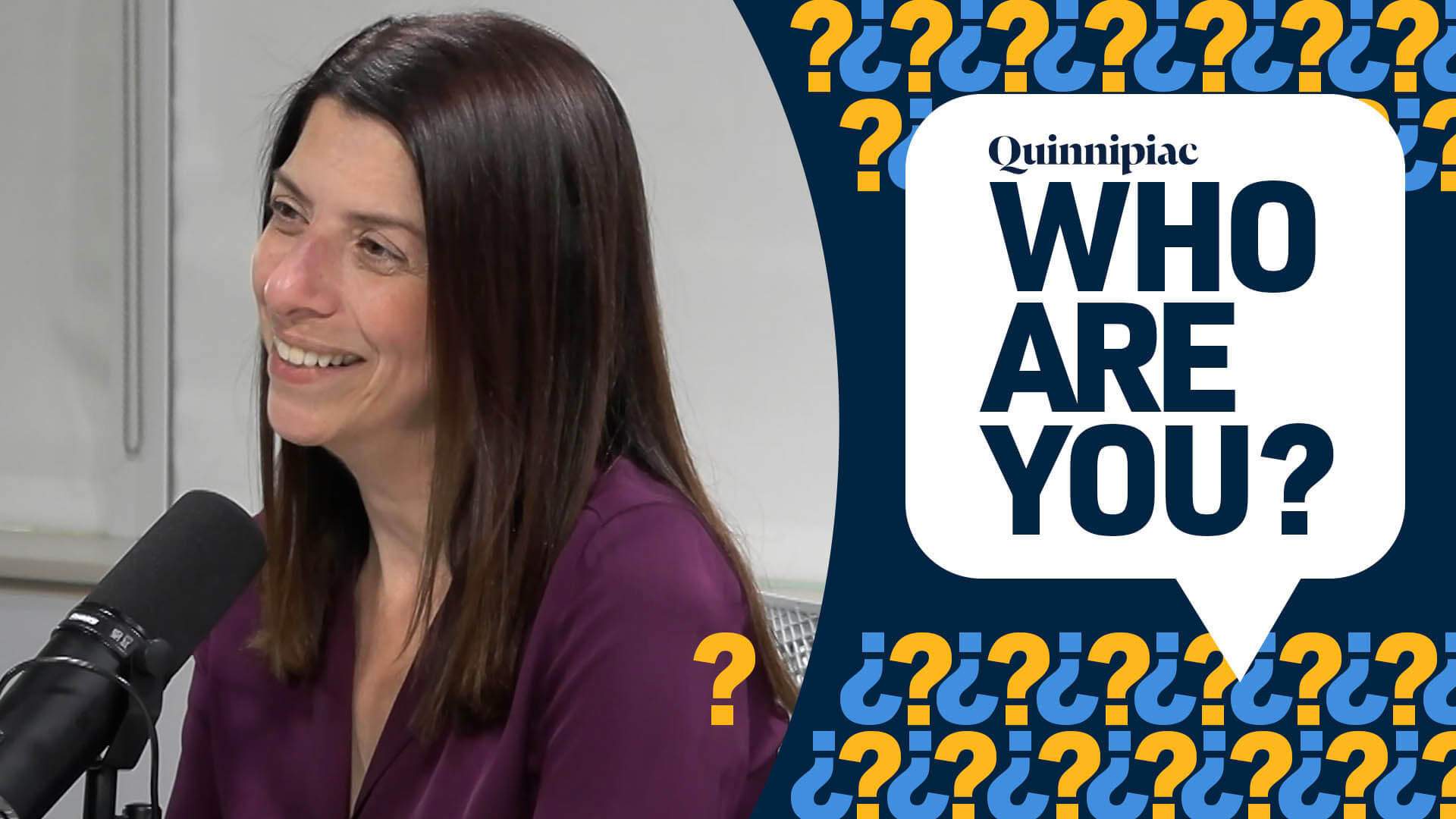
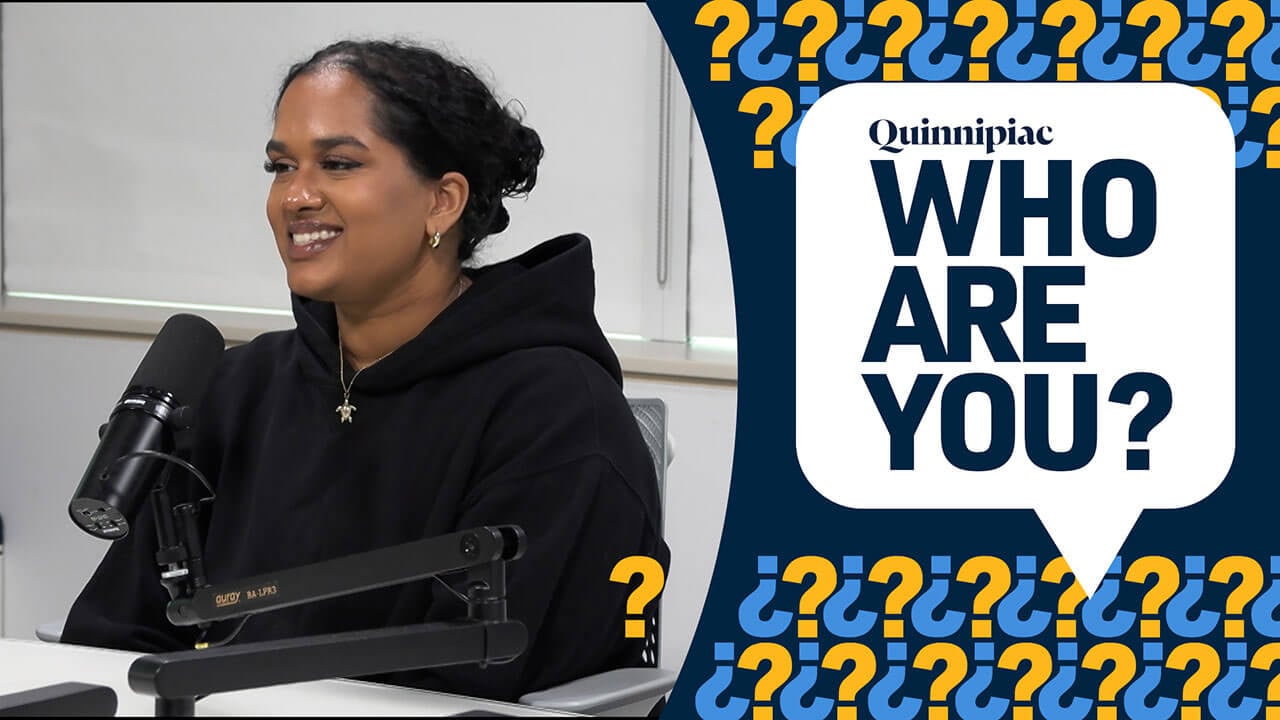
‘Who Are You?’ podcast with guest Professor Amy Paros
A journey from aerospace project management to teaching management
A journey from aerospace project management to teaching management
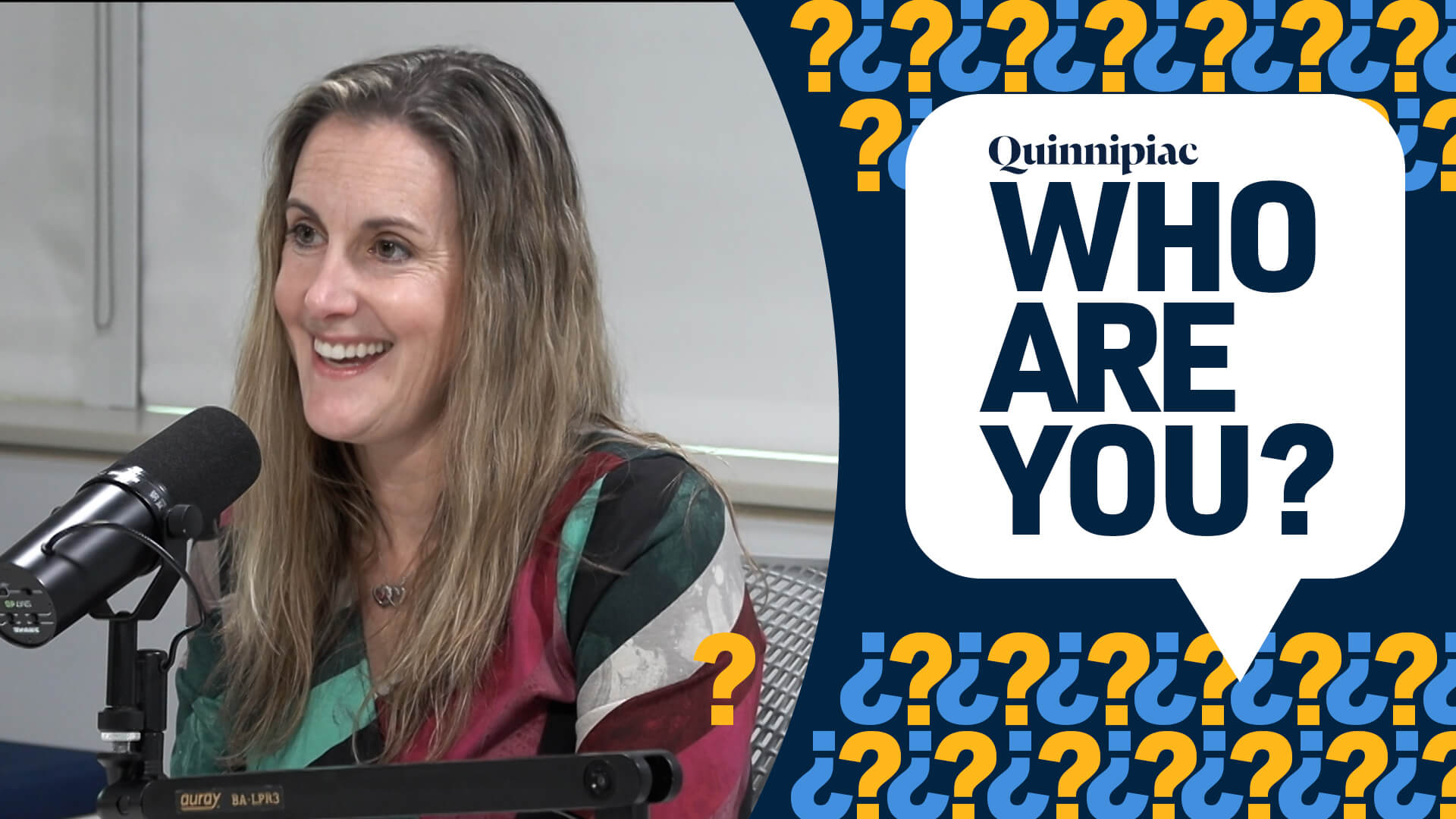
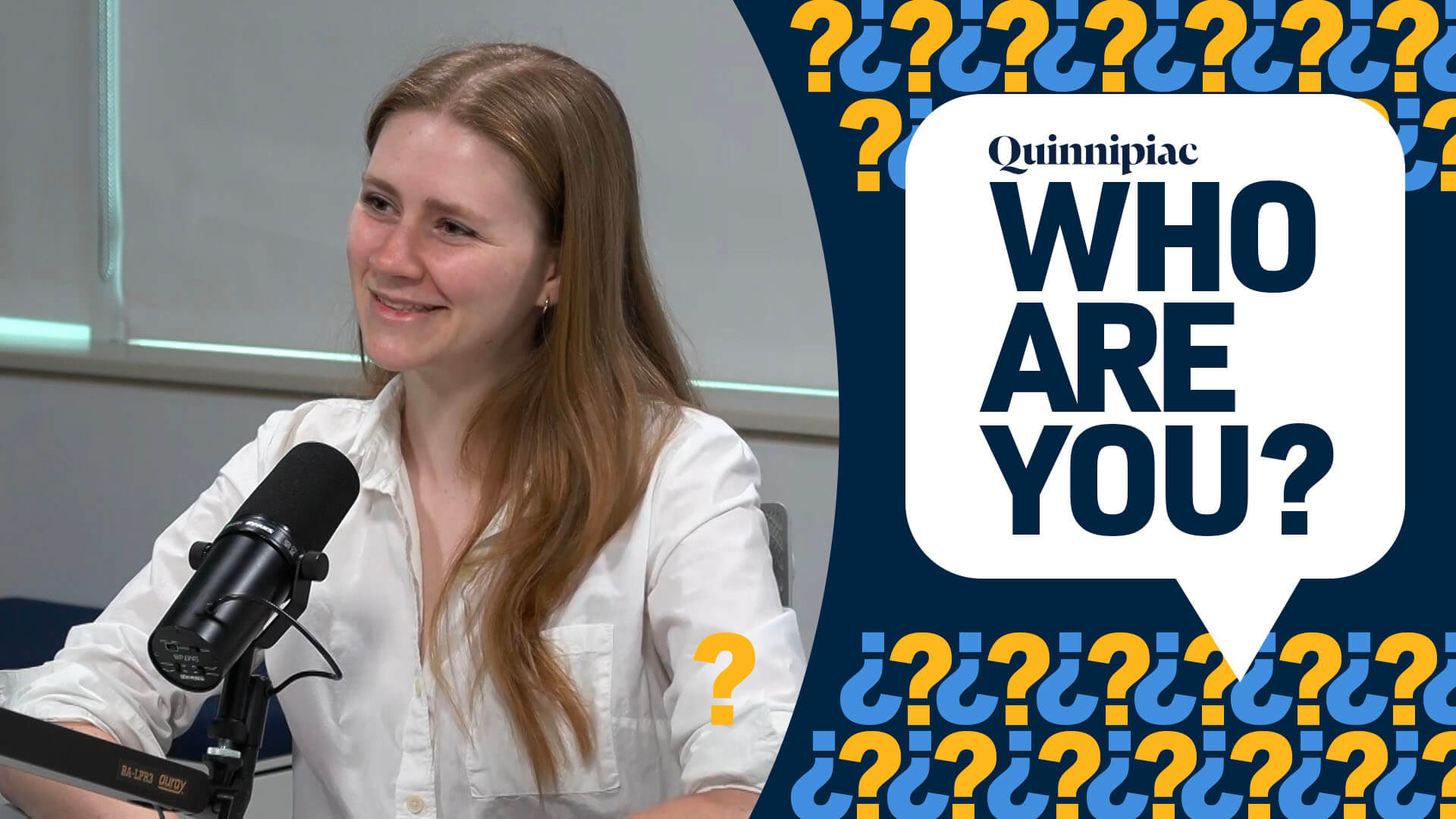
Joel Vanner: Hello, and welcome to ”Who Are You?,” the Bobcats, you know, the stories you don't. I'm your host Joel Vanner inside the Podcast Studio at Quinnipiac University's School of Communications, and I'm joined today by my guest, Professor Amy Paros. Professor Paros, welcome to the show.
Amy Paros: Thank you. I'm so happy to be here with you.
Joel Vanner: Can I call you Amy? Professor Kratz is gonna get long. The more we chat here. So, I'm sure you've seen an episode of our program before. I ask my guest the same first question, and that is, tell me who are you?
Amy Paros: And that's actually a hard question to answer.
Joel Vanner: It's a deep question.
Amy Paros: I've thought about it, and I am Amy Paros. I am proud to be a associate professor of management in the School of Business. My family is everything. I have played hockey for almost four decades, and I love my dog.
Joel Vanner: What position do you play in hockey?
Amy Paros: I've always been a defenseman.
Joel Vanner: And you're a coach. So we mentioned a little raspy voice had a long weekend coaching your kids hockey games. What kind of dog do you have?
Amy Paros: I have a 1-year-old golden doodle named Zoe.
Joel Vanner: Okay.
Amy Paros: I have a 4-year-old Vizsla named Mika.
Joel Vanner: So, Amy, take me back to Amy growing up. Where did you grow up?
Amy Paros: I grew up in Windsor Locks, Connecticut. It's a tiny three by three mile town right at the airport. So people think they're actually flying into Hartford, Connecticut. Fun fact, it's Windsor Locks.
Joel Vanner: You're flying into Windsor Locks, Connecticut.
Amy Paros: Flying into Windsor Locks.
Joel Vanner: Growing up, around the airport, that is something that kind of became a part of your life, which we'll get to later, right? But growing up, what were you interested in? Were you interested in airplanes just where you grew up or was there something else that kind of had your attention at that time?
Amy Paros: I mean, obviously, we are getting towards the airplane interest, but I think it just started as I tend to have a very active mind. So whether it was outside playing with my friends in the yard, like kids used to do or deciding I needed to know how something worked. I remember I took apart my dad's toaster one time. My mom's toaster?
Joel Vanner: You took apart and you couldn't put back together. What was, okay.
Amy Paros: I think it may actually be down on his workbench still. And then, of course, my brother started tinkering with it. My baby brother is five years younger than me, so we always tended to do things together.
Joel Vanner: Learned behavior there. Watch me take it apart.
Amy Paros: So, you know, I'm actually still not allowed to use my dad's tools, but I always wanted to know how things worked, why they worked. One of the quotes that kind of comes to mind when I was thinking about talking to you is not all who wander are lost because I like to just learn, understand, think about things, find something that I've never done before. I traveled a lot when I was in corporate, and I always had this rule that while I was traveling, I couldn't go to a chain. I had to find and, of course, this was well before, you know, we could just stick it into AI, and it would tell us and give us reviews. But I had to find a place that was small, was local, you know, ideally family run, and somebody recommended and said, Oh, you know, you need to go off the beaten path and go find that. And so just really learning about things, loving technology, taking things apart, putting things together, finding what I could find is really what fascinated me about growing up.
Joel Vanner: And we talked before the show about both of our loves for hockey, which was a huge part of your growing up, too. You mentioned your dad threw skates on you, and it turned out to be quite an experience for you growing up that led to other avenues in life, too. Tell me about what position you played in hockey and how that became such a big part of your life.
Amy Paros: So, I was defense in my undergrad. I actually played division three college hockey.
Joel Vanner: Did that lead you to college, or did you kind of go into college thinking academics or was that why you were there?
Amy Paros: Yeah, I think hockey was my doorway in, and then I realized, Oh, wait, I need to feed myself when I leave. And so then academics became a huge priority for me, absolutely, at that point. But my dad actually didn't put skates on me. So it started off. My dad had a pickup game at one of the local civic centers. And the story in my family is that my mom was delivering my brother in the hospital. I think it was more I think that's just kind of over time how the story has been created. Yeah. But she was very pregnant with my brother. And so my dad took me, and I had boots on, and he pulled me around the ice, and I looked at him and I said, Well I want to do this? And I'm dating myself, but in the 80s, while I wasn't necessarily a pioneer in women's hockey by any means, there were many strong women that came before, but it wasn't something that people were saying, Oh, that little girl, I want to put her on my hockey team. You know, so my dad helped carve out that space for me while my mom continued to drive me up and down the East Coast my entire childhood.
Joel Vanner: And that is something you continue today to do for your children, coach their teams. We talked about the long weekend you had coaching your kids teams. So we're in college, playing hockey, academics, coming into the picture. What did you study in your undergrad?
Amy Paros: So my little secret is I actually was computer science. Okay. But don't worry, you will never fly in an aircraft that I've programmed any code for. It wasn't something that I was great at, but what it was, it was my bridge to the technical side. I loved things that were advanced and engineering wise, and you know, manufacturing complexity. And so what happened was it was my doorway into my first job where I was in aerospace project engineer. And so I knew the technical, and I was able to bridge between the financial side or the business side and the customer side and really kind of get that engineering and manufacturing hub together with those other business entities.
Joel Vanner: And this was a place that you were third generation at, correct? Your father and your grandfather and your brother also worked at the same place. What was that family dynamic, like?
Amy Paros: My grandfather and father have not only worked there, but they also retired from there. My brother currently works there. I'm the only one that isn't going to retire from there because I'd love to retire from Quinnipiac long, long time from now. But it was interesting because there are times that I've worked with both my father and my brother, but it's always been professional. It's a giant fortune fifty company that we worked for. So it's funny that our paths came together. But it really was the hub of industry where I grew up. And so it kind of made sense. Most people worked there. I started off just as an intern. Probably even before that, I started off working security at their door. I would check trucks that would come in and out of the facility to make sure that they met the expectations and the security level. After that, I had an internship in finance. I have a mentor still to this day that told me, if you want to know about a business, start off in finance. And it's the only and ever time I've ever worked in finance because I didn't love it, but I learned a ton. From there, I came back with a firm job offer after graduation. So I graduated with my four year degree, and that was in computer science, and I came back as a project engineer. I worked on some military and commercial aircraft. From there, I continued a little bit with contracts management. I did some operations in the aftermarket space, which was really exciting because most of my career is in the traditional, design and development of aircraft hardware, which is very focused on low cost and low weight and high efficiency. But then you go into the aftermarket, and that's where the organizations really make their money, and you have more interaction with the end clients, the airlines. And so I got to work with Delta, and I got to work with some Japan airlines clients and some Midwestern United States based aircraft owners as well. And so that was really fun
Joel Vanner: And there's a part where you thought, I want to go back for my MBA, too, right? Take me through that process of being in your career and taking that step to go back to school. What was that like for you?
Amy Paros: Yeah, I always thought that I was going to just keep on working and then one day go into the C Suite and run the business the way I wanted to.
Joel Vanner: I mean, you got all those experiences starting out in finance, right, learning all the aspects of the business. You were on your way there.
Amy Paros: Yeah, I have a tendency to, like, want it my way, so I figured that that's what I was going to do. And in order to do that, I needed to know all these parts. So I had my foot in engineering, and then I moved over into a space where I knew I needed to know more about operations. So engineering being that design and development, the solving of those technical problems. And manufacturing still has to take all that brain engineering and make it physically exist in the world.
Joel Vanner: Turn it from paper to product.
Amy Paros: Yes. And so what I did is I ended up going back and I got a masters in operations. And then I had a little bit of, like, keep going to school. I loved school. I fell in love with learning and exploring. Like I mentioned, it kind of was my thread from childhood. And so I just stayed, and I went on for an MBA. And then after that, I was kind of like, What next? Interestingly enough, my dad made somehow cultivated this funny bet between my brother and I. And it was the person with the most college degrees, by the time they're 30 owes the other and all expenses paid vacation.
Joel Vanner: Did you know this before you knew it? Was it something you knew that this was a bet going on or, you lose or win the bet, and that's when you found out.
Amy Paros: No, no, no. So we actually tied. So I didn't finish my PhD until after 30, and he does not have a PhD. So I have more college degrees, but I didn't do it in the time frame. It kind of happened right around the time. He was finishing up his four year degree. I decided I was going to go back to school, and my dad got his degree actually as an adult. So he finished his college diploma three months before I got mine. And so it was something like he wanted to stir the pot on because education is that never depreciating asset. He said that to me countless times in my life. Education is the one thing they can't take away from you, and it never depreciates. So go get as much as you can of it. And so he kind of asked us and encouraged us to go do that. And at that point, I had finished two grad degrees and realized that I love teaching. I had taught some I had taught some classes in, like, a professional environment where the company I was working for did professional development, and I saw instructors. And there was a couple times they were like, Hey, why don't you come and teach this class? You know the content you've been here before. And so I did a little bit of that corporate training just on the fly. I was always coaching and around hockey. I did some CCD classes. When I was really little, I always owned, like, a third grade for my church, and I delivered that content. So I love teaching.
Joel Vanner: You're used to that, like, facilitation mindset, being in those learning environments with all those experiences.
Amy Paros: Yeah, as much as I love my own understanding, exploring, taking it apart, putting it back together, see what works, see how you can make it better. I love the experience and the opportunity when you can get somebody else there.
Joel Vanner: Unlocking it for them.
Amy Paros: So that's, that's my favorite.
Joel Vanner: Tinker with this and see what you find out.
Amy Paros: See what you find out. Together, let's see if we can get two plus two is something bigger than four, right?
Joel Vanner: So you're here at Quinnipiac as an associate professor in our management department in the School of Business. Tell me about the courses that you teach and how you bring all of those experiences and love for education into your classes.
Amy Paros: I teach organizational behavior, project management and leadership, mostly in the grad programs. So I'm primarily in the MBA program. I do both online and on ground courses. What I love about the courses I teach is it's really about it's not about a major. It's not about a job. It's about how do you look at the way organizations are structured, the way people work within those organizations, those connections across your network and your passions and where you want to make impact. And how do you use those things connected and threaded through theory to elevate your career to, you know, for some of our students, even carve out where are you going in your life?
Joel Vanner: Which could be a non linear path. We've had a lot of guests on the program. A lot of students say their path to just even getting to undergraduate is a non linear path to find out what they're interested in. And I'm sure for those in our graduate programs like the MBA Masters of Business Administration, it's something similar.
Amy Paros: Yeah, I think anyone who has had a linear path may need to reflect a little bit more on how they've moved throughout that path because there's always changes. I mean, I think I mentioned I was a computer science major. And here I am teaching organizational behavior and leadership. And the connection for me was through that project management, where I learned to take that technical love and match it up to the people in the organization side of a business making money and thriving. I think that the journey is really important, and not being closed to any potential opportunity. Have that conversation, say yes, a little bit more. Think about where you might go. I didn't necessarily think I would end up here, teaching. I love my job. I actually have a sticker on my computer that says, I heart my job. And students ask me all the time, Do you really? And I was like, Yeah, I do. I live over an hour away. So I drive special because I like to be here, and I love our students. And I think so much about my favorite part of being in the classroom is that, you know, that journey. And it's about how each student comes to us, what experiences they have and how you connect those into the learning outcomes you're trying to deliver to make it impactful for their unique experience.
Joel Vanner: What would you say to someone who is considering going back to school, maybe even going in our MBA program? They're not quite sure if they're ready to take that first step. They've listened to this episode and they've heard, you know, all the positives about education, and it's a non appreciating asset, and they're just not quite sure. What would you say to them as they're considering applying to the MBA program?
Amy Paros: Yes. Why not? What are you gonna lose? It's all those things, yes, yes, yes.
Joel Vanner: Bet on yourself.
Amy Paros: Yeah, because I think the moment that you don't and you sit back and think, Am I ready or can I do it, you've already gotten in your own way. Just go for it. And I'm not saying don't know, don't plan, don't you know, make decisions based on data. Do your research, make a decision, and go for it. See where it takes you.
Joel Vanner: Well, Amy, thank you so much for joining me on the show today, sharing your experience, insights and all about you. I appreciate getting the chance to talk to you.
Amy Paros: Thank you very much. I appreciate you, too.
Joel Vanner: If you enjoy today's episode, be sure to subscribe and share and find other episodes on Apple, Spotify, and YouTube podcasts. Until next time when I ask my next guest, Who Are You? I'm Joel Vanner. Bye for now.











Quinnipiac Today is your source for what's happening throughout #BobcatNation. Sign up for our weekly email newsletter to be among the first to know about news, events and members of our Bobcat family who are making a positive difference in our world.
Sign Up Now