



‘Who Are You?’ podcast with guest Professor Stan Veliotis
How a career in accounting can transform your life
How a career in accounting can transform your life
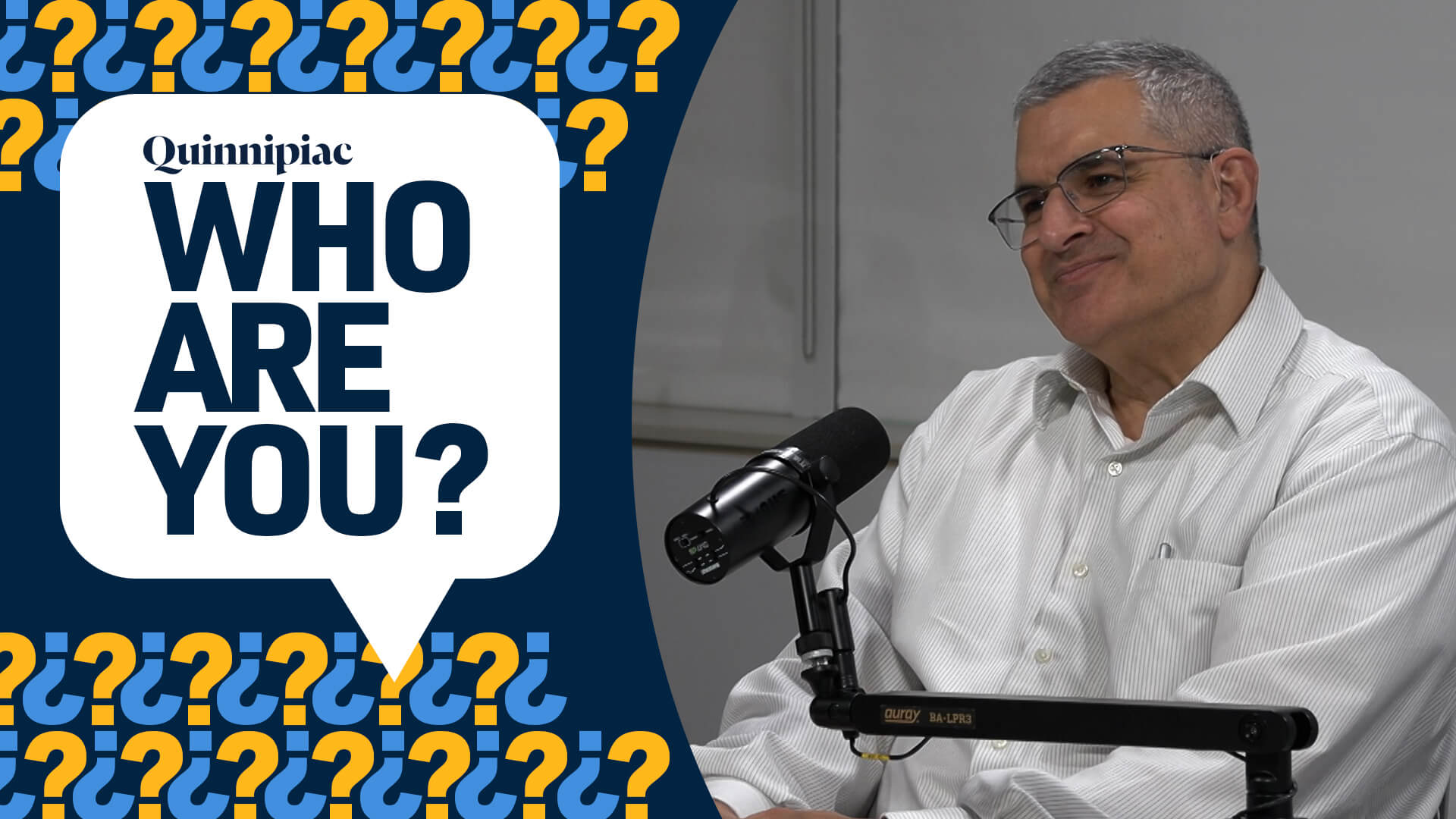
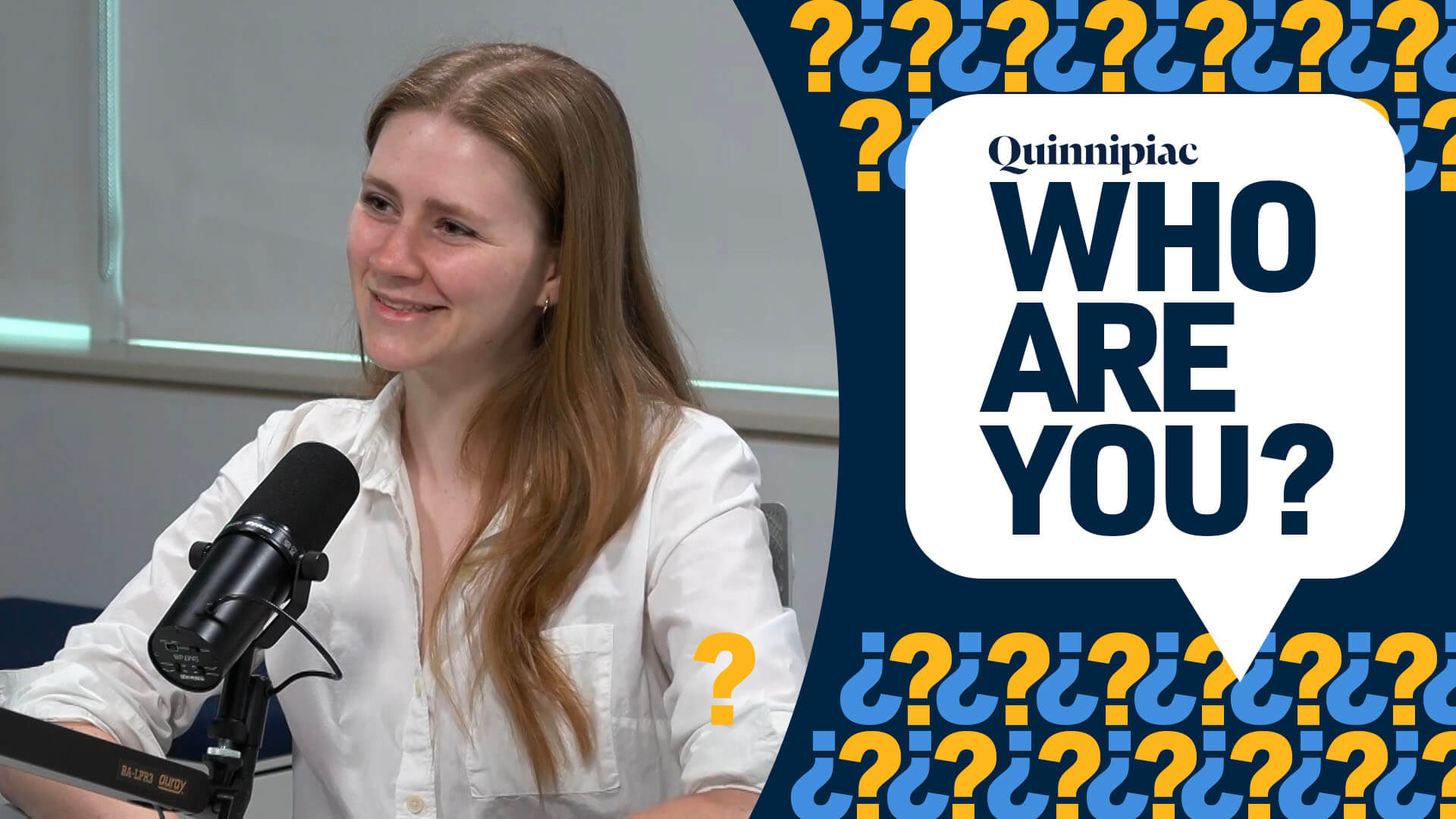
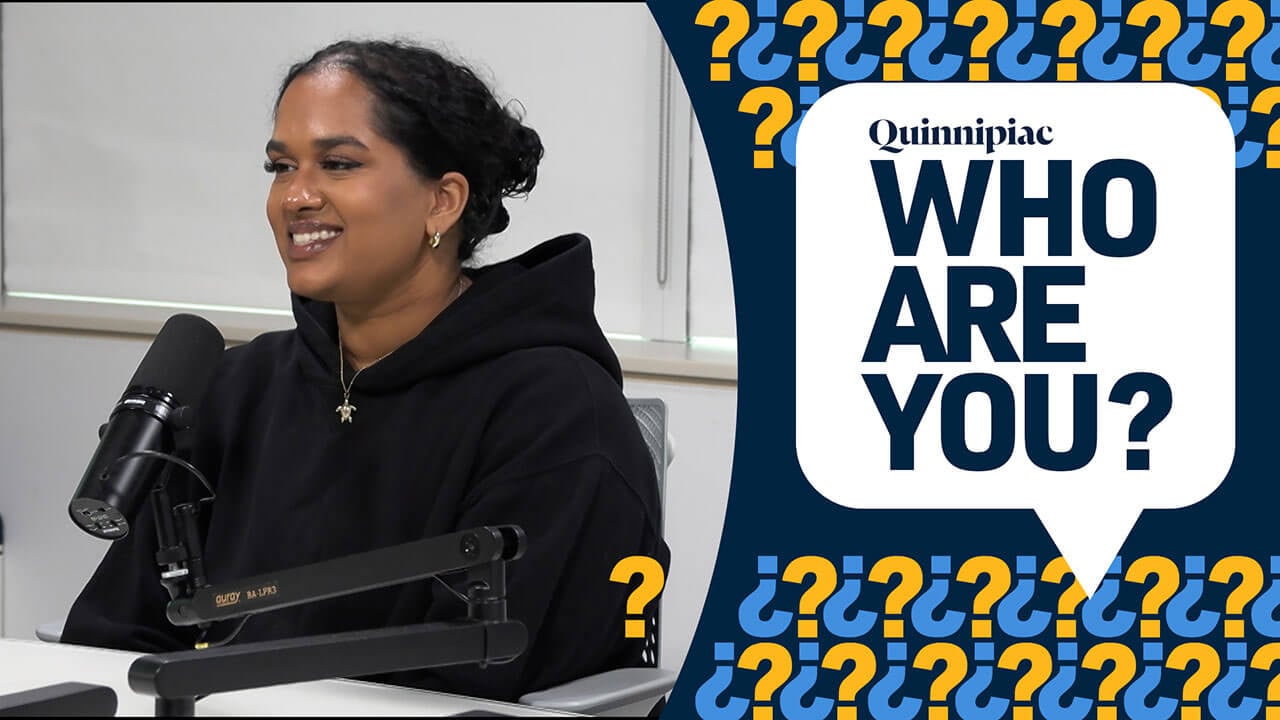
Joel Vanner: Hello, and welcome to ”Who Are You?,” the Bobcats, you know, the stories you don't. I'm your host, Joel Vanner, inside the Podcast Studio of Quinnipiac University's School of Communications, and I'm joined today by my guest, Stan Veliotis. Stan, welcome to the show.
Stan Veliotis: Joel, thank you for having me. It's good to see you again. It's nice to be talking to you in this podcast here.
Joel Vanner: Good to see you on the show, too. I ask my guests the same first question every time. I don't know if you've seen a previous episode, but that first question is, who are you?
Stan Veliotis: So I'm Stan Veliotis. I'm the chair of our accounting department in the School of Business here at Quinnipiac, also an associate professor. That's what I am now, how I got here. This is sort of the second half of my professional career, second half being in academia. I came from another school recently over to Quinnipiac. But before that, my first half of my career was in law firms and accounting firms, mostly accounting firms, practicing as a tax lawyer, CPA, then I made to move- Made the move to academia, because I just love working with young people. And I was adjuncting and caught the bug, and then I bit the bullet and went for my doctorate up here in Connecticut. And that's how I discovered Connecticut. I'm from New York City originally.
Joel Vanner: Not that far away.
Stan Veliotis: Yeah, yeah. And so I just love working with young people. I love writing about what I want to write about. I love teaching what I want to teach. I'm just a very selfish person that gets to indulge and get paid for it, too.
Joel Vanner: And you're here at Quinnipiac recently joined our community. Welcome again to Quinnipiac. So let's take a step back further in time. You mentioned you're from New York. Well, New York City? What part of New York?
Stan Veliotis: Queens, about a mile or so from what used to be called Shea Stadium.
Joel Vanner: Okay.
Stan Veliotis: Now it's called Citi Field. As we used to go in during off season, sort of break in and play football on the football field and have fun. So a town called Elmhurst is about a mile from Citi Field. That's where I spent my first 25 years, living with my parents.
Joel Vanner: And growing up, did young Stan think one day, I want to be an accountant?
Stan Veliotis: Last thing on my mind, I didn't really have any role models in our neighborhood. It was poor working class neighborhood. My parents my dad was a laborer, my mom and dad came to the US after the war, didn't have an education. All the neighbors seemed to be pretty much in the same boat.mAll laborer types. I think I was one of maybe a couple of kids maybe on the block that maybe went to college, so no guidance. So I sort of drifted into college. It was practically free. One of the city University of New York programs was pretty much, if you lived in the city, it was practically free. That's the only reason why I went it was free. And my father said, look, either work or go to school, I'm like, alright, I'll go to school.
Joel Vanner: So you chose to go to school, kind of happened in there, drifting around. Where did you solidify your interest in what you wanted to study? How did that process come about for you? Was it you decided on business accounting, or was there something else that you pursued at the outset?
Stan Veliotis: Right, so in the beginning, I was drifting, like I said, and I did, like, the the Western literature courses, the philosophy courses. It was a way to sort of, you know, read about very stimulating topics without the stress of it leading to a career, just having fun, hearing professors give their views and debating topics. And then when I took an accounting course, Accounting 101, the professor was coming in with a suit, and at some point, he dropped the line "Well, I make 100,000 a year." I almost- My jaw dropped because 100,000 a year was a lot of money, not just in Queens, anywhere, probably. So he was doing well with his practice, but that got my attention.
Joel Vanner: The suit? $100,000 a year?
Stan Veliotis: Exactly.
Joel Vanner: Stan said, that's me. I want that.
Stan Veliotis: That's right. And it didn't seem like it was rocket science and to make that kind of money. So that got me a little more focused on the coursework, so I changed my major to accounting and took an extra half a year to graduate because I was a little bit behind. But that pretty much focused me on a career in accounting and in business.
Joel Vanner: So finding this interest in accounting then from that professor, well dressed, high paid job, what was your first entry into the professional world of accounting? Was it when you were in college through an internship or was it another experience?
Stan Veliotis: I think my first internship, well, let me back up. When I was in high school, I worked as a messenger. Some people watching this podcast probably don't know what a messenger is. At one point, we didn't have email. And before that, we didn't have fax machines.
Joel Vanner: Sounds kind of peaceful.
Stan Veliotis: Peaceful.
Joel Vanner: Yeah, haha.
Stan Veliotis: So if you wanted a document to be sent across town in Manhattan, you would hire someone for ten bucks to deliver it. So the company I worked for was a messenger service. So I enjoyed delivering packaging, packages. And I was always wondering, wow, he's charging $10 for each package. He's paying me $2 an hour- $2 an hour was minimum wage back then. How does he make money? So I started my mind was also coupling it with my accounting courses. How does he make money? And then it dawned on me, well, he's got a fixed cost of me going downtown. He's paying me to $2 for the hour, but he's got me taking five packages. He's got the fixed cost of two bucks, but he's setting in five packages. So this idea of there's ways to make money if you sort of use your brain, think about how money flows, it got me interested in business itself. But then when I came out of college, I got a job with a very small accounting firm. And because the small accounting firm, you tend to do more diversified work, as opposed to generally, the bigger the firm, the more specialized you are. So working for these small accounting firms, you get to see basically under the engine of a business, and I got to appreciate far more than just my example of delivering a package downtown I got under the engine. And so what drives a business to profitability, what makes them suffer, and that really I got hooked at that point.
Joel Vanner: So you liked that first experience. You found kind of your area that you wanted to be in? In that?
Stan Veliotis: Yeah, right away, well I knew I loved adding up the numbers to find out, was this business successful or not? It's almost like a roll of the dice. Is it going to be a seven or not, or if you watch your favorite team play on a Sunday, are they gonna win or not? So, business is almost like looking at the sports pages or looking at a website for your favorite team to see how they did. So the client didn't know whether they were doing well or not. They give you all their information, and back then it wasn't as automated as now. So it took a while to crunch the numbers and say, You know what? You made 200,000 this year. Oh, no, you lost 30,000 this year. And it was so exciting to fight your way through the numbers.
Joel Vanner: It's like storytelling your way of the success or not of a company through financials.
Stan Veliotis: Exactly. It's basically, it's a motion picture of how they did last year, the story of how they did and a snapshot of how they look right now, and ideally a forecast of what that movie will look like next year based on things we can point out to them. But I just found it so fun to work with it. Because before that, I think I told you this story when we met last time outside of this setting, this idea that you sort of thought it was funny. I thought it was just a story. I didn't realize it was funny. I guess it is funny to people, but I'm so into money that even before I knew about business, I used to take my paycheck from being a messenger. We used to get paid in cash. We didn't have Venmo and all these things you young people have now.
Joel Vanner: Sure.
Stan Veliotis: So I would take my cash, and we'd get paid, and I would bring the cash home, and the money would be a little bit dirty, like literally dirty from being handled by so many humans. I would literally wash it, Joel, and-
Joel Vanner: What? In the bathtub?
Stan Veliotis: I would wash it in the sink.
Joel Vanner: Okay.
Stan Veliotis: And then let it with a little bit of soap and let it hang in my mother's little boiler room. And then it would dry the next day. Not done.
Joel Vanner: She said, Stan, you got to make room for the laundry and get it off the-
Stan Veliotis: Get it out of there. Get it out of there.
Joel Vanner: On the clothesline.
Stan Veliotis: Get it out of there. Then I would iron it, and then it would organize it by serial number, by year. I think I had in me a little bit of that attention to detail.
Joel Vanner: Yeah.
Stan Veliotis: Not a really good skill to have at that point, but I just enjoyed so much the order of things. And the fact that it was money turned me on to money. Oh, now Stan's got $350 in the bank. Now he has $450. I was $500 in the bank. You can buy a guitar now. I sort of like seeing the accumulation of wealth, albeit at small levels, and then seeing it with my clients at work really got me hooked. Again, got me hooked to it even more.
Joel Vanner: There is something about seeing the physical dollar, right, to equate with a certain amount that, wow, that is a good sum there that you have.
Stan Veliotis: For sure.
Joel Vanner: So fast forward to your entrance into academia and into teaching. Where did you find a love for teaching in relation to accounting?
Stan Veliotis: So as I was rising through these consulting firms, I was first a junior person being delegated work too and then asking questions of my supervisor and hopefully learning a little bit and being mentored a little bit. So as I was rising up a little bit, I would then become the mentor to younger people under me and delegating work to them. And I found myself enjoying that part of the job the most. Yes, the client had a deliverable that was needed. They were paying X dollars for this project in the next three weeks. But I would enjoy talking to this young staff person about, well, here's what they're looking for. They're not asking for something else, but just so you know, ideally, we would also tell them this and give them the well rounded. Bit of advice. We're not paying for it, so we're not doing it, but just keep in mind. So I would go off on these sort of tangents. And then you'd have the bosses walk by and say, Stan, it's really nice what you're doing with them, but, you know, we have a deliverable, and the client's not paying for that. So I found myself enjoying that more and more, less and less the part of the job that is about making money and being tough on staff. So I started adjuncting, stumbled onto adjuncting part time. And that was just 3 hours night class, just pure joy. Look at my watch a minute later. It felt like a minute later, and of course was over. I want more. So I enjoyed adjuncting so much that it confirmed that I loved working with young people. I love imparting knowledge. I love people being forced to listen to my jokes and war stories.
Joel Vanner: Do you quiz them on them, too?
Stan Veliotis: I throw- I throw references in my exam.
Joel Vanner: Okay.
Stan Veliotis: References in my exam. And I get a little chuckle sometimes when people get the inside joke. But that's what made me decide within a couple of years to pursue the doctorate, to get full time into the teaching business.
Joel Vanner: So here at Quinnipiac, you are the chair of our accounting department, also, an associate professor of accounting. How do you take all of the experiences that you've had in industry and translate them into lessons for students in the classroom?
Stan Veliotis: Yeah, I would say a couple of ways. One thing is to make sure that we do hit the material that's in the textbook, even though that might be yawn, boring. The reason why is we are a licensed program- We're a licensure program. In other words, our kids are going to become CPAs. Just like a medical school and a law school.
Joel Vanner: And a CPA is a certified public accountant?
Stan Veliotis: Certified public account.
Joel Vanner: Okay.
Stan Veliotis: And therefore, we have to make sure that we hit the material. But I do also work in how it's relevant in the real world, how, yes, the book focuses on this and even the CPA exam focuses on this, but here's what it means in the big picture, trying to bring to bear things that I feel are important, so that even if a kid decided to change their major at the last second, they can take with them something about, you know, here's how we do budgeting. Here's what it means to be wealthy or not wealthy. So that's what I try to do is bring things from the real world that I feel are relevant. I also bring a lot of I get beat up in my evaluations sometimes, but I am tough on them in terms of the process part of the course. You know, if, for example, if they reply to an email to me, they answer an email to me, but they don't reply with the history. I know it's annoying that I'm pointing out to you, Joel, you answered my email, but you sent a brand new email. I don't know what you're answering. I'm a very busy person. Make believe I'm the client. Make believe I'm the partner, though, the boss at the job, and practice with me. I'd rather have you have egg on your face with me and let me point it out to you versus maybe turning off a colleague or an important client because you're doing something that's very inefficient and pushing work onto them. Have a version of empathy. The other person's busy, too. You need to be a little bit more organized. So I do some of that, too, even has nothing to do with the substance. This could be a chemistry course or it could be a-
Joel Vanner: Right.
Stan Veliotis: An accounting course. So I try to do a lot of that. It goes back to this whole mentoring thing about-
Joel Vanner: Simulating the real world experiences that they'll have once they land in the workforce after college.
Stan Veliotis: Exactly. And the way we organized this podcast was just so easy and efficient because we're all following efficient ways of doing communication and then keeping the email history. And it sounds like a silly thing to point out to someone. But they don't realize 'cause they're only 19-years-old, some of them, and they're just used to doing their texts and in the real world, maybe at some point, my generation will fade away, and all these kids will be doing everything by text or someday just talking through implants in the brain. Who knows what's gonna happen. But until my generation goes away, until all the gray hairs are gone, and then, Joel, your generation has the gray hairs, and then something new comes along.
Stan Veliotis: I've already got a couple.
Joel Vanner: You've got a couple?
Stan Veliotis: You just can't see it on the camera. So I would say with them, Look, just indulge me. Think about trying to make things easier for the "older folks" because there's a reason why we want the email here from you. There's a reason why we recommend saying something like this in an email versus that. So I do a lot of process, and it does a little bit annoy some kids, but I do feel it's an important part of being a mentor, just like a parent might be tough on you and years later, you realize, yeah, my dad was right for yelling at me about that.
Joel Vanner: You talked about process, and we've said the word accounting a lot, and I don't think we've said the word taxes a lot. Something that has a process is taxes, and that's really your area of interest in accounting, right? What draws you to that area specifically?
Stan Veliotis: Yeah, so there's two major parts of accounting careers, especially back in my day, everybody had to do something called auditing, A-U-D-I-T. We all know about auditing, with "the IRS is auditing me". But the auditing that we talk about in the CPA world is when an accounting firm is hired by a big company, even Quinnipiac has an accounting firm that audits that samples their data to make sure that the numbers are reliably represented in the financial statements. And heaven forbid, there's not fraud going on, like the whole Enron case that everyone knows is a case study of fraud that wasn't caught by the accounting firm. So, so I was doing that for my first two years. Everyone had to do auditing back in the day. So it forced you to learn how to audit techniques, how to learn about getting under the engine under the hood. As you were getting your license? Is was getting my license. So once I had my license, I said to myself, well, do I want to focus on auditing, or do I want to do more of what I was doing on weekends for this accounting firm? Because during the busy season, they would make us come in and do tax returns for humans, not just the corporate clients doing audits, but doing all these wealthy individuals' tax returns, including some athletes, some people that were playing on TV, playing basketball. That Sunday. It was fun to be working on his tax return. And so I was turned on to it because I like the fact that when I finished the tax return, there was a very anxious client waiting for the results.
Joel Vanner: Sure.
Stan Veliotis: How much is my refund? How much do I owe? Why do I owe that? And I would love seeing how the partner and the boss would handle. The client just sort of, you know, calmed them down, explained why. Learned a lot of good techniques to how to deal with stress with clients. 'Cause clients sometimes are not rational when it comes to their money. They don't appreciate why they might owe something. It's a nice problem to have. You know, you made $1 million gain on the sale of something. Be lucky that you made that profit.
Joel Vanner: Right.
Stan Veliotis: So you're paying 300,000 on $1 million. So the money part of the fact it goes back to my whole ironing of money thing. I just love the idea of money, not that I'm a capitalist pig and that I would step all over you, Joel, and take $1 out of your pocket if you're not looking. It's just that I love the idea of how money it's like a sport. And the more careful you are, the more inventive you are, the more inventive you are, the more you can gather as these points. And instead of points on a scoreboard, where you win the game or win the Super Bowl, you win in the financial game of life that, I'm financially secure. I can pay for my kids' wedding. I can pay for their tuition. I can leave a little to my grandchildren someday if I have grandchildren. So so it all goes back to that that tax is about real money. And so, doing the tax returns was one way of exposing myself to a client's reaction to the financial result. I also like the planning part because there are totally legal ways, totally legal and ethical ways to plan. For example, some listeners here probably are putting money into their 401K or here at a university we pay 403B plans. And that's a great idea to do that. There's reasons why we do that because of tax rate savings, time value of money savings. And that as I learn more and more about planning, it was more and more just a thrill of ways to save money. It is really, really interesting.
Joel Vanner: Looking out for your future self. It sounds like accounting is heavy in the math, heavy in the mathematics, right? But it's also there's a human connection personality part that you kind of alluded to when you're reporting to the client. So as we get into this age of AI as it relates to academics, what would you say for students who are interested in careers in accounting, but may be skeptical that that may be an industry that could be impacted by artificial intelligence?
Stan Veliotis: Yeah, I hear the concern. I see it. But the analogy I give is going back, because again, I've been around for a while, we used to do tax returns literally with a pencil. And I would work it out for hours and hours literally with an eraser, erasing my mistake, blowing over the eraser part. My boss would sign off on it. Then we would make photocopies, send it to the client. Hopefully, there were no changes because then we'd have to do it all over again.
Joel Vanner: Send it through messenger, right?
Stan Veliotis: Oh, through messenger. And then they would file with the IRS through snail mail, through the mail. So when they started having computers doing this, including our ability to send these input sheets to, I think, Texas it was with the information, and then it was put into a computer, came back came back a week later. Or eventually, we had a big computer in the office, and people were able to do it in the office. Then we had our own computers. People worried it's gonna get rid of all the jobs. And, if anything, the tax business has doubled, quadrupled since then. I don't know what the exact numbers are, but if you look at these big accounting firms, they've gone up in size, three, four, five times since then. So my view of the AI, as well as the technology bursts with the computer software, the kind of software that many of the listeners use turbo tax and-
Joel Vanner: QuickBooks.
Stan Veliotis: QuickBooks for the accounting part. It just makes the job, the mundane part of the job easier, quicker, more accurate. And it frees one up to do more thinking. What do I want to do with this? Why is this happening? So it makes the job more enjoyable. Photocopying for hours and hours as a junior lawyer, as a junior accountant, a lot of that stuff is done much more easily now or not even done at all because it's all in a PDF file on someone's computer. So had I been a young junior staff person now, I'd be able to be freed up to do more of the thinking and enjoying as opposed to drudgery. So perhaps the hours are a little bit less now than back in my day, where sometimes you would come in all weekend just to make photocopies, and the partner would apologize. But look, you know, I need someone to do it. You got to do it. And you learn nothing doing that. Whereas if AI is going to help you with some shortcuts or back then with the computer software 20 years ago, 30 years ago, it just frees you up for more of the thinking, the fun part of the job, the consulting part of the job, the communication part of the job where you get to deal with the human, the client, as opposed to being in the back office for hours and hours and hours locked away.
Joel Vanner: And how are the courses in our accounting program here at Quinnipiac helping prepare students for an area in accounting maybe they don't know that they want to be in now, but they get into in the future? How are the courses at Quinnipiac helping students prepare for that?
Stan Veliotis: That's a good point. So, we try to make sure the kids hit enough topics that they're in good shape for the CPA exam, although every program in the country recommends that kids take a review course. These are these professional outfits that help doctors, future doctors, future lawyers, future CPAs, focus on the things that these review courses pretty much know are going to be on the exam and target you to pass the exam, not necessarily to be a well rounded business advisor that I try bring into my classroom. So our courses have a wide diversity of topics. For example, every student has to take tax. Even if they know they want to be an auditor, they have to take tax. And then each one of us each one of them has to take auditing, even if they know they want to go into tax. So they do get enough different topics that they get exposed so that someday if they're part of a firm, they know what their colleague down the hall is doing. They can sell a project, even though they don't do that work itself, they can sell it. So they see enough of the other kind of topics. And then the basic meat and potatoes, these financial accounting classes, what does it mean to have a profit? What does it mean to have a net worth of X dollars? The details of how to get to those numbers or in a sequence of the accounting 101 course. Here we call it 211. And then you build onto it with these courses in your usually your senior years that go onto intermediate one, two, three just drills down way more than it would have been when you were in a bunch of-In a class with a bunch of students that were not accounting majors. We drill down way more. And so I think by the time they come out of their bachelors they're in great shape for the exam. They're in great shape to do whatever they want to in the business world because they understand accounting and enough about tax to be either a great CPA or just to run their own business.
Joel Vanner: And what would you say to students? What advice would you give to those who may be interested in a career in accounting, but they're just not quite sure. How would you suggest that they get started in that way? Just take a class or is there somebody that you look up to in industry? What would you say to them?
Stan Veliotis: A couple of things. If they're a business student, the good thing is they'll see an accounting class because we have that accounting 211 class, or accounting 101, basic accounting. If they're not, it's a shame because I think that every student, I don't care what your major is. We're all gonna work for a living later. We're all gonna have to worry about limited resources and how do I pay the bills, and how do I save for the future? I think it should be a required course. Again, I'm selfish because it's my top. It's my world. I think everything I do is important, and whatever you do, Joel is not important.
Joel Vanner: Well, you're on the microphone today, so we're hearing you.
Stan Veliotis: So, I would say, try to take the course. If not, maybe go out and listen to people like, Warren Buffett. Because Warren Buffett's big on the key the key that accounting is the language of business. I think it's the quote that gets attributed to him. And just take a look at what's out there. Now, we don't see as many movies with accountants. You see a lot of movies with doctors and lawyers. I mean, the one movie that's out there is The Accountants, which is the least realistic.
Joel Vanner: Not at all related in that-
Stan Veliotis: Exactly. I don't, we don't-
Joel Vanner: I've seen it a couple of times.
Stan Veliotis: Right. This is the Ben Affleck movie for those that haven't-Although as an Accountant 2, I think, I heard out now, I think, where he's still an accountant and he's shooting up more people, whatever. Not very realistic. Whereas a lot of lawyer and doctor movies, engineer movies seem to be realistic. The accountant ones, they're usually just a nerd in the back. And that's just the old stereotype. It doesn't reflect nowadays where the tools AI included data analytics software. Just make you a lot more like a big shot consultant that you also had seen the movies glorified, whereas the accountant nerd in the back office, that's just the old 1950s movies, not anymore. So I would say, try to maybe do a little bit of searching out there if you don't have the course and listen to what people like Warren Buffett say because they love it. You could also look at some financial statements. If your parents, if you're a younger person, who doesn't own stocks or if you yourself are interested in the company, let's say you love Netflix. You can't get enough of Netflix. Why don't you just go look at Netflix financial statements Alright, it'll be a little bit hard to understand the first time, but it's got the word cash there in $10 billion. It has the word their content, $30 billion. Take a look at how they measure themselves financially. And then the next page would be how they did revenue of this many billion, expenses of this much. And you'll get an appreciation of what accounting does and reflects and informs even the customer. Why does Netflix charge me $15 a month? Now you appreciate why they spend a lot of money to deliver what they deliver. So that might be another good idea. Go to your favorite company. You'll be more motivated and take a look at their financial statements.
Joel Vanner: Get a better understanding of how the world works, and at the end of the day, I don't know, maybe balancing a checkbook could be some level of personal accounting in that way, which is a skill I have, but I hope future generations have, too, at this stage. Well, Stan, I appreciate your time today. It's great to have you on, and thank you for sharing your background and your experience and insights into the world of accounting here at Quinnipiac.
Stan Veliotis: Great. Thank you so much for having me. Nice talking to you.
Joel Vanner: If you enjoyed today's episode, be sure to subscribe and share and find others on Apple, Spotify, and YouTube podcasts. Until next time when I ask my next guest, who are you? I'm Joel Vanner. Bye for now.















Quinnipiac Today is your source for what's happening throughout #BobcatNation. Sign up for our weekly email newsletter to be among the first to know about news, events and members of our Bobcat family who are making a positive difference in our world.
Sign Up Now