



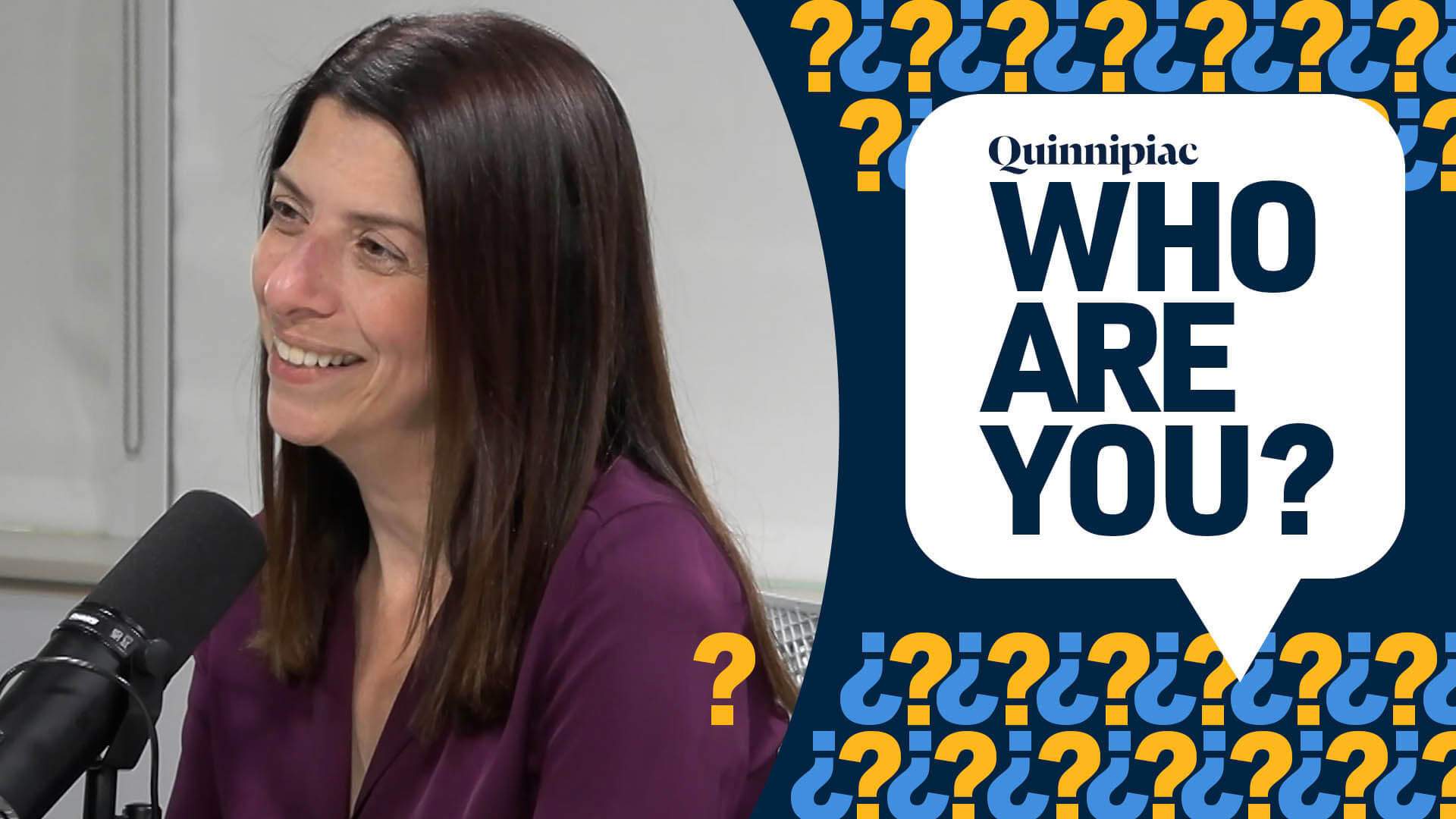
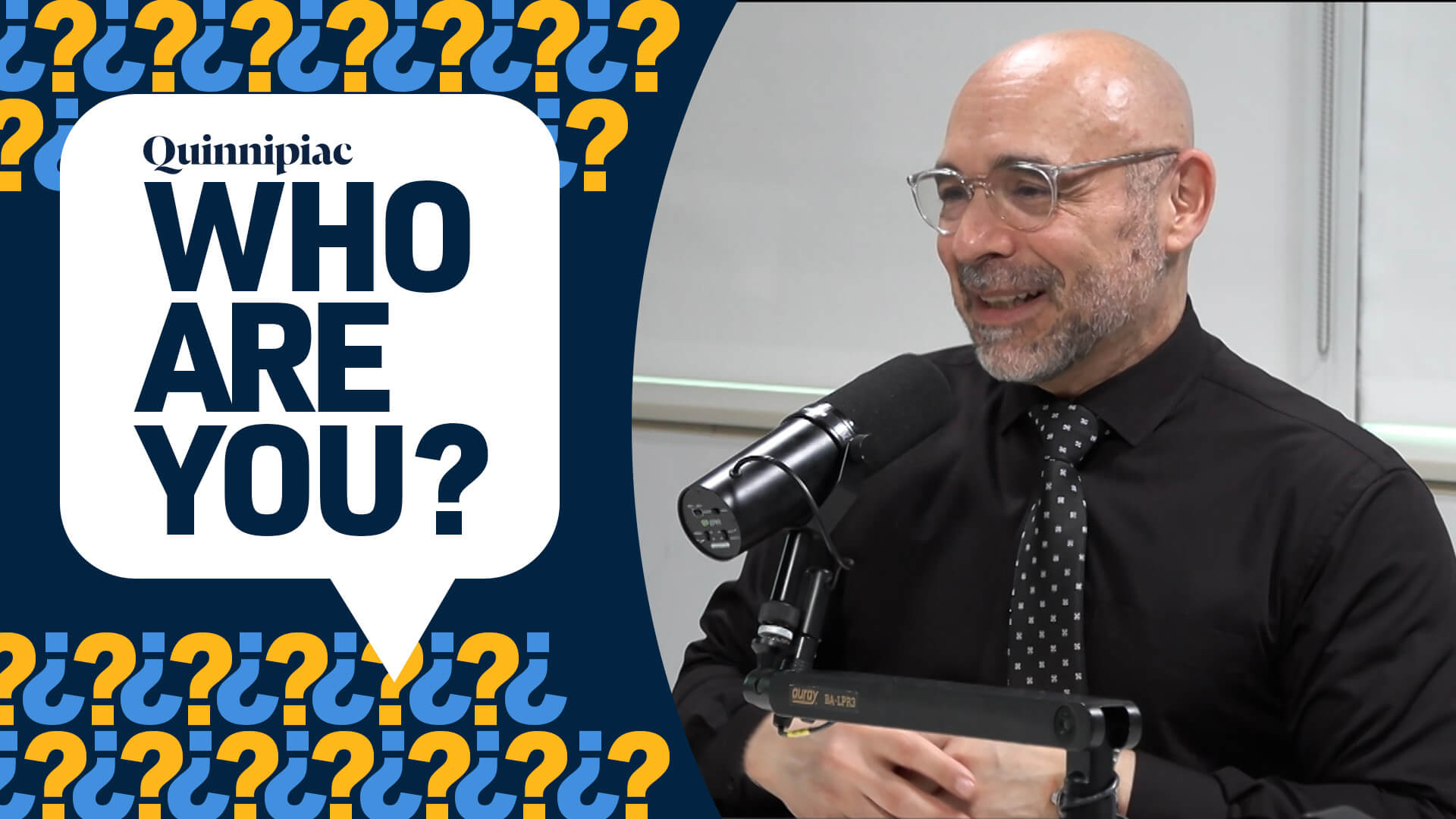
‘Who Are You?’ podcast with guest Professor Ari Perez
Everything you need to know about Civil Engineering at Quinnipiac
Everything you need to know about Civil Engineering at Quinnipiac
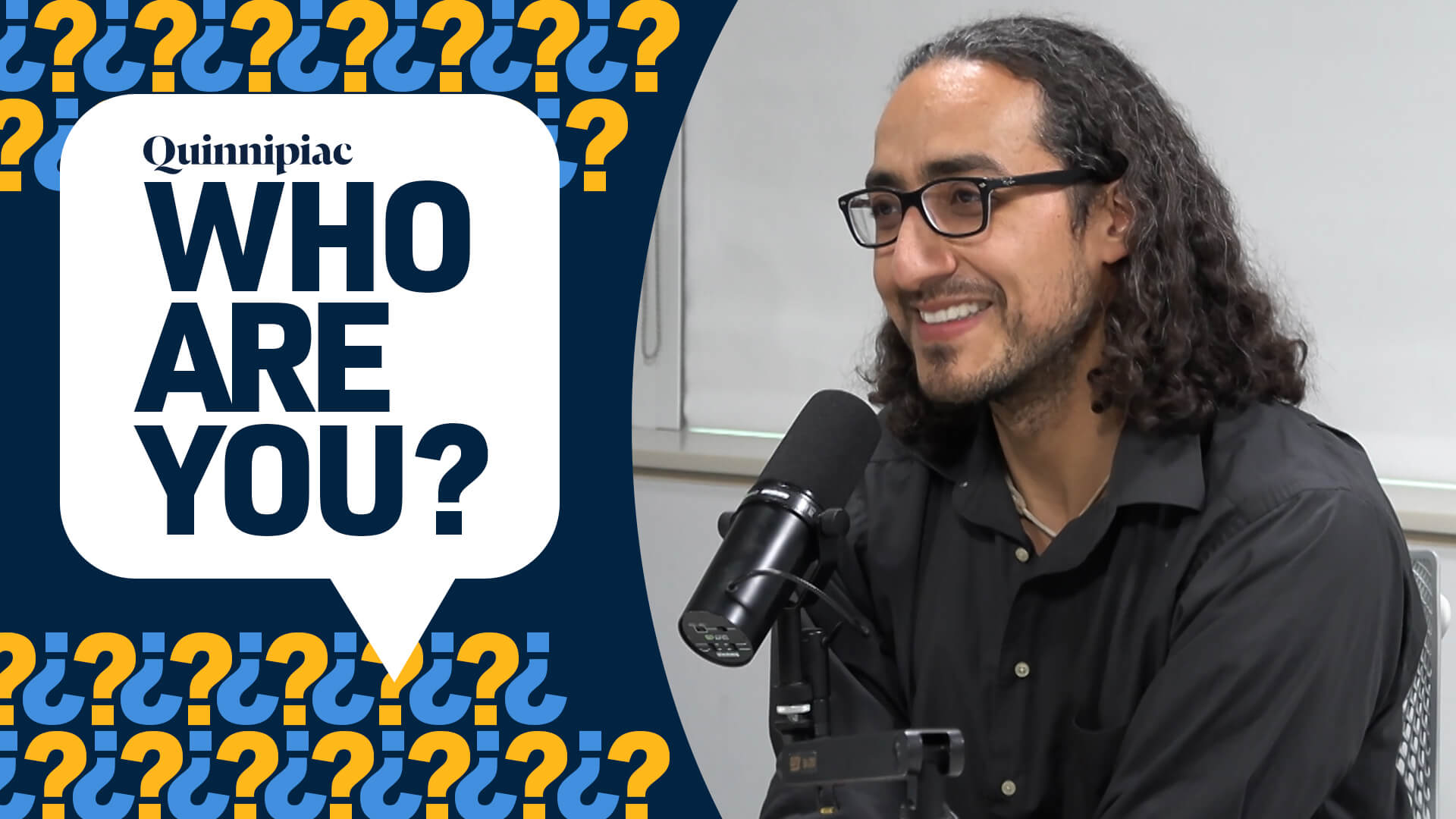
Joel Vanner: Hello, and welcome to ”Who Are You?,” the Bobcats, you know, the stories you don't. I'm your host Joel Vanner inside the podcast studio at Quinnipiac University's School of Communications. And I'm joined today by my guest Ari Perez. Ari welcome to the show.
Ari Perez: Thank you so much for having me. I'm so excited to chat with you, Joel.
Joel Vanner: And I know you're a podcast professional. We'll get into your podcasting experience in a little bit, but I'm happy you're here.
Ari Perez: Thank you.
Joel Vanner: As a guest on the show. Ari, my first question to every guest is the same. That is, tell me who are you?
Ari Perez: Yeah. So I've thought a lot about this. You know, it is nice that I had some time to prepare.
Joel Vanner: It is a deep question.
Ari Perez: Yeah, it is. And you can go so many ways. So I thought really about what is important to me, and I don't know that I have a cohesive event, so I just came up with a bunch of words. So I'm just a guy from Honduras. I grew up in Honduras and then I lived in France for a little bit. I moved to the United States in 2007 to go to grad school. I went to a big school in the South that I love, and then I became a Bobcat in 2014 to start the new School of Engineering and Computing or Computing and Engineering is actually called here at QU and I have a kid who is 6-years-old and awesome, and his name is Ray and I love him. That was also important for me. And I am a big Swifty. That's also important.
Joel Vanner: In our School of Computing and Engineering here at Quinnipiac, you're an associate professor of Civil Engineering.
Ari Perez: Yes, sir. So I've been a professor here of Civil Engineering for the last 12 years. I came in to start the program. I do geotechnical engineering, which is soil Engineering. And and I am super proud of this is actually one of my proudest academic achievements. I have also adjuncted on the side for the College of Arts and Sciences in the Women and Gender Studies Department.
Joel Vanner: And we'll unpack your Quinnipiac experience. But first, Ari, I want to start with Ari Growing up. You mentioned France, Honduras. Tell me about Ari Growing up. Where are we? Where do we start? And what were you interested in?
Ari Perez: Yeah, for sure. So I was actually born in the US in Miami, and then I grew up in Honduras with my mama and my grandparents. So in a town called Tamperosa and then a little bit in Tuigalpa which is the capital. And I just really like Lego, like, a lot of kids, like my own kid.
Joel Vanner: I like Lego now. I build all the botanicals.
Ari Perez: It's great. I'm a little bit upset about the Pokemon price being so high, 'cause I really wanted an Evie. Yeah, and, like, the three starters. It's like, 650 bucks, anyway. So I really love Lego. I really like that. I really like history and kind of, like, architectural history and monumental architecture and kind of big material kind of, like, pieces of culture from distant past. Then in the mid 90s, my mama, who was a doctor went to France to get her specialty. And so I lived there where we met my stepfather. And I really just developed an interest again for, like, ancient Rome and, like, everything to me that attracted me was the history and the culture behind it, but, like, it was really the tactical representation, like, the temples, the castles, everything that I could touch.
Joel Vanner: And there's a lot probably to explore in France, too.
Ari Perez: Yeah.
Joel Vanner: Culture shock, but also a lot around you and your environment.
Ari Perez: Yeah, and just a totally different way of living and, you know, new language. French is my second language after Spanish. And I have so many fond memories. And I'm actually, I have French citizenship now. And so I was really able to become culturally fluent in French and French culture and French history. My stepfather was a French history teacher. So I did that up until about early high school. And then about that time, my mama and my stepfather and I moved back to Honduras, where I finished my high school. I graduated a little young at 14, and then I decided to go to university, that was pretty clear to me. But it was a little weird because I was young and I just didn't have any good idea as to what I wanted to do.
Joel Vanner: Right. You mentioned you graduated high school when you were 14. Something we talk about on this show with other guests is sometimes deciding a college major when you're 16, 17, 18, whatever age you enter college. That's a lot to understand. What do I want to do for the next four years, six years, 3+1 , you know, whatever it is. But at 14, how did you kind of uncover maybe where you wanted to start and go in school? That must have been a bigger decision.
Ari Perez: Yeah.
Joel Vanner: A big decision.
Ari Perez: Yeah, no, it definitely was. And in hindsight, I really lucked out. I like to say that I lucked out three times in my professional career, kind of just landing in the rot fields.
Joel Vanner: So you pick engineering? Was that the field?
Ari Perez: I did. I did. And the way I did it is, like, I was 14. I was registering for university. Uni is a little different back home. So there is no such thing as an undeclared major. You have to pick something, and you can always change it, but you have to say something. And I remember being 14, 15, standing in line with my grandmother to register, and, like, you know, there's three people ahead of me and I'm like, What am I gonna say? And then there's two people ahead of me. I'm like, Oh, my gosh, what am I gonna say? And there's one person in front of me. I'm like, Well, I have to pick something. And it was really an engineering field because of like, socioeconomic conditions in Honduras. I wanted something that had a nice professional path and, like, something that I would have a very clear path on how to build a professional career and all of that stuff. And it was really between software engineering, and I really thought I was going to do that. But something, kind of stuck at me in the back of my head. So when it finally became my turn, the person said, Hey, what do you want to be for the rest of your life, I blanked out a little bit, and then I was like, Oh, and my first thought I was like, Well, I love building legos as a kid. You know, civil engineering is just ego on a bigger scale. So I said, civil engineering. And they wrote it down and I started taking classes. And my first year, year and a half, I just kept having this, like, feeling, man, I should really go to the registrar and, like, change because I actually want to be a software engineer, but I never got around to it. And then Inertia just kind of took over, and I ended up taking a civil engineering class, even though I thought I was not going to be into it,
Joel Vanner: Just stayed the course and went through it.
Ari Perez: And then I really loved civil engineering, and I really became, like, enamored with the field and its flexibility, its depth, its history. Like, civil engineers or some of the very first engineers that we have. And again, kind of, like, my fascination with history and antiquity, like, I love that my profession and my field, like, I can trace it back to, like, Romans. There are Roman civil engineers whose names I know and, like, I can be like, Yo, fulvius did that thing. And that's the same feeling that I get when I point out to my mom, Hey, I built that and I love that.
Joel Vanner: Right. And as you're explaining the field of civil engineering, you're talking with such passion, which translates into your courses, and we'll get into how that informs your teaching. But actually, when did academics become a spot on your radar that you said, Hey, I actually want to teach this to students. How did that journey unfold?
Ari Perez: Yeah, for sure. So I said I had three strokes of luck, and teaching was the third one. So the first one civil engineering. I didn't think I was going to be into it, love it. So very lucky. Then when I went to grad school, I had to pick a branch of civil engineering. Didn't have any idea as to what I wanted to do. I thought I was going to work on bridges, but I enrolled in soils, and I was like, soils, how bad can that be? Love it, like passion of my life. Second stroke of luck. And then I came in without funding attached to research, which is a non standard way of coming in, but because of the transition from Honduras to here, that's what happened. And my second semester, my advisor came up to me and offered me a teaching position. So I could afford the luxuries in life, like rent, food, fuel,.
Joel Vanner: Basics.
Ari Perez: Yeah, just, you know, the stuff that I really wanted. And my family has a lot of teachers in it, and I never thought I would be one. Like, my stepfather was a history teacher. My dad, my grandfather, calling my dad. He was, like, a teacher, too, and I have so many aunts and uncles. But, you know, I needed money. And so I started teaching. And once I started teaching, I was like, Oh, no, I like this. Like, this is fun. Like, I really love building relationships with the students and getting to know them and really sharing my knowledge of civil engineering of soils. So I just kept at it and that's how it became my career.
Joel Vanner: And you mentioned in your introduction, you played an integral part in forming the School of Computing and Engineering here at Quinnipiac. What was your journey to Quinnipiac like? Was it a place you heard of and had an interest in? Was it just you saw, Oh, you know, this may be an interesting opportunity. How did Quinnipiac come to be.
Ari Perez: Yeah. So, you know, I was on the job market end of 2013. And when you go to graduate school, especially at, like, large research universities, like I did, most of the focus is on your productivity as a scholar and as a research. That is kind of the stat that people really care about. And then teaching only becomes the sad thing that you do so that you can get to your research. And I like research. I like my research, but, like, it's not what animates me. What I really love is spending time in the classroom in front of students. And so when I started looking at jobs, I really looked at teaching places. I was like, I don't want to be, you know, writing grants in the lab. Like, I love that for people who love that, but that's not for me.
Joel Vanner: Right.
Ari Perez: And I had never heard of QU, but at the time, they had a job posting, and the job posting just looked like a perfect fit for me. They're saying, Hey, we're building a new school from scratch. It's going to be teacher focused. It's going to be, you know, teaching focus, student centered. We're here to, like, really share a love of engineering. Like, there are obviously research expectations, but you will be assessed on how good your classes are, which I thought would be good for me. And it just seemed like such a wonderful opportunity that I was very excited to apply, even though my first thought is, like, like the Poll? Because I like politics knew of the poll then I Googled Quinnipiac Poll, and then eventually it happened.
Joel Vanner: Connected but separate.
Ari Perez: Yeah, yeah, yeah. It's funny, too, because, like, this might be my memory bleeding, but either right before I came or right after I came, Mark put out, like, an ad that was saying how to say Quinnipiac and there was a lot of people saying Quinnipiac wrong. Like, it's not Queny Quinnipia or whatever, you know,.
Joel Vanner: Quinnipiac.
Ari Perez: Right.
Joel Vanner: Quick.
Ari Perez: It's Quinnipiac. I just remember seeing that and I'm like, Okay, so I'm not alone that this is a place that I am unaware of.
Joel Vanner: It was probably well timed because you understood the right pronunciation.
Ari Perez: And then, you know, I applied. I had a wonderful phone interview. At the time, there was only one more civil engineer here. And so they let me know how everything was. I was lucky enough to be selected for an on campus interview. I interviewed on my mama's birthday I thought that would bring me luck.
Joel Vanner: Lucky day.
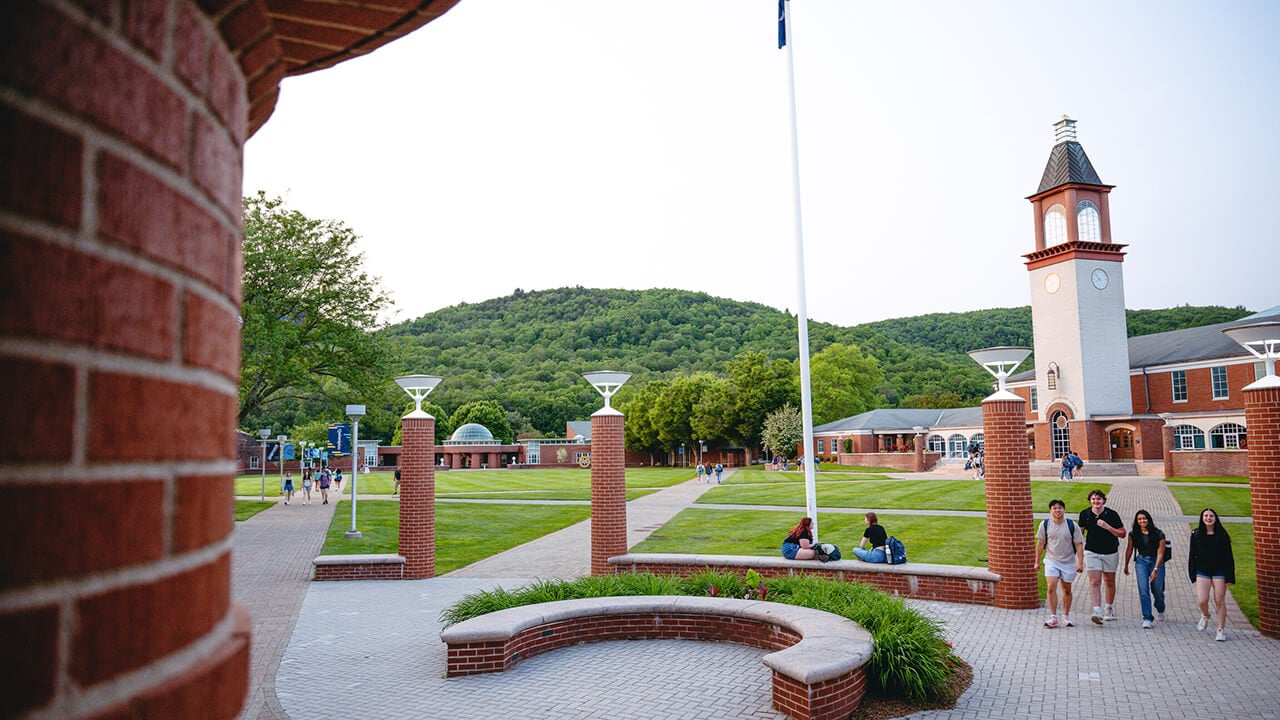
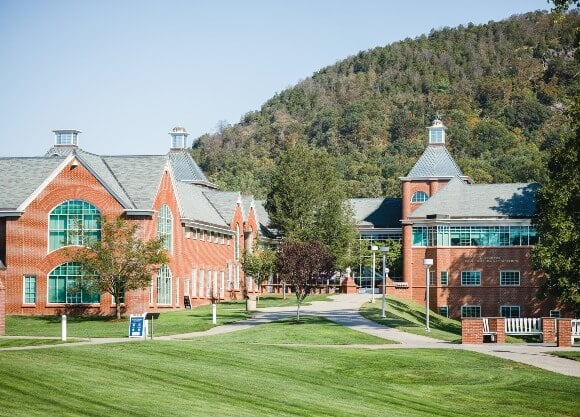
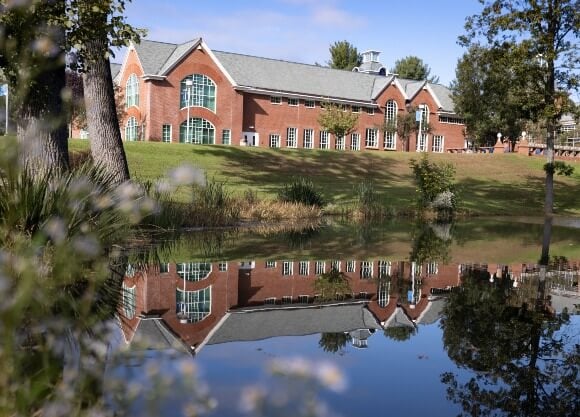
Ari Perez: Yeah. And then the campus it had just snow. There was, like, a snowball. You know, how, like the quad here just looks like a little snow globe every so often. It was perfect. And Man, like, I just remember what a wonderful day. You know, I was one of those times where, like, you show up and there's an opportunity and everything just looks like it's clicking. I had a good sense. I was like, I think they like me. Like, I love this place. I was so excited to come here, and I went home, and, obviously, they went through the interview process, and a couple of months later, when they called me to offer me a job, I was eating pancakes at IHOP, and I can remember everything. I was just so excited to come here and really land in a place the things that I thought were valuable and interesting and worth pursuing were valued and were the goal.
Joel Vanner: So you've worked to build a civil engineering program, as the other programs in the School of Computing and Engineering have been growing and building, as well. Tell me about the scale and scope of civil engineering here at Quinnipiac. What is it? What can students expect and what kinds of opportunities are in the program?
Ari Perez: For sure. So to start with just kind of like the 32nd overview of civil engineering, civil engineering is the field that takes nature as it is and works to adapt it for human welfare and human well being. And so that means mostly building stuff, but it doesn't mean necessarily just building stuff. So the fact that you can open the spigot and drink the water because you know it's good to drink, that's a civil engineer who did that and who built the pipes and who built the pipe network, and who then, you know, when you flush your toilet, they take care of that so they can be, you know, put safely back in the river, so on and so on and so on. Here at QU, we have a program that really emphasizes the basics of civil engineering and really gives you an idea of, like, the breath of all the jobs you can do. One of my favorite things about the field is there are so many opportunities that you can kind of pick how you want to work. You can work in an office 40 hours a week in a cubicle and just do design of concrete beams and never see anybody else, or you can be out hiking the fields in the mountains for like 38 hours a week, just 2 hours in the office filling reports becauseyou're taking water samples for environmental engineers. You can work with people as a town engineer. You can, like the community at large, you can just work in design teams. You can work as the engineer on field, whatever you want. And so a lot of our students that come here, you know, after their four years, they move on to jobs as project managers, construction managers, structural engineers and designers, so the folks that, like, make and build bridges and design them and make sure they're safe, safety consultants and just everything that is related to the build world, as we know it, that's a job for a civil engineer.
Joel Vanner: And the class sizes, we'll get into that and the benefits that those present, but the way the classes are allow you to connect individually with each student to unlock what they're interested in and customize courses and how you teach to what they're interested in.
Ari Perez: 100%, you know, we have a small program. I get to know all of my students so well. Like, I get to know them, their hometowns, what they like, what teams they like, what teams they don't like. And so I'll wear special jerseys and, like, sometimes I'll put on my red jersey in the morning, and I'll be like, Man, so and so who is a Barcelona fan, is going to give me, like, a comment in class. So I should think of something to say back to, like, fake name, obviously, but, like, Natalie because I know she's a Brcelona fan. And I just love having that relationship. Like you said, our classes are Max at 24 students per class, so I always have time to, like, mostly talk with all my students and make a connection. Like, if you come to my class, it is 95% more likely will swap something during class. Like, I might ask you a question about concrete, or I might ask you a question about soil or, you know, just like, Hey, man, can you help me out with this calculation as we solve a problem? But to really keep that, like, human link between me and my students and to get that sense, like, you know, they're not just random folks. They're like, people that I really like and enjoy company, and like, we have things we talk about and what I love here is that we have such a nice group of students that whatever I want to chat about, I can chat about it with somebody. So this current semester, I've gotten obsessed with Love Island. I have never seen Love Island in my life. Three weeks ago, I started the only thing I can think of. And so I got into class like 5 minutes ear and I was like, Okay, who here has seen Love Island? Because, I need to talk about it. And that'll be great. And then Champions League is the next day and I'd be like, Alright, y'all, we need to talk about Champions League. Yeah, I just love having such good relationships with my students.
Joel Vanner: It helps you co build the classroom with your students to make that learning environment, a learning and relatable environment. You mentioned Love Island. I don't know maybe you'll develop and teach a class about Love Island, but you have developed taught a class about Taylor Swift. Tell me about the class and then kind of what that means for you to be able to be here at Quinnipiac and explore that area of interest.
Ari Perez: Yeah. So like I say, because, you know, this is a women in gender studies class on Taylor Swift, who is one of my heroes, and, like, I really love her work and everything. And it is one of the things, if not the thing I am the proudest about academically, because it's so far from my home base. And it's really a passion project. And, you know, I've actually been able to tell the story about how the class got around on my podcast and on interviews. And I feel it is such a wonderful story to illustrate the QU community because it I've never worked at another place, so I can't sit here and be like, it would have never happened in another place, but, like, I don't know.
Joel Vanner: If it happened in another.
Ari Perez: It would have never happened on another place. Thank you. Like, you know, faculty here, like, they're very friendly, most of them, and, like, a lot of us want to collaborate and we're interested, and we all just have a passion for teaching. And so, it ended up I'll just tell you the story so short, 'cause it couldn't have happened anywhere else. But the director of the Women and Gender Studies Program is a friend of mine, like, personal. We have kids that are around the same age, so we hang out. And every time there was a class on Taylor Swift, like, at Harvard or at NYU, I would send her, like a little note and be like, Hey, Kim, that's her actual name. We really need to get a class here at QU. And eventually, she was like, Hey, man, like, if you want it, you can teach it. And I was like, Thank you. I will. And after the, like, rush up excitement, I was like, Oh, my gosh, like, What am I gonna talk about in this class? Like, you know, we have very set academic standards. Like I can't just show up and like, gosh, Oh my God, I love Taylor Swift so much. Like, I have to actually teach these kids things. And as I started thinking about it, I just realized that I could really rely on the network of expertise and all of my wonderful colleagues here at QU. And so what ended up happening is I divided the class into 13 modules, each one looking at Taylor Swift's work from a specific academic discipline lens. And so like marketing like business and leadership, right? And so I had Professor Julia Fullick Jagiela, who is the chair of management, come in and share her expertise with that, women in gender studies. Professor Kim O'Neil came here and did that, you know, even looking at, like, mental health and how people will always joke, like, Taylor Swift is my therapist, and she keeps me saying, and so I had Professor Clorinda Velez coming in, like, talk about this and help us look at the literature and explain and just draw from their expertise. And I put out 13, I think, really wonderful episodes with 13 really wonderful faculty that really allowed me to explore all the nooks and cranies, and I always thought of it as a partnership. I know so much about Taylor. You know so much about sports journalism. Like, let's meet in the middle. Let's have a really nice discussion about it. And yeah, I don't know that it could have happened anywhere else but here.
Joel Vanner: So, Taylor Swift aside, back to civil engineering, what advice would you give to students who are looking to decide on a field of engineering and maybe even civil engineering?
Ari Perez: Yeah, for sure. So, the first thing I would say is there is this impression that engineering fields are very difficult and rigorous and take a lot of work, and you have to be real smart to get in. And that is true, but that is true of everything. Like, a lot of college degrees, almost all of them are hard and you have to be into it. And so, I don't think getting a degree in engineering is objectively at the end any more difficult than getting a degree in most anything else because they will all be difficult. It's just in their different ways. And the example that I always think of this, you know, people are a little afraid of math, and they think math is really difficult. But if you ask most of my students, would you rather solve an integral or would you rather go on stage in front of 30 people and tell a joke? Almost to a person, they will all solve the integral, like it feels very awkward to go out there and be a performer. And so when they choose the integral, I'm like, So, who are you to tell me the integral is easier. It's just a different flavor of difficult and you're going to go to the thing you're strong. And so, you know, is engineering difficult? Of course, but so is everything. And so if you're interested in it, regardless whether you think you have it or not, most everybody has it, it's just a matter of work. And the other thing is what I just said, you know, like anything else is just about being motivated and wanting it and being interested in it and finding pleasure in it. Like, anything that you work, you know, we all fantasize about the jobs we'd love to have. I had once on advise tell me, Do you know who Stephen A Smith is? I'm like, like the sports journalist. I'm like, Yeah, he's like, Well, I would rather have his job than to be an engineer. And I'm sitting behind the desk. I'm like, Well, yeah, if I could have Stephen A Smith's job, like, I would rather have that job, too, but.
Joel Vanner: Maybe Stephen A Smith wants to be an engineer.
Ari Perez: Correct. And, like, there's only so many of those jobs, right? And, good for you, pursue your passion, but, like.
Joel Vanner: Yeah.
Ari Perez: You know, I am passionate just about engineering. I got whatever level. And so that's what makes me good for an engineering fellow. I don't just want the fancy top engineer level. Like, I just like all of it, right? And I think if people are interested in there, it's just a remembrance that, like, it's like going to the gym or, like, going on a hike. Like, it's tough. You have to put in work. There's no other way around it. But, you know, if you're a person that's gone to the gym for a year, the weights that were super heavy Month one, month 12, you're just, like, swinging them around. You're not even looking at them because you've gotten better. And if you're interested in engineering, and this is what you think, I can make a difference in the world. I can really help my community. I can really, you know, make a very tangible difference in people's lives, then please come into the field. We really need you, and everything else is just a matter of work. It's just You know, doing the math and getting through all of that. And that work will be anywhere you go.
Joel Vanner: And when you graduate, you can take it into a whole bunch of different avenues that you may want to take it into. You mentioned a couple. When you were describing the field. You can go into environmental. You can work in an office setting. You can do a mix of both, really anywhere you want to go, and the alumni graduating from the program speak to that and the versatility when students graduate here from Quinnipiac.
Ari Perez: Yeah, that's awesome to hear. You know? Like, I think an engineering degree, like, is just such a wonderful degree in the options that it opens up for you. And, you know, it's up for everybody because some people just aren't interested in it, and that's okay. Like there's so much good stuff out there to pick from. But for folks who are interested in how things work, I just think it's such a good degree and path to, like, open up thinking and creativity. One of the stories that I always tell is this Calvin and Hop strip about determining the maximum load on the bridge. So Kevin and his dad are driving on the bridge, and there's a ten ton maximum sign, and Kevin asks his dad, how do they know that? And as a kid, I know that. Right. And as a kid, I was tortured by this question. And when I saw the comic strip, my first thought was like, Oh, my God, thank you. Somebody finally is asking the question, I've been dying to know. And then the dad says, Well, you see, they build the bridge, and then they drive a one ton truck over it, and if the bridge holds up, they drive a two ton truck over it, and then if the bridge holds up, three ton, four ton, up until the bridge falls down, then they rebuild the bridge. They weigh the last truck, and that's how they get the song. And then they put the side out. Right. And as a kid, I knew two things. I knew, Well, that's not it. Right. But I didn't know I mean, like, that can't be it has to be another way, but, like, what is it? And it's not until I became an engineer that like, the way of thinking kind of reconstitualization happened, I was like, Oh, no, they don't build the bridge and figure out the weight. They decide the weight, and then they go like, yo, what kind of bridge can we build so that that sign is then true? And that's the way to think about it. And, I think there are so many of these aha moments of how the world works, of how, like, people organize themselves and how our, like, environment changes our society in ways both tangible and intangible, the ways we think that you learn doing civil engineering, that's incomparable.
Joel Vanner: And just to close out, I didn't give you an opportunity to do this, but if you would like to plug your podcast on Taylor Swift, where can listeners give it a listen?
Ari Perez: Thank you very much. So it's called What Are Taylor Swift Studies Anyways. And you can find it on all the major streaming platforms, so Spotify and like Apple Music and all that kind of stuff. If you just Google it, it's there. I am from Honduras and Spanish in my first language. And so, because I phrased as a question, I did the Spanish question marks, like, at the beginning and at the end. But if you Google it even without the question marks, What Are Taylor Swift Studies Anyways, you should be able to find it. And that's a little thing that's where the begining.
Joel Vanner: Give Ari's podcast to listen, also enroll in the course if you're running it again.
Ari Perez: Yeah.
Joel Vanner: Ari, I appreciate you coming on and joining me today. It was great learning about your experience and hearing about all the cool things you do here at Quinnipiac.
Ari Perez: Well, thank you so much. It's so fun to be here, and I'm excited to, like, listen to this again.
Joel Vanner: If you enjoy today's episode, be sure to find other episodes on Apple, Spotify, and YouTube podcast. Check out Ari's there as well. Until next time when I ask my next guest, Who Are You? I'm Joel Vanner. Bye for now.


Quinnipiac Today is your source for what's happening throughout #BobcatNation. Sign up for our weekly email newsletter to be among the first to know about news, events and members of our Bobcat family who are making a positive difference in our world.
Sign Up Now