



Quinnipiac and Ireland’s Great Hunger Museum of Fairfield partnership honors Famine legacy with traveling exhibition at Blessed Michael McGivney Pilgrimage Center
October 21, 2026
October 21, 2026
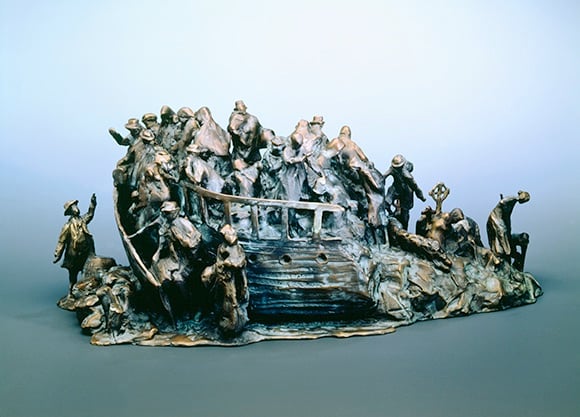
Through March 31, 2027, the center’s second curated rotation of loaned works representing the Great Hunger highlights artists Margaret Chamberlain, Glenna Goodacre and John Behan. Located at 1 State Street in New Haven, the Blessed Michael McGivney Pilgrimage Center is open every Wednesday through Sunday from 10 a.m. to 4 p.m. Admission is free.
The three-part traveling exhibit, which kicked off on April 10, 2026, and runs through September 30, 2027, features artwork thoughtfully selected from a vast collection that visually examines the Irish Famine of 1845-1852 and its lasting impact. Through outstanding historical and contemporary works of art, the collection explores the impact of the loss of life, the leeching of the land and the erosions of language and culture.
Quinnipiac serves as the caretakers and curators of the collection, partnering closely with IGHMF on educational programming and the organization of a series of rotating, temporary exhibits.
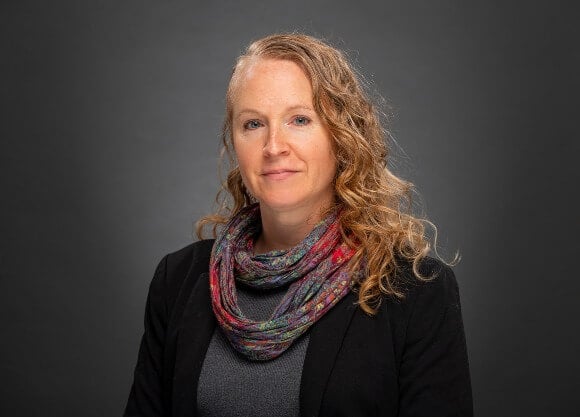
Bethany Zemba, Quinnipiac’s vice president of government and community relations and chief of staff, said Quinnipiac has long viewed the collection as an important educational and cultural resource — one that preserves the stories, experiences, and enduring legacy of those affected by the Great Hunger.
"Our relationship with IGHMF has been collaborative, constructive and focused on a shared objective: ensuring the long-term preservation and public presentation of the collection,” Zemba said. “Since establishing the partnership, our organizations have worked closely together on exhibition planning, collection stewardship, communications, and efforts to expand public engagement with the artwork and its historical context.”
Central to this partnership is a shared goal of establishing IGHMF’s new, permanent museum space for the collection. Once the new museum is ready, Quinnipiac will donate its entire collection to IGHMF, ensuring it remains united in Connecticut, widely accessible and deeply connected to the Irish and Irish American community.
While tracking progress being made toward a permanent home for the collection and remaining committed to supporting that vision, Zemba said current exhibition in New Haven serves as an important bridge, providing public access to the artwork while demonstrating the strength of the partnership and the collective commitment of all involved to preserving this important chapter of Irish history for future generations.
“Our goal has always been to ensure that the story of the Great Hunger is preserved, honored, and shared as broadly as possible, and this partnership allows the collection to continue fulfilling that purpose while supporting its long-term future,” Zemba said.
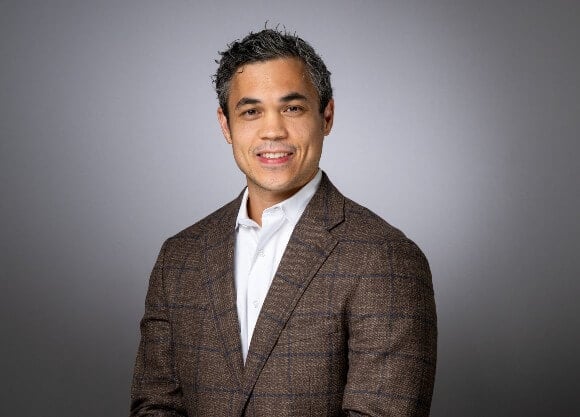
Established by leaders of the Gaelic-American Club of Fairfield, IGHMF is dedicated to exploring the Famine and its lasting impact through art. IGHMF President John Foley said working in partnership with Quinnipiac has been extraordinary.
“Quinnipiac has demonstrated tremendous leadership throughout this transition. Together, we have worked carefully to ensure that this internationally significant collection remains intact, professionally stewarded and accessible to the public,” Foley said. “What is particularly exciting is that the relationship does not end with the transfer of the collection. We see Quinnipiac as a continuing educational partner through scholarship, programming, exhibitions and opportunities for students and faculty. We are building upon what Quinnipiac created and working together to take the collection into its next chapter.”
Zemba said Quinnipiac is proud of the role it has played in the collection’s preservation and grateful for the partners who are helping expand its reach.
“By partnering with Ireland's Great Hunger Museum of Fairfield and the Blessed Michael McGivney Pilgrimage Center, we are helping bring these powerful works of art to new audiences while honoring the collection's historical significance,” Zemba said.
Foley noted the 17-month exhibition at the Blessed Michael McGivney Pilgrimage Center is an important part of the journey toward opening IGHMF’s permanent museum in Fairfield. While that permanent home is being developed, the exhibition in New Haven allows this extraordinary collection to remain accessible and, importantly, introduces it to new audiences.
He said the year of America's 250th anniversary is an especially appropriate time to share the collection, as the country was shaped not only by those who founded it in 1776, but by generations of immigrants who arrived afterward and made it their home.
“The Irish experience is an important part of that larger American story, and the partnership between IGHMF, Quinnipiac University and the Blessed Michael McGivney Pilgrimage Center gives us an extraordinary opportunity to tell it,” Foley said.
Many consequences of the Great Hunger are deeply woven into the American story.
“The famine accelerated an enormous migration of Irish people to the United States, and those immigrants and their descendants went on to play an extraordinary role in building and shaping this country,” Foley said. “As we commemorate 250 years of the United States, we have an opportunity to tell a fuller American story, including the experiences of immigrant communities that arrived here, often facing poverty and discrimination, and nevertheless became an integral part of the nation.”
Foley said that’s the central vision of IGHMF – telling the story of the Great Hunger itself, but also what happened afterward: the diaspora, the immigrant experience and the enormous contribution Irish immigrants and their descendants made to America.
Bethany Sheffer, curator for the Blessed Michael McGivney Pilgrimage Center, said the impact of the Great Hunger resonates throughout the Knights of Columbus organization founded by Father McGivney in 1882. His parents immigrated to the United States in the late 1840’s, arriving from Ireland aboard “famine ships.”
“The focus of the Blessed Michael McGivney Pilgrimage Center is to share the life and legacy of the Knights of Columbus founder, Blessed Michael McGivney, a son of Irish immigrants, and the history of the Knights of Columbus,” said Sheffer.
The Center had been developing an exhibition to celebrate the 250th anniversary of the United States, focusing on the events in history impacting the creation of the Knights of Columbus and its development over its 144-year history, when the opportunity to collaborate with Quinnipiac and IGHMF developed.
“We had previously borrowed several of the works in 2016 and knew that they would be perfect in the section of the exhibit where we discuss the impact of the Great Hunger in the shaping of the United States in the 19th century, which in turn, impacted the life of Father McGivney and the creation of the Order,” Sheffer said.
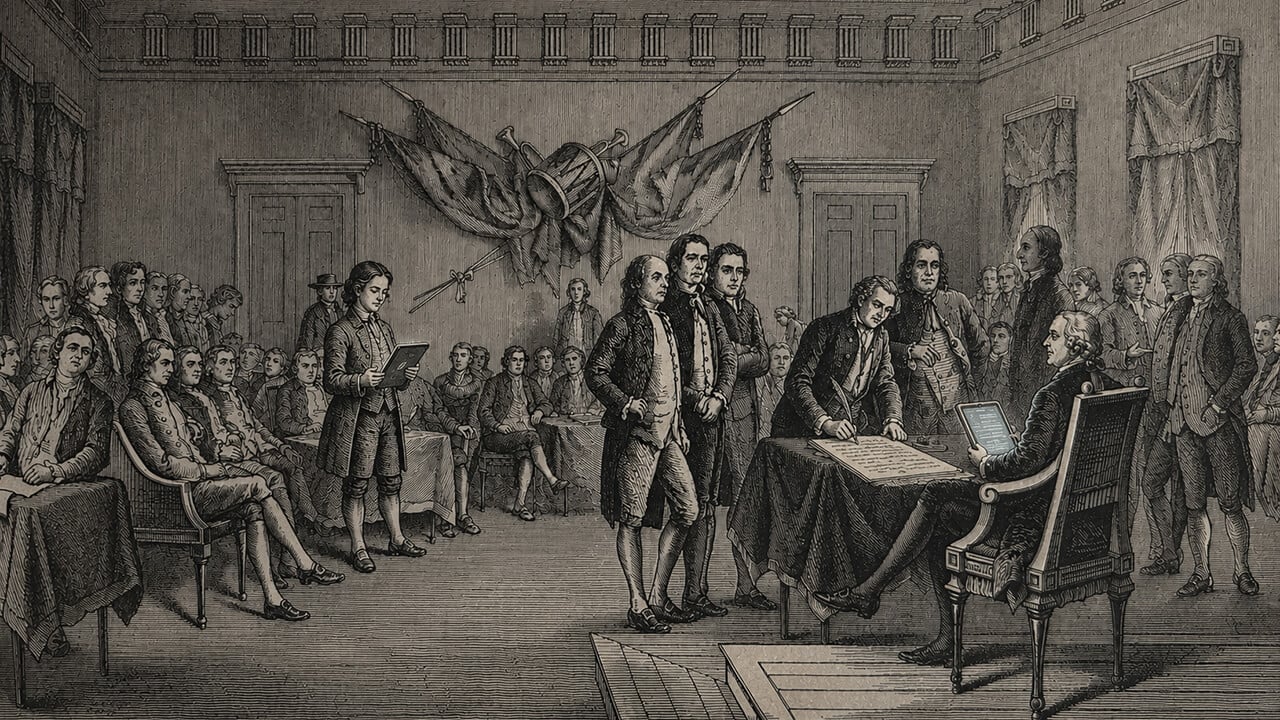
Foley said there is a remarkable historical symmetry in bringing this collection to the Blessed Michael McGivney Pilgrimage Center in New Haven. The Great Hunger forced enormous numbers of Irish men and women to leave Ireland and begin new lives in America. Many arrived with very little and encountered strong anti-Irish and anti-Catholic prejudice. They frequently took some of the most difficult and dangerous jobs in factories, mines, construction and on the railroads. When a husband or father was killed or died young, there was virtually no social safety net for the family left behind.
“That history is directly connected to Blessed Michael McGivney and the founding of the Knights of Columbus here in New Haven in 1882,” Foley said. “Father McGivney was himself the son of Irish immigrants and ministered to a largely Irish-American immigrant Catholic community. He understood both the discrimination these families faced and the devastating consequences when a family's breadwinner died. The Knights provided fraternity, dignity and practical financial support to those families.”
He said the Center serves as a highly significant space to tell a story that’s deeply rooted in both Irish-American history and the Knights’ origins.
“The famine helped create the Irish diaspora in America. That immigrant community helped build institutions such as the Knights of Columbus, and those institutions in turn helped Irish and other Catholic immigrant families establish themselves and become part of the American story,” Foley said. “To now have this collection displayed at the Pilgrimage Center, in the city where Father McGivney founded the Knights, gives the exhibition a resonance that I think is very special.”
Zemba said the exhibit further illustrates Quinnipiac's belief that art can serve as a powerful tool for education, reflection, and dialogue, while also demonstrating what can be achieved when organizations come together around a shared commitment to history, education, and cultural preservation.
“As visitors experience the exhibition at 1 State Street, they will encounter not only extraordinary works of art but also a deeper understanding of a defining moment in Irish history and its lasting impact on communities around the world,” Zemba said. “The story of Ireland's Great Hunger is one of profound loss, resilience, and hope, and its lessons continue to resonate today. Through this collaboration, Quinnipiac University, Ireland's Great Hunger Museum of Fairfield, and the Blessed Michael McGivney Pilgrimage Center are ensuring that these stories remain accessible and relevant to contemporary audiences.”
Want to learn what Quinnipiac is all about? We invite you to join us at an Open House, where our students, faculty and staff will introduce you to life as a Bobcat through a variety of sessions and tours.











Quinnipiac Today is your source for what's happening throughout #BobcatNation. Sign up for our weekly email newsletter to be among the first to know about news, events and members of our Bobcat family who are making a positive difference in our world.
Sign Up Now