


Attend an Open House
Want to learn what Quinnipiac is all about? We invite you to join us at an Open House, where our students, faculty and staff will introduce you to life as a Bobcat through a variety of sessions and tours.
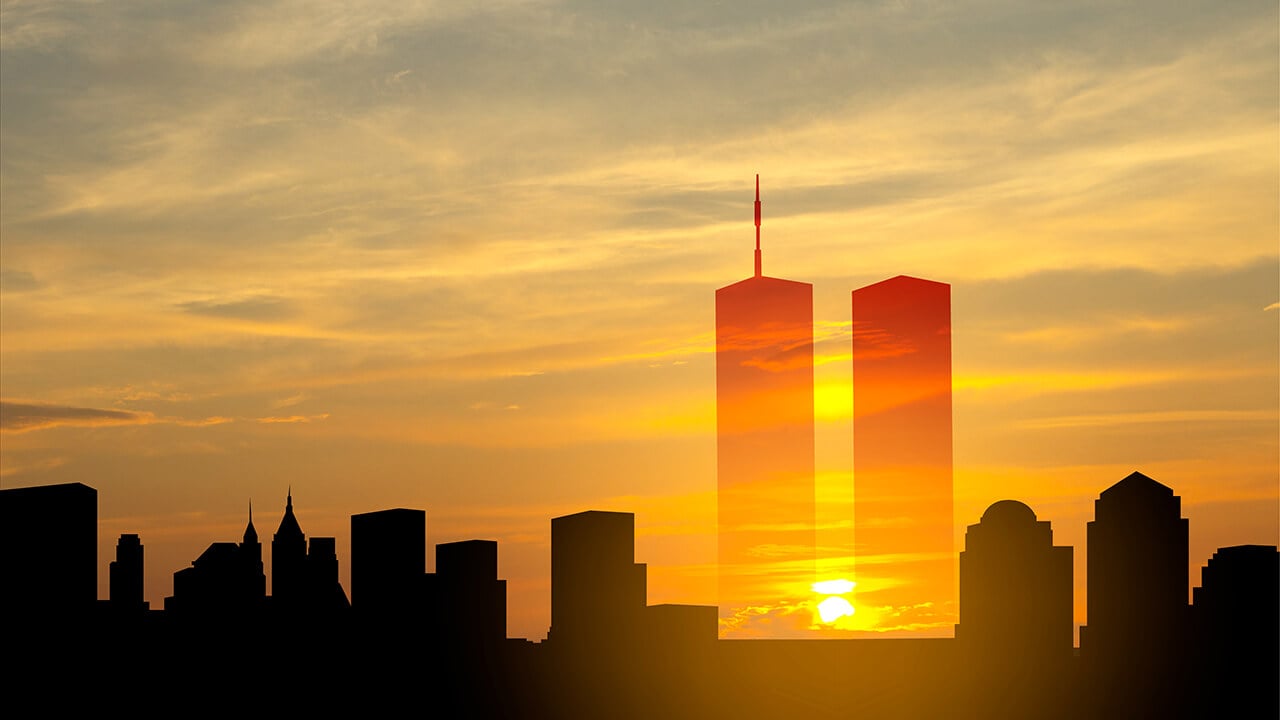
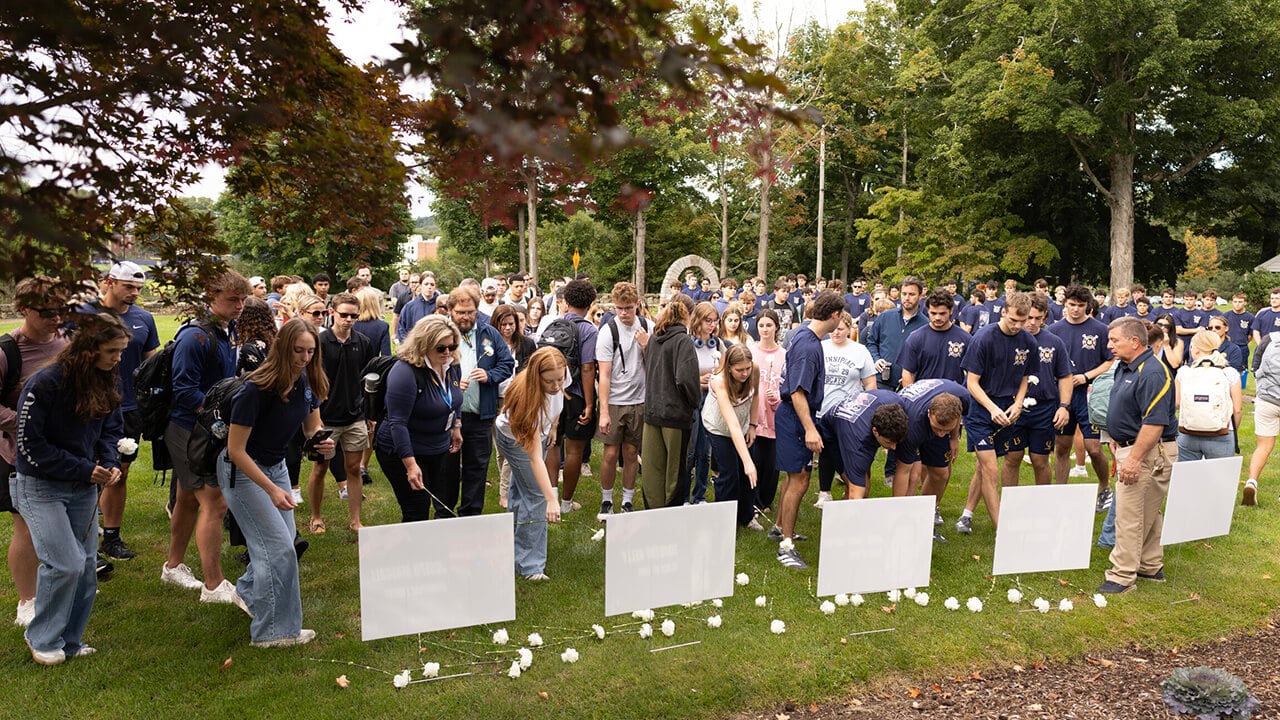
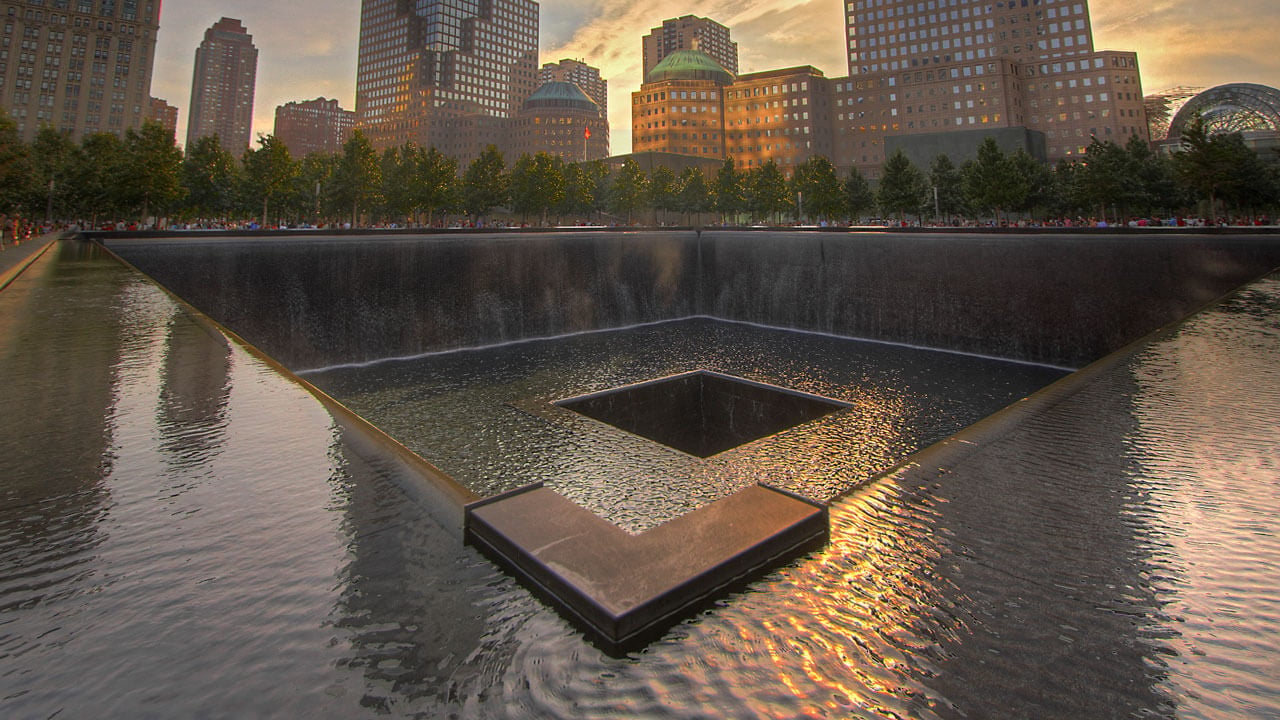
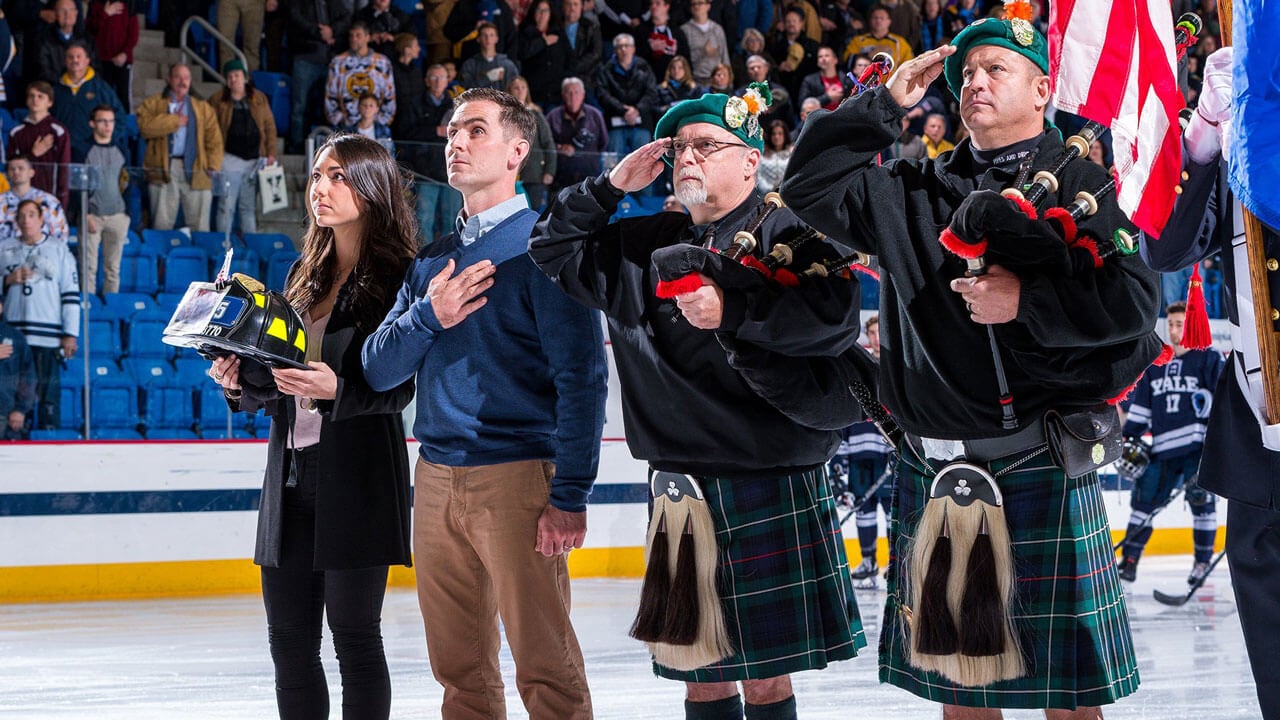
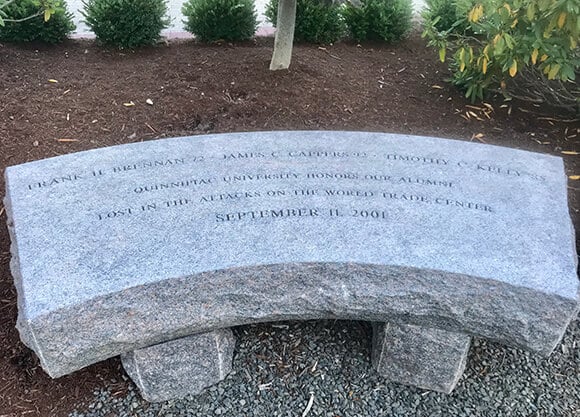
The teach-in began with a moment of silence honoring each of the lives lost due to the attacks, including four members of the Quinnipiac community: Frank H. Brennan ’72, James C. Cappers ’92, Timothy C. Kelly ’85, and Quinnipiac parent and New York firefighter Joseph Mascali P ’02, P ’05, P ’14. DeLoma noted Mascali was also the inspiration for the annual Heroes Hat game, a fierce rivalry match between Quinnipiac and Yale men’s ice hockey.
Held in the SITE Auditorium on September 8, the teach-in framed distinct points of view of the 9/11 tragedy from those who experienced it in New York City, in Connecticut, and on Quinnipiac’s Mount Carmel Campus.
Several speakers noted it was a sunny Tuesday morning with brilliant blue skies and perfect late summer temperatures, much like the day of the teach-in.
Others set the scene by reminding the audience that a quarter century ago, cell phones were basic devices incapable of mobile internet or social media, and network overloads quickly jammed calls, leading to communication blackouts.
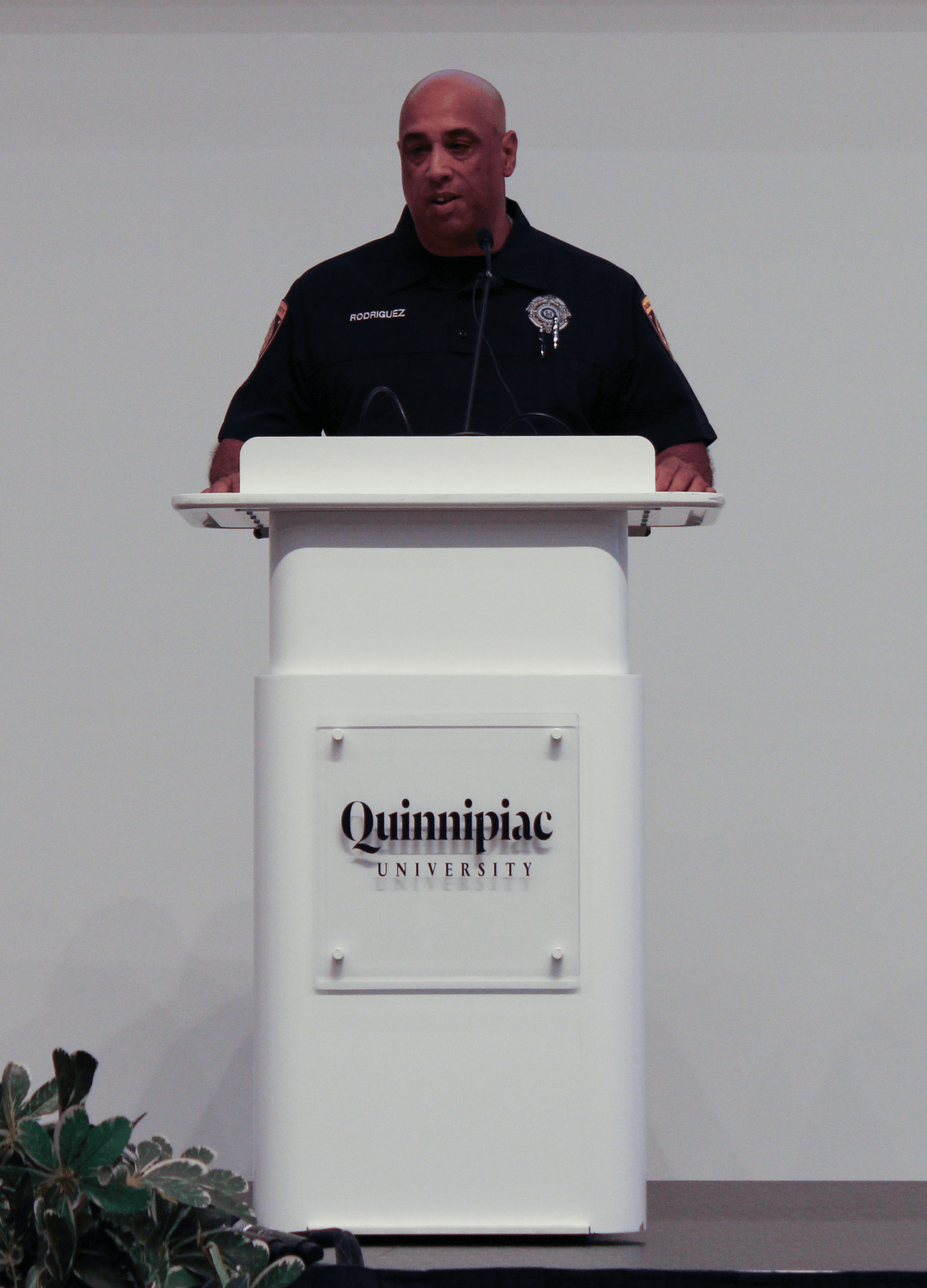
On September 11, 2001, Quinnipiac Public Safety Officer Alfredo Rodriguez was an officer at the City University of New York. Shortly after the first plane hit the north tower of the World Trade Center at 8:46 a.m., Rodriguez and his partner responded to a city-wide mobilization to the World Trade Center (WTC). At first, the cause of the emergency was unclear, Rodriguez said.
“We got over the Brooklyn Bridge and that’s when I saw the smoke and realized it was something that was really happening,” said Rodriguez.
As they reached the site to help with evacuation, the second plane hit the south tower of the World Center, at 9:03 a.m.
“As we were responding and evacuating buildings, the buildings came down — the first building, and then the second one,” Rodriguez said. “There was debris everywhere. It was a really sad day.”
Rodriguez witnessed unforgettable devastation — pancaked fire engines, scattered plane debris and an overwhelming number of New York-based emergency responders who were impacted.
He called his wife to tell her and his young children that he loved them and may not make it home, watched thousands fleeing on foot to find safety and endured the tragic loss of his chief and many close friends.
Rodriguez implored students to learn about the terrorist attacks and the days that followed, and to remember and honor those who died.
“Educate yourself. It’s history. This is something you’re told would never happen, but it did happen. We’ve got to reflect on that,” Rodriguez said. “Every responder that responded to that, and the ones that we lost, I have respect for them. Please don’t forget.”
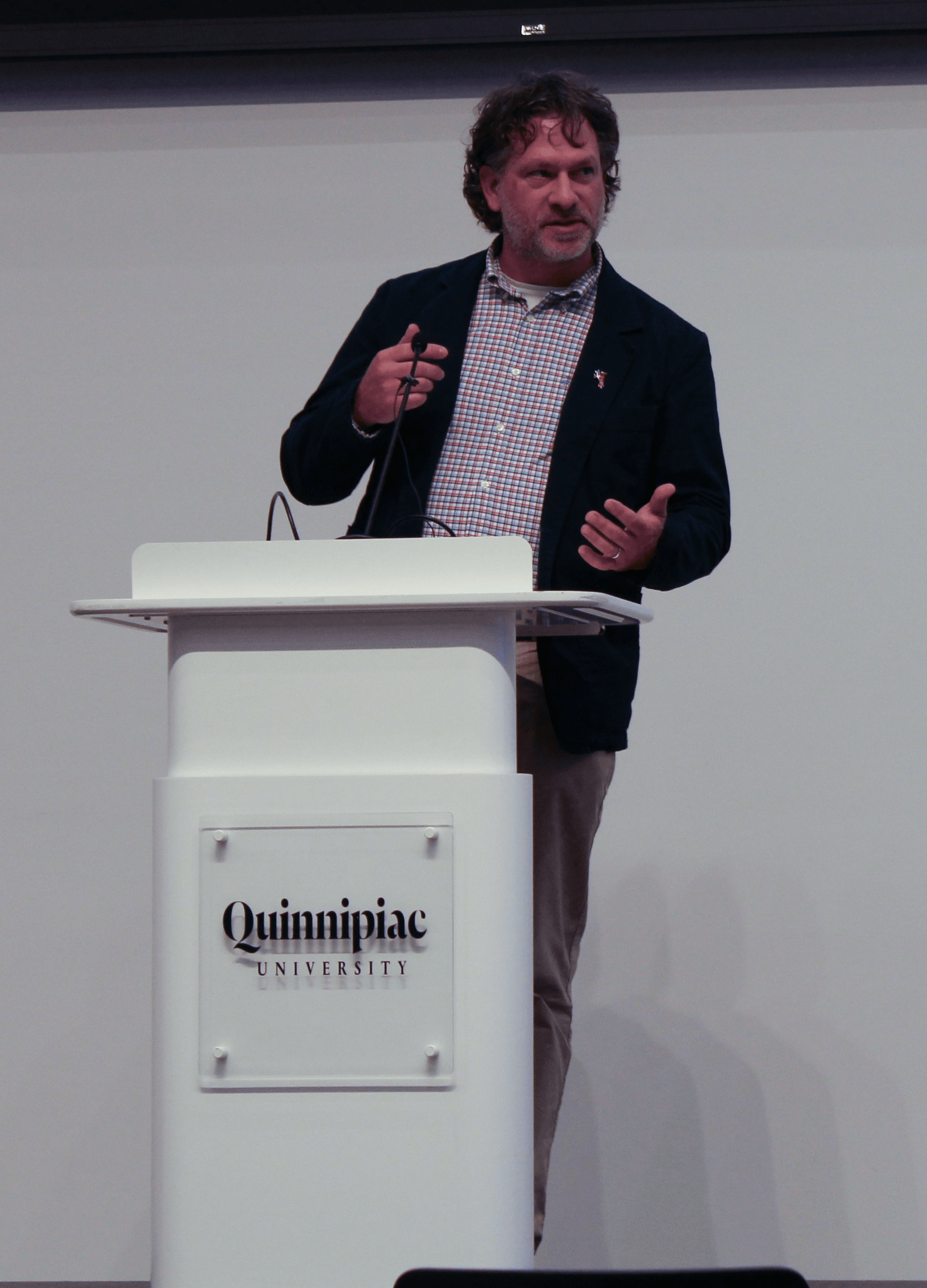
Jonathan Sawitsky, senior director of user experience and engagement, was working for a Stamford, Connecticut sister company to Thomson Financial, with a presence in the World Trade Center.
With his coworkers, Sawitsky tuned into television news showing smoke pouring from one of the buildings, then watched as the second plane slammed into the south tower.
Driving home along a nearly deserted northbound I-95 corridor, Sawitsky said he’ll never forget encountering a massive column of police cars, fire engines, ambulances and law enforcement vehicles racing southbound toward New York City.
“At first I couldn’t tell what it was, but as the lights and sirens came toward me in the southbound lanes, it seemed to go on for miles and miles,” said Sawitsky.
Twenty-five years later, he said 9/11 motto “lest we forget” has evolved to remind us to never forget the memory of people coming together to help.
“That indomitable spirit, intentional consideration and unparalleled humanity defines us, shows us what we are capable of and should never be forgotten,” said Sawitsky, born in Brooklyn.
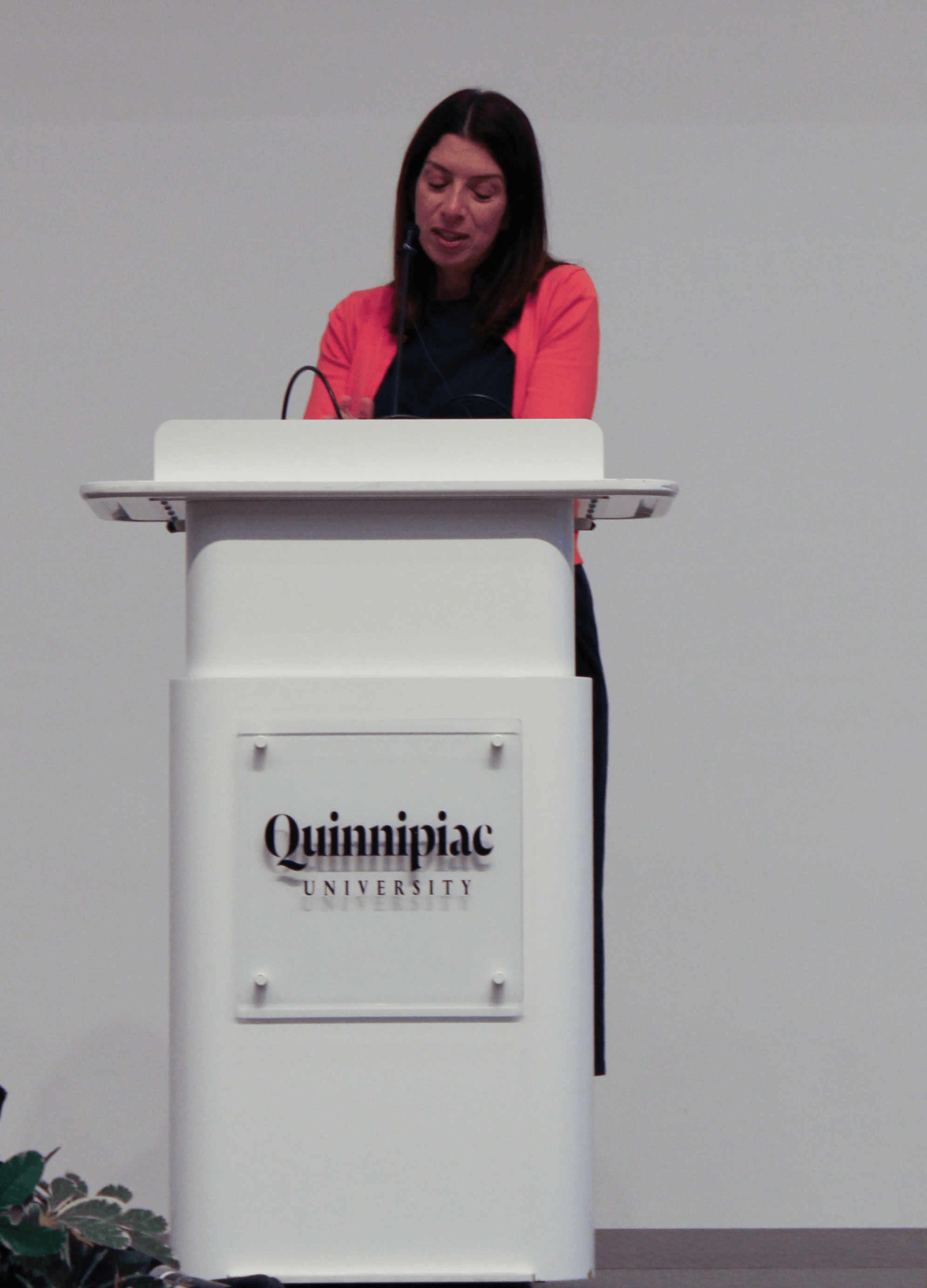
Dr. Lisa Coplit, dean of Quinnipiac’s Frank H. Netter MD School of Medicine, was in charge of the in-patient service team at Mount Sinai Hospital on the Upper East Side of Manhattan when the World Trade Center was attacked.
When the second plane hit that morning, Coplit began to fear for her husband and his colleagues at their Battery Park office, just a few blocks away from the World Trade Center. Her fear was made worse by the complete lack of cell phone service and she was relieved when a brief call finally came through, confirming he was taking shelter.
Later, her husband told her that he had stepped outside just moments before the impact and saw a plane flying incredibly low overhead.
In the terrifying seconds it took to process the situation, he watched the jet accelerate and slam directly into the second tower, felt the searing heat of the impact’s fireball, and witnessed the devastation of falling debris and victims. Later that afternoon, he walked to their midtown home covered in dust and debris, not knowing which of his colleagues were alive — and many were not, Coplit said.
While she desperately wanted to be home with her husband, Coplit felt compelled to remain at the hospital for several more hours, in case any survivors arrived. But none came.
“I’d spent a whole career trying to take care of people, and yet there wasn’t one person,” Coplit said.
But what she remembers most about September 11, 2001, is not the unspeakable horror.
“It’s actually the beauty and the humanity of the city and the country, and the true heroism of our first responders, and the gratitude and care that was showered on them that they so deserved,” Coplit said. “The thousands of civilians who showed up at Ground Zero wanting to help look for survivors, and being turned away. Everybody was looking for a way to help, and it was extraordinary. We cannot help but remember the pain and the loss of that day. But I really, really like to remember the beauty.”
Liz Brown, Quinnipiac’s executive director of One Stop, was working with a financial software firm located across the street from the World Trade Center complex on September 11, 2001. At 8:46 a.m., she was gathering her colleagues to head to a client meeting at Salomon Smith Barney at 7 World Trade Center, a building adjacent to the towers.
“And that’s when the first plane hit. One of my colleagues commented it sounded familiar, like the 1993 [World Trade Center] bombing,” Brown recalled.
Stepping outside, Brown looked up to see flames pouring from the tower and paper raining down like a ticker-tape parade. Using her cellphone, she had just managed to connect with her mother when the second plane struck, sparking panic in the crowd around her. She and her colleagues fled on foot for two blocks to escape the immediate chaos.
“And then we kept turning back, and that’s when we would see the bodies of people jumping. A naïve thought I had that day was that they must have trampolines; they must have nets — something,” Brown said. “But I learned later that was not true, and many of my colleagues who got out of the subway that day had bodies falling to the ground around them.”
In the weeks that followed, Brown avoided the subway, walking four miles each way to work.
Eventually, she and her husband left New York for Connecticut, where they started their family, including her son, a proud Quinnipiac graduate.
However, Brown wonders whether walking eight miles daily while repeatedly exposed to Ground Zero’s toxic air and falling ash — a hazard that caused cancers, pregnancy complications, and deaths among her former coworkers — may have impacted her son, who was born with a birth defect.
As for the impact of that day 25 years ago, over time, Brown said, she has healed.
“I don’t resent beautiful blue skies on Tuesdays anymore,” Brown said. “I wish I could give you a silver lining. I’m really amazed by some of the stories I’ve heard today. I was a witness to an unspeakable tragedy, but I need to try to do more to help others and be more compassionate.”
Today, Stefano Fasulo is Quinnipiac’s director of graduate studies, but on that September day 25 years ago, he was an undergraduate student at Hofstra University in New York, about 25 miles east of Manhattan.
When the attacks happened, he felt compelled to act.
“The reports started coming in that the planes were hijacked,” said Fasulo. “I’m not really sure what it was, but I there was this insatiable, compelling need to do something.”
Fasulo and four friends packed into a small car and started driving toward New York City. They made it over the Queensboro Bridge before they had to start walking to try to reach the site.
“At that time, the first tower had fallen, and I just remember four people and I started running down the street, and as we got closer, you could absolutely smell and start to see the difference in the air,” Fasulo said.
To help the crowd of fleeing people — some covered in soot, others crying or struggling to find phone service — they stepped into a corner store, left money on the counter and grabbed a case of water to hand out. They continued that effort as they moved on, gathering water from other shops as they went. Fasulo said local shop owners were doing whatever was needed to lend support.
In the days that followed, a cousin helped Fasulo join volunteers serving food to first responders and others clearing debris and searching for victims at Ground Zero. He was assigned to help at the Javits Center, a primary staging area, supply depot, and coordination command center for rescue and recovery operations.
“I think that’s where things really took a toll because I would meet these individuals who were at the site trying to remove debris and looking for people. I give them so much credit and respect. To see them after a day’s worth of work — they were emotionally and mentally drained having to go through this process,” Fasulo said. “It was 25 years ago, and I still can’t believe it. But that was one of the biggest things I’ve ever seen people coming together for, out of tragedy. It was beautiful for something that was very tragic.”
Jason Burke, Quinnipiac assistant vice president of student experience and executive director of veteran and military affairs, is a retired U.S. Navy Captain and pilot. On September 11, 2001, then-Lieutenant Commander Burke was stationed at a base near Philadelphia.
When he first heard the news of a plane hitting a tower, Burke said he thought the pilot of a small plane had probably lost situational awareness.
When the next tower was hit, his base immediately went into lockdown.
Two days later, on September 13, 2001, Burke flew a DC-9 to Watertown, South Dakota, on a time-sensitive mission to gather a cargo of specialized commercial torches ordered by the government. The specific length of each torch was critical to cut through rebar and rubble at Ground Zero to aid in the search for survivors.
“They felt there could be hundreds, if not thousands, of survivors after the buildings collapsed,” said Burke.
Arriving in South Dakota, Burke was faced with improperly packed pallets which could not be loaded on his plane.
He immediately contacted the company, which was co-located at the airfield. Despite having worked a 24-hour shift to fabricate the torches, the entire company came out to help re-palletize the load as quickly as possible, Burke said.
Flying into Newark, New Jersey, Burke could see lower Manhattan smoldering and an immense debris fog hanging over that part of the island. At the time, all commercial flights in the country were grounded.
“What was eerie was not hearing any air traffic at all. The only communications we heard were two F-16s over Minneapolis that were looking for a tanker for in-flight refueling,” he recalled.
As soon as his plane touched down, waiting trucks with conveyer belts offloaded the cargo in ten minutes and raced off toward the World Trade Center site.
“Like many of my colleagues have said, we got to see how quickly people responded and were working together with that common goal,” Burke said.
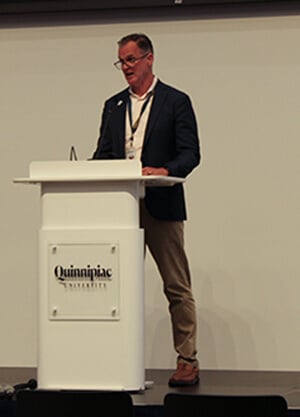
Chief Experience Officer Tom Ellett and his family were living in New York City on September 11, 2001. He was entering his third week of work at New York University.
“I remember it so well,” Ellett said. “It was a Tuesday morning, the second day of the second week of classes. The sky was really brilliant blue. Students were heading to class, faculty and staff were beginning their day — everything felt normal. Then, in a matter of minutes, everything changed.”
Ellett said his wife and young son were walking through Washington Square Park, on the way to the boy’s first day of school, when the plane destined to strike the first tower flew right over their heads. At first, nobody knew what had happened. Information was limited. Rumors spread quickly. Facts were difficult to confirm.
“For those of you who have grown up with smartphones, social media and instant communication, it’s difficult to imagine what the uncertainty felt like. There were no emergency alerts on our phones. No social media feeds. No text chains keeping your eyes and ears connected,” Ellett said.
Instead, office phones began ringing — parents, students and others seeking to find out what was happening. Live new reports were conflicting and incomplete, cell phone networks became overloaded and communications failed. Sirens echoed throughout the city.
“From our vantage point near NYU, we could see the smoke rising from Lower Manhattan. We could actually see the towers from Washington Square Park. Eventually, we all witnessed the collapse of the first and the second tower. Even 25 years later, it remains one of the most surreal moments of my life,” Ellett said. “But what I remember most is not simply what happened that morning. It’s what happened next. “
As events unfolded, Ellett was tasked with coordinating student-support efforts. Thousands of students were looking for answers, reassurance, information, stability and even a home.
“Some of our residence halls were located two blocks from the World Trade Center. Most students were frightened. Many were confused. Some had witnessed unimaginable events,” said Ellett. “What became immediately clear was that students did not just need information. They needed people. They needed support. They needed someone to listen. They needed community.”
By bringing students together in common spaces, coordinating counseling, residential life, public safety and administrative support, NYU was able to “be present” for the students, said Ellett.
Following the September 11 attacks, Ellett witnessed a profoundly quiet, post-apocalyptic New York City marked by lingering smoke, missing person posters, and widespread communication blackouts that left families disconnected. Yet amid the soot-covered, restricted streets, Ellett was uplifted by the striking sight of two young boys playing catch in the middle of Broadway. It served as a powerful reminder that life persists even during tragedy. Ellett shared three lessons learned from the experience: that community matters; that leadership is about serving others through crucial moments; and that resilience is built on compassion.
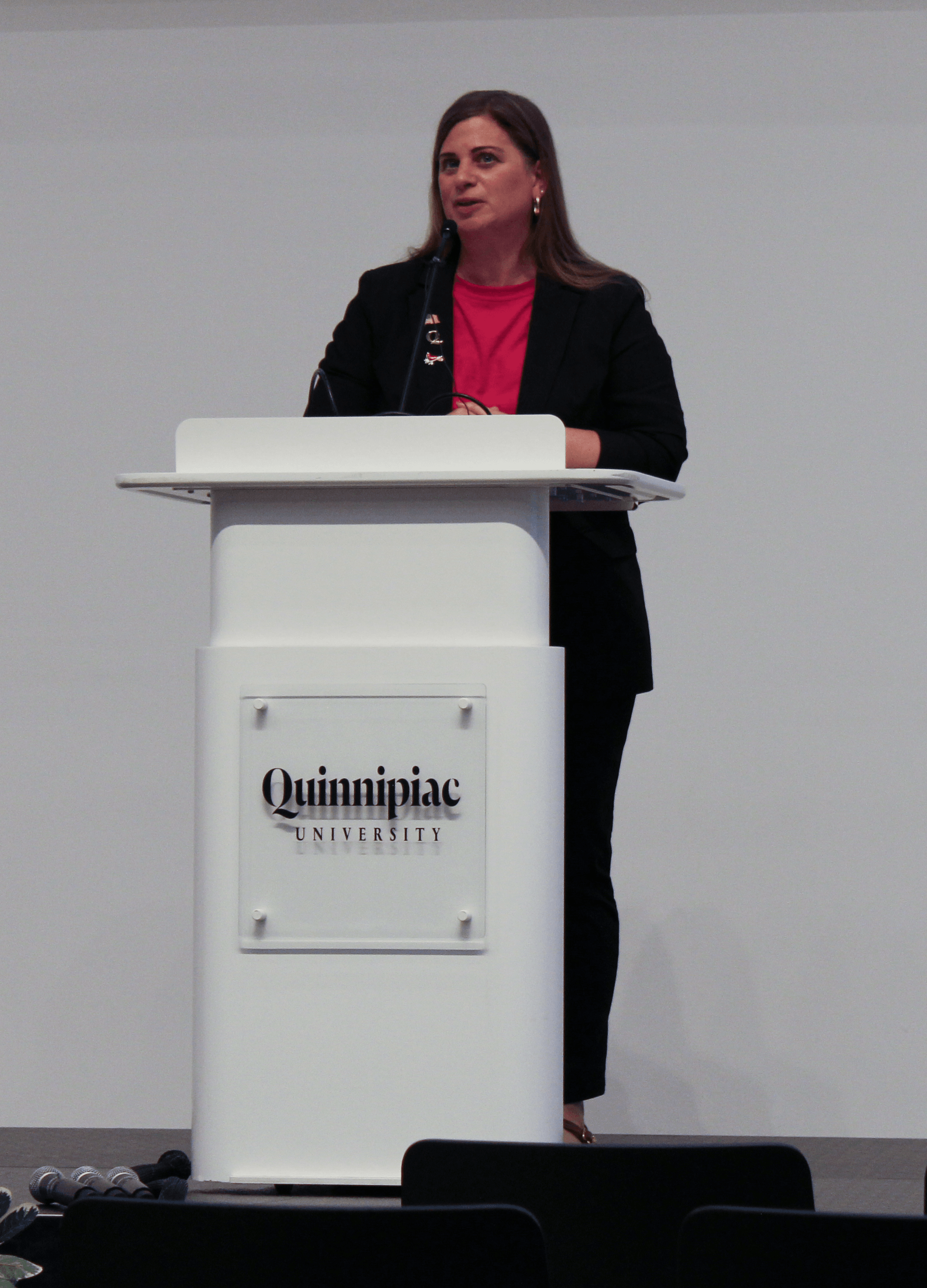
Karla Natale ’99, MS ’14, associate vice president for community partnerships and university events, was early in her administrative career with Quinnipiac, serving as Director of Special Events, when news of the attacks reached the school’s Mount Carmel Campus.
Natale said finding community is what helped Quinnipiac students, faculty and staff find support and solace. See more of Natale’s recollections in the story “Remembering Quinnipiac on 9/11: 25 Years Later.”
“It was really a privilege that I didn’t realize at that time: Quinnipiac is just a wonderful community,” Natale said. “Everybody is here for each other. We support each other. It was really evident that day, and that is something that I will never forget.”
Together with DeLoma and Burke, Natale co-organized the September 8 teach-in with the support of Eve Behrens ’27, DPT ’30.
First-year student Michael Merrick ’30 said he was glad he came to hear what the speakers had to share.
“I don’t have any correlation to this event because I wasn’t there for it. I was born seven years after it,” Merrick said. “So I think it’s important to hear the history, and it was really interesting to hear people’s experiences.”
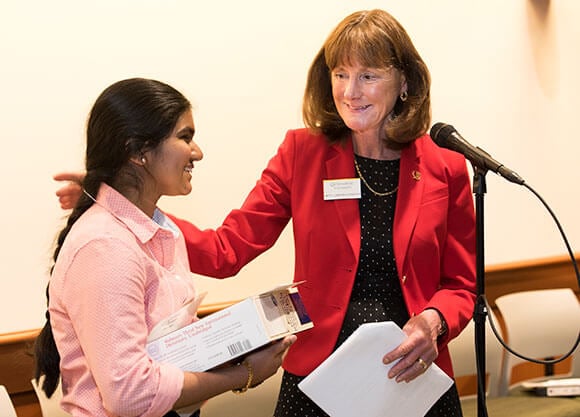
President Marie Hardin said each speaker's story resonated as they also shared the impact of the September 11, 2001, terrorist attacks.
“I think this was so incredibly important because this is something that lives in our collective memory, yet at the same time it’s deeply personal for everyone,” Hardin said. “And so, to hear these stories, and to be part of this event, was deeply meaningful for me.”
Want to learn what Quinnipiac is all about? We invite you to join us at an Open House, where our students, faculty and staff will introduce you to life as a Bobcat through a variety of sessions and tours.
Quinnipiac Today is your source for what's happening throughout #BobcatNation. Sign up for our weekly email newsletter to be among the first to know about news, events and members of our Bobcat family who are making a positive difference in our world.
Sign Up Now