



Quinnipiac launches ETHOS, leading conversations about ethical AI use
October 20, 2026
October 20, 2026
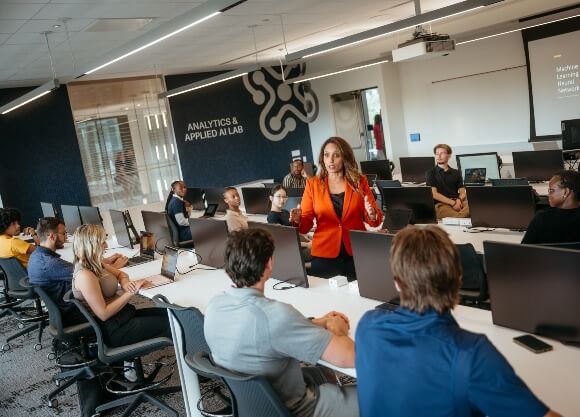
ETHOS meets this need with a community-centered, humanities-driven approach — treating ethical AI use as a form of civic discourse through workshops, open forums and interactive presentations.
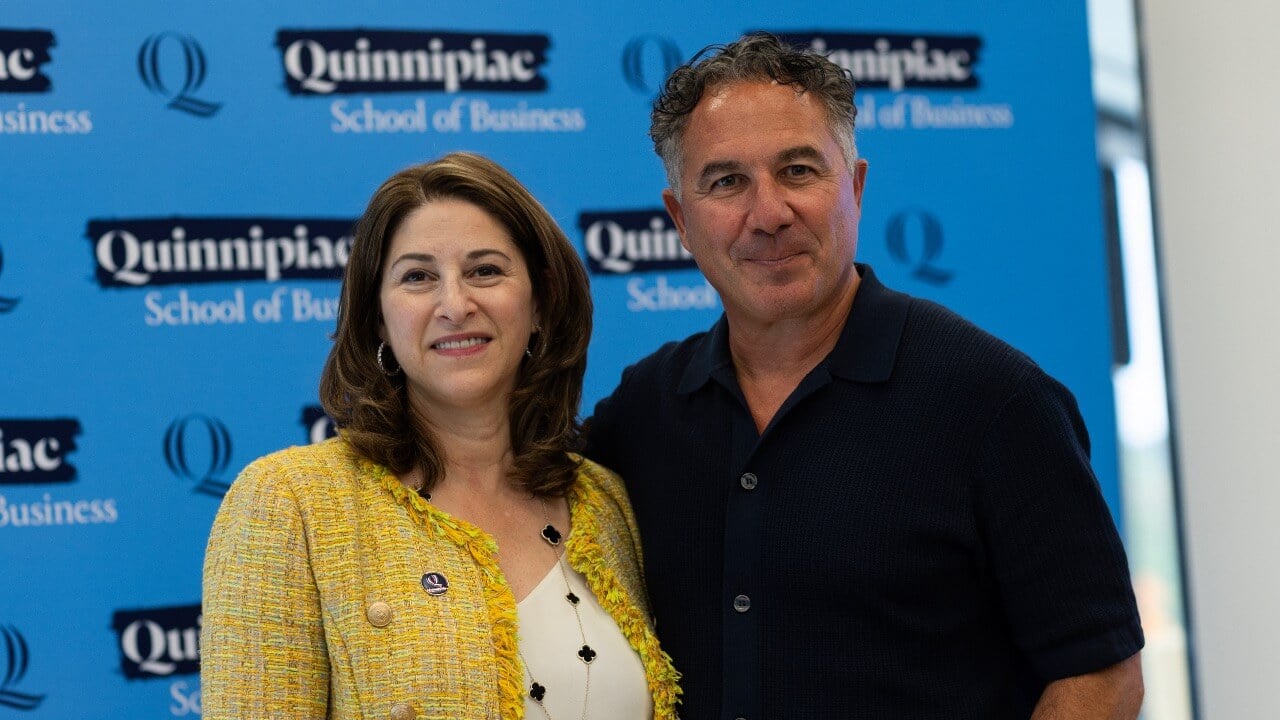
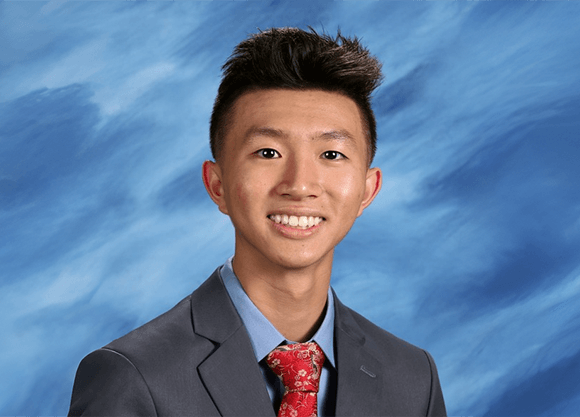
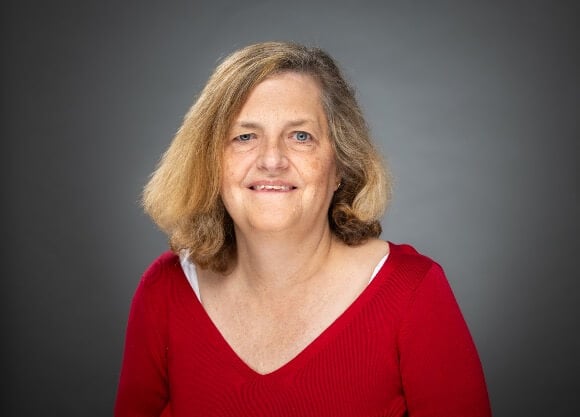
Co-led by Chris Voth, coordinator of academic integrity and part-time faculty, and David Tomczyk, associate professor of entrepreneurship & strategy, ETHOS welcomes students, faculty, staff and alumni from various disciplines into crucial conversations.
“Throughout the year, ETHOS offers programs and events that examine the ethical, social and human implications of AI, both in higher education and in professional fields such as healthcare, business and the creative arts,” said Voth. “Through conversations, shared learning and diverse perspectives, ETHOS encourages students, faculty and staff to ask questions, think critically and consider how these technologies affect individuals, communities and society. Our goal is to help everyone make informed choices about whether, when and how to use AI.”
The interactive workshops and discussions are designed to stand on their own, so Quinnipiac members can choose which events interest them and join a conversation with no prior experience. At the same time, the sessions complement and expand on each other, providing returning members an opportunity to explore concepts in more depth.
The variety in topics allows participants from various academic backgrounds and programs to collaborate and explore new ideas.
“We have sessions about AI and human rights, AI and discrimination and the bias that's built into it, and those we have targeted for any person who is interested in those topics,” said Tomczyk. “So we're expecting a pretty diverse group.”
ETHOS also holds sessions over Zoom in the evenings to invite graduate and online students to participate in conversations, in addition to the events held on campus during the university’s Common Hour.
“Ultimately, we want ETHOS to be flexible, interdisciplinary and — most importantly — welcoming where conversations about AI are accessible and relevant to everyone in the Quinnipiac community,” said Voth. “That's really the idea behind our tagline: ‘Join the Conversation.’”
While the use of AI has been included in university class curricula, those who are able to use the tool in an ethical and thoughtful way are more valuable to potential employers as they enter the job market.
“One of the interesting things that I've heard repeatedly from both employers, faculty who've talked to employers and even students who are looking for jobs, is that employers aren't looking for people to have a degree in something that says AI,” said Tomczyk. “If you're not doing it in a thoughtful purposeful manner, then your employer isn't interested in that. So the goal of ETHOS, to get people to think critically about AI, is really a precursor to getting hired in a job that may use AI or may be affected by AI.”
The feedback from the ETHOS workshops and panels have been incredibly positive.
“Every single person who's come to a session, they are like, ‘Wow, this has been really good,’” said Tomczyk. “We had faculty, we had staff, we had students, who were all like, ‘I never thought of AI this way.’”
One of the initiatives that ETHOS is currently developing is a set of student-created guidelines to support others in using AI in an ethical way.
“What we'd like is for students to give advice to other students, because one, it means that people are thinking about it, and two, people are much more likely to take advice from a fellow student rather than from the administration,” said Tomczyk. “Because AI continues to evolve, it becomes a baseline document that we can revisit year after year and say, ‘What things have changed? Where are the new priorities of people? How do we make sure that AI use still is ethical?’”
Another perk for students involved in ETHOS is the opportunity to earn the Foundations in Ethical AI Micro-Credential.
“This credential can be added to their resumes and LinkedIn profiles, demonstrating to prospective employers that they have taken the initiative to explore the ethical, social and professional implications of AI,” said Voth. “As organizations increasingly confront these challenges, graduates who can think critically about AI and contribute thoughtfully to conversations about its responsible use will bring valuable perspectives to the workplace.”
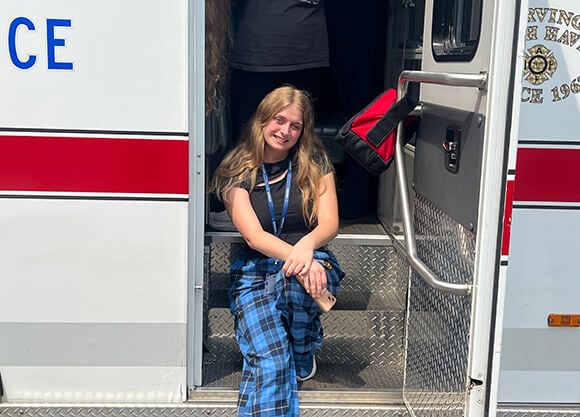
One of the students involved with ETHOS is Ryan Speed ’30.
Speed lives in The Grove residence hall, and his group has focused his interdisciplinary project on ethical AI use for college students.
“I am currently working with Chris Voth, as well as other members of ETHOS, to develop this project and eventually create something that will help college students, specifically here at Quinnipiac, to ethically use AI,” said Speed. “I hope to better understand how to use AI appropriately and correctly after completing this project as well as educating others about AI’s uses too.”
For Speed, who is pursuing a degree in nursing, he is already learning how using AI as an aspiring healthcare professional can be a powerful tool, if done responsibly.
“Being a part of ETHOS, I will have more knowledge about how to use AI to improve my own thinking and understanding of my nursing courses instead of having it do my assignments,” said Speed. “Having AI replace my own thinking would significantly harm my ability to become a nurse as well, especially because one key aspect of being a nurse is having critical thinking skills.”
In the near future, ETHOS hopes to create resources that other schools and communities can use to teach ethical AI use to younger students. Specifically, Voth and Tomczyk are collaborating with Jennifer Dauphinais, associate teaching professor of education and coordinator of the social emotional learning and school climate program, to develop a series of educational materials that other universities and K-12 schools can adapt to their students’ needs.
“Our goal is to build on the conversations we're having here at Quinnipiac and create resources that help other educational communities explore the ethical challenges of AI integration,” said Voth. “Rather than offering a one-size-fits-all approach, we want to provide a framework that encourages students, educators and institutions to ask questions, consider different perspectives and develop approaches to AI use that reflect their own needs and values. We are currently exploring funding and grant opportunities to make this happen.”
Through this initiative, Quinnipiac serves as a pioneer for expanding AI education in a unique way.
“Long-term, what we want to do is make this a model that we can bring to other universities and to high schools, middle schools, across the state, across the region, possibly even further,” said Tomczyk. “We want to make, essentially, Quinnipiac the first and biggest university talking about the ethics of AI.”
Finally, ETHOS is also working to develop an Ethical AI Student Cohort, including leaders from various academic programs to shape conversations about AI at the university. This leadership opportunity allows student to explore thought-provoking ideas, share perspective and collaborate with their peers to develop educational activities.
“We want students to have a voice in shaping the expectations and practices that affect them, rather than simply being told what responsible AI use should look like,” said Voth. “We're excited to involve students who are interested in these conversations and we encourage them to reach out to learn more about participating.”

Want to learn what Quinnipiac is all about? We invite you to join us at an Open House, where our students, faculty and staff will introduce you to life as a Bobcat through a variety of sessions and tours.























Quinnipiac Today is your source for what's happening throughout #BobcatNation. Sign up for our weekly email newsletter to be among the first to know about news, events and members of our Bobcat family who are making a positive difference in our world.
Sign Up Now