



‘Who Are You?’ podcast with guest Professor Guido Lang
Bridging entrepreneurship and AI in higher education
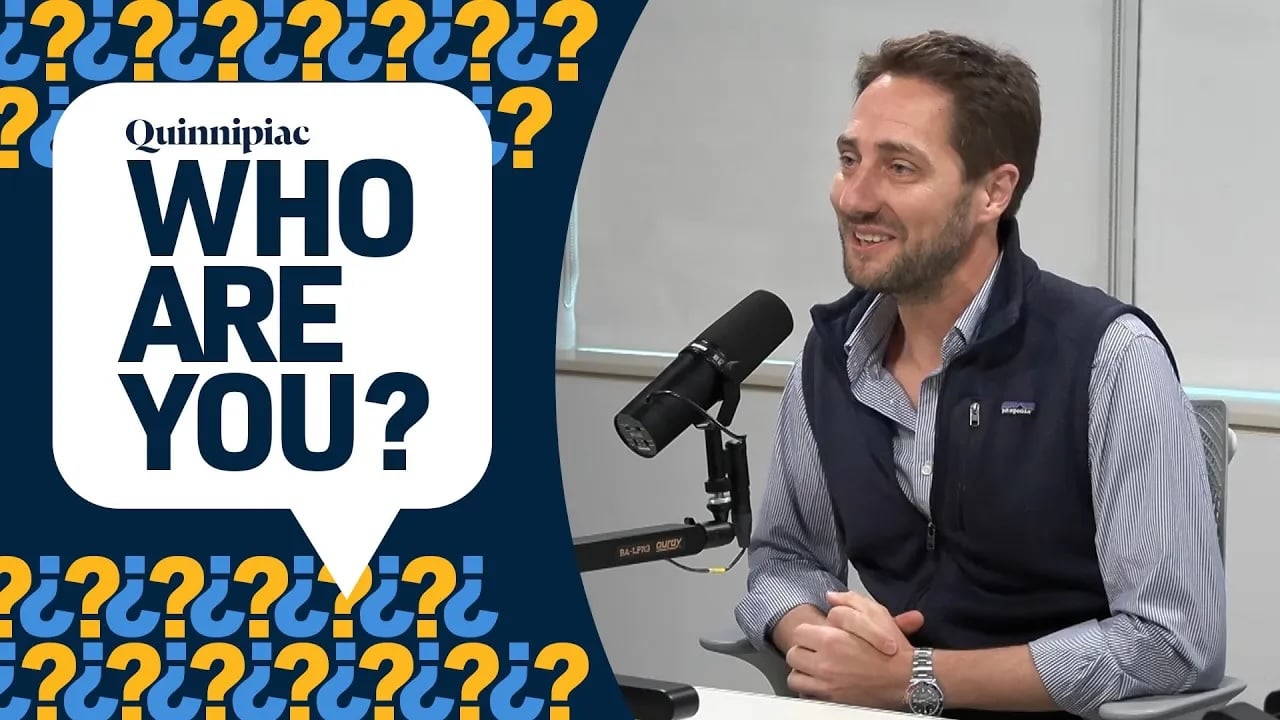
Bridging entrepreneurship and AI in higher education
0:00 Welcome to "Who Are You?"
0:31 Who is Guido Lang? Background & Quinnipiac Tenure
0:54 Early Entrepreneurial Journey in Germany (Web Design)
2:01 Grad School in LA & Reflecting on Early Business
4:08 International Education: Switzerland & Beyond
5:26 Path to PhD & Volunteer Work in Africa
7:46 Early Teaching Experiences & Philosophy
9:16 Founding Mintright (Ebook Distribution)
12:04 Entering Healthcare with Metaflow
14:07 Ventures in the AI Space & Luxury Retail Training
16:31 AI in Medical Training & Classroom Innovation (Chatbot)
19:31 Advice for Finding a Business Partner
21:05 Integrating Entrepreneurship & Global Experience into Teaching
22:55 Project-Based Learning in the Age of AI
23:53 Mentoring Students & Encouraging Entrepreneurship
24:32 Closing Remarks & Outro
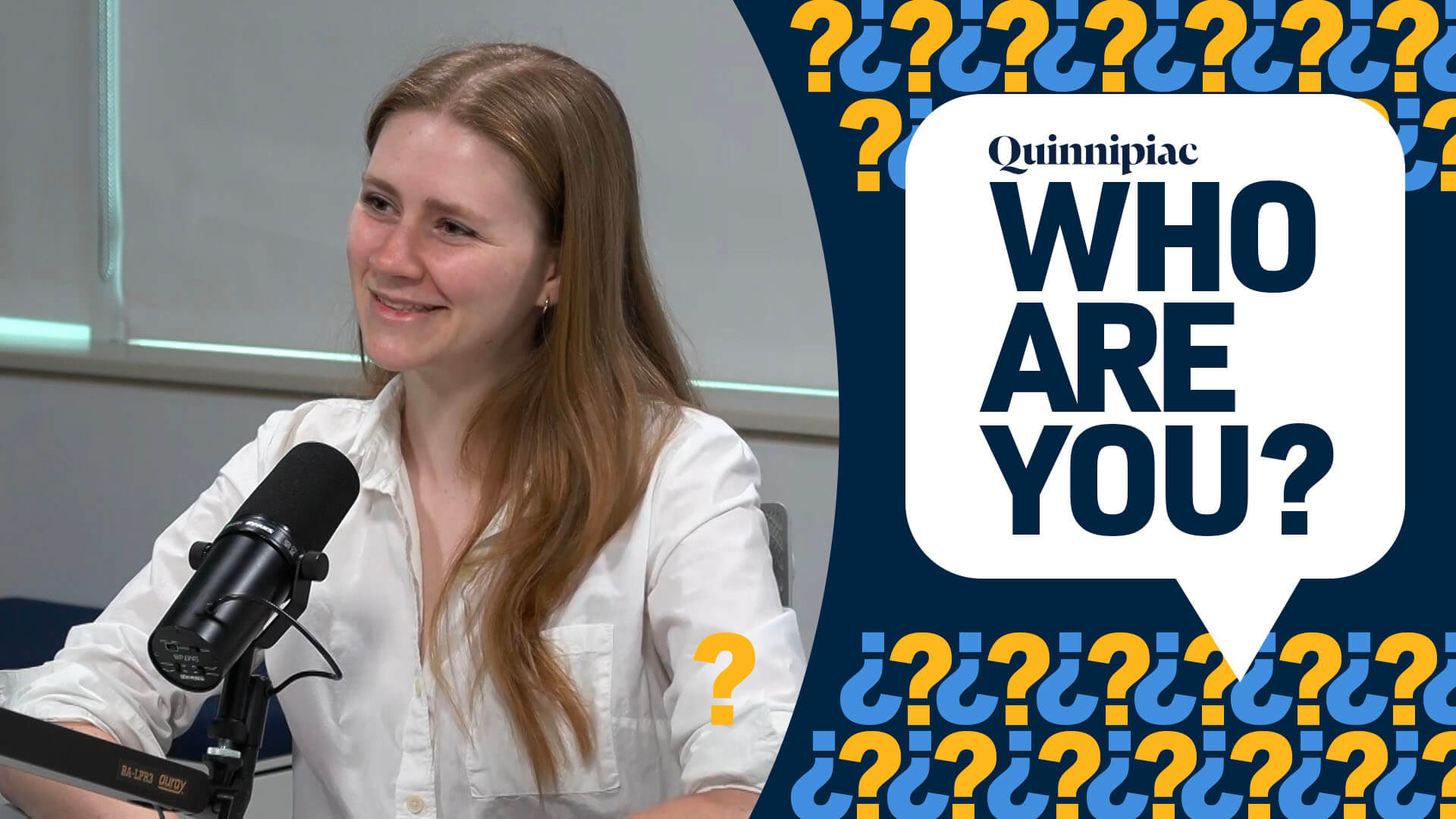
Joel Vanner: Welcome to “Who Are You?” The Bobcats you know, the stories you don't. I'm your host, Joel Vanner, inside the podcast studio at Quinnipiac University for Episode Seven, and my guest today is Guido Lang. Welcome to the show, Guido.
Guido Lang: Thank you. Thank you. Thanks for having me.
Joel Vanner: Absolutely. So I guess you could probably tell by the name of the show what my first question or maybe you've seen a past episode, what my first question to my guests are and that first question is, who are you?
Guido Lang: All right. So, Guido Lang, as you mentioned, I'm a professor here in the Business Information Systems Department at the School of Business. I've been here for quite some time. Joined in 2012. So yeah, it's been a while, but, yeah, here and excited to be on the show.
Joel Vanner: So tell us a little bit about your journey to Quinnipiac. You've been here 13 years, but how did you get here?
Guido Lang: Originally, if you can't tell by now with my accent, I'm not exactly from around here. I'm from Germany, Dusseldorf, in particular, in the northwest of the country. Grew up there, did high school and all of that. But already in my teenage years, basically, I got involved in entrepreneurship. I dabbled in photography first, and then I got into graphic design. And then the Internet was about to take off. There was a late 90s, and I started teaching myself web design, because, you know, that was what the cool kids were doing at the time, and I was just getting into it. And so, I got together with a few friends of mine, and we started building websites for small companies in Germany. And that grew because it was a time when the Internet was just taking off. So there was lots of demand. Companies were saying, We got to get on this. Similar to what we see now with AI was the same time, but just different Internet in general. And yeah, so we built that company, grew it over five years, did lots of mistakes, obviously, because honestly, I was, you know, 17 when I started. I had long hair till here. It was green. I was a punk. Yeah, it was wild years. Lots of mistakes, but ultimately sold the company, and then uh and then, yeah, that was my experience, my first experience really with entrepreneurship. And then I went to study. Then afterwards, moved out west, far west to LA, did my grad at Cal State Long Beach in business. And sort of then, for the first time I was able to reflect on all the mistakes that we did make with that company. But it was great, being in a classroom and being able to, you know, relate what I was reading and what the process was saying to my experiences.
Joel Vanner: What was that like when you were teaching yourself web design and starting that first company? What was that like? You were kind of charting uncharted waters, right? And you were young, right? Didn't have a lot of experience behind you there. What was that like?
Guido Lang: Um, well, the beauty of being young is that you also don't really care, right? And especially when you're in high school or then later in your studies, you don't have much risk, especially in the field of digital, right, where yeah, you're investing time, you're learning skills, you're building something. So the biggest risk you're taking is wasting your time. And so it's not as scary as when you're I don't know, setting up shop where you have to make a large investment. It's a time investment, yes, so there wasn't that much risk. But it was still scary. And at the same time, you know, it felt you know, being as young as I was at the time, to be in a boardroom, making a presentation to folks who are really excited and interested to hear what I had to say, because, again, it was the Internet, no one knew what was going on. And at that time, whenever you have these new technologies coming in, you can position yourself as an expert, even though you may have just I don't know, a year of experience, but all of a sudden you're an expert, and people will listen to you. And that was actually quite empowering and fun.
Joel Vanner: So, California, tell me a little bit about California, what your favorite part was and what your studies were.
Guido Lang: Yeah. So I was at Cal State Long, which as I was saying, undergrad and business management in particular. Um, to be honest with you, I chose to go to LA because I wanted to have a change of scenery, wants to have some good weather, surfing, that kind of stuff. So actually throughout my life, often times, I made decisions, not so much of, like, what I want to do, but where I wanted to be. So that was one of those where I've thought, you know, it would be really cool to be in LA for a few years. So that brought me out to LA, and it was a great experience, honestly. I mean, you know, the environment was great. It was a big change for me, love the surfing, loved the vibes of the people. Wasn't so much in love with the traffic, but, you know, it's LA.
Joel Vanner: Yeah. Then after that, where did you go next?
Guido Lang: So after that, actually, I went back to Europe this time to Switzerland. I got my master's degree in Information Systems at the University of Bern. So I was there for a few years, lived in Bern, also in Geneva, which is very international as an environment, so I really like that. And also, doing my graduate studies, I ended up being a visiting student first at the University of Hong Kong or Hong Kong University HKU in Hong Kong, which was great because I was able to explore that part of the world. Which was fascinating Hong Kong at the time. It really, it still is a crossroads of Asia, but it was a different environment than it is today, but still an exciting place. And then I was a visiting student briefly, also at Harvard University. And yeah, that was my master's program. So great experience all around as well.
Joel Vanner: What was it like balancing all of that traveling, also learning and taking courses and doing everything that comes along with that? How did you balance that?
Guido Lang: Well, I mean, I love travel and I love being in new environments. It energizes me. And the university, luckily, the University of Bern, you know, they were very much supportive of that. So they want students similar to Quinnpiac honestly, right? We encourage now we encourage students going abroad and the same was true for me back then at that university. They really wanted students to do that. So they were flexible in terms of, like, accepting transfer credits when you were abroad and all that stuff. So it was rather easy. But yeah, and exciting.
Joel Vanner: And now to the East Coast, New York City for your doctorate, tell us a little bit about that and then how you ended up here at Quinnipiac.
Guido Lang: Yeah. So, as a matter of fact, I didn't actually make it straight to the East Coast, you would think. So I was finished with my master's program. And as I was in my master's program, I didn't even know what would come afterwards, to be honest with you, I didn't have a plan of going into a PhD, going into my master's. It was rather I was in that master's program and had to make some money. And as a German citizen, when you are in Switzerland, a different country, you can't just work. Similar to when you're here International so you can just work anywhere. The only place I could work was on campus. And so I wanted to make some money, so I looked for jobs on campus. And the one opening I saw at the time was as a teaching and research assistant at the Institute of Information Systems at the University. And so I applied and ultimately got the job. But through that, I was able to, for the first time, sort of see behind the scenes of the university, like, you know, what does it take to prepare lectures? What does it take to do research? What does that even mean I didn't know anything about research at the time. And so I really fell in love with that environment. I really love the idea of being able to pursue knowledge, to teach. I really enjoyed the engagement with students. I was able to do some small lectures and tutorial sessions and such. So that got me excited about, you know, going, so I thought, Let me get a PhD to be able to do that. Um, but then I applied and I got into the program at CUNY City University of New York, Baruch College. But before doing that, I had basically a gap here between my master's ended and my PhD started. So without going straight to New York, I actually did a stopover, if you will. I spent some time in Cameroon in Africa. I was doing volunteer work there. Setting up Internet labs at schools, at local schools. Basically, that was a time when, you know, smartphones weren't around yet, really. So we were using old school phones and connected them to laptops and computers to bring Internet access to schools. And then I would teach the teachers some web design, which, again, I knew from my previous work.
Joel Vanner: Carrying over past experiences.
Guido Lang: Exactly exactly. And then in the afternoons, we would turn this around and make it in Internet cafe. So this way, the schools who could make some money because ultimately, they had to pay for internet access. So they were using the funds from the Internet cafe to pay for that. Um Yeah, anyway, so that was a long story. That ultimately brought me down to New York City for my PhD. Yeah.
Joel Vanner: And is there anything in the courses you teach now thinking back to your first teaching experiences, what do you carry from those into the students that you teach here at Quinnipiac today? Is there anything any routine or anything in particular that you always remember at the start of a term?
Guido Lang: Um, it's not necessarily routine, but honestly, every time I ask myself, would I want to be in that class? Right? Because, I mean, to be frank with you, I sat in many boring classes, right? I've seen many boring lectures. And especially in my field information systems, oftentimes, you know, programming and such is taught in such a dry and boring way and complicated unnecessarily and very math heavy. And I hated that. And then I experience, you know, through interaction with other professors, more interactive ways of teaching, and quite frankly, also teaching things myself. I realize that there's better ways of learning, better ways of teaching. So, honestly, it's not really a routine, but everytime when I do design a class and I keep redesigning and improving my courses every year, every semester, um, but I always ask myself, like, do I want to be a student in that class? And what can I do to make it better?
Joel Vanner: So your journey here has been quite unique in terms of your teaching experience, etc., but you also have a lot of entrepreneurship experiences. Tell us a little bit about those and some lessons learned from that.
Guido Lang: Yes, absolutely. So as I mentioned before, I started early on in my teenage years back in Germany, but then I continued that trend. I started another company. Then later on when Ebooks just came about was the time when Amazon had just launched the Amazon Kindle, Apple iBooks store on the iPad, Barns Nobel Nook, those came out and I literally picked up a kindle one day in New York City, and I looked for German titles, and they were exactly none available. Zero. I look for Italian titles, French titles, none. Only the large US publishers were available on that platform. So I called up a large German publishing house and said, Listen, guys, I'm a German here in the city. I bought a kindle, but guess what? None of your books are available. What gives. And they told me, Well, we're having some technical difficulties. I thought, Okay, that's weird. So then the next day, I call them back, and I, may a bit of a lie. I said, Listen, guys, I have a company. We can help you figure out how to get your titles into all the different eBook retailers Ebook stores here in the US. I didn't have a company, obviously, but I figured if they say yes, we'll figure it out.
Joel Vanner: Make it up as you go.
Guido Lang: Exactly exactly. And we said, Listen, we take no money upfront. We do it on a commission basis. 20%, right? Of every book sold goes to us. You've got no risk, right? Our incentives are aligned. And to my surprise, they said, Yes. So I flew out then to Germany, ultimately, and with another co founder sell at this company that became Mintright and global Ebook distribution platform. Yeah, was a good success, great experiences, again, along the way. And we ultimately built that out to handle about 100,000 titles across all the different retailers and working mostly with international publishing companies. So yeah.
Joel Vanner: Wow. And then after that, you switched industries to Healthcare.
Guido Lang: Yeah, well, actually, even before healthcare, you know, as an entrepreneur, honestly, I mean, you have successes, but many more failures, to be honest with you. And that's fine, because you learn from those. Actually, I think you learn from the failures more than from the successes, almost. And so, yeah, so after that, I tried my hand with another co founder with another friend of mine at a platform that was there to rent out unused photo and video gear. So living in New York City, I had a few friends that were photographers, videographers, and they have, you know, great equipment, expensive equipment, but they don't use it all the time. So I thought, Wouldn't it be great to help them make money off the equipment when they don't use? So we created a platform that would handle the entire rental process and even insure it so that there would be no risk for them renting out the equipment. Great platform and great co founder, but at the same time, it failed. It just didn't take off. Ultimately, we learned that while people were telling us, we would love to make money off the equipment, they weren't really ready to give it out because they were always hoping to get a last minute deal or get last minute photo shoot or something like that. So they just couldn't we couldn't use it ultimately. And so it didn't take off. Good lessons learned from that, as well. But then yeah, and then thereafter, I finally came into the healthcare space. That is with Meta flow. This is a company that we've been around now for, like, I think, six years. I've been working on that with a co founder. Metaflow is, in essence, an inventory and vendor management system. We help health care clinics, doctor's offices, and healthcare networks all over the US, but mostly in the Western US, manage the inventory of, you know, drug samples and such. And we stumbled into this by chance because my co founder there, he is a medical device sales rep and pharmaceutical sales rep, and he realized that in many doctors' offices, they have lots and lots of drug samples which they give out before writing a prescription to a patient. But they realized these drug samples would often expire because no one knew how many they had. The pharmaceutical sales reps would bring in too many or too few, and they would run out of them. It was a mess. And looking into that, we realized that it's because the pharma companies had no insight into what the inventory levels were of drug samples at these clinics. So we built a platform that solves that problem, basically, giving pharma companies access to the inventory information at the same time, ensuring that whatever is an inventory at the medical office is properly cataloged, so they're in compliance with everything, and we're getting data from the FDA in case any recall, so we are going to help with that as well. Yeah, that is Metaflow in a nutshell. That grew starting with drug samples. So when we expanded over time, we realized clinics were using it not just for drug samples, but also for vaccines, especially during COVID vaccine time. They're using it for vaccine management. So we had functionality around that. Then we realized they're using it for devices, medical devices. We expanded to that. So very exciting. I'm the CTO of that, so I handle the whole platform development, security, safety, privacy, all that stuff. I learned a lot about, you know, healthcare industry and the various regulations that come with it. Yeah, so that's Metaflow in a nutshell.
Joel Vanner: And it sounds like throughout all of your entrepreneurship journeys, you've been at the start of something that balloons, right? So web design, the inventory management, healthcare, vaccines, COVID, that really took off. And now AI. You're big into the AI space. Tell me a little bit about your ventures in the AI space.
Guido Lang: These days, everybody has to have an AI company, right? I mean, so I couldn't be left behind. But no, no kidding. So obviously, AI is changing how we do business, right? It's changing every single industry, every single job, and it's going to get more and more so. And it's also changing what we're doing at Quinnipiac obviously. But I realized pretty quickly that what we're doing in the classroom here has to change, and what's happening in corporate learning and development has to change likewise. So what I came to realize is that in luxury retail in particular, a lot of time is spent on training the sales associates before they actually go out on the sales floor. And a lot of that training happens in person through role play, where you have, you know, one person pretending to be a customer, the other one, you know, being a sales associate in training, and you do role play exercises. And I realize that's something that you can perfectly replicate using AI. You now video realistic avatars available that you can use with, you know, fantastic voice, really facial expressions, really realistic. And you can train them to engage in this sort of back and forth role play. They can be the customer, and at the same time, later then you can have feedback be given automatic feedback based on, you know, large amounts of training data that we have when it comes to best practices in retail selling. And so we're leveraging that, we're leveraging AI avatars and the data that's available for best practices to help retailers, particularly luxury retailers, you know, improve how they train their sales associates and ultimately, you know, get better sales results.
Joel Vanner: And what is it like working in the AI space, right? Every day, we were talking before we started recording. Every day, it's something new. Every day, platforms change, new things come out, disruptors come, right? What is it like working in that space? And then how do you transition what you're learning there into the courses you're teaching here at Quinnipiac and how you're preparing students to go out into a world where this will be there every day, too?
Guido Lang: Yeah. It's exciting, honestly. I love the AI space because it's so fast moving. So to give an example, when I first started that company, and the impetus, the idea for that company actually came from interactions here at the medical school because here at the medical school at Quinnipiac, this is actually how it started. At the medical school here at Quinnipiac, a lot of time is spent working with so called standardized patients. These are actors, they hire actors to pretend to be a patient with physical ailments or, you know, mental health ailments. And they have a script, they learn that and they come in, and they do the role play with doctors or nurses.
Joel Vanner: In the physical simulated space.
Guido Lang: Exactly, exactly. And so I realized at the medical school this could be just as well used, right, using AI instead of, you know, actors because students really benefit from this roleplay. And so, ultimately, this idea came out of that, and I started building the first prototype. But at the time, video avatars weren't good enough yet. And literally, I think it was three months afterwards, the video avatars became much better, much more realistic. You could have interactive avatars, which you couldn't do again, it was last year. It happened within a few months. It was crazy. So when summer came around, I had to basically scratch the entire prototype I had built up until then, which was audio only, and switch over to avatar based and video. So and that's just exciting to me. I mean, again, you know, when you're a solo entrepreneur or in a small team, you know, you can change quickly. You're nimble. That's your big advantage, right? So when I realize that the market is changing, something new is available, I jump on it, I try it out. If it fits, I adopt it, because as a company, we want to provide the best experience possible to our clients. But that also translates very much to what's happening in the classroom in my own classroom, But I also see it brought at Quinnipiac. So, my own classroom, even, like, like I think 1.5 years ago when we were just beginning realizing how AI is changing teaching, what I had done is I had created a custom chatbot for one of my courses, in particular, for one of my online courses online R programming course, where I realized quickly that students would go online to look for answers. That's normal, right? But the problem is when you're learning a new programming language, there are different styles of, you know, using variables and writing code. So I wanted students to get the right answers from my style of writing the code, right? Because it fits with my examples, it fits with my teaching. So I built a custom chat bot that would ingest all of my learning materials that I provided with, and then students were able to ask a question that it would respond in a way that mimics what I would say if I were to respond in an email. Again, it was an online class, a-synchronous. So students, you know, they didn't see me in the classroom, and they would write me emails with questions. But then, let's say, if they write me an email, like, you know, at midnight, I wouldn't respond until the next morning. And I didn't want students to be held back by the sort of time delay. So I built this custom chat bot, so they were able to ask these questions and get responses right back and in the same style as if I had written it and if it was coming directly from so I end up doing research around that as well to see, you know, what students liked about it, what we can improve. And yeah, that's a whole different story. But anyway, so the point is here in my classes, and it was back then, but even today, I try out new AI tools all the time. I think the only way that we can, you know, move forward is to experiment because things change so fast. That's true for business, but it's also true for what we're doing in the classroom. So we got to keep trying new things and see what works, basically. And, yeah.
Joel Vanner: For anybody out there for students who want to be an entrepreneur, but they need a partner. You have a saying, and I want you to say it here. What advice would you give them as they're looking for someone to partner up to unlock their idea and make it happen?
Guido Lang: Yeah, it's tough. So I wish I had good advice. But honestly, to me, you know, finding a partner in business, like finding a partner in life. I'm not aware of any algorithm or shortcut that gets you there.
Joel Vanner: No AI.
Guido Lang: No, I'm sure they're working on. But honestly, it's tough. It's really tough. I mean, you know, I was fortunate to have good experiences, good co founders, which isn't to say that there aren't disagreements and such. Just like in a marriage, right, or in a relationship, you have disagreements, and it's tough. But honestly, what I found is try to find someone who complements your skill, right? So I don't know if you have no technical skills, then try to find someone who has them, right? If you don't know marketing, then try to find someone who knows marketing. Whatever it is that you, you got to be very sort of honest about what you're good at, what you're not good at, so that you can find partner a partner or partners that can complement you with the skills that you're lacking. But at the same time, you know, you should be also good friends together. You want to be able to know, you spend a lot of time with that person of these people. So you want to, you know, you should like them. They should like. You should get along, which again, sort of general advice, I guess, but it's not easy to find the right person, honestly, just like in dating or in life. It's not so easy. No easy answer.
Joel Vanner: So you have all of these entrepreneurship ventures successful and unsuccessful, teaching experience and research. How do all these things come together and impact the teaching and learning environment that you bring for your students?
Guido Lang: So, honestly, my classes are very hands on. So just like an entrepreneur, you know, when you start off, it's just you or maybe with a small team, you got to be willing to roll up your sleeves and just do it. So all of my classes are very much, let's roll up our sleeves and do it together. So instead of me lecturing, so I think this kind of talking is probably the most talking that you'll ever get from me in a classroom, it's going to be much more me walking around and helping students, we're trying to solve problems together. I show them how to do it, but ultimately, it's them doing it. And I'm there to, you know, to troubleshoot to help them along the way. So, um for me, it's all about sort of bringing together what I've done in my entrepreneurial adventures, which I share with my students, of course, as well, right? I try to relate and bring back stories that some of them that I just share with you, but many others into the classroom. But ultimately, being an entrepreneur means, you know, being able to do something, do it, right? You got to roll up your sleeves. So the class are very hands on that I have. You know, being very international with my experiences, I can relate very well to students that, you know, have international backgrounds or even those that aspire to have them. I can share those experiences as well. But I try to basically be able to relate and always go back to what we talked about in the beginning, which is would I want to be in this class, right? How can I make this class, the most fun, the most experiential learning experience possible so that, you know, if I were a student in my class, I would enjoy it, right? I would want them to be there. And so, again, it's about hands on, you know, using that engagement, that interaction that I provided, it's really experiential learning that I think is the best way, especially now in the age of AI, where the old ways of doing things of, you know, multiple choice exams, not in my class. Actually, I shy away from any kinds of standardized exams because, AI can do this stuff, right? This is no longer how we should assess learning. So I really focus on project based work where students work individually or in small teams, and I'm there to guide them along the way. I think that kind of learning is really what needs to happen in all classrooms, to be honest with you.
Joel Vanner: Simulating what they would find out in real world.
Guido Lang: In the real world. Exactly, right? We have to be mimicking what's happening in the real world. So we're using all the tools. And again, being an entrepreneur, you know, I leverage whatever's available, right? And if new things become available, I integrate that in my work. Same in the classroom. I leverage whatever tools are available. If new ones become available, even mid semester, I bring them in. Granted, sometimes, you know, we try something out and it doesn't work, which is fine, too, because we can learn from that altogether, as well, right? So I think students, you know, they're part of their journey and part of the experience, but it's a fun one. It's a fun ride. I love what I'm doing, honestly.
Joel Vanner: And I'm sure it's rewarding. Seeing your students graduate, succeed, have their own ventures.
Guido Lang: That's true.
Joel Vanner: And maybe come back and visit your classes or at least just keep in touch.
Guido Lang: Yes. And I do advise students as well. So students oftentimes come to me with questions around entrepreneurial ideas. I was involved in the early days when we had the Center for innovation entrepreneurship starting off here at Quinnipiac. So I'm very much always telling to say, if you have any ideas for startups products, come to me, especially around digital, obviously, and my door is always open. So I'm excited to, you know, work with any student that comes in with ideas. I did the same in my college years, and later, I'm always excited when I see students that have ideas, I'm there to help them get them off the ground.
Joel Vanner: That's awesome that you provide that environment for students in your courses. And unfortunately, that brings us to the end of our time today, Guido, we could talk all day about AI, and etc. But thank you so much for joining me on this podcast.
Guido Lang: Thanks for having me.
Joel Vanner: That's a rap for this episode of “Who Are You?” If you like today's episode, be sure to like and subscribe and find other episodes on Apple Spotify, and YouTube podcast or wherever else you find your favorite podcasts. Until next time when I ask my next guest, who are you? Bye for now.
















Quinnipiac Today is your source for what's happening throughout #BobcatNation. Sign up for our weekly email newsletter to be among the first to know about news, events and members of our Bobcat family who are making a positive difference in our world.
Sign Up Now