



Marketing student wins ‘Best Paper Award’ for QUIP-RS research at international conference
August 25, 2026
August 25, 2026
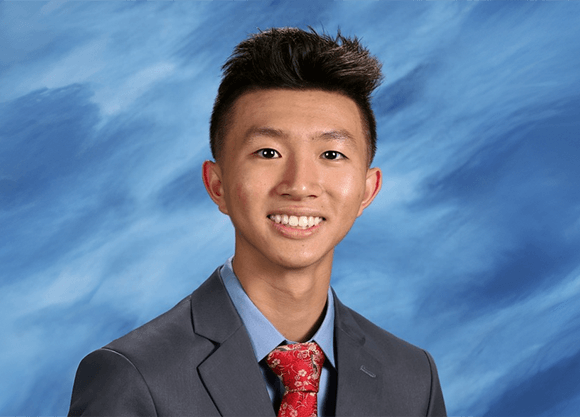
These are the questions that Brandon Meas ’27, MS ’28, a marketing major in the 3+1 accelerated dual-degree applied AI & business analytics program, decided to investigate through his experience with the Quinnipiac University Interdisciplinary Program for Research and Scholarship (QUIP-RS) and by taking advantage of the User Experience and Behavioral Insights Lab in the School of Business.
“The School of Business User Experience and Behavioral Insights Lab is equipped with tools at the frontier of behavioral science, including software for eye-tracking, emotion reading, response time and geospatial analysis,” said School of Business Dean Holly Raider. “Our students don’t just read about decision making and consumer behavior; they are designing experiments, running them and watching real people make real choices in real time. This is rare at the undergraduate and even graduate level.”
Meas originally heard about the opportunity through QUIP-RS, an intensive eight-week program that enables students to develop scholarly skills with funding and mentorship, from Tilo Ghosh Chowdhury, professor of marketing and co-director of the User Experience & Behavioral Insights Lab, after taking Chowdhury’s Marketing Research class the previous fall.
“I attended one of QUIP’s online info sessions and was hesitant at first to officially apply, since it was a huge commitment that would span eight weeks of my summer,” he said. However, Professor Tilo was so supportive and helpful answering all my questions along with the rest of the QUIP-RS committee. And after realizing that this could be a great opportunity to continue the research I conducted in the Behavioral Research Lab during a course I took in the spring, I decided to take the chance and apply.”
To understand the impact that advertisements have on consumers, Meas compared a group tasked with finding vacation travel spots against a group that scrolled Instagram as they regularly would. Each group was then split again into two groups — those viewing a traditional feed with ads and those viewing a feed with minimalist ads.
“For my research, I created a simulated Instagram feed using a platform called Qualtrics and hosted it on Cloud Research,” he said. “I designed 72 Instagram posts (54 fillers and 18 unique ads) and had a target sample pool of 240 participants. I wanted to test how the design of an ad and the viewing intent of a participant would impact their search efficiency and consumer behaviors. Ultimately this shifts the future of digital advertising from simply capturing attention to actively managing consumer bandwidth.”
There were three main findings that Meas discovered from his research.
“First, I discovered a significant ‘Spillover Effect.’ I found that minimalist ads preserve a user’s cognitive battery,” he said. “Because these ads aren’t visually exhausting, users’ attention spilled over into the rest of the feed, leading them to spend much more time engaging with organic filler content compared to when they were shown traditional, heavy ads.”
Second, Meas learned that the viewers who were not assigned a task while scrolling had a significantly more intrusive experience compared to those tasked with finding a vacation spot, especially when they saw traditional ads.
“Finally, I found a fascinating disconnect between engagement and likeability,” said Meas. I observed that causally scrolling ‘free viewers’ focused more on traditional ads, but they rarely like them. Conversely, goal-oriented users not only engaged well with minimalist ads, but they were also much more likely to click the ‘like’ button. It proved that just because a busy ad captures initial attention, it doesn’t mean it drives positive brand sentiment.”
Understanding these impacts can have a substantial effect on how digital media and advertisements will evolve on social media platforms.
“My research is critical for digital marketers, who must design visually engaging and functionally efficient posts for goal-oriented consumers,” said Meas. “As digital fatigue reaches an all-time high, the future of marketing relies on understanding how users process information. My findings can be translated into practical business actions, where through the ‘Spillover Effect,’ managers can treat minimalist ads as visual breathers that reset a user’s attention span rather than just aggressive revenue drivers.”
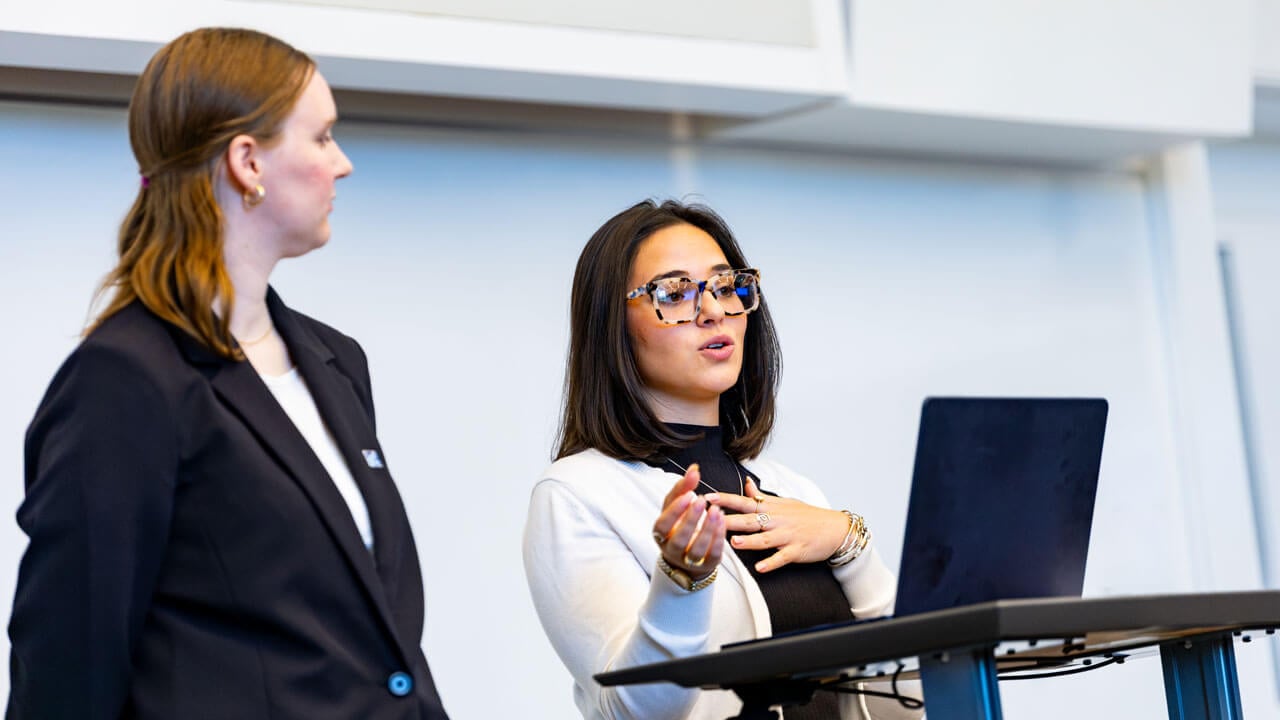
Meas presented his research findings at the impressive Academy of Business Research conference at the end of July, where he was awarded “Best Paper Award.”
“I am proud of Brandon, and I am proud of what his success says about the culture we have built in the Behavioral Insights Lab, a culture of inquiry, ambition and collaboration,” said Dean Raider. “His success is also a reflection of the wonderful QUIP-RS program that provides structure and support for student research; that was also a valuable experience for Brandon this summer.”
In addition, the mentorship and support that are available to students at both the undergraduate and graduate level is a value that Quinnipiac takes pride in.
“Our faculty, staff and graduate student mentors are dedicated to helping students prepare through coursework, mentoring and refining the ideas, from research question to methodology to inferences,” said Dean Raider. “Preparation includes practice presentations and receiving feedback. This sharpens the research and helps students be even more confident in their presentation skills.”
Meas said he is grateful for the ways that Quinnipiac has encouraged his research interests and helped prepare him to present his findings at an international conference.
“Quinnipiac has been a huge support for me throughout my research, providing me with funds to get participants for my study, as well as funds for me to get in the conference,” he said. “Also, the moral support I had from fellow peers and faculty encouraged me to give it my all at the conference, and my professor truly was my biggest help, in helping me prepare my slideshow and go over my script many times until I was ready.”
The opportunities that are available at Quinnipiac are one of Meas’ favorite things about the university, among other social opportunities to find community.
“My favorite part about being a student at Quinnipiac is honestly the experiences the campus has to offer, in research programs like QUIP-RS to academic events like the Illuminate Student Expo,” he said. “There’s also so many clubs and organizations that host incredible events, some standout events being Fall Fest and Wake the Giant. Overall, there’s so many opportunities to not only have fun but make connections with extraordinary people at Quinnipiac.”










Quinnipiac Today is your source for what's happening throughout #BobcatNation. Sign up for our weekly email newsletter to be among the first to know about news, events and members of our Bobcat family who are making a positive difference in our world.
Sign Up Now