


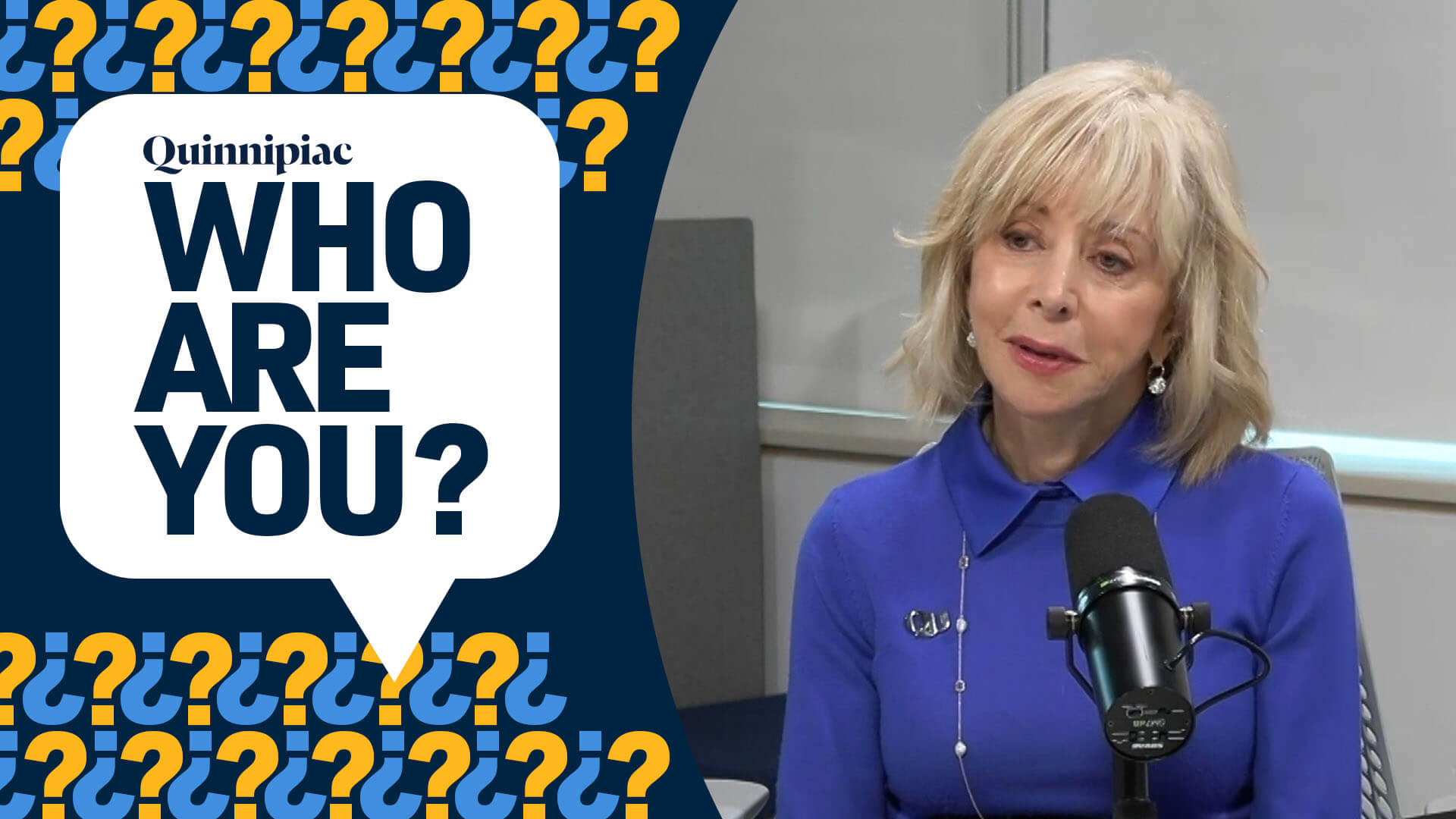
‘Who Are You?’ podcast with guest President Judy Olian
Quinnipiac University's 9th President
Quinnipiac University's 9th President
0:00 Welcome to “Who Are You?”
0:23 Who is Judy Olian? Background & Journey to Quinnipiac
1:01 Why Quinnipiac? Nimbleness & Transformative Education
2:50 First Impressions & Evolving View of Quinnipiac
4:54 Engaging with Students & Learning from Them
6:20 Defining Leadership with a Four-Pillar Strategic Plan
8:55 Navigating COVID & Investing in the Future (Health & Wellness Center)
13:50 Adapting to Higher Ed's Evolution & Quinnipiac's Role
16:14 The Value & Affordability of Higher Education
19:54 Future Focus: AI, Human Skills & Campus Experience
25:05 Lessons Learned: Teamwork, Focus & Resilience
28:56 Advice for Students: Experiment & Discover
31:52 Future Plans & Staying Connected
34:03 Closing Remarks & Outro
Joel Vanner: Welcome to Episode nine of “Who Are You?” The Bobcats, you know, the Stories You Don't. I'm your host, Joel Vanner. And for the ninth episode, I am joined by a very special guest who is Quinnipiac's ninth president. And my guest, I'm sure, as you could guess by the name of the show, my first question to you is, who are you?
Judy Olian: Thank you, Joel. It's nice to see you again. We had a few fine interviews over the course of your time here at Quinnipiac.
Joel Vanner: We have.
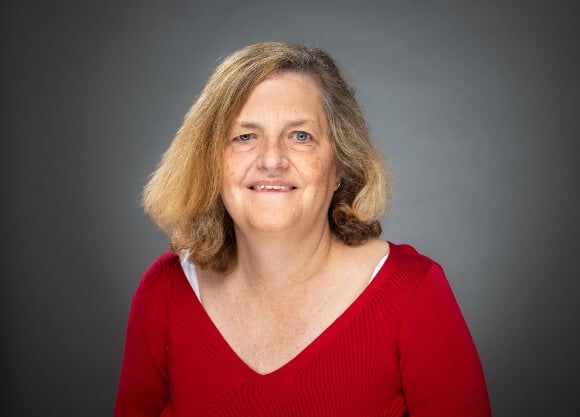
Judy Olian: I am Judy Olian. Privileged to be the ninth president. Grew up in Melbourne, Australia, and then Israel, and have been, I would say, a lifelong academic with one step in the business world, 1 ft.
Joel Vanner: And you have been president of Quinnipiac. You joined us in July of 2018. Before that, you were dean of UCLA Anderson School of Management and a chair and management there for a little over 12 years. What initially drew you to Quinnipiac? And what were some of the key factors that influenced your decision to take on the role as our ninth president?
Judy Olian: Have to say, I was drawn to Quinnipiac, but everything I encountered actually exceeded my expectations. I came from pretty large, great public universities. I went to grad school. Even undergraduate in Israel was public, Wisconsin, Maryland, Penn State, UCLA, all great public, what we call R1 institutions, research institutions, research intensive institutions. I am a person who's impatient. I like to move fast, and I wanted to be in a place that was nimble and agile and where you could have impact, which was needed in a relatively short span of time. I felt that Quinnipiac met that bill. I wanted to be at a place where education was truly transformational so that when you met students at the beginning and then reconnected with them at the end, they found themselves. They were totally transformed. They realized what they were good at. They created whole networks of opportunities around themselves. They became leaders. That transformation of before versus after, I think, is magnificent at Quinnipiac. And I also wanted to be at a place that really put the students in the very center. And I found that in Quinnipiac.
Joel Vanner: So, joined our community in July 2018, with all those thoughts in mind. What were your initial impressions of Quinnipiac when you first arrived, and how has that evolved over time?
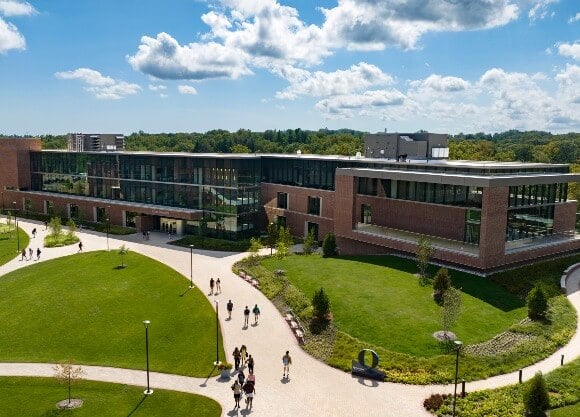
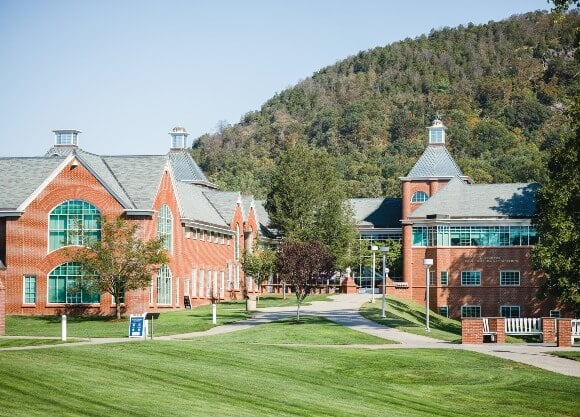
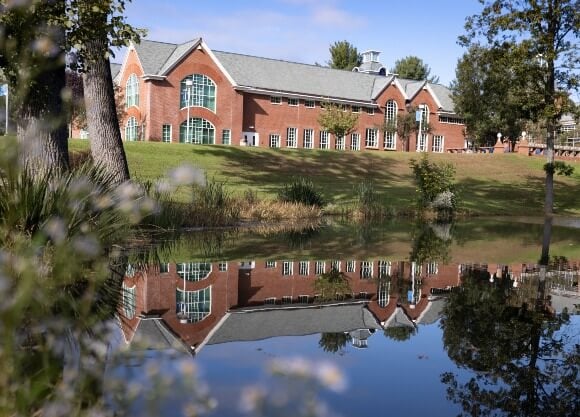
Judy Olian: Well, I have to say, when I first interviewed for Quinnipiac, I was a tile stealth candidate, and I had never set footed Quinnipiac. And I didn't know what it really was. And I remember on a very cold day in late 2017, I came, as if you will, a bogus shopper in terms of, you know, the marketing guru call it a bogus shopper, where I went around and said, Well, my child, son daughter, is interested in coming to Quinnipiac, and I would stop students along the way and ask what do you think of this place? And invariably, I encountered students who were just thrilled with their experience. I was also blown away by our three campuses because, you know, we're not one of these sprawling large public universities. And yet, our campuses were gorgeous, well-maintained. The three serve different purposes. And so just dipping my toe in the water gave me that impression of really beautiful, beautifully cared for institution and also very happy people. And, you know, you can't lie when you just walk around. Nobody was staged or choreographed to tell me certain things. So those were my very first impressions in late 2017 before I accepted the job. And then it only got better.
Joel Vanner: And as president, you've met with students a number of times. You've held office hours as well. You talked about students and being a mystery shopper. What has been your favorite way to engage with students as president?
Judy Olian: Well, I hope I've engaged a lot with students. There are so many different ways I engage with students, you mentioned I have office hours every couple months, and I learn so much, I take notes, and then we follow up, and if there's anything that needs fixing, we try to fix it. And I meet students that way. I go to all kinds of big and little events where I meet and talk to students. I go to a lot of sports activities, a lot of games. My weekends are usually filled with a few different games. I go to classes sometimes. I'm invited to go back to my roots as a professor. And I have the opportunity to have interviews over time with different students who tell me what they're doing and how they've grown. So I have numerous opportunities. We break bread with students. They come to the house. So it's just been a joy, frankly. And you learn a lot. You learn what's on students' minds, what they're thriving at, and where they see opportunities for improvement.
Joel Vanner: Great to have those moments connecting with students in our community. Were there any specific moments or challenges in your early years at Quinnipiac that helps define your leadership philosophy and inform the future?
Judy Olian: You know, first year, I went on a listening tour. I met with all kinds of student organizations, with faculty, with the leadership of the institution. And I really had three basic questions. What is it that you do? Where could we help you do better and more? And what do you dream of for the future of Quinnipiac? And that really informed my world view of who Quinnipiac is and what the future could look like. We developed a strategic plan around four pillars that still serves us incredibly well today. And those four pillars were achieving academic excellence, inclusive excellence, nurturing internal and external communities and developing lifelong relationships. And each of those pillars fuels certain kinds of goals, for example, on the first pillar, we've spawn new academic programs. In the second pillar around Inclusive Excellence, we've really built a community where everyone is welcome and everyone we're trying to enhance the sense of belonging of everyone. Nurturing internal communities is around student life, faculty life, activities that unify the campus. Nurturing external communities is what we give back to our neighborhoods. And how we help our students become enlightened global citizens by recognizing their service. And the fourth is around lifelong relationships, whether as lifelong learners or as lifelong alumni and supporters. So every one of those is visited each year by our leadership, and we set goals and then hold ourselves accountable and publish those. So that was a very formative piece of my leadership that has served us really well as we've gone along, and I hope that most people know, at least our strategic plan, let alone read it. And there is a Cliff Notes version, too, on the web. And it really defines us and the future orientation that we have. And that's how we became the University of the future. A second formative moment was, of course, COVID, which hit in February of 2020 and really lasted for a couple of years in terms of its long tail. And the third are all of the new investments that we've made in learning and living spaces that has really shaped the experience that our students have that our faculty have, and that the faculty and students can join together around that.
Joel Vanner: Throughout your tenure, what have been some of the most rewarding challenges you faced as president? You mentioned a little bit about the strategic plan, the formation, and the four pillars, but what were the most rewarding challenges, and how did you overcome them?
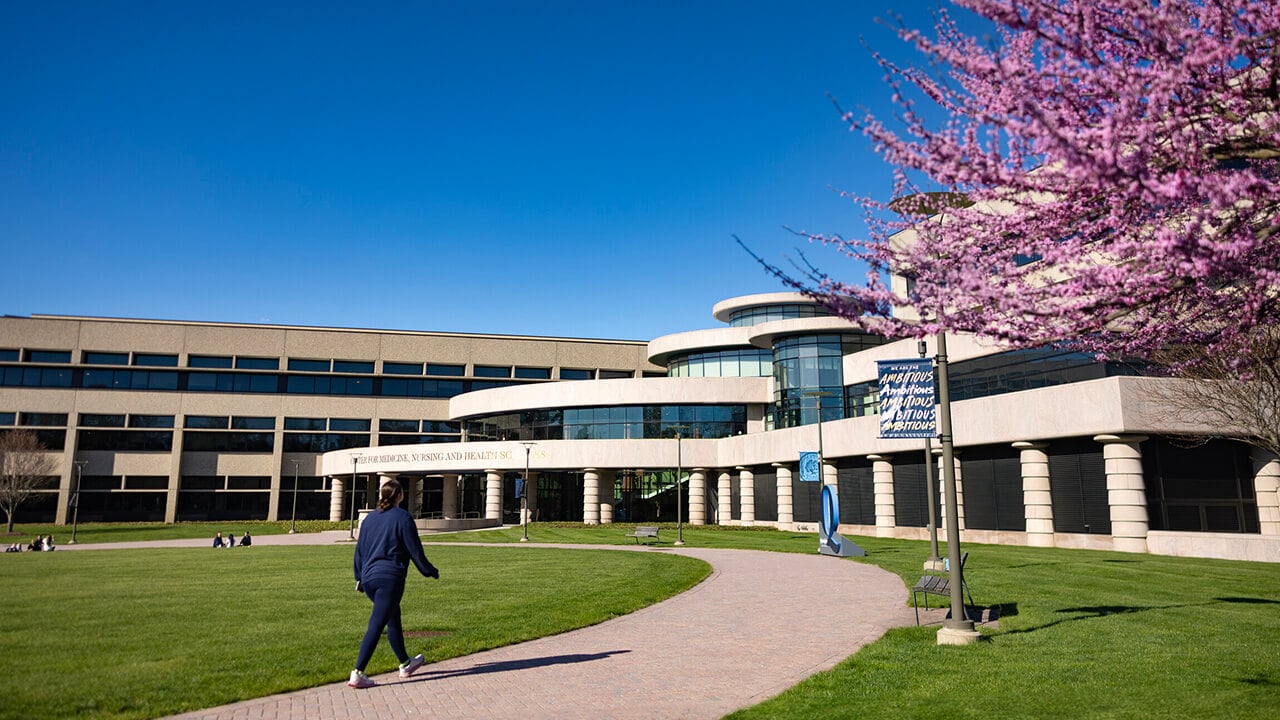
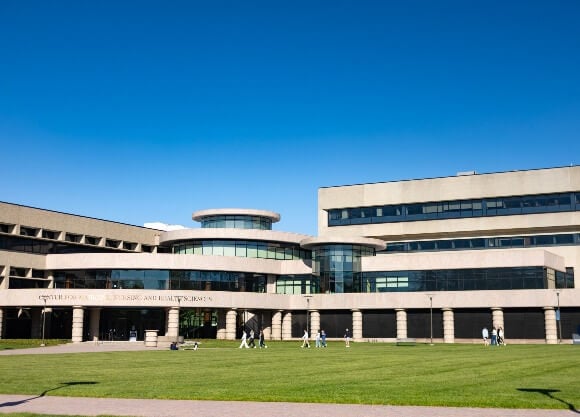
Judy Olian: What we tried to do, I mean, is obviously manage ourselves in a very responsible way, but at the same time, keep pushing the envelope. So one of the pieces that was really challenging was during COVID because you had to deal with it here and now. You had to protect the health and well-being of our community. And I think we were somewhat prescient in realizing that it was better to be in community as opposed to remote because of the long-term effects of being so isolated. So we brought people back very quickly and had to care for them. So there was the here and now issue, but there was also the parallel track of keeping an eye on the future. We just completed a strategic plan. So how do you keep your foot to the pedal in both tracks, the here and now, and keep an eye on the long-term future without compromising one or the other? You had to deal with the health crisis and the community crisis, and you wanted to keep progressing. So I'm really proud of what our leadership and our board leadership did during COVID in making a decision when everyone else was, you know, battening down the hatches to invest in the Health and Wellness Center that, in fact, was completed towards the end of COVID or right at the end of COVID, because we felt that, number one, that was something that the community would come gather around, everyone uses. It doesn't matter whether you're a poet or a quant, whether you're in North Haven or here. Everyone uses this great health center. Secondly, it addressed the physical and mental well-being of the students through the health center there. So I felt that was a really important investment, especially in the moment of time that we were at. But it was a challenge to pull it off. And we had the tremendous opportunity of what that would bring. But at the same time, the challenge of uncertainty about the future, you didn't quite know when the pandemic would end and what shape we'd be in, and what our enrollments would be. And at the same time, you had to build the future. I felt that was something we actually navigated well and perhaps better than some of our peers by being able to operate in parallel tracks.
Joel Vanner: And the new Health and Wellness Center. Well, when it was new, then is still here now. It's a beautiful building, and so are the other buildings going up on the Mount Carmel Camp.
Judy Olian: And I think it's heavily used all around and there are a lot of programs in there that help our students for the rest of their lives because we have programming in there on how to cope with stress and anxiety, how to deal with addictions, how to deal with family pressures, how to prioritize when you've got all of these issues on your plate. And so I really think that it's something that we'll keep on giving to our students as they build great and healthy habits. I mean, I work out most days. And it started when I was in college. It's a habit that has stayed with me. Yeah. So I hope we develop coping and inoculation skills in the Health and Wellness Center that stay with people for life. So that was one of those challenges and opportunities. And, you know, nobody can do everything, no matter how expansive or how rich you might be in terms of an institution. So you have to make choices. About what you think the priorities are. And I think we've made those well about what to invest in for the future while maybe saying no to some other things.
Joel Vanner: Higher education, and you kind of alluded to this, is evolving rapidly. How do you view the role of universities in preparing students for the challenges of the future? And then for Quinnipiac, specifically, how has Quinnipiac adapted to these challenges? You spoke on that a little bit before, but there's anything else you want to add to that?
Judy Olian: I think higher education has transformed societies all over the world. First of all, we're increasingly a knowledge-based economy. And please let me start out by saying we need all kinds of different people. And I think individuals that go into professions that don't necessarily go for higher education have helped us build this economy just as significantly. But those who go into higher education become the knowledge workers of the future and the incredible innovations, whether it's in healthcare or biotechnology, whether it's in information technologies, whether it's in advanced manufacturing, whether it's in how we deliver services to improve people's lives, they usually stem from universities. Universities have made the world a much richer place to live in for everyone. Universities have also taught the principles of democracy that have been exported all around the world, and that has benefited every society, however they've chosen to adopt it. And many of the leaders, by the way, of countries around the world, have studied here and have brought with them principles of democracy, however they've been adapted. So the well-being of society, child mortality, cancer rates, diabetes, and information technologies that have enabled us to do what we're doing on a daily basis have started typically at foundational research environments in higher education, and those that fuel those advances are typically products of higher education. So higher education has been the engine that has improved well-being for society over the centuries. It has a critical role, and I spoke recently in a column. I wrote recently a column that talks about the fact that, as expensive as it appears, it is expensive to attend college; it has actually come down in the last 20 years in inflation-adjusted dollars. 37% decline versus a 37% increase in the consumer price index during that period. So as expensive as it is, it is a great investment into one's individual future, but it's also become more affordable than many other things we take for granted in society. Like food that we buy, like homes, like services that we consume, like healthcare. Those have gone up much more than what higher education has done in inflation-adjusted dollars. So is it affordable for everyone I wish it were, and we have to make that goal possible. But does it pay off to individuals and to society? In an unequivocal way, it has what we would call a positive trade surplus to society and tremendous individual returns. The difference between a person who finishes college versus one who finishes high school is a 75% lifetime premium on earnings.
Joel Vanner: How has Quinnipiac adapted to these challenges and changes in the higher education landscape?
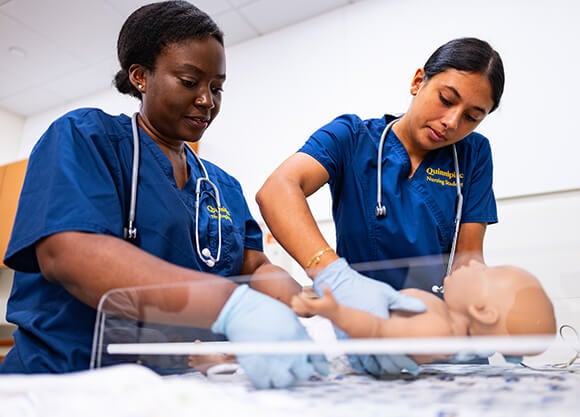
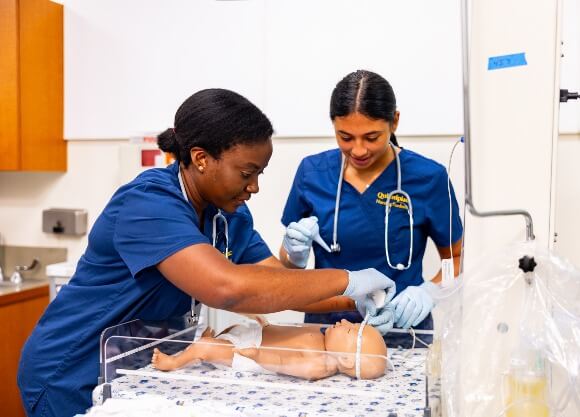
Judy Olian: We have constantly, and that's one of the strengths of Quinnipiac. We have constantly updated and adapted our academic programs to fit and precede, in a sense, demand in the marketplace. We co-create with whether it's healthcare professionals or industry professionals, we co-create curricula that prepare our students for careers of the future so that we're not behind and we actually shrink the distance between school and work because of what we teach and how we teach. When we build buildings, we don't build architectural monuments; we build buildings that are enablers of the future because of how we've laid out the classrooms and the labs to really provide learning opportunities and research opportunities that are about the future. We create collaborative spaces because that's how people work in the real world. We create interdisciplinary teams, for example, in healthcare, so that nurses, PTOT professionals, work with future doctors in teams so that they know how to collaborate and how to speak across functions and actually make healthcare better. So Quinnipiac is constantly looking towards where the puck is headed. And we are adapting and partnering with our industry partners, our healthcare partners, and our nonprofit partners to make sure that it's not just relevant what we're learning and teaching, but it is actually charting a course for where these practices need to go.
Joel Vanner: And you've been a key figure in shaping Quinnipiac's academic programs and its reputation. With our academic partners, with the Provost, of course. What do you think the university's most important focus areas are going to be over the next decade, if you could predict the next decade today?
Judy Olian: The next decade seems a lot further away. Today than it did maybe a few years ago, just because change is so dramatic. We believe that there are cool foundations that every student needs to graduate with. One of them is knowing how to apply AI artificial intelligence to whatever the field is, and Joel, you're working on that in your current role at Quinnipiac. And so, whether you're in the humanities, in history, philosophy, in the arts or whether you're in computer sciences in medicine or in in nursing, you are going to need to know how to get the best information, apply it in the most efficient way and draw on the most current knowledge, that will be through AI tools. So we need to make sure that everyone has exposure for that, and it's embedded in how we access and process information. And I think we're at that pivotal moment, right, where AI is taking shape or seeing its influence in academics, and as incoming classes come in, strategies will shift, and the knowledge and the fluency in it will have to be there to have prepared. And we have to keep moving in an agile way to be moving with the cutting edge waves of knowledge around them. A second area that I think every one of us students needs to be equipped with is what some call the soft skills. It is how to function in ways that are uniquely human. Because there may be more and more functions that are data-driven that are accessible now through AI tools. But nothing will replace the human connection, human judgment, human critical systems thinking, and knowing how to work with others in a variety of different environments, multicultural environments, multinational environments, multi-professional or disciplinary environments, people who have totally different lived experiences than yours. And yet that's how we produce. That's how we become more efficient. That's how we become better at what we're doing. So these kinds of interpersonal skills, the emotional intelligence, IQ, in addition to IQ, are going to loom larger as more and more tasks become informated and become more efficient through non-human processes. But we need to know how to filter, evaluate and assess the quality of what comes out, what is spit out of these large language models. We need to know how to then transmit it, persuade, cajole, execute through humans. And that requires these interpersonal skills, these soft skills, the system thinking. So I feel that through our extracurricular activities at Quinnipiac and through some of the embedded class team projects, collaborative work, internships, externships, experiential learning that some of that is embedded in those experiences so that our students who graduate have both, because those are going to be critical skill sets of the future, both.
Joel Vanner: You mentioned earlier the three campuses, Mount Carmel, York Hill, North Haven, the vibrancy, the uniqueness, the connectedness of those. Having those experiences on those campuses will surely help students learn those soft skills to be better prepared for the future.
Judy Olian: That is some of the advantages of being on a residential campus that is intimate. And I'd say campus, it's split up into three parts. I mean, having that kind of intimacy and a wealth of opportunities in which to stretch your horizons and find out what you like, what you're good at, leadership skills, teaming skills. I mean, you don't have the option of saying, I'm gonna do it on my own rather than work through others, because you don't know everything, and sometimes you have to work through others you simply can't accomplish it alone. So this is a great living learning lab for people to hone their skills, but I think it's actually crucial for the future.
Joel Vanner: On a personal level, as you prepare for the next chapter, what are some of the personal and professional lessons you'll carry forward from your time at Quinnipiac?
Judy Olian: I've really benefited from great teams around me. And having the wealth and the blessing of great teams makes you a better leader. And you always want to spread the recognition, the wealth of opportunities, among team members, because, frankly, that's the only way you're going to accomplish your job. I couldn't possibly do what I'm doing without the benefit of a fantastic set of leaders across the university. Um, and that makes me look better, frankly. So first of all, surround yourself with a great team because that's the way you're going to accomplish your own goals. That's going to be the secret to your success. And I am so confident that because of the breadth and depth of the teams that we have, we are poised for the future in a way that's going to be even better than where we are today. It's one of the lessons. Another lesson is, as you get into more and more complex jobs, you have to be able to filter out the noise. You cannot possibly do everything and accomplish everything at once. And I have this phrase. The main thing is the main thing. You got to figure out what the main thing. And your main thing in year one might be different from the main thing in year two and year three. But figure out what the most important things are that you have to get done where the rest is nice to have. And you have to prioritize yourself initially. When you're an individual contributor, what might I get fired about? If I don't do, what is an absolute must? And figure that out, negotiate that with your boss. And then as you get further up in the organization, it becomes even more important to filter out the noise. The main things I mean. The third is a pot of times, things don't go your way in whatever role you have.
Joel Vanner: You can control what you can control and can't control what you can't control.
Judy Olian: Sometimes it's nothing to do with you. It's the fact that something happened. It wasn't your life or externalities. The market crashed. We had a pandemic. There was a bad decision made somewhere out there in the organization. It impacts, you know, what's personal and what isn't personal. And rise to the occasion. But don't waste energy and emotional effort on what isn't personal. Obviously, if you made mistakes, you got to learn from there. But a lot of times it's something that was contextual. Take responsibility where you can, but don't drag yourself down when something isn't personal. And I say that, especially to female leaders, the data show research shows that females tend to internalize failure more than do men. Sometimes the failure has nothing to do with you. You have to learn if there's failure and don't do it twice. But sometimes it's just business. Find a solution. Don't just present the problem and move on without letting it drag you down. So those are a couple of the lessons I've learned.
Joel Vanner: I like you're saying the main point is the main point.
Judy Olian: The main thing is the main thing.
Joel Vanner: The main thing is the main thing. My saying is lift others as you rise. And you mentioned surrounding yourself with good people. And that will contribute to your overall success.
Judy Olian: And there's nothing more fulfilling than seeing people grow who are around you because of the opportunities that they've had.
Joel Vanner: If you could leave one piece of advice for Quinnipiac students who are about to embark on their own leadership journeys, what would it be?
Judy Olian: You know, we were just at the fabulous GAME, the Global Asset Management Education Forum (GAME), which has the who's who of Wall Street and probably 12-1,300 students from 135 universities, another 150 faculty, and those who of Wall Street. And it was a difficult day because it was the day tariffs were announced. But they all showed up, and they all focused on the main thing. We interviewed someone. I interviewed a major business leader, and he was asked a similar question. And he said, You know, first find something that you're really good at, and then you'll learn to love it. So there's this tension between do what you love versus do what you are really good at, and the two tend to come together. I would say you're in a really safe space here at Quinnipiac with very low barriers to entry. If you started in communications, you can transition into another field or vice versa. If you find that you want to explore something else, or you don't love what you're doing, or engineering, computer science or game design, whatever it is. So give yourself the license, the freedom to experiment to find something that you're good at? You love.
Joel Vanner: Give yourself the grace, too, right, to try those things. It doesn't have to be the thing.
Judy Olian: Yeah, I started out in clinical psychology, and I love the issues of the mind, but I wasn't totally suited to clinical psychology. And I morphed into organizational behavior, which is related and to organizational strategy. But I spend so much time on issues of the mind, of the soul in terms of my role today. And it was because I morphed into something else that really became my passion. Give yourself the license to explore and discover and you will.
Joel Vanner: So as you prepare to leave Quinnipiac, is there anything specific that you think you may fill your time with, take on a new hobby, anything like that?
Judy Olian: Well, first of all, I am gonna stay somewhat involved with Quinnipiac. Pete and I, my husband and I love Quinnipiac, so I'm sure we'll be very loyal Bobcats for life. I will do, I mean, the board and the next president, doctor Marie Hardin, have been very gracious in asking me to somehow stay involved. I have good exposure in the state to some leaders. I hope that will be helpful to Quinnipiac. But really, I serve at the pleasure of the next president and the board. And I'll stay involved in a way that's helpful to them. As they wish. And in terms of new hobbies, you know, first of all, I'll become less of a slave to my calendar, though I still will be doing quite a lot of things, and that'll be good. I will probably pursue the other side of my brain, which I haven't had that much time to pursue, and that's the artistic side. I love design. I love textiles. Probably won't paint. I love interior design. I've somehow annoyed people here in a good way, I think, in terms of the new buildings and spaces that we've built, that I've imposed certain choices on them. And I will enjoy having time to do that. I'm sure I'm going to take online classes of something, maybe astronomy, maybe some new things in global marketplace issues. So I'm sure I'm going to do an online class on a continuing basis as a lifelong learner, as I think we all need to be.
Joel Vanner: Giving yourself the grace to try new things, new things, and always learn.
Judy Olian: Yeah.
Joel Vanner: Yeah. Well, President Olian, that brings us to the end of our time together today. It's a full circle moment when you join Quick.
Judy Olian: That's right. One of my favorite experiences was riding around with Joel in a cart in an electric cart, where he hassled me with questions and peppered me with funny things. So we had a great time. So thank you, Joel.
Joel Vanner: Absolutely, thank you so much for joining me on the show today, offering your insights into your lived experiences and advice for future leaders listening, and it's been a pleasure.
Judy Olian: Thank you, Joel, and good luck to you, and we're so happy that you're back as a Bobcat.
Joel Vanner: Thank you. I'm happy to be here. Yes, absolutely, Bobcat for life.
Joel Vanner: If you liked today's episode, be sure to like and share and find other episodes of “Who Are You?” on Apple, Spotify, YouTube, or wherever else. You get your favorite podcasts. Until next time, when I ask my next guest, who are you? I'm Joel Vanner. Bye for now.










Quinnipiac Today is your source for what's happening throughout #BobcatNation. Sign up for our weekly email newsletter to be among the first to know about news, events and members of our Bobcat family who are making a positive difference in our world.
Sign Up Now