


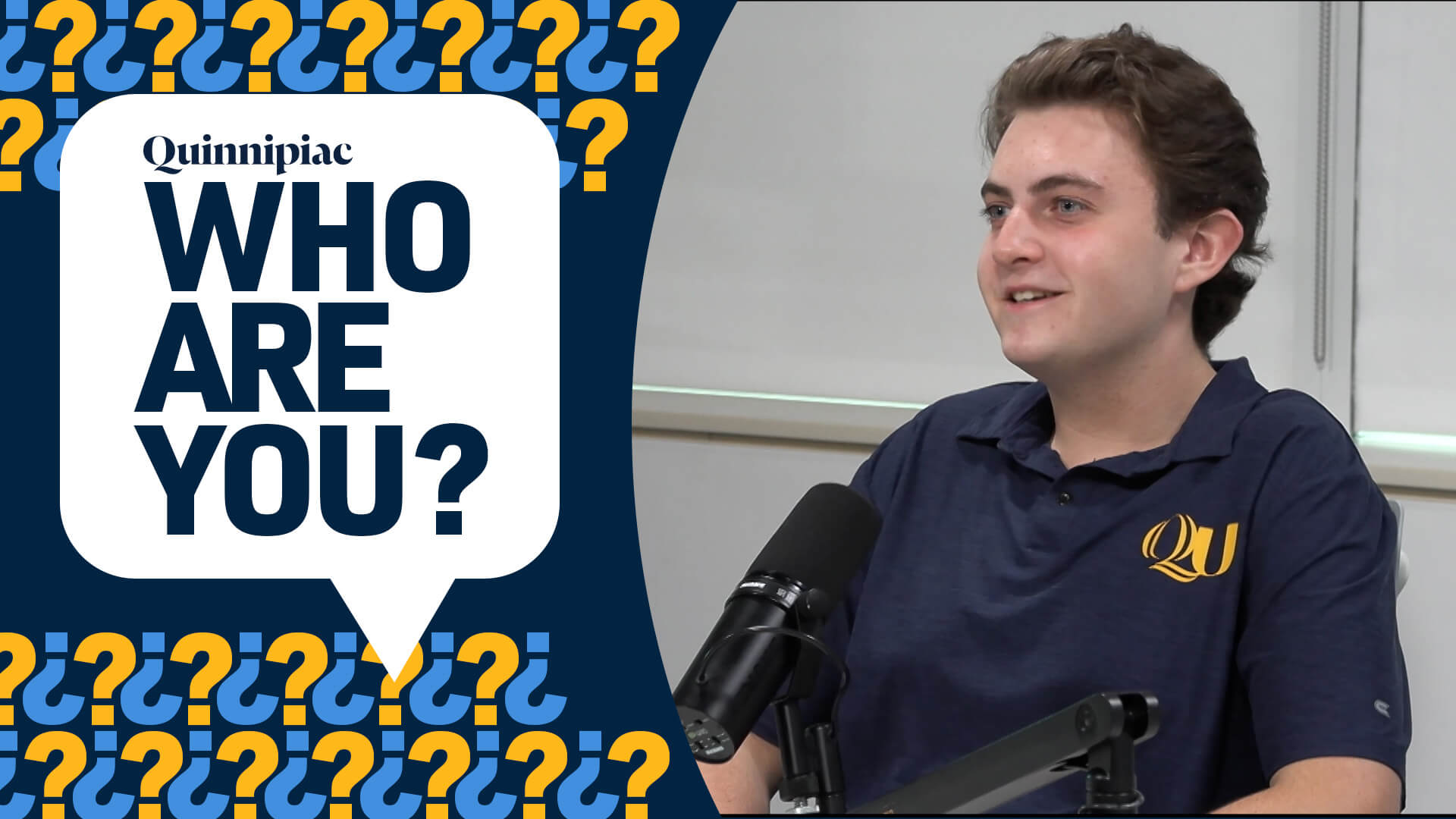
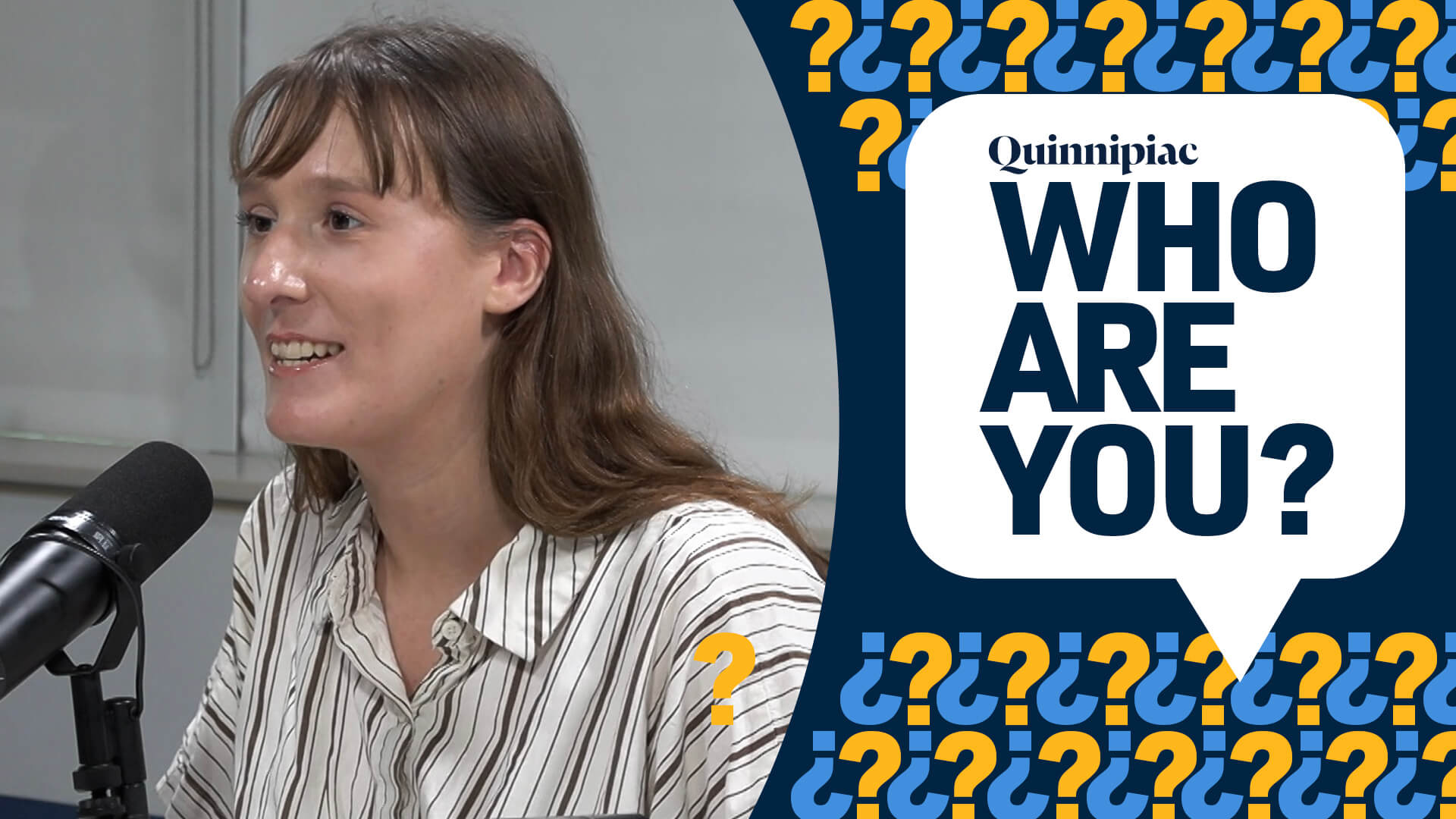
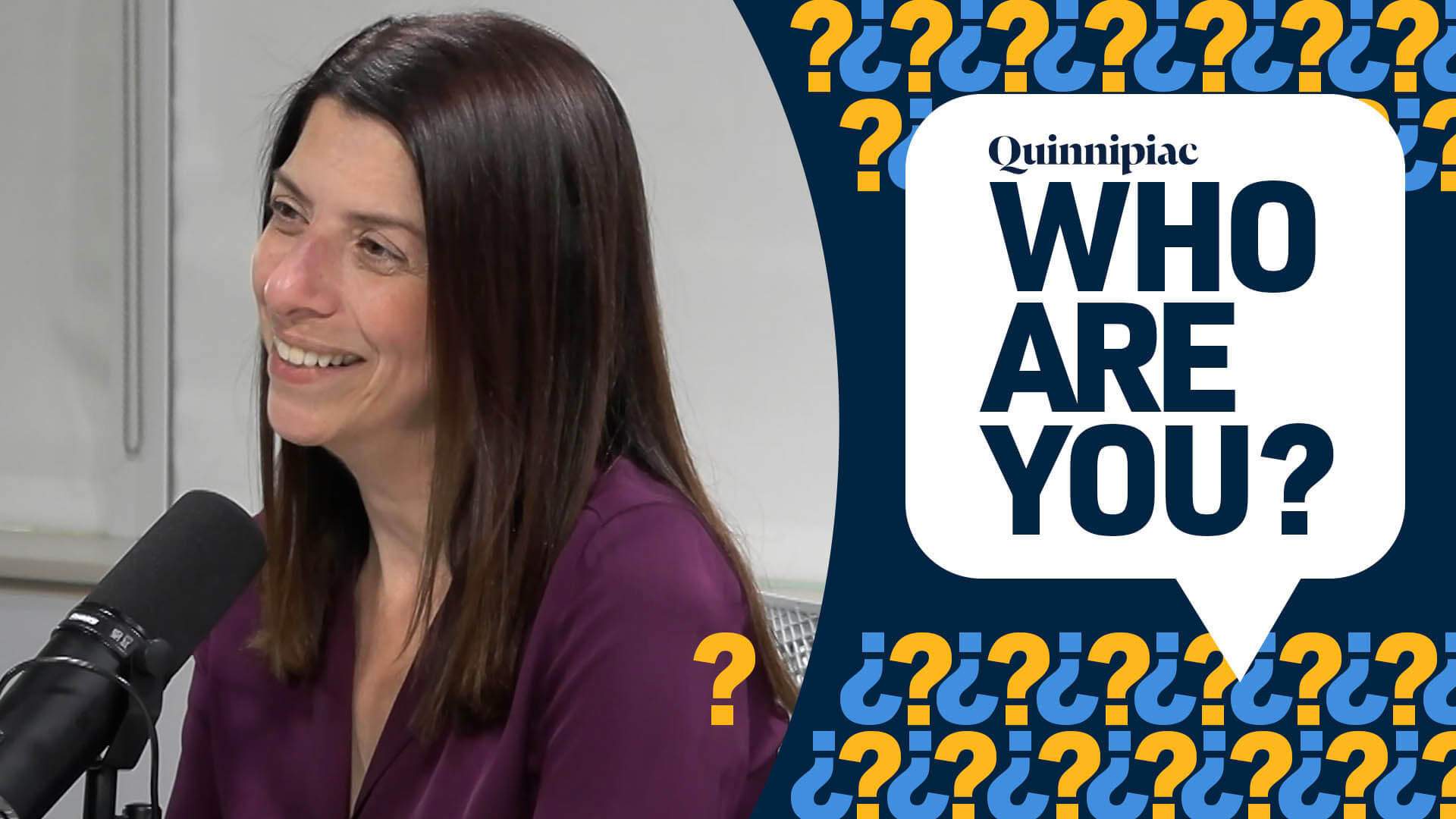
‘Who Are You?’ podcast with guest Noah Sussal ’27
Opening doors and finding your place your first year in college
Opening doors and finding your place your first year in college
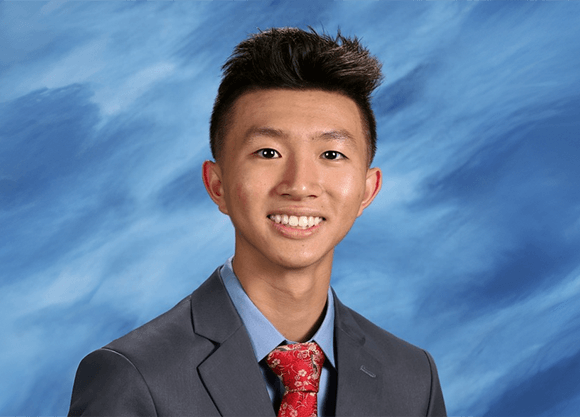
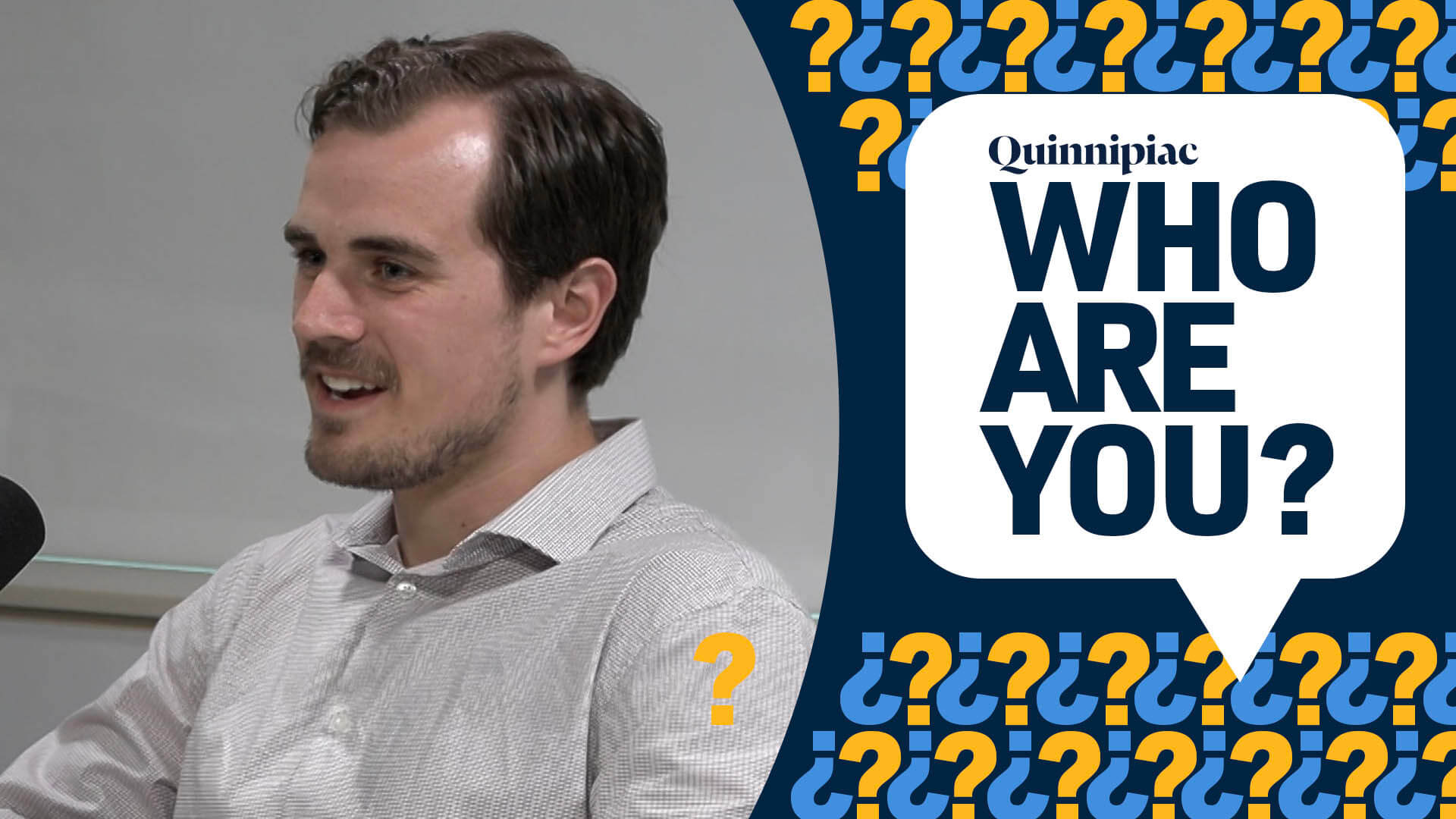
Joel Vanner: Hello, and welcome to ”Who Are You?,” the Bobcats you know, the stories you don't. I'm your host, Joel Vanner, inside the Podcast Studio at Quinnipiac University's School of Communications, and I'm joined today by my guest, Noah Sussal. Noah, welcome to the show.
Noah Sussal: Thank you for having me. I'm excited to be here.
Joel Vanner: I'm sure you could guess by the name of the program, what my first question to you is going to be. And that is, who are you?
Noah Sussal: Yeah, so, my name is Noah Sussal. I'm currently a second year in the 3+1 accelerated dual degree program here on campus as a double major in finance and accounting. I serve as a resident assistant, and I serve as treasurer on a few different E-boards across campus.
Joel Vanner: Finance and Accounting sounds like a lot of math, which was not my favorite subject in school. But actually, let's unpack that.
Noah Sussal: Yeah.
Joel Vanner: Where did your interest in business start?
Noah Sussal: Yeah, so I think it really started in a lot of the different organizations I was a part of growing up, and kind of my interest, I started to explore in high school. So growing up, I was very involved in Cub Scouts and then the Boy Scouts. And so that kind of had a lot of business components to it in popcorn sales, for example, which I'm sure you might be familiar with. And so, just kind of going around the neighborhood.
Joel Vanner: Were you the top seller?
Noah Sussal: I was- I'm not sure, to be honest. I think I'd cross, like, certain benchmarks: $500, $1,000, $2,000. So some pretty cool numbers. But I would really just kind of go throughout my neighborhood, knock on doors, annoy people, sell them popcorn. And it was a fun time, and then we got to have some nice celebrations at the end of it. So it was a good experience. Then, kind of going through middle school and then high school, I started to get interested in investing, which is obviously the business world. And so.
Joel Vanner: It's really taken off, too, lately.
Noah Sussal: Right. Especially, yeah, with new forms of investing in crypto,which is kind of some of the interest I've explored here so far. But kind of doing that really exposed me to that business environment. And so I just kind of would go down rabbit holes on YouTube and just watch people kind of talk about investment strategies and just new and upcoming technologies that could be implemented and all those sort of things.
Joel Vanner: So it sounds like you kind of self-taught yourself entrepreneurship, interest in investing. That led you to business, right? And you chose Quinnipiac. What about Quinnipiac attracted you on the academics and business side?
Noah Sussal: Yeah, well, I think my first exposure to Quinnipiac came from being so close to Hamden, having grown up in Cheshire. So growing up, I'd go to a lot of games, specifically hockey and basketball, just because those are two sports that I really enjoy watching. And so that was, like, my initial exposure. Then as I kind of went through the college search process and looked for schools, the 3+1 program at Quinnipiac really appealed to me because of the ability to get a bachelor's degree and a master's degree and a traditional four year track. And that's something that I've now been able to expand to two bachelor's degrees, hopefully, and then a master's degree in my fourth year. And then kind of just seeing the different opportunities that Quinnipiac has for business students, too. So the game forum, for example, really appealed to me, as well.
Joel Vanner: And that's the Global Asset Management Education Forum.
Noah Sussal: Yes, it is. The largest student-run financial conference. So the 15th one is taking place this year in New York City this spring. So that's going to be a really awesome experience to participate in again.
Joel Vanner: We've had a couple of guests on the show who have done that, and it sounds really awesome. So it's awesome that you're involved in that. The 3+1 program — tell me about your first year. You have two majors now, finance and accounting, and you'll get your master's degree in your plus one year. How did you become acquainted to college? Being so close to home, what was that experience like for you? And then also balancing the academic part of it.
Noah Sussal: Right. Yeah, so I think kind of when I transitioned to school, the most important thing to me was to make the most of the college experience, which is kind of broad. And so the way I was able to do that was by, kind of separating, like, being so close to home from being at school. So I would still contact my family. We'd talk a couple of times a week and catch up, but I wasn't necessarily going home all the time. So I tried to spend I think all but one weekend at school, which was really good just for my personal growth and helped me transition in. And then kind of doing that kind of let me focus, like, very specifically on school. And start to expose myself to, like, the academic environment and learn and learn what works for me and what doesn't and kind of build on that. And then I expose myself to the other parts of college. So extracurriculars, you know, and just being able to meet people and try new things and have new experiences. And just kind of over time being here, I was able to figure it all out and it's been really successful so far.
Joel Vanner: What academic-related extracurriculars have you been able to take advantage of so far?
Noah Sussal: Yeah, so the two E-boards that I serve on are Quinnipiac Blockchain, which is an organization that I helped to kind of rebrand and restart last year. So I serve as treasurer for them, and I also serve as treasurer for the Business Analytics and Information Systems Society. So, fortunately, those two organizations are kind of in the same realm of, you know, new tech, and so we work very closely. And so, being able to serve as treasurer for both has been a really good experience between conferences and different events we've been able to put on together. And then, in addition to those, I have participated in the GAME forum, which I am participating in and volunteering for this year.
Joel Vanner: And what is the Quinnipiac Blockchain club? Because I know it's fairly new and someone may not know what Blockchain even means.
Noah Sussal: It's totally right. It is relatively new, and a lot of people don't know what Blockchain is. And so the organization started off as kind of the crypto club, right? So, people would come together and just talk about crypto, do research, just have a conversation. And then when I got involved in it and some of my peers from last year, we sat down and we were like, Look, we have this really good foundation, but we want to focus on the technology of blockchain and what we can actually do with it in terms of a student org and research and other initiatives and kind of separate that from just talking about crypto. And so, our focus was on really separating that stigma that's there, where people assume blockchain is crypto, when in reality, blockchains a technology and cryptos just a use case. So kind of putting together different initiatives, so research projects, for example, to break down what blockchain is and then actually talk about the different use cases, such as crypto or healthcare or AI.
Joel Vanner: It sounds very applied to what you're learning in your course as you get to take into this real world experience in this organization. You're only a second year student, and we usually have students on this podcast who are upperclassmen or even graduate students. How did you become so involved in these organizations so early in your time here at Quinnipiac?
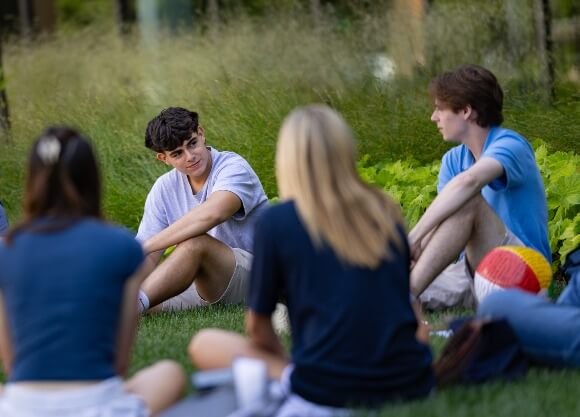
Noah Sussal: Yeah, so I kind of talked about before, like, my transitioning onto campus and really being immersed in the community and environment here and trying to expose myself and stay grounded here and figure everything out. So I think when I came to campus, like, I was super nervous and unsure, and I really didn't know what was going to happen, but I also kind of figured everyone else was in the same boat. And so I definitely wasn't alone, even though people don't necessarily talk about that side of things. So I think my approach is really just to try everything that I was interested in or even things that I wasn't interested in, because, who knows what the result would be? And so I heard about the Blockchain organization, and I showed up to a meeting, and I was kind of sitting there, and I was a little unsure. And then some master's degree students and upperclassmen and just a number of students just from different backgrounds came in, and I heard everybody talk, and I was like, Wow, there's some super cool people here. These are really great perspectives. Kind of want to see where this takes me.
Joel Vanner: And you didn't need to be a certain year to join the club. They just kind of welcomed you right in.
Noah Sussal: So, traditionally, on campus, student orgs are undergrad focus, but we did have graduate mentors involved, and some of those people have become really great friends of mine that I'm in touch with now. And so it was really great exposure and experience.
Joel Vanner: And you had experience in another mentor program, too. You lived in The Grove, right? Which is one of our newest residence halls on campus. What was your experience like living in The Grove as a 3+1 student?
Noah Sussal: Yeah, so coming into Quinnipiac I was excited to live in The Grove. You know, obviously, it's a new dorm until you get, you know, a nice room and a nice bathroom and all these, like, amenities.
Joel Vanner: Air conditioning. The rest of it.
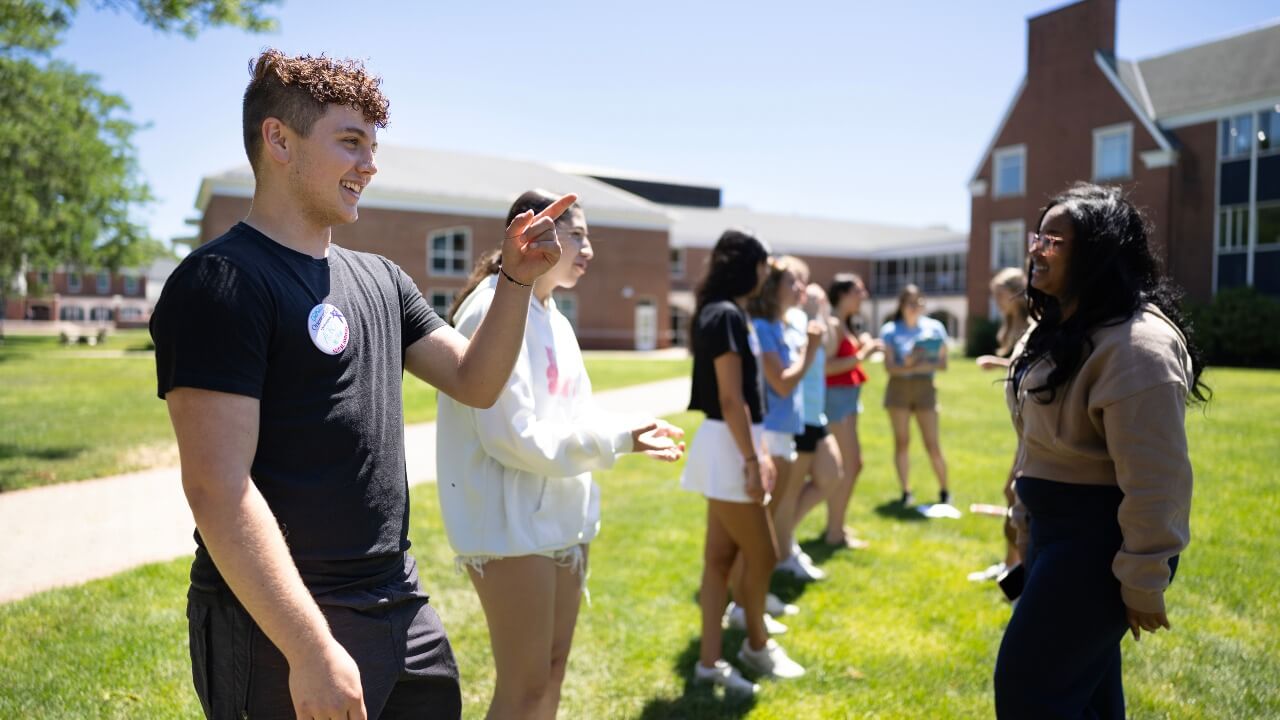
Noah Sussal: Right. But what was cool about The Grove to me, too, is the research project component of it. And I think that really appealed to me because of the opportunity it gave me to be a part of something on campus and to meet new people through kind of a more structured path than, like, most first-year experiences. So I think that was what really appealed to me was that ability to kind of set myself up for success before I even got to school. So living in The Grove, the first person I met was my RA, who's been a really great friend and mentor of mine since and has been super helpful in my transition to becoming an RA. And then I met our RHD, who's been a really, really great resource and mentor, as well. And so the whole community in The Grove has just been amazing. And I was fortunate enough to kind of meet all my current friends there. So when I first came to The Grove, I knew I had this project, and I knew I'd have exposure to new people and new experiences, but I still knew, like, I wanted to branch out and try something new. And so for about the first week, I didn't have a roommate, so I would open my door. I'd play music on a speaker and I'd just invite whoever I saw in and just bribe people with candy or food or whatever I had.
Joel Vanner: Noah had an open house every day.
Noah Sussal: Right. So that was super cool. And it kind of helped build community within, like, my hallway, specifically, which helped me, I think, realize I wanted to be an RA, but also helped me to make the friends that I live with today and hang out with and have traveled with. And so the Grove was one of the best experiences I've ever had. Super fortunate that I...
Joel Vanner: Yeah, and now you mentioned, as a resident assistant, an RA, you get to do that for your residents right now. You mentioned you work with an RHD, which is a residence hall director. What's the teamwork that happens between an RA and an RHD here?
Noah Sussal: Yeah, so, essentially, within Reslife, the breakdown is you have kind of the directors, and then you have your pro staff, the pro staff are on campus and oversee the RHDs and then the RHDs are kind of present in each section of dorms, and then the RHDs oversee the RAs. So they each have a staff. And our relationship with them, it is a work environment, so you do have to be aware of that with professionalism and those other characteristics of a work environment. But it's also a very mentorship focused environment, too. And so it's really like going through training together, which is two weeks of, you know, some pretty intensive training where you're dealing with heavy topics and learning new people and moving in and trying new things. So there's a lot going on, and so kind of working through that together, and then transitioning into the school year, where they're here to support us as RAs, figure out what we need to do and figure out our lives and do our jobs and be supportive of our residents. And then also, like, I make an effort, too, to, like, check in with my RHD. So we have biweekly check ins, and when he's like, Noah, what's going on and we talk about it, you know, I'll come back to him and ask what's going on with him. And there's really a good dialogue, and it is definitely a mentor-based relationship, I think, which has been super positive, really good experience.
Joel Vanner: In addition to the involvements and academic experiences you've had, you've had a couple class trips that you've taken as part of your studies. What trips have you taken so far?
Noah Sussal: Yeah, so the first trip I did was based on a class that studied the Holocaust and film with Professor Callahan. And so, Professor Callahan and then Peter Gallay and then our group of students from class traveled to Germany, Poland, and the Czech Republic to kind of have an immersive experience based on that class. And that was my second time abroad. But my first kind of major, more long-term, it was a two-week-long trip, and it was with people that I had just met and didn't really know super well. And so that was a really great experience because of all those new factors going on. It really helped to kind of propel me into, like, being in a new environment with those new people. It helped me to expose myself to new things. So that was kind of how I got involved in it, but it was a super, super rewarding experience.
Joel Vanner: And that was a part of a class that you took. What did you learn academically and socially from that experience here, and then going internationally with that group of students and just having that experience where are you at?
Noah Sussal: Yeah, so as I kind of mentioned, the class was focused on Holocaust, on the Holocaust and film. But I think what was kind of the most one of the most eye-opening parts to me, in addition to kind of learning about the Holocaust, which is something I've studied throughout middle school and high school a lot, was the exposure to different perspectives of people that aren't just business majors, especially in such a heavy topic setting. And so, being able to be in that environment with people who are majors in the School of Communications, some in the School of Business, and just other schools across campus, I think, really led to some super valuable discussions and perspectives, and then, you know, eventually some really valuable experiences on that trip.
Joel Vanner: And you were also a part of a delegation that Quinnipiac sent to the Oxford Consortium for Human Rights and New Technology. Tell us how that experience came up and how that kind of connects to your finance, and accounting, and business background, too.
Noah Sussal: Yeah, so I was initially exposed to that opportunity by being part of the Albert Schweitzer Institute, ASI, as we call it. And so, ASI, is a really amazing on campus organization that does a lot of human rights work. And so, kind of through ASI, they've worked with the Oxford Consortium for a number of years now, and they send a few delegations a year. And so they have one in the spring, one in the summer, and one in the fall. And the summer one is focused on the integration of human rights and new technology. So being involved in the Blockchain organization and the base society and just kind of my majors in the business world in general, I knew that I really wanted to kind of pursue that because volunteering and community service is very important to me. And that intersection, I think, was ready kind of explore that. And additionally, the opportunity to travel and kind of have that immersive experience abroad really helped bring everything together and make it something that was appealing to me.
Joel Vanner: What advice would you give to current students or students who are transitioning into college life, who want to get involved but maybe it's not something they have experience with? They don't know if they have those time management skills. How should they get started so that they can find success and be open to opportunities like you have so far?
Noah Sussal: I think the most important thing is to be open-minded in everything you do. So in the experiences you have, the people you meet, the opportunities that you come across, really, like, look at everything through a number of lenses and just as- just with an open mind and think about, you know, even if it doesn't interest me, could it interest me or could it have a positive impact on me and kind of run with that? And so, you know, if you're coming into school and you, you know, want to focus on exposing yourself to new things and building or, you know, building structure, right, focus on those organizational skills and then look for opportunities about that, reach out to the on campus resources and just kind of run with that and just whatever you're looking to accomplish, just take that mindset to it of being open minded. And, you know, really immersing yourself and appreciating different perspectives and just kind of take it and run with it.
Joel Vanner: And don't do it alone, right? Do it with a community with your peers that you meet in class.
Noah Sussal: Always reach out to other people. It's always going to be someone that's kind of going through the same thing you are.
Joel Vanner: Probably quietly, you don't even recognize it.
Noah Sussal: Right. But, you know, I talked about coming into campus and not really knowing what I was doing. And that wasn't something that, you know, people necessarily talked about, but we all kind of knew that we were a little bit nervous and a little bit scared and confused. And I kind of just tried to remember that when I would, like, go up to people I didn't know and introduce myself and start a conversation. So I think just being open-minded is the most important thing you can do.
Joel Vanner: And being a citizen of the world, too, which you've done so far in your experiences here.
Noah Sussal: Yes.
Joel Vanner: Well, Noah, thanks so much for joining me on the show, sharing what you've done so far, and look forward to hearing about your future successes here to be continued.
Noah Sussal: Thank you so much for having me.
Joel Vanner: If you enjoy today's episode, be sure to subscribe, share, and find other episodes on Apple, Spotify, and YouTube podcasts. Until next time, when I ask my next guest, who are you? I'm Joel Vanner. Bye for now.



Quinnipiac Today is your source for what's happening throughout #BobcatNation. Sign up for our weekly email newsletter to be among the first to know about news, events and members of our Bobcat family who are making a positive difference in our world.
Sign Up Now