

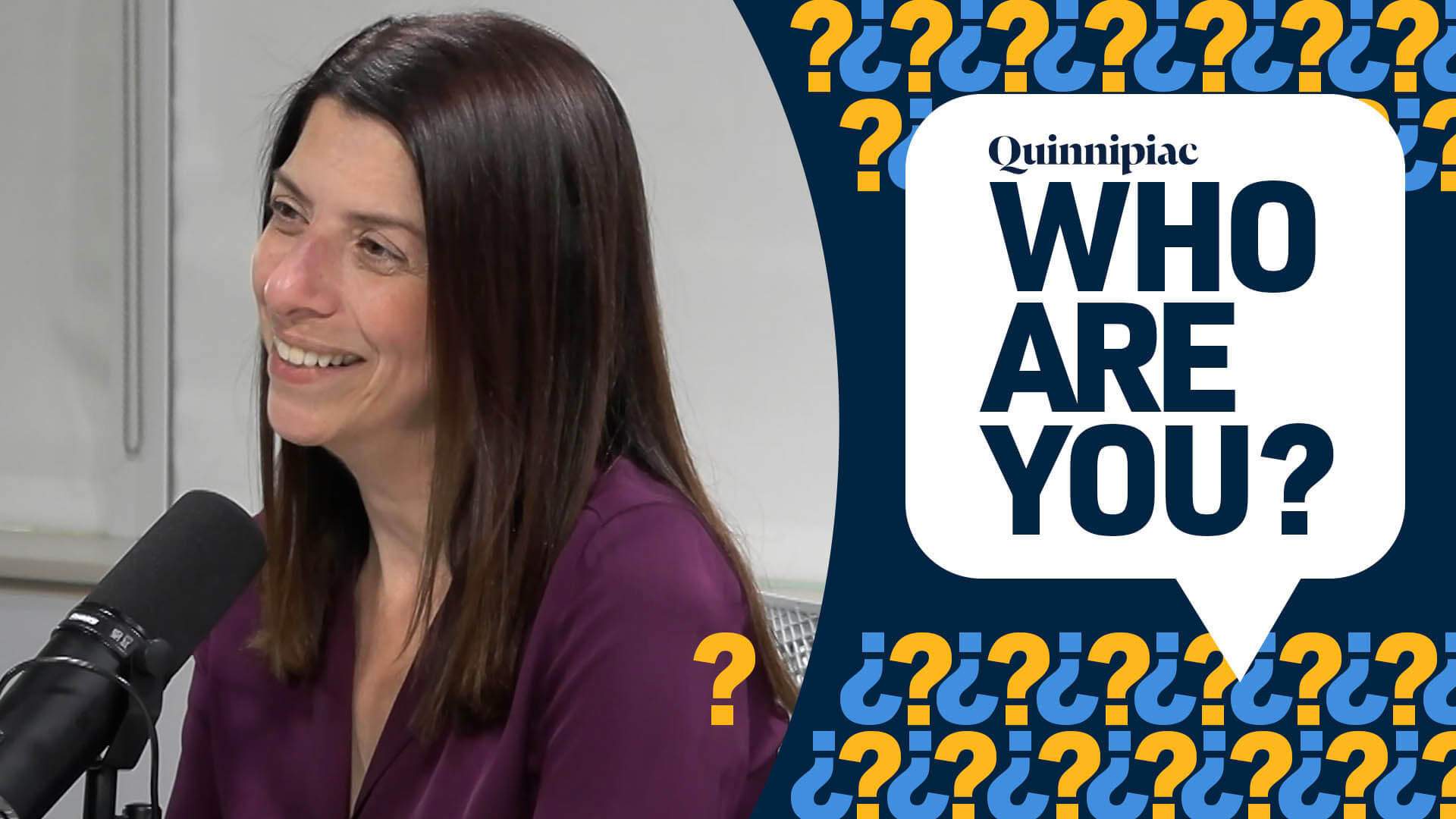
‘Who Are You?’ podcast with guest Aiyana Baker ’25
Honoring heritage through nursing, leadership & indigenous advocacy
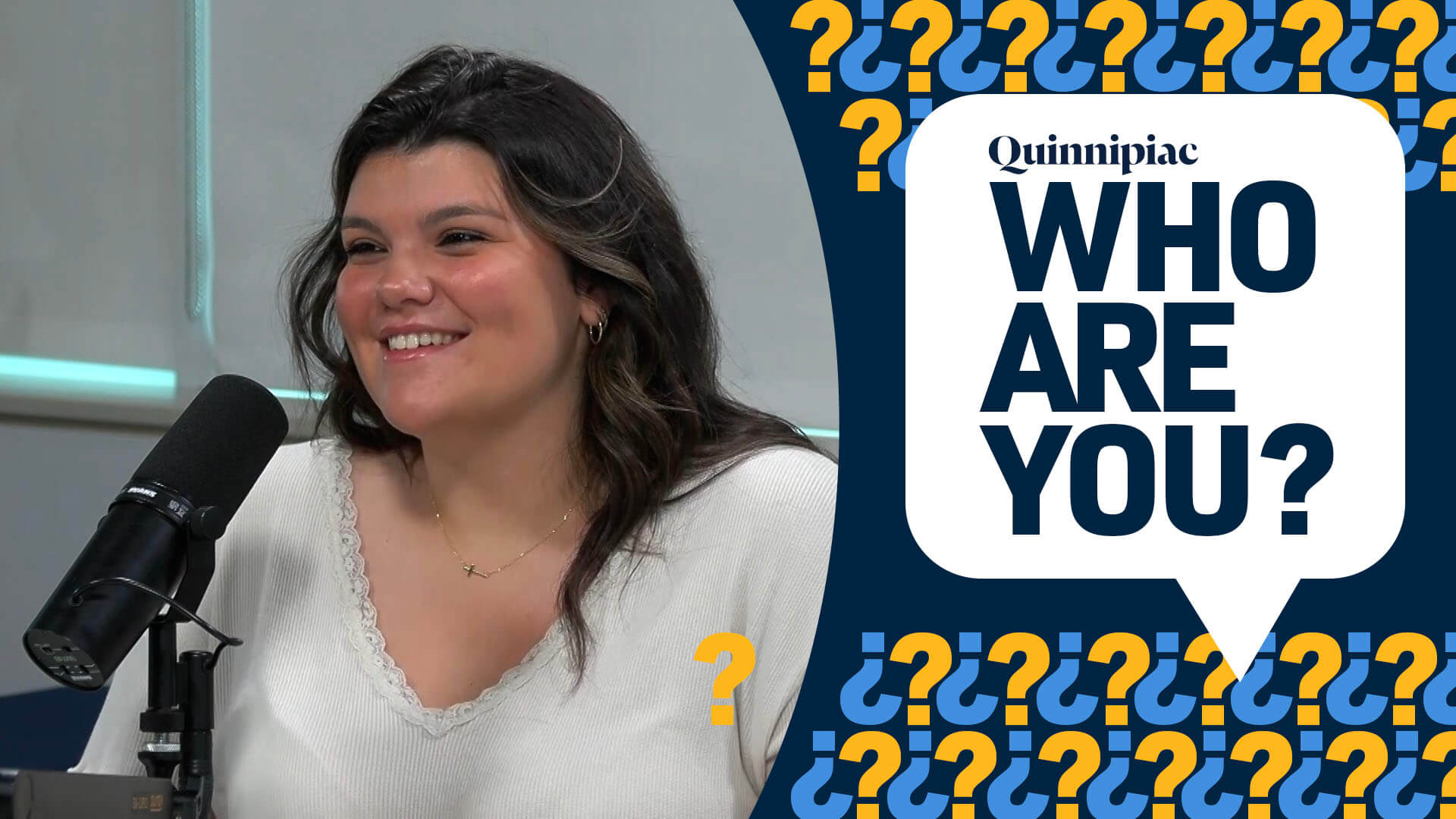
Honoring heritage through nursing, leadership & indigenous advocacy
Joel Vanner: Welcome to today's episode of ”Who Are You?,” The Bobcats you know, Stories you don't. I'm your host, Joel Vanner, inside the podcast studio at Quinnipiac University School of Communications, and I am joined for today's episode by Aiyana Baker. Aiyana, welcome to the show.
Aiyana Baker: Thank you.
Joel Vanner: So we know your name, but I'm sure you could guess by the title of the program, what my first question to you is going to be. And that is, who are you?
Aiyana Baker: So my name's Aiyana Baker. As you mentioned, I am president of the Indigenous Student Union at Quinnipiac and a senior nursing major with a bio minor, and also a member of the Mohegan Tribe of Uncasville, Connecticut.
Joel Vanner: So tell me a little bit about your story, your background, and how you mentioned you're a nursing major, how that, um, played a role in you coming to Quinnipiac and choosing that as your program.
Aiyana Baker: Yeah. So obviously, I was just applying to a bunch of nursing schools like throughout the Northeast area and stuff like that. Wanted to stay somewhat close to family, but also have the experience of going away. And Quinnipiac kind of landed in my lap, and I decided to go with them, with them being one of the best nursing schools in the country. Also having a great-great-aunt who was medicine woman of the Mohegan tribe. She really influenced my decision in coming to a school that was close to our native homelands and doing a major that I could bring my native heritage out in looking at more, like, the holistic parts of medicine and basing things off of the book that she got to write when she was still alive on all the different plants of, like, the Northeast and how they were used for medicinal purposes. And also, my cousin passed away my eighth- when I was in eighth grade in high school- and she was in nursing school when she passed. So that was a really big influence on not only wanting to do this for myself anymore, but also do it in memory of her.
Joel Vanner: You have that memory. Choosing nursing, you have your connection with your great-great-aunt who is the medicine woman. Tell me a little bit more about when you came to Quinnipiac. You mentioned you're in the Indigenous Student Union. You're the president ISU as we'll say later on the show. How did you get involved in the Indigenous Student Union?
Aiyana Baker: Yeah so having a family that was so big with my grandpa being a child of 13, I had over like 200 cousins looking into, like, the third and fourth cousins and everything like that. And I met my cousin who was at Quinnipiac who started ISU right before coming. We were at Pow Wow together, and she was like, I really think you should be a part of this organization.
Joel Vanner: And that was the first time you met that cousin.
Aiyana Baker: Yeah. Yeah. So that was, like, really interesting. So her and I met up once I got to Quinnipiac, and I started out as a general board member. And then by the spring of my freshman year, I was treasurer and then sophomore year, I became president.
Joel Vanner: Tell me a little bit about the Indigenous Student Union and the different activities and events is brought to Quinnipiac.
Aiyana Baker: So we started out very, very small. There wasn't a lot of representation. And when she had graduated, we were getting very little funding because we had just become chartered. So we started out with small events, like just jewelry making out of, like, beads you could get off Amazon just to kind of teach, like, the culture and what beating meant to native people. And then bringing in, like, catered native food from Sly Fox Den in Rhode Island. And then we got to expand to having, like, more native speakers come to campus and being able to compensate them for their time and everything like that. And now just recently doing the Pow Wow.
Joel Vanner: What is a Pow Wow?
Aiyana Baker: A Pow Wow is essentially where a bunch of, like, native groups get together, and native allies can also be there to experience it. And there's tribal music, there's tribal food, tribal activities, and vendors all come and sell, like, their work that they've worked very hard on.
Joel Vanner: And you led the planning of Quinnipiac's first Pow Wow. Tell me a little bit about the event.
Aiyana Baker: So my cousin that started ISU, she stayed on as an alumni advisor and kind of helped me through all of the planning process. And we were able to plan something that normally takes, like, a year to plan in just a couple of months. So that was, like, a really big step for us. This is something that I've always wanted to do before I graduated, and just being able to see, like, that dream come true before, like, I left was so important to me, and it's something that we hope to continue to do.
Joel Vanner: The Indigenous Student Union, are there faculty at the university that you're connected with? Tell me a little bit about the faculty that have worked with ISM?
Aiyana Baker: Yeah, so Julia Giblin from the Anthropology Department and Hillary Hall Dane and Sean Duffy have all been a huge help to us. They've been on the Indigeneity Initiative, which is like a separate group from ISU. That's faculty and students that kind of help support our events as ISU and help native representation happen on campus more. Along with that, the nursing program has been very helpful, as well. Professor Diane Sullivan, Gladys Valspar Ellit, and Nicole Casbaro have also helped in all the powwow planning. They were on the Pow Wow Planning committee and everything like that. And then even Dean Slater in the nursing program has really been a huge help.
Joel Vanner: So you've mentioned some faculty in the School of Nursing. Tell me a little bit about how you've been able to bring your experience and knowledge in traditional native medicine into the School of Nursing.
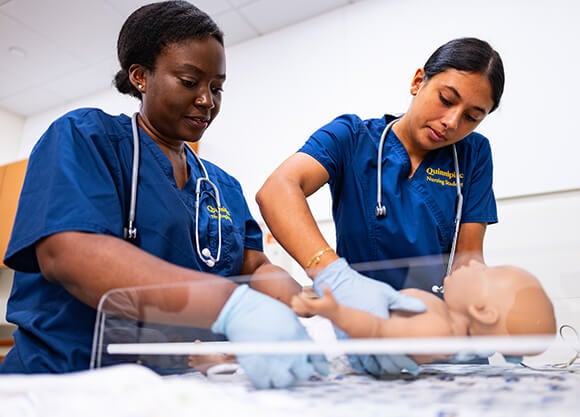
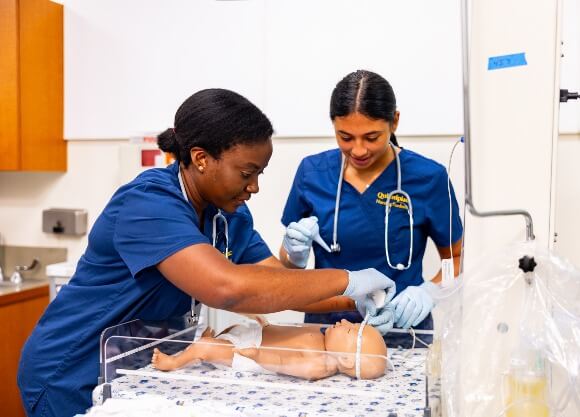
Aiyana Baker: Yeah, so I would say Quinnipiac School of Nursing really just has a holistic approach, to begin with. That's something that they really encourage and everything like that. And some of the faculty members have had me do some research on my aunt's book where I've been able to teach more students at Quinnipiac about this approach and about, like, the different plants that are in this book and how they can be used for medicine. And along with that, I've also done a presentation at the teaching that happens every year during Native American Heritage Month.
Joel Vanner: Tell me a little bit about what it means for you to be able to come to Quinnipiac and embrace your heritage and be able to bring those traditions like the first Pow Wow to our campus.
Aiyana Baker: I think just coming here and, like, seeing that there wasn't a lot of representation, that was something that was so important to me to start making happen more. So being able to make something like the Pow Wow happen was such a huge step for not only Quinnipiac, but for us as an organization, just because we had never even hosted anything that big. Like, it was way beyond, like, anything we could have ever dreamed of. So being able to do that and being able to make my tribal nation proud, that's very close to Quinnipiac, was super important to me.
Joel Vanner: Between your work with ISU and your presentations in the School of Nursing, what have you learned or been able to take away from those leadership experiences that you'll carry as you graduate from Quinnipiac?
Aiyana Baker: Yeah, I think it also helps, like, in the nursing field with me being a leader, like, being able to lead this organization has shown me that I can do a lot more than I ever thought I could, because I know when I first came to Quinnipiac, like I never thought that I would be able to do something like this. I was very scared to become an organization leader, and now it's made me feel more like encouraged to be able to do this outside of Quinnipiac as well.
Joel Vanner: You've had all these amazing leadership opportunities with the Indigenous Student Union and in the School of Nursing, learning about the field of nursing and then bringing in your traditional native medicine, experience, and knowledge; what advice would you give students, current and prospective students who are interested in coming to Quinnipiac and making an impact here like you have?
Aiyana Baker: I would just say, like, to always be encouraged that you can make a difference in the voice that you have, that's something my grandpa always taught me growing up throughout all the things that he was, like, teaching me and giving me resource wise and everything like that was to just keep reaching for the stars and just, like, knowing that even if your voice, seems small in that moment, that you can make, like, such a huge impact with it if you just, like, keep working hard towards the things that you want to do and what you want to accomplish here.
Joel Vanner: Well, that's all the time we have today, Aiyana. Thank you for joining me on the show, and thank you for your contributions to our community here.
Aiyana Baker: Thank you.
Joel Vanner: If you enjoy today's episode, be sure to find more episodes of ”Who Are You?,” on Apple, Spotify, and YouTube Podcasts, and be sure to like, subscribe and share. Until next time, when I ask my next guest: who are you? I'm Joel Vanner. Bye for now.



Quinnipiac Today is your source for what's happening throughout #BobcatNation. Sign up for our weekly email newsletter to be among the first to know about news, events and members of our Bobcat family who are making a positive difference in our world.
Sign Up Now