


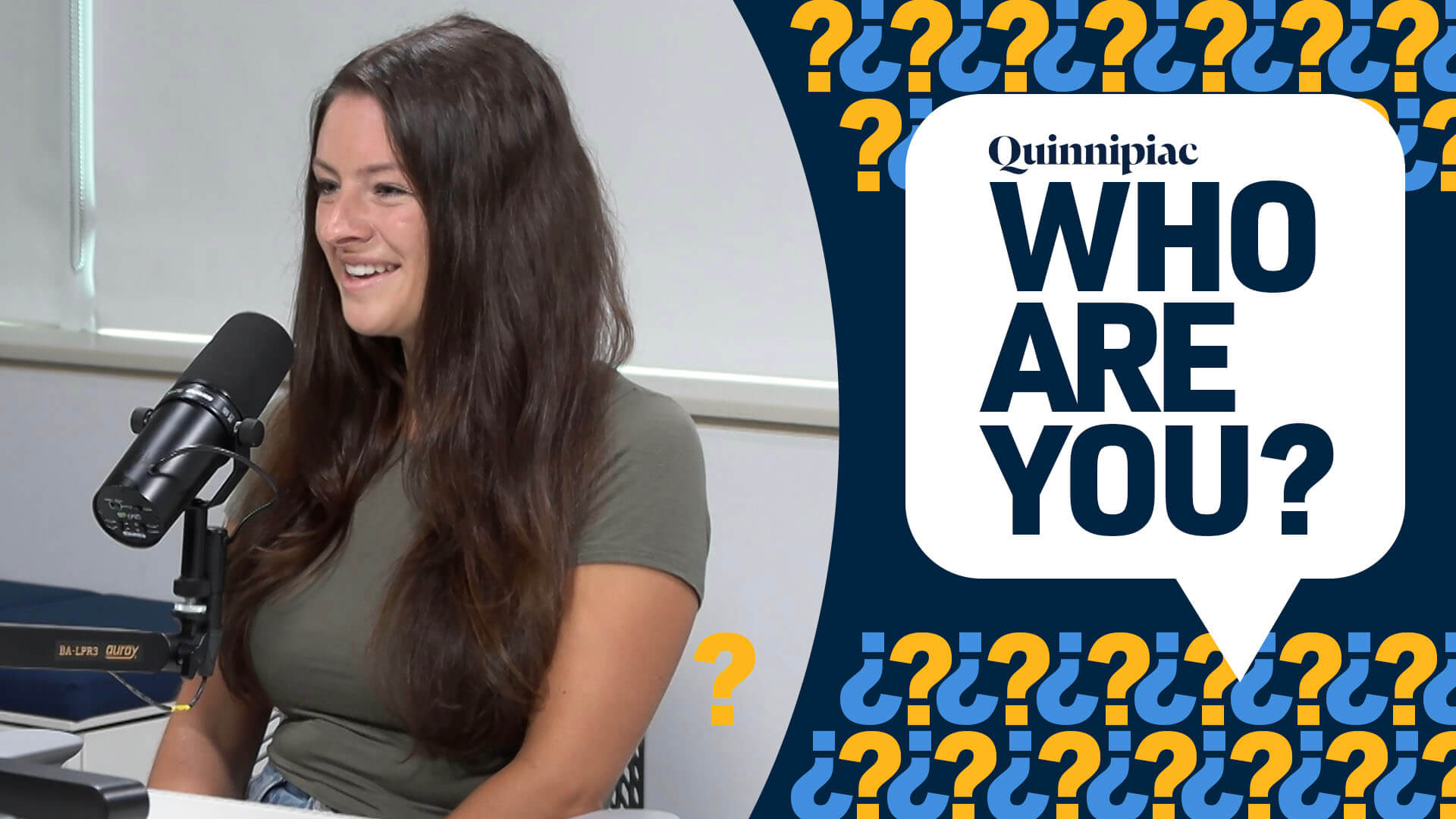
‘Who Are You?’ podcast with guest Morgan Pastir ’21, BSN ’23
It's okay if the journey isn't a straight line
It's okay if the journey isn't a straight line
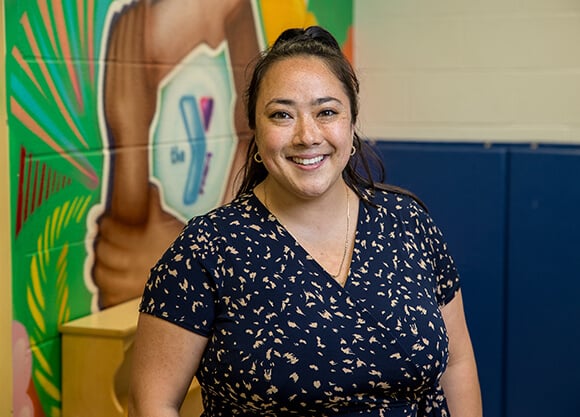
Joel Vanner: Welcome to ”Who Are You?,” the Bobcats you know, the stories you don't. I'm your host, Joel Vanner, inside the Podcast Studio at Quinnipiac University's School of Communications, and I am joined today by my guest, Morgan Pastir. Morgan, welcome to the show.
Morgan Pastir: Thank you. Thanks for having me.
Joel Vanner: I'm sure you could guess by the name of the program what my first question's going to be. We know your name, but tell me who are you?
Morgan Pastir: I'm Morgan. I am a two-time Quinnipiac alum, and I'm a registered nurse.
Joel Vanner: Welcome to the show, two-time outdoing me by one degree there. What was your first degree at Quinnipiac?
Morgan Pastir: My first degree was in psychology.
Joel Vanner: Psychology. What got your interest in psychology?
Morgan Pastir: So in high school, I took an AP psych class, and I thought it was super interesting, like how the brain works, why people act the way they do. I said, Oh, I went with it.
Joel Vanner: And you decided that that was something you would maybe want to pursue in college?
Morgan Pastir: Yeah, I was kind of unsure what I wanted to do, what direction I wanted to go. I was applying to a bunch of different schools, and I just liked it. So I was like, Let's just go with it and see where it takes me.
Joel Vanner: What about Quinnipiac drew you to accept your offer and come here?
Morgan Pastir: I applied to a bunch of schools, and I didn't really know if I wanted to go far or stay close, but when I got my Quinnipiac acceptance, I was the most excited. It was close enough to home but far enough, and I was just so excited. It just felt right. So.
Joel Vanner: And your time in the psychology program, what kind of courses did you take? And what did you learn through those studies?
Morgan Pastir: There are so many different psych classes here. There's abnormal psych, and then there's children psych and family. There were a bunch of different directions and paths, and it was interesting to see how many different components of psych going from one class in high school to a huge array of classes here.
Joel Vanner: Was there a time in your psychology program that you were like, Hmm, maybe this opened my eyes to something else that I may want to do?
Morgan Pastir: Yeah, so psych was always interesting, but I didn't know if I could do that career wise. I didn't know if I wanted to further my education to the PhD level where then I'd be able to prescribe and potentially have my own practice. So I kind of I thought it was interesting, but I didn't know if I could do that long term as a career. So I kind of shifted midway through college and changed my focus a little bit.
Joel Vanner: What did you change your focus to?
Morgan Pastir: I thought I would maybe try dentistry, which is even more schooling.
Joel Vanner: Okay. Do you like the dentist?
Morgan Pastir: I like going to the dentist.
Joel Vanner: Ok
Morgan Pastir: Which I know is kind of weird.
Joel Vanner: I'm sure the dentists love to see you on the schedule.
Morgan Pastir: They're like, Morgan Love's coming here. So then I met with an advisor, and she kind of guided me through the transition of changing my focus.
Joel Vanner: And who was your advisor?
Morgan Pastir: Anna Gilmore.
Joel Vanner: Anna Gilmore. And she leads the pre-dental studies advising.
Morgan Pastir: She does everything. That woman is amazing. We had a general meeting where she talked about just pre-med, pre-vet, and pre-dental, and she is in charge of all those things. And she just sat me down and told me how to do it. And she was like, This is what you have to do to get there, and if you're going to put in the work, you can do it.
Joel Vanner: So what did she advise you to do to pursue that track?
Morgan Pastir: She told me to stick with psychology because I thought I would have to change my major to chemistry or something like that. And she said, If you like psychology, stick with it and take all the prerecs for dental school. Because there's no pre-dental major, it's kind of like a path. And so she told me to stick with psychology and then just take all the prerequisites for dental school.
Joel Vanner: You were also in the student organization, right, for those interested in dental studies.
Morgan Pastir: Yes. So there was a group of us who were pre-dental students, and it was actually pretty cool. We went to NYU. We traveled to different schools and went to the open houses, and we were like a tight-knit group, and those people were they were really interested in dentistry.
Joel Vanner: So you were in the organization. You probably shadowed some orthodontists, right? But you didn't you're not a dentist. Tell me how that decision came about.
Morgan Pastir: So, I did. I shadowed everyone, the orthodontist, my normal dentist, everyone, and I asked my dentist if he would ever go back to dental school. And he was like, Morgan, I would never go back. And so that
Joel Vanner: It's a ringing endorsement.
Morgan Pastir: Yeah. It made me realize, like, okay, dental school, I knew it would be a challenge, but he's already completed it, and he wouldn't do it again. So it kind of made me reevaluate. Do I really love it, or do I just think it's interesting? And so it kind of took me a minute, and I was like, Maybe I don't want to be a dentist.
Joel Vanner: So don't want to be a dentist. But you learned a lot, probably through that whole entire experience, and you made connections. So you graduated with your psychology degree. And what came next for you?
Morgan Pastir: So after that, I knew I enjoyed people, talking to people, and wanted to do some form of healthcare. So I was a medical assistant for a year, and throughout that, I kind of dove deeper into healthcare, and that's where it kind of brought me to my next step.
Joel Vanner: Was it in a certain specialty?
Morgan Pastir: It was in a vascular office, so veins and arteries and stuff like that. I thought it was interesting, and it was in my hometown, so it was close to home. I knew some of the people that worked there, so it was a welcoming, fresh-out-of-college environment.
Joel Vanner: And it was another place to learn, gain all that experience. And that led you to your next program here at Quinnipiac, which was the 12-month accelerated BS NRN program, right?
Morgan Pastir: Yes. So I was at the medical assisting office for a year, and I took some pre-rec, and I was like, I had this one nurse who was fantastic. And she was like, You can be a nurse. You would be a great nurse. Why don't you look at some programs? And then I found Quinnipiac, and I was like, Okay, I've already done four years. I just want to get in and out. I want to be a nurse. How can I do it? And Quinnipiac had a 12-month program, and I was like, Let's apply and see what happens.
Joel Vanner: Is that unique in the I'm not familiar. Is that unique in the world of accelerated programs, the 12-month?
Morgan Pastir: It is a lot of programs are 15 months, so or maybe 16, but it's longer. And so I wanted to do a program that was you dive right in. You just immerse yourself in all things nursing, and Quinnipiac has the 12-month program. And so I was really hoping I applied to a couple of programs just in case, but I was really hoping that I got the 12-month Quinnipiac. I loved it here, so it was just I want to stay here if I can.
Joel Vanner: And accelerated, it sounds intense, just by the word.
Morgan Pastir: Yeah.
Joel Vanner: What has been your experience like in the program?
Morgan Pastir: Honestly, I was more scared than I probably needed to be. 12 months, and a whole nursing program is kind of intimidating.
Joel Vanner: And you're still trying to figure out where you want to be, too, right? Psychology, dental, and medical office.
Morgan Pastir: And once you get here and you meet your cohort, it's a pretty small cohort. I think there was 70 of us, and you just you all become friends. You go through it together. Everyone helps each other. And once you join and start, it's, I mean, it's definitely a challenge, but it's not as hard as I thought it would be.
Joel Vanner: What was, like, a typical day in the program like for you?
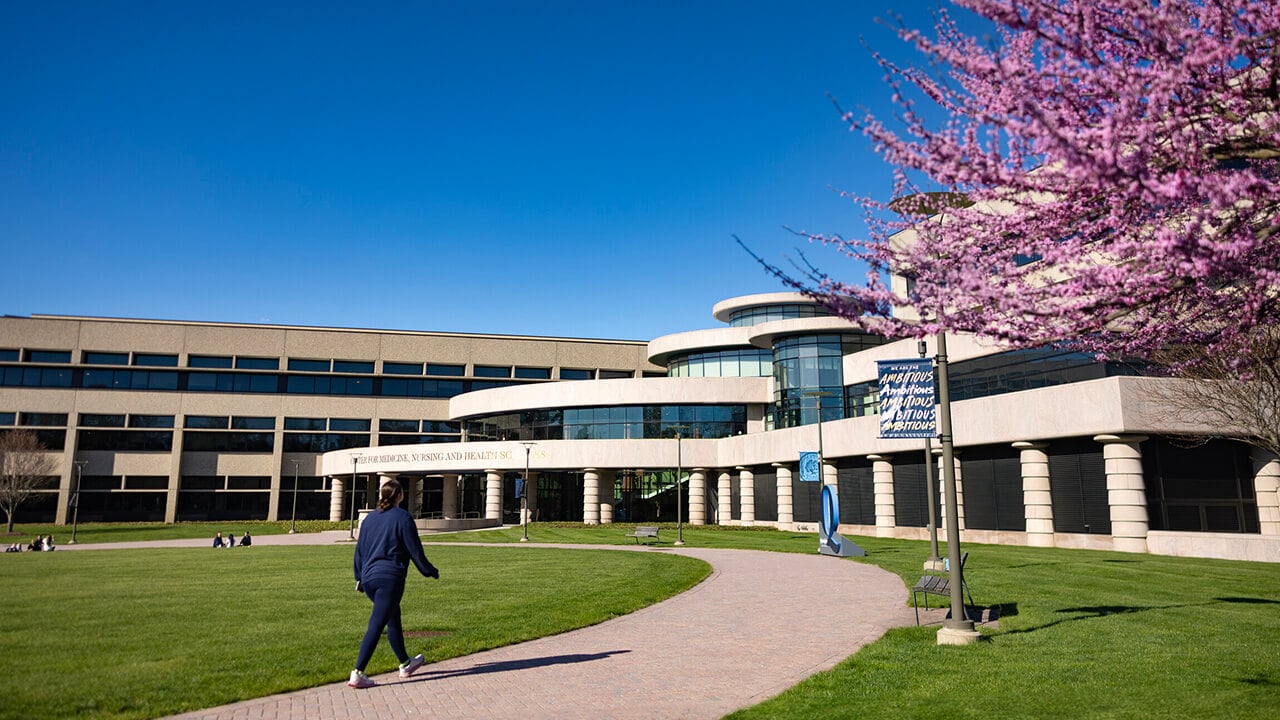
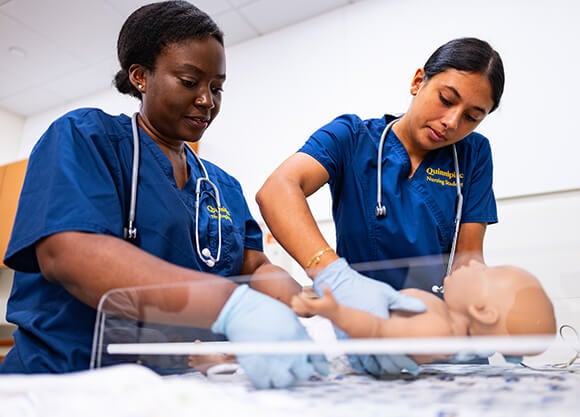
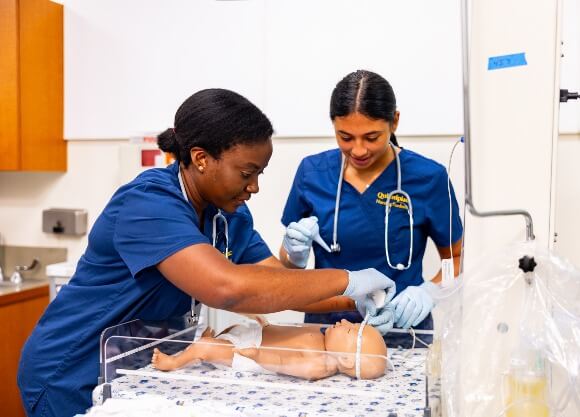
Morgan Pastir: Every day was kind of different because there were just so many aspects of our courses and our labs. So we would have class days, and then we would have lab days, but there were different types of labs. >> And these are on the North Haven campus, right? >> Yeah, everything was on North Haven. So we would have our classes, our labs, and then our skills, and then clinical. So our skills labs was more about how to, like, spike a bag and how to take vitals. And then we would have patient simulations. So we would actually get to work with actors who were trained to be patients and got to practice in, like, a safe environment and get feedback from our professors.
Joel Vanner: They're watching you on the outside the room.
Morgan Pastir: They're watching. And then you give your peers feedback. They give you feedback, and then you have clinical where you, like, practice with real patients. So we kind of and they would schedule it so perfectly. We would have our cardiac class, our cardiac vitals, and then our SIM with our patients, and then our real patients. And so it was just kind of like this group of topics was all in each of the different aspects. And then you get to practice on your real patients.
Joel Vanner: What was that like? So the standardized patient, they're paid actors, right? They have a script that they follow. What was that like, going from kind of like a safe space, you know, planned to, you know, you're out in the real world with somebody who's not an actor who has a real medical concern?
Morgan Pastir: The actors are really good. Sometimes you just think they're actually sick and have the conditions they have. I think transitioning to real patients it's tricky because you don't want to wake them up and you don't want to interrupt them at all. You want to let them sleep. But getting to practice with the standardized patients, it gets you familiar with how you're going to say things and how you can approach different things. And then getting the feedback is just so helpful because then you know how a patient would actually respond most of the time, because these actors really make you feel like you are in the hospital.
Joel Vanner: Probably took some of the fear away from what you may see in the when you're seeing actual patients getting to experience that with the standardized patient. Because it's an accelerated program, and it's 12 months, which you said is unique, and I'm sure others in the cohort had other life circumstances going on while they were in this program, too, how did the faculty in the School of Nursing support you and the cohort throughout the program?
Morgan Pastir: They were fantastic. Our program director, Phil, he would work overnight and then come to school and teach us a class. And then, if anyone was confused, there were some topics that are just not easy. And he would host like Zoom sessions after class, which was just not even a part of the curriculum or anything. He would just make sure we got it, and he would have little mini PowerPoints that would just focus on the really hard-to-grasp concepts. And life does happen, and some of the people you go through stuff, things happen outside, and we all, just as a cohort, knew that we had to finish. We had to graduate, and we just would work together. Some people would make study guides and send it to everyone, and Phil would just come extra and help us if we needed it. And it just it really is a team effort. It's not, Oh, I want to outdo you. We all want to pass. We all want to pass the NCLEX and just be nurses. And the group, the faculty, and just the cohort together, we all made it happen.
Joel Vanner: So you had these experiences on campus. What were your clinical experiences in the program?
Morgan Pastir: Clinical was so fun. So we used to drive together as a cohort. We would get coffee before and go together. And I actually had this one professor, Laura Conklin, who is amazing, and I would have her in the standardized patient class, and then I would have her at the hospital. And she was so kind. She got me pizza on my birthday, and she just made us feel so comfortable. She would give us feedback, and she would make it such a safe space for learning. And then I would get to be with her at the hospital and in those patient rooms. So I was comfortable because I knew I had her. She's so smart. She's one of the best nurses I've ever worked with. And she it was just so exciting that I got to transition from the classroom to the hospital with someone I'm comfortable with who's so smart, she's not going to let me make a mistake. She'll let me learn, but she's a great backup to have, and she's just she's the best.
Joel Vanner: And that connection prepared you for your second experience with the VA, which was a residency program.
Morgan Pastir: Yes. So Laura works at the VA, and she told me about this residency program that they had. So she said, when you're done, I really think you would benefit from this. You get to do a full year, and you rotate the whole hospital, so you get to see the ICUs and the emergency department and med surge and try everything. So she guided me to the people who I could apply for that position. So then, once I graduated, I actually got to be a colleague with her.
Joel Vanner: Awesome. How did what you've learned in the program prepare you for a residency program like that? You had Laura there, you know, as your now colleague after being your mentor and working alongside her. But how did what you learned prepare you for an experience like that?
Morgan Pastir: I think in the classroom, you learned the content. But then, the standardized patients and clinicals gets you transitioning to, okay, I'm going to be in the hospital. People are really sick. You really need to stay on your toes, make sure you're looking at the whole picture. I think the different components of learning really prepare you for that because you get the content. What are these medications doing? What is the body doing? Then you get to practice with your patients standardized and in clinical. So it's the perfect combination of learning the content and getting to practice. So it launches you into that, Okay, I'm ready to be a nurse and have my own patients and it does prepare you. But there's always going to be nursing is a crazy field to get into. So you do learn some stuff, obviously, once you start, but it definitely gives you the foundation you need.
Joel Vanner: And you have that rotation that put you through all different areas of the hospital, too. Is there one you landed in now after the VA?
Morgan Pastir: So, I was at the VA, and I really loved the higher acuity patients having to use your knowledge more. And so I actually ended up in the cardiac ICU at Yale. And I always knew I wanted to do something higher level, something with people who are more sick when we were in med surge. Doctor Martinez would always talk about, Okay, this is the basics, but if you do get to the higher level, this is different measurements and different things. And he always would talk about this wedge pressure. And it was confusing in nursing school, but now I'm in the cardiac ICU, and I know exactly what he's talking about. I'm like, Oh, my goodness, I'm at that higher level now, and I know what he was talking about, and it's all coming together, and you learn stuff in school, and you learn stuff in your first year, but there's always more learning and nursing and new technology. And it's just it's crazy to kind of be like, Oh, my gosh, Dr. Martinez talked about that a couple of years ago, and now I'm practicing it.
Joel Vanner: And you probably tell them, and you say, Hey, remember that thing you said a couple of years ago? Now I'm actually experiencing it.
Morgan Pastir: Yeah, and my preceptor, so when you start in a new unit, you have to learn the unit, especially the high acuity where I am now. You practice with someone and they're your mentor. And so my preceptor is actually back in school, and she was like, Oh, I work at Middlesex and I was like, Oh my gosh, what are the odds you've met Phil Martinez? He's actually her preceptor because he still works as an APRN. So she gets to work with him, and I'm like, What a full circle moment that you're teaching me and he's teaching you.
Joel Vanner: It sounds like you were just never destined to go to dental school. All these connections came together.
Morgan Pastir: No, dental school. Still love the dentist, but definitely love nursing more.
Joel Vanner: So, continual learning in the program in the field, you continued to learn about yourself as you progress through your psychology degree and then went on to the accelerated program here at Quinnipiac. What advice would you give to someone who maybe isn't sure if they want to enter a healthcare-related field? Or an accelerated program like the one you did here at Quinnipiac.
Morgan Pastir: I would say, do the things you're interested in and take a variety of classes. Psychology was interesting to me. The sciences were interesting. I liked biology. But once I took anatomy, I was like, Oh, my goodness, the human body. It's so incredible.
Joel Vanner: And Anatomy is one of those courses that I think people are like, Whoa, you know?
Morgan Pastir: Yeah.
Joel Vanner: There's a lot there.
Morgan Pastir: Definitely talk to your advisors because they've seen people go through these journeys. You have advisors in your majors, and then you have general advisors. So I had a psychology advisor, but then I also had Anna Gilmore, who knows the pre-dental, the premed, the pre-vet, and they've seen people go through this journey, and they really know how to help you and guide you in the right direction.
Joel Vanner: Shadowing was a big part of your.
Morgan Pastir: Shadowing is huge. You might think you love something. Shadow. Try a bunch of different things because then you see, Okay, this sounds fantastic, but these are the frustrations of every job. Through frustrations. You see what's worth it, what's not worth it. The paperwork, the stresses. Shadowing is huge.
Joel Vanner: And you'll build your network along the way. You may also have some crazy connections when you're in the field, too.
Morgan Pastir: This is true.
Joel Vanner: Well, Morgan, thank you so much for joining me on the show today and sharing your experience here at Quinnipiac and your success in your career so far.
Morgan Pastir: Thanks for having me.
Joel Vanner: If you like today's episode of ”Who Are You?,” be sure to like and subscribe and find other episodes of our show on Apple, Spotify, and YouTube podcasts. Until next time, when I ask my next guest, who are you? I'm Joel Vanner. Bye for now.



Quinnipiac Today is your source for what's happening throughout #BobcatNation. Sign up for our weekly email newsletter to be among the first to know about news, events and members of our Bobcat family who are making a positive difference in our world.
Sign Up Now