



School of Health Sciences dean leaves unforgettable legacy on physician assistant education
August 25, 2026
August 25, 2026
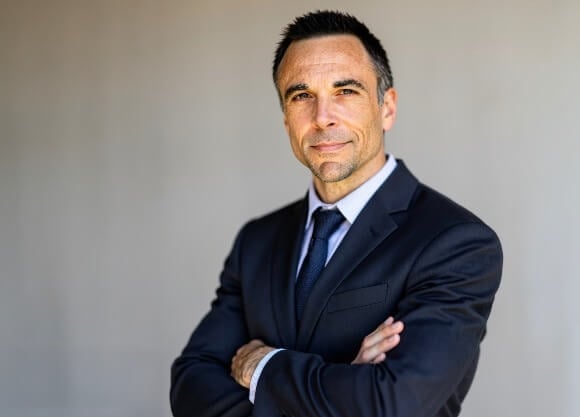
Primarily, Honda increased submissions to the JPAE from around 130 to more than 200 submissions each year. There were several key initiatives that Honda supported to make this possible.
“So much of the success of a peer-reviewed, academic journal is predicated on authors having a positive experience, where their high-quality research and scholarship is disseminated in a timely fashion and brought to the academic community in ways that leverage modern technologies so that readers can consume the research in ways that meet readers ‘where they are’ and package the information in a way that allows their findings to have real world impact,” he said.
By prioritizing a digital framework for the journal, Honda made the publication process more enjoyable for authors. With more evidence-based research being published, more scholars are working to promote better healthcare outcomes.
“Leveraging social media and multi-media approaches, rather than just a paper/printed publication, has allowed our authors’ work to reach readers more effectively, which informs evidence based pedagogical/andragogical changes,” said Honda.
In addition to social media platforms, Honda has also spread key research ideas more effectively by launching and hosting a monthly podcast, featuring authors of high-impact articles.
Another key impact of Honda’s service as the editor in chief included the launch of three new sections to the journal — Education Innovations, Student Perspectives and Perspectives on PA Doctoral Education.
“During my time as editor, we tried to make sure that the sections we added and sunset reflected the pedagogical and andragogical concerns of the PA educator community," Honda said. “We collected input continuously from our editorial board members and readership on what is emerging in the field that they wanted to learn more about and what was going to have the highest impact in the field. By adjusting the sections, we were able to prompt our community of authors and researchers about what the community at large saw as the key challenges in PA education and thus spark a dialogue of ideas that directly addressed these areas.”
Honda also provided opportunities for students to get involved with research and offer a unique perspective to PA education.
“Particularly, I loved that we added a feature that directly targeted students, which allowed us to create a space for students to flex their scholarship muscles, as well as directly communicate with the education community at large about what they say as the most pressing issues students face in PA education,” he said.
Quinnipiac Provost Debra Liebowitz says that Honda’s work will have a lasting impact across healthcare education.
“His legacy is one of elevating scholarship, fostering innovation and ensuring that educators have access to the latest evidence and ideas to strengthen teaching and learning,” she said. “Ultimately, that work supports the development of highly skilled healthcare professionals who are prepared to lead and serve their communities.”
Honda incorporates what he learned from his time at JPAE directly into his leadership at Quinnipiac.
“So important to my work on the journal has been directly recognizing the limits of my own knowledge and fostering and amplifying the views of those who know more than I do about different areas of biomedical education or have a different perspective,” he said. “To this end, none of the accomplishments of the journal have been mine alone, but rather I have had the honor and privilege of leading a team whose mission was to distill and disseminate the expertise of the brilliant minds that were on my team and in the PA education community. I try to see my leadership role at Quinnipiac in the same light. The most important work I do is to surround myself with the brilliant minds of our faculty, staff and students, and have this critical mass of experience, expertise and creativity launch the school into a new era of distinction.”
Quinnipiac prioritizes supporting devoted faculty, staff and students who are looking to make an impact on their profession.
“At Quinnipiac, we are committed to attracting and developing faculty and academic leaders who are shaping their professions through excellent clinical practice, research and thought leadership,” said Liebowitz. “Trent's national leadership in physician assistant education reflects exactly these values. Our students benefit tremendously when they learn from faculty who are actively contributing to advancements in their fields and helping define the future of healthcare education.”
With his direct experience and expertise with physician assistant education, Honda is supporting Quinnipiac’s master's of physician assistant program as it continues to shape well-rounded and impressive healthcare providers.
“Trent's accomplishments also build on Quinnipiac's longstanding reputation for excellence in physician assistant education,” said Liebowitz. “Our PA program has long been recognized as a leader in the field, and his national contributions further strengthen that tradition. We are proud to have a dean whose influence extends beyond our campus and contributes to shaping the future of health professions education nationwide.”
Carey Barry, MHS '02, who serves on the editorial board of the Journal of Physician Assistant Education JPAE and co-hosted the JPAE Podcast with Honda, was also very involved in the digitalization of the journal and engagement with the PA education community. She is also a graduate from Quinnipiac's physician assistant program.
She said she believes that Honda’s legacy as editor in chief can be viewed in two ways.
“First, he transformed JPAE while maintaining a strong commitment to publishing high-quality, rigorous research,” she said. “During his tenure, the journal moved to a fully digital, continuous publication model, created new opportunities for scholarship…, expanded its social media presence, launched the JPAE Podcast and improved the submission and publication process. These changes strengthened the journal's quality and reach while making PA education research more accessible and engaging for the broader community.
The second, and arguably most important, part of Honda’s legacy was his investment in people, Barry said.
“He has a real passion for mentoring PA educators and helping them develop as researchers and scholars,” she said. “Through individual mentorship, his work with authors, support for a team that produced the 'Finding Your Starting Point in Scholarship Coffee Talk' series and the podcast, he has helped make research feel more accessible. Despite everything he accomplished at the journal level, Honda never lost sight of the individual researcher. He has always been willing to have the conversation, answer the question, challenge an idea or encourage someone who wasn't quite sure they belonged in research."
As someone who has had first-hand experience working with Honda and has benefitted from his mentorship, Barry believes that Honda’s legacy will continue long after his time as editor in chief.
“That impact extends well beyond the journal. Honda didn’t just help advance PA education research, he helped develop the people who will continue to move it forward,” she said. “JPAE is stronger because of Honda's leadership, but I also believe PA education research is stronger because of the researchers he has mentored, encouraged and inspired during his career. That legacy will continue well beyond his tenure as editor in chief.
As he steps down from his role at JPAE, Honda’s impact will support the future of physician assistant education and directly impact patient outcomes.
“It has been the honor of a lifetime to lead the journal for the last four and a half years. It has truly been a privilege. In the end, I hope my legacy is to ensure that PA educators can improve their teaching using evidence-based, near real-time innovations that improve the student experience, and ultimately, improve and enhance the education of the next generation of healthcare providers, with the down-stream effects being that patients get better care because their providers have better education,” he said. “In a nutshell, I hope that my upstream work ultimately translates into better patient care and outcomes.”

















Quinnipiac Today is your source for what's happening throughout #BobcatNation. Sign up for our weekly email newsletter to be among the first to know about news, events and members of our Bobcat family who are making a positive difference in our world.
Sign Up Now