



Recent graduate reflects on her DNP journey, culminating in an impressive final project
September 04, 2026
September 04, 2026

“What made the experience especially meaningful was the opportunity to apply what I was learning directly to patient care through my doctor of nursing practice project,” said Nicolas. “Rather than simply studying theory, I led a quality improvement initiative that had a measurable impact on clinical practice and patient outcomes by collaborating with various stakeholders who had the same desire and goal.”
Nicolas explained the importance of her project, emphasizing the need for attention towards sepsis diagnoses.
“My doctor of nursing practice (DNP) project focused on improving the early recognition of sepsis on a medicine unit. On the medicine unit, sepsis is one of top three diagnoses where the early signs of sepsis were often missed, leading to medical emergencies, prolonged hospital stay, the need for higher level of care and increased cost. Sepsis is a life-threatening condition that requires early identification and treatment to prevent complications and mortality. Sepsis is also the third-leading cause of death worldwide,” Nicolas said.
Nicolas’ project yielded impressive results as her hard work paid off.
“The purpose of the project was to further develop a process for medical staff to improve adherence to the early sepsis bundle by using the sepsis pathway, which was supported by staff education, daily interdisciplinary huddles, visual reminders, creating a standardized charge nurse handoff tool with the mnemonic TIME (Temperature, Infection, Mentation, Extreme illness) and the use of electronic clinical deterioration scores (eCART) to assist with early detection,” Nicolas said. “Over the course of the project (16 weeks), sepsis pathway usage increased from 20% to 33%, time to sepsis care decreased from 303 minutes to 202 minutes and interdisciplinary collaboration around sepsis recognition improved, demonstrating how evidence-based quality improvement strategies can enhance patient outcomes.”
Nicolas was as much a nurse leader as she was a student during her project. She talks about balancing the two responsibilities.
“One of the biggest challenges was leading a practice change in a busy clinical environment while balancing my responsibilities as a nurse leader and doctoral student. Encouraging consistent adoption of the sepsis pathway required ongoing education, communication and engagement with staff who were already managing competing priorities,” Nicolas added. “Collecting and analyzing data, maintaining momentum throughout the project and ensuring stakeholder involvement were also challenging at times.”
Nicolas added how her project also brought moments of success.
“The most rewarding moment came from seeing measurable improvements in patient care,” said Nicolas. “The project increased utilization of the sepsis pathway and reduced the time to sepsis care, demonstrating that small, evidence-based changes can have a meaningful impact on patient outcomes. I was also proud to see strong collaboration among nurses, nursing assistants, hospitalists and leadership, all working toward a common goal.”
Nicolas’ noted that her impressive project idea came from her own observations.
“My DNP project grew out of a clinical need I observed as a nurse leader on a medicine unit. I completed a process map, fish bone diagram and review of internal data with the help of the unit leadership and noted sepsis is a time-sensitive condition and there were opportunities to improve the early identification and management of patients at risk for sepsis,” she said. “Collaborating with clinical stakeholders, the quality improvement initiative focused on using a standardized sepsis pathway to promote earlier recognition and the sepsis bundle to implement treatment.”
Her project was supported by many wonderful individuals, Nicolas added.
“The project came together through the support and collaboration of many individuals. My site mentor, Dr. Leafe, provided invaluable guidance and helped ensure the project aligned with organizational priorities, mission and vision. Nursing leadership, hospitalists, bedside nurses, nursing assistants and interdisciplinary team members actively participated in the implementation process and offered feedback throughout the project,” she said. “At Quinnipiac, my faculty advisor, Dr. Bradley, provided mentorship, encouragement and scholarly expertise that helped shape the project from conception to completion. The success of the initiative was truly a team effort, and I am grateful for the dedication and support of everyone who contributed along the way.”
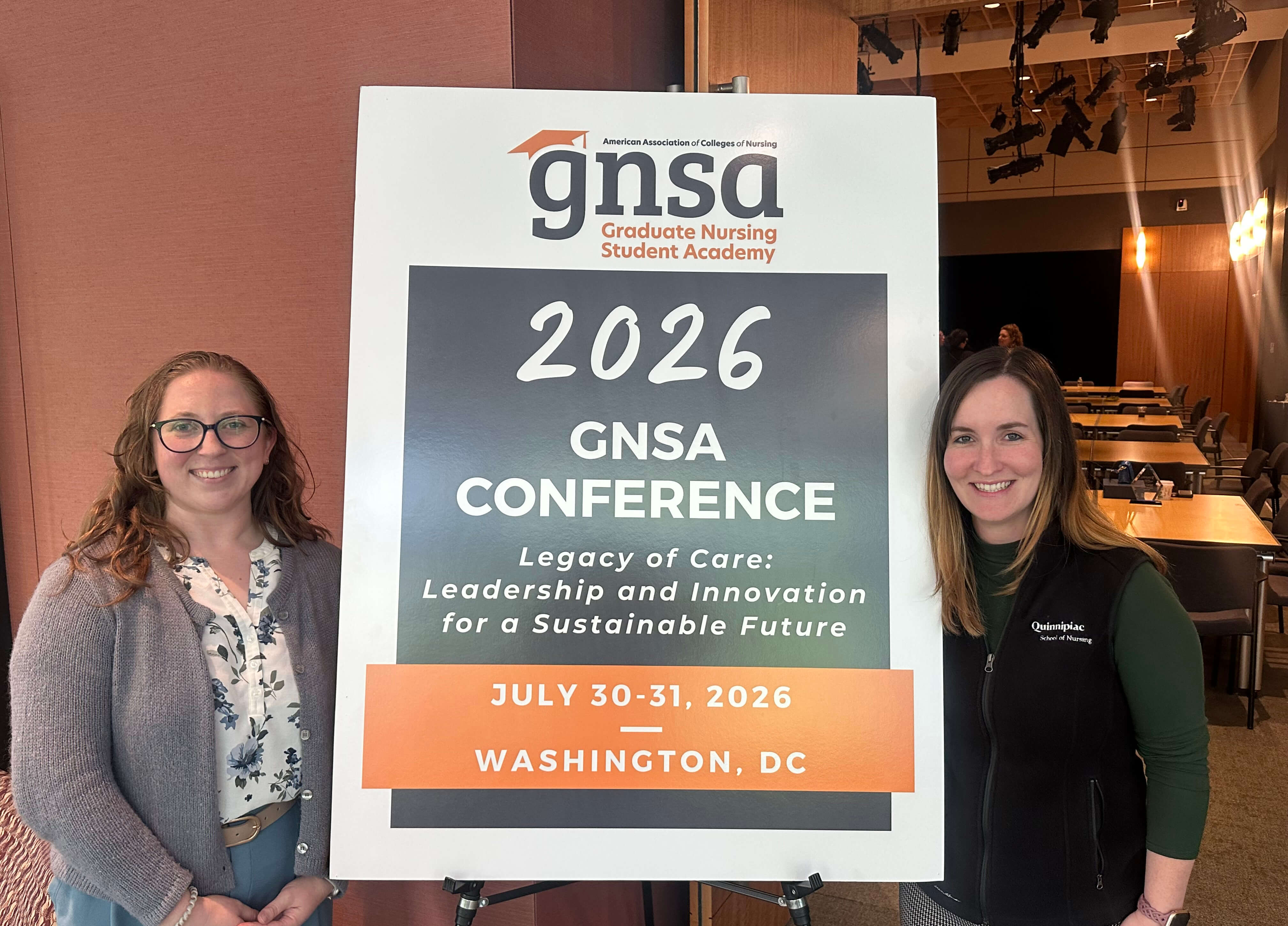
After extensive dedication to her work, Nicolas went on to present her project.
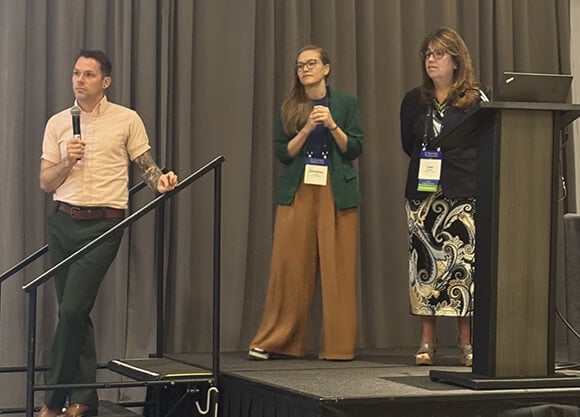
“As a result of my presentation, I have joined the system wide sepsis committee, while working with local leadership to review sepsis data,” said Nicolas. “Presenting my DNP project was both exciting and rewarding. I was initially nervous because I had invested so much time, effort and passion into the project and wanted to communicate its significance effectively. As I shared the findings with faculty, clinical leaders, mentors and colleagues, that nervousness quickly gave way to pride and confidence. What made the experience especially meaningful was demonstrating how an evidence-based quality improvement initiative could positively impact patient care. Presenting the project's outcomes and seeing the audience's engagement reinforced the value of the work and the importance of translating research into practice.”
Nicolas’ Quinnipiac journey was meaningful to her. She expressed gratitude toward the university and its DNP program.
“Looking back, my time as a Quinnipiac DNP student was transformative,” she said. “The program pushed me to grow not only as a clinician but also as a leader, scholar and advocate for evidence-based practice. Balancing doctoral studies with a demanding healthcare career and family responsibilities was not always easy, but it taught me resilience, time management and the importance of perseverance. The support and mentorship I received from faculty, particularly my project chair and advisors, as well as the camaraderie of my classmates, created a strong sense of community throughout the journey.”
Nicolas’ confidence grew throughout her time in the DNP program, and she is now a proud Quinnipiac alumna.
“Most importantly, Quinnipiac helped me develop the confidence to drive change within healthcare organizations. As an alumna, I am proud of what I accomplished and grateful for the experiences that strengthened my leadership skills, expanded my perspective and prepared me to make a lasting impact on the patients and communities I serve. Earning my DNP was more than an academic achievement. It was a personal and professional milestone that challenged me to grow as a leader, scholar and advocate for quality improvement,” said Nicolas.
Nicolas will continue her journey in healthcare, taking the lessons she learned in the DNP program along with her.
“Today, I continue to serve in a nursing leadership role, where I am focused on improving patient outcomes, advancing quality and safety initiatives and supporting frontline clinicians in an ambulatory setting,” she said. “Earning my DNP degree has strengthened my ability to lead evidence-based change and translate research into meaningful improvements in clinical practice. Quinnipiac played an important role in preparing me for this stage of my career. The DNP program challenged me to think critically, analyze complex healthcare issues and develop the skills needed to lead organizational change. As an alumna, I carry those lessons with me every day and remain grateful for an education that prepared me to make a meaningful impact on patients, healthcare teams and the broader community.”
















Quinnipiac Today is your source for what's happening throughout #BobcatNation. Sign up for our weekly email newsletter to be among the first to know about news, events and members of our Bobcat family who are making a positive difference in our world.
Sign Up Now