


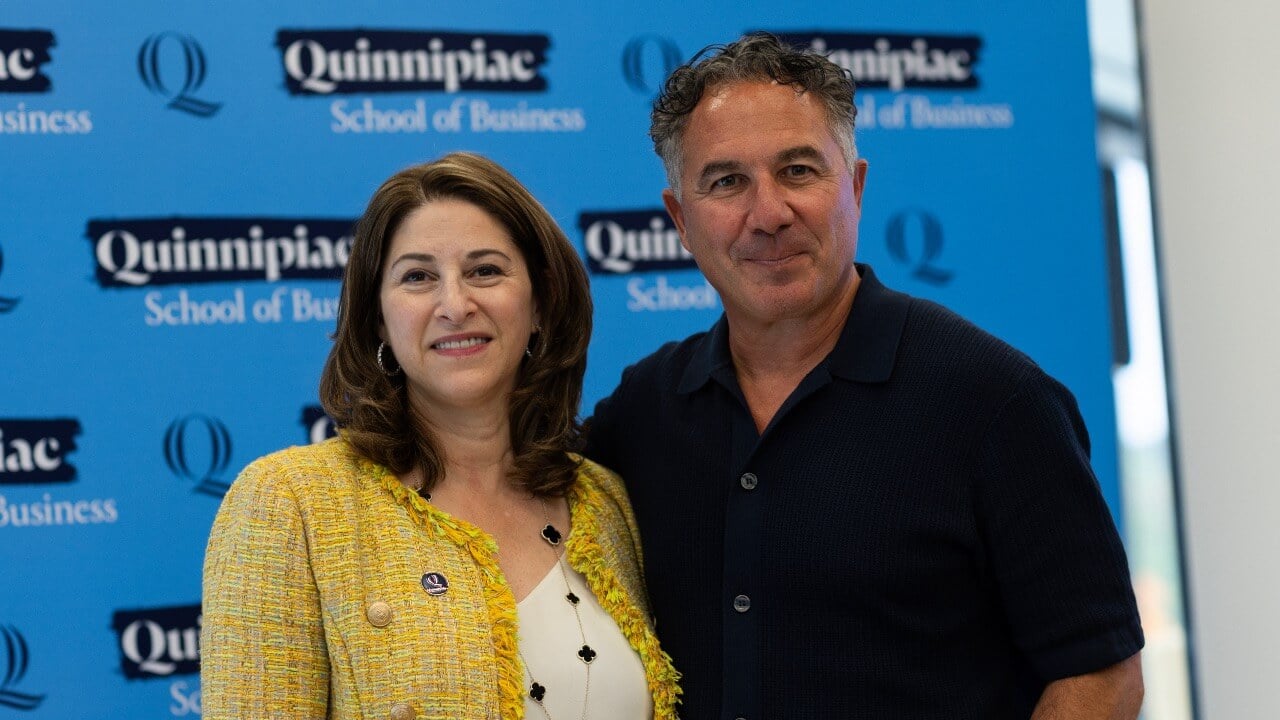
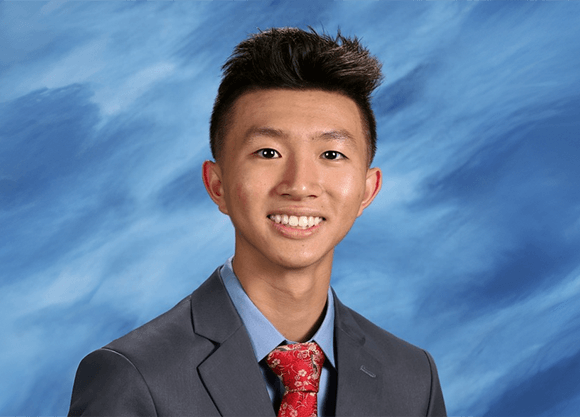
‘Who Are You?’ podcast with guest Moinuddin Kothawala ’25, MS ’26
Building confidence and standing out on campus

Building confidence and standing out on campus
Joel Vanner: Welcome to ”Who Are You?,” the Bobcats you know, the stories you don't. I'm your host, Joel Vanner, inside the podcast studio at Quinnipiac University's School of Communications. And I'm joined today by my guest, Mo Kathawala. Mo, welcome to the show.
Moinuddin Kothawala: Thanks. I'm glad to be here.
Joel Vanner: I'm sure you could guess Mo what my first question to you is going to be, and that is who are you?
Moinuddin Kothawala: So my name's Moinuddin Kothawala. I go by Mo for short. I'm a recent graduate from the 3+1 program at Quinnipiac pursuing computer information systems with a minor in management and a Web foundations development badge. I'm currently in my plus one, which is my master's year where I'm doing applied AI and Business Analytics program.
Joel Vanner: Lot to unpack there academically. But let's first start outside of Quinnipiac. Mo as a kid. What were your passions growing up and what were you involved in?
Moinuddin Kothawala: So, growing up, I've always wanted to give back to my community. I've always loved helping out whenever and wherever I could. So I loved volunteering. I loved participating in programs from middle school after school and through the YMCA program doing 21st century, just helping out with different types of skills that students can gain from their early years in education, going into a high school, transitioning into college. So I really love just helping out in my community, whether it's helping out and volunteering at the Stanford Nature Museum Center or if it's through school or anything along the lines of my local mosque or religious Center in Stanford.
Joel Vanner: You mentioned the 21st century program. What was that program? What did you do when you volunteered there?
Moinuddin Kothawala: Sure, so the 21st-century program, Rippowam Middle School, it's where I went to middle school, essentially, works with the YMCA in our city, and they essentially organize different types of extracurricular activities along with academic activities, both implemented during after school from 2:00 P.M. Till about five. And essentially, they have a good hour and a half, 2 hours of academics take place. Before they introduce, like, the recreational piece of it so that students can see that just because even if you're staying after school to work on your studies or even if you're staying after school to improve upon a skill that you may not be good at in the classroom, just to give them that encouragement of, that there's something else also for you to socialize, for you to network with other students, even though you're young, you don't know what networking means. You're just going to think you're playing basketball in the gym or something, but opportunities of taking field trips to SkyZone after getting all your work done and just basically being able to interact with your peers in a different way outside of the classroom during school hours.
Joel Vanner: Volunteering sounds like it was a huge part of you growing up. Is that something you did with your family, with your parents?
Moinuddin Kothawala: It's something I've always myself just really had an interest in always just giving back, especially seeing things throughout my life, through events that I've been to personally, how they can't take place without volunteers, even. They're very important piece of any type of event that goes on having people to help. So I've always wanted to contribute in that aspect. So that's what really drove me to want to get involved in volunteering, not just like in academics, but the recreational piece of it. Like the 21st century YMCA program, and then for even our Stamford Islamic Center, helping count the donations we receive at the Friday prior afterward. So I'd love to just in any way, I can honestly give back.
Joel Vanner: So thinking about college, Quinnipiac obviously came into the picture somehow. How did Quinnipiac come into the picture for you, and how did you get started on your journey?
Moinuddin Kothawala: Sure. So originally, I wasn't fully aware of what Quinnipiac Uni was, right? I was still looking at college, trying to figure out, Hey, what do I want to study? What am I interested in? Because like every other student, you don't really know up until, like, your end beginning of, like, freshman year, sophomore year, starting to think about where would I go to college in high school, you know?
Joel Vanner: It's a big decision.
Moinuddin Kothawala: It's a big decision. Exactly. So I was like, What do I want to do? I knew that my dad runs his own business, so I've always been attracted to the business aspect of how things run. So I've always knew I wanted to do something in business, but I've also had a passion for technology and how it operates and how we're improving upon it, especially with how advanced AI and everything is now. At a young age, I've always been passionate about technology. So I found a way to research about that by taking a class actually about Juru. It's a programming language that we learned how to use, like, doing hello world and these just little prompts and stuff. So really doing these classes in high school really piqued my interest in that area, but I always knew that, like, it wouldn't be to the point where, like, I'm going to be coding from scratch and I'm going to be able to remember these things to a tee, you know? So I really did my research, looked at programs, like for computer science, for information systems. Like, some universities have instead of, we call it computer information systems, some universities have it management information systems. But essentially, it's the same knowledge that you will be learning in that field, you know? So it was really just about figuring out how to those two things together, find something that has a mix of both. So when I found out about the 3+1 program that Quinnipiac offers, being able to get your bachelor's and your master's in four years while also being able to add other accreditations on top of it. I took three additional classes to get a foundation Development badge. I learned how to create a website from scratch and learned how to create my own portfolio and stuff. So just these other things that I look looking into Quinnipiac it really, drew my, drew my interest for coming here. Especially, I applied to multiple schools at the time. I applied to a school further up in Connecticut, more closer to New York, even some schools in Jersey. So all over, I wanted to be well-rounded when applying. But ultimately, after doing a college prep academy and participating in that in my junior senior year of high school, that really helped me see Quinnipiac as a great option in terms of not too close, not too far from home, having the ability to still be meeting these companies that I potentially want to get in touch with one day and work with and just the faculty and staff itself, like from taking a tour.
Joel Vanner: You took a tour?
Moinuddin Kothawala: Yes.
Joel Vanner: Tell me about your first time on campus.
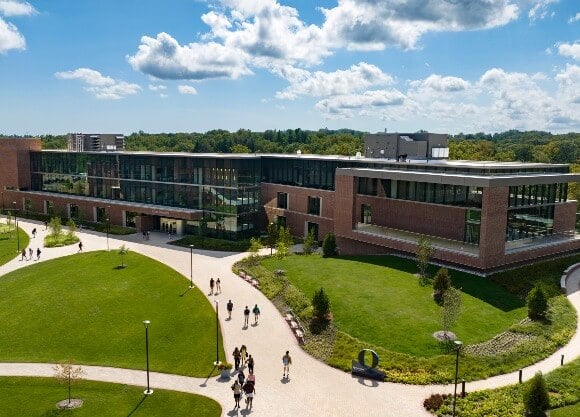
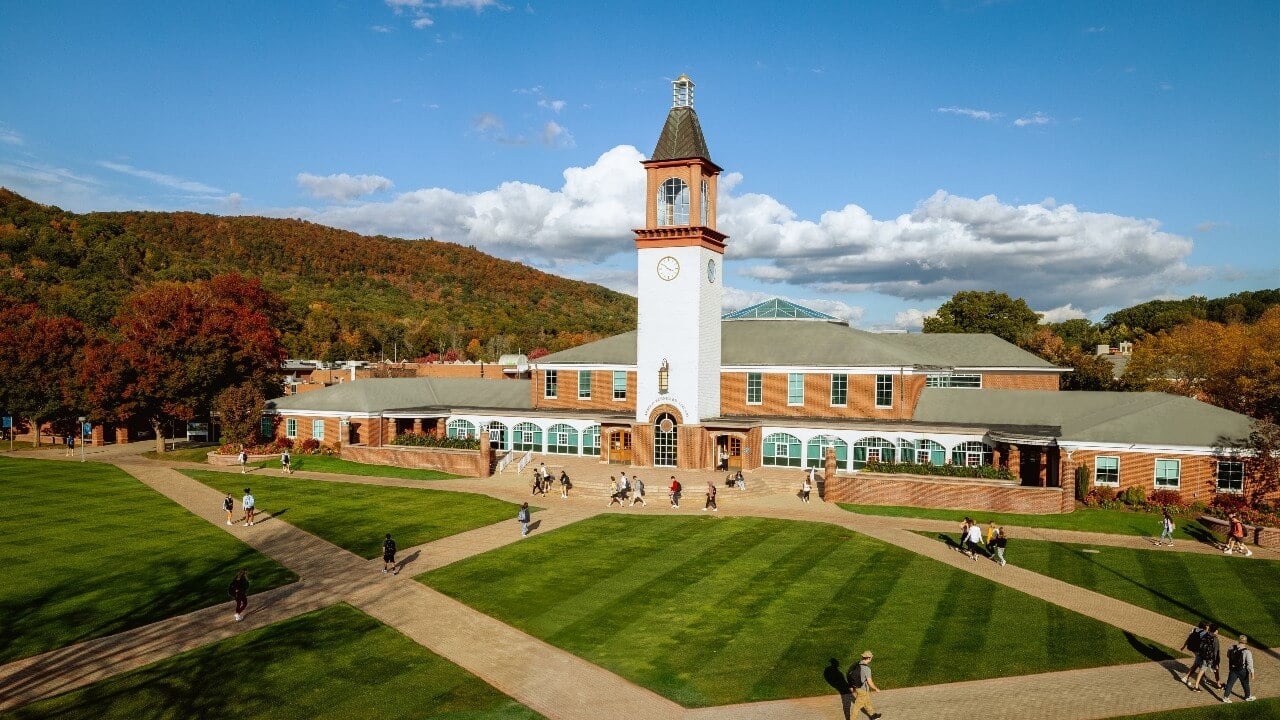
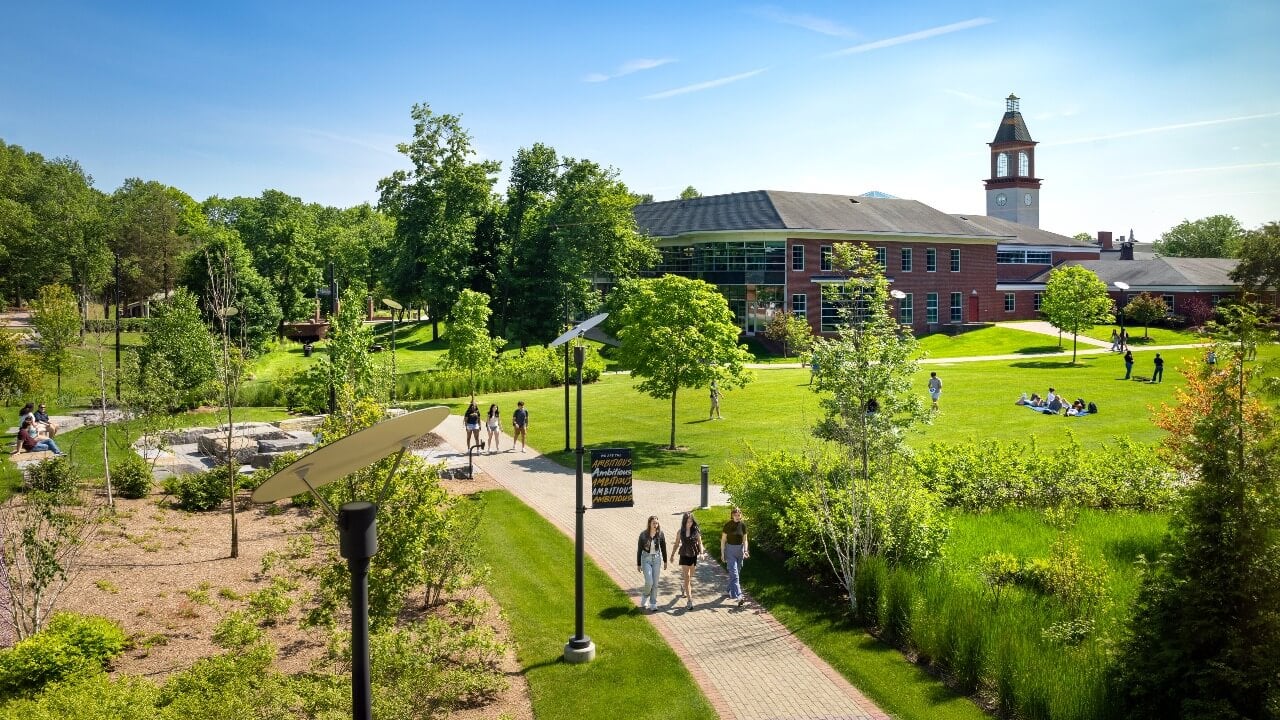
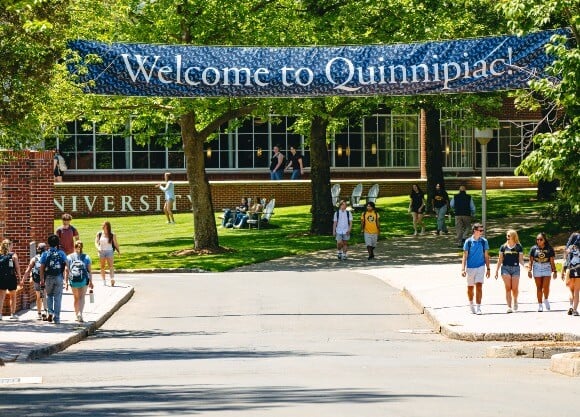
Moinuddin Kothawala: Of course. So actually, it was pretty funny. So when I first took a tour, it was a little bit like two years after COVID finally came to an end a bit. So things were still getting back into how normal life was at one point. But essentially, when I came to take my tour, I had a wonderful time. I got to see the beautiful campus. I got to even take a tour of the York Hill campus at the time we were offering tours of York Hill. So I got the chance to have a tour guide take us up in the shuttle bus and get a whole preview of the view from up top York Hill, campus is beautiful. You can see main campus from there, even it's a beautiful view. So I was really lucky to be one of the last students, one of the few students to get to take a tour of the York Hill campus and the Mountain Carmel campus at the time. And it was during summer. So it was a wonderful time to see how much how nice the weather was here, being able to, like, think about you'll get all seasons while being here in Connecticut, not just, like, it's always going to be hot or cold all the time. So that first visit, like, just seeing the layout of the area, seeing the people interacting, even though it was the summer, seeing, like, employees over the summer, student employees, faculty, staff, just roaming around, and, like, just thinking not being stressed or just very calm vibe, I just really, like, spoke to me in a way.
Joel Vanner: Yeah. You can take a tour, like you described, and you can also do the Be a Bobcat For a Day program, where you actually during the school year, you can shadow a student, attend classes, go to their involvements, go to lunch, do anything. That's what I did. That's how I came here. That was a great experience. So you took a tour came to Quinnipiac in the 3+1 program. You're undergraduate in computer information systems. Tell me about the 3+1 program and how those two connect and the experiences you've had so far.
Moinuddin Kothawala: Sure. So the 3+1 program and the experiences that I have had so far, essentially, they really have benefited me in terms of from the friends that I've met, from the people that I've gotten to meet over time through this process. From working in undergraduate admissions as a tour guide, that opportunity opened up throughout freshman year in spring semester. It's something that I was drawn to just because of the environment being near these individuals, with similar interests in, like, academic, similar interests in extracurriculars and stuff, it really led me to get involved by working for the school as a student employee, getting more involved within extracurricular activities at school, like participating in, like, investment club or block chain or even going to case competitions through companies like Travelers. They had a case competition recently in which students from all schools applied, and a few students from Quinnipiac went, Eastern, Southern, Central and had the opportunity to go to the corporate office in Hartford, Connecticut, and we got split among teams, so students from different universities would be on the same team, and you'd have to find a way to work with others with different thoughts, ideas, different ways that even though you're from different universities and stuff, figure out the same type of problem. So I feel like those experiences have really, like, opened me up into getting out of my shell, because I wasn't always the type to want to talk to people. Even when I'd say that I give tours on campus after taking a great tour myself, that really drew me to want to become a tour guide even because of how well of a tour I had, the orientation experience I had even. I still remember one of my OLs till this day, Caylee Thomas, she was an OT major, and till this day, like, she really made an impact to me wanting to come here. It just goes into, like, from the personal experience of, like, feeling comfortable to be able to want to step out of my shell, go to these competitions, events, extracurriculars, even. So I feel like the 3+1 program, even though hearing like plus one and the extra word...
Joel Vanner: It sounds like a lot.
Moinuddin Kothawala: It sounds like a lot, right? But, despite what it sounds like, it's all about how people show you. It's about what how much you can take upon yourself and how much you can handle and stuff. So it sounds scary, but it's really manageable. It's a really great opportunity, even, which, I really stress a lot. Like, thinking about it in the long run, like, I would not change my decision for Quinnipiac even because of how, being able to just gain multiple accreditations at such a young age, before even getting into the professional field, it's just very beneficial. So that's what really drew me.
Joel Vanner: And you mentioned that you're a tour guide now after having an awesome tour. You also mentioned something before we started filming. Your first day on campus when you were looking for the kickoff event for the School of Business. You happened upon the Dean of the School of Business, but didn't quite know it was her. So tell us about that.
Moinuddin Kothawala: That's a really funny story. Actually, I actually mentioned it as my one experience on my tour, even. So in my experience, when I first got here, you have Welcome Weekend. And Welcome Weekend is when every single school will have an intro introduction to the professors, the faculty, the dean of that school, and you will do a little icebreakers. So, of course, any student when you're at a new place, you're at a new area, you don't know where everything is. So I was like, Who better to know where my own event would be than the School of Business. I walk in, not thinking twice about what's going on. It's pitch black inside. So I'm like, Oh, maybe they're closed. It is, like, around the weekend time, but who knows? Maybe someone's in there. So I see a light on in the Dean's office, but at the time I don't know, it's the Dean's office. I just see a little door. So I walk in, and I'm like, Oh, who could maybe they can help me. So I'm like, Hi, I'm a freshman, I'm a first year. I'm just looking for the Welcome Weekend event for the School of Business. So this person is sitting behind the administrative assistant desk, so I'm assuming it's the person. Whose desk it is, right? They're wearing a professional pantsuit, their hair is in a bun and everything. So I'm thinking, like, it's the person that works here. So it doesn't click, but they offer me a free piece of merch, like a shirt, and they give me the shirt, and they're like, we can walk to the event together. They point me to the direction and everything like that, you know, trying 'cause I was like, Oh, I'm late. I don't know what I'm doing. Everyone's going to see me walking.
Joel Vanner: Calm your nerves. Not what you need in this moment.
Moinuddin Kothawala: Exactly. Like, stressing out, especially being new here and not knowing anyone on the new orientation group, right? So she gave me that free piece of merch, showed me the direction to the Recreation Athletic and Wellness Center. So I went to where the event was happening in Burt Khan, and when I get there, it's like 150 people there. We're doing, like, a Kahoot for, like, an icebreaker. And I remember this number vividly because we're inside, and then same person walks in, but now they're wearing jeans, they're wearing a Bobcat shirt with the Quinnipiac logo on it that every other first year is wearing. And they have their hair down and stuff. So I'm like, I don't recognize them at the time, but that's the same person that I met at the desk. So still doesn't click to me. They go up on stage, and in front of all these people, they're like, Is there a Mo here? And I'm like, I'm like, shocked. I'm like, still trying to figure out what's going on? Like, what's happening? Like, did I it's not even the first day of classes. What did I do?
Joel Vanner: What did Mo do?
Moinuddin Kothawala: What did I do? And then, a person from my orientation group, he puts my hand up like this, and I'm like, Oh, my God, no, please. And then basically the Dean uses me as an example. Dean Raiders, you should all take the opportunity to always ask questions. It doesn't matter whether you're in the School of Business or not in the School of Business. If you're in a part of a campus that you recognize or don't recognize, you should always take the chance to ask anyone you see a question or an inclusive school, we care about everyone. Like, it could be someone you don't know walking down Bobcat Way or walking down the quad or anything like that. But you can definitely feel comfortable enough to ask them, like, Hey, is where this location might be or am I going in the right direction or something like that? Because you never know who you might meet. Like, I met the Dean of the School of Business without knowing who she was at that time, right?
Joel Vanner: Like, you have the right moment, the right connection.
Moinuddin Kothawala: Exactly. And then who knew in the long run, like, that connection would open up many opportunities for me from working as a grad assistant, career development currently at the School of Business, working, being able to get the opportunity to become the class of 2025 commencement speaker for the School of Business. So just who knew at that moment in time, that little connection made over not knowing where I was going could lead to opportunities down the line. So that's why I always talk about that experience. I feel like you never know who you're going to meet. So you should always never hesitate to ask questions, never hesitate to feel unsure about something because you never know what you might learn or who you might meet along the way.
Joel Vanner: You mentioned earlier the Travelers case competition, and you just mentioned you're a grad assistant in the Career Development Office in the School of Business. What types of resources do the School of Business have for students in the career development space?
Moinuddin Kothawala: Sure. So in the career development space, we have individuals for advising. So they work with you on this peer-advising side for your classes and your courses and what you might need to take and don't take. And on the career development side, specifically, I work on resume reviews, LinkedIn profile reviews, internship searches. So if you're interested in an internship in the specific field, I could try to see what employer connections our university might have through handshake to basically set up a time to see if a connection at that organization could potentially get you in touch with the hiring manager for maybe that position or that department, depending on the situation, you know? So from LinkedIn profile reviews, mock interviews, interview practice, essentially, anything in the realm of career development we work on, and we do it through appointments, drop in, anytime that you'd like to stop by, like, we're there Monday through Friday. I'm there from 10-2, but you can always, email me, and I'm more than happy to, like, stay or have someone else, set up a time with our career development team like Jill and Dave, they're awesome. They're my bosses. They taught me so much, and I've learned can't- I still don't know how much I'm going to learn we have till spring semester. So there's so many other things I've yet to learn from them. But it's just been a great experience so far, being able to take the things that I've learned from trying to apply for a job, trying to apply for internships to be able to help students get their own now, you know, especially being able to have those resources offered to myself back before I was a grad student, it's good to see that still continues on, even now that I am now that I'm currently in graduate school.
Joel Vanner: Have you had an internship here?
Moinuddin Kothawala: Yeah, so I got an internship at a private local bank in Fairfield County. It's called First County Bank. So I was a seasonal teller/intern there for summers 2023 and 2024. So I worked more on with customers, day to day regarding withdrawals, deposits, CDs, like, credit card payments and stuff as well. And then more transitioning toward financial statements, too, just seeing how day to day working with customers and their finances would translate into the analysis field for a career that I want to go into later on in time after I finished my education. So I want to work in, like, data analysis, security and risk assurance. So just essentially, getting that internship, having the ability to work with the career development team here, getting my resume set for applying, and having the best opportunity to put my best foot forward. It was just really what helped me get called back the second year in the summer to participate again in that program. So it was a wonderful opportunity.
Joel Vanner: What have you taken away from being a 3+1 student in computer information systems and also now in the Business Analytics and applied AI program? What have you taken away from those academic experiences?
Moinuddin Kothawala: So, honestly speaking, you really learn how much, like, you need. Both go hand in hand. Like business analytics, computer information systems, they really do go hand in hand in terms of you're handling multiple types of information, no matter what type of information. Like in any field, any business, you're always going to have data of some sort, whether it's relating to engineering, whether it's relating to nursing, healthcare, or anything along those lines. Like, any business has information and data. So seeing the mix and match between how to handle data, how to interpret data, how to look through data, right, that really showed me how much there's so much skills that you can even get to learn. So pursuing my master's in applied AI business and it goes more into, like, especially seeing how AI, like, is being used now, especially in the 21st century. Like, now, like, how many things are being advanced, how many companies are even utilizing AI? That really drew me to wanting to pursue my master's in that, especially because the information systems piece for my undergrad really helps me get, like, the foundational understanding of it, but this will really help work on the little details of how AI can be used to help benefit companies or benefit individuals, even, and help them with their resume, even, right? Like, right now, if you apply for any type of job, you'll see that before a recruiter even gets to see your resume, we'll go through a whole AI database to see if it has those keywords from that job description. So having the opportunity to even discuss that story with NBC Connecticut, I had a chance to get interviewed by them and discuss that, too. So, like, all the things that you learn about how much tech and business go hand in hand. Like, I would have never have thought like, Wow, this is how it happens. Like, there are so many other steps involved when it involves a business information needed to run that business and how you handle it and how, learning about it really affects the way, like you interpret it, too.
Joel Vanner: And you'll graduate with that base of understanding, right, about AI, that experience through your courses that you need as you go into the workforce today because AI is everywhere in everything that we do now.
Moinuddin Kothawala: Exactly. It's like trying to see how AI can benefit us rather than hold us back, per se or to be afraid of it, rather than how it can be used to benefit and make the world a better place.
Joel Vanner: So, from your experience as a tour guide, which will never be replaced by AI because you have to physically come here to campus to experience it, right? What is one piece of advice you would give someone who is coming here on a tour?
Moinuddin Kothawala: One piece of advice I would give is, don't be intimidated by the tour. Even though it's an hour, it's the hour that you'll get to learn not just more specifically about your major, but about the environment, the culture, about Quinnipiac, about what really each and every tour, they're going to give you what drew them here and why. You're going to learn the same info, of course, but that person telling you their story, it really goes into what you see yourself and what you see your story, what you see your story could unfold as through that tour. So don't be intimidated by the hour-ish tour. Like it's going to really show you whether or not this place speaks to you or not because I'm going to be honest, like, even though I took one tour coming back after, like, just doing my own tour, even after seeing that tour, really, like, I remember my tour guide. I remember my orientation leader because of the experience that they provided me at that time in life. So I just feel like I'm if I were you coming on tour, I would of it less of the angle of, like, Oh, I need to get all the information down rather than just feel the energy, feel the vibe around you, see how people are interacting, how the students are interacting in between class times, like, going to each of the locations, seeing what's offered in each space in general, and just seeing the environment and how it just makes you feel. Because if you're not feeling comfortable, which everyone should, right? It's about how things speak to you. So just let the place speak for itself, and I feel like you'll know exactly where you fit in and how you feel.
Joel Vanner: Do things on your own time too. Go to the engagement fair where you can meet student organizations. You mentioned the Blockchain club. You mentioned the BAIS Business Analytics, Information Systems society that you were involved in. Go take advantage of those opportunities and meet those groups.
Moinuddin Kothawala: Definitely.
Joel Vanner: And open your horizons past the classmates that are in your classes, right?
Moinuddin Kothawala: Yeah, 'cause like, honestly speaking, outside of your classroom, there are opportunities extracurricularly that you should get involved in, like, for Muslim Student Association, being Muslim is a big part of who I am. So I wanted to get involved in the organization and representation on campus, so I decided to join my freshman year as a member and then slowly making my way to run for E-board as secretary for the Muslim Student Association, sending out emails, hosting reserving spaces for all the different types of events that we have throughout the year, being able to join Greek Life in my senior year as a founding father for Sigma Phi Epsilon. That was another experience that I really, was never expecting to. Like when I went into college, I thought Greek life was one certain way, right? But then coming here, being able to go to classes, seeing how other students also came to Quinnipiac with the same thoughts and mindset, but then seeing what it did for them, that experience changed them, right? It really inspired me and opened me up to also wanting that, as well. So from Business Analytics Information Systems, society, BAI society, joining that to becoming a guest speaker for the for their club for blockchain, learning how to mind data. Like, that's a valuable skill, especially to learn nowadays. So all these different types of clubs, they not only help you socially, they help you learn skills outside of the classroom that you can even try to implement in your class if it applies in that manner, you know? So, honestly speaking, without that extracurricular piece of it, I feel like you can't have one without the other. Like, I always tell my tours, too, if you come here, expect to sit in your room after classes and all your homework is done and not do anything but that, then it's like you get what you put into your experience.
Joel Vanner: It's not going to work.
Moinuddin Kothawala: It's not going to work.
Joel Vanner: You need that extra.
Moinuddin Kothawala: Exactly. Like, you need a little something to switch things up a bit day by day. So even though, you don't have to join, like, a plethora of clubs or do a plethora of things that I mentioned it could sound like, Oh, my God, he's doing this, that, all those other things, et cetera, right? But you can start off, so. Like, I started off as a Muslim Student Association just a member freshman year, and then South Asian society slowly sophomore year, student programming board, becoming a member to a volunteer for Fall Fest, and then Wake the Giant. So it's like starting out slow, making your way up and seeing how these different things make you feel and the impact you have.
Joel Vanner: And there's plenty of organizations. Yeah, there's a line with a passion area, too. It doesn't have to be in your academic area. My last question to you, related to academics, what advice would you give students to succeed in 3+1 program, but just succeed generally?
Moinuddin Kothawala: So the advice I would personally give for whether you're a 3+1, traditional undergraduate student, four years, anything like that, 3+3 law, anything, whatever program that you may be a part of, I recommend time management. It's a big thing, like, from high school to college. Any type of education to college experience. Like, it really matters about planning things out, making sure that you have everything written down, as cheesy as it sounds, as much as everyone says it over and over and over. You've probably heard it like 1,000 times. It really does make a big difference, seeing what you have to do when you have to do it, being able to manage that time so that you're still able to do what you like and not have to give something up in order for something else that you like to happen, like, finding a way to have a balance between your academics, your recreation, all stuff from activities, extracurricular clubs, organizations to even going on a little trip with your friends in midweek. Like, it's all about time management. Definitely don't get overwhelmed. Like, I'm very- I get stressed very easily. I'm one of those people that, I'll have assignments due on Sunday, and I'll start stressing about them on Monday, right? Even though I have all this time to get things done, I'll be like, What if I have to reach out to the professor to clarify before? What if I do this wrong and I have to redo it before submission, right? It's telling you there's no- it's not going to help you in any way to stress. Like, at the end of the day, you have all the help that you need. You have the learning commons, you have your professors, you have your classmates. You have all the resources that you need. You should never think that, like, you should never let the stress get you before the assignment or before anything that you think would happen will get you. Like, always, again, just be in the moment, live in the moment, think about what you can do, think about the things that you can change, not the things you can't change because I remember freshman year, I was like, I'm really bad at math. I'm going to fail EC272. I'm not going to do good at MA170 probability and data analysis. Like, I'm not going to do well, how am I going to handle this, and going to my advisor's office, going to talk to that person who really, like, getting those methods, like time management, all those types of things, you think it's silly. But it really comes in handy at the end of the day, whether you're accelerated student, whether you're a traditional undergrad at the end of the day, if you write things down, if you make a schedule, if you stick with it, and you don't burn yourself out, that's the way you'll avoid burning yourself out, and that's the way you'll avoid letting stress take things over and run your life rather than you running it yourself.
Joel Vanner: You said it all. You have a community. You have the learning commons, your professor, your academic advisor, your peers, those you're in involvements with. You have a community here to help you not stress about those things and help you develop yourself and learn new things. Mo, thank you so much for joining me today and sharing your insights and perspective.
Moinuddin Kothawala: Of course, thank you for having me. I really appreciate it. This is a wonderful experience, and I'm glad to be a part of it.
Joel Vanner: If you enjoy today's episode, be sure to subscribe, share, and find other episodes on Apple, Spotify, and YouTube podcasts. Until next time, when I ask my next guest: who are you? I'm Joel Vanner. Bye for now.










Quinnipiac Today is your source for what's happening throughout #BobcatNation. Sign up for our weekly email newsletter to be among the first to know about news, events and members of our Bobcat family who are making a positive difference in our world.
Sign Up Now